Category: Agriculture

  • How we will generate over 1.2 million Jobs from Agriculture – Mbah, Enugu PDP guber candidate 

    The governorship candidate of the Peoples Democratic Party, PDP, in Enugu State, Dr. Peter Mbah, has assured of his resolve to create over 1.2 million jobs for the citizens using the opportunities presented by the state’s abundant potentials in agriculture and agro-allied industries.

    Mbah gave the assurances during an interactive session with the members of the Institute of Chartered Accountants of Nigeria (ICAN), Enugu State Chapter, held at the Nike Lake Resort and Hotel, Enugu at the weekend.

    Addressing the professional body, the PDP gubernatorial candidate said his plan to transform the agricultural sector from subsistence farming to mechanised farming and agro-allied industrialisation would lead to the creation of different economic zones in the state to create at least 1.2 million jobs for the teeming youths.

    “Our objective in the agricultural sector is to have special agro-allied processing zones across the three senatorial districts. We are also going to deploy technology, not just migrating from manual to mechanised agriculture, but also migrating from pipeline to platform means in intervening in the agricultural sector.

    “We can’t afford to do a catch up because basically technology is taking over the space and we have to do a quantum leap and be in front and make sure that our farmers are ICT literate so that we will be able to use the technology we have to enhance and scale up their production.

    “We know that if we can add an additional hectare of farmland to the level of farming we are doing now, we would have created four employments. It is one hectare, four people. Our plan is to have 100,000 hectares of farmland in each senatorial zone. That would amount to 400,000 jobs in each zone and 1.2 million jobs generated from agriculture alone across the state.

    “We intend to do that by designating these areas as special economic zones so that the friction that the commercial farmers would ordinarily have with the communities would be avoided by such designation. We will work with the State House of Assembly to harmonise the land tenure system so that we can plot them depending on the size of what investors want to do”, he said.

    He reiterated his commitment to move agriculture from the manual and pipeline method of cultivation to platform and technology-enabled agro-allied industrialisation where there would be value in the chain of production such as processing, packaging, storage facilities and infrastructure that would facilitate transportation of farm produce to the market.

    He emphasised that his administration would embark on aggressive investment drive to create employment and ensure exponential economic growth.

    “Our job as a government is to enable the environment for investment and that could be by several ways. Because the only business we have as a government in Enugu State is to make the state the preferred destination for investment, we are interested in de-risking investment flow. It could be by going into partnership with the prospective investors. It could be by making sure we undertake to provide some parts of that investment such as infrastructure.

    “Our plan is also to ensure that as we are bringing in these investors, we are also aggressively training our youths; which is why we talk about skills acquisition centres; technical and vocational training centres and practical skills that are relevant to this ecosystem of investors and industries that we are going to be experiencing here in Enugu State.

    “We are going to make sure our graduates have the relevant skills to support this huge influx of investment we are going to have here in the next four to eight years through our deliberate programmes to attract these investments. So, we’ll be creating those private sector driven growth across all the sectors” Mbah concluded.
  • NASS grants first reading to Kalu’s bill seeking to modernise agricultural sector

    NASS grants first reading to Kalu’s bill seeking to modernise agricultural sector

    The Senate, yesterday, granted first reading to a bill seeking to transform Nigeria’s agricultural sector into a modern business for agricultural land’s security amongst others.

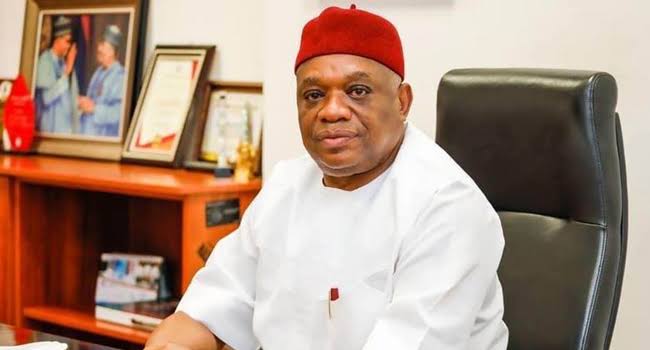
    In order to achieve its goal, the proposed law sponsored by the Chief Whip of the Senate, Orji Uzor Kalu seeks to establish the National Agriculture Technology Board which will be saddled with the responsibility of implementing the National Agricultural Technology and Innovation Policy.

    Further details of the bill fronted by the Abia-North senator reveals that the Agricultural Board’s task would include: to ensure the implementation of the National Agricultural Technology and innovation policies, research into and develop methods of modern farming beneficial to Nigeria’s landscape, source fund for agricultural projects; include all relevant stakeholders in the advancement and implementation of the policies; and perform any other responsibility conferred on the Board by the Federal Government.

    Leader of the Senate, Senator Ibrahim Gobir presented the short title of the bill to the members of Senate plenary, shortly afterwards the Senate in a voice vote presided by the President of the Senate, Ahmed Lawan passed the first reading of the bill.

    (Sun)

  • FG moves to tackle rising food prices, calls for global cooperation to avert food crisis

    FG moves to tackle rising food prices, calls for global cooperation to avert food crisis

    The Federal Government said, yesterday, it has put measures in place to address rising cost of food across the country, and plans to convene a meeting of the National Food Security Council shortly.

    The government also disclosed that it has lined up concrete actions to ensure the growth of some sectors of the nation’s economy that had refused to grow in recent times.

    Minister of Finance, Budget and National Planning, Mrs. Zainab Ahmed, disclosed this while briefing State House correspondents at the end of the virtual Federal Executive Council, FEC, meeting, presided over by Vice President Yemi Osinbajo at the Council Chambers, Presidential Villa, Abuja.

    The minister said FEC approved the National Food Security Council to meet “very quickly to address the issue of food inflation, and also provide a plan and some methods in which we can reduce the cost of food to support improved food prices for the citizenry.’’

    She stated further that the council was briefed about the rising inflation rate and the need to manage the cost of inflation in the country.

    Besides, the minister said FEC considered a report from the Ministry of Finance, Budget and National Planning for the first quarter of 2022 GDP report, which showed that the economy had grown by 3.1 per cent in the first quarter of 2022, against a growth of 0.5 per cent in the first quarter of last year.

    She said: “This growth shows a gradual economic stability from the recession that we witnessed in 2020. It also shows the six quarter of positive growth that the Nigerian economy has presented.

    “So of the 46 economic activities, the bulk sector performance shows that services sector grew strongly by 4.7 per cent, agriculture also grew by 3.61 per cent, Industry on the other hand contracted by minus 6.81 per cent and there’s also a significant contraction in the crude oil, petroleum and natural gas sector of 26.04 per cent.

    “We’re very mindful of the fact that unless we have most of the sectors growing especially the growth in the jobs impacted sectors, that this growth that is positive will not be directly felt by the people.

    “We also reported to council that inflation has started going upward to the extent that the monetary authorities of the Central Bank have had to adjust the Monetary Policy Rate (MPR) to 13 per cent at the last Monetary Policy Committee, MPC, meeting and that’s an attempt to manage the cost of inflation.

    “So, Council has decided to set up a special effort to look at the sectors that are not growing and also to look at how we can grow the other sectors better.”

    Also briefing journalists, Minister of Police Affairs, Maigari Dingyadi, said council approved a Memorandum of Understanding, MoU, for the purchase of 82 Toyota brand of vehicles, branded raincoats and sundry other accoutrements for the use of the Nigeria Police at the total cost of N8,315,209,825.

    He explained that the council’s approval was a result of the initial approval for the Nigeria Police Trust Fund to award contracts for the supply of sundry accoutrements for the efficient operation of the Police.

    The Minister of Power, Abubakar Aliyu, said council approved the contract to supply and install emergency restoration system or 330 KV and 132KV transmission line for ongoing rehabilitation works in Lagos at the sum of $968,818 as the offshore, onshore component is N7,393 million and the contractor is Rab Power Industries Limited.”

    Fielding questions on the update on the Federal Government electricity deal with Siemens of Germany, the minister explained that he had toured their facilities in Germany to ascertain the level of work in the production of the equipment and was satisfied with the spate of work so far.

    According to him, despite the impact of the ongoing Russia/Ukraine war, which slowed down the process of their production, he had been able to get Siemens committed to supply 10 mobile transformers to be installed in the country by September this year.

    He said works were ongoing in the country as contractors were already working on the sites to prepare grounds for the installation of the equipment. immediately they arrive the country.

    (Vanguard)

  • FG approves cultivation of genetically modified Maize


    The Federal Government has granted environmental approval for the evaluation and open cultivation of TELA Maize, a new variety of genetically modified maize developed by researchers at the Institute for Agricultural Research, Ahmadu Bello University, Zaria.


    Approval for the cultivation of the crop was announced in a statement issued in Abuja on Sunday, jointly signed by the Communications Officer, West and Central Africa for African Agricultural Technology Foundation; and the Information Officer, IAR/ABU, Yakubu Dodo.


    According to the statement, the genetically modified maize would resist fall armyworm, stem borers, and tolerate moderate drought.

    The government decision was contained in a certificate issued to IAR by the National Biosafety Management Agency, the agency mandated to regulate genetically modified products across the country.


    The certificate dated October 8, 2021, with permit code no. NBMA/CM/003, was issued to IAR for general/commercial release of TELA maize genetically modified for drought tolerance, resistance to stem borer and fall armyworm.


    “It comes into effect from October 8, 2021, to October 5, 2024,” the statement read in part.


    A decision document accompanying the certificate from NBMA stated that in arriving at the decision to grant the permit, the agency took into consideration the advice of the National Biosafety Committee, the National Biosafety Technical Sub-Committee, and the risk management report provided by the applicant.


    The statement added, “The agency was convinced that there are no known adverse impacts to the conservation and sustainable use of biodiversity, taking into account risk to human health.

    “The permit, pursuant to this decision, is without prejudice to other extant legal requirements.”


    It stated that this approval would authorise the permit holder and persons covered by the permit to commercialise the TELA maize genetically modified for drought tolerance and insect resistance.


    Reacting to the decision, the Executive Director, IAR, Prof. Ishiyaku Mohammed, said it was inspiring for the institute to secure NBMA approval for the commercial release of the drought-tolerant and  insect-resistant maize.


    Source: www.punchng.com