Author: Editor

  • NAF Takes Delivery of Five New Helicopters for Security Operations

    NAF Takes Delivery of Five New Helicopters for Security Operations

    Precious Nwonu, Enugu

    The Nigerian Air Force has taken delivery of five new helicopters as part of efforts to strengthen its air operations and improve support for ground troops tackling extremist groups and other security threats across the country.

    The newly delivered aircraft comprise three AW109 Trekker B helicopters manufactured by Leonardo Helicopters of Italy and two H125 helicopters produced by Airbus Helicopters.

    The Director of Public Relations and Information, NAF, Air Commodore Ehimen Ejodame, disclosed this in a statement on Wednesday.

    Ejodame said the three AW109 Trekker B helicopters arrived in Lagos on September 15, 2026, as part of 10 aircraft recently acquired by the Federal Government.

    He said the remaining seven AW109 Trekker B helicopters were expected to arrive before the end of the year, while the two H125 helicopters had already been delivered.

    The latest acquisition is part of the Federal Government’s ongoing efforts to modernise the country’s airpower and improve the operational capacity of the Armed Forces in responding to evolving security challenges.

    Reacting to the development, the Chief of the Air Staff, Air Marshal Sunday Kelvin Aneke, described the delivery as another milestone in the government’s investment in the re-equipment and modernisation of the Nigerian Air Force.

    Aneke said the helicopters would increase the availability of operational aircraft and improve the service’s ability to respond to security situations across different theatres.

    “The arrival of these five helicopters provides greater flexibility in the employment of airpower in support of ground troops in ongoing operations,” he said.

    The Chief of the Air Staff also expressed appreciation to President Bola Tinubu for what he described as his continued support for the Nigerian Air Force and its modernisation programme.

    He said the government’s investment was helping the service develop the capabilities required to carry out its operational responsibilities and respond to the country’s changing security needs.

    The NAF said the new platforms would further enhance its ability to conduct air operations and provide support to troops deployed across various parts of the country.

  • Veteran Nollywood Actor Olu Jacobs Dies at 84

    Precious Nwonu, Enugu

    Veteran Nigerian actor and film executive, Oludotun Baiyewu Jacobs, popularly known as Olu Jacobs, has died at the age of 84.

    His death was announced by his son, Olusoji Jacobs, in an Instagram post on Wednesday, September 16, 2026.

    The family, while announcing his death, described the veteran actor as “The Lion of Lufodo” and appealed to bloggers and social media influencers to respect its privacy during the mourning period.

    Jacobs was born on July 11, 1942, and built a career spanning theatre, television and film. He trained at the Royal Academy of Dramatic Art in London before working with repertory theatres in Britain and appearing in several British television productions and international films.

    He later returned to Nigeria, where he became one of the prominent figures in the country’s growing film industry and contributed significantly to the development of Nollywood.

    Over the course of his career, Jacobs appeared in numerous stage productions, television programmes and films, working both in Nigeria and internationally. His credits included productions such as *The Dogs of War*, *Pirates*, *Baby: Secret of the Lost Legend* and several Nigerian films.

    His contribution to African cinema earned him several recognitions. In 2007, he won the Africa Movie Academy Award for Best Actor in a Leading Role. He later received the Industry Merit Award at the 2013 Africa Magic Viewers’ Choice Awards and the Africa Movie Academy Awards’ Lifetime Achievement Award in 2016.

    Jacobs was also honoured by the Nigerian government in 2011 when he was conferred with the national honour of Member of the Order of the Federal Republic, MFR, for his contributions to the film industry.

    Beyond acting, Jacobs was involved in developing talents within Nigeria’s entertainment industry. He co-founded the Lufodo Group with his wife, veteran actress Joke Silva, with interests including film production, distribution and the Lufodo Academy of Performing Arts.

    His death marks the end of the career of one of Nigeria’s most recognisable veteran actors, whose work spanned several decades and connected Nigeria’s theatre tradition with its modern film industry.

    The family has appealed for privacy as it mourns the actor and film executive.

  • ADC Raises Alarm as Petrol Price Rises to N1,470

    ADC Raises Alarm as Petrol Price Rises to N1,470

    Precious Nwonu, Enugu

    The African Democratic Congress has raised concerns over the latest increase in petrol prices, warning that the rising cost of Premium Motor Spirit is deepening the economic pressure on Nigerian households and businesses.

    The opposition party’s warning came as petrol prices at some Nigerian National Petroleum Company Limited retail outlets in Abuja rose to as much as N1,430 per litre, while prices in some locations were reported at about N1,470 per litre.

    In a statement issued on Monday by its National Publicity Secretary, Bolaji Abdullahi, the ADC said the increase was already affecting the cost of transportation, food, electricity, education and other essential services.

    The party said the impact of higher fuel prices went beyond motorists, arguing that increased transportation and operating costs were being passed on to consumers and businesses.

    “President Tinubu has turned the petrol pump into an instrument of punishment for Nigerians,” the party said.

    The ADC also expressed concern over reported increases in private school fees, with some schools allegedly raising charges by between 30 and 40 per cent.

    It said the increases were adding to the financial burden on families whose incomes had not increased at the same pace as the cost of living.

    “Parents are not earning 40 per cent more. Their salaries have not risen with the prices of fuel, food, rent, transportation and school fees,” the party said.

    The opposition party, however, acknowledged that school proprietors were also facing higher operating expenses, including electricity bills, fuel costs, taxes, rent and staff salaries.

    The ADC urged President Bola Tinubu’s administration to take urgent measures to ease the pressure on households and businesses, warning against interpreting Nigerians’ ability to cope with the situation as acceptance of government policies.

    Meanwhile, checks at several NNPCL retail outlets in the Federal Capital Territory showed that petrol was being sold at between N1,395 and N1,430 per litre.

    The latest prices represent increases of between N50 and N80 per litre, depending on the location.

    The new pump prices were observed at NNPCL stations around Airport Junction, Gwarinpa, Kubwa Expressway, Wuse Zone 4 and other parts of Abuja and its environs.

    However, Sunday Asefon, National Director of Students Engagement of the City Boy Movement and Senior Special Assistant to the President on Students Engagement, attributed the latest petrol price increase to international market pressures rather than subsidy removal alone.

    In a statement titled, “The Pain Is Not From Subsidy Removal, It’s From Geopolitical Tensions Including the War in the Middle East,” Asefon linked the development to tensions involving the United States, Iran and Israel.

    He argued that the rise in petrol prices from about N800 per litre at the Dangote Petroleum Refinery’s gantry to between N1,300 and N1,400 at filling stations could not be explained solely by the removal of fuel subsidy.

    “The real enemy is the ongoing global geopolitical tension. The missiles being fired by the United States, Iran and Israel are the unseen hands shaping the global oil market,” Asefon said.

    He pointed to instability around the Strait of Hormuz, a major route for global oil shipments, as another factor capable of affecting international crude prices and, consequently, domestic petrol costs.

    According to Asefon, the Bank of England had warned that a complete disruption of the waterway could push global crude prices to between $100 and $130 per barrel.

    The contrasting positions come as Nigerians continue to contend with higher fuel and transportation costs, with the latest pump price adjustments adding to concerns over the cost of living.

  • Otti Seeks Stronger Partnerships to Improve Abia Healthcare

    Otti Seeks Stronger Partnerships to Improve Abia Healthcare

    Precious Nwonu, Enugu

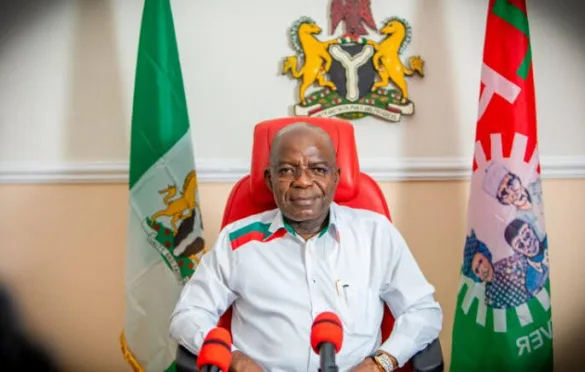
    Abia State Governor, Alex Otti, has called for stronger collaboration between the state government, federal tertiary hospitals and other medical institutions to improve healthcare delivery and advance the proposed Abia Medical City.

    Otti made the call while addressing the 115th quarterly meeting of the Committee of Chief Medical Directors and Medical Directors of Federal Tertiary Hospitals in Nigeria.

    The governor, who was represented by his deputy, Ikechukwu Emetu, described healthcare as a key driver of human development and economic growth.

    He said his administration had demonstrated its commitment to the sector by allocating 15 per cent of the state’s 2026 budget to healthcare.

    According to him, the government has also recruited hundreds of healthcare professionals and commenced the rehabilitation of primary healthcare centres across the state through Project EQUIP and other interventions.

    Otti said the proposed Abia Medical City was designed to go beyond conventional hospital services, describing it as an integrated healthcare ecosystem that would bring together specialised medical services, research, diagnostics, pharmaceutical manufacturing, medical technology and other related services.

    He therefore urged medical institutions and other stakeholders to partner with the state government to turn the vision into reality.

    The governor said such partnerships would help strengthen the state’s healthcare system while creating opportunities for innovation, investment and improved access to specialised medical services.

    Also speaking, the Secretary to the Abia State Government, Dr Emmanuel Meribole, commended the administration for what he described as progress in the health sector.

    Meribole also highlighted the increasing collaboration between the state government and the Federal Medical Centre, Umuahia.

    The Chairman of the Committee of Chief Medical Directors and Medical Directors of Federal Tertiary Institutions in Nigeria and Chief Medical Director of Usmanu Danfodiyo University Teaching Hospital, Sokoto, Prof. Sa’ad Ahmed, expressed appreciation for the cooperation between the state government and the health institutions in Abia.

    Meanwhile, the Chief Medical Director of the Federal Medical Centre, Umuahia, Prof. Azubuike Onyebuchi, disclosed that the state government was constructing a 20-room VIP ward at the medical centre.

    The development is part of the ongoing efforts to improve healthcare infrastructure and strengthen medical services in the state.

  • NDLEA Arrests Mexican Suspect, Dismantles Meth Lab in Ebonyi

    NDLEA Arrests Mexican Suspect, Dismantles Meth Lab in Ebonyi

    Precious Nwonu, Enugu

    The National Drug Law Enforcement Agency has arrested a Mexican national allegedly linked to a transnational methamphetamine syndicate and uncovered an industrial-scale clandestine laboratory in Ebonyi State.

    The suspect, identified as Mexican national Arturo Carrera Loaiza, was arrested on August 19, 2026, while allegedly attempting to leave Nigeria through the Murtala Muhammed International Airport, Lagos.

    The NDLEA Chairman and Chief Executive Officer, Brig. Gen. Mohamed Buba Marwa (retd.), disclosed the development on Tuesday during a briefing with journalists in Lagos.

    Marwa, represented by the agency’s Director of Media and Advocacy, Femi Babafemi, said the arrest followed months of investigation into a transnational drug network suspected of establishing methamphetamine laboratories in different parts of Nigeria.

    He said the investigation was connected to earlier operations in Ogun and Oyo states, where several Mexican nationals and Nigerians had been arrested.

    According to him, NDLEA operatives on May 16 arrested three Mexican nationals and seven Nigerians at a forest location in Ogun State.

    Another Mexican national, 56-year-old Jose Villa Ochoa, and four Nigerians were later arrested on June 17 at a clandestine methamphetamine laboratory in a forest area in Tapa village, Ibarapa North Local Government Area of Oyo State.

    Marwa said investigations by the agency’s Special Operations Unit revealed that Ochoa allegedly identified Loaiza as the person who recruited him and brought him to Nigeria.

    He said international cooperation enabled investigators to obtain a photograph of Loaiza, which Ochoa allegedly identified during questioning.

    Further intelligence indicated that Loaiza arrived in Nigeria on June 10 alongside another Mexican national, Jose Ceballos Perez.

    Marwa said Loaiza was eventually tracked to the Lagos airport, where he was arrested while allegedly trying to leave the country.

    During interrogation, the suspect reportedly claimed that he came to Nigeria to establish a restaurant business and denied involvement in the production of methamphetamine.

    However, investigators allegedly recovered photographs showing him wearing a laboratory coat and standing beside equipment suspected to have been used in methamphetamine production.

    According to Marwa, forensic analysis of metadata from the photographs led investigators to a property under construction in Isiata Ugoni Okposi, Ebonyi State.

    A subsequent operation at the property on August 30 reportedly uncovered suspicious structures, chemical odours and other indications of possible illicit drug production.

    Marwa said analysis of CCTV footage recovered from the premises allegedly showed Loaiza and a Nigerian suspect, John Samuel Ivo Okike, moving chemicals and laboratory equipment from the property.

    Further intelligence reportedly led NDLEA operatives to another building, where additional chemicals and equipment suspected to be connected to methamphetamine production were recovered.

    Items recovered included acetone, toluene, hydrochloric acid, ethanol, P2B, tartaric acid, condensing units, fabricated reaction pots, weighing scales, gas burners and a laboratory coat allegedly linked to the suspects.

    The NDLEA chairman said CCTV footage, forensic findings and witness accounts had provided additional evidence as investigators continued efforts to establish the activities of the suspected syndicate.

    Marwa warned that the agency would not allow Nigeria to become a base for international drug cartels seeking to establish clandestine laboratories in rural communities.

    He said the arrest of Loaiza and the discovery of the Ebonyi facility, coming after similar operations in Ogun and Oyo, demonstrated the agency’s efforts to use intelligence and forensic investigation to disrupt transnational drug networks.

    Marwa commended personnel from the NDLEA Special Operations Unit, Strike Force, Forensics Department and the Ogun, Oyo and Ebonyi State Commands for their roles in the operations.

    He said investigations were ongoing to identify and apprehend other alleged members, financiers and collaborators linked to the syndicate.

  • PDP Defends Wike, Accuses APC Governors of Fear of 2027 Contest

    PDP Defends Wike, Accuses APC Governors of Fear of 2027 Contest

    The Peoples Democratic Party has defended the Minister of the Federal Capital Territory, Nyesom Wike, following the rejection of his political support for President Bola Tinubu by the All Progressives Congress Governors’ Forum.

    The PDP said Wike remained a major political force whose support could contribute significantly to Tinubu’s re-election bid, insisting that the minister had the constitutional right to decide whom he would support politically.

    The party stated this in a press release issued on Tuesday and signed by its National Publicity Secretary, Jungudo Haruna Mohammed.

    The statement followed the position of the APC governors that their members would not participate in, support or endorse any political arrangement capable of undermining the APC or its candidates ahead of the 2027 general elections.

    The PDP argued that Wike was not the problem of the APC governors, but that their concerns were rooted in their governance records and fear of facing strong opposition candidates at the polls.

    “The APC Governors’ Forum should understand that Wike is not their problem; their problem is their poor governance and failure to meet the expectations of their people,” the party said.

    According to the PDP, Wike’s support for Tinubu did not amount to an endorsement of the APC or require him to abandon his membership and political relationships within the PDP.

    It said the minister, who is serving in the APC-led Federal Government, could legitimately support Tinubu while retaining his political identity.

    The opposition party accused the APC governors of initially misinterpreting Wike’s support for Tinubu as support for the ruling party.

    “The APC governors had initially misconceived Wike’s support for President Bola Ahmed Tinubu as an endorsement of the APC. They are now beginning to realise that supporting the President does not mean abandoning the PDP or surrendering the political space to the APC,” the statement said.

    The PDP also rejected what it described as the governors’ attempt to prevent Wike from supporting or fielding candidates capable of challenging APC candidates in the 2027 elections.

    It argued that political parties had the right to field candidates for elective positions and that voters should be allowed to determine the outcome.

    “Elections are contests, and every political party has the democratic right to present candidates before the electorate,” the party said.

    The PDP further claimed that the APC governors’ position reflected anxiety over the prospect of facing strong PDP candidates in the next general elections.

    It maintained that the PDP had stabilised and was preparing candidates across elective positions who could challenge APC incumbents and their preferred candidates.

    The party questioned why governors who were confident in their records would be concerned about opposition candidates contesting against them.

    “If they have truly performed and retained the confidence of their people, they should welcome a contest and allow the electorate to decide,” the PDP said.

    The party also highlighted Wike’s political record as a former governor of Rivers State and his performance as FCT minister, describing him as a political organiser and mobiliser whose influence could not simply be ignored.

    It argued that rejecting Wike’s support would be counterproductive for anyone seeking Tinubu’s victory in 2027.

    “It is therefore politically irrational for anyone claiming to support the President to reject a political leader of Wike’s stature and the votes and mobilisation capacity he can bring to the President’s campaign,” the statement said.

    The PDP questioned whether the APC governors were more interested in securing their own political victories than ensuring Tinubu’s re-election.

    “A governor who truly wants the President to win should welcome every credible political force capable of contributing to that victory,” it said.

    The party urged the governors to focus on governance, accountability and their performance in office instead of attempting to determine whom Wike should support politically.

    It also challenged them to account for resources accruing to their states through the Federation Account Allocation Committee and ensure that local governments receive funds due to them.

    Describing Wike as an “asset” to Tinubu’s political project, the PDP said his political influence and mobilisation capacity could contribute to the President’s electoral prospects.

    It, however, maintained that the ultimate decision would rest with voters in 2027.

    “At the appropriate time, Nigerians will decide with their votes. Those who have performed will present their records, while those who have failed will face the judgment of the electorate,” the party said.

    The PDP said it would not be intimidated into withdrawing from the electoral contest, adding that it would field candidates and campaign for an alternative ahead of the 2027 elections.

    “The message to the APC Governors’ Forum is simple: Chief Barrister Nyesom Wike is a force to reckon with, not a force to reject,” the party said.

    It added, “The PDP will not be intimidated into abandoning the electoral field. We will field credible candidates, mobilise Nigerians and offer the electorate a genuine alternative come 2027.”

  • CAC Seeks Unified Ownership Register to Tackle Illicit Funds

    CAC Seeks Unified Ownership Register to Tackle Illicit Funds

    Precious Nwonu, Enugu

    The Corporate Affairs Commission has called for the harmonisation and centralisation of Nigeria’s beneficial ownership registers to strengthen efforts to combat money laundering, illicit financial flows and the misuse of corporate structures.

    The Registrar-General and Chief Executive Officer of the CAC, Hussaini Ishaq Magaji, made the call on Tuesday in Abuja at a training on the Beneficial Ownership Register organised for journalists and civil society organisations.

    Magaji said Nigeria needed an interconnected system that would make it easier to identify the individuals who ultimately own, control or benefit from companies operating across different sectors.

    He said the fragmentation of ownership information across separate institutional databases could make it difficult to establish the full picture of corporate ownership.

    “Nigeria should work towards harmonising and centralising beneficial ownership information within a coordinated national framework, with the CAC corporate registry serving as the central corporate data backbone,” Magaji said.

    He stressed that the proposed harmonisation was not intended to strip other agencies of their statutory responsibilities, but to ensure that ownership information held by different institutions could be effectively connected.

    “This is not about taking away the legitimate statutory responsibilities of NEPZA or NEITI. It is about connecting the dots,” he said.

    The CAC currently operates a Beneficial Ownership Register, while information on entities operating within Free Trade Zones is maintained under the framework of the Nigeria Export Processing Zones Authority.

    Beneficial ownership information relating to companies in the extractive sector is also maintained under the Nigeria Extractive Industries Transparency Initiative framework.

    According to Magaji, the three systems essentially seek to establish the same information about the individuals behind corporate entities.

    “Ultimately, we are trying to answer the same fundamental questions: Who owns this entity? Who controls it? Who benefits from it? And who is the natural person behind the corporate structure?” he said.

    He noted that much of the underlying corporate information was already linked to records held by the CAC, making stronger coordination and interoperability among the relevant institutions necessary.

    ### CAC urges journalists, CSOs to scrutinise ownership data

    Magaji also urged journalists and civil society organisations to advocate for common standards, interoperability and improved access to beneficial ownership information while respecting legitimate privacy and data protection requirements.

    “To journalists and Civil Society Organisations: Your voice is needed in this conversation. We want you to interrogate this issue. Ask the difficult questions. Why should beneficial ownership information remain fragmented? Can we have interoperability between these registers? Can we establish common standards? Can we eliminate duplication?” he said.

    He described beneficial ownership transparency as an important tool for corporate accountability and the protection of public resources, rather than merely a regulatory requirement.

    The CAC boss said the register could assist journalists investigating companies, procurement arrangements, transactions and business relationships by helping them identify individuals who ultimately control corporate entities.

    He urged journalists to go beyond the names of registered directors when examining corporate structures.

    “When investigating a company, a transaction, a procurement arrangement or a business relationship, ask: Who owns this company? Who ultimately controls it? Who benefits from it? Are there relationships that are not immediately visible?” he said.

    Magaji disclosed that agencies including the Economic and Financial Crimes Commission, Independent Corrupt Practices and Other Related Offences Commission and National Drug Law Enforcement Agency had used beneficial ownership information in investigations and enforcement activities.

    He, however, cautioned journalists against assuming that the appearance of an individual’s name in a corporate record amounted to evidence of wrongdoing.

    “Information must be properly understood, independently verified and reported fairly and responsibly,” he said.

    ### CAC register free to access

    The Registrar-General said access to beneficial ownership information on the CAC platform was free, urging journalists and CSOs to use the resource for research and accountability reporting.

    “Access to the beneficial ownership data is free. We are deliberately making this information accessible because transparency should not become a privilege available only to those who can afford it,” he said.

    He said the effectiveness of the register should be judged by how the information was used to detect corporate abuse and strengthen accountability, rather than simply by the existence of the database.

    “Nigeria needs a transparency system that does not merely collect information, but connects information,” Magaji said.

    The CAC also announced plans to hold a Global Conference on Beneficial Ownership in Lagos on November 8, 2026.

    The conference is expected to attract about 200 delegates from 43 countries and will examine Nigeria’s progress in beneficial ownership transparency since its commitment at the London Anti-Corruption Summit.

    Magaji said the event would also provide an opportunity to discuss the next phase of reforms, including greater harmonisation, interoperability and effective use of corporate ownership data.

    “The world is watching Nigeria. Countries that are seeking to strengthen their own beneficial ownership systems are looking at our experience,” he said.

    The CAC Persons with Significant Control Rules, 2022, provide the framework for disclosing individuals who exercise significant ownership, control or influence over companies and other relevant entities.

    In Nigeria’s corporate legal framework, a Person with Significant Control refers to what is commonly known internationally as a beneficial owner.


  • 2027: APC Governors Reject Alliance With Wike’s Rainbow Coalition

    2027: APC Governors Reject Alliance With Wike’s Rainbow Coalition

    Precious Nwonu, Enugu

    Governors elected on the platform of the All Progressives Congress have ruled out any political alliance with individuals or opposition groups ahead of the 2027 general elections.

    The governors said they remained committed to the APC and would support only candidates sponsored by the ruling party in the forthcoming elections.

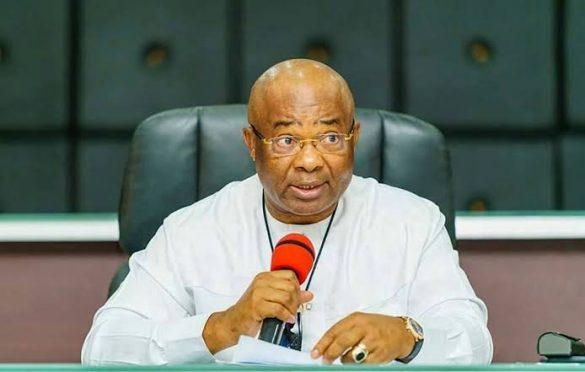
    Chairman of the APC Governors Forum and Imo State Governor, Hope Uzodimma, disclosed this after the forum’s meeting in Abuja on Monday night.

    Uzodimma said the governors had not entered into any formal agreement with any individual or opposition party ahead of the elections.

    The position comes amid the growing activities of the Minister of the Federal Capital Territory and Peoples Democratic Party leader, Nyesom Wike, who has been promoting a political movement known as the Rainbow Coalition in Rivers State.

    Wike, who is serving in the APC-led Federal Government, has declared his support for President Bola Tinubu’s re-election bid in 2027 while maintaining that his Rainbow Coalition is separate from the APC.

    The minister has also been at odds with some APC governors over political matters.

    During a recent media chat, Wike alleged that Uzodimma and Kwara State Governor, AbdulRahman AbdulRazaq, were among those behind the political challenges he had faced.

    He attributed the alleged opposition to the growing influence of his Rainbow Coalition, which he said was attracting politicians interested in contesting against some APC governorship and senatorial candidates in 2027.

    However, the APC governors, in a communique read by Uzodimma after their meeting, said they would not support any political arrangement that could undermine the party or its candidates.

    The forum said its campaign efforts would be directed exclusively towards APC candidates at all levels.

    Uzodimma said, “The APC Governors Forum unanimously resolved that its members will not participate in, support or endorse any alliance or political arrangement capable of undermining the re-election of Mr President, weakening the APC or adversely affecting any candidate of the party at all levels.”

    He added that the governors would not support candidates outside the APC.

    “In other words, the forum has no intention to support any candidate at any level that is not an APC candidate because our candidates who are contesting the election are being sponsored by our party,” he said.

    According to the Imo governor, the forum’s campaign strategy would remain aligned with President Tinubu and the leadership of the APC.

    “The governors’ campaign commitment is exclusively to all APC candidates. All levels of the party campaign architecture will align with the expectations of Mr President and the strategic objectives of the party,” he said.

    The declaration effectively draws a line between the APC governors’ official political activities and Wike’s Rainbow Coalition, despite the minister’s support for Tinubu’s second-term bid.

    The 2027 elections are expected to produce further realignments as political parties and influential politicians intensify efforts to consolidate support ahead of the polls.

  • Toyin Abraham Unveils Pete Edochie as First Major Cast in ‘Bestie’

    Precious Nwonu, Enugu

    Nollywood actress and filmmaker Toyin Abraham has announced veteran actor Pete Edochie as the first major cast member of her upcoming movie, Bestie.

    Abraham made the announcement on Monday, September 14, revealing that Edochie will portray a character named Papa Ngozi in the highly anticipated production.

    The filmmaker unveiled the veteran actor on social media, celebrating his decades-long contribution to the Nigerian film industry and describing him as a “legend” and “GOAT.”

    She also confirmed that Bestie will hit cinemas on December 16.

    Although Abraham has yet to reveal details of the film’s storyline, Edochie’s involvement has generated interest among movie lovers, given his status as one of Nollywood’s most respected veteran actors.

    Further details about the remaining cast members and the plot of the movie are expected to be announced as the release date approaches.

    For Edochie, the role adds to a career spanning several decades, during which he has featured in numerous Nigerian films and television productions and become widely recognised for his diverse portrayals.

    Bestie continues Abraham’s tradition of releasing films during the busy December cinema season.

    Her previous festive-season projects include Ijakumo: The Born Again Stripper in 2022, Malaika in 2023 and Alakada: Bad and Boujee in 2024.

    The filmmaker also recorded major commercial success with her 2025 movie, Oversabi Aunty, which surpassed N1bn at the Nigerian box office.

    The achievement earned Abraham a Box Office Champion Award from the National Film and Video Censors Board in March 2026.

    The December release of Bestie will put the movie in competition with several other major Nigerian productions.

    Funke Akindele’s The Four: No One Fights Alone is scheduled to hit cinemas on December 11, five days before Abraham’s film.

    With additional cast announcements expected, Abraham has continued to keep much of Bestie ’s storyline under wraps, while the casting of Edochie as Papa Ngozi has provided fans with an early glimpse of what to expect from the production.

  • Dangote May Seek SEC Nod for Extra Shares as IPO Demand Surges

    Dangote May Seek SEC Nod for Extra Shares as IPO Demand Surges

    Precious Nwonu, Enugu

    Nigeria’s capital market witnessed an extraordinary rush of retail investors on Monday as thousands of Nigerians scrambled to buy shares in the Dangote Petroleum Refinery and Petrochemicals initial public offering.

    The N2.1525tn offer generated intense demand within minutes of opening, with investment platforms and banks racing to process applications from investors seeking a stake in one of Africa’s biggest industrial projects.

    The scale of the demand has raised the possibility that Dangote Refinery could seek approval from the Securities and Exchange Commission to accommodate subscriptions beyond the limit permitted under existing market rules.

    Under the rules, an issuer may absorb up to 25 per cent above the original offer size. Any additional absorption beyond that threshold would require the approval of the SEC.

    A deleted post by the Nigerian Exchange Group had indicated that N1.48tn had been pooled through 402,634 transactions about an hour after the offer opened. However, the figure could not be independently confirmed after the post was removed.

    There were also reports that subscriptions reached about N1.5tn within six hours of the opening. The figure, however, had not been independently confirmed by the NGX or the issuing houses.

    What was confirmed was that subscriptions had crossed N10bn only minutes after the offer opened, underlining the strong appetite among investors.

    NGX Group Chairman, Umaru Kwairanga, said the response could result in an exceptionally large shareholder base for the refinery.

    “We would eventually have a company of the highest number of shareholders in the world and we would be looking for a stadium for our yearly general meeting,” he said.

    Chairman of Coronation Group, Aigboje Aig-Imoukhuede, also described the early response as extraordinary, saying billions of naira had been subscribed by thousands of investors within minutes or less than an hour of the offer opening.

    Fintech platforms struggle

    The huge demand exposed the capacity challenges facing digital investment platforms as investors attempted to subscribe through their smartphones.

    Bamboo, Cowrywise and Afrinvestor experienced severe traffic, with users reporting failed logins, expired sessions and difficulties completing transactions.

    Bamboo acknowledged that it was experiencing much higher-than-expected traffic from investors trying to access the Dangote offer, making it difficult for some users to log into the platform.

    Cowrywise also reported unusually high traffic and said its team was working to restore normal access. The platform later disclosed that the disruption lasted about an hour before its services were fully restored.

    Afrinvestor equally experienced access difficulties, with some users reporting problems completing their transactions.

    The disruptions generated complaints on social media, with some investors questioning whether the platforms had adequately prepared for the unprecedented demand after promoting the IPO to their customers for weeks.

    The experience nevertheless highlighted the growing role of fintech platforms in expanding retail participation in Nigeria’s capital market.

    NGX data had shown that Bamboo accounted for 22 per cent of market trading volume in the first seven months of the year, reflecting the increasing importance of digital platforms to retail investment.

    Traditional banking channels also recorded strong demand as investors looked for alternatives to the affected fintech platforms.

    Zenith Bank made the offer available through its website, mobile application, internet banking, USSD, corporate banking channels and branches nationwide.

    FirstBank activated FirstMobile, FirstOnline, LIT App, PayByLink, FirstDirect, FirstMonie agents and its branches, while Fidelity Bank provided access through its mobile application and dedicated virtual accounts for non-customers.

    Moniepoint also made the offer available to its customers through its banking application.

    Low entry point attracts investors

    The attraction of the offer was boosted by its relatively low entry threshold.

    At N525 per share, investors can purchase the minimum 10 shares for N5,250, making the offer accessible to a broad range of Nigerians.

    The company is targeting as many as 10 million investors, potentially creating one of the largest shareholder bases associated with a Nigerian industrial company.

    The offer comprises 4.1 billion ordinary shares at N525 each and would raise N2.1525tn if fully subscribed.

    The public offer represents about 3.3 per cent of the refinery’s enlarged share capital.

    The total issued shares of the refinery stand at 120.13 billion. Dangote and his companies hold 80.74 per cent, while Greenview International Corporation owns 6.5 per cent and the Nigerian National Petroleum Company Limited holds 6.8 per cent.

    Group Managing Director and Chief Executive Officer of Vetiva Capital Management, the lead issuing house and lead adviser, Chuka Eseka, said the transaction was deliberately structured to allow retail investors to participate through digital channels.

    According to him, investors could subscribe through bank applications, fintech platforms and Point of Sale terminals, allowing the offer to reach Nigerians across the country.

    Previous private placement

    The surge in demand mirrors the experience of Dangote Refinery’s earlier private placement.

    The company had initially sought to raise $1bn from private investors but received applications worth $3.7bn.

    Dangote said the company eventually accepted $2.5bn and refunded $1.2bn because it could not accommodate the entire demand.

    The experience, he said, demonstrated the appetite for ownership of the refinery and influenced the decision to open the investment to the wider public.

    Chief Executive Officer of High Cap Securities, David Adonri, expressed doubts about whether Dangote would be willing to release substantially more equity, but maintained that the refinery remained an attractive asset for investors.

    Dangote targets $350bn valuation

    Amid the IPO frenzy, President of Dangote Industries Limited, Aliko Dangote, disclosed plans to transform the group into a company with a market capitalisation of at least $350bn by 2030.

    Speaking at the Facts-Behind-the-Offer Presentation and Market-Opening Gong Ceremony in Lagos, Dangote said the Nigerian Exchange would serve as the group’s base before its businesses expand into international markets.

    He said the group planned to list all the companies it operates on the NGX, adding that the $350bn valuation target was based on a price-to-earnings ratio of 10 times.

    Dangote said the refinery IPO was not primarily designed to raise money, arguing that the group had sufficient capital for its immediate expansion plans.

    Instead, he said, the offer was intended to broaden ownership and enable Nigerians, Africans and international investors to participate in the wealth created by the business.

    “Africa must own this share,” Dangote said.

    He added, “I do not want to be called the richest man in Africa. I want to be called the wealthiest man in Africa so that I can create wealth for others.”

    Dangote disclosed that the group had about $46bn worth of investments in its pipeline through 2030 across refining, cement and fertiliser.

    The refinery, which is currently operating at about 700,000 barrels per day, is being expanded to 1.4 million barrels per day.

    The group also plans to establish another 700,000-barrels-per-day refinery in Kenya, which would take its potential total refining capacity to 2.1 million barrels per day.

    Polypropylene production is expected to rise to 2.5 million tonnes, while the group is considering investments outside Africa, including the United States, within the next three to four years.

    African ownership

    Kwairanga said the transaction represented an important test of the ability of Nigeria’s capital market to connect African savings with African businesses.

    Lagos State Governor, Babajide Sanwo-Olu, described the IPO as a historic moment for Nigeria and Africa, saying it demonstrated the ability of African businesses to attract capital on a global scale.

    Chairman of the Botswana Stock Exchange, Neo Mooki, also praised the transaction and the refinery project, describing it as evidence that Africans could build and own globally significant assets.

    “I always say that Africa is not poor,” Mooki said.

    The IPO is structured as an offer for subscription, meaning new shares are being issued by Dangote Refinery and the proceeds will accrue to the company.

    The funds will form part of the financing for the refinery’s planned expansion, estimated at $14.3bn.

    The offer closes on October 13, 2026, while the final subscription figure will only be known after applications have been collated and reconciled by the registrars and issuing houses.
  • FG Signs N728.9bn Bond to Clear Gencos’ Outstanding Debts

    FG Signs N728.9bn Bond to Clear Gencos’ Outstanding Debts

    Precious Nwonu, Enugu

    The Federal Government has signed financing documents for a N728.9bn power sector bond aimed at settling part of its outstanding obligations to electricity generation companies and improving liquidity in the power market.

    The Series 2 bond was formalised in Abuja on Monday following approval for the issuance of its Tranche B, coming after the earlier Series 2 Tranche A.

    The latest transaction brings the value of the Federal Government’s two power sector bond issuances to about N1.23tn within nine months, as authorities seek to address legacy debts estimated at about N4tn across the electricity market.

    Speaking at the signing ceremony, the Minister of Finance and Coordinating Minister of the Economy, Taiwo Oyedele, said clearing the accumulated debts must be accompanied by reforms capable of preventing a fresh build-up of obligations.

    Oyedele disclosed that the N728.9bn bond comprises N402bn in cash bonds raised through the capital market and N326.9bn in non-cash bonds allocated to participating Generation Companies under the Presidential Power Sector Debt Reduction Programme.

    He said the outstanding obligations had weakened liquidity, limited investment and undermined confidence among players across the electricity value chain.

    The minister, however, warned that debt settlement alone would not address the sector’s fundamental problems.

    “This means the bond programme cannot stand alone. It must be accompanied by stronger market discipline, improved revenue assurance, reduction in technical and commercial losses, greater efficiency and accountability across the electricity ecosystem,” he said.

    Oyedele said the government was using the domestic capital market to resolve legitimate legacy obligations in a structured manner while pursuing reforms to ensure the debts did not recur.

    He said the real test of the intervention would be whether it resulted in a financially sustainable electricity market capable of attracting investment, meeting its obligations and providing more reliable power to consumers.

    The Chief Executive Officer of Nigerian Bulk Electricity Trading Plc, Akin Odeyemi, described the Series 2 issuance as another milestone in efforts to address the financial challenges confronting the electricity supply industry.

    Odeyemi said 11 generation companies were participating in the latest issuance, compared with eight under the first series.

    He said the wider participation reflected increased confidence in the debt settlement programme and its framework for addressing verified obligations owed to Gencos.

    According to him, accumulated debts had affected the ability of market participants to fulfil their obligations and restricted Gencos’ capacity to invest in additional generation.

    He said the programme was therefore designed not only to settle historical debts but also to restore liquidity, financial confidence and sustainability across the electricity market.

    The Managing Director of CardinalStone Partners, Michael Nwezi, said the completion of the first phase of the N4tn debt settlement programme was significant for both the power sector and Nigeria’s capital market.

    Nwezi said the first phase comprised Series 1, which raised N501bn in January 2026, and Series 2, which raised approximately N729bn.

    He described Series 1 as a test of investors’ appetite for a structured instrument addressing the complexities of the electricity sector, adding that the success of the first issuance paved the way for the larger Series 2 transaction.

    According to him, the latest issuance attracted pension fund administrators, banks, sovereign wealth funds, asset managers and other institutional and retail investors.

    He said the strong response demonstrated that investors were willing to provide capital for transformational projects where there was sufficient transparency, visibility and confidence in the repayment structure.

    Nwezi said the completion of Series 2 marked the end of the programme’s first phase, with preparations for the second phase expected to commence shortly.

    Also speaking, the Special Adviser to the President on Power, Dr Lanre Babalola, said the bond represented an important step towards restoring commercial stability to the electricity market.

    Babalola said unresolved obligations had weakened market participants and discouraged investment over the years, but stressed that resolving historical debts was not enough to reform the sector.

    He called for measures to prevent new debts from accumulating, including improved payment and revenue collection, reduction in technical and commercial losses, accelerated metering and tariffs that increasingly reflect efficient costs while protecting consumers.

    “The objective is ultimately a power sector that can pay its bills, attract investment, and expand reliable electricity supply without requiring government financial intervention,” he said.

    The Director-General of the Bureau of Public Enterprises, Ayodeji Gbeleyi, said the Series 2 transaction would help address verified legacy obligations to Gencos while restoring liquidity and investor confidence.

    Gbeleyi also cited the successful payment of the first principal component of the Series 1 bond, which became due in July 2026, as evidence of the government’s commitment to meeting its obligations under the programme.

    He said complementary measures were being implemented in the distribution segment to improve metering, revenue assurance and network performance while reducing technical, commercial and collection losses.

    Representing the Gencos, Sahara Group Chief Executive Officer, Kola Adesina, described the intervention as a confidence-building measure for the electricity industry.

    Adesina said clearing the debts should translate into improved liquidity across the value chain, from gas supply and generation to transmission and distribution.

    “The industry must now respond with performance,” he said.

    He added that improved liquidity should result in increased generation, stronger networks, lower losses, improved revenue collection and greater investment.

    Adesina, however, stressed that government intervention could not substitute for commercial discipline, calling for accountability, cost-reflective economics, respect for contracts and a market where all participants fulfil their obligations.

  • New UK High Commissioner Arrives Nigeria, Pledges Stronger Bilateral Ties

    Precious Nwonu, Enugu

    The United Kingdom’s High Commissioner-designate to Nigeria, Pete Vowles, has arrived in Abuja to assume his new diplomatic assignment, promising to strengthen cooperation between the two countries.

    Vowles, who succeeds Dr Richard Montgomery CMG, arrived in the Nigerian capital on Monday, according to a statement by the British High Commission.

    Speaking after his arrival, the new envoy said his immediate focus would be on understanding Nigeria, engaging with its people and exploring opportunities to further strengthen the longstanding relationship between both countries.

    “I am hugely excited to be in Nigeria. My first priority is to listen and learn – to travel, meet people and immerse myself in this extraordinary country, its culture and its energy,” he said.

    Vowles said the relationship between Nigeria and the UK was built largely on strong ties between their people, adding that he looked forward to working with stakeholders across the country to expand areas of cooperation.

    “The UK and Nigeria have a deep and enduring partnership, built above all on the connections between our people,” he said.

    The envoy added that he was keen to discover Nigeria and work with partners across the country to determine how both nations could achieve more together.

    Vowles comes into the role with extensive diplomatic and development experience.

    Before his appointment to Nigeria, he served as the British Ambassador to Zimbabwe and held senior positions at the UK Foreign, Commonwealth & Development Office.

    He had also served as the British Ambassador to Myanmar and held diplomatic and development assignments in countries including Bangladesh, India, the Democratic Republic of Congo and Kenya.

    His appointment as the UK’s next High Commissioner to Nigeria was announced on June 16, 2026.

    His arrival comes as Nigeria and the UK continue to maintain extensive relations covering diplomacy, trade, security, development and people-to-people exchanges.

    Both countries have continued to engage on a range of bilateral and international issues of mutual interest.