Author: Editor

  • APC Condemns Alleged Disruption of Opposition Political Gathering, Police Begins Probe

    APC Condemns Alleged Disruption of Opposition Political Gathering, Police Begins Probe

    …APC denies responsibility, says allegation baseless

    The Enugu State Police Command has launched an investigation into the alleged disruption of two political gatherings in Nkanu West Local Government Area, as the All Progressives Congress (APC) in the council denied allegations that it sponsored the incidents.

    The incidents, which occurred on Saturday, September 12, involved a ward meeting of the Nigeria Democratic Congress (NDC) at Ndiuno-Obuoffia community and a Peoples Democratic Party (PDP) rally at St. Joseph Primary School, Agbani.

    According to the Police Public Relations Officer, SP Daniel Ndukwe, armed hoodlums allegedly disrupted the NDC meeting with sporadic shooting, leaving two attendees injured.

    In the second incident, hoodlums allegedly destroyed canopies and chairs arranged for the PDP rally at St. Joseph Primary School, Agbani.

    Following the incidents, the Commissioner of Police, CP Mamman Bitrus Giwa, directed the Deputy Commissioner of Police in charge of the State Criminal Investigation Department (CID) to conduct a thorough investigation and ensure that those responsible are brought to book.

    The Command said its operatives were promptly deployed to both locations after receiving reports of the incidents to prevent further breaches of public order and track down fleeing suspects.

    The Police, however, disclosed that neither of the political gatherings had been preceded by notification to the Command or a request for security coverage.

    Giwa consequently reiterated his warning to political parties and their supporters against violence as political activities intensify ahead of the forthcoming elections.

    He urged political parties and other stakeholders to notify the Police ahead of campaigns, meetings, rallies and other political gatherings to enable the Command to make adequate security arrangements.

    The commissioner warned against violence, intimidation, destruction of property and other acts capable of disrupting public peace and the electoral process, assuring residents that the Command would deal decisively with anyone found to have violated the law.

    Reacting to reports of the incidents, the APC in Nkanu West condemned the disruption of opposition political activities, describing such actions as “antithetical to the tenets of democracy and political participation.”

    In a statement signed by its Chairman, Hon. Chinedu Hillary Nnaji, on Sunday, the party said it was “deeply concerned” about the development and strongly condemned any attempt to disrupt political activities.

    The APC, however, rejected allegations that it sponsored the reported incidents, describing the claims as unfounded and baseless.

    The party argued that the opposition parties had been experiencing internal disputes and cited reported divisions within the NDC and PDP as possible factors requiring investigation.

    On the NDC, the APC alleged that its primary election in Enugu was characterised by irregularities, political intimidation, violence and allegations of financial extortion of aspirants, which it said had contributed to parallel leadership structures, court cases and strained political relations.

    The APC also pointed to the prolonged internal crisis within the PDP, saying the party’s disputes had extended to issues involving its national leadership.

    The Nkanu West APC said it remained “formidable and ready to participate honourably in the campaigns and elections,” while calling on its supporters to remain calm and law-abiding.

    It urged its supporters and the general public to disregard allegations linking the party to the reported disruptions, insisting that it remained committed to peaceful political participation, democratic principles and the rule of law.

    The party also called on the security agencies to thoroughly investigate the incidents and determine what actually transpired.

    The developments come as political activities intensify in Nkanu West ahead of the forthcoming elections, with the Police Command warning political parties and their supporters to conduct their activities peacefully and in accordance with the law.

    With investigations now underway, the Police are expected to determine the circumstances surrounding the two incidents and identify those responsible for the alleged violence and destruction.

  • Why NDC May Be Heading for a Ballot Crisis in Enugu

    Why NDC May Be Heading for a Ballot Crisis in Enugu

    By Sebastine Okafor, Ph.D.

    A few days ago, various media platforms were filled with reports of the withdrawal of one of the gubernatorial aspirants of the Nigeria Democratic Congress (NDC), Enugu State Chapter, Prof. Enenwannaji, following his alleged truce with one of his fellow aspirants, Sir Chinyeaka Oha. The Prof. is said to have emerged from what many described as an “illegal primary” conducted by the state chapter of the party, led by Dr. Johnpaul Anih, whom they claimed was not recognised. However, after a series of peace talks, he decided to step down for Sir Oha, whom he described in the media as his brother.

    That act was seen by many as a welcome development, to the extent that many media houses reported that the crisis bedevilling the party was over. But, in reality, it may only be the beginning of the main crisis.

    Where there are two allegedly disputed processes and one person decides to step down, the withdrawal of one does not, by itself, cure the alleged legal defects surrounding the process that produced the other. In law, a disputed process cannot simply become valid because one of its participants has withdrawn.

    It is a well-known fact that the National Working Committee of the party did not conduct any primary election in the state, while the state faction recognised by INEC, led by Dr. Johnpaul Anih, conducted what it described as one of the best primary elections to be held by any opposition political party in the state.

    Going by the legal questions surrounding the process, NDC may be heading into a deep electoral problem in Enugu State. The party, for instance, swore affidavits to protect some of its earlier fielded candidates, including Hon. Emeka Aba for Igboeze North/Udenu Federal Constituency, Barr. Agubuzo of Udi/Ezeagu Federal Constituency and Bishop Oscar Ossai of Enugu North Senatorial District, among others, before somehow removing them.

    In those affidavits, the party allegedly confirmed that it did not conduct any primary, while filing a series of conflicting documents. In one document, the party stated that the chairman of the electoral committee, Chief Teddy Obey, conducted the primaries with his team. In another affidavit, the party denied that Chief Teddy Obey was the chairman of the electoral committee.

    The reason for this is not far-fetched. Chief Obey is the Zonal Vice Chairman of the party in the South-East Zone and also a member of the 20-member National Selection Committee and Screening Committee. Chief Teddy’s alleged involvement in these different capacities has raised substantial questions about compliance with the party’s guidelines, especially where the party itself appears to have attempted to remove his name from the list of those who conducted the primary election.

    It is also a known fact that, even where the party claims to have conducted a primary in Enugu, questions remain about the existence of a clear and verifiable list of electoral committee members who conducted the alleged primaries across the senatorial zones, federal constituencies and state constituencies.

    This is important because the courts have repeatedly held that a party’s primary process must comply with the law, the Constitution of the party and its own guidelines. In APC v. Nelson & Ors (2023) LPELR-59758(CA), the Court of Appeal stressed that evidence must establish that the primary was actually conducted by the competent organ of the party before other issues surrounding it can have legal effect.

    As it stands, the party has about 40 cases challenging the outcome of the primary in the Federal High Court, Enugu, and more than 11 doing the same at the Federal High Court, Abuja.

    One clear position running through these disputes is the allegation that the NWC of NDC did not conduct any primary election in Enugu State and that even the primaries the party claims to have conducted are not supported by a clearly established INEC monitoring report.

    The courts have recognised that the conduct of party primaries is not completely beyond judicial scrutiny where statutory or party rules are alleged to have been breached. In Mansur v. PDP & Ors (2023) LPELR-59791(CA), the Court of Appeal considered the legal consequences of an alleged failure to conduct a valid primary, while in Agi v. PDP, the Supreme Court reaffirmed that the courts can intervene within the limited area created by electoral law when the nomination process is alleged to have violated the law or party guidelines.

    Another angle to this is that, in some cases, the party would allegedly deny the involvement of the plaintiff in the pre-primary election process, claim that its candidate emerged through affirmation and still publish the names of those it claimed never participated, with the names appearing in certified copies of its primary election result sheets reportedly signed by the same Chief Obey whose involvement the party had denied.

    These conflicting positions are not matters that can simply be wished away through political negotiations. They raise questions of evidence, credibility and the legal foundation upon which any candidate seeks to stand.

    The Supreme Court has made it clear that the political party plays a central role in the sponsorship of a candidate. In Ozomgbachi v. Amadi & Ors (2018) LPELR-45152(SC), the Supreme Court addressed the relationship between political parties and their candidates in electoral contests.

    It is a known fact that a series of allegations have been flying around about the party in Enugu, but the truth remains that you cannot build something on nothing. You cannot collect money from people, write names of candidates, create conflicting records and expect those affected not to seek justice.

    Where a party wants its candidate to appear on the ballot, the foundation of that candidacy must be legally defensible.

    A settlement between two aspirants may resolve a personal disagreement, but it does not automatically extinguish the rights of other aspirants who have approached the courts, nor does it erase questions concerning the legality of the primary process.

    The courts have repeatedly treated the statutory and party-guideline requirements as relevant where a genuine aspirant challenges the nomination process. As the Court of Appeal noted in Labour Party v. Nnaji & Anor (2023) LPELR-59426(CA), disputes surrounding party nomination can turn on whether the party complied with the applicable legal and internal requirements.

    As it stands, the party in Enugu State may find it difficult to escape the legal tussle in which it has allegedly found itself because just one successful suit out of the many pending cases could have serious consequences for its candidates and its participation in the election.

    This is why the question is no longer simply whether Prof. Enenwannaji has withdrawn for Sir Chinyeaka Oha. The bigger question is whether the process that produced the candidate who remains can survive judicial scrutiny.

    If a court finds that the relevant primary was not conducted by the competent organ, was not properly monitored or was otherwise not conducted in accordance with the Electoral Act and the party’s guidelines, the withdrawal of one aspirant cannot rescue the process.

    In that situation, the real possibility is that NDC may be left without a legally sustainable candidate in Enugu State and, consequently, may not find its name on the ballot for the affected election.

    The only potentially sellable candidate for the party in the state, therefore, remains Peter Gregory Obi, but even that political strength cannot substitute for compliance with the law.

  • Nigeria Owes Tobi Amusan a Statue

    Nigeria Owes Tobi Amusan a Statue

    –By Abdul Mahmud

    There are countries that build monuments to their heroes because they understand something that Nigeria appears to have forgotten: a nation does not preserve its memory by allowing history to remain in books, archives and speeches alone, it gives memory a physical address, places the faces of its heroes in the public square and tells succeeding generations, through bronze and stone, that these are the men and women whose lives enlarged the meaning of the country they served; Nigeria should begin such a conversation with Tobi Amusan, and I would go further, I think Nigeria owes her a statue.

    The argument has little to do with athletics alone, and even less to do with the transient excitement that accompanies victory on a track, for Amusan did something considerably larger than win a race: she placed the Nigerian flag at the summit of world athletics, became the first Nigerian world champion in an athletics event, broke the world record in the 100 metres hurdles in Eugene in 2022 with 12.12 seconds, and returned almost immediately to win the world title in a manner that transformed her from a gifted athlete into part of the country’s permanent sporting history. The world record has now been taken from her by America’s Masai Russell, but records move, champions change and sporting history keeps rewriting itself; what cannot be erased from Nigerian history is that Amusan was the first Nigerian athlete to hold a world record and win a World Athletics Championships title.

    A statue would therefore not be a reward for a race, nor an ornamental gesture towards a successful sportswoman, but a public declaration about the kind of citizenship Nigeria chooses to honour; in a country where too much public space has been appropriated or effectively privatised by people whose careers have left the country poorer in both material and moral terms, there is something almost radical about returning the public square to the public and filling it with the likenesses of people whose achievements belong to everyone. Nigeria has become remarkably generous with the elevation of political power into public memory, with the names and images of officeholders appearing on roads, buildings, and institutions, while their records remain contested, but the people who have given the country reasons to feel proud are too often left with medals, photographs and the fading applauses of ceremonies. Other countries understand the difference. Britain has placed Nelson Mandela in Parliament Square in London, among figures whose public lives have become part of the moral language of the country and the wider world; India has filled its public spaces with monuments to Gandhi, Ambedkar and other figures whose lives are inseparable from the country’s history;

    Such monuments do something more than preserve likenesses. They tell a nation what deserves remembrance.

    Nigeria has no shortage of people deserving such remembrance. The country has produced writers who enlarged the African imagination, scientists whose work travelled beyond our borders, athletes who made the Nigerian flag visible on the greatest stages of world sport, soldiers and civilians who paid the ultimate price in moments of national crisis, teachers who spent entire lives educating children without receiving anything approaching the honour accorded to less deserving public figures, and ordinary citizens who performed extraordinary acts of courage without cameras, government delegations or ceremonial titles. Joseph Blackson should belong to this conversation. In 2018, when a passenger boat capsized in Rivers State, Blackson, a 36-year-old diesel supplier and father of two, repeatedly entered the water and rescued 13 people; he was attempting to rescue the 14th when he died. There is something deeply unsettling about the fact that such a man can disappear almost completely from national memory while the names and faces of men who have done considerable harm to the public good remain permanently reproduced across Nigeria’s civic landscape.

    Abuja offers us an extraordinary opportunity to correct this imbalance. The Federal Capital is a city of hills, and those hills already give the capital a natural scenery from which to contemplate the city below. I would like to see Nyesom Wike, the Minister of the Federal Capital Territory, consider turning one of those hills into a national place of remembrance, perhaps the hills around the intersection of the road beyond NICON Junction and the expressway running from the AYA Junction towards Gwarimpa, into what might appropriately be called Heroes’ Hills. Or the hills overlooking the city gate. Imagine approaching Abuja and seeing, rising above the metropolis, the statues of Nigerians whose lives have given the country something larger than political office: Amusan standing with the quiet authority of an athlete who carried the Nigerian flag to the summit of world sport; Blackson looking towards the city whose citizens he once risked his life to save; and, alongside them, the men and women whose courage, intellectual achievement, sacrifice, or service have enlarged the grand Nigerian story.

    The idea has an appealing symbolism because Abuja was conceived as the capital of a nation that sought a common centre, a place that could stand above the claims of particular regions and speak to the idea of Nigeria as one country. What better place, then, for a hill of heroes? From such a height, the statues would look over a city that represents the Nigerian idea of unity, while the city below would look upwards towards people whose achievements belong to no single ethnic group, religion or political party. Heroes’ Hills could become a place where a Nigerian child from Sokoto stands beside another from Rivers and sees in the monuments a shared inheritance; a young athlete from Edo could encounter Amusan’s story and imagine a future of her own, while the story of Blackson could remind another child that heroism does not require office, wealth or fame. A visitor to Abuja would encounter not another monument to political power, but a hillsscape devoted to the memory of people who gave something to the nation without demanding the nation in return.

    A country should know the difference between power and heroism. Power can purchase a billboard, commission a portrait and name a road; heroism does not need an office before it deserves remembrance. Amusan ran for Nigeria when the world was watching, Blackson entered a river when people were drowning, and the moral value of their acts does not depend on whether either of them possessed political influence. A child walking past a statue of Amusan would encounter the image of a Nigerian woman who reached the highest level of her sport; a child standing before a monument to Blackson would encounter the story of a Nigerian who saw strangers in mortal danger and entered the water until his own life was lost.

    There is also a deeper reason for putting Amusan in bronze. Her world record may have been taken from her, but the passing of a record should strengthen rather than diminish the case for preserving her place in Nigerian memory. Records belong to the present; monuments belong to memory. Another athlete may run faster, another generation may produce a greater hurdler, but nobody can become the first Tobi Amusan again. Her 12.12 seconds in Eugene belongs permanently to the history of Nigerian sport, just as her world championship belongs to the country’s history. The statue should stand somewhere Nigerians actually encounter it in the course of ordinary life, somewhere young people pass on their way to school, work or sport. A monument should interrupt the ordinary movement of a city and ask the passer-by to remember. Heroes’ Hills would offer precisely such a setting.

    Let us build the hill where Nigeria’s real heroes can look over the country they helped make proud. Let us put Tobi Amusan in bronze.

  • Broken System, Broken Lives:Tinubu’s Toxic Legacy – By Oseloka Obaze

    Broken System, Broken Lives:Tinubu’s Toxic Legacy – By Oseloka Obaze

    Under President Bola Ahmed Tinubu and the ruling All Progressive Congress (APC), Nigerians have experienced an abhorrent failure of governance.  Eight years of Muhammadu Buhari was a disaster. In its aftermath, and four years of President Tinubu’s presidency, nationalism, governance, unity, peace and security have foundered progressively.  Patriotism is all but dead.

    APC’s leadership -in the three arms of government – has behaved so capriciously that rule of law and, our entire democracy is at stake.  Tinubu’s administration, has mortgaged the future of Nigerian children, including the unborn. Our lives and our governance modalities are broken. That’ is sufficient grounds to vote them out in 2027.

    Under Tinubu’s watch Nigeria has borrowed itself into a huge debt trap; so much so that our national economy and fiscal profile are unsustainable.  Presently, Nigeria owes a whopping N160 trillion in debt. Meanwhile, the government has squandered N9.3 trillion saved from fuel subsidy on salaries and other non-capital and non-generative expenses.  The government now wants to raid the N270 billion in dormant accounts and unclaimed dividends belonging to private citizens.

    As a nation, Nigeria has never been this weak and this exposed. This explains why the government is running national budgets from three fiscal cycles concurrently. Budget padding has become the norm. Due process, savings or the sovereign wealth fund is not their priority. APC has been so fiscally profligate that there is neither a firewall nor a safety net for the national population.  And there are no proper guardrails against official malfeasance. Nigeria is now a crime scene. The evidence abound.

    Then there is the blatant failure in delivering basic education and primary healthcare, resulting in 20 million out-of-school children and a globally high rate of infant and maternal mortality.  Pervasive insecurity nationwide, threatens communities, livelihood, food security, manufacturing, and has resulted in 350,000 civilian deaths and over 900, 000 internally displaced persons (IDPs).

    Overall, the government has failed in its primary responsibility to protect Nigerians. Hunger and poverty stand weaponized. Ungoverned spaces are expanding. Cost of governance and cost of living have spiraled sky-high.

    Tinubu’s government is audaciously undemocratic. Constitutional violations abound in its actions. Budget padding and whimsical alteration of legislative bills is now the norm. A case in point, the presidency altered provisions of the 2025 tax reform bill passed by the National Assembly.  The presidency by subterfuge arrogated to itself authoritarian powers like seizing and selling of taxpayers assets without court orders.  This is not just criminality; it is authoritarianism writ large.

    All our national development indices now point southwards.  180 million Nigerians are strapped in multidimensional poverty. We have 20 million out of school children, the highest globally. A bulge of our national youth population falls within the NEET cadre-Not in Education, Employment or Training.

    Tinubu’s Nigeria represents the classical case of leadership hubris and arrogance. Tinubu’s leadership is so fraught with hubris that our national psyche is egregiously damaged. The president’s personal and leadership credentials continue to demarket Nigeria. Bigotry, nepotism, and tribalism in governance, appointments, projects and resources distribution has worsened our deep-seated challenges in ways hitherto unimaginable.

    Disconcertingly, the present cadre of leaders does not only display extreme false pride, but also a false sense of superiority.  Their groupthink deludes them into believing that they know best; they refuse expert advice and often contend that the rule of law is not applicable to them.  It’s hardly surprising that the government’s top hierarchy as well as the APC presidential campaign team is replete with public officials with pending criminal cases.

    Tinubu’s government has wittingly become fascist. The present administration is driven by precepts rather than best practices. Government’s purpose and possessiveness are tribe-driven. So despite visible and indisputable infrastructural blight and palpable broad disenfranchisement, such gross domestic disapproval has been muted by bigotry and tribalism.

    Tinubu and the ruling APC are the very antithesis of clean governance. What is most troubling is that the leadership seems insensitive or clueless as to how bad things are in Nigeria.  They also seem oblivious that price hikes of over 20% on commodities like medicine, food and fuel induce adverse shock on the society.

    For most Nigerians, there is no aspirational quality to national life. Indeed, life under Tinubu is short, brutish and cheap.  Bloodletting and death becomes us. Things are so bad that if APC were a manufactured product, it would have been pulled off the shelves and banned for being detrimental to human existence.

    Clearly, Tinubu’s governance modality is off-kilter and his administration is so undisciplined that the government has no compassion or moral compass. Misaligned policies elicit toxic legacies. As such, a patent glaring distrust and distance now exists between the Presidency and the national population. This is the result of a perversely broken system, broken lives, and Tinubu’s toxic legacy. This is a disaster for Nigeria. The status quo cannot stand. It cannot continue, not when Nigeria faces an existential threat.

    Year 2027, will serve as Nigeria’s meeting moment. Presently, most political discourse in Nigeria revolves on bad governance, excessive borrowings, and excessive cost of governance; the parlous economy, pervasive insecurity, impunity, blinkered corruption and diametric State Capture.  These are undemocratic dividends under Tinubu that must end.

    Already public criticisms of Tinubu’s government and open dissent are on the rise.  Public anger is also simmering, especially amongst Gen Z youths. Some scrimmages have occurred publicly. The situation seems fragile and ready to snap at which point the anger might spill into the streets.  As things stand, Nigeria runs the risk that an electoral incident, a faux electoral outcome or a mere happenstance, might be catalytic to such an uprising.  Those who deem that possibility unlikely are living in a fool’s paradise. They should be thinking of how to avoid or react to the type of violent Gen Z uprising that occurred in Bangladesh in 2024 and Nepal in 2025.

    Despite presumed sectional gains and coveted advantages, President Tinubu has done enormous political damage to his tribe in the context of Nigeria. Nonetheless, only Nigerians can redress their national plight. As such, Nigeria’s political opposition must rally to the common cause of voting out Tinubu and the APC.  Another four years of Tinubu and the APC means that we won’t have a nation called Nigeria. 2027 might be Nigeria’s tipping point.

    ———-

    Obaze is MD/CEO, Selonnes Consult – a policy, governance and management consulting firm in Awka.

  • JUST-IN: Enugu Building Collapses, Trap One Worker Under Rubble

    A four-storey building under construction and reportedly being developed as a hotel has collapsed in Enugu City, leaving a construction worker feared trapped beneath the rubble as at press time.

    The incident occurred on Sunday morning, September 13, 2026, at Independence Layout, triggering panic among residents and passersby as emergency responders and local residents rushed to the scene to search for the trapped workers.

    According to the Executive Chairman of the Enugu Capital Territory Development Authority, Uche Anya, who spoke to newsmen, the collapse occurred by 5am today. The workers were reportedly sleeping inside the uncompleted building when the structure suddenly gave way, bringing down a huge portion of the building and burying those inside.

    Anya noted that he and his team arrived at the scene 10 minutes after the collapse, adding that four of the workers have so far been rescued and were receiving treatment at the hospital.

    He disclosed that one of the six workers believed to have been sleeping at the site had left the building shortly before the collapse.

    Eyewitnesses said the impact of the collapse produced a loud sound that attracted hundreds of people to the area, with residents joining emergency personnel in efforts to locate and rescue the victims.

    The extensive debris from the collapsed structure has, however, made the rescue operation difficult as emergency workers continue to search through the rubble.

    The National Emergency Management Agency (NEMA), Nigerian Red Cross Society, Enugu State Emergency Management Agency (SEMA), Enugu State Capital Territory Development Authority, men of the Federal Road Safety Corps, and the Police are currently involved in the rescue operation.

    While rescue efforts are ongoing at the site, Anya revealed that the approval for the building was given in 2021, before the administration of Gov. Peter Mbah in 2023.

    He added that when he led a team to inspect the building after he assumed office, “we found out that there are serious integrity issues and serious non-compliance with their 2021 approval”, stressing that he personally issued the first ‘stop work’ order for the building and sealed it for the last 6 months.

    He further revealed that in the last thirty to forty days, the representative of the owner had been interfacing with his office to remedy the situation before the collapse.

    Expressing hope that the worker trapped will be rescued, he informed that the representative of the owner had been arrested to aid investigations.

  • FCC Commissioner Eze Empowers Youths with Jobs, Scholarships, Opportunities at 2026 Youth Connect

    FCC Commissioner Eze Empowers Youths with Jobs, Scholarships, Opportunities at 2026 Youth Connect

    Precious Nwonu, Enugu

    The Federal Character Commission has urged youths in Enugu State to take advantage of legitimate employment, education, entrepreneurship and skills-development opportunities available through government institutions and other platforms.

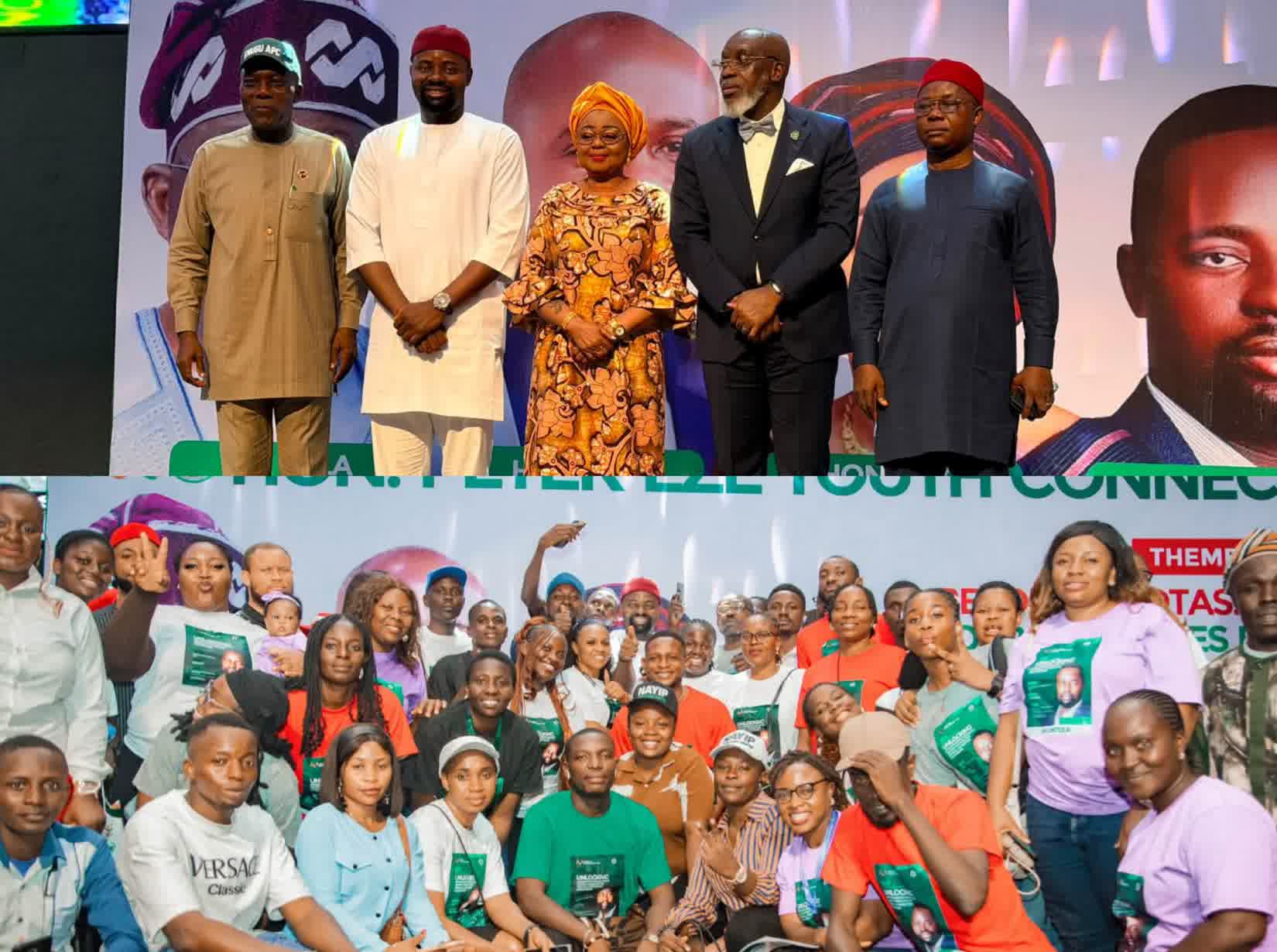
    The call was made at the Peter Eze Youth Connect 2026, held at the International Conference Center, ICC, in Enugu State, organised by the Federal Commissioner representing Enugu State in the Federal Character Commission, Hon. Peter Ogbonna Eze.

    Themed, “Beyond Quotas: Unlocking Opportunities for Enugu Youth Through the Federal Character Commission,” the programme was designed to bridge the information gap between young people and institutions responsible for providing employment, scholarships, grants, training and other opportunities.

    Speaking at the event, Eze said many young Nigerians miss opportunities because of misinformation, limited access to information and the belief that government jobs are predetermined before they are advertised.

    He said, “You can barely get an opportunity you do not apply for”, urging young people not to disqualify themselves through fear or assumptions that available opportunities had already been shared.

    According to him, there are more than 700 Federal Government ministries, departments, agencies, commissions and other establishments offering employment and other opportunities across the country.

    He explained that the Federal Character Commission has a constitutional and statutory responsibility to promote equitable representation across federal institutions.

    Eze also warned youths against falling victim to fraudulent recruitment agents, stressing that legitimate government jobs should not be bought.

    “Anyone asking you to pay for a legitimate government job is asking you to participate in an illegal act and should be reported through the appropriate channels,” he said.

    The commissioner said the initiative was established to go beyond federal employment quotas by exposing young people to grants, scholarships, fellowships, training programmes, entrepreneurship opportunities and other legitimate pathways to personal and economic advancement.

    He described true empowerment as equipping people with “knowledge, skills, information, access and opportunities” rather than merely providing short-term assistance.

    The Executive Chairman of the Federal Character Commission, Hon. Hulayаt Motunrayo Omidiran, in her keynote address, said federal character should not be viewed merely as a system of numerical distribution.

    She said its deeper purpose was to promote equity, inclusion, national cohesion and a sense of belonging among Nigerians.

    Omidiran encouraged Enugu youths to acquire relevant knowledge, develop contemporary skills, embrace technology, build professional networks and actively pursue legitimate opportunities.

    She also warned them to verify opportunities and remain vigilant against fraudulent recruitment schemes and deceptive offers.

    “Equity and merit should never be regarded as contradictory principles,” she said, stressing that competence, discipline, integrity and excellence remained essential for advancement.

    The Enugu State Government, represented by the Secretary to the State Government, Prof. Chidiebere Onyia, commended the organisers for creating a platform that connects young people with opportunities.

    Onyia said the programme went beyond discussions about representation by creating practical pathways for youths to access scholarships, international networks, career guidance and entrepreneurial opportunities.

    He urged participants to make effective use of networking opportunities, stressing that relationships could provide access to ideas, expert advice, career guidance and business opportunities.

    The government representative also highlighted the importance of technology and artificial intelligence, urging young people to focus on acquiring skills that would enable them to compete beyond geographical boundaries.

    The guest speaker, Senator Emmanuel Onwe, spoke on “Career Pathways, Mentorship and Scholarship Opportunities: Navigating the Road to Purpose and Professional Success.”

    He advised young people seeking mentors to prepare themselves by developing their character, intelligence and knowledge before approaching accomplished professionals.

    Onwe also announced scholarship opportunities in the United States for Nigerian youths, including undergraduate programmes in Computer Information Systems, Electronic Engineering Technology and another engineering technology programme.

    Another guest speaker, Roland Oroh, Founder and Director of Agribusiness Register Limited and Manager of the European Union-Nigeria Agribusiness Platform, spoke on “From Learning to Earning: Finding, Accessing and Securing Real Job Opportunities.”

    Oroh highlighted the importance of agriculture and shared insights on entrepreneurship, including his experience in the honey business.

    The event culminated in the selection of five Enugu youths for opportunities to study abroad.

    Three beneficiaries were selected for undergraduate programmes: Michael Uche from Enugu West Senatorial District, Okoro Chineye from Enugu North Senatorial District and Chukwuemeka Chiemere from Enugu East Senatorial District.

    Two others, Ugwuaji Paul and Odo Emmanuel Nnamdi, both from Enugu North Senatorial District, were selected for postgraduate programmes.

    Speaking in a brief interview with a PACESETTER reporter after the event, Eze was asked about plans to expand the initiative beyond the five beneficiaries and create more educational opportunities for young people in Enugu State.

    He said the organisers could not compel beneficiaries who study abroad to return but would continue to provide opportunities and hope they would use them to make a positive impact.

    “We can’t force them to come back. The only thing is to extend the opportunity to them. If they use it well, that’s our prayer. If they don’t, we don’t have control over that,” he said.

    According to him, the initiative was aimed at adding value to the lives of beneficiaries while encouraging them to extend the impact to others.

    “That’s why we say in the Youth Connect, if we connect you, you connect others. Be useful to other people,” Eze added.

    He was also asked about measures to ensure that beneficiaries use the knowledge and skills acquired abroad to contribute to the development of Enugu State.

    Eze said the programme was still at an early stage and that the organisers would assess its impact before expanding it, noting that the level of interest shown by young people had demonstrated the need for the organisers to review the programme, assess its impact and identify ways to improve it in subsequent editions.

    “Now that we have seen our people are interested in adding knowledge, acquiring skills, and also having something to do, we are going to go back, look at what we have done, look at the impact and look on how to improve. So we must improve and do it better next time,” he said.

    The organisers said Peter Eze Youth Connect was conceived to build an informed, confident and opportunity-ready generation of Enugu youths capable of competing, participating and contributing meaningfully to national development.

    The initiative also encouraged beneficiaries to share opportunities with others and use their eventual success to create opportunities for more young people.

  • Chimamanda Adichie Says Son’s Death Changed Her Feelings About Nigeria

    Chimamanda Adichie Says Son’s Death Changed Her Feelings About Nigeria

    Precious Nwonu, Enugu

    Award-winning Nigerian author Chimamanda Ngozi Adichie has revealed that the death of her 21-month-old son, Nkanu, has profoundly changed her feelings towards Nigeria, saying she no longer wants to return to the country.

    Adichie made the disclosure in an interview with The New York Times, where she spoke about the loss of her son and its impact on her relationship with her home country.

    Asked whether Nigeria still felt close to her heart, the author said her feelings had changed following the tragedy.

    “My feelings toward Nigeria have changed,” she said.

    “I do not want to go back to Nigeria.”

    Nkanu, one of Adichie’s twin sons, died in December 2025 following a medical emergency at Euracare, a private hospital in Nigeria.

    According to the author, her son initially developed a fever and was placed on antibiotics by her husband, Ivara Esege. However, when his condition did not improve, the couple took him to the hospital for further medical assessment.

    Adichie said Nkanu was subsequently sedated with propofol for an MRI examination, after which he suffered cardiac arrest and died the following day.

    Recounting the moments surrounding the incident, she said a doctor later approached her in a visibly distressed state and made a statement about the amount of propofol administered to her son.

    “He was very calm and he said to me, ‘Well, look, they gave him too much Propofol.’ Those were his exact words, which I will never forget until the day I die,” she recalled.

    Adichie had earlier raised allegations of medical negligence concerning the treatment her son received at the hospital.

    The circumstances surrounding Nkanu’s death have also become the subject of a coroner’s inquest, with proceedings reportedly involving disagreements and delays between the family and the hospital.

    The hospital has reportedly disputed aspects of the family’s account and accused Adichie and her husband of destroying evidence by cremating their son’s remains, a matter connected to the ongoing proceedings.

    Adichie and her husband have called for improvements in Nigeria’s healthcare system but, according to the report, have not filed a lawsuit against the hospital.

    Reflecting on the possibility of returning to Nigeria, Adichie said her children could be the only reason she might consider coming back.

    She noted that her daughter still considered Nigeria her “happy place.”

    Before Nkanu’s death, Adichie said Nigeria had remained deeply connected to her identity and literary career. She described the country as the place where she received “everything” that helped shape her into a writer.

    However, she said the loss of her son had fundamentally altered that relationship.

    “I mean, it is so surreal, all of this. I still can’t believe we’re talking about my son who died,” she said.

    “You’re going through something, but you also feel like you’re outside of it.”

  • NDLEA Warns Nigerians Against Accepting Unknown Cargoes From Abroad

    NDLEA Warns Nigerians Against Accepting Unknown Cargoes From Abroad

    Precious Nwonu, Enugu

    The National Drug Law Enforcement Agency has cautioned Nigerians against collecting or receiving consolidated consignments from relatives, friends or associates abroad without knowing exactly what the packages contain.

    The agency warned that some Nigerians overseas are allegedly using consolidated cargoes to send illicit drugs into the country while listing unsuspecting family members and friends as consignees.

    The NDLEA Director of Media and Advocacy, Femi Babafemi, issued the warning in a post on X on Sunday, urging Nigerians to exercise caution before agreeing to receive packages on behalf of people abroad.

    According to Babafemi, substances identified as Colorado and Loud, both strains of cannabis, have been discovered in some of the consignments.

    He said recipients who have no knowledge of the contents could still face arrest and prosecution if illegal drugs are found in packages bearing their names.

    Babafemi wrote, “RED ALERT! The new thing now is that some of our ‘abroad’ people are sending home consolidated cargoes contaminated with illicit drugs especially Colorado and Loud, putting their family members and friends as consignees or recipients.”

    He advised Nigerians who were not involved in drug trafficking to decline requests to receive consignments where the contents were unknown.

    He added, “The warning here is, if you’re not part of the syndicate, don’t accept to receive consignments on behalf of your ‘abroad’ brother or sister or friend particularly if you don’t know the full content of the consignment.”

    Babafemi further warned that several people had already been arrested in similar circumstances, noting that NDLEA operatives continued to uncover such consignments during their operations.

    “Many are already behind bars for this and the number keeps increasing with daily operations by @ndlea_nigeria officers. Please heed this warning and save yourself of the jail experience,” he said.

    The warning was accompanied by video footage showing NDLEA operatives opening large black plastic-wrapped packages on a metal table.

    The footage showed clear plastic bags containing yellowish, lumpy substances suspected to be cannabis products being removed from the consignments.

    The latest warning comes as the NDLEA continues its efforts to disrupt international drug trafficking networks and prevent illicit substances from being brought into Nigeria through various routes.

  • ​Energy Transition Milestone Under Dr. Kingsley Udeh: President Tinubu Commissions Africa’s First Barefoot Renewable Energy College – PART 1

    ​Energy Transition Milestone Under Dr. Kingsley Udeh: President Tinubu Commissions Africa’s First Barefoot Renewable Energy College – PART 1

    By Professor Ani Casimir, KC

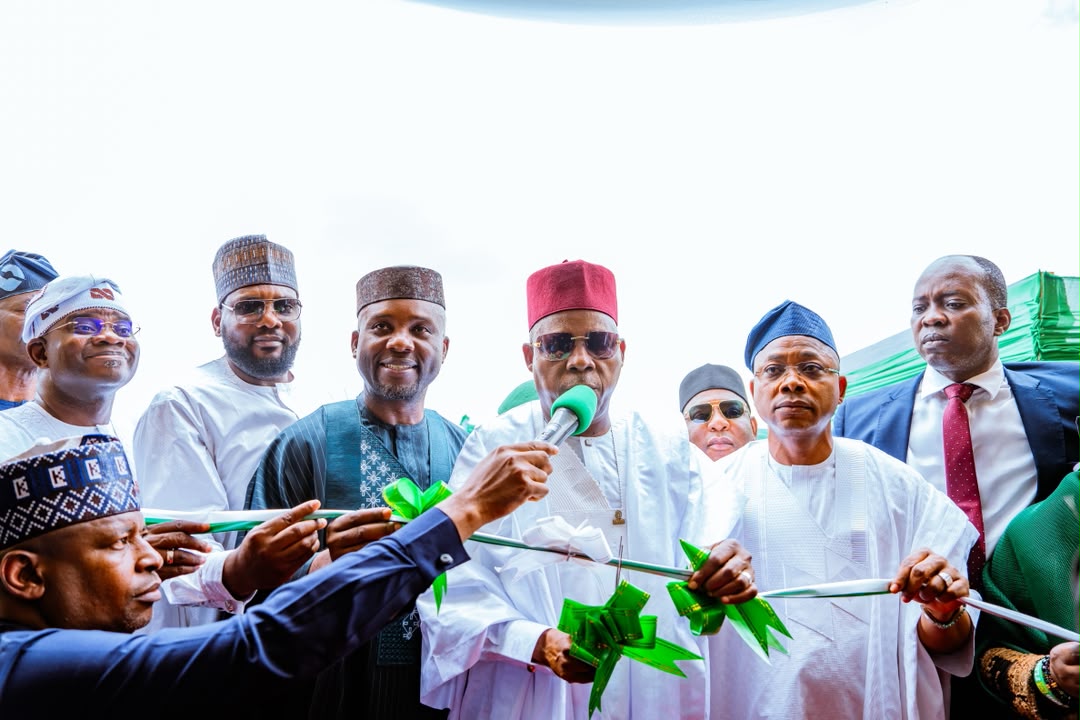
    ​Osara in Kogi State, Nigeria, has turned into another Jerusalem and a history maker for the President Bola Ahmed Tinubu, GCFR, administration in the critical sub-energy sector. The Honourable Minister of Innovation, Science, and Technology is chalking up huge creditable records that are increasing his validity and positive visibility in the eyes of the Presidency—something never witnessed before by his predecessors in office. He is a record breaker, as Osara has made national history under President Tinubu’s watch as the new vista of sustainable energy generation. In a historic leap toward sustainable power and green economic growth, President Bola Ahmed Tinubu, GCFR, has commissioned the Energy Commission of Nigeria (ECN) Complex and the pioneer Barefoot Renewable Energy College in Osara, Kogi State, Nigeria. Described as the first of its kind in Africa, the project stands as a strategic cornerstone of the Federal Government’s commitment to energy security, technical capacity building, and clean energy transition under the Renewed Hope Agenda.

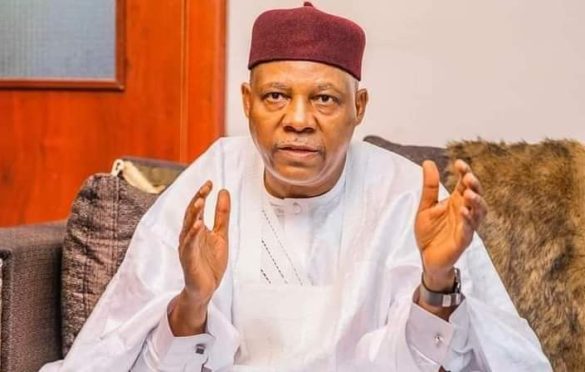
    ​The Honourable Minister waxed poetic as he hailed the commissioning of BARECKS and the Green Hydrogen Pilot Plant, which President Tinubu reaffirmed as a practical manifestation of his commitment to innovation-led development. The elated President Bola Ahmed Tinubu, GCFR, represented by Vice President Senator Kashim Shettima, GCON, commissioned the Barefoot Renewable Energy College (BARECKS) and the Green Hydrogen Research and Demonstration Pilot Plant in Kogi State. The Honourable Minister of Innovation, Science, and Technology, Dr. Kingsley Tochukwu Udeh, SAN, beaming with patriotic pride, described the landmark projects as a bold demonstration of the Federal Government’s commitment to innovation, renewable energy, and sustainable national development. While giving his keynote address at the commissioning ceremony, the Minister said the twin projects reaffirm the Federal Government’s resolve under President Tinubu’s Renewed Hope Agenda to build a knowledge-driven economy where Science, Technology, and Innovation (STI) serve as catalysts for industrialization, job creation, economic prosperity, and sustainable national development. He noted that the Ministry remains focused on translating research into practical solutions, innovation into commercial opportunities, and scientific discoveries into national wealth.

    ​The National Strategic Investment for a Sustainable Energy Future

    ​Highlighting the transformative vision behind this historic development, the Honourable Minister of Innovation, Science, and Technology, Dr. Kingsley Tochukwu Udeh, SAN, described the complex as a strategic national investment designed to bridge Nigeria’s technical skills gap and power its renewable energy infrastructure. “The Energy Commission of Nigeria Complex and the Barefoot Renewable Energy College perfectly align with and project the Renewed Hope Agenda of Mr. President,” Minister Udeh stated after the successful commissioning of the Osara Energy Project. “It will promote job creation, economic diversification, improved energy access, poverty reduction, and sustainable development.”

    ​The Barefoot Renewable Energy College is structured to deliver hands-on, practical training in solar technology, biomass, and other decentralized renewable platforms. By equipping technicians, youth, and rural innovators with market-ready skills, the institution will nurture and sustain a massive concentration of an indigenous workforce capable of installing, maintaining, and scaling clean energy systems across West Africa. The Honourable Minister and the Presidency have spent quite some time ensuring that everything is in place for the success of the commissioning. Now that it has taken place, we need to highlight the insider details of this strategic breakthrough in Nigeria’s sustainable renewable energy institutionalization.

    ​Key Highlights of the Osara Complex

    ​1) Each facility and unit in the College is an innovative project initiative with core functional impact for Nigeria’s technological transformation and development. Nigeria is on the move in Africa as a core driver of technological innovation. A conceptual clarification of the complex’s separate units will illustrate this strategic benchmark with the Osara College curriculum layout:

    ​2) Barefoot Renewable Energy College: Practical vocational training in solar, biomass, and renewable technologies to build a skilled workforce.

    ​3) Green Hydrogen Research & Demonstration Pilot Plant: Decentralized green hydrogen testing as a clean alternative to diesel generators.

    ​4) National “Research to Revenue” Alignment: Translating home-grown indigenous scientific innovation into commercialized, market-driven energy solutions.

    ​5) Net-Zero 2060 Commitment: Targeting greenhouse gas reduction across the industrial, transportation, and power sectors.

    ​Pioneering Green Hydrogen Innovation

    ​The four core functional areas go beyond vocational training. A technical layout identifies the Osara complex’s technological innovative energy project that houses the Green Hydrogen Research and Demonstration Pilot Plant. The facility serves as a testing ground for decentralized green hydrogen systems—a zero-emission alternative designed to offset heavy reliance on diesel generators, particularly in regions with fragile grid infrastructure. Dr. Udeh emphasized that diversifying Nigeria’s energy mix with green hydrogen directly advances the country’s pledge to attain net-zero carbon emissions by 2060. The Ministerial vision mirrors the President’s Renewed Hope vision that cascades to many functional divisions: first, the Barefoot Energy College, and second, the Green Hydrogen Facility. In the first place, the Barefoot College will generate and activate practical training, workplace upskilling, and local technical assembly. On the other hand, the Green Hydrogen Facility will establish a diesel alternative for Nigeria, increase grid stabilization, and help Nigeria achieve the 2060 net-zero target set by Mr. President.

    ​As the Honourable Minister, Dr. Kingsley Tochukwu Udeh, SAN, assured: “Osara will empower Nigeria and Mr. President to achieve this strategic energy target for the nation.”

    ​…to be continued in the next part.

  • Gov. Otti Hails Gov. Mbah on Honorary Doctorate from University of East London

    Gov. Otti Hails Gov. Mbah on Honorary Doctorate from University of East London

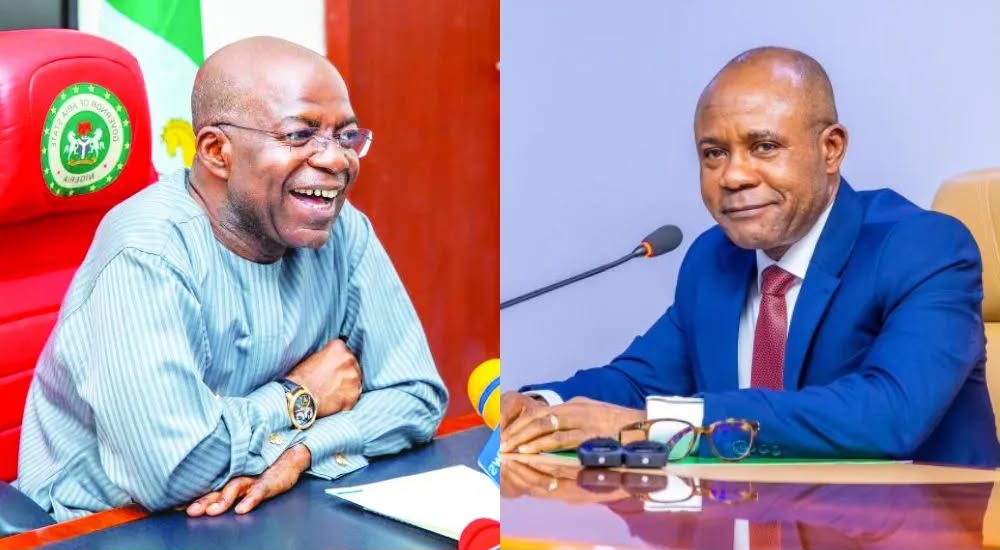
    Abia State Governor, Dr. Alex C. Otti, OFR, has congratulated his Enugu State counterpart, Dr. Peter Mbah, on the conferment of an honorary Doctor of Law degree by the University of East London, United Kingdom.

    The university conferred the Doctor of Law degree, honoris causa, on Mbah in recognition of his contributions to governance and public service.

    In a congratulatory message issued by his Chief Press Secretary, Ukoha Njoku Ukoha, on Friday, Otti described the honour as a well-deserved recognition of Mbah’s leadership and commitment to the development of Enugu State.

    “Your Excellency, this honour from the University of East London is a testament to the impact of your administration in Enugu State,” Governor Otti stated.

    According to Otti, the university’s recognition of Mbah’s investment in education and his philosophy that “education is fundamentally the cornerstone of human progress, the bedrock upon which the future stands” underscores the relevance of the honour.

    The Abia governor said the award also reflected the confidence reposed in Mbah and the progress recorded in Enugu State under his administration.

    “As leaders in the South East, we share a common vision to rebuild our region and make it a hub of commerce, industry and innovation in Nigeria. Your commitment to good governance is encouraging,” Governor Otti said.

    Otti expressed hope that the honour would motivate Mbah to greater service to Enugu State and Nigeria, while wishing him continued wisdom, strength and success in steering the affairs of the state.

  • Nkanu East 2026: APC’s Ogbuekwe Gains Momentum, Wins Support Across Seven Communities

    Nkanu East 2026: APC’s Ogbuekwe Gains Momentum, Wins Support Across Seven Communities

    The chairmanship campaign of the All Progressives Congress (APC) candidate in Nkanu East Local Government Area, Hon. Chief Engr.

    Mike Chikosolu Ogbuekwe, popularly known as Mmiri Ọma Na Nkanu, has continued to gain grassroots momentum, with communities across the council area declaring support for his candidacy and the APC ahead of the September 26 local government election.

    The latest mobilisation took Ogbuekwe and his campaign train through Nara, Mburumbu, Nomeh, Ohuani/Onicha Agu, Amechi Idodo, Orukwu and Umuode, where residents, community leaders, party stakeholders, women and youth groups turned out to receive the candidate and express support for his ambition.

    The campaign stops also became platforms for stakeholders to canvass support for Governor Peter Ndubuisi Mbah and other APC candidates ahead of the 2027 general elections, with speakers repeatedly citing the governor’s development record as a reason for their continued support for the party.

    In Nara, residents of Ward 1 and Ward 2 defied torrential rain to receive the campaign train, with community and political leaders describing the gatherings as an opportunity to acknowledge the impact of the Mbah administration and rally support for Ogbuekwe.

    At Ward 1, the APC Ward Chairman, Dr. Kenechukwu Nnamani, declared the ward’s support for the APC and its candidates.

    Other stakeholders, including Rt. Hon. John Nwankwo and Hon. Williams Chukwu, also welcomed the campaign delegation. Chukwu pledged his support for Ogbuekwe and the APC and announced a donation of ₦100,000 towards the campaign. Barr. Chief Joshua Mbah also presented a ram in support of the campaign.

    The Nkanu East APC Chairman, Hon. Abel Igwe, popularly known as Agege, urged the electorate to support Ogbuekwe and the APC councillorship candidates on September 26, while calling for continued support for Governor Mbah and other APC candidates in 2027.

    He subsequently presented the APC flag to the party’s councillorship candidate for Nara Ward 1, Hon. David Nwoye.

    Addressing the gathering, the Director-General of the Mmiri Ọma Campaign Council, Hon. Prince Chukwuemeka Nwatu, urged residents to support the APC candidates across the ballot, including Ogbuekwe, Governor Mbah, Senator Kelvin Chukwu, Rt. Hon. Nnolim Nnaji and Hon. Okey Mbah.

    Ogbuekwe, while thanking the people for turning out despite the rain, said Governor Mbah’s development initiatives had raised expectations of what political leadership should deliver.

    “We are going to copy what Peter Mbah is doing in Enugu State and paste it in Nkanu East,” he said.

    He promised to pursue greater development across the local government if elected and urged the people to support APC candidates at the state and national levels.

    At Nara Ward 2, the campaign also received a strong turnout despite the weather. Former Deputy Governor of Enugu State, His Excellency Bishop Ralph Nwoye, the Governor’s Senior Special Assistant on Market Liaison, Hon. Dr. Chinedu Mbah, and other political and community leaders joined the engagement.

    The Ward Chairman, Hon. Chinonso Chukwu, declared the ward’s support for the APC, while other stakeholders, including Hon. Femi Okube, Mrs. Chinelo Okafor and Hon. Chidi Edenta, praised Governor Mbah’s development initiatives and expressed support for Ogbuekwe.

    The President-General of Nara, Chief Emmanuel Edeani, also pledged support for the APC candidates.

    From Nara, the campaign moved to Mburumbu and Nomeh, where similar declarations of support greeted the APC candidate.

    At Mburumbu, the Ward Chairman, Hon. Emmanuel Eze, urged party members and stakeholders to work together for victory in the September council election and sustain mobilisation ahead of 2027.

    The Commissioner for Innovation, Science and Technology, Engr. Prince Lawrence Eze, welcomed the campaign on behalf of community stakeholders and expressed confidence in the readiness of Mburumbu residents to support Governor Mbah and the APC at the polls.

    The APC flag was presented to the Mburumbu Ward councillorship candidate, Hon. Uchechukwu Nweke, by the Nkanu East APC Chairman.

    The ALGON Chairman, Enugu State, and Executive Chairman of Nkanu East LGA, Hon. Sydney Okechukwu Edeh, described Nkanu East as “totally and 100 per cent APC” and endorsed Ogbuekwe for the chairmanship.

    He said Ogbuekwe had demonstrated competence and capacity through responsibilities handled under the Mbah administration and would, if elected, continue the development direction of the state government.

    At Nomeh, the Secretary to Nkanu East Local Government, Rev. Felix Okoye, expressed confidence in the APC’s prospects, while the ward chairman and other stakeholders reiterated their support for the party.

    Mazi Uche Anichukwu, Senior Special Assistant to the Governor on Media and External Relations, highlighted development projects and initiatives in the area, including the planned agricultural project around the Nomeh-Unateze axis.

    The APC flag was subsequently presented to the Nomeh Ward councillorship candidate, Hon. Kenneth Nwankwo.

    Community leaders and stakeholders at the gathering declared their support for the APC, with the event repeatedly echoing the declaration, “Nomeh 100 per cent APC.”

    The campaign subsequently moved to Ohuani/Onicha Agu, Amechi Idodo, Orukwu and Umuode, where Ogbuekwe again received a warm reception and further endorsements.

    At Ohuani/Onicha Agu, the former Chairman of Nkanu East Local Government Area, Chief Hon. Ikechukwu Ubagu, presented a ₦1 million donation to Ogbuekwe on behalf of stakeholders and residents.

    Ubagu also pledged the ward’s support for Ogbuekwe in the September 26 council election and assured that the community would support APC candidates in the 2027 general elections.

    The endorsement was largely linked by speakers to Governor Mbah’s development record, with stakeholders citing infrastructure and other government interventions as reasons for their support for the APC.

    At Amechi Idodo/Orukwu, the member representing Nkanu East Constituency in the Enugu State House of Assembly, Hon. Okey Mbah, commended residents for their turnout and solidarity.

    The APC Chairman in Nkanu East, Abel Nwigwe, said the campaign was also an opportunity for communities to assess and acknowledge the development direction of the state government.

    Prof. Hyginus Banko Okibe, Executive Chairman of the Enugu State Universal Basic Education Board (ENSUBEB), described Ogbuekwe as an educated, tested and trusted candidate, while pledging his support for the APC candidate and Governor Mbah.

    The Director-General of the Mmiri Ọma Campaign Organisation, Prince Chukwuemeka Nwatu, also canvassed support for Ogbuekwe, citing his experience and professional background.

    Across the communities, Ogbuekwe presented a consistent development message, promising to replicate what he described as the Mbah administration’s development model at the local government level.

    He identified infrastructure, agriculture, human capital development and security as areas of priority, while also promising to support youth development, market development and other grassroots initiatives.

    Ogbuekwe said the APC’s nomination had provided an opportunity to bring the governor’s development philosophy closer to the people of Nkanu East.

    He also pledged to work with Nara indigenes in the diaspora towards the development of Nara Market and other community initiatives.

    At the different campaign stops, he repeatedly urged residents to support other APC candidates, including Hon. Okey Mbah for the State House of Assembly, Rt. Hon. Nnolim Nnaji for the House of Representatives, Senator Kelvin Chukwu for the Senate and Governor Peter Mbah.

    He also referenced a pledge by Nnolim Nnaji to facilitate one transformer for each ward in Nkanu East.

    The campaign engagements have consequently transformed into a broader mobilisation effort, combining the September 26 local government contest with efforts to strengthen the APC’s grassroots structure ahead of the 2027 general elections.

    For Ogbuekwe, the repeated endorsements, public declarations and the ₦1 million campaign donation represent signs of growing grassroots acceptance. For the APC, the engagements provide an opportunity to test the strength of its organisation across communities before the council poll.

    But while campaign rallies can demonstrate enthusiasm and political organisation, the ultimate test remains the ballot.

    With September 26 drawing closer, Ogbuekwe and the APC have secured public declarations of support in several Nkanu East communities. Whether those declarations translate into votes will be determined when the people head to the polls.

  • Shettima Leads Nigeria’s BRICS Engagement in India

    Shettima Leads Nigeria’s BRICS Engagement in India

    Precious Nwonu, Enugu

    Vice President Kashim Shettima has arrived in New Delhi, India, to represent President Bola Tinubu at the 18th BRICS Leaders’ Summit as Nigeria seeks to strengthen economic, trade and diplomatic ties with countries within the bloc.

    The summit, which is being held under the theme, “Building Resilience, Innovation, Cooperation and Sustainability,” is expected to provide Nigeria with opportunities to attract investment and expand cooperation in key areas of the economy.

    Shettima is leading a Nigerian delegation that includes the Minister of Foreign Affairs, Bianca Odumegwu-Ojukwu; Minister of Industry, Trade and Investment, Jumoke Oduwole; Minister of Communications, Innovation and Digital Economy, Bosun Tijani; and Minister of Environment, Balarabe Abbas Lawal.

    Ahead of the summit, Odumegwu-Ojukwu said Nigeria would use its participation to pursue new partnerships and investment opportunities in agriculture, technology, artificial intelligence, trade and the digital economy.

    She said Nigeria was particularly interested in learning from India’s experience in using technology and artificial intelligence to create opportunities for its large youth population.

    “India is firm in its expertise in agriculture and, of course, even in the digital economy. In fact, prior to this, we had a session dealing with women in the digital economy and artificial intelligence, and we are leveraging India’s greatest strength, which is in the engagement of its youth population,” she said.

    Oduwole also said the Federal Government was seeking to strengthen Nigeria’s trade relationship with India, which she said had previously reached about $14 billion.

    According to the minister, major Indian investors had expressed interest in meeting with the Nigerian delegation, while Nigeria also maintains significant trade relationships with other BRICS countries.

    “And so, deepening those relationships will further strengthen the Renewed Hope Agenda of President Bola Ahmed Tinubu’s administration. India used to buy Nigerian oil quite a lot, so we are looking at how to expand that with everything going on in the world,” Oduwole said.

    At the summit, Shettima is expected to join leaders of BRICS member and partner countries and representatives of invited international organisations for discussions on global growth, resilience, innovation and sustainable development.

    The Vice President is also expected to hold bilateral meetings aimed at advancing Nigeria’s interests in trade, investment, agriculture, technology and industrial development.

    Nigeria became a BRICS partner country in January 2025, providing the country with an additional platform to strengthen South-South cooperation and deepen engagement with major emerging economies.

    The Nigerian delegation will also participate in the BRICS open session and other activities scheduled alongside the summit.