Author: Editor

  • Macron Hosts Tinubu to Private Dinner at Élysée Palace

    Precious Nwonu, Enugu

    French President Emmanuel Macron on Thursday hosted President Bola Tinubu to a private dinner at the Élysée Palace in Paris as both countries seek to deepen bilateral relations.

    The meeting was disclosed on Friday by the Special Adviser to the President on Information and Strategy, Bayo Onanuga, in a post on his verified X account.

    Onanuga said the dinner reflected the longstanding relationship between Nigeria and France and the two countries’ interest in expanding cooperation.

    “French President Emmanuel Macron received President Bola Ahmed Tinubu for a private dinner Thursday night at the Élysée Palace, reflecting the enduring relationship between Nigeria and France and their shared commitment to strengthening bilateral cooperation,” he said.

    The engagement comes during Tinubu’s second leg of his three-week annual leave in Europe. The President arrived in Paris on September 13 after spending the first part of his holiday in London.

    Tinubu had departed Abuja on August 30 for the break, with the Presidency saying he would return to Nigeria at the end of the vacation to resume official duties and participate in preparations for the 2027 general election.

    The dinner adds to a series of high-level engagements between Tinubu and Macron since the Nigerian President assumed office in May 2023.

    Tinubu visited Paris in June 2023 to attend the Summit for a New Global Financial Pact, where he met with Macron.

    The French government also hosted Tinubu for a state visit on November 28 and 29, 2024. During the visit, both countries signed declarations of intent covering economic cooperation, sustainable investment, critical minerals, banking, and the creative and cultural industries.

    Nigeria and France have also expanded cooperation in areas including trade, investment, security, energy, innovation and culture.

    France’s development agency, Agence Française de Développement, has invested more than €3 billion in Nigeria since 2010, according to the French government, with projects implemented across 26 states.

    The latest meeting also comes ahead of an expected visit to Nigeria by Macron.

    French Ambassador to Nigeria and ECOWAS, Marc Fonbaustier, said in July that the French President was expected to visit Nigeria in the autumn.

    According to the ambassador, the visit would provide an opportunity for both leaders to assess progress under the existing bilateral roadmap and identify additional areas of cooperation.

    The Tinubu-Macron engagement therefore provides another opportunity for Nigeria and France to sustain discussions on their economic, diplomatic and strategic partnership.

  • 2027: Obi-Kwankwaso Movement Unveils 59-Member Campaign Council

    2027: Obi-Kwankwaso Movement Unveils 59-Member Campaign Council

    Precious Nwonu, Enugu

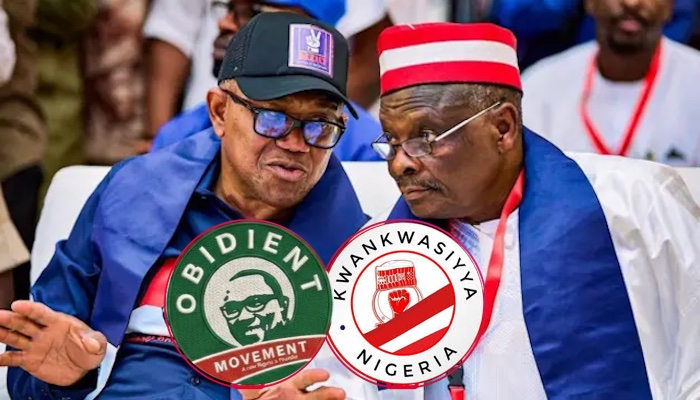
    The Obi-Kwankwaso Movement has constituted a 59-member Presidential Campaign Council as it steps up preparations for the 2027 general elections.

    The council, unveiled on Thursday, comprises zonal and state coordinators, as well as directors overseeing mobilisation, women affairs, strategy, security, legal affairs, administration, procurement, information technology and other areas.

    The structure covers Nigeria’s six geopolitical zones and the Federal Capital Territory, with coordinators appointed for the 36 states.

    John Ughulu, the movement’s Director-General, will lead the campaign council as Director-General, while National Secretary Saadatu Sani is also part of the leadership.

    The six zonal coordinators are Suleiman Abubakar for the North-Central, Hashimu Dungurawa for the North-West, Amadu Gwambe for the North-East, Dr Adebayo Adefolaseye for the South-West, Christopher Ighodaro for the South-South and El-Shaddai Ikeh for the South-East.

    The movement also appointed Ibrahim Jabir as coordinator for the Federal Capital Territory, alongside coordinators for the 36 states.

    Other members of the campaign council include Sabo Gashua as Director of Grassroots Mobilisation, Glory Adayi as Director of Women Affairs, Kabir Yahaya as Director of Contact and Engagement, and Abdumumini Tijjani as Director of Mobilisation.

    Yusuf Mani was appointed Director of Special Duties, while Peace Daful will oversee Procurement. Prof Charles Nwekeaku was named Director of South-Eastern Town Hall, with Sunmisola Adebayo appointed Director of Information Technology.

    Kingdom Okere will head Legal Affairs, Abiodun Dabiri will oversee Strategy and Planning, while retired CSP Richard Enemona was appointed Director of Security and Intelligence. Aisha Abdulrahaman will serve as Director of Administration.

    In a message to the newly appointed members, Sani described their selection as a responsibility to serve the country and urged them to take the movement’s message to communities across Nigeria.

    She said the council would be expected to communicate the movement’s message from the state level down to local government areas, wards and communities.

    Sani added that the movement was driven by a national vision rather than the personal interests of individual politicians.

    She said the campaign council would require discipline, strategic thinking, grassroots mobilisation and effective communication to carry out its assignment.

    The movement said the council was established as part of efforts to strengthen its nationwide organisation and coordinate activities ahead of the 2027 elections.

    The development follows the movement’s earlier decision to retain its independent organisational structure rather than merge with another political organisation ahead of the election.

  • 2027: Igwesi Named Enugu Coordinator of Renewed Hope Ambassadors

    2027: Igwesi Named Enugu Coordinator of Renewed Hope Ambassadors

    Frontline politician and Chairman of the New Enugu Smart City Development Authority, Rt. Hon. USA Igwesi, has been appointed the Enugu State Coordinator of the Renewed Hope Ambassadors, in a move expected to strengthen the mobilisation and grassroots coordination of the President Bola Ahmed Tinubu administration’s Renewed Hope agenda in the state.

    The appointment, approved by President Tinubu following his nomination by the Enugu State Governor, Dr. Peter Mbah, was conveyed in an official letter signed by the Director-General of the Renewed Hope Ambassadors, Governor Hope Uzodimma, which said Igwesi’s appointment was in recognition of his commitment, capacity, and alignment with the vision and objectives of the organisation.

    The letter stated: “This appointment is in recognition of your commitment, capacity, and alignment with the vision and objectives of the Renewed Hope Ambassadors. In this role, you will be responsible for coordinating activities within your State, mobilizing stakeholders, promoting the ideals of the initiative, and ensuring effective implementation of programmes at the grassroots level.”

    Rt. Hon U.S.A Igwesi
    Rt. Hon U.S.A Igwesi

    Igwesi, a former Majority Leader of the Enugu State House of Assembly and former Member of the House of Representatives for Nkanu East and West Federal Constituency, will coordinate and supervise the organisation’s state-level activities, mobilise support and partnerships, promote its objectives and values, and maintain effective communication and reporting with the National Secretariat, according to the letter.

    The Renewed Hope Ambassadors, which has its headquarters in Abuja, urged the new State Coordinator to discharge his responsibilities with integrity and diligence and in a manner that upholds the reputation of the organisation.

  • CSDA Takes Community Sensitisation, PRA to Six Nkanu West Communities

    CSDA Takes Community Sensitisation, PRA to Six Nkanu West Communities

    …Residents, traditional rulers commend Mbah’s rural development drive

    The Enugu State Community and Social Development Agency (CSDA) has taken its community sensitisation and Participatory Rural Appraisal (PRA) exercises to six communities in Nkanu West Local Government Area, with residents and traditional rulers commending Governor Peter Mbah’s administration for its focus on grassroots development.

    The exercise, led by the General Manager/Chief Executive Officer of CSDA, Monday Diamond Ani, is aimed at identifying and documenting beneficiary communities while enabling residents to participate directly in identifying and prioritising their development needs.

    As part of the exercise, elections and inaugurations of Community Project Management Committees (CPMCs) were conducted in the newly identified communities.

    The CSDA team visited Enuagu Amurri, Omuoha Obuoffia, Enuagu Akpugo, Eziokwe Amurri, Umueze Awkunanaw and Ndiagu Obuoffia.

    At Enuagu Amurri, the traditional ruler, His Royal Highness, Igwe Charles Nwoye, Obu Oha 1 of Amurri Ancient Kingdom, received the team and commended CSDA’s community-driven approach to rural development.

    Nwoye also expressed appreciation to the state government for its attention to grassroots development.

    At Omuoha Obuoffia, the team was received by His Royal Majesty, Igwe Obiora Igwesi, the traditional ruler of the community; Rt. Hon. USA Igwesi, a former member of the House of Representatives; the President General, Chidi Ugwu; alongside other residents.

    Igwesi said the community had maintained a cooperative relationship with CSDA over the years, noting that the Agency’s interventions in the area predated the current exercise.

    The traditional ruler of Umueze Community, HRM Igwe Dr. Emeka Ani, also expressed appreciation to Governor Mbah for what he described as his administration’s performance and for including the community in its development efforts.

    Similarly, His Royal Highness, Igwe Ikechukwu Nnaji of Enuagu Akpugo, thanked the governor for bringing a water project to the community after, according to him, almost 30 years of waiting for government intervention.

    Speaking during the exercise, Ani said the programme would also create opportunities for beneficiaries to receive livelihood support for micro-businesses.

    He said Governor Mbah was committed to rural development and prompt intervention in communities, particularly through projects identified by residents as their most pressing needs under Phase 2.0 of the NG-CARES programme.

    Ani urged members of the CPMC to remain transparent, committed and accountable in managing the responsibilities entrusted to them by their communities.

    He said sustainable community development requires people genuinely committed to humanitarian service and concerned about the welfare of vulnerable members of society.

    The CSDA’s community sensitisation and PRA exercise is part of its broader effort to ensure that communities participate actively in determining the projects and interventions that address their most pressing developmental needs.

  • Obi’s SSG Obaze speaks on Anambra debt controversy

    Obi’s SSG Obaze speaks on Anambra debt controversy

    Oseloka Obaze, the former Secretary to the Anambra State Government under Peter Obi has broken his silence on the renewed controversy over the financial position of the state when the former governor handed over power to Willie Obiano in 2014.

    The former SSG, who said he was personally present when Obi signed the handover documents on March 17, 2014, also disclosed that he witnessed Obiano receiving and acknowledging his copy of the documents, including certified bank statements and the handover report.

    The development comes amid a fresh dispute between Obi and the Charles Soludo administration over loans and other financial obligations allegedly inherited from previous administrations.

    The Anambra State Government had recently said it was still servicing loans incurred under previous administrations, including those of Obi and Obiano. The state Commissioner for Finance, Izuchukwu Okafor, said deductions were still being made from the state’s federal allocation to service the obligations.

    But Obi has rejected the claim, maintaining that he left office without outstanding debts relating to salaries, pensions, gratuities and certified projects.

    Amid the renewed controversy, the former SSG said he had firsthand knowledge of the 2014 handover and insisted that the financial documents presented to Obiano clearly contained details of the state’s assets and liabilities.

    According to him, the handover documents listed the financial position of the state, including funds and investments held by the government at the time Obi left office.

    A copy of the handover report released this week by the National Coordinator of the Obidient Movement, Yunusa Tanko, showed figures including ₦27 billion in local investments, $156 million in foreign currency investments valued at ₦26.5 billion, ₦28.166 billion in certified state and MDAs balances, and a ₦10 billion Federal Government refund.

    The document put the total listed balances at ₦91.666 billion and estimated liabilities at ₦5 billion, leaving a stated net balance of ₦86.666 billion.

    The former SSG also recalled the 2017 Anambra governorship debate organised by Channels Television, where he said Obiano was questioned over the financial records he received from his predecessor.

    He said Obiano, who was a certified accountant and auditor, had acknowledged during the debate that some funds were indeed available, while questioning the rationale behind keeping money when there was work to be done.

    The former SSG further referred to an account attributed to former Taraba State Governor, Darius Ishaku, who he said had disclosed that Obiano told him that Obi left substantial funds which helped his administration undertake the construction of the Anambra Airport at Umueri.

    He also cited former banker and now Abia State Governor, Alex Otti, who publicly said in 2022 that Obi left at least $155 million for his successor. Otti said he was involved in helping Obi secure Eurobonds while he was managing director of Diamond Bank and that some of the investments had maturities extending to later years.

    The latest intervention has added another dimension to the long-running argument over what Obi actually handed over to Obiano in 2014.

    While Obi’s camp has pointed to the handover documents and investments as evidence that the state had substantial resources at the time, successive reports and statements from the Obiano and Soludo administrations have maintained that the state inherited significant financial obligations.

    In 2015, the Obiano administration put the inherited debt burden at about ₦185 billion, a figure disputed by Obi’s camp.

    The current Anambra administration has also released records which it said showed that Obi’s administration contracted eight external loans between 2007 and 2013, with an original value of about $123.77 million. The government said part of the loans remained outstanding.

    The competing claims have therefore centred on a key question: whether the assets and investments recorded in Obi’s 2014 handover documents adequately offset the financial obligations associated with the state at the time.

    For Obi’s former SSG, however, the fact that the handover documents were presented, received and acknowledged by the incoming administration remains central to the dispute.

    He consequently questioned why the financial position documented at the point of transition should continue to generate controversy more than a decade after the handover.

    “During the nationally televised Anambra 2017 governorship debate on Sunday, 12, November 2017, organized by Channels Television, Gov Willie Obiano asserted surprisingly that there were no funds left by the Obi Administration.

    “I recall asking him on national television how, as a certified accountant and auditor, he would sign off and accept financial documents, for which he now was expressing reservations. He then publicly acknowledged for the first time that some specified funds were in place and asked what was the use of saving money, when there was work to be done. As Gov. Darius Ishaku of Taraba would later confirm to members of the Nigerian press corps, Gov. Obiano had disclosed to him that his predecessor (Gov. Obi) had indeed left huge sums, which enabled him to independently build the Anambra Airport at Umueri.

    If Gov. Obiano, to whom Peter Obi handed over in 2014, would eventually acknowledge – implicitly and explicitly – that Gov. Peter Obi indeed left the stipulated funds, a fact that was also publicly corroborated by Gov. Alex Otti, in his capacity as an ex-banker, what then, one may ask, is the beef and grouse of the incumbent Anambra State Government?”, he queried. Tribune

  • Before We Ask The Police To Die For Us

    Lanre Olagunju
    Lanre Olagunju

     By Lanre Olagunju

    There is something curious about the Nigerian relationship with the police. We complain about them. We criticise them. We film them. We sometimes mock them. But when the armed robbers arrive, we call the police. When kidnappers invade a community, we call the police. When violence breaks out at night, when a missing child needs to be found or when an armed criminal is on the loose, the same institution many Nigerians love to hate suddenly becomes the institution we expect to save us.

    But what do we owe those we ask to protect us?

    Nigeria has lost police officers repeatedly this year while they were doing the job we expect them to do. Since March, publicly reported incidents alone show at least 21 police officers killed in eight separate operational incidents that I could verify.

    DownloadInteractive Maps


    Two officers were killed at a border checkpoint in Kebbi in March. Four died while repelling a terrorist attack in Borno in April. Three Explosive Ordnance Disposal officers were killed by an IED in Zamfara in June. Two were killed at a checkpoint in Rivers, while another two died following a patrol crash in Imo. Two more police officers were killed in Zamfara in July.

    Then came Benue. Four Mobile Police officers were killed defending Ayilamo on 10 September. Four days later, two newly deployed officers were killed in an ambush while escorting the Divisional Police Officer back to the community. That is six policemen dead in one community within days.

    These are not numbers on a spreadsheet. They had names. They had parents. They had wives. They had children who will now grow up with stories about fathers who left home to work and did not return.

    Consider the three EOD officers killed in Zamfara in June. Superintendent Abdulrazak Musa Hassan, Inspector Murtala Musa and Inspector Auwal Ahmad were part of a team responding to a suspected explosive device planted along the Anka-Bagega road. Their mission was to clear a route made dangerous by an IED. The device exploded before they could neutralise it.

    This is one of those jobs that most of us would rather not imagine doing. Someone has to approach the bomb. Someone has to inspect it. Someone has to decide how to make it safe. And sometimes, that someone does not come home.

    The tragedy is that we can become so accustomed to hearing about dead policemen that the  news barely stops us anymore. Perhaps that is part of the problem.

    AccessPremium News


    We should be careful here. Respecting the police does not mean pretending every police officer is innocent, professional or beyond criticism. They are not. Where officers abuse their powers, citizens must be able to speak up, document wrongdoing and seek justice.

    That distinction matters in the current argument about filming police officers. The Inspector-General of Police, Olatunji Disu, recently said Nigerians should not turn policemen into social-media skits, describing indiscriminate filming as demoralising. But he also acknowledged that citizens have the right to record officers performing their duties in public. The NBA President, Oyinkansola Badejo-Okusanya, similarly supported the right to record officers while calling for clearer boundaries around privacy and accountability.

    That seems like the sensible conversation. A citizen should be able to document misconduct. But should a policeman who is risking his life in a dangerous operation also become entertainment because someone happened to have a smartphone?

    There is a difference between accountability and humiliation. There is also a difference between criticism and contempt.

    There is another part of this conversation that Nigerians can influence directly: welfare.

    DownloadInteractive Maps


    A police officer who spends a significant portion of his salary getting to work is carrying a burden before the shift even begins. This is why the recent Lagos initiative is worth watching. The state has provided 2,000 Cowry Cards giving police officers three months of free access to BRT, rail and electric boat services, followed by a proposed 50% fare discount.

    That is not a substitute for better policing. It is not a reward for misconduct. It is simply recognition that welfare and performance are connected.

    The private sector can do more. Air Peace, for example, has been acknowledged by the police for providing rebates and special boarding arrangements for officers.

    Why not extend the idea? Why should a serving police officer not receive modest discounts at selected pharmacies, supermarkets, transport companies, bookshops or educational institutions?

    Why should companies not create scholarship schemes for children of officers who die in service?

    The Police Officers’ Wives Association (POWA), under the leadership of the president, Olufunmilola Disu, has already shown what is possible.

    Through a partnership with the Niger Delta Development Commission (NDDC), it secured a $200,000 master’s scholarship programme for five children of police officers to study in the United Kingdom. It has also supported scholarships, nursing education, medical outreaches and welfare programmes for families of police officers.

    These gestures matter because a policeman does not leave his family behind when he puts on his uniform. He carries them with him. And when he dies, they remain.

    Perhaps Nigerians need a new phrase. Not because the police should be above scrutiny, but because those who serve should not be beneath appreciation.

    Thank an officer. Support an officer. Demand professionalism from an officer. Report an officer who abuses power. Protect the right of citizens to demand accountability. But also remember that the person standing at that checkpoint is human.

    In America, “Thank you for your service” is often used for members of the armed forces and security services. Nigeria need not copy another country’s culture wholesale. But we could borrow the principle.

    Before we ask the police to sacrifice everything for the country, perhaps we should ask ourselves a simpler question: What are we doing to make it worth their while to keep standing between us and danger?

    Because a country cannot endlessly demand courage from people it refuses to honour.

    And if we want better policing, perhaps the first step is not simply asking the police to do better. Perhaps it is also asking whether we, as a society, are doing enough to help them do better.

    Lanre Olagunju wrote in from Abuja

  • Workers demand 40% allowance, promotion arrears, warn of rising tension

    Workers demand 40% allowance, promotion arrears, warn of rising tension

    Precious Nwonu, Enugu

    The Joint National Public Service Negotiating Council, Trade Union Side, has urged the Federal Government to implement the 40 per cent peculiar allowance for civil servants and pay outstanding promotion arrears owed to workers.

    The council made the demand in a letter to the Minister of Finance and Coordinating Minister of the Economy, Taiwo Oyedele, warning that prolonged delays could heighten dissatisfaction among public servants.

    The workers specifically demanded the payment of promotion arrears for batches seven and nine, which they said were still being processed.

    The letter, signed by the council’s National Secretary, Olowoyo Gbenga, acknowledged the Federal Government’s recent payment of two months’ outstanding wage award.

    The council, however, said the payment did not resolve other outstanding issues raised during a meeting between its leadership and Oyedele on August 5, 2026.

    The workers recalled that they had earlier written to the minister on July 9, drawing attention to the delayed implementation of the 40 per cent allowance and unpaid promotion arrears.

    They commended Oyedele for responding to their concerns and implementing the agreement reached on the outstanding wage award.

    The council said the two months’ wage award was paid within the agreed timeline, before August 15, 2026.

    It, however, said the implementation of the 40 per cent peculiar allowance remained outstanding.

    According to the workers, the allowance was contained in a circular issued by the then Executive Chairman of the National Salaries, Incomes and Wages Commission, Eyo Nta, with implementation scheduled to commence from May 1, 2026.

    The council appealed to the minister to remove what it described as administrative bottlenecks delaying implementation of the circular.

    “The essence of this letter is to once again invite your office to the urgent need to revisit this issue and accelerate the implementation of the circular without any administrative red-tape blockade,” the council stated.

    The workers also argued that lack of funds should not be used as a reason for delaying the payment.

    “The national leadership of JNPSNC wants to state without hesitation that the Federal Government can implement this circular without a pinch of excuse(s) because resources are adequately available to pay the money,” they said.

    ### Promotion arrears

    Apart from the allowance, the council identified the payment of promotion arrears for batches seven and nine as another major outstanding issue.

    It said the payments were still “hanging in the process of payment” and urged the government to expedite their release.

    The council consequently listed the two demands as the immediate issues requiring government action: implementation of the 40 per cent peculiar allowance based on the relevant circular and payment of promotion arrears for the affected batches.

    While appealing to the government to resolve the issues without confrontation, the workers said prompt action would help preserve the confidence built during their August meeting with the minister.

    They urged the government to implement the allowance without issuing an ultimatum, describing such action as necessary to prevent further tension within the public service.

    The council, however, warned that dissatisfaction was already growing among workers over the unresolved entitlements.

    “There is no doubting the fact that potential spontaneous reactions are building up among workers due to restiveness on this subject matter in the public service among public servants,” it stated.

    The council concluded its appeal with the warning, “A stitch in time saves nine.”

    The latest demand follows the recent settlement of the outstanding wage award, which had been a major issue between organised labour and the Federal Government.

    With the wage award now paid, the implementation of the 40 per cent allowance and settlement of the promotion arrears remain among the outstanding financial issues confronting the public service.

  • FG Suspends Niger NSCDC Commandant Over Deaths of Miners in Custody

    FG Suspends Niger NSCDC Commandant Over Deaths of Miners in Custody

    Precious Nwonu, Enugu

    The Federal Government has suspended the Niger State Commandant of the Nigeria Security and Civil Defence Corps, Suberu Aniviye, following the deaths of suspected illegal miners held in the agency’s custody.

    The Minister of Interior, Olubunmi Tunji-Ojo, directed the immediate suspension and ordered a comprehensive investigation into the circumstances surrounding the deaths.

    The incident reportedly occurred at the M.I. Wushishi/Lukoto axis of Minna, the Niger State capital, in the early hours of Thursday.

    The minister’s directive was disclosed in a statement issued on Friday by his Special Adviser on Media and Publicity, Alao Babatunde.

    According to the statement, the deceased suspects were among suspected illegal miners arrested during enforcement operations carried out in parts of the state on September 15 and 16, 2026.

    Tunji-Ojo described the development as unfortunate and said the suspension of the state commandant would remain in place while the investigation lasted.

    “It is an unfortunate incident, however, a full investigation will be conducted while the commandant under whose watch this happened remains suspended,” the minister said.

    He added that the government’s primary responsibility was to protect lives and maintain security.

    “We run a government whose ultimate priority is security of lives and we have worked to stay true to this,” he said.

    The minister appealed to residents to remain calm and obey the law while the investigation was conducted.

    He also expressed his condolences to Niger State Governor, Mohammed Umaru Bago, as well as the families and relatives of those who died.

    Reports had indicated that at least 33 suspected illegal miners died while in custody, although the NSCDC has not officially confirmed the exact number of fatalities.

    The deaths had earlier prompted the NSCDC to establish an investigative panel to determine what led to the incident.

    The corps’ National Public Relations Officer, Babawale Afolabi, announced the investigation in a statement on Thursday.

    He said the panel, headed by the Deputy Commandant-General in charge of Intelligence and Investigation, was tasked with carrying out a detailed inquiry into the deaths.

    The investigation is expected to examine the condition of the suspects when they were arrested, their treatment while in custody, detention conditions, medical care provided and other factors that may have contributed to the fatalities.

    The NSCDC also warned against drawing conclusions about the cause of death before the completion of medical and laboratory examinations.

    The corps said claims linking the deaths to a particular disease had not been medically established and should therefore not be treated as confirmed.

  • Mambilla project: Nigeria defeats $3.38bn arbitration claims

    Mambilla project: Nigeria defeats $3.38bn arbitration claims

    Precious Nwonu, Enugu

    Nigeria has secured a major legal victory in the long-running dispute over the Mambilla Hydroelectric Power Project, with an International Chamber of Commerce arbitration tribunal dismissing claims by Sunrise Power and Transmission Company Limited that could have exposed the country to more than $3.38bn.

    President Bola Tinubu announced the development in a statement issued by the State House on Thursday, saying the ICC tribunal in Paris ruled in favour of Nigeria in the latest phase of the nearly nine-year legal battle.

    The dispute began in October 2017 when Sunrise initiated arbitration proceedings against Nigeria over an alleged breach of a 2003 agreement relating to the development of the Mambilla power project in Taraba State.

    According to the Presidency, Sunrise had sought $680m, including settlement payments and interest, in the latest proceedings, while a separate related claim involved more than $2.7bn in compensation and interest.

    The combined claims therefore placed Nigeria’s potential financial exposure at more than $3.38bn.

    The final award was issued on September 17, 2026.

    Tinubu described the ruling as a significant development for the stalled hydropower project, saying it had removed a major legal obstacle that had hindered its progress for years.

    “Today’s ICC ruling clears the single biggest legal hurdle that has paralysed the Mambilla hydro power project for years,” the President said.

    ### Tribunal dismisses Sunrise claims

    Details of the arbitration award reported by TheCable showed that the three-member tribunal rejected Sunrise’s request for a declaration that Nigeria had violated its contractual obligations under a settlement agreement and an addendum entered into by both parties.

    The tribunal also dismissed Sunrise’s demand for $400m, comprising a $200m settlement payment and another $200m described as a default payment.

    It further ruled that Leno Adesanya, promoter of Sunrise Power, was bound by the arbitration agreement with Nigeria under the settlement agreement and addendum.

    The tribunal consequently affirmed its jurisdiction over Nigeria’s counterclaims against Sunrise and Adesanya.

    As part of the award, Sunrise and Adesanya were ordered to reimburse Nigeria for 75 per cent of the legal costs and expenses incurred in defending the case.

    Nigeria’s legal expenses were estimated at $11.82m. Of that amount, $2.5m is expected to be paid from funds held in escrow by the ICC and released after notification of the final award.

    The defendants were ordered to pay the remaining $9.32m, with interest at 10 per cent annually, compounded yearly, from the date they are notified of the award until the outstanding sum is settled.

    The arbitration costs were fixed at $1.66m, with Sunrise and Adesanya responsible for 75 per cent and Nigeria responsible for the remaining 25 per cent.

    The tribunal comprised Melaine van Leeuwen as president, with Stavros Brekoulakis and Simon Nesbitt serving as co-arbitrators.

    Nigeria’s legal team was led by Elizabeth Oger-Gross and Tolu Obamuroh of Paul Hastings LLP.

    Tinubu commended Attorney-General of the Federation and Minister of Justice, Lateef Fagbemi, officials of the Federal Ministry of Justice and members of the legal team for their handling of the case.

    He also acknowledged former President Olusegun Obasanjo and the late former President Muhammadu Buhari for appearing as witnesses in Nigeria’s defence.

    “I commend the patriotism and support of former President Olusegun Obasanjo, GCFR, and late President Muhammadu Buhari, GCFR, who testified in the case,” Tinubu said.

    The President also recognised former ministers Babatunde Fashola and Suleiman Adamu, as well as other experts who participated in the proceedings.

    He credited the National Security Adviser with supporting the government’s case and the Economic and Financial Crimes Commission with investigating aspects of the dispute.

    ### Project scaled down

    The Mambilla project dates back to a 2003 agreement for the construction of a 3,050MW hydroelectric power plant in Taraba State under a build-operate-transfer arrangement.

    The project was subsequently subjected to several revisions as the government sought to make it financially viable.

    In 2016, Fashola, who was then Minister of Power, Works and Housing, described the proposed facility as a project capable of generating about 3,000MW.

    However, in February 2021, former Minister of Power Saleh Mamman announced that the government had reduced the planned capacity by about half, from 3,050MW to approximately 1,525MW.

    The reduction was intended to cut the estimated project cost by about $1bn and improve its financial viability.

    Several months later, Mamman told the Senate Committee on Power that the project had been further rescoped to approximately 1,500MW to make it “bankable” and acceptable to prospective lenders.

    The original project was estimated to cost between $5bn and $5.8bn, while the revised 1,500MW to 1,525MW project was estimated at about $4bn.

    ### Settlement dispute

    The disagreement between the Federal Government and Sunrise continued despite attempts to settle the matter.

    The parties entered into a settlement agreement in 2020, but subsequent disagreements over its implementation resulted in another round of arbitration.

    Sunrise alleged that the Federal Government failed to fulfil its obligations under the settlement and sought financial compensation.

    The latest ruling brings another chapter to the prolonged legal dispute surrounding the project.

    Despite being identified by successive administrations as a major project for expanding Nigeria’s electricity generation capacity, the Mambilla plant has yet to become operational.

    Its progress has been affected by legal disputes, financing difficulties and changes to its implementation structure.

    A Federal Ministry of Power implementation document previously listed the arbitration, completion of financing arrangements with the Export-Import Bank of China and the need to rescope the project among the issues delaying its execution.

    Tinubu said the Federal Government remained willing to work with legitimate investors and fulfil valid contractual commitments, while challenging claims it considers unjustified.

    “I want to assure you that while our country remains committed to partnering with genuine investors and honouring its legal obligations, it will continue to defend all opportunistic claims instituted against our commonwealth strongly,” he said.

    The Mambilla ruling is the latest in a series of major international legal disputes involving Nigeria and multibillion-dollar claims.

    In 2023, a UK court overturned an $11bn arbitration award obtained by Process & Industrial Developments Limited in connection with a failed gas processing agreement.

    The Mambilla dispute has also featured in domestic investigations into alleged financial misconduct. The PUNCH previously reported that Justice James Omotosho of the Federal High Court sentenced former Power Minister Saleh Mamman to 75 years in prison in absentia following his conviction in a N33.8bn money laundering and fraud case brought by the EFCC.

    The court also ordered Mamman to refund the outstanding portion of funds allegedly diverted from money earmarked for the Mambilla and Zungeru hydroelectric projects.

    Meanwhile, former Power Minister, Prof. Barth Nnaji, recently attributed Nigeria’s prolonged difficulty in attracting investment into new power plants to policy inconsistency, inadequate infrastructure and changes to financing arrangements.

    Speaking at the 2026 conference of the Nigerian Association for Energy Economics in Lagos, Nnaji discussed the country’s energy transition, the role of natural gas, financing challenges and delays affecting major projects, including Mambilla.

    He said Nigeria had gone 11 years without financing a new major power plant and linked the situation to the discontinuation of a government-backed financing mechanism introduced during his tenure.
  • 2027: Catholic Bishops Declare Fasting, Prayers

    2027: Catholic Bishops Declare Fasting, Prayers

    The Catholic Bishops’ Conference of Nigeria (CBCN) has called on dioceses and parishes across the country to commence civic education, voter mobilisation, fasting and prayers ahead of the 2027 general elections.
    The bishops made the call in a communiqué signed by the President of the CBCN, Archbishop Matthew Man-Oso Ndagoso of Kaduna, and the Secretary, Bishop Peter Olukayode Odetoyinbo of Abeokuta Diocese, and issued at the end of their Second Plenary Meeting for 2026, held from September 10 to 18 at the Our Lady and St. Kizito Pastoral Centre, Oke-Gada, Ede, Osogbo Diocese, Osun State.

    The bishops specifically directed dioceses and parishes to organise end-of-month fasting and prayer, alongside Rosary processions, from October to December 2026 as part of preparations for the elections.

    They also declared December 8, 2026, as a special national day of prayer and fasting for the success of the 2027 general elections. The CBCN urged all stakeholders to work towards ensuring that the elections are free, fair and credible.

    It encouraged eligible Nigerians to come out in large numbers to vote for candidates they consider qualified, while exercising their choices according to their consciences.

    The bishops also asked citizens to study and follow the provisions and guidelines contained in the pastoral letter issued by the Conference on the forthcoming elections.

    Beyond the electoral process, the bishops called for civic education and mobilisation as part of efforts to promote responsible participation in the 2027 elections.

    The Conference also called for a renewed approach to politics, urging political actors and citizens to focus on moral principles, the promotion of human life and dignity, and the pursuit of the common good.

    The bishops said Nigeria continued to face challenges in achieving national integration but maintained that positive change remained possible through individual and collective efforts.

    They further said they would continue to pray for people holding political offices, citing the biblical recommendation of St. Paul to pray for those in authority.

    On the broader state of the nation, the bishops expressed concern over insecurity, poverty, poor infrastructure, bad governance and what they described as assaults on human dignity.

    They called for stronger security measures, better intelligence gathering and accountability for those responsible for criminal activities, while urging citizens to cooperate with security agencies and reject ethnic and religious divisions.

    The bishops also urged governments at all levels to create jobs, support local businesses and implement economic policies capable of reducing the financial burden on poor Nigerians.

    They called for greater investment in roads, electricity, water and railway infrastructure as part of measures to improve socio-economic conditions across the country. Tribune

  • Xenophobia: Mbah Welcomes 112 Enugu Returnees from S/Africa, Doles out ₦77m to 77 Returnee Families

    Xenophobia: Mbah Welcomes 112 Enugu Returnees from S/Africa, Doles out ₦77m to 77 Returnee Families

    …Says “Don’t be afraid to start again”

    …Returnees: “We feel at home”

    Governor of Enugu State, Dr. Peter Mbah, on Thursday, welcomed home 77 Enugu State families made up of 112 indigenes forced home by the unabating xenophobic attacks in South Africa, assuring them that the state would stand in solidarity with them every step of the way.

    Mbah also used the occasion, which took place at the International Conference Centre, Enugu, to dole out a support of ₦1m to each of the 77 families, noting that the administration was still profiling about 42 additional returnee families in conjunction with the Nigerians in Diaspora Commission, NIDCOM.

    The Governor, who was represented by the Secretary to Enugu State Government (SSG), Prof. Chidiebere Onyia, condemned the attacks, but urged them not to be afraid to start again.

    “The renewed attacks and hostility directed at black African migrants in parts of South Africa is condemnable and have forced many Nigerians to reconsider their safety and return home.

    “Some may have left behind businesses, possessions, investments, friendships and years of work. And so, while there is happiness in seeing you alive and safely back on Enugu soil, we also understand that coming home under circumstances you did not choose can carry its own pain.

    “The question before us is not simply, ‘How do we receive our people back?’ The bigger question is: ‘How do we help them begin again?’ That is why today’s reception must go beyond photographs and handshakes. It must mark the beginning of reintegration. It must mark the beginning of rebuilding.

    “Importantly, government must do more than make speeches. It must put something tangible in your hands. That is why we have approved a ₦1 million seed fund for each returning family represented here today. Let me stress the word seed. A seed is not the harvest. It is the beginning of the harvest.

    “This support is, therefore, not being presented as compensation for everything you may have lost. It is not intended to replace the businesses, properties or investments that some of you may have left behind. Rather, it is a modest but deliberate expression of solidarity from your state.

    “The important thing is that we want this intervention to move you from returning home to rebuilding at home. And the Government of Enugu State will continue to explore ways of connecting you with relevant opportunities, programmes and institutions that can support that journey,” Mbah stated.

    He encouraged them not to lose hope, but to deploy the experiences and skills acquired in South Africa to bear in exploring the new opportunities in their home state.

    “I want to make one more appeal to you: Do not discard what you learnt abroad. Bring it home. Bring the discipline. Bring the ideas. Bring the networks. Bring the entrepreneurial experiences. Bring the knowledge of markets and technologies. Bring the things that worked. And even bring the lessons from the things that did not work.

    “This experience must mark the beginning of a new conversation about the opportunities that exist here in Enugu, because the Enugu of today is changing. Our administration is deliberately working to create an environment where people can live, work, invest, build businesses and raise families with greater confidence.

    “We are expanding infrastructure. We are improving connectivity. We are strengthening healthcare. We are investing in education and human capital. We are opening new possibilities in agriculture, tourism, technology, enterprise and industry,” he concluded.

    In her response, one of the returnees, Chidimma Ogbonna, thanked Governor Peter Mbah for his concern and for the support, saying “we feel at home.”

    “Your kindness gave hope and this opportunity. Thank you for welcoming us home and for believing in us,” she stated.

    Another returnee, Cosmas Okwor, thanked Mbah for making them feel accepted, stressing, “We are hopeful again.”

    They expressed joy over the improved infrastructure and security in the state, saying they would aid their resettlement.

    Chairman of the Enugu State Council of Traditional Rulers, HRH Igwe Samuel Ikechukwu Asadu, encouraged them to pick up the pieces of their lives and forge ahead.

    “Put yourself in a position to win. New opportunities beckon,” he stressed.

    Earlier in her welcome address, the Special Adviser to the Governor on Diaspora, Barr. Olangwa Ezekwu, commended the Minister of Foreign Affairs, Amb. Bianca Odumegwu-Ojukwu, and the Hon. Abike Dabiri-Erewa-led NIDCOM for helping Nigerian states to have their people safely home. She thanked Governor Mbah for being a father to all.

  • Aisha Buhari Visits Atiku Abubakar

    Precious Nwonu, Enugu

    Former First Lady Aisha Buhari has paid a visit to former Vice President and African Democratic Congress presidential candidate for the 2027 election, Atiku Abubakar.

    Atiku disclosed the meeting in a post on his X account on Wednesday, describing the visit as warm and appreciated.

    He said the meeting also underscored the responsibility of those seeking a better Nigeria to place the welfare and future of citizens at the centre of their efforts.

    “Today, I was delighted to receive former First Lady, H.E. Aisha Buhari. Her visit was warm and deeply appreciated,” Atiku wrote.

    The former Vice President said the visit came amid growing economic pressures on households across the country.

    According to him, Nigerians are facing increasing costs of basic necessities, including food, transportation, education and healthcare.

    He said the situation had reinforced the need for leaders seeking to improve the country to focus on measures that would ease the burden on citizens.

    Atiku said Nigerians deserved an economy that rewards hard work, creates opportunities and enables families to live with dignity and hope.

    He added that achieving such an economy would require collective efforts to reduce economic hardship and restore confidence among citizens.

    “That is the Nigeria we must build together, a country that works for its people again. We must ease the burden, restore hope and make Nigeria Affordable Again,” he said.