Author: Editor

  • A Brother Called Judas: Is Charles Soludo Cain?

    A Brother Called Judas: Is Charles Soludo Cain?

    By Festus Adedayo

    History records that the most fatal stabs always come from within oneself. In other words, there is a motif of proximity to stabs. Deepest wounds are often delivered, not by external rivals, but by those within the same household or friends.

    On September 22, 1828, the reality of his above dawned on the Zulu of present day South Africa. Afflicted by a strange psychosis that struck him after the death of Nandi, his mother, King Shaka Zulu went berserk. He ordered a year-long mourning of Nandi, forbade planting of new crops, banned milk from the kingdom and ordered the execution of pregnant women, as well as their husbands.

    How does the kingdom handle this? Shaka’s half-brothers, Dingane and Mhlangana, as well as his induna, (chief advisor/attendant) Mbopha, had immediate answers. As Shaka’s army embarked on a military expedition northwards, the conspirators saw a loophole. While Shaka slept at his royal kraal in kwaDukuza, the trio caught him off guard, stabbing him fatally with their spears. As he lay dead, Dingane seized the reign of the Zulu Kingdom.

    If that example is too alien, lost in the bowel of two centuries, let’s come home, to a contemporary example on the African continent. Thomas Sankara and Blaise Compaoré were what Yoruba call Kòrí-kòsùn — bosom, intimate and inseparable soulmates who shared an extremely close, deep bond. That bond was to later become one of the most famous real-life political fratricides on the continent. While Sankara was Head of State of Burkina Faso, he and Compaoré were not just ideological allies; they referred to each other as “brothers in arms.” In 1987, Compaoré orchestrated the fatal coup that got Sankara executed. He then took over power, while systematically legitimizing his regime by deconstructing Sankara’s revolutionary legacy.

    West African Mali empire epic griot recall themes of betrayal similar to the above. The epic goes thus: At the death of King Naré Maghan, his first wife, Sassouma Bereté and her son, Dankaran Touman, conspired against Sundiata Keita, Dankaran’s crippled half-brother. They did this out of envy and fear of Sundiata’s fame. An earlier prophecy had predicted Sundiata’s greatness. Both mother and son mocked Sundiata’s cripple state and then tried to eliminate him. The late King Maghan had in fact left a testament that the young, disabled Sundiata should take over the reign of the kingdom but Dankaran, who now usurped the throne, forced his crippled brother into exile.

    Balla Fasseké, Sundiata’s devoted griot and advisor, took sides with Sundiata, leading to his exile, too, by Dankaran. In exile, Sundiata waxed stronger while, on the throne, Dankaran appeared to the people as a weakling. Then, when Soumaoro Kanté, Dankaran’s sorcerer, invaded Mande, out of fear, Dankaran fled. The void of a vacant monarchy led the Mande to send emissaries to Sundiata who, in a triumphant return, eventually became the king.

    In both ancient and contemporary times, there is a huge literature of brothers stabbing brothers. From the biblical Cain killing his brother, Abel, out of jealousy of divine prosperity; to Julius Caesar being stabbed by his friend, Brutus, the literature drips of blood. Among the Igbo, there is a recurring motif of two brothers hunting or traveling together. One, the less-acclaimed/jealous brother plots to kill the other, so as to claim the crown or inheritance. Also in Igbo cosmology, extracting personal gains from one’s kinsman (Nwanne) at the expense of his life or well being, for personal gain, is considered a severe cultural transgression. Chinua Achebe’s literature is filled with such thematic warnings. He built a cultural archetype about fratricide as capable of breaking the fabric of Igbo community.

    Again, traditional Igbo sees any attempt at breaking Umunna (kinship) values as cultural transgression. It questions the morality of exposing and externalizing home-front disputes as tantamount to handing over one’s kinsman to external political adversaries.

    From whichever lens you may look at it, though framed as fiscal transparency and Anambra State governor, Prof Charles Soludo, claimed he was “setting the records straight” by releasing his Anambra brother, Peter Obi’s alleged debt claims, what he did was actually Brutus stabbing Caesar, simplicita. It is fratricide disguised as governance audit. After he stabbed Caesar, Brutus’ defence, too, just like Soludo’s, was that it was done out of duty to the Roman state.

    The above stab is also a replica of what happened between joint Roman Emperors and biological brothers, Caracalla and Geta. It is one of Roman antiquity’s most brutal accounts of sibling rivalry. It is dubbed the story of political fratricide and paranoia. Both brothers were born only eleven months apart. Their parents were Emperor Septimius Severus and Empress Julia Domna. Both brothers grew up in the palace with mutual childhood hatred, up until their adulthood.

    A contemporary historian, Cassius Dio, recorded that both men serially clashed over sports, music, and social circles. Their father, in his bid to stabilize his dynasty, made them co-emperors. History recorded that while Caracalla was emperor in 198 AD, Geta was in 209 AD. In 211 AD, as he lay dying on his deathbed in Eboracum, modern York, Severus’ famous advice to his sons was, “Be harmonious, enrich the soldiers, and scorn all other men.”

    On the throne, however, the hostility of the brothers paralyzed Roman governance. They then mutually divided the imperial palace into two. To avoid being poisoned, they fortified their doors with bodyguards and employed food-tasters. They even attempted to divide the Roman empire into two, a plan that was thwarted by their mother who tearfully asked if they wanted to divide her body, too. In December 211 AD, Caracalla decided to eliminate his brother. He arranged a fake reconciliation for their mother’s apartment, a place that would raise no suspicion and make Geta feel safe. There, Caracalla’s guards pounced on Geta and, as he fled to their mother’s bosom, clinging to her neck, he was stabbed to death nevertheless.

    After killing him, Caracalla ordered what was called condemnation memory – a damnatio memoriae – which removed his brother’s name from every inscription in Rome, including his images. Any contrary effort, he decreed, was an offence against the Roman State. He also executed about 20,000 of Geta’s palace staff, supporters, friends, and political allies all over Rome.

    What Soludo did last week in Anambra State is comparable to damnatio memoriae. Just as Brutus stabbed Caesar under the guise of “doing it for the republic” and administrative duty, on the on-going loan brouhaha, Soludo is Brutus and Caracalla rolled into one. Through Dr Law Mefor, his Commissioner for Information, Soludo disclaimed Obi’s self portrayal as loans-repellant during his time as Anambra State governor. Mefor, in a statement, said Obi left unpaid loans from eight different external borrowings, the total balance of which, at the official exchange rate, stood at N127.4 billion.

    To me, the veracity or otherwise of both men’s claims on the loans is secondary. My questions to Soludo are: Since the man he claimed is his “good friend” — for whose sake he is stabbing his Nwanne –left office in 2007, has Soludo ever heard a word of the humongous broad daylight theft done on that friend’s behalf in his home turf? Has Soludo ever since then heard successors of his “good friend” talk about the loans he took while in office? Does he know that putting a shroud on his “friend’s” dirty linen was done in the spirit of their own brand of Umunna?

    My concluding question to Charles Soludo will then be — is this newfound “Et tu, Brute?” spirit of his, which propelled the stabbing of his Nwanne — a result of an ambition to be president of Nigeria after his Anambra tenure, or, is Charles naturally a grumpy Cain and a betrayer Judas, who sold his predecessor for 30 pieces of shekels?
  • Behold Our New Forests of Demons

    Behold Our New Forests of Demons

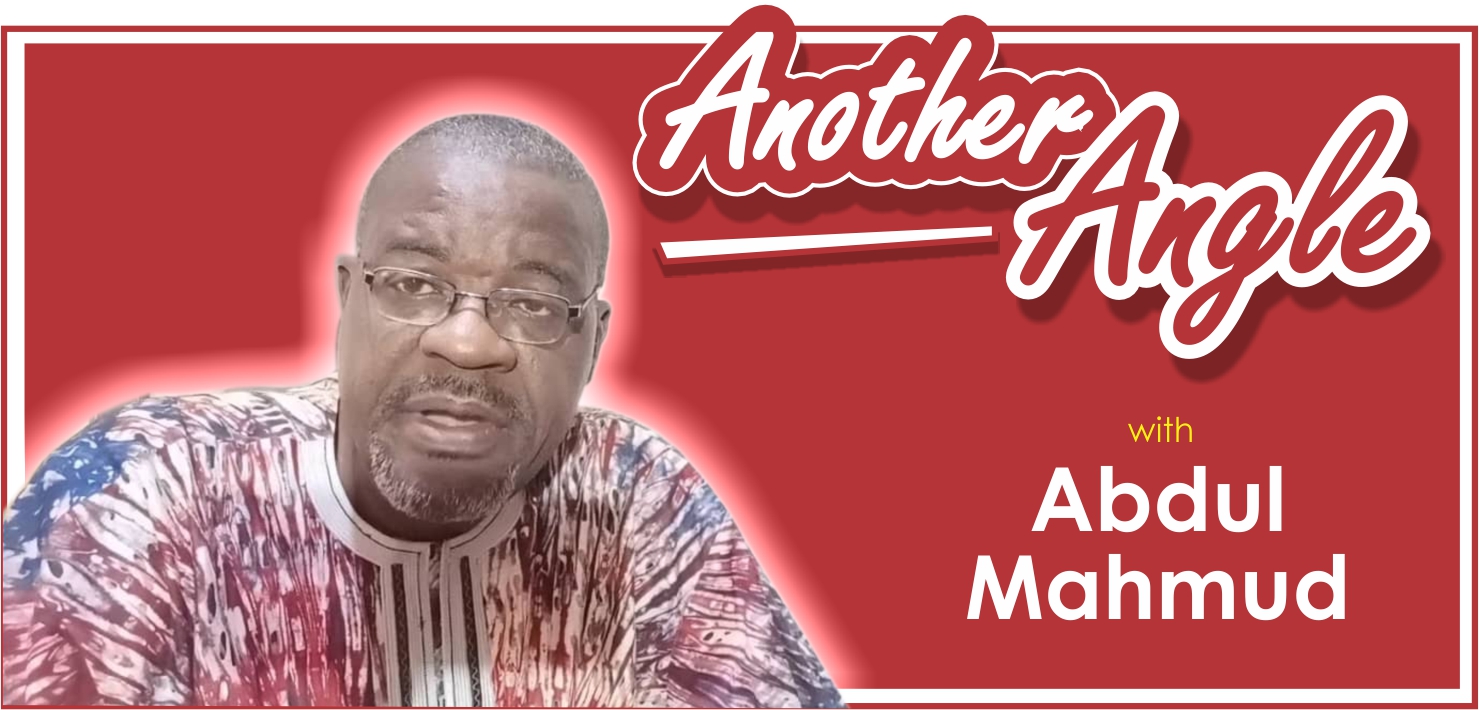
    -By Abdul Mahmud

    In the foundational imaginary of Yoruba literature, the forest was never simply a collection of high-canopy trees and dense undergrowth, but rather a sacred and liminal grove of the spiritual where humanity confronted the supernatural.

    When D.O. Fagunwa wrote his classic masterpiece, Ogboju Ode ninu Igbo Irunmale, translated beautifully by Wole Soyinka as The Forest of a Thousand Daemons, he invited generations of readers into a mystical landscape populated by ghommids and spellbinders; a terrain where the courageous hunter faced terrors to secure wisdom and cosmic equilibrium for his community.

    In that literary landscape, the wilderness represented an inheritance of heritage, a deep well of ancestral memory, and an existential boundary that separated the civilised hub of human society from the untamed, magical wonder of the cosmos.

    Today, however, that ancient virginal tapestry has been violently stripped from our geography, replacing the enchantments of folklore with a terrifying material reality that desecrates our collective heritage.

    The contemporary Nigerian wilderness has transformed into something profoundly sinister, morphing into a hideous sanctuary for bloodthirsty kidnappers and highly organised transnational drug syndicates.

    The recent, unsettling disclosures by the National Drug Law Enforcement Agency, delivered through the agency’s Director of Media and Advocacy, Femi Babafemi, must be understood as an existential alarm bell that shatters any remaining illusions about national territorial integrity.

    Under the proactive leadership of Brigadier General Mohamed Buba Marwa, the agency’s painstaking, multi-month investigation has unveiled a sophisticated web of illicit enterprise that turns the deep foliage of Ogun and Oyo states into highly industrial narco-laboratories.

    The arresting imagery of operatives infiltrating remote forest locations on May 16 to apprehend three Mexican nationals alongside seven Nigerians is compounded by the subsequent raid on June 17 in Tapa village, within the Ibarapa North Local Government Area of Oyo State, where a fifty-six-year-old Mexican chemist named Jose Villa Ochoa was caught operating a clandestine methamphetamine factory.

    This is no longer a matter of petty border smuggling or localised transit trade; it represents the terrifying domestic institutionalisation of industrial-scale synthetic drug manufacturing right under our feet; and before our korokoro eyes as the streets would put it.

    We must interrogate how global drug cartels from the Americas can seamlessly export their deadly technology, technical expertise, and operational footprints directly into the heart of rural southwestern Nigeria without triggering immediate local resistance.

    The cold truth is that foreign chemical engineers like Jose Villa Ochoa do not simply wander into the forests of Tapa village or clear land in Ogun State by accident or sheer geographic coincidence.

    These transnational merchants of death operate through an intricate, deeply entrenched framework of domestic collusion, facilitated by a powerful, highly influential class of Nigerian collaborators who trade the sovereign security of their homeland for immense financial returns.

    These local collaborators provide the essential infrastructural scaffolding for this toxic trade, utilising their local networks to secure vast tracks of remote land, navigate rural traditional authority structures, and smoothly bypass formal regulatory frameworks.

    Without this domestic elite acting as facilitators, financiers, and protective shields, a Mexican cartel would find it impossible to transport delicate laboratory equipment and highly controlled precursor chemicals through our ports and checkpoints into the depths of our forests.

    This parasitic collaboration exposes a catastrophic moral decay within a segment of the Nigerian elite who are willing to turn the country into a toxic narco-state for their personal enrichment.

    By financing the establishment of methamphetamine laboratories, these domestic actors are not just breaking the law, but are actively seeding an epidemic of synthetic substance addiction that will inevitably destroy millions of young Nigerian lives.

    The devastation wrought by methamphetamine, commonly known on the streets as ‘mkpuru mmiri,’ is already well-documented across communities, tearing apart families and overwhelming our fragile mental health infrastructure.

    To cultivate the industrial capacity for this drug within our own borders, using the natural cover of our ancestral forests to shield production from the law, is an act of supreme betrayal against the future of our country.

    It turns our natural heritage into a landscape of death, guaranteeing that the poison manufactured deep inside our forests will return to devastate our urban centers, universities, and rural communities alike.

    This forest invasion reveals a dangerous convergence between the operational methods of international drug cartels and the existing networks of rural banditry and kidnapping that have long plagued our rural populations.

    For several years, our failure to effectively police, govern, and defend our massive forest reserves has allowed various criminal groups to establish autonomous fortresses where they hold citizens for ransom with absolute impunity.

    By allowing these vast spaces to remain ungoverned territories, the Nigerian state has inadvertently created the perfect, low-risk ecosystem for international drug syndicates looking to build clandestine factories far away from urban law enforcement.

    The frightening synergy between well-funded drug cartels and heavily armed kidnapping syndicates could create a self-sustaining criminal economy where drug wealth directly funds sophisticated weaponry, making these remote forest empires virtually impenetrable to conventional police forces.

    Our forests are being stolen from us, transformed from symbols of natural wealth and cultural pride into dangerous, militarised enclaves of global criminality.

    The federal government must therefore look beyond reactive law enforcement and recognise that this crisis demands a comprehensive, strategic re-occupation of our national territory.

    We cannot afford to treat the discovery of these hidden methamphetamine laboratories as isolated criminal incidents to be managed by occasional raids and subsequent criminal trials.

    The state must launch an aggressive, systematic campaign to permanently project authority into every forest reserve, national park, and remote borderland, ensuring that no square inch of Nigerian soil remains outside the sovereign reach of the law.

    This requires deployment of advanced aerial surveillance, sustained rural patrols, and the active integration of local communities into a comprehensive territorial defense strategy.

    We must rebuild the broken relationship between rural populations and formal security agencies, ensuring that local farmers and hunters become the primary defensive shield against foreign cartels and their domestic sponsors.

    More importantly, the full weight of the state’s legal apparatus must be brought down upon the Nigerian financiers and facilitators who make these international criminal incursions possible in the first place.

    The National Drug Law Enforcement Agency must expand its focus from the physical laboratories and foreign chemists to relentlessly trace the financial trails that lead directly back to comfortable boardrooms, political offices, and elite estates in Lagos, Abuja, and Ibadan.

    True deterrence will only be achieved when these local enablers face total asset forfeiture, long prison sentences without the option of a fine, and complete public exposure of their treasonous activities.

    They must be treated not only as accomplices to drug trafficking, but as existential national security threats who have actively invited foreign syndicates to set up criminal colonies within our borders.

    The magical forests that once defined our collective cultural imagination, serving as spaces of ancestral memory and spiritual reflection in our classic literature, are being systematically erased by a dark, modern reality.

    If we remain passive, allowing our wilderness to be permanently surrendered to the control of kidnappers, bandits, and Mexican drug cartels, we will witness the complete collapse of rural security and national sovereignty.

    The demons that modern Nigeria faces are no longer the mystical, fictional entities of D.O. Fagunwa’s literary imagination, but are instead flesh-and-blood criminals driven by greed and enabled by local treachery.

    We must reclaim our forests from these merchants of death, restoring our wilderness as a place of peace, productivity, and natural beauty, while ensuring that those who seek to turn Nigeria into a narco-state are utterly defeated.

  • APC Chairmanship Candidate Pushes Grassroots Agenda During Stakeholders’ Engagement

    The All Progressives Congress (APC) Chairmanship Candidate for Nkanu East Local Government Area, Hon. Engr. Mike Ogbuekwe, has intensified his engagement with stakeholders across the area, holding discussions on issues affecting the people and communities of Nkanu East.

    The stakeholder meeting which was held ahead of the campaign’s grand finale on Monday, September 21, 2026, provided an avenue for frank discussions on matters of community development, the concerns of residents and the collective path towards advancing the interests of the local government.

    Ogbuekwe, speaking after the meeting, expressed appreciation to the stakeholders for their contributions, wisdom and commitment, describing their participation as valuable to the ongoing grassroots engagement.

    He stressed the importance of remaining connected to the grassroots, noting that regular interaction with community stakeholders provides an avenue to better understand the aspirations and concerns of the people.

    According to him, the progress of Nkanu East requires collective responsibility, sustained dialogue and a shared commitment to the wellbeing of its communities.

    The Mmiri Oma Na Nkanu candidate said the engagement had further strengthened his resolve to work collaboratively with stakeholders and residents in pursuit of the development of Nkanu East.

    He reiterated his message of collective action, declaring: “Together, we move forward. Tomorrow Is Here!”

    The meeting is part of Ogbuekwe’s continuing stakeholder and grassroots engagements ahead of the Nkanu East chairmanship election.

  • Energy Transition Milestone Under Dr. Kingsley Udeh: President Tinubu Commissions Africa’s First Barefoot Renewable Energy College – PART 2

    Energy Transition Milestone Under Dr. Kingsley Udeh: President Tinubu Commissions Africa’s First Barefoot Renewable Energy College – PART 2

    ​By Professor Ani Casimir

    Driving Nigeria’s $1 Trillion Economic Agenda

    ​The successful launch of the Osara strategic project reflects Minister Udeh’s broader “Research to Revenue” framework as one of his national driving forces and motivational planks at the Federal Ministry of Innovation, Science, and Technology (FMIST), which seeks to convert domestic scientific research into commercial enterprises. By merging vocational education with cutting-edge technology transfer, the Barefoot Renewable Energy College provides a sustainable model for youth empowerment and industrial decentralization—proving that Nigeria’s clean energy transition is not merely an environmental goal, but an engine for economic growth.

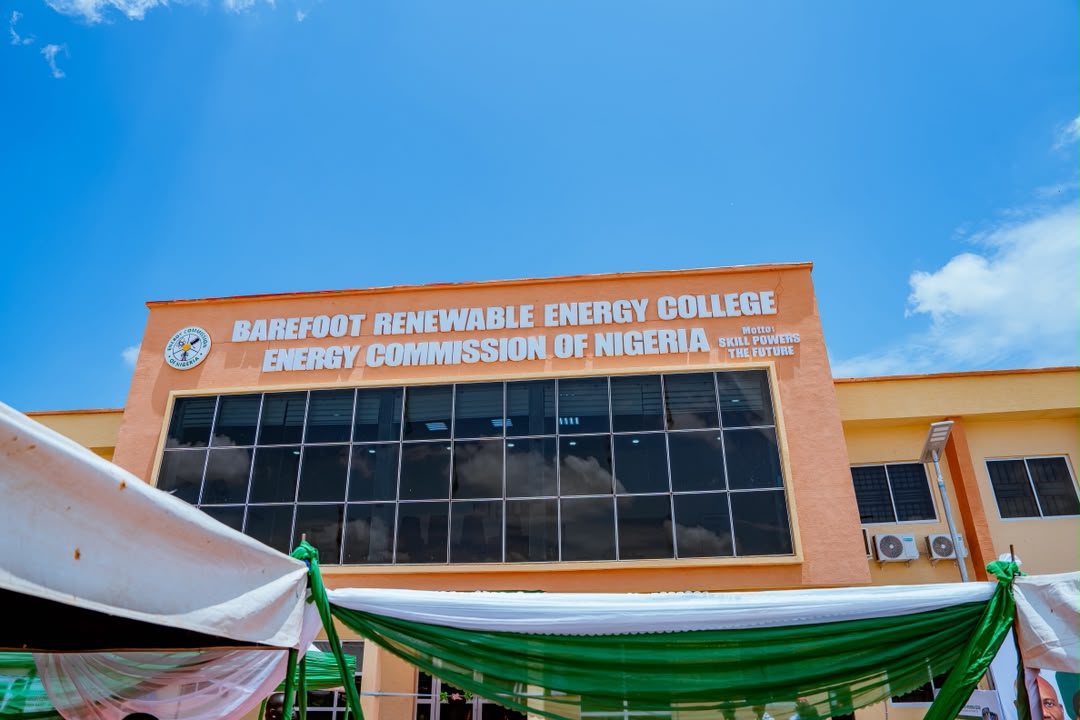
    ​The commissioning of the Barefoot Renewable Energy College (BARECKS) at the Confluence University of Science and Technology (CUSTECH) in Osara, Kogi State, marks a structural shift in how Nigeria and the wider African continent approach energy expansion. Beyond serving as an academic institution, the college shall act as a catalyst across several key dimensions of sustainable development identified below:

    ​1. Closing the Critical Technical “Manpower Gap”

    ​For decades, green energy adoption across Sub-Saharan Africa has suffered from a shortage of indigenous technical expertise, often leading to reliance on costly foreign technicians or abandoned solar infrastructure.

    ​1.1. Institutionalizing Vocational Skills: BARECKS directly addresses this bottleneck by standardizing practical, hands-on training for technicians, engineers, and installers.

    ​1.2. Self-Sustaining Operations: Building a domestic talent pool ensures that off-grid and mini-grid installations can be assembled, repaired, and managed locally, dramatically extending the lifespan of clean energy assets across the region.

    ​2. Grassroots Energy Inclusion & Gender Empowerment

    ​Modeled on inclusive educational frameworks, the “Barefoot” concept prioritizes demystifying technology for marginalized, rural populations.

    ​2.1. Rural Electrification: By training local youth and women from off-grid communities, the college creates clean energy ambassadors who bring solar power, clean cooking technologies, and micro-grid solutions straight to remote areas.

    ​2.2. Bridging Inequality: Training programs targeted at women and underserved demographics directly support UN Sustainable Development Goals—specifically SDG 5 (Gender Equality) and SDG 7 (Affordable and Clean Energy).

    ​3. Economic Diversification & Green Job Creation

    ​Nigeria’s economy has historically relied heavily on fossil fuel revenues. The establishment of BARECKS aligns with the country’s broader transition toward green industrialization.

    ​3.1. Youth Employment: Clean energy installation, component assembly, and mini-grid management offer scalable avenues for youth employment and entrepreneurship.

    ​3.2. “Research to Revenue” Pipeline: Situated near pilot facilities such as the Green Hydrogen Research and Demonstration Plant, the institution serves as an incubation hub, turning indigenous innovation into commercial products.

    ​4. Direct Contribution to Net-Zero 2060 Goals

    ​Nigeria has committed to achieving net-zero carbon emissions by 2060 while expanding electricity access to over 85 million currently unserved citizens.

    ​4.1. Reducing Fossil Fuel Reliance: Replacing diesel generators with solar micro-grids and green hydrogen applications substantially lowers carbon emissions across industrial, agricultural, and residential sectors.

    ​4.2. National Grid Stabilization: Technical innovation coming out of Osara provides practical templates for hybrid power architectures, supporting national grid resilience.

    ​5. A Blueprint for Sub-Saharan Africa

    ​Positioned as Africa’s pioneer Barefoot Renewable Energy College, the Osara complex serves as a regional prototype.

    ​5.1. South-South Cooperation: Neighboring African nations face identical challenges: high solar irradiance coupled with inadequate local technical capacity. BARECKS provides a model for regional cross-border training, technology transfer, and joint research tailored specifically to African climatic and economic environments.

    ​6. National Impact Matrix of the Osara College Commissioning

    6.1. Human Capital: Shifts Nigeria from a technology consumer to a skilled, self-reliant clean energy workforce.

    6.2. Economic Development: Nurtures green micro-entrepreneurship and reduces national dependence on foreign experts.

    6.3. Climate Action: Accelerates decentralized clean power adoption to meet national Net-Zero targets.

    6.4. Pan-African Leadership: Positions West Africa as an active contributor to global green technology innovation.

    The commissioning of the Barefoot Renewable Energy College (BARECKS) at Osara serves as a key indicator of the Honourable Minister, Dr. Kingsley Tochukwu Udeh, SAN’s operational competency and his strategic alignment with President Bola Ahmed Tinubu’s Renewed Hope Agenda. This strategic ministerial milestone reflects his administrative leadership and political commitment across three main areas of the ministerial vision and strategic mission he articulated upon his appointment.

    ​It is evident from his body language that he is fully committed to the consistent implementation of this presidential vision across every level of his Ministry. This evidence-based commitment is attracting daily global, regional, and national visibility for Nigeria.

    ​7.0. A New Biotechnology Ecosystem for Nigeria

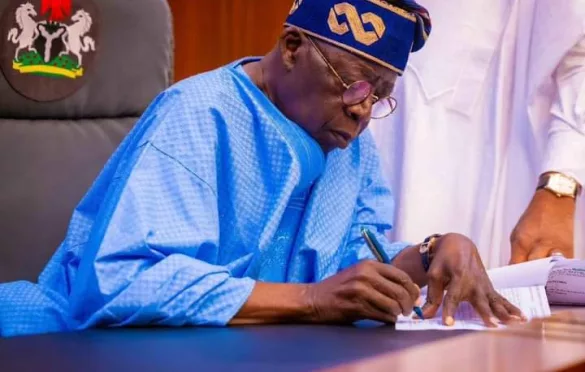
    ​Dr. Kingsley Udeh, SAN, is moving Nigeria toward building a stronger, innovation-driven, and globally competitive economy through major policy decisions in the biotechnology and bioenergy sectors. With Mr. President approving the Revised National Biotechnology Policy as the national framework for the development, application, regulation, and commercialization of biotechnology in Nigeria, the implementation of this revised policy will position Nigeria to better harness opportunities presented by the rapidly expanding global bioeconomy, strengthen national competitiveness, attract investment, improve food and nutrition security, and accelerate sustainable economic growth.

    ​Furthermore, Nigeria’s membership in the Global Bioenergy Partnership (GBEP) provides an important platform for international cooperation, knowledge exchange, and the advancement of sustainable bioenergy development. Under the leadership of President Bola Ahmed Tinubu, GCFR, the Federal Government remains committed to translating science, technology, and innovation into practical solutions that improve lives, strengthen our economy, and create opportunities for Nigerians. In furtherance of this presidential directive, Dr. Udeh is ensuring that Nigeria does not merely participate in the emerging global bioeconomy, but develops the scientific capacity, regulatory environment, partnerships, and commercial ecosystem required to compete effectively within it.

    ​7.1. Proof of Ministerial Competency and Action-Oriented Leadership

    ​Delivering a flagship, complex infrastructural and educational project—spanning solar technology, biomass, and green hydrogen pilot infrastructure—demonstrates strong administrative capability. It highlights Minister Udeh’s capacity to translate federal policies into tangible investments.

    ​7.2. Bridging the Legal-Technological Divide

    ​As a Senior Advocate of Nigeria (SAN) leading the Federal Ministry of Innovation, Science, and Technology (FMIST), Udeh’s legal and policy background equips him to navigate complex institutional frameworks, public-private partnerships, and regulatory governance required to launch national science infrastructure.

    ​7.3. Operationalizing “Research to Revenue”

    ​The Minister has consistently advocated for turning academic and scientific research into commercialized, high-impact products. Grounding this college in practical, hands-on technical assembly directly executes that vision.

    ​7.4. Alignment with President Tinubu’s Renewed Hope Agenda

    ​The Renewed Hope Agenda rests on key pillars: economic diversification, energy security, job creation, and youth empowerment. Minister Udeh’s championing of this project directly advances these mandates:

    ​7.5. Energy Transition & Security: By establishing local capacity for off-grid renewables and green hydrogen, the Ministry directly supports the President’s goal of modernizing Nigeria’s power mix, expanding electricity access, and hitting Net-Zero 2060 decarbonization targets.

    ​7.6. Job Creation and Youth Inclusion: Rather than relying solely on imported technology and foreign consultants, the “Barefoot” vocational model builds indigenous technical capacity, equipping young Nigerians with market-ready green skills.

    ​7.7. Industrial Decentralization: Locating Africa’s pioneer barefoot energy college in Osara, Kogi State, aligns with the administration’s policy of decentralizing infrastructure and spreading federal investments beyond primary urban centers.

    ​For the Honourable Minister, Dr. Kingsley Tochukwu Udeh, SAN, this project validates his stewardship of the Science, Technology, and Innovation portfolio. It demonstrates that under his leadership, the Ministry is moving beyond abstract policy formulation toward concrete, revenue-generating, and human-capital-building outcomes that advance the President’s vision for economic renewal.

    ​Nigeria possesses immense talent, natural resources, and scientific potential. Our task now is to support the strategic vision of the Honourable Minister as he works to convert that potential into innovation, enterprise, and sustainable national prosperity.

    ​Professor Casimir Ani is the Director/Team Lead, Ethics, AI, and Higher Education Strategic Projects (EAISTRAP), University of Nigeria, Nsukka. He is also a Member, UNESCO Technical Working Group on Ethics of AI for Nigeria (since 2022).
    Email: casimir.ani@unn.edu.ng

  • Tinubu Directs States to Deliver Cheaper Transport Fares From October 1

    Tinubu Directs States to Deliver Cheaper Transport Fares From October 1

    Precious Nwonu, Enugu

    President Bola Tinubu has directed state governments to accelerate the rollout of Compressed Natural Gas and electric-powered public transport systems, with the Federal Government targeting measurable reductions in transportation costs from October 1.

    Tinubu gave the directive in an update on the National Affordable CNG Transit Programme on Saturday, saying the target followed his August 27 meeting with governors of the 36 states.

    According to the President, the meeting produced an agreement to ensure that more Nigerians begin to benefit from lower transportation costs from October 1.

    An implementation committee has since been established under the auspices of the Nigeria Governors’ Forum to coordinate the programme. The committee is chaired by Kwara State Governor AbdulRahman AbdulRazaq.

    Tinubu urged the states to work with transport unions and commercial operators, support vehicle conversions and fleet deployment, and provide the infrastructure needed to ensure that savings from cheaper energy are reflected in transport fares.

    “Above all, ensure that savings from cheaper energy reach Nigerian citizens through lower fares,” the President said.

    The initiative is built around the use of CNG, which the President said could reduce vehicle fuel expenditure by between 60 and 80 per cent compared with petrol.

    In August, Tinubu also directed the rollout of an additional 500 CNG refuelling stations, on top of 500 previously ordered through the Midstream and Downstream Gas Infrastructure Fund, bringing the planned nationwide network to 1,000 stations.

    The Federal Government said more than 120,000 vehicles have so far been converted to CNG, while more than 400 certified conversion centres and over 90 CNG refuelling stations are currently operating across the country. More than 100,000 additional conversion kits are also being processed.

    The Presidential Initiative on Compressed Natural Gas and Electric Vehicles has been coordinating the expansion of conversion facilities, refuelling infrastructure and alternative-energy transport systems across the states.

    A stakeholder meeting convened by the initiative in September found that several states had already deployed CNG and electric buses, tricycles, motorcycles, conversion centres and refuelling facilities as part of preparations for the October 1 target.

    Tinubu cited several states where alternative-energy transport has already reduced fares.

    In Borno, he said CNG and electric public transport services charge between N50 and N100 on routes where commercial operators charge between N300 and N600. In Oyo, CNG buses reportedly reduced the Lagos-Ibadan fare from about N8,000 to N3,200 during initial deployment.

    In Enugu, the President said 100 CNG buses had been deployed, reducing the Enugu-Nsukka fare from N2,500 to N1,500. He also said alternative-energy transport had reduced fares by as much as 50 per cent in Adamawa.

    Other examples cited by the President include 100 CNG-powered buses providing free transportation on major routes in Kaduna, 40 electric buses deployed in Abia with fares subsidised by 50 per cent, and reduced fares on CNG-supported routes in Abuja and Niger State.

    Tinubu said Edo currently has 50 CNG buses in active service, while Kano has converted more than 1,000 commercial vehicles. Delta, Kwara and Lagos are also expanding CNG-supported transport services, while Akwa Ibom has taken delivery of 50 CNG buses ahead of commercial operations.

    The President said the Federal Government would continue to expand CNG infrastructure and conversion capacity while supporting states, transport operators, manufacturers and private investors involved in the alternative-energy transport sector.

    The October 1 deadline is a target for states to begin delivering measurable reductions in transport costs, rather than a uniform nationwide fare fixed by the Federal Government. Implementation will depend on state governments, transport operators and the availability of CNG and electric mobility infrastructure in individual locations.

  • Israeli Lawmaker Urges UN to Pursue Nnamdi Kanu’s Release

    Israeli Lawmaker Urges UN to Pursue Nnamdi Kanu’s Release

    Precious Nwonu, Enugu

    An Israeli lawmaker, Afef Abbed, has called on the United Nations to revisit its 2022 opinion on the detention of the leader of the Indigenous People of Biafra, Nnamdi Kanu, and press for the implementation of its recommendations.

    Abbed, a member of Israel’s Knesset, made the call in a letter dated September 1, 2026, addressed to the UN Secretary-General, the UN High Commissioner for Human Rights and the Chair-Rapporteur of the UN Working Group on Arbitrary Detention.

    He urged the UN to review the implementation of Opinion No. 25/2022 concerning Kanu and seek an official update from the Nigerian government on measures taken in response to the Working Group’s findings.

    The UN Working Group on Arbitrary Detention adopted Opinion No. 25/2022 in 2022 after examining circumstances surrounding Kanu’s arrest in Kenya and his subsequent transfer to Nigeria. The opinion is officially recorded as A/HRC/WGAD/2022/25.

    The Working Group concluded in the opinion that Kanu’s deprivation of liberty was arbitrary and called on the governments of Nigeria and Kenya to take steps to remedy his situation without delay. It recommended his release, compensation and other forms of reparation in accordance with international law.

    Abbed said the UN should continue monitoring the matter and encourage dialogue with the Nigerian government to ensure that proceedings involving Kanu comply with applicable international human rights standards and Nigeria’s obligations under the International Covenant on Civil and Political Rights.

    He said the subsequent legal developments in Nigeria had not removed the need to consider the concerns raised in the Working Group’s 2022 opinion.

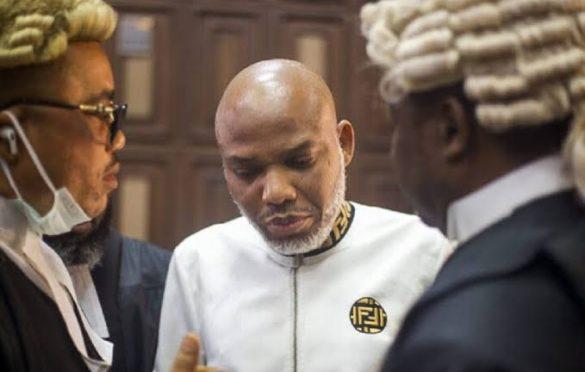
    Kanu was convicted by the Federal High Court in Abuja in November 2025 on seven terrorism-related counts and sentenced to life imprisonment on several of the counts, alongside additional prison terms on others.

    Abbed said Kanu’s conviction and sentence made it more important for relevant international mechanisms to examine whether the recommendations contained in the UN Working Group’s opinion had been implemented.

    He also referred to legal proceedings concerning Kanu’s detention and transfer to Nigeria, arguing that they had raised questions about his fundamental rights and due process.

    The Israeli lawmaker further expressed appreciation for what he described as the “professional and independent work” of the UN Working Group in examining Kanu’s case.

    Abbed also referenced concerns raised over Kanu’s health and alleged inadequate access to medical care, saying such allegations involving the health and fundamental rights of a detainee should receive attention from relevant international human rights mechanisms.

    His intervention comes amid continued calls from some individuals and groups for a review of Kanu’s case and his release.

  • Enugu LG Polls: Obuoffia, Akpugo 2 Endorse Ogbodo, APC Candidates

    Enugu LG Polls: Obuoffia, Akpugo 2 Endorse Ogbodo, APC Candidates

    …John Ogbodo is one of the best performing Chairmen – Gov. Mbah

    Chetanne Chinelo, Enugu

    The All Progressives Congress (APC) campaign for the September 26 Enugu State local government elections received further endorsements in Nkanu West Local Government Area as stakeholders in Obuoffia and Akpugo Ward 2 declared support for Executive Chairman and chairmanship candidate, Hon. John Chukwuma Ogbodo, and other party candidates.

    The endorsements were made during the “Beyond Expectations” campaign train’s engagements in the communities, culminating in a grand finale at Akpugo Ward 2.

    Obuoffia

    In Obuoffia, stakeholders pledged the ward’s support for all APC candidates, with the Chairman of the Nkanu West Traditional Rulers Council and Obuoffia Traditional Rulers Council, HRH Eze Barr. Igwesi Obi Igwesi, describing the choice of Governor Peter Mbah as one without a credible alternative.

    Igwesi said Obuoffia remained willing to demonstrate its solidarity with the governor, while also urging residents to support the APC candidates in the local government election.

    A former member of the House of Representatives and Enugu State Coordinator of the Renewed Hope Ambassadors for the re-election of President Bola Tinubu, Rt. Hon. USA Igwesi, also expressed support for the APC candidates.

    He said Mbah would be re-elected in 2027 and urged the people to vote for President Tinubu as well.

    Another stakeholder, Owelle Steve Avah, called on Ogbodo to convey the gratitude of Obuoffia residents to Governor Mbah over what he described as the governor’s numerous infrastructural interventions in the ward.

    Avah said the September 26 election would provide an opportunity for the people to reciprocate the support, saying:

    “Chairman, the coming election for Local Government is our own way to pay you back.

    “We have nothing much to say other than to ask God to help you, Obuoffia will help you, Nkanu will help you, Nigeria will help you”.

    The State Deputy Youth Leader of the APC, Ogonna Aneke, also declared support for Mbah and the party’s candidates, citing what he described as extensive development across Enugu State.

    Similarly, the Secretary of Nkanu West LGA, Onochie Jon-Igwesi, said past political developments had shown that Mbah had prevailed in situations where he was underestimated.

    Tracing the governor’s political journey from his former party, Jon-Igwesi expressed confidence that Mbah would again overcome his critics and secure a second term in 2027.

    Akpugo Ward 2 rally

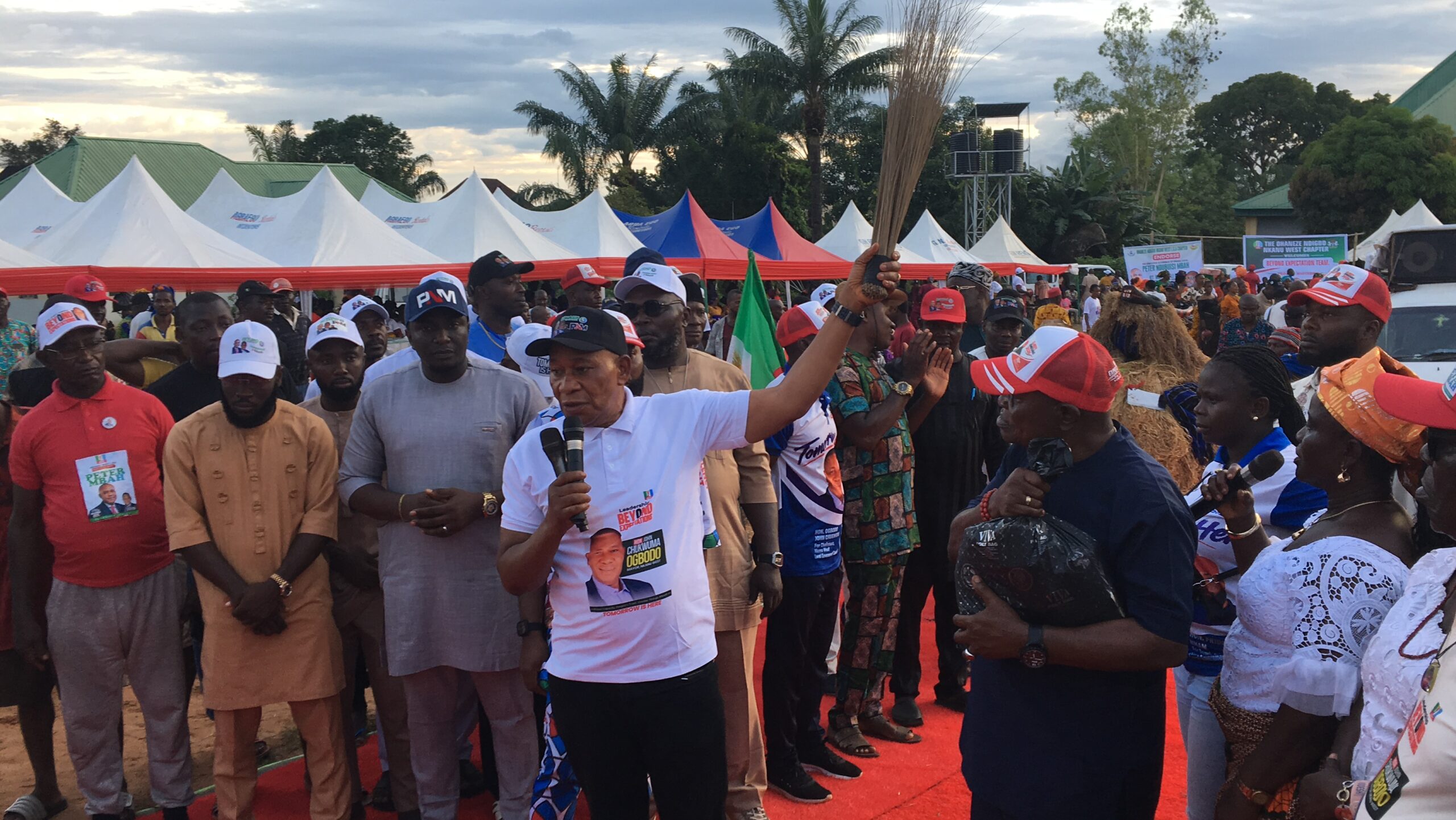
    At the grand finale of the campaign in Akpugo Ward 2, Ogbodo, who is the incumbent Executive Chairman of Nkanu West LGA and APC chairmanship candidate, appealed to the people to support the governor and the party’s candidates in the election.

    Ogbodo said Akpugo Ward 2 comprises Ndiagu Obuno and Obununo communities and noted that no previous chairman of Nkanu West had come from the area before Mbah supported his emergence.

    “Since the start of politics, no Chairman of Nkanu West LGA has ever come from here until His Excellency graciously found me worthy, and with the support of the people, I became council chairman,” he said.

    He thanked the people for what he described as their recognition of his administration’s work across Nkanu West and appealed to them to extend their gratitude to Mbah.

    Ogbodo also highlighted infrastructure and education projects in the area, including the road linking Amodu, Akpugo, Akpawfu and Amagunze.

    According to him, the road had previously posed difficulties for residents, particularly during burial ceremonies, when ambulances reportedly stopped at a bridge and corpses were carried by hand to burial venues because of the condition of the road.

    He said the situation had changed following the ongoing road construction.

    Ogbodo further said all the Smart Schools in Nkanu West had been onboarded and equipped with modern facilities, including computers, interactive boards, boreholes and lighting.

    “So, we are eagerly waiting for January and February to reciprocate the hard work of His Excellency and all the APC candidates,” he said.

    Representing Governor Mbah at the rally, the Secretary to the Enugu State Government, Prof. Chidiebere Onyia, urged residents to vote for Ogbodo and his running mate on September 26.

    “We have only one person to vote for on September 26, John Ogbodo and his deputy,” Onyia said.

    He said he was at the rally to represent the governor and demonstrate the state government’s support for Ogbodo, whom he described as “one of the most performing mayor in Enugu State today.”

    “We fully endorse Peter Ndubuisi Mbah for 2027 because he has done a lot of work and we’re sure that he will do more. Anyone that wants to be Governor of Enugu State will have to wait after his tenure,” he said.

    The SSG further told the gathering that aspirants interested in the governorship from Nkanu West would have to wait, saying, “I know that there are people vying for Governorship in Nkanu West but there is no vacancy there.”

    Several speakers in Obuoffia and Akpugo highlighted infrastructure and education projects in the area as the reasons for their support.

    The campaign ended with APC stakeholders and supporters reaffirming their support for Ogbodo and other party candidates ahead of the September 26 local government election.

  • Trump Bars CNN, MS NOW, Politico from White House Over Reports

    Trump Bars CNN, MS NOW, Politico from White House Over Reports

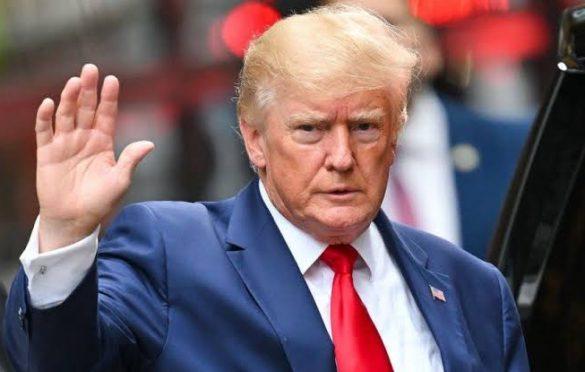
    US President Donald Trump has announced an immediate ban on CNN, MS NOW and Politico from the White House, accusing the three news organisations of repeatedly publishing what he described as “fiction and lies” about his administration.

    Trump announced the move in a post on Truth Social on Friday, but did not specify the reports he considered false or explain how the restriction would be implemented.

    “Media outlets shouldn’t be able to constantly write or report FICTION and LIES when they’re covering the President of the United States, the Trump Administration, or the United States of America,” he wrote.

    He also accused Politico of receiving “an illegal and ridiculous $8 million subscription” from the US government during the administration of former President Joe Biden. Politico has denied the allegation.

    Despite Trump’s announcement, journalists from the three organisations were still working at the White House on Friday.

    CNN also reported that members of its television pool team were travelling with Vice President JD Vance when Trump announced the ban.

    CNN rejected the move, saying it had a right to report from the White House without government interference.

    The network described the proposed restriction as an “illegal assault” on press freedom and said it stood behind its White House journalists and their “fair and accurate reporting.”

    “Should the ban, which President Trump threatened, go ahead, it would be an illegal assault on that fundamental and constitutionally protected right,” CNN said.

    Politico also said it would continue covering the Trump administration and defend its constitutional rights.

    The US National Press Club criticised the move, saying that excluding news organisations because of disagreement with their coverage amounted to an attempt to control which journalists could witness and report on presidential activities.

    Trump’s latest announcement follows other disputes between his administration and major US news organisations over access to the White House and other government facilities.

    In January 2025, the administration barred Associated Press journalists from parts of the White House, including the Oval Office and Air Force One. The AP subsequently sued to restore its access, with the case still in litigation.

    In April 2025, Reuters and Bloomberg News lost their permanent positions in the small press pool covering the president.

    The White House also removed a Wall Street Journal reporter from the press pool for Trump’s trip to Scotland in July following the newspaper’s reporting on Jeffrey Epstein.

    In September, the Pentagon introduced a policy requiring journalists to agree not to report certain unauthorised information or risk losing their press credentials.

  • Ebonyi Governor Removes Works Commissioner Stanley Mbam

    Ebonyi Governor Removes Works Commissioner Stanley Mbam

    Ebonyi State Governor, Rt. Hon. Francis Ogbonna Nwifuru, has directed the immediate removal from office of the state Commissioner for Works, Engr. Stanley Lebechi Mbam.

    The governor also directed Mbam to hand over all government property in his possession, including his official vehicle, to the Secretary to the State Government.

    He was further directed to transfer his responsibilities to the Permanent Secretary in the Ministry of Works.

    The directive was contained in a Public Service Announcement issued on Saturday by the governor’s Chief Press Secretary, Dr. Monday Uzor.

    The governor assured residents that his administration remained focused on delivering effective governance and improving public infrastructure.

  • Keyamo Criticises Atiku Over Reference to Tinubu as ‘Bola’

    Keyamo Criticises Atiku Over Reference to Tinubu as ‘Bola’

    Precious Nwonu, Enugu

    Minister of Aviation and Aerospace Development, Festus Keyamo, has criticised former Vice-President Atiku Abubakar over his repeated reference to President Bola Tinubu by his first name during a press conference in Abuja.

    Keyamo, in a post on his X account on Friday, described Atiku’s reference to the President as “very disrespectful and discourteous”, arguing that the office of the President should be treated with dignity despite political disagreements.

    “The continuous reference to President Bola Ahmed Tinubu by His Excellency, ex-Vice-President Atiku Abubakar in his Press Conference earlier today as ‘Bola’ is very disrespectful and discourteous,” Keyamo said.

    He added that political differences should not affect the respect accorded to the office of the President.

    “He should know better that no matter your differences with Mr President, for the sake of the country, that office should be accorded all the dignity it deserves,” the minister said.

    Keyamo also took issue with the tone of Atiku’s remarks, alleging that they reflected personal grievances.

    “The tone reeks of pain and bitterness in his heart,” he said.

    The minister further referred to Atiku’s recent comments about the ages of the two politicians, arguing that it was inconsistent for the former vice-president to describe Tinubu as older than himself while addressing him by his first name.

    “After all, he made the outlandish claim the other day that Mr President is older than himself. It is therefore a contradiction that he would also refer to an ‘elder’ by his first name,” Keyamo said.

    Atiku had, during the Friday press conference, called on Tinubu to take measures to reduce petrol prices and ease the pressure of rising living costs.

    The former vice-president urged the President to consider his proposed government intervention, saying Tinubu could rename the idea and take credit for it if that would result in lower petrol prices for Nigerians.

    “Tinubu should not be ashamed to do what is necessary to lower the price of petrol simply because Atiku Abubakar proposed a government intervention.

    “He should just take the idea, rename it if he wishes, and even take the credit. What matters to me is that Nigerians pay less,” Atiku said.

    He also argued that a policy proposal should not be rejected simply because it came from a political opponent and called for measures that would provide more lasting relief to households.

    Atiku’s remarks came amid continuing concerns over petrol prices and the wider impact of energy and transportation costs on the cost of living.

  • 2027: Appeal Court Upholds NDC Registration as Political Party

    2027: Appeal Court Upholds NDC Registration as Political Party

    Precious Nwonu, Enugu

    The Court of Appeal in Abuja has upheld the registration of the Nigeria Democratic Congress as a political party, overturning a Federal High Court judgment in Lokoja, Kogi State, which had nullified its registration.

    The appellate court reached the decision in a split judgment, with two members of the three-member panel ruling in favour of the NDC and one dissenting.

    Justices Mohammed Danjuma and Muslim Sule Hassan, who formed the majority, set aside the judgment of the Federal High Court and upheld the Independent National Electoral Commission’s recognition of the NDC.

    The majority held that the Lokoja court erred by revisiting its own earlier judgment of December 10, 2025, which had directed INEC to register the NDC as a political party.

    The appellate court described the lower court’s action as an abuse of judicial power and hierarchy.

    The judgment also rejected a dispute over the NDC’s logo, which an association operating under the name Peace Movement Party had claimed belonged to it.

    The appeal followed a ruling by Justice Isah Dashen of the Federal High Court in Lokoja, which had set aside the court’s earlier decision directing INEC to recognise and register the NDC.

    The reversal followed an application by the Peace Movement Party, which argued that it had a legal interest in the matter but was not joined in the original proceedings.

    Justice Dashen had agreed with the argument and held that all parties with an interest in the case ought to have been given an opportunity to participate before the earlier order was made.

    The Federal High Court consequently ordered that the matter be heard afresh with the relevant parties properly joined.

    Dissatisfied with the decision, the NDC appealed to the Court of Appeal.

    In the latest ruling, the majority allowed the party’s appeal and restored the effect of the earlier judgment recognising its registration.

    However, Justice Okon Abang, the third member of the panel, dissented.

    In his judgment, Abang upheld the Federal High Court’s position, holding that there was no basis to fault the lower court’s decision and that it had acted in accordance with the principles of justice and fair hearing.

    The ruling comes as the NDC prepares for the 2027 general elections, having already nominated candidates for the polls.

    The judgment provides the latest development in the legal dispute over the party’s registration, which began with the Federal High Court’s December 2025 order directing INEC to register the NDC.

  • Court Rejects Suit Seeking Oduah’s Disqualification From 2027 Senate Race

    Court Rejects Suit Seeking Oduah’s Disqualification From 2027 Senate Race

    Precious Nwonu, Enugu

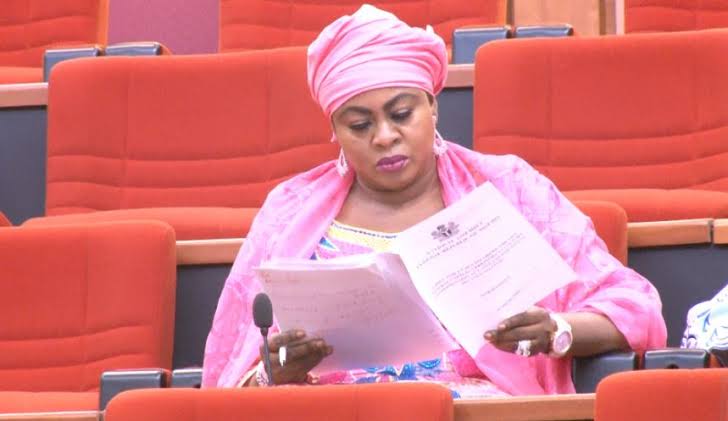
    A Federal High Court in Abuja has dismissed a suit seeking the disqualification of former Senator Stella Oduah as the All Progressives Grand Alliance candidate for the Anambra North Senatorial District in the 2027 election.

    Justice Joyce Abdulmalik, in a judgment delivered on Friday, held that failure to possess a National Youth Service Corps certificate does not constitute a ground for disqualifying a candidate from contesting a senatorial election.

    The suit was filed by an APGA aspirant, John Okechukwu Emeka, who challenged the nomination of Oduah by the party.

    Oduah, APGA and the Independent National Electoral Commission were joined as the first, second and third defendants respectively.

    Emeka, through his counsel, A.C. Ozioko, had alleged that Oduah provided false information to INEC in her Form EC9 in connection with her qualification for the 2027 election.

    The plaintiff claimed that Oduah had stated in her 2026 INEC form that she had never presented a forged certificate to the commission, while allegedly stating in an earlier affidavit that she had lost her First School Leaving Certificate and NYSC certificate.

    He further alleged that the authorities responsible for issuing the certificates had indicated that Oduah was not issued the documents.

    The plaintiff also challenged Oduah’s NYSC record, alleging that she had not completed the mandatory national service and had relied on a letter from the Nigeria Employers’ Consultative Association in presenting her qualification to INEC.

    The court, however, rejected the suit and held that the allegations of forgery raised by the plaintiff could not properly be determined through the originating summons procedure.

    Justice Abdulmalik noted that forgery constitutes a criminal offence and would have to be established to the required standard of proof.

    On the NYSC issue, the court specifically held that non-possession of an NYSC certificate was not a basis for disqualifying a candidate from a senatorial election.

    The court also upheld arguments by Oduah’s lawyer, Onyechi Ikpeazu, SAN, and APGA counsel, Ifeanyi Mberi, that issues concerning the former senator’s qualification to contest public office had previously been determined by an election petition tribunal in 2019.

    The court further found that the suit was statute-barred because it was filed outside the 14-day period prescribed by law for challenging the nomination.

    APGA submitted Oduah’s name as its candidate for the Anambra North senatorial election on July 7, 2026, while Emeka instituted the action on July 24, three days beyond the statutory period.

    The court consequently dismissed the case for lacking merit.

    The judgment comes as political parties and candidates prepare for the 2027 National Assembly elections, with INEC listing the presidential and National Assembly elections for January 16, 2027.