Precious Nwonu, Enugu
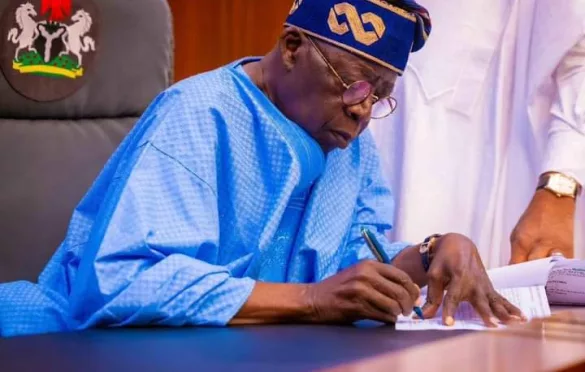
President Bola Tinubu has directed state governments to accelerate the rollout of Compressed Natural Gas and electric-powered public transport systems, with the Federal Government targeting measurable reductions in transportation costs from October 1.
Tinubu gave the directive in an update on the National Affordable CNG Transit Programme on Saturday, saying the target followed his August 27 meeting with governors of the 36 states.
According to the President, the meeting produced an agreement to ensure that more Nigerians begin to benefit from lower transportation costs from October 1.
An implementation committee has since been established under the auspices of the Nigeria Governors’ Forum to coordinate the programme. The committee is chaired by Kwara State Governor AbdulRahman AbdulRazaq.
Tinubu urged the states to work with transport unions and commercial operators, support vehicle conversions and fleet deployment, and provide the infrastructure needed to ensure that savings from cheaper energy are reflected in transport fares.
“Above all, ensure that savings from cheaper energy reach Nigerian citizens through lower fares,” the President said.
The initiative is built around the use of CNG, which the President said could reduce vehicle fuel expenditure by between 60 and 80 per cent compared with petrol.
In August, Tinubu also directed the rollout of an additional 500 CNG refuelling stations, on top of 500 previously ordered through the Midstream and Downstream Gas Infrastructure Fund, bringing the planned nationwide network to 1,000 stations.
The Federal Government said more than 120,000 vehicles have so far been converted to CNG, while more than 400 certified conversion centres and over 90 CNG refuelling stations are currently operating across the country. More than 100,000 additional conversion kits are also being processed.
The Presidential Initiative on Compressed Natural Gas and Electric Vehicles has been coordinating the expansion of conversion facilities, refuelling infrastructure and alternative-energy transport systems across the states.
A stakeholder meeting convened by the initiative in September found that several states had already deployed CNG and electric buses, tricycles, motorcycles, conversion centres and refuelling facilities as part of preparations for the October 1 target.
Tinubu cited several states where alternative-energy transport has already reduced fares.
In Borno, he said CNG and electric public transport services charge between N50 and N100 on routes where commercial operators charge between N300 and N600. In Oyo, CNG buses reportedly reduced the Lagos-Ibadan fare from about N8,000 to N3,200 during initial deployment.
In Enugu, the President said 100 CNG buses had been deployed, reducing the Enugu-Nsukka fare from N2,500 to N1,500. He also said alternative-energy transport had reduced fares by as much as 50 per cent in Adamawa.
Other examples cited by the President include 100 CNG-powered buses providing free transportation on major routes in Kaduna, 40 electric buses deployed in Abia with fares subsidised by 50 per cent, and reduced fares on CNG-supported routes in Abuja and Niger State.
Tinubu said Edo currently has 50 CNG buses in active service, while Kano has converted more than 1,000 commercial vehicles. Delta, Kwara and Lagos are also expanding CNG-supported transport services, while Akwa Ibom has taken delivery of 50 CNG buses ahead of commercial operations.
The President said the Federal Government would continue to expand CNG infrastructure and conversion capacity while supporting states, transport operators, manufacturers and private investors involved in the alternative-energy transport sector.
The October 1 deadline is a target for states to begin delivering measurable reductions in transport costs, rather than a uniform nationwide fare fixed by the Federal Government. Implementation will depend on state governments, transport operators and the availability of CNG and electric mobility infrastructure in individual locations.
Leave a Reply