Tag: tinubu

  • Atiku’s Back to Back Party Primaries Hits, and Misses

    Atiku’s Back to Back Party Primaries Hits, and Misses

    By Demola Olarewaju

    The prowess of Atiku Abubakar when it comes to party primaries was not built in a day and his recent successes at that level are built on a foundation of loss, defeat and tears.

    His entry into politics in 1991 was marked by a bitter gubernatorial ticket rivalry between him and Bala Takaya, a rivalry so fierce that both men eventually were disqualified by the IBB regime. This disqualification was alongside the likes of Sule Lamido, Yusuf Sani, Dapo Sarumi, Femi Agbalajobi, Joe Nwodo, Hyde Onuaguluchi, Sergeant Awuse and others.

    Also disqualified were 23 aspirants for the presidential ticket in that 3rd Republic and Atiku was drafted by Shehu Musa Yar’Adua to run in his stead for President.

    With the backing of the powerful Yar’Adua machinery, Atiku came third in the first round of balloting, behind MKO Abiola and Babagana Kingibe. He was then asked to step down for Abiola and become his running mate but Abiola was forced by the SDP Governors to choose Kingibe instead. Atiku lost out, Atiku campaigned hard and Atiku delivered 140k+ Adamawa votes for SDP.

    In 1999 after running successfully for Governor, he became Vice-President and then clinched the ticket of the AC in 2007 by caucus consensus.

    By 2011, Atiku was back in the PDP and ran against sitting President Goodluck Jonathan, polling 805 delegates’ votes versus Jonathan’s 2,736. Atiku lost, Atiku campaigned hard and Atiku delivered Adamawa for PDP.

    2015, Atiku found himself in APC and ran against Muhammadu Buhari and others. He came in third place with 954 delegates’ votes. Atiku lost, Atiku campaigned hard and Atiku delivered Adamawa for APC.

    2019 – Atiku won the PDP presidential primaries in Port-Harcourt. Wike had then blackmailed PDP into bringing the National Convention to PH and within 24 hours, every single presidential suite in the city had become reserved. Wike claimed they said Atiku had paid for them and that he had asked them to return the man’s deposit. Atiku won the majority delegates’ votes defeating Saraki, Tambuwal, Sule Lamido etc.

    2023 – Atiku won the PDP presidential primaries after being stepped down for by Tambuwal, much to the chagrin of Wike who has been embittered since then.

    But notice Atiku never gets bitter after any primary or general election – he stays loyal and delivers votes for the candidate who defeated him and the party that hurt him.

    And that’s one secret of how the man does it: by staying loyal to the general cause even when his interest is threatened or eliminated, Atiku has built an army of trusted political friends that span into every single state, political party or group interest.

    By always subsuming his interest to the general interest per time, Atiku maintains razorlike focus on each KPI and in the process builds allies and sets up structure from the bottom up. Atiku doesn’t focus on the presidential primaries when Ward Excos are being elected, Atiku doesn’t think of his own aspiration while the party is looking for a National HQ building: to every political activity there is a time.

    Thirdly, Atiku’s structures aren’t ever only for him – this House of Reps aspirant, that senatorial or gubernatorial hopeful – his structural interests even push down to state excos – as I found out to my own party electoral loss when I ran for Lagos State PDP Publicity Secretary. Atiku never walks alone, he always aggregates other political interests.

    These are just three reasons (observable from outside) for why he is so formidable in party primaries. Those who think it is about money can go and ask Nyesom Wike about 2019 and 2023.

    I hope other presidential aspirants can learn from Atiku on both how to win primaries and how to accept defeat gracefully.

    As long as we agree that whoever loses will still work for the greater interest against the person now in Aso Rock, as Atiku has always done: we can meet at the primaries.

  • 2026 and the Architecture of Power: Understanding The Tinubu Presidency

    2026 and the Architecture of Power: Understanding The Tinubu Presidency

    -By Abdul Mahmud

    This new year scarcely requires a seer to reveal its gravity. It stands as a decisive threshold for both Nigeria’s political class and the country itself. As the final full year before the 2027 general election, it unfolds within an atmosphere markedly defined not by open contestation but by cooptation, not by ideological opposition but by realignment, not by persuasion but by careful calibration of power. The familiar nuances of electoral politics have been subdued, replaced by a quieter, sinister and more strategic choreography in which alliances are absorbed, dissent is neutralised, and political outcomes are increasingly prefigured long before the ballot is cast. Tinubu’s Presidency has thus inaugurated a governing order that resists casual description and demands sustained, rigorous analysis. Authority has grown more personalised, institutions have been subtly but decisively reoriented, and the space of democratic life has narrowed. Power is no longer primarily fought over; it is managed, conserved, and deployed through configurations that feel increasingly distant from Nigeria’s recent political experience. What is taking shape is not simply a new leadership style, but a political condition in which the contest for power has yielded to the meticulous administration of power already secured.

    So, what’s really taking shape?

    Tinubu’s presidency marks a formative phase of governance characterised by the consolidation of authority through elite bargaining, the steady attenuation of democratic institutions, and the managed retreat of competitive politics. It does not announce itself as ideological. No manifesto declares its worldview, and no doctrine articulates its philosophical commitments. Instead, it operates as a governing illogic grounded in transactional politics, and the strategic deployment of state power in the service of endurance. Its coherence lies not in ideas but in method. At the centre of this method is elite cooptation and coordination. Power circulates within a narrow political circle where loyalty is sustained by access, protection, and reciprocal advantage. Alliances cohere less around programmes than around proximity to authority. The ruling party functions primarily as an instrument of aggregation, not as a forum for deliberation or contest. Opposition persists within formal constitutional boundaries, but its capacity to shape outcomes continues to contract. Politics increasingly resembles a closed conversation conducted beyond the reach of popular intervention. Elections still punctuate the political calendar. Ballots are cast, results announced, courts convened, and ceremonies observed. Democratic form remains intact. Democratic substance, however, undergoes a quiet but persistent erosion. Participation thins as belief in the consequences of electoral choice diminishes. Voters engage with the process less in hope than in resignation. Political competition loses its transformative promise, reduced to a symbolic presence within an already determined architecture of power. The vote comes to affirm authority more than to interrogate it.

    This configuration invites comparison with certain early authoritarian systems, not in ideology or historical circumstance, but in structural logic. In those settings, power was consolidated through the fusion of party, state, and patronage, yielding stability through alignment rather than consent. Tinubu’s presidency reflects a comparable pattern. Control advances less through open persuasion than through administrative coordination. Loyalty steadily displaces representation as the central political currency, while stability is secured through managed inclusion and calibrated exclusion. What emerges is not the silencing of politics but its careful containment, a narrowing of the space in which dissent may operate without ever quite disappearing. It is within this logic that the recently constituted high-level party committee must be understood. Comprising governors of the ruling party, members of the Federal Executive Council, and other strategically placed stakeholders, the committee is chaired by the Governor of Yobe State, Mai Mala Buni, with Muiz Banire, former Legal Adviser of the APC, serving as Member-Secretary. Its membership spans the commanding heights of political power: Senator Adamu Aliero; AbdulRahman AbdulRazaq of Kwara State, who chairs the Nigeria Governors’ Forum; Hope Uzodimma of Imo State, Chairman of the Progressive Governors’ Forum; and governors from Benue, Jigawa, Cross River, Ekiti, and Delta. It also includes Governors Uba Sani of Kaduna and Siminalayi Fubara of Rivers, senior ministers of the Tinubu administration, former governors, and key presidential aides. The committee’s composition is revealing. It gathers together not merely party functionaries, but custodians of state power, administrative reach, and regional influence, signalling an effort to synchronise authority across multiple layers of governance.

    This architecture points to a broader project: the consolidation of a pan-Tinubu suzerainty that extends beyond party boundaries while steadily hollowing out the opposition. President Tinubu’s rhetoric of accommodation and tolerance, framed as a defence of democratic resilience, sits uneasily alongside the political realities taking shape. As Oyo State Governor Seyi Makinde has suggested, the role attributed to Nyesom Wike within this order is not incidental but instrumental, working across party lines in ways that weaken and fragment the opposition, particularly the PDP. The aim is not the outright abolition of rival parties, but their domestication. Opposition is permitted to exist, but only in diminished, divided, and ultimately manageable forms. In this sense, inclusion becomes conditional, tolerance selective, and pluralism subordinated to the overriding imperative of control. What is being constructed is a political order in which unity is achieved not through persuasion or shared purpose, but through dominance carefully disguised as consensus.

    Governance within this order privileges coherence and control over pluralism and dissent. Institutions remain visible, but their autonomy steadily contracts. Courts continue to function, though within a narrowing interpretive space. Legislatures exercise oversight through accommodation and bargaining rather than confrontation. Regulatory bodies increasingly align their conduct with executive priorities. Media organisations operate under diffuse but effective pressures that shape tone, emphasis, and silence. The outward continuity of institutional life thus conceals a deeper transformation in which independence yields to accommodation and restraint is replaced by compliance. Law sits at the centre of this transformation. Legal process retains its formal authority, but its connection to justice and accountability grows attenuated. Rules are deployed less as limits on power than as instruments for preserving stability. Procedure displaces principle. Political conflict is absorbed into litigation, translated from public disagreement into technical argument. Judicial outcomes, in turn, tend to affirm the prevailing distribution of power, conferring legal legitimacy on arrangements fashioned elsewhere. In this way, law operates not as an impartial arbiter but as a governing mechanism, ordering conflict rather than resolving it. Economic governance extends this same logic into the material lives of citizens. Policies presented as reform advance largely through executive fiat, with minimal public deliberation. Hardship is framed as necessity rather than consequence, sacrifice as virtue rather than failure. Social pain is moralised as discipline, while the language of inevitability accompanies decisions that reorder livelihoods, deepen inequality, and strain communal bonds. As legal process neutralises political contestation and institutions absorb dissent, economic policy completes the circuit of control. Public consent recedes in importance, displaced by appeals to expertise, urgency, and endurance. What emerges is a political economy in which adjustment replaces accountability, and endurance stands in for consent.

    In this political atmosphere, citizenship is quietly reconfigured. Active participation gives way to managed inclusion, while political agency is reduced from the capacity to shape outcomes to the freedom to comment upon them. Protest increasingly attracts securitised responses, and dissent is recoded as disruption rather than recognised as democratic expression. The public sphere does not collapse through decree; it contracts through mood and expectation. Fear need not be declared to be effective. Caution becomes internalised. Silence acquires the character of prudence rather than resignation. This transformation proceeds without the spectacle of overt repression. No dramatic bans signal a rupture with constitutional order. No formal emergency suspends democratic norms. Instead, change unfolds cumulatively. Each adjustment appears technical, even reasonable, when taken alone. Together, they produce a political climate marked by compliance, calculation, and quiet withdrawal. Democratic life thins through attrition rather than shock. What remains is not an absence of politics, but a diminished version of it, one in which engagement is carefully weighed against consequence, and participation is increasingly symbolic.

    Opposition is also redefined under these conditions. Critics are rarely confronted head-on; they are more often absorbed into negotiation, fragmented through inducement, or marginalised by selective exclusion. Disagreement persists, but it is stripped of leverage. Public intellectuals, activists, and commentators operate within a narrowing field where critique circulates without effect. Alternative visions struggle to gain traction because power presents itself not as a contingent arrangement open to challenge, but as a settled fact to be navigated. Politics shifts from contest over direction to adjustment within constraint. Patronage functions as the stabilising mechanism of this order. Access to state resources becomes the primary currency of loyalty. Appointments reward alignment, contracts reinforce networks, and economic opportunity increasingly follows political obedience. Dependency and compliance intersect, recasting the state from guarantor of collective welfare into distributor of selective benefit. As perceptions of fairness decline, public trust erodes. The language of corruption loses its moral urgency, reframed as an unavoidable feature of governance rather than an ethical failure demanding redress. Against this backdrop, the idea of reform assumes strategic importance. Reform rhetoric provides the moral cover through which consolidation is presented as progress. Structural adjustment is dressed in the language of modernisation; disruption is recast as courage. Resistance to reform is portrayed as nostalgia, sentimentality, or irresponsibility. In this way, critique is neutralised not by rebuttal but by delegitimation. Power is framed as necessity rather than choice, endurance as virtue rather than submission. The effect is not merely to govern policy outcomes, but to shape the terms on which political judgment itself is made.

    This condition shapes the national mood as Nigeria approaches 2026. Political expectation declines, cynicism spreads, and withdrawal often replaces engagement. Survival displaces aspiration. Younger generations encounter politics as a closed system rather than an open field, and hope shifts from public institutions to private strategies. Migration, informal economies, and personal networks emerge as alternative pathways to security. The danger lies not only in democratic erosion, but in habituation: as citizens adjust to limited agency, the possibility of recovery diminishes. Democratic capacity weakens through disuse, and memory of contest fades. Power consolidates not merely through control, but through the quiet acceptance of constraint. Naming this phase of governance as a distinct moment in Nigeria’s democratic trajectory performs both analytic and political work. It resists the personalisation of critique, framing Tinubu’s presidency as a system of governance rather than a reflection of temperament. It signals temporality, marking a phase rather than an immutable fate. Such naming preserves space for reflection, intervention, and alternative futures.

    The New Year is here. The architecture of power established during this formative period will shape what is possible. Whether this governing illogic hardens into permanence or encounters disruption will depend upon forces both within and beyond the state. That inquiry belongs to the next part of this essay, which turns to the prospects for politics and democracy under conditions shaped by consolidation, fatigue, and quiet resistance. For now, Tinubu’s presidency stands as a defining moment in Nigeria’s democratic journey: a moment of form without substance, of power without persuasion, and of consequences whose reverberations will extend far into 2027.

    Happy New Year. 

  • Open Letter To Mr. President: Reassessing Police Deployment To VIPs For Improved National Security

    Open Letter To Mr. President: Reassessing Police Deployment To VIPs For Improved National Security

    By Dr. John Egbo

    Decreasing the number of police officers assigned to VIPs in Nigeria is a more appropriate and timely response than withdrawing the entire police officers assigned to the VIPs in this worsening insecurity across the country. The police force is overstretched, and redeploying some officers from excessive VIP protection duties back to public safety functions is essential for restoring confidence in national security. Decreasing the number of officers assigned to VIPs is a better security measure than total withdrawal of police officers from the VIPs.

    Importantly, the proposed reduction does not eliminate police protection for VIPs but strengthens police manpower for public protection and response to crime in progress incidents. It aims to ensure that assigned officers also serve as patrol personnel wherever VIPs travel to. In many cases, as VIP convoys travel through the country, the police officers accompanying them have deterred criminal elements—bandits and armed robbers, who often withdraw when confronted with an armed police escort. This has occurred repeatedly, even in areas where nearby police stations were unable to respond quickly.

    The fundamental role of the police remains: to protect and serve both the VIPs and general public. VIPs—especially national leaders, ministers, and influential citizens—are often prime targets for criminals, whether due to envy, political motives, or financial gain. As the saying goes, uneasy lies the head that wears the crown. Therefore, completely withdrawing all police officers from VIPs would be counterproductive and would expose them to greater danger than the average citizen.

    What the Inspector General of Police should prioritize is a strategic reduction, not an elimination of officers attached to VIPs and to sensitive establishments such as vulnerable businesses or schools. This approach frees up manpower for public patrols, highway security, and community policing initiatives, without placing VIPs at an unacceptable risk.

    As a retired Deputy Sheriff in the United States and a security consultant, I can affirm that crime control is most effective when resources are deployed based on threat assessment and environmental realities. Many parts of Nigeria are now serious crime hotspots, and policing strategies must adapt accordingly. Withdrawing every officer from VIP protection would only shift vulnerability, not solve the larger problem.

    In addition, elected officials—particularly members of the National Assembly and Ministers—should be directed to spend more time in their home constituencies and communities, accompanied by reduced and more efficient police security teams. Politics, like crime, is fundamentally local. Their presence at home strengthens governance, improves community relations, and supports grassroots policing.

    The President’s directive to recruit additional police officers is timely and long overdue. However, Nigeria must jealously guard the recruitment process. Criminal infiltration—whether by bandits, terrorists, or their sympathizers—poses a major internal threat to police effectiveness. Poorly vetted recruits can undermine operations, leak sensitive information, or sabotage crime-fighting efforts, placing both citizens and officers in danger.

    Nigeria needs a police force that is professional, properly vetted, and optimally deployed. Reducing excessive VIP protection details and strengthening public security roles is not just a policy adjustment—it is a necessary step toward restoring safety and order for all Nigerians.

    VIPs moving with a reduced number of police officers serve as crime deterrent along their routes.

    Dr. John Egbo is a United States retired Deputy Sheriff and Consultant on Security Matters. Jnegbo1@gmail.com

  • Burying Buhari – By M.O Ene

    Burying Buhari – By M.O Ene


    Humans are made up of body and soul. The body is of the earth. The soul is divine. The body dies. The soul lives. The body is buried to dissipate the distress. The soul is a spirit; no one knows better. Faith enters the equation: Don’t speak ill of the dead. The death of one diminishes humanity. Such cultural mumbo-jumbo emissions help to heal the heart of the grieving.

    I understand not speaking ill of the dead. It is of no use. The deceased has lost the physical ability to counter. Yet, the memories of life cannot be swept away. Interestingly, the speed with which we forget the dear departed is alarming. Lucky are those of whom the living still recall just months after they leave the scene. Therefore, the focus is on learning the lessons of the life lived—not rehashing rabidly the actions of the deceased.

    So let it be with Muhammadu Buhari.

    It is not easy to recall the good deeds that Buhari did with the great opportunities he had. As a military muscleman, his laudable ‘war against indiscipline’ turned into draconian decrees, including ludicrous long jail terms for political prisoners, muzzling of mainstream media, and shocking retroactive public execution of petty drug dealers!

    On his second coming, Buhari dashed the hopes of Nigerians by unleashing more corruption, bandits, and terrorist herdsmen with AK-47. He visited his signature violence of dogs and baboons on EndSARS protesters. He was particularly harsh on the Southeast, “the dot” in his warped ethnic estimation, which is to be visited with threats of another genocide. When censored for the vile statement, he banned Twitter (now X). Not even on his way out would Buhari forgive Nnamdi Kanu, Sunday Adeniyi Adeyemo (Igboho), and El Zakzaky, the Shi’a Muslim cleric. On the other hand, he treated the butchering Boko Haram terrorists with mittens!

    Buhari died peacefully in London, where he had spent many moons receiving good medical attention. His wife, who had been living in Dubai, reportedly relayed a plea for forgiveness. Fair enough: forgiven, not forgotten. Meanwhile, MNK (whom courts in Kenya and Nigeria have freed) languishes in jail because Buhari would not forgive a simple juvenile insult. What will it take for men to accept mistakes and make amends while the good gods guarantee life! I hope that Yakubu Gowon is listening and learning, not adding more insults of lies to injuries he caused and failed to heal.

    When the present emotions ebb, Nigerians must rise against medical tourism. It is ridiculous that Nigeria cannot set up topnotch medical facilities to treat its top executives. Putting Nigerian leaders at the mercy of foreign pharmacological firms is a screaming shame and a stupid security risk. Ironically, Nigerian medicos who offer commendable care abroad can offer better care in Nigeria.

    President Ahmed Bola Tinubu should establish decent hospitals at which prominent politicians get great care and die peacefully when the time comes—as it will come inevitably. We had two former heads of state in London, possibly getting care from exiled Nigerian doctors they could not keep in the country. The cost of retrieving the remains of Buhari and transporting people to and from the UK is enough to equip a set-aside standard clinic in Abuja, FCT.

    Before he jets out to France again, President Tinubu must learn the lasting lessons of the current bala-blu (hullabaloo) and think of legacy, a bequest for the memory of ex-President Muhammadu Buhari.


    #moe, 7.15.25

  • Tinubu and The Bad Roads Not Taken

    Tinubu and The Bad Roads Not Taken

    -By Abdul Mahmud

    “I couldn’t reach Yelawata in Benue State due to bad roads”, said President Bola Ahmed Tinubu. This sentence captures the spirit of Tinubu’s presidency. Aloof. Detached. Cold. Inconsiderate. Leadership without compassion. Governance without sacrifice. Authority without empathy. How did Mandela once describe compassion? He said, “Our human compassion binds us the one to the other, not in pity or patronisingly, but as human beings who have learnt how to turn our common suffering into hope for the future.” In those words lie the moral clarity of leadership: to feel with others, and to act in ways that dignify their pain. But in the hour when the people of Benue cried out beneath the weight of their grief, when blood soaked their soil and hope withered on parched lips, President Tinubu neither spoke with the tenderness the moment demanded nor did he offer comfort. Instead, he stood, quartered only to the state-organised gyre, where falcons heeded the call of the lying falconer while unburdened by the anguish of the listeners, unmoved by the cries circling beneath his silence.

    I return to the scene of the crime. Yelawata, in Benue State, is soaked in blood. Again. Victims of another attack. Not the first in the state. Sadly, not likely the last. Men butchered. Women slaughtered. Children silenced by bullets and machetes. Bodies burnt. Farmers buried in shallow graves. A people under siege, paying with their lives for living on ancestral land. And the President? He dilly-dallied like Nero until he was forced out of Aso Rock. When he eventually turned up in Benue State, he didn’t go to Yelawata.

    Why? The roads were bad.

    That excuse tells us everything. It tells us Tinubu doesn’t see governance as a sacrifice. It tells us he sees power as comfort, not service. That he is more concerned with personal convenience than national grief. That to him, bad roads are a reason not to visit, not a call to action. The road to Yelwata was too rough for his usual long motorcade. But is the road to governance not paved with sacrifice? A president should go where pain is deepest. He should stand with the broken. Weep with the grieving. Reassure the fearful. But Tinubu stayed away.  He dispatched men like Sunday Dare and Bayo Onanuga; envoys who, upon arrival, shielded their nostrils with cupped palms, as though the stench of death and despair in Yelawata were too profane for their privileged lungs. They came not to mourn, but to manage optics; not to grieve with the grieving, but to distance themselves from the human wreckage their master could not bear to face. He sent words instead of presence. He chose distance over duty.

    What is the worth of a ruler who cannot be troubled by the suffering of his people? Presidents do not have the luxury of comfort. They are servants, not absolute monarchs. They must lead from the front, even through valleys of blood. When George W. Bush visited Ground Zero after 9/11, he climbed the rubble. When Barack Obama went to Newtown after the school shooting, he wept with the parents. When Nelson Mandela walked into the ruins of apartheid violence, he held grieving mothers and swore it would never happen again.

    Tinubu avoided Yelawata. Then insulted the people. He claimed the killings were reprisal attacks. Without evidence. Without tact. Without truth. He invariably blamed the victims. He called them the culprits. He rewrote a genocide into justification. And when he finally arrived Makurdi, it was under pressure. Nigerians had cried. Protested. Shamed him into action. So, he adjusted his diary.

    That adjustment came too late. In Makurdi, school children were drenched by rain, lined up to wave flags at a president who couldn’t be bothered to dry their tears. In front of the Tor Tiv, the King of the Tiv, Tinubu’s lies crumbled. The monarch told him to his face: “These are not reprisals. They are genocidal. They aim to wipe out our people.” It was a moment of truth. The kind only kings and corpses can speak. Tinubu had no answer. After the Royal smack-down, he chose not to make it to Yelawata. He contrived an excuse: the roads were not motorable. A helicopter couldn’t be arranged. A convoy couldn’t roll. A man who uses presidential jets to vacation in France; and who is billed for luxurious holidays in the sunshine of Saint Lucia couldn’t find a way to reach grieving Nigerians at home.

    Now, the question many are eager to ask: What does it cost to show empathy? What does it take to be present in pain? In Tinubu’s case, apparently too much. This presidency has reduced governance to showmanship. It is all optics, no substance. Press releases instead of policies. Travel photographs instead of action. Ceremonies instead of compassion. Tinubu has become a distant figure. A president of Abuja, not of Nigeria. He rules from marble offices, not the muddy fields of the countryside. From Lagos business tables, not farming communities in Benue. He governs through statements, not presence. Through silence, not sympathy. The tragedy of this moment isn’t just the deaths in Yelawata. It is the erosion of leadership. It is about a man who sees the office of president as the crowning of a personal ambition, not a platform for national healing. A man who imagines governance is a reward, not a responsibility. This needs to be put out more plainly: this is not leadership. This is negligence. Tinubu’s refusal to visit the scene of the carnage, his false statements about the cause and his delay in responding to the tragedy that befell our country all points to a leader who doesn’t feel the country’s pain. One who doesn’t carry the emotional weight of his office.

    What happened in Benue is part of a pattern.

    Tinubu’s second year in office has been marked by detachment. Nigerians groan under inflation. Food is unaffordable. Electricity is a myth. Fuel prices break the backs of ordinary citizens. Unlike the back David Diop so powerfully evoked in his acclaimed poem, Africa, unbent, “that never breaks under the weight of humiliation”. The backs of ordinary citizens stoop beneath the burden of betrayal. Yet the president travels. Dines. Celebrates. Appoints cronies. Signs inflated budgets. Adds more burden to weary citizens. There is no compassion in his policies. No empathy in his speeches. No connection in his actions. A caring ruler would reduce his convoys. Tinubu expanded them. A president with empathy would cut down waste. Tinubu has increased waste. A ruler in tune with citizens would share in their sufferings. Tinubu asks them to “tighten belts” while he loosens his.

    To govern a country requires moral courage. Tinubu’s response to national pain is indifference. His answer to cries is silence. His reaction to mass murder is a shrug. Then, where lies the heart of his rulership? Not in Benue. Not in Zamfara. Not in Plateau. Not in the IDP camps. Not in the shanties. Not in the markets. The heart of this government beats only for the rich, the powerful, and his coterie of handlers. For friends in Lagos. For loyalists in government houses. For image-makers. Not for the rest of us.

    The presidency should be the conscience of the nation. Under Tinubu, it has become a billboard. A brand. A throne without soul. It is not just his failure to visit Yelawata that is tragic. It is the symbolism of it. It tells the story of a man who doesn’t understand the weight of grief. Who doesn’t see the power of presence. Who thinks governance is about roads, not relationships. Even if the roads were bad, there were other options. Helicopters. Courage. Love. Anything but absence. But he chose to stay away, which speaks volumes. It says, “You are on your own”, O-YO! “You are not worth the trouble.” It says, “Your pain is inconvenient.” It says, “I’ll mourn you from a distance.” A president who cannot brave bad roads for his people cannot lead them through harder paths. But, here is the deeper tragedy: the road to Yelawata isn’t the only one Tinubu refused to travel. He has refused the road of humility. Of compassion. Of moral leadership. He has chosen another path; the road of entitlement, indulgence, and imperial comfort.

    Our country is ruled by a man who cannot be disturbed. But, our country is disturbing. It cries out from every state. It begs for presence. For proximity. For a ruler who shows up. In person. Not by proxy. Until that happens, we will continue to drift.

    Governance is not about the ease of travel. It is about the urgency of compassion. It is not about what is motorable. It is about what is moral. Tinubu failed this test. In the hour of grief, he was absent. In the moment of truth, he deflected. In the face of pain, he excused. He cannot build our country from behind the presidential walls. He must descend his Olympian height. Step into our blood-soaked earth. Walk with the wounded. Cry with the survivors. Stand with the forgotten.

    Or step aside. Our country deserves more. Being the president shouldn’t be taken as a title, with all the pomp to boot. It is a task. It is not the celebration of personal ambition. It is the surrender of comfort for the sake of others. It is not about dodging bad roads. It is about building better ones and still traveling the worst ones when duty calls. Until Tinubu understands this, he will remain a stranger to his office. A visitor in his own country. A ruler, not a leader.

    While he pretends that the tragedy in Benue is “an internecine clash of neighbours”, to quote my friend, Josephine Akioyamen, the people of Benue must dig in to defend themselves against the rampaging Fulani conquistadors, Yelawata will remember his indifference. Just as our country remembers. The world will not forget.

  • Benue Killings: Tinubu Visits Victims of Yelewata Attack at Teaching Hospital

    Benue Killings: Tinubu Visits Victims of Yelewata Attack at Teaching Hospital

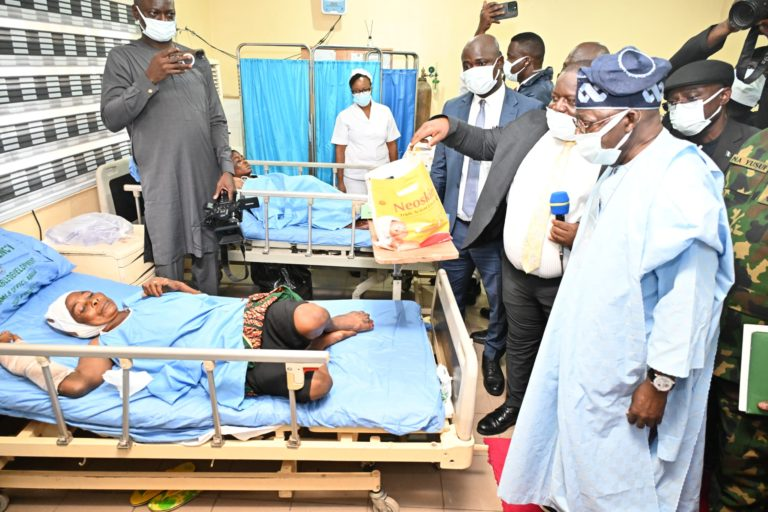
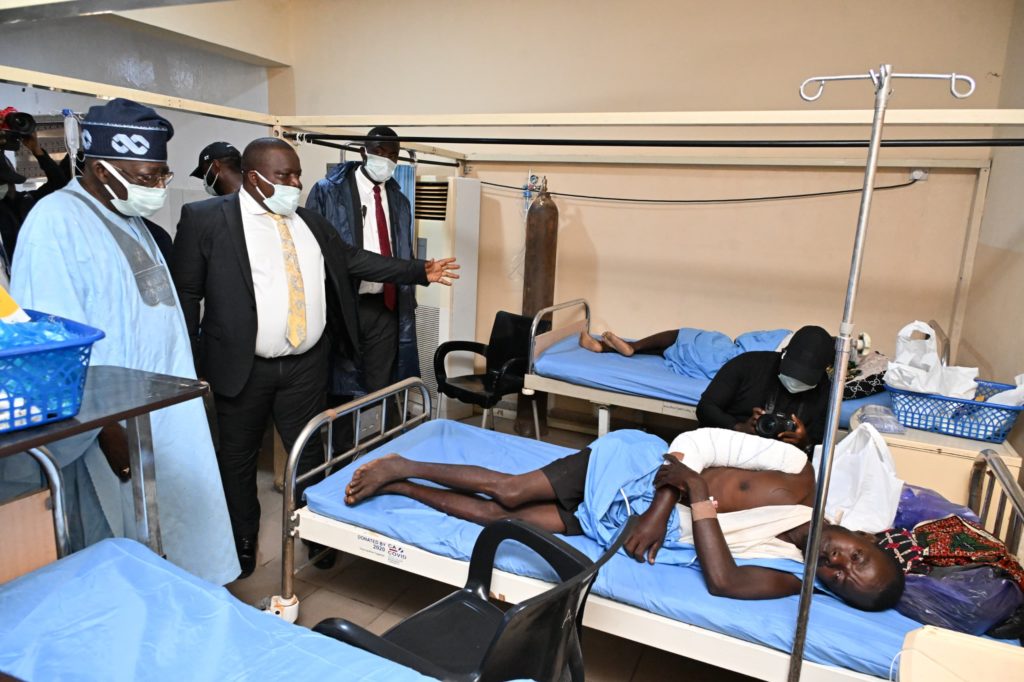
    President Bola Tinubu has visited surviving victims of last Friday’s brutal attack in Yelewata community in the Guma Local Government Area of Benue State.

    Tinubu visited the North-Central state following the attack which left over 59 people dead and several others injured.

    The President went straight to the hospital after arriving at the Tactical Air Command, Nigerian Air Force Base, Makurdi, at about 12:58 pm on Wednesday.

    He later left the hospital for the new Banquet Hall of the Benue State Government House where he is expected to meet with major stakeholders in the state in view of the violent attacks that have led to the loss of lives.

    Tinubu is expected to meet with families of victims, displaced and injured persons, and community leaders directly impacted by the violence.

    The meeting with the stakeholders is part of a broader effort to find a lasting solution to the crisis that has affected parts of the state, especially rural communities.

    Expected at the meeting are key national and state-level figures, including the state governor, Hyacinth Alia; governors from across the country, particularly from the North-Central states; the National Security Adviser (NSA), Nuhu Ribadu, Secretary to the Government of the Federation (SGF), George Akume.

    Also expected to attend are service chiefs, key members of the National Assembly, leaders of the ruling All Progressives Congress (APC), and other prominent individuals, especially those representing affected communities in Benue.

    The state government declared a public holiday for the visit. Channels TV 

    See more photos from the hospital visit below:

  • Workers’ Day in Nigeria: A Day for the Unemployed

    Workers’ Day in Nigeria: A Day for the Unemployed

    By Abdul Mahmud

    Exactly a decade, three years, and a day to the eve of a Workers Day, I sat with my comrade and friend, Uche Onyeagocha. We spoke about the fate of Nigerian workers since the return to civil rule. In the middle of our discussion, Uche, lamenting their condition, said: “Mahmud, to talk about workers without talking about joblessness is dishonest. We cannot celebrate labour in a country that has no work. In our peculiar reality, the Workers Day, while highlighting the plight of millions without jobs or hope, should be a day for the unemployed”.

    Our country is once again celebrating another Workers Day, which once had something of meaning, something of pride, of unfurling of banners, raising of fists in the air, now feels like a joke. A cruel joke played on our workers. The screams of “Patria o Muerte, Venceremos”- homeland or death, we will overcome – still rent the air. The sound of brass bands still plays. But, the meaning that the day once lent to itself has since vanished. The stadia and parade grounds are still filled with banners and pious speeches. But the workers’ souls are empty. The parades continue. The workers’ rallies are now little more than symbolic pageantries characterised by dances that do little to alter the conditions of the working class. But the hope is gone.

    Forget the nonsense of Joy is Coming. There is no joy left. Only pain. Only hunger. Only memories of better times. Workers become ghosts. Present, yet invisible. Moving, yet stuck. Breathing, but barely living. What is a worker whose wages buy nothing? What is labour without dignity? In our country, a job does not always mean a living. Employment does not always mean escape from poverty. Work, for many, is simply another name for suffering.

    The officialdom calls May 1st Workers’ Day. The streets know it by another name. Go outside, look around. Who do you see? Those that the officialdom describes as workers. Teachers owed salaries for months. Nurses who buy their own gloves. Streets’ sweepers who live under bridges. Graduates selling Gala and Lacasera in traffic. There are jobs, the officialdom screams. But the jobs are fake. The statistics lie.

    The National Bureau of Statistics claims our unemployment rate is low. It says only 4.3% – a decrease from 5.0% in Q3 of 2023 – are unemployed. But how? On what planet? In what country? By what measure? If a man sells Zobo for one hour a week, he is counted as employed. If a woman fries akara by the roadside every two days, she too is employed. These statistics are based on the warped NBS methodology that considers anyone who works for at least an hour a week as employed. Wow! The numbers hide the truth, and conveniently conceal the mass unemployment that characterises the labour market. Here: the NBS methodology, illogical, defies commonsense. A fixation wrapped in statistical jargon, dressed as logic and facts. It is a trick. A magician’s act.

    Ours is a country of the jobless. Of the hopeless. Of the underpaid and the undervalued. The real unemployment rate? No one knows. But the evidence is everywhere. Young men on every street corner. Women roaming markets without stalls. Graduates writing CVs with no addresses to send them. A country bleeding potentials. Even those with jobs suffer. Salaries delayed. Pensions denied. Promotions frozen. Hospitals without medicine. Schools without teachers. Offices without electricity. Even Aso Rock, the symbol of presidential inaction, is even going solar. The Nigerian worker does not work to live. He works to survive. Sometimes, barely. The government promised to pay federal workers the minimum of ₦70,000. What is the value of ₦70,000 in today’s world? It cannot buy a bag of rice. It cannot pay rent in any city. It cannot fuel a car for a week. Yet that is what Tinubu calls the minimum wage. A shameful number. A national embarrassment. The cost of living rises every day. Prices double. Salaries do not move. Inflation has no respect. It eats without warning.

    Under President Bola Tinubu, things have worsened. The economy is in chaos. The fuel subsidy is gone. The naira floats like Sapele timberlogs on the River Ethiope. Prices of food and transport have exploded. The poor cannot breathe. The middle class is gone. The rich build new fences. Tinubu’s policies follow the gospel of the market. But the market is cruel. The market has no heart. It serves profit, not citizens. It listens to economists in foreign suits. It does not hear the cries in Ojuelegba or Mararaba. It has no time for the woman carrying basket of tomatoes on her head. Or the boy who walks five kilometres to school.

    It is neoliberalism that Tinubu calls it. Deregulate everything. Let the market decide. Cut subsidies. Cut support. Cut life. Build coastal roads that lead only to his pocket and the pocket of his crony, Gilbert Chagoury, not citizens. Build projects, not futures. That is the vision. That is the madness.

    But a country is not a magic show. It is not the magician’s bag. It is people. Human beings with dreams. With bones that ache. With children to feed. With hopes that die quietly in traffic. The workers suffer still. The youths japa. The factories close. The shops shrink. The streets fill themselves with despair. Our country is turning into a marketplace of sorrow.

    Where are the unions? Where is labour? Where is the rage? Where is the roar of yesterday? The Nigerian Labour Congress used to be a lion. Now it is an efulefu. A folded leaflet. A press release at noon. A handshake with politicians. Union leaders now sit with those who crush workers. They smile over tea. They tweet from air-conditioned offices. But the workers sweat. The workers cry. The workers are alone.

    The Workers’ Day has become theatre. A parade of uniforms and speeches. No soul. No fire. No fight. Only routine. Only performance. But the time for silence is over. Workers must speak. Loudly. Clearly. Angrily. They have nothing to lose but their chains. There is nothing to fear. Fear has already stolen everything. Fear has taken food. Taken shelter. Taken the future. What more can it take? How about the youths? Our country’s ticking time bombs. They are everywhere. On bikes. In kiosks. At betting shops. In embassies. Holding passports. Holding dreams. Many flee the country. Japa. That’s the dream now. To leave. To run. They are all running from a country that eats its own. The NYSC which holds the youths to wishful dreams has become a ritual with no reward. One year of service. Then what? Years of waiting. Of joblessness. Of rejections. Of regrets. The certificate means nothing. The future is blank. Our country breaks its youth. Then, it blames them for failing, for falling from non-existent grace to grass.

    A country that cannot provide jobs for its young is doomed. A country that watches its future rot has no future. The time has come to say it plainly: this country has failed its workers. It has failed its youth. It has failed itself.

    On Workers’ Day, there should be mourning. Mourning for the jobs lost. Mourning for the salaries stolen. Mourning for the factories closed. For the dreams buried. For the families torn by poverty. For the parents who cannot pay fees. For the children who go to bed hungry. There must be anger too. Not the kind that burns buses. But the kind that fuels action. That writes petitions. That mobilises. That organises. That doesn’t agonise. That demands. Citizens must ask: what is the value of labour in our country today? What does work mean in a country where working does not bring food? Where efforts do not bring dignity? Where contributions bring no recognition? There is wealth in Nigeria. There is oil. There is gold. There is gas. But the wealth is hoarded. The oil is stolen. The gold is smuggled. The gas is flared. The rich build castles. The poor build shacks. Inequality is the national flag.

    Let the Workers’ Day become a day of protest. Not a day of praise. Let it be a day of truth. A day of reflection. A day when workers stop pretending. When the unemployed stop clapping for suffering. When citizens start shouting. This country is at a crossroads. It cannot continue hurtling down the road of elite greed and mass misery. It must choose a new path. One built on justice. On fairness. On work that pays. On leadership that listens. Workers must be respected again. The unemployed must be seen. The youths must be given a chance. The unions must find their voice. And the government must remember: no country grows when its people are broken.

    Let us not say “Happy Workers’ Day.” There is no happiness here. Only struggle. There is pain. There is no respite. Workers’ Day must speak not only for the employed, but also for the unemployed, the jobless, the forgotten, and for those trapped in silence and idleness. They must be told: You are not invisible. Your struggle is known. Your worth is unquestionable. Until Workers’ Day is truly a celebration of labour, of jobs, of justice, let it remain what it is: a loud cry from the silent mouths of oppressed workers who have nothing but their silence and chains to lose. Today’s not Workers’ Day. It is the Day of the Abandoned. The Day of the Betrayed. The Day of the Unemployed.

  • PDP accuses Tinubu of hate speech, inciting mutiny and insurrection

    PDP accuses Tinubu of hate speech, inciting mutiny and insurrection

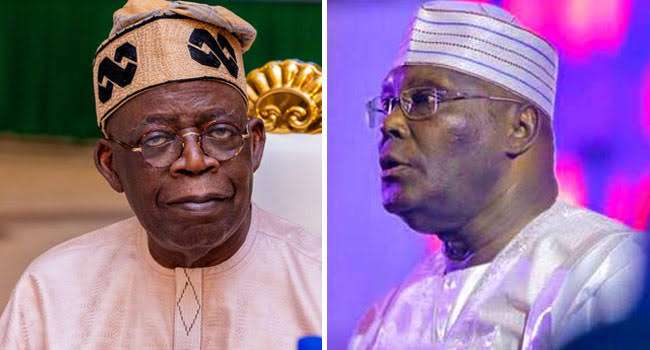
    The Atiku/Okowa Campaign Organisation has accused the presidential candidate of the All Progressives Congress (APC), Asiwaju Bola Ahmed Tinubu, of sending his campaign officials to unleash hate speech against prominent leaders in the North and other parts of the country in a desperate bid to incite Nigerians, cause insurrection and disrupt the 2023 general election.

    But in a swift reaction, the Presidential Campaign Council (PCC) of the All Progressives Congress (APC) has said that the current sabotage of the Naira notes swap and fuel scarcity that have caused untold hardship to millions of Nigerians across the country revealed the true character of the presidential candidate of PDP, Atiku Abubakar, as public enemy number one.

    The Spokesperson of Atiku/Okowa Campaign Organisation, Kola Ologbondiyan, in a statement issued yesterday decried how notable arrowheads and supporters of the Tinubu/Shettima Campaign have been moving around various media houses to spew hate speeches and promote blackmailing narratives apparently with the view to undermining national unity and derailing the electoral process.

    He said Tinubu, who was heavily agonised by his looming defeat in the 2023 general election, having been rejected by Nigerians, has now resorted to incendiary statements as well as deploying top members of his campaign, including a serving governor, to insult and condemn prominent Nigerian leaders as a ploy to trigger crisis in the polity.

    The PDP campaign further alleged that such top officials of the Tinubu Campaign are also reportedly instructed to attack peaceful and well-meaning Nigerians, issue threats, incite mob actions, promote riots and violence in various parts of the country in furtherance of Tinubu’s unrelenting incitement to his followers to deploy violence, fight and snatch power by all means.

    Ologbondiyan recalled how Tinubu recently in London declared to his followers that: “political power is not going to be served in a restaurant, it is not served a la carte. It is what we are doing; It is being determined; you do it at all costs; fight for it, grab it, snatch it and run with it.”

    He also recalled how Tinubu during an APC campaign rally in Abeokuta, Ogun State, made very wild allegations, inciting his followers to see the February 25, presidential election as a “revolution”.

    Ologbondiyan noted: “It is therefore not in doubt that having failed in every parameter of assessing a credible presidential candidate and having realised that he cannot win in the election, the APC presidential candidate is desperately seeking to cause anarchy, mayhem, bloodletting, violence and a forcible overthrow of our democratic system not minding the lives and safety of millions of Nigerians.

    “It is clear that Tinubu is pathetically being driven by an entitlement mentality, and as such, he does not care about the unity of our country.

    “In any case, Tinubu had since announced that he does not believe in Nigeria as a nation. It is therefore obvious that he is in the presidential race for purposes that are not for the wellbeing of Nigerians; thus his readiness to set our nation on fire for his selfish purpose.”

    He noted that it was however pitiable that a two-term governor, who has been spewing divisive insults on the leaders of the nation, could make himself a willing tool just because of personal aggrandizement.

    PDP Campaign, therefore, called on Nigerians to be wary and firmly resist the evil machinations of the Tinubu Presidential Campaign against the nation.

    It stressed that Tinubu and his co-travellers must come to terms with the reality that Nigerians across ethnic, religious and political divides have made up their minds to elect the Atiku as the next president and not even their predilections to violence, hate speech and blackmail can detract from this resolve.

    Meanwhile, the APC PCC said the current sabotage of the Naira notes swap and fuel scarcity have caused untold hardship to millions of Nigerians across the country, while Atiku maintained a graveyard silence.

    APC PCC Director, Media and Publicity, Bayo Onanuga, in a statement issued yesterday said while Atiku and PDP were in bed with the saboteurs and fifth columnists among the operators of Money Deposit Banks and oil marketers who created the current logjam to force the outcome of the February 25 presidential election in favour of the former Vice President, Atiku.

    “Tinubu courageously pitched his tent with the poor masses who have been most negatively impacted by the antics of these evil doers,” Onanuga said.

    He said having realised they had lost the initiative and their antics exposed to Nigerians by Tinubu at the APC Presidential Campaign rally in Abeokuta, Atiku made a half-hearted appeal to CBN to ‘slightly’ extend the deadline for the currency swap.

    Onanuga said Nigerians would recall that since the CBN introduced its current cash-limit and new Naira notes swap policies, Atiku and PDP maintained opportunistic silence with the hope they would benefit from the discomfort the policies would create for Nigerians and the resentment they would generate for the ruling APC.

    He noted: “We are currently at a loss to understand what informed the current call of Atiku on CBN not to extend the February 10 deadline despite the unmitigated hardship still being faced by many Nigerians who could not meet their basic daily needs as a result of lack of cash from banks and the empty ATM machines.

    “Anyone who lives in Nigeria and not Dubai and visits banks and ATM locations will feel sad that the CBN is making our people suffer for its badly timed Naira swap policy.”

    Onanuga stressed that the bank’s latest fire brigade approach in approving payment of N20,000 at the counter was far from offering relief as queues are still long, agony and frustrations widening, an invitation to riots.

    According to him, “This poorly implemented policy has turned Nigerians to destitutes because they cannot access their own money in their bank accounts. People cannot get money to give their kids to school or pay for daily needs at corner shops, fruit shops, including buying newspapers. Transactions in market places have plummeted.”

    Onanuga added that the CBN governor gave insight into the nature of the problem when he revealed in Daura last Sunday that out of the N3.3 trillion in circulation, only N500 billion was in the bank vaults, while only N1.9 trillion had been received by the banks for swap.

    He said: “But people are not getting the new notes to spend, thus triggering the huge anger in the land against Emefiele.

    “We thus find it ludicrous that a man who joined the call for an extension of the deadline last week is championing a new campaign against further extension because he feels the suffering of Nigerians will serve his own political ends to become president at all cost.”

    Onanuga stressed that Atiku as a political leader disconnected from the Nigerian people that he was campaigning to govern, adding that living comfortably in Dubai for many years has drained Atiku of all empathy.

    He stated: “This is a man who wants to be president and does not mind even if he presides over the graves of Nigerians as long as his inordinate ambition materialises in line with the prophecy of his marabouts.

    “It is crystal clear to every Nigerian of conscience now that Atiku Abubakar and PDP do not mean well for our country. PDP and Atiku have become desperadoes who will wish calamity on the country as long as it makes them win an election they are destined to lose, spectacularly.

    “Atiku is now public enemy number one in Nigeria. He is evil personified and must be rejected at the polls on 25 February.” The APC campaign pointed out that if Atiku has the poor people of the country at heart like Tinubu, the PDP candidate would not be advocating for adherence to a policy that has become a burden too heavy to bear for our people

    (This Day)

  • Cracks widen in APC over Tinubu

    Cracks widen in APC over Tinubu

    Cracks appear to be widening on the walls of the ruling All Progressives Congress (APC) over its presidential standard-bearer, Bola Ahmed Tinubu

    Barely a week after he raised the alarm over an alleged plot to sabotage him in the forthcoming election, Governor Nasir El-Rufai of Kaduna State and staunch supporter of Tinubu on Wednesday re-echoed a similar position, saying elements within the presidency were working against the presidential ambition of the former Lagos State governor.

    The reporter recalled that while addressing a campaign rally at the Moshood Abiola International Stadium, Abeokuta, Ogun State, recently, Tinubu alleged that some interests were against the elections as scheduled.

    He specifically said the scarcity of fuel being experienced across the country and the redesign of the naira, the Nigerian currency, were part of the plot to sabotage him at the polls.

    But he assured his supporters, who attended the rally, that neither the elections nor his victory can be stopped.

    Aside from lingering fuel scarcity, Tinubu was referring to the Central Bank of Nigeria (CBN), which had on October 26, 2022, announced its plan to redesign the three banknotes.

    Buhari subsequently unveiled the notes on November 23, 2022, while the apex bank fixed the January 31 deadline for their validity.

    As the January 31 deadline approached, many Nigerians have been lamenting the scarcity of the new notes while the National Assembly demanded a six months extension.

    However, emerging from a meeting with the president on Sunday, the apex bank boss said Buhari gave permission for the deadline to be extended to February 10.

    Mixed reactions had trailed Tinubu’s comments, even as the presidential campaign organisation of the PDP candidate had berated the APC candidate of trying to blackmail President Buhari and blame the APC-led federal government over his “looming rejection by Nigerians.”

    El-Rufai’s bombshell 

    Just as the dust raised by the Tinubu comment was about to settle, Governor Nasir El-Rufai yesterday stirred the hornet’s nest when he declared that elements in the Presidency were working against Tinubu’s candidature.

    El-Rufai, who spoke on Channels Television’s Sunrise Daily programme, said those people backed a different aspirant in the APC presidential primaries but the aspirant did not win the ticket. According to him, people are now hiding behind President Buhari to pursue their interests.

    “I believe there are elements in the villa who want us to lose the election because they didn’t get their way; they had their candidate. Their candidate did not win the primaries.

    “They are trying to get us to lose the election, and they are hiding behind the president’s desire to do what he thinks is right,” he said.

    Aisha, wife of the president yesterday backed El-Rufa’i over his claim that some elements in the presidency are plotting to sabotage Tinubu’s victory.

    The first lady, who wields great influence in the Villa, voiced her support for El-Rufai when she shared a clip of the interview containing the governor’s main allegation against the saboteurs who are non-members of the party and are exploiting the president’s goodwill for their selfish ends.

    El-Rufai’s comment won’t affect Tinubu’s chances – APC 

    The Director of Strategic Communications of the All Progressives Congress (APC) Presidential Campaign Council, Dele Alake told Daily Trust that El-Rufai’s statement has no effect on the chances of the party’s presidential candidate, Bola Ahmed Tinubu.

    Alake said the most important person in the Villa is President Muhammadu Buhari, who he said was very much in support of Tinubu and his emergence as his successor on May 29.

    He said, “The statement is self-explanatory. He said some people; he never said the president.

    “In your individual media houses, you have an editorial policy and there are elements within your organisations that don’t agree with those policies but they still work there.

    “So it is a natural phenomenon in all organisations, in all institutions. Not all staff in organisations see issues the same way.

    “The most important person is the president and Commander-in-Chief. He has spoken often and he said Tinubu is his candidate and he has appealed that we should vote for him who is coming to consolidate his achievements and address whatever challenges that would be left because he has the managerial competence, he has the intellectual acumen, he has an outstanding record of experience and performance.

    “So we know that Bola Ahmed Tinubu is the candidate to beat. Asiwaju is the only fruitful candidate and that is why all of them are envious of him. But that has never won them an election and this one won’t be different”, he said.

    Cabal fighting back – CSO, dons

    The Executive Director, Coalition of Democrats for Electoral Reforms (CODER), Dr Wunmi Bewaji, said El-Rufai’s comment is an indication that some members of the Aso Rock cabal are still aggrieved with the outcome of the APC primaries.

    “The implication is these are people who are taking advantage of Buhari himself. When you say somebody is president, of course, there are a whole lot of people surrounding him.

    “We heard what Governor Ortom of Benue said, of how he was prevented from seeing the president by some powerful forces within the villa. So these are people, by nature of what they do around the president, who could determine what happens in the country. Unfortunately, at the end of the day, it is the president that will be blamed by the people.

    “When Asiwaju made that statement in Abeokuta, those who were ignorant of what was going on thought there is a problem between Asiwaju and Buhari. Absolutely not! The same people, this same cabal who wanted to be the one to determine who will succeed Buhari come 2023, are the same people who recruited all the people that Asiwaju defeated.

    “They recruited all of them and in the end their candidates lost. This is it, but by and large, it is manifesting clearly that it is not Buhari that is against Bola Tinubu. It is the so-called cabal that he has defeated during the primaries. He defeated all their candidates and of course, they are already jittery,” Bewaji, a former member of the House of Representatives said.

    On his part, a university don, Prof. Gbade Ojo said, “It is a demonstration of a party that is not cohesive. Ordinarily, there cannot but be quislins in a political party but where irreconcilable differences cannot be managed to the point of working against the flag bearer of the party, sad enough it means Mr. President is not in charge!”

    Reacting, a renowned political scientist, Professor Kamilu Sani Fage of Bayero University, Kano (BUK) said the utterance from the Kaduna state governor is not strange as it is “part of Nigeria’s party politics which is devoid of any clear-cut ideologies separating the parties. Therefore, you have these 5th columnists in every part that as losers tend to sabotage and go about with the mentality of ‘if I can’t get it, no one else should.”

    He said what is happening in the ruling party is similar to the face-off between Atiku Abubakar, the presidential candidate of the PDP and the G-5 governors led by Rivers State governor, Nyesom Wike.

    He also likened the development to a similar crisis within the then Action Group (AG) that led to the collapse of the First Republic and also a similar crisis in the then Peoples Redemption Party (PRP) in the Second Republic.

    “This does not augur well for democracy. It is undemocratic and positions like this (sabotaging one’s party) is a short-sighted approach because if your party loses, the opposition will give all of you tough times,” he added.

    Buhari not supporting anybody – Lai

    Contacted, the Senior Special Assistant to the President on Media and Publicity, Malam Garba Shehu, simply replied: “You want to know the names? Wouldn’t it be better for you to ask the governor?”

    However, the Minister of Information and Culture, Alhaji Lai Mohammed, while reacting to El-Rufai’s statement, said officially, the government was not aware of anyone within the Presidential Villa engaging in such action.

    He said the government had been fair to all candidates regardless of party affiliation and that President Muhammadu Buhari had consistently demonstrated that he was for free, fair and credible elections.

    The minister, who was asked to react after the Federal Executive Council (FEC) meeting, said: “On a more serious note, one thing I can assure you is that no matter what, this administration is focused, determined to ensure free and fair elections. But I think with this administration, the most important person is Mr. President and I think he has shown by words and by deeds that he is dedicated to free, fair and credible elections.

    “Fair, free, credible elections means not backing anybody. And everywhere he goes, he makes that very clear even as recently as Friday when he was in Daura, he said the same thing. If there’s anybody working against a candidate, we don’t know officially.”

    (Daily Trust)
  • Police, soldiers, FRSC prevent guests from entering Niger State APC rally, says its ‘order from above’

    Police, soldiers, FRSC prevent guests from entering Niger State APC rally, says its ‘order from above’

    The crisis rocking the Niger State chapter of the All Progressives Congress, APC, has deepened as security operatives have cordoned of the New Bussa Township Stadium, Borgu local Government Area venue for the APC presidential and governorship candidates.

    The Police, soldiers, men of the Federal Road Safety Corps, FRSC, Civil Defence Corps and the local vigilante group were deployed to the New Bussa Stadium venue of the planned rally as early 8a.m. for an event slated to hold from 11am to 2pm.

    The army came in two loaded pick-up vans, while the Police men were dispatched from the state headquarters to join their colleagues in New Bussa to ensure that no one gets in into the already prepared venue.

    Journalists, invited guests and supporters, who came for the rally, were turned back by the police operatives citing “order from above”.

    The closure of the stadium came barely 24 hours after the commissioning of the rehabilitated New- Bussa Township Stadium, Borgu, Niger State, by the Deputy Chief Whip of the Senate, Senator Aliyu Sabi Abdullahi (APC, Niger North) who rehabilitated the said stadium.

    A Support Group, 774, under the leadership of the senator representing Niger North, Aliyu Sabi Abdullahi, had planned a “Grand Lockdown Rally” for the presidential candidate, Asiwaju Bola Tinubu and his running mate, Senator Kashim Shettima, as well as the governorship candidate, Umar Mohammed Bago and his running mate Comrade Yakubu Garba.

    The mega rally was billed to hold at the New Bussa township stadium today, Tuesday, to mobilise supporters for the candidates.

    The Deputy Whip of the Senate, who is also the National Coordinator, Project 774 for Tinubu/Shettima, 2023, had through his Special Assistant (Operations), Mohammed Garba Danladi in a letter dated January 27 and addressed to the state party Chairman, Haliru Zakari Jikantoro notified the party of the planned rally.

    Senator Sabi, in the letter, also stated that the State Working Committee of the party was invited to the Grand Lockdown Rally for the candidates and their running mates on the need to galvanise support and positively enhance the party’s chances at the polls.

    Working Committee

    However, the State Working Committee of the party, in a statement in Minna on Monday by the publicity secretary, Mallam Musa Dan Sarkindaji, said the Chairman of the party, Haliru Zakari Jikantoro has disassociated himself from the rally.

    The four paragraph statement, titled “Niger APC Disassociated Herself From Lockdown Rally in Borgu” and signed by the publicity secretary, also directed all party faithful not to honour and attend such rally, claiming that the planned rally contravene unified campaign structure as designed by the party.

    According to the statement, “The All Progressives Congress (APC) in Niger State under the leadership of Haliru Zakari Jikantoro has disassociated itself from lockdown rally organized in New Bussa, Borgu Local Government Area of the state.

    “The party wishes to draw attention of all party faithful not to honour and attend such rally as it contravene with unified campaign structure as designed by the party.”

    The Party instead urged its executives, stakeholders and party loyalists to attend the grand zonal rally which is scheduled for Wednesday, February 2 in Bida, headquarters of Bida local government.

    However, no reason was given for the action of the party, but it was gathered that the state governor, Alhaji Abubakar Sani Bello, who is the leader of the party in the state, had instructed the party to stay away from the planned rally, a confirmation of the Cold War between him and the senator, the organiser of the rally.

    Why we sealed of stadium — Police

    However, DSP Wasiu Abiodun, Police Public Relations Officer, PPRO, Niger State Police Command said in a reaction that the Police had to take over the venue of the planned rally, as a proactive measure due to intelligence received of likely breach of security at the venue.

    “Hence, we have to do the needful to avert any possible attack or hijack by suspected miscreants to cause mayhem and breach of peace in the community.

    “The Command will not fold its alms and allow act of political violence, avoidable loss of life, destruction of properties and lawlessness,” Abiodun added.

    (Vanguard)

  • Tinubu describes Peter Obi as “ill-equipped” at Anambra Rally

    Tinubu describes Peter Obi as “ill-equipped” at Anambra Rally

    The presidential candidate of the All Progressives Congress (APC), Bola Tinubu says Peter Obi, standard bearer of the Labour Party (LP), is a danger to those who will fall for his “misrule”.

    He said this while speaking on Tuesday at a rally in Awka, capital city of Anambra, Tinubu said Obi lives in Lagos because he is “guilty” of not developing his home state.

    Tinubu stated this as a reason for the residents of Anambra not to vote for Obi as president because he was “ill-equipped” to be governor.

    Tinubu was quoted to have said “I know I can do these things because I made similar progress when governor of Lagos. Meanwhile, one of my opponents is a former governor of your state. But he does not live among you. He lives in Lagos,” he said

    Tinubu claims he lives in Lagos because he is pleased with the progress made in turning Lagos into one of Africa’s biggest economies. He further explained that Obi, however, refuses to live among his people because he feels guilty for not giving you the development and growth you deserved from him.

    The APC presidential candidate said “Mr. Stingy refused to use the state’s money to help its people. He sacrificed your welfare and wellbeing so that he can boast that he saved money. But what good is saving money if you refuse to save your own people?

    He claimed “That type of man is a danger to those unfortunate enough to be subject to his misrule. Such a man was ill equipped to be your governor. Do not make him your president.”

    While speaking at another rally in Calabar, the Cross River capital, Tinubu said the Peoples Democratic Party (PDP) could not provide electricity to roast corn while it was in power for 16 years.

    The former governor of Lagos also said Atiku Abubakar, the presidential candidate of the PDP, would sell government assets for himself if elected.

    “Don’t mind PDP and their lies of 16 years. They can’t provide electricity to roast corn. They keep on lying,” he said.

    “They say privatisation, privatisation into Atiku’s pocket. We must end that. PDP does not know the way. They don’t know how to think.”

    (Arise News)

  • At NESG, Tinubu says budget deficit not bad; insists petroleum subsidy must go

    The presidential candidate of the All Progressives Congress (APC), Bola Tinubu, says deficit budget in itself is not bad, if well deployed.

    He also said the petrol subsidy regime in Nigeria must go, as it has overstayed.

    Mr Tinubu stated these while making a presentation to the Nigerian Economic Summit Group (NESG) on Friday in Lagos.

    He said a deficit budget is not inherently bad, adding that all modern economies run it.

    The former Lagos State governor has consistently maintained opposition to austerity policy, as he advocates expansionary fiscal policy to tackle inflation.

    “The most powerful and wealthiest governments run deficits, as do the poorest nations.

    “A budget deficit is not necessarily bad. Look at the Japanese example with high government borrowing and low inflation. The real issue is whether deficit spending is productive or not unproductive. Deficit spending is a compound negative, especially if backed by excessive borrowing of foreign currency. This is not classroom economics but it is the lesson of the real economic history of nations,” he said.

    However, his message is coming at a time the country is steep in debt, as the administration of President Muhammadu Buhari is unable to balance its revenue and expenditure. To bridge the gap, the government relies on borrowing to finance its budget.

    The deficit in the 2023 Appropriation Act recently signed by Mr Buhari stands at over N12.1 trillion – over 50 per cent of the N21.83 trillion 2023 budget. In addition, the Debt Management Office (DMO) puts the entire debt profile of the country at N77 trillion.

    Meanwhile, there is N23.7 trillion Ways and Means loan from the Central Bank of Nigeria that Mr Buhari has asked the National Assembly to securitise for 40 years.

    I disagree with mainstream thought on inflation — Tinubu

    In his presentation, Mr Tinubu expressed opposition to the conventional approach of raising interest rate to combat inflation, describing it as “harsh medicine.”

    Nigeria’s inflation rate as of December 2022 is 21.4 per cent.

    “I do not hold to the mainstream view that all forms of inflation are best tackled by interest rate hikes and shrinking the economy. Supply-induced inflation does not lend itself to this harsh medicine, just as one does not cure a headache by plucking out one’s eye,” he said.

    He stressed that monetary policy is too weak to address inflation, rather, his government would deploy more of fiscal policy.

    “Fiscal policy will be the main driver. Monetary policy is weaker and a less effective instrument. Bad monetary policy is, of course, destructive. But even good monetary policy cannot carry the load the fiscal arm can,” he said.

    Speaking further, Mr Tinubu added that petroleum subsidy must go, stressing that the subsidy regime has overstayed its usefulness.

    “It is based on this idea that I believe we must remove the PMS subsidy immediately. It has outlived its shelf life as a public good. We will neither subsidise neighbouring countries’ fuel consumption nor allow a select few to reap windfall profits and hoard products.

    “And the subsidy money will not be ‘saved’ because that means elimination from the economy. Instead, we will redirect the funds into public infrastructure, transportation, affordable housing, education and health, and strengthen the social safety net for the poorest of the poor. thus averting increased security challenges,” Mr Tinubu stated.

    He pledged to remove artificial fiscal restraint, and embark on policies to guarantee 10 percent GDP growth per annum.

    Mr Tinubu will face Peter Obi of the Labour Party, Atiku Abubakar of the Peoples Democratic Party, and 15 other presidential candidates at the 25 February poll.

    (Premium Times)