Tag: revenue

  • Anambra Begins Tax Enforcement Against Defaulters After Regularisation Window Closes

    Anambra Begins Tax Enforcement Against Defaulters After Regularisation Window Closes

    Precious Nwonu, Enugu

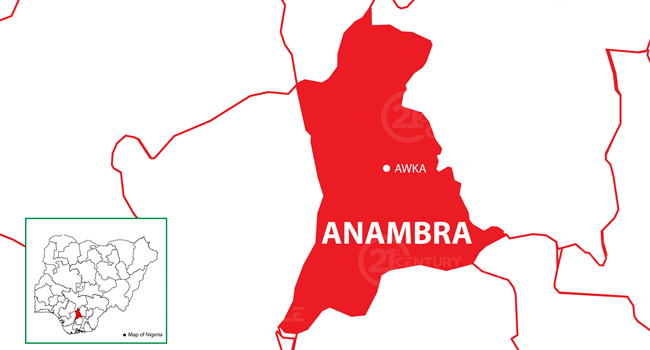
    The Anambra State Internal Revenue Service has commenced enforcement measures against individuals, businesses and corporate organisations that have failed to meet their tax obligations in the state.

    The Executive Chairman of AIRS, Ikeazor Okonkwo, announced this on Tuesday at a press briefing held at the agency’s headquarters in Awka.

    Okonkwo said the enforcement followed the expiration of the Voluntary Assets and Income Declaration and Tax Regularisation Scheme on September 5.

    He explained that the scheme had allowed taxpayers with outstanding liabilities to regularise their tax affairs and benefit from available concessions.

    With the expiration of the programme, he said AIRS had moved into the enforcement phase in line with existing tax laws.

    He said those targeted include taxpayers who failed to regularise their liabilities under the scheme, individuals and businesses that received Best of Judgment assessments but failed to challenge or settle them within the stipulated period, as well as taxpayers found to have underpaid or under-remitted taxes.

    According to him, defaulters could face statutory sanctions, including the issuance of final demand notices, sealing of premises where applicable, recovery of outstanding liabilities and prosecution for established tax offences.

    Okonkwo urged affected taxpayers to use the available opportunity to resolve their outstanding obligations and comply with the state’s tax laws.

    He disclosed that about 500,000 taxpayers had so far been captured in the agency’s database, while AIRS was working towards adding another 500,000 taxpayers to reach a target of one million.

    The chairman said technology would play a major role in the enforcement exercise, noting that digital systems would be used to reduce unnecessary physical interaction between tax officials and taxpayers.

    He added that AIRS had embarked on extensive sensitisation campaigns before commencing enforcement, using radio and other media platforms, churches, markets and public address systems to educate residents about their tax obligations.

    Okonkwo also announced plans to establish an alternative dispute resolution mechanism to handle genuine complaints from taxpayers who disagree with their assessments.

    He said taxpayers with legitimate objections would be given an opportunity to present their cases for consideration, while those without valid objections would be expected to settle their outstanding liabilities.

    The AIRS chairman said the agency had already identified taxpayers who had failed to comply and was working with its legal advisers to determine the appropriate enforcement procedures.

    He outlined four broad categories of taxpayers: those who were already compliant and should maintain their status; those with genuine objections who could present their cases; those without valid objections who should make the required payments; and others with outstanding obligations who must regularise their tax affairs in accordance with the law.

    Okonkwo said the enforcement was part of efforts to improve the culture of tax compliance in Anambra.

    He explained that taxpayers were expected to declare income from various sources, including salaries, rent, investments and business activities, and pay the appropriate taxes.

    According to him, AIRS spent its first six months prioritising taxpayer education and engagement while analysing available data to identify areas of significant non-compliance.

    He said the agency would continue to pursue outstanding tax obligations within the limits of the law while encouraging compliant taxpayers to maintain their status.

    Taxpayers seeking clarification or verification were advised to visit the AIRS website or contact the agency through its official email addresses and customer service lines.

    The enforcement exercise comes amid efforts by state tax authorities across the country to increase domestic revenue and improve taxpayer registration and compliance.

    In Anambra, AIRS said its ongoing expansion of the taxpayer database and adoption of digital systems would help improve the identification of taxable individuals and businesses across the state.
  • Minister of Finance unveils FG’s initiative for a robust revenue generation that would meet 2022 budget

    Minister of Finance unveils FG’s initiative for a robust revenue generation that would meet 2022 budget


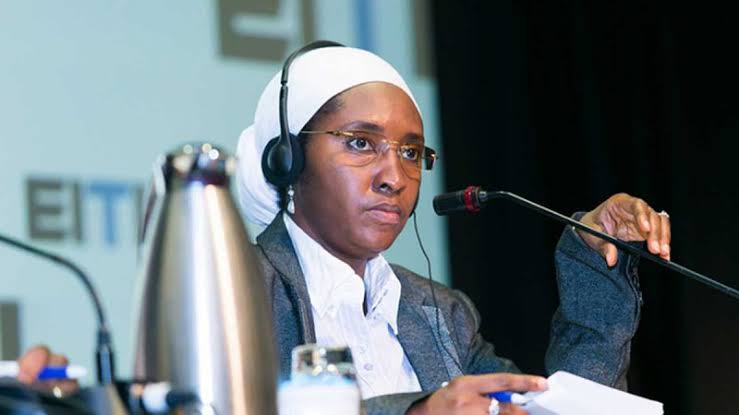
    The Minister of Finance, Budget and National Planning, Mrs. Zainab Ahmed, has unveiled the federal government’s strategic initiative for a robust revenue generation that would meet the federal government’s N10. 74 trillion target, with which to fund the 2022 budget.


    She said at the federal government’s 2022 Budget Public Presentation, in Abuja, on Wednesday, that revenue generation remained the major fiscal constraint of the federal government and that her team would vigorously pursue the administration’s Strategic Revenue Growth Initiatives to improve its fiscal position in the year.


    According to her, “Several measures are being instituted under the Administration’s Strategic Revenue Growth Initiatives to improve government revenue and entrench fiscal prudence with emphasis on achieving value for money.”


    Some of the specific actions under the initiatives, Mrs. Ahmed said would include, “Evaluation of the process and policy effectiveness of Fiscal Incentives, including the review of sectors eligible for Pioneer Tax Holiday Incentives under the Industrial Development Income Tax Relief Act; dimensioning the cost of tax waivers/concessions, and evaluating their policy effectiveness; setting annual ceilings on Tax Expenditures to better manage their impact on already constrained government revenues; and ensuring that MDAs appropriately account for and remit their internally-generated revenue.”


    Besides, the minister said that her team would identify and plug existing revenue leakages to enhance tax compliance and reduce tax evasion, as well as, leverage technology and automation to eliminate fiscal drainers like subsidies.


    Revenue streams


    According to the minister, an oil revenue forecast of N 3.362 trillion to fund the 2022 budget would be higher by N1.350 trillion (67.18%) above the previous year’s target of N 2.011 trillion.


    Similarly, FG share of Non-Oil Taxes would be expected to stand at N 2.132 trillion, this year, which is about 43.27 percent above last year’s budget of N1.488 trillion.


    Mrs. Ahmed said that N2.216 trillion would be earned as Independent Revenue, up from the 2021 budget of 1.061 , which recorded actual collection of N1.1 trillion, as at November, last year.


    Other revenue streams, according to the minister were: Dividend from various investments in companies, N195. 716 billion; NLNG Dividend, N187.397 billion; Share from Share of Minerals & Mining, N2.915 billion; Share of Electronic Money Transfer Levy (formerly called Stamp Duty), 29.367 billion down from 500 billion in the preceding year; and Share of Oil Price Royalty, N96.943 billion.


    The rest were: Revenue from Government Owned Enterprises (GOEs), N3.306 billion, up from N2.173 billion budgeted for 2021; Draw down from Special Levies Accounts, N 300.000 billion; Signature Bonus 280.855 billion; Domestic Recoveries, N 26.933 billion; Grants and Donor Agencies funding, N63.376 billion; and Education Tax, N305.998 billion.


    Source: www.vanguardngr.com

  • FG generates 73% of its 2021 targeted revenue.


    Nigeria’s Minister of Finance, Budget and National Planning, Mrs Zainab Ahmed, says the the Federal Government has generated N3.93 trillion, being 73 per cent of its targeted N7.9 trillion revenue for 2021.


    She made the disclosure on Friday in Abuja, at the Public Presentation and Breakdown of the Federal Government 2022 Appropriation Bill.


    The News Agency of Nigeria (NAN) reports that President Muhammadu Buhari presented the N16.39 trillion 2022 Appropriation Bill to a joint session of the National Assembly on Thursday in Abuja.


    According to Buhari, total revenue available to fund the 2022 Federal Budget is estimated at N10.13 trillion, including grants and aid of N63.38 billion, as well as the revenues of 63 Government-Owned Enterprises (GOEs).


    Described as a budget of Economic Growth and Sustainability, it was predicated on a conservative oil price benchmark of US$ 57 per barrel with daily oil production estimate of 1.88 million barrels per day.


    The minister said the exchange rate of N410.15 per US dollar and projected Gross Domestic Product (GDP) growth rate of 4.2 per cent and 13 per cent inflation rate, were also taken into consideration.


    Ahmed said that of the generated revenue for 2021, the Federal Government’s share of oil revenues was N754.2 billion, representing 56.3 per cent of performance of the prorated sum.


    She added that non-oil taxes revenues stood at N1.15 trillion, representing 115.7 per cent, which was above what was targeted in the 2021 budget.


    On the expenditure side, the minister said that N8.14 trillion had been spent out of the N9.71 trillion prorata budget, adding that it was inclusive of expenditure estimates of Government-Owned Enterprises (GOEs), but excluded project-tied loans.


    Giving a breakdown of the expenditure, Ahmed said that N2.87 trillion had been expended on debt service and N2.57 trillion for personnel cost, including pensions, while N1.79 trillion had been expended for capital projects.


    Speaking on the 2022 Appropriation Bill, Ahmed said that the N16.39 trillion proposed to be spent was 12.2 per cent higher than the initial 2022 Medium Term Expenditure Framework (MTEF).


    She said that of the amount, N10.132 trillion was projected to be generated as revenue and N6.26 trillion which was 3.39 per cent of GDP as deficit would be financed majorly by borrowing.


    According to her, to fund the deficit, N2.51 trillion would come from domestic sources, another N2.51 trillion from foreign borrowing, N1.16 trillion from multi- and bi-lateral loan drawdowns and N90.7 billion from privatization proceeds.


    For the revenue, she said that N3.53 trillion would come from oil, N2.13 trillion from taxes, N1.816 trillion from independent revenue, N1.728 trillion from retained GOEs and N924.31 billion from other revenue sources.


    On expenditure, she said that recurrent expenditure, which is non-debt spending, was estimated to cost N6.83 trillion, while aggregate capital expenditure was pegged at N5.35 trillion and N3.61 trillion would go for debt servicing, while N292.7 billion would provide for retirement of maturing bonds to local contractors and suppliers.


    Speaking on critical sectoral allocations, Ahmed said that defence and security sector, at 15 per cent, would get N2.41 trillion, infrastructure at 8.9 per cent N1.45 trillion and education sector 7.9 per cent of the budget at N1.290 trillion.


    For the health sector, 5 per cent of the total budget at N820.2 billion and social development and poverty reduction programmes at 5.3 per cent of the budget would get N863 billion.


    Ahmed, however, said that the 2022 budget was expected to further accelerate the recovery of the nation’s economy.


    “We are optimistic of attaining more inclusive GDP growth as we focus on achieving our objective of massive job creation and lifting millions of our citizens out of poverty.


    “Early passage of the 2022 budget for implementation from January 1 will significantly contribute towards achieving government macro-fiscal and sectoral objectives.”


    She said that though revenue currently remains the nation’s fiscal challenge, government remained committed to the effective implementation of the Strategic Revenue Growth Initiatives (SRGI).


    Source: www.vanguardngr.com

  • FG pledges its commitment to increase revenue generation and enhance the economy


    The Federal Government has pledged its commitment to improving revenue generation and enhancing economic competitiveness in the country.


    The Minister of Finance, Zainab Ahmed, made the pledge on a virtual platform on Monday during the Executive Roundtable on the Finance Act 2020 and Economic Outlook for 2021 organised by PricewaterhouseCoopers.


    In her opening remarks, she said, “The Federal Government of Nigeria will continue to champion economic policies aimed at improving revenue generation, enhancing economy competitiveness, encouraging domestic investors and enhancing macroeconomic stability despite the significant challenges posed by COVID-19.


    “This administration is committed to stimulating economic growth by fostering economic resilience in our business communities and broader economy in line with the thematic thrust of the 2021 budget.


    “I want to also add that the Federal Government is forging stronger collaboration with the subnational government, state government as well as the local government.”


    PwC Partner and Chief Economist, Dr Andrew Nevin, asked Nigeria to leverage on exporting services to the world.


    He said Nigeria had a populace of intellectuals earning foreign exchange which should be leveraged on.

    ‌

    He said, “Nigeria exports brains and we are earning significantly from it around the world and that is the asset we need to optimise.


    “The interesting thing is that we can export brains from Nigeria without people leaving Nigeria. In fact, if you think about Nigeria’s unique conditions, our ability to export is not manufactured goods.”


    PwC Tax Leader, Mr Taiwo Oyedele, who spoke on the import levy on cars said that the total tariff to be paid on imported cars was 40 per cent as against five per cent that has been in the public domain.


    He said, “This is really important to clarify. For new cars, it is only the levy that has been reduced from 35 to five per cent. The import duty of 35 per cent is still available on new and used cars which means for a new car, the total tariff you pay on import is 40 per cent.”


    Oyedele explained that 40 per cent levy was still high enough to en courage people to buy locally.


    Source: www.punchng. com

  • CAC generates N19bn for its 2020 fiscal year


    The Corporate Affairs Commission on Monday announced a revenue generation of N19bn for its 2020 fiscal year.

    It also announced a total remittance of N2.7bn to the consolidated revenue account of the Federal Government.


    The Registrar-General, CAC, Garba Abubakar, told journalists in Abuja that the commission had also settled all its tax obligations, adding that the obligations were negotiated downwards by the commission’s management.


    “We have settled all our tax obligations. The tax obligations were over N1.2bn when I took over and we were able to re-negotiate and have paid N700m and got a discount of about N500m to N600m,” he said.


    Abubakar added, “For the first time we were able to pay operating surplus of over N2.7bn to the Federal Government. If not for the outstanding liabilities, the operating surplus would have been more than N5bn.”


    On revenue generation, the CAC boss said the commission surpassed its 2020 target by about N1bn.


    He said the feat was achieved after the commission blocked areas of leakages to its revenue generation drive.


    “We had a projected revenue target in 2020 of N18.2bn and we closed the year with over N19bn,” Abubakar stated.


    He explained that about 85 per cent of the N6bn liability of commission which he inherited had been paid.


    READ ALSO: 243 COVID-19 violators convicted, pay N4.8m fine


    He said to ensure the integrity CAC records, the commission had directed a revalidation exercise for all its accredited customers.


    According to him, the revalidation exercise would last till March 31 this year, as anyone who fails to validate their records would not be able to transact business with CAC.


    The CAC helmsman also vowed that no union would close the headquarters of the commission beginning from today (Tuesday), stressing that the industrial crisis at the commission was being addressed.


    Abubakar said qualified employees of the commission had been promoted, while most of the pensions arr ears of staff had been cleared.


    Source: www.punchng.com

  • Crude Oil : Nigeria’s oil export revenue increases as the price of a barrel rises above $55


    The international oil benchmark, Brent crude, extended its gains on Friday, rising above $55 per barrel, in what is a potential boost to Nigeria’s crude oil export revenue.


    Brent crude, against which Nigeria’s oil is priced, hit an 11-month high of $55.41 per barrel as of 2:50pm Nigerian time on Friday, trading more than $15 higher than the Federal Government’s benchmark for the 2021 budget.


    The 2021 budget, which was signed by the President, Major General Muhammadu Buhari (retd.), on December 31, was based on an oil price benchmark of $40 per barrel and a production level of 1.86 million barrels per day.


    The upturn in oil prices was supported by Saudi Arabia’s pledge to cut output and a global stocks rally as investors looked beyond rising coronavirus cases, according to Reuters.


    “The surprise Saudi cut is keeping bulls at the helm. It will take a brave man to bet against the current bullish run of play,” said Stephen Brennock of oil broker PVM.


    Saudi Arabia this week pledged extra, voluntary oil output cuts of one million barrels per day in February and March as part of a deal under which most OPEC+ producers will hold production steady in the face of new coronavirus lockdowns.


    However, analysts said oil prices could see a correction in coming months, if their rallies were not backed by stronger fuel demand.


    Severe mobility restrictions around the world to contain a surge in COVID-19 cases still weighed on fuel sales, weakening the prospect of energy demand recovery in the first half of 2021.


    “Oil markets are expected to stay in a bullish tone towards February,” said Kazuhiko Saito, chief analyst at commodities broker Fujitomi Co.


    “But concerns over slower demand in gasoline and other fuels in the United States and other parts of the world due to wider restrictions to contain the spreading COVID-19 pandemic may limit gains.”


    ‌

    The pandemic claimed its highest US death toll yet, killing more than 4,000 people in a single day, while China reported the biggest rise in daily cases in more than five months and Japan may extend a state of emergency beyond the greater Tokyo region.


    A rally in global shares also lent some support to oil prices, with Japan’s Nikkei hitting a three-decade peak, as investors looked beyond rising coronavirus cases and focused on hopes for an economic recovery later in the year.


    As a sign of tighter supply following Saudi Arabia’s cut, seven North Sea crude cargoes were bought and sold in the trading window operated by Platts on Thursday. Normally, just one or two cargoes change hands each day.


    Source : www.punchng.com