Tag: Opec

  • OPEC Secretary-General, Barkindo, is dead

    Barely 24 hours after he was received by President Muhammadu Buhari on Tuesday in Abuja, Mohammed Barkindo, the 4th Organisation of Petroleum Exporting Countries (OPEC Secretary-General is dead.

    Group Managing Director of the Nigeria National Petroleum Corporation (NNPC), Mela Kyari, via his verified Twitter handled @MKkyari tweeted at 4:32: “We lost our esteemed Dr Muhammad Sanusi Barkindo. He died at about 11pm yesterday 5th July 2022. Certainly a great loss to his immediate family, the NNPC, our country Nigeria, the OPEC and the global energy community. Burial arrangements will be announced shortly.”

    Buhari, had in the short reception said: Barkindo’s six-year tenure were challenging brought about by challenges that were crippling the oil market and COVID-19 pandemic that sent crude prices spiralling down at an alarming rate.

    He has described him as a worthy ambassador of the country.

    The President had also said posterity will remember him kindly for making the nation and himself proud during his six years of meritorious service.

    He had the. directed the Ministry of Petroleum Resources and the Nigerian National Petroleum Company (NNPC) Limited to mobilise the oil and gas industry to organise a befitting welcome reception in honour of Barkindo.

    “You have indeed been a worthy ambassador of our country. We are proud of your achievements before and during your appointment at OPEC and the proud legacies you will leave behind.

    “Your time in charge of the affairs of OPEC has been a very challenging one for the global oil industry. Oil producers were finding it difficult to come together to address challenges that were crippling the oil market.

    “Not long after, the world was faced with the COVID-19 pandemic that sent crude prices spiralling down at an alarming rate. You showed incredible leadership to rally industry players and pushed through the turbulent times.

    “There is no doubt about your efforts in putting together the Declaration of Cooperation which is the largest in the history of OPEC and the global oil industry and also the longest in duration in the history of the organization. This was a herculean task,” he said.

    Buhari heaped more praises on Barkindo for providing experienced administrative management to OPEC, adding that his efforts have placed the organization in a stronger position to confront the challenges it will face in the coming years.

    (Sun)
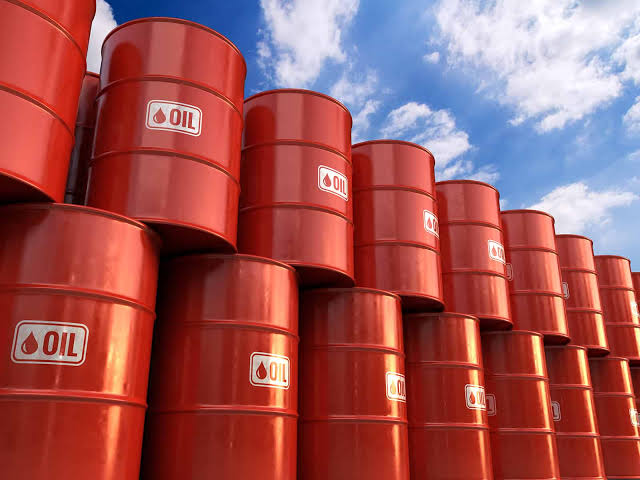
  • OPEC raises Nigeria crude oil quota to 1.799million barrels per day

    OPEC raises Nigeria crude oil quota to 1.799million barrels per day

    The Organisation of Petroleum Exporting Countries (OPEC) has increased Nigeria crude oil quota from 1.772million barrels per day for June 2022 to 1.799million barrels per day in July 2022.

    According to the world’s oil supply governing body, the raise was by 27,000 barrels, translating to 3.4% increase in the month of July.

    The cartel disclosed the news in its press statement on its 29th OPEC and non-OPEC Ministerial Meeting was held via videoconference on Thursday.

    In the statement, OPEC also approved the highest production volume of 10.833million barrels per day for Saudi Arabia and Russia.

    As the United Arab Emirates is to produce 3.127million barrels per day, Iraq and Kuwait are to produce 4.580million barrels per day and 2.768millions barrels per day respectively, the organisation ratified 1.753million barrels per day for Mexico and 1.680million barrels per day for Kazakhstan.

    The increase made Nigeria to be top on the list of its African counterparts and followed by Angola that got approval for 1.502million barrels per day.

    According to OPEC, the meeting “advance the planned overall production adjustment for the month of September and redistribute equally the 0.432 mb/d production increase over the months of July and August 2022.

    “Therefore, July production will be adjusted upward by 0.648 mb/d as per the attached schedule.”

    The meeting, said the cartel, resolved to reaffirm the decision of the 10th OPEC and non-OPEC Ministerial meeting on 12 April 2020 and further approved in subsequent meetings, including the 19th OPEC and non-OPEC Ministerial Meeting on the 18 July 2021.

    It also affirmed the production regulation plan and the monthly production adjustment mechanism approved at the 19th OPEC and non-OPEC Ministerial Meeting and the decision to adjust upward the monthly overall production by 0.432 mb/d for the month of July 2022.

    It extended the compensation period until the end of December 2022 as requested by some underperforming countries and request that underperforming countries submit their plans by 17 June 2022.

    On compensation plans, OPEC said it should be submitted in agreement with the statement of the 15th OPEC and non-OPEC ministerial meeting.

    It, however, restated the critical significance of observing total conformity and to the compensation mechanism.

    The meeting resolved to hold the 30th OPEC and non-OPEC Ministerial Meeting on June 30, 2022.

    (Vanguard)

  • OPEC: Discontinue investments in oil and gas industry


    The Organisation of Petroleum Exporting Countries on Tuesday kicked against calls for the discontinuation of investments in the oil and gas industry, describing such calls as dangerous.


    Secretary-General, OPEC, Sanusi Barkindo, spoke in a keynote address on ‘Global oil market dynamics in a decarbonising world’, at the 20th Nigeria Oil and Gas Conference and Exhibition in Abuja.

    In his virtual address, the OPEC scribe said investors, environmental lobbyists and even some corporate boards were pressuring oil companies and governments to pursue radical policies and initiatives that could, in the end, be more disruptive than productive for the global energy industry.


    He said, “There have recently even been calls for investments in oil and gas to be discontinued, which is a dangerous and unrealistic scenario. These voices have emerged particularly in the context of the net zero 2050 emissions discussions.


    “The fact is, however, that oil and gas have an important role to play in the energy transition. Let me be clear, OPEC supports the need to reduce emissions, bolster efficiency and embrace innovation, but we must be aware of the risk we run of not adequately investing in the future of this industry.”


    He said the sector was already dealing with the harsh impacts the COVID-19 pandemic had had on investment, which declined by 30 per cent in 2020.


    “If this were to continue, we could see demand exceed supply, posing a significant energy security risk to


    both producers and consumers. And this, of course, could result in knock-on effects for both the global economy and geopolitics,” Barkindo stated.


    He further noted that although many of OPEC’s member countries had made good progress in diversifying their economies, many of them still relied primarily on revenue from their oil and gas assets to support their economic and social development.


    The OPEC boss said achieving net zero emissions by 2050 was already a great challenge for advanced economies, some of whom had expressed their doubts about the reality of achieving the ambitious goal.


    “And thus, for developing nations, it is even that much more daunting, particularly as they are occupied with ensuring their basic needs are met day in and day out. Each day is a challenge to simply put food on the


    table and earn a decent living wage,” he said.


    In terms of scale and timing, Barkindo said the 28-year period from now until 2050 was not adequate to achieve net zero emissions.


    This, he said, was based on the scale of investments required, the availability of land, the required massive expansion of the electricity grid and a host of nearly 400 milestones that would need to be reached to achieve the net-zero goal.


    Source: www.punchng.com

  • Nigeria produce 1.57 million barrels of oil per day

    Nigeria and several other members of the Organisation of the Petroleum Exporting Countries exceeded their oil production quotas in March, according to S&P Global Platts.


    Nigeria, which had also recently improved its compliance, saw a steady rise in its March exports.


    Nigeria produced 1.57 million barrels per day last month, a 30,000 bpd rise from February, and 70,000 bpd above its quota.


    Crude oil production from OPEC and its allies rose by 450,000 bpd in March, the latest S&P Global Platts survey found, as Russia and Iraq pumped well above their agreed caps, while quota-exempt members Iran and Libya also boosted output. In Libya’s case, its production hit an almost eight-year high.


    Iraqi compliance fell to 88 per cent in March, as it produced 3.95 million bpd, an increase of 60,000 bpd from the previous month.


    Despite a fall in exports, its crude inventories grew, survey panelists said. The March figure is almost 90,000 bpd above its OPEC+ production quota of 3.857 million bpd.


    Meanwhile, Angolan crude output recovered to 1.16 million bpd in March after its production had slumped to a 16-year low in February.


    OPEC’s 13 members pumped 25.20 million bpd in March, up 340,000 bpd from February, while their nine non-OPEC partners, led by Russia, produced 13.08 million bpd, a rise of 110,000 bpd, the survey found.


    With the production gains, OPEC+ compliance with its quotas slipped to 111 per cent in March, compared with 113.5 per cent in February, juiced by Saudi Arabia voluntarily cutting an additional 1 million bpd since January.


    Source: www.punchng.com