
Tag: Obasanjo

  • The Next Election, Not the Next Generation

    The Next Election, Not the Next Generation

    -By Abdul Mahmud

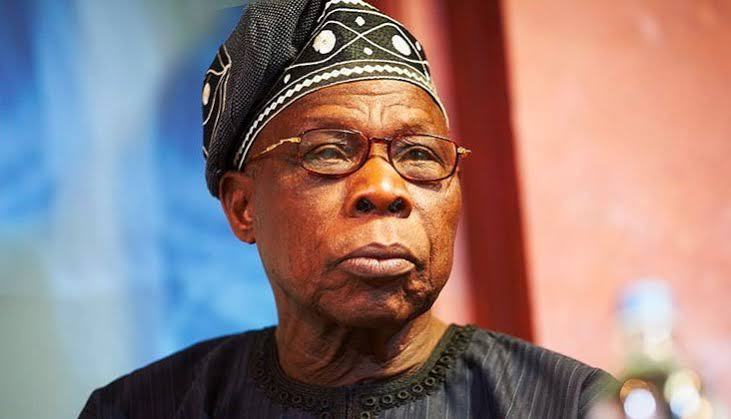
    Obasanjo has a singular talent for driving the blade deep into our country’s conscience. No former president wields words like him: pointed, layered, unflinching. To him, no subject is sacred. No figure, too revered. He dissects them all with the precision of a surgeon and the courage of a prophet. His commentary is never casual; it is always an incision that reveals the rot beneath. And yet, therein lies the paradox. For every truth he unveils, a shadow of himself appears silent and self-incriminating. His insights often sting not because they are false, but because they echo with the ghosts of his own complicity. Obasanjo holds up the mirror to our country, but his reflection too stands in the frame.

    Last week, the media echoed Obasanjo’s voice far and wide: “Those in power today are only concerned about the next election, not the next generation.” A simple sentence. Yet, it struck like thunder. It wasn’t just a criticism. It was a verdict. A stinging indictment of the smallness that defines our politics. In those few words, he laid bare the rot at the heart of our leadership. He revealed the depth of a crisis that our country has long normalised. While his words are the stones thrown at glasshouses, or made for applause or headlines, they are a wake-up call. A rough shaking from the dream of indifference. A call to reckon with who rulers of our country are becoming and what our country may soon lose if the rulers continue this way. He forces rulers to look beyond manifestos and microphones. To face the hollow out bottom of our national purpose. His voice, like a prophet’s, disturbs. And rightly so.

    Today, in our country, leadership has drifted far from its noble roots. It is no longer a call to serve, it has become the crab-like scramble for political survival. Tenure has replaced transformation. Power, not purpose, drives the engine of governance. Those who rule do so with eyes fixed on the next election, not the next generation. They govern with fear, not foresight; with calculation, not conviction. The idea of legacy has been replaced by the hunger for control. There is no dream, only strategy. No roadmap, only insidious ambition. Our rulers no longer plant trees whose shades they may never sit under. They build nothing that outlives them. And so, the future stands abandoned like a child waiting at a door that may never open. They govern to stay in power.

    Chinua Achebe captured it perfectly in his book, The Trouble with Nigeria. He said: “The trouble with Nigeria is simply and squarely a failure of leadership.” Achebe’s words still ring true today. He saw through the façade long before the problems became this glaring. And, sadly, it seems like the situation has only gotten worse. The evidence is everywhere. Our schools are failing. Our hospitals, once mocked as mere consulting clinics, have now deteriorated into silent mortuaries – places where hope goes to die and the living fear to enter. The roads are full of potholes. Our youth are lost to hopelessness. And yet, our rulers are blind to these problems. The future of the next generation is compromised, and our rulers seem unfazed. They do not see the consequences of their failures.

    Why?

    Because they do not govern for the future.

    They govern for now. They do not care about legacy. They care only about tenure, elections, and power. They are too busy securing the next election to consider the next generation. This is why our policies are chaotic. They are short-sighted. Projects are started, only to be abandoned halfway. Behold the obsession with flyovers and the concrete madness that has gripped our governors, who mistake slabs and steel for progress, while the people beg for schools, hospitals, and clean water! Economic plans are announced, only to be forgotten. Education is neglected. Health care is ignored. Every promise made seems to fade away in the face of politics as usual.

    Our rulers do not plan for long-term prosperity. They want quick wins. They want to win the next election, not create lasting change. There is no grand vision, no blueprint for the future. All they see is the next vote, not the next generation. Take the education sector. It is broken. Teachers are underpaid. Schools are dilapidated. Classrooms are overcrowded. Students sit on floors. And they respond with empty promises. Meanwhile, the children of our rulers are sent abroad for better education. The system is rigged. The brightest minds are denied access to quality education, while mediocrity thrives. Health care is worse. Public hospitals are gone. They are underfunded, understaffed, and ill-equipped. Citizens die from preventable diseases because the system is broken. Yet, our rulers fly abroad for medical treatment. They neglect the very sector that could save lives. The hypocrisy is staggering.

    Security is another crisis. Bandits run rampant in the north. Terrorists control vast swathes of land. Kidnappers strike at will. The government’s response is slow, ineffective, and often political. The lives of ordinary citizens are sacrificed. The military is overstretched, fighting with outdated equipment. Yet, the government keeps increasing the defense budget. The country is on the brink, but no one seems to care. And what about democracy? It is in name only. Political parties are no more than patronage networks. Primaries are auctions. Candidates are chosen by godfathers, not the people. The electorate is sidelined. Citizens are ignored. Democracy has become a tool for self-interest, not service. Democracy has been emptied of its noble promise. It no longer serves the people; it serves the powerful. What was once a sacred covenant between the rulers and the citizens has become a ladder for personal gains. The Harvard scholars, Ziblatt and Levitsky were right in their book, How Democracies Die, that democracies rarely collapse with a bang; they erode slowly, as norms decay, institutions weaken, and those in power substitute the public good with private ambition. Our country is living that slow death. The guardrails meant to protect our republic have been kicked aside by those meant to uphold them. Citizens’ voices are drowned out by money and power.

    What future do our rulers offer the next generation? A country where mediocrity reigns? A country where merit is irrelevant? A country where the brightest minds leave, and the dullest stay behind? The future is bleak. But it doesn’t have to be this way.

    Obasanjo’s words are not new. They capture a pattern of failure. Our country has repeatedly stumbled over the same obstacles. Short-term thinking. Selfish politics. The same mistakes keep being made, and the people keep suffering. The Second Republic collapsed under the weight of selfish politics. Shagari’s government offered little reform. Babangida promised economic liberalisation but delivered economic disaster. Abacha’s rule was a period of looting and repression. Obasanjo’s second coming was marked by the failed attempt at a third term. Jonathan’s years were marked by wasted opportunities. Buhari’s tenure was marked by stagnation and inefficiency. Tinubu’s government is already failing disastrously.

    Each government has failed to deliver meaningful change. None has left a legacy worth remembering. All promised change, but none provided it. The same story repeats itself over and over. The citizens suffer, but the rulers remain unscathed. The long arc of history shows us the cost of ignoring the future. Countries that fail to plan, fail to survive. Rome fell not just because of the invasion of barbarians, but because of internal decay. The Ottoman Empire disintegrated because its leaders ignored the signs of decline. Mobutu’s Congo is a cautionary tale of mismanagement and corruption.

    But all is not lost. There is hope.

    Countries rise from the ashes of their mistakes. Rwanda, after its genocide, focused on rebuilding with a clear vision. Singapore, once poor and underdeveloped, invested in human capital and infrastructure. Leadership and vision made the difference. These countries did not dwell on the past. They focused on the future. They planned for the long term. Our country can rise too. But not with the current rulers. Our country needs a change. Our country needs leaders who care about more than just elections. Our country needs leaders who care about the future. Leaders who will leave a legacy for the next generation. Our country needs the politics of purpose, not of power.

    Our citizens must rise. They must demand better leadership. They must question the rulers. They must reject those who only care about power and self-interest. They must demand leaders who are willing to serve, not to rule. They must insist on transparency and accountability. They must reject tribalism and nepotism. Our citizens must abandon the politics of sentiment and begin to measure leadership by the weight of service, not the size of slogans. In a country scarred by broken promises, citizens can no longer afford to gamble their future on charisma without character. The ballot must become a moral instrument, wielded in favour of those whose hands bear the calluses of real work – men and women who have served not themselves, but the people; who have shown, in quiet diligence, a commitment to public good over private gains.

    Citizens must look beyond the billboards and the roadside crowds, and ask harder questions: Who has stood with them when the cameras weren’t rolling? Who has delivered when there were no political points to score? Leadership must be rooted in history, in evidence, in a lived ethic of care. It is time citizens voted not for those who promise paradise, but for those who have exalted them, built schools, reformed the system, or shielded the weak from the blows of the harsh state. Only then can democracy serve the living, and not just the powerful.

    A new political culture is needed. One that values service over self-interest. One that prioritises the future over the present. Every leader must be asked: What will you leave behind? It is not enough to simply win elections. Leadership is about building the country and the people, not just securing power. Mandela understood this. Lee Kuan Yew understood this. Kagame’s Rwanda shows that, even after great tragedy, countries can rebuild. Vision is essential. And leadership is key. Our country is a giant. But it is a sleeping giant. It is time to awaken her.

    If our rulers will not think of the next generation, the next generation must think of how to replace them. The citizens must rise. They must take charge of their future. History will remember not only the failure of leaders, but the courage of citizens who refused to surrender their fate to mediocrity. When those entrusted with our country’s future chose ambition over vision, it was the citizens who rose, not with arms, but with resolve; not with bitterness, but with purpose. Surely, history will record this for posterity: when the custodians of power abandoned their posts, active citizens stepped forward to reclaim the dreams of our country. They choose legacy over fleeting victory, substance over spectacle. They gave history something worthy to record.

    Obasanjo is right. Achebe was right. Now, it is the citizens’ turn to act right.

    History and the future wait for no man – including woman.
  • Cooking gas price: Put Nigeria’s interest first, Obasanjo begs stakeholders

    Cooking gas price: Put Nigeria’s interest first, Obasanjo begs stakeholders

    Former President Olusegun Obasanjo, has charged stakeholders in the Liquefied Petroleum Gas (LPG) sub-sector, popularly called cooking gas to ensure that they put Nigeria’s interest first.

    Obasanjo made the plea at 2nd West Africa LPG Expo and Nigerian Liquefied Petroleum Association (NLPGA) Summit 2022 held in Lagos at the weekend.

    The ex-president’s plea came on the heels of rising cost of cooking gas currently at about N12,000 per 12.kg cylinder in parts of the country.

    He argued that the domestic market has so much potential as the fastest growing LPG market globally.

    ‘‘However there are challenges which I will call on all stakeholders to come together and resolve. These include but not limited to; more volumes from other domestic producers to the ever rising demand/supply, infrastructural development to aid supply to the last mile and the issue of regulations such as VAT, among others that make affordability by the common man a challenge,’’ the former leader said.

    He encouraged other oil and gas majors to remain committed and look at how to develop the local liquified petroleum gas sector as a way of showing appreciation to a country in which they have benefited enormously.

    Obasanjo recalled that the leadership of NLPGA while on a courtesy visit alluded to the role that his administration played in promoting LPG use in the domestic market to what it has become today.

    He said that the policies his administration initiated as at 2005 leading to the 2007 intervention, assisted in not only maintaining gas supply sustainability of alternative energy but significant than the industry has today, but also helped in managing the risk of deforestation, stoppage of health and safety risks associated with the use of kerosene and firewood.

    ‘‘Let me start by commending the organisers of this conference and for the kind words they had shared in the past recognising the impact that has been made so far by an initiative I took when I was the President, to direct that some of our liquefied petroleum gas be retained locally for domestic use.”

    Obasanjo said the government under his leadership saw the Nigerian Gas Master Plan as a major interventionist concept to move the gas sector from its essentially dormant status in 2006 to a market-based system with willing sellers and willing buyers, realising the full potential of the sector for the benefit of all Nigerians.

    The former president pointed, out that it was clear that the major players were at that time more interested in the global market and this led to the Domestic Supply Intervention Policy.

    ‘‘Achieving a rapid growth in supply to drive the market was unlikely to happen on its own with the then structure of the sector, which was dominated by oil-centric International Oil Company’s (IOCs) with little appetite for domestic gas market development.

    According to him, the domestic supply intervention policy was necessitated to jump start sustainable supply to the domestic market, the main objectives being to, enhance living standards, reduce deforestation and rural-urban migration with its associated national security issues, reduce household energy poverty and serve to promote industrial growth.

    He disclosed further that, the thrust of the policy was to create a minimum level of supply by intervention. However, beyond this threshold, he said, it was expected that the basis for a fully competitive market would have been established and market forces will thereafter drive the growth of supply and demand in the market.

    In essence, he maintained that, the domestic supply intervention policy was a transitional policy intervention aimed in the short term at driving supply availability to a level that could sustainably support a fully competitive gas market.

    ‘‘The domestic supply intervention policy required all associated and nonassociated gas reserves holders to dedicate gas supply to the domestic market in the first instance thereafter export to the international market.

    On NLNG interventions, he said ‘‘I have heard from the NLPGA that since 2007 inception of the Domestic LPG supply program till date, the Nigeria LNG Ltd. has stood tall above its peers in the discharge of supporting the local sector.

    (Sun)

  • 2023 Presidency should go to S-East — Obasanjo, Falae

    2023 Presidency should go to S-East — Obasanjo, Falae

    ENUGU—FORMER president, Olusegun Obasanjo, has restated his position that the South-East should be allowed to produce Nigeria’s President in 2023, insisting that it would ensure peace, justice, fairness and sustainable national development in the country.

    Similarly, former secretary to the Government of the Federation, Olu Falae, also threw his weight behind a South-East presidency, noting that it is the only zone that has not produced the president in recent times.

    Obasanjo, who addressed members of Political Action Committee, PAC, of Ohanaeze Ndigbo, who visited him at his Olusegun Obasanjo Presidential Library, Abeokuta, to solicit his support for the quest for a Nigerian President of South-East extraction, said the minimum Nigerians would accept is that the next president should come from the South.

    Ime Obi Ohanaeze Ndigbo, at its meeting, last week, mandated its president general and the secretary to constitute a political committee to go around the country to solicit support for a president from the South-East.

    The Ohanaeze team consists of Ambassador George Obiozor, the President General; Ambassador Okey Emuchay, the Secretary-General; former president generals of Ohanaeze Ndigbo, Nnia Nwodo, and Gary Igariwey.

    Others are Professor Anya Anya, former Chairman, Police Service Commission, Simon Okeke, and Dr. Chiedozie Ogbonnia, the National Publicity Secretary of Ohanaeze Ndigbo.

    “The next president of Nigeria must come from the South East. The least acceptable minimum is a president from the Southern part of Nigeria”, Obasanjo was quoted by Ohanaeze Ndigbo’s spokesman, Alex Ogbonnia, as saying.

    The former President, who commended Ohanaeze Ndigbo for demanding their rights, told the delegation that what he “owes Nigeria is sincerity, objectivity and guidance.”

    He maintained the need for morality, equity and justice in a multi-ethnic, multi-religious and multi-cultural country like Nigeria, warning that “it is inconceivable to have peace and progress in a country that is rooted in injustice.”

    Obasanjo said: “Federal character, rotation of power and such other measures are meant to help our nation-building process and more sure-footedly, move Nigeria forward” and warned that “riding over these measures rudely, shoddily and roughly cannot augur well for our nation-building process and progress.”

    In his remarks, Obiozor commended the former president for his unwavering commitment to peace and unity of Nigeria, saying that Obasanjo remains one of the strongest voices in Nigeria and one of the most respected Nigerians in the world because of his track records of accomplishments while his tenure lasted as the President of Nigeria.

    He commended him for his courage, sincerity, steadfastness and passion for justice, especially as it affects the Igbo and the future of Nigeria.

    For national unity, peace, it’s turn of S-East —Falae

    Also throwing his weight behind a South-East presidency, Falae, who spoke in an interview, said the region has not produced a president in recent times.

    The former Minister of Finance said: “I expect that the South East will have a fair chance to ask for the president of Nigeria because in recent times the president has not come from the South-East. I said in recent times.

    “For national unity and peace, yes, but the South East is not the only zone that has not produced the president in recent times. There are six zones now and in the recent past, the zones that have produced the president are the North-West, South-West and South-South.

    “The North-Central, North-East and South-East have not produced president in the recent times, so there are three that have equal rights to ask for it if we want to be fair

    “If we want to use North and South, then it’s two (North and South) I insist it must come from the South because the present president is from the North.

    “However, if we are talking of zones within the six geopolitical zones of Nigeria, then we cannot limit it. We must look at all the zones that have not produced the president.”

    Nigeria’s next President must be patriotic, detribalized — Onitiri

    On his part, a socio-political activist, Adesunbo Onitiri, has said that Nigerians must select with caution, a patriotic, young, highly educated, Godly, and de-tribalised president during next year’s general election.

    Onitiri, in a statement in Lagos, yesterday, said: “We democrats also urge all Nigerians to vote wisely, as this suffering and abject poverty must end. Our economy is at its lowest ebb. There is serious insecurity in the country.

    “We need a patriot, young, highly educated, healthy, internationally connected President, who has the capability and ability to govern. He must be honest, transparent, credible, and diligent with the quality of a world-class President. Not a moneybag.

    “Nigeria needs leaders like Mohammed bin Rashid of Dubai, President of Malaysia and President of Singapore Lee Kuan Yew. These people should be our role models. We desperately need leaders that can turn our economy around, turn our desert into a land flowing with honey and milk.”

    (Vanguard)

  • Obasanjo commends Gov Uzodimma for developmental strides in Imo state


    Nigeria’s former President, Chief Olusegun Obasanjo, has lauded Governor Hope Uzodimma on the laudable developmental strides that Imo State is witnessing under his administration.

    The past President paid the compliment during his 85th birthday celebration, hosted by the first family of Imo State at the Banquet Hall of Government House, Imo State.

    Speaking on the sidelines of the celebration, the former President called for improved engagements with genuinely frustrated militant members of society to de-escalate conflict and promote peace.


    (Vanguard)

  • Corruption: I’m a saint compared to Buhari, Obasanjo, others, says Babangida

    Corruption: I’m a saint compared to Buhari, Obasanjo, others, says Babangida


    Former military dictator Ibrahim Babangida says his regime is more saintly when compared to democratic governments of President Muhammadu Buhari and his successors.

    Mr Babangida, whose regime is blamed for internalising the culture of corruption (settlement) in Nigerian polity, made this statement in an interview published by Arise TV on Friday.

    Asked why his is perceived as corrupt, Mr Babangida said he is a saint when compared to democratically elected presidents like Mr Buhari and others who have led the country since 1999 when Nigeria returned to democratic rule.

    “You cannot compare it with the fact on ground now,” Mr Babangida said. “From what I read, from analysis, I think we are saints when compared to what is happening under a democratic dispensation.”

    Mr Babangida, who led a junta that ruled Nigeria from 1985 to 1993 and annulled Nigeria’s most credible June 12, 1993 election, said he sacked a governor for misappropriation of less than N313,000 but today people steal billions are are walking freely in the country.

    “I sacked a governor for stealing less than N313,000. Today those who have stolen billions are in the court and parading themselves on the streets. So who else is in fighting corruption,” Mr Babangida said.

    In a related development, the senior pastor of Citadel Global Community Church, Tunde Bakare, had said corruption has become more deadly under the watch of Mr Buhari.

    “If because of insecurity and corruption, we voted Jonathan out and now insecurity is worse, corruption is much more deadly now, what do you think should happen?,” Mr Bakare, a former ally of Mr Buhari, asked in his sermon last Sunday.

    Though Mr Buhari claims to be leading an anti-corruption war, his regime has been rocked by several corruption scandals, ranging from certificate forgery among his aides to theft and diversion of public funds.

    In 2017, Secretary to government of the federation Babachir David Lawal, was fingered in diversion of N544million fund meant to cater for Internally Displaced Persons in terrorism ravaged North-East. Mr Lawal was suspended after much pressure from then-Senate. He subsequent trial by the EFCC has effectively been inert.

    Peoples Gazette in December 2020 exclusively exposed how top operative in Mr Buhari’s kitchen cabinet, Isa Funtua, got a N840 million windfall from the Federal Inland Revenue Service without any justifiable reason. The government has kept mum of the matter till date.

    In April 2017, $43 millon slush fund belonging to the NIA was found in a residential apartment at Okoyi, Lagos by EFCC officials. The then NIA boss, Ayo Oke, was sacked with President Buhari vowing that those involved in the IkoyiGate scandal will not go unpunished. Nothing has been heard of the matter till date.

    Former Nigerian Finance minister Kemi Adeosun was in July 2018 exposed by Premium Times to have skipped NYSC and forged a certificate to secure her appointment in Mr Buhari’s government. She later resigned from office but was not prosecuted for forgery.

    Anti-graft agency boss Abdulrasheed Bawa was exposed by Peoples Gazette to have diverted recovered assets in September 2020 when serving as a zonal head of EFCC in Port Harcourt. Less than five months after the exposé, Mr Buhari appointed him to lead the anti-corruption agency. (Peoples Gazette)

  • “Create Special Court to tackle Insecurity, ” Obasanjo tells FG


    The Federal Government has been called upon to create special courts to deal with cases of banditry, kidnapping, ransom demanding and unlawful carrying of weapons.


    The government was also charged to be proactive and to secure necessary and updated intelligence to deal with organised crimes.


    This call was contained in a statement jointly signed yesterday by former president, Chief Olusegun Obasanjo and Sheik Ahmad Abbubakar Gumi in Abeokuta, Ogun State.


    The renowned islamic cleric had led eight others including Prof. Usman Yusuf, Mallam Tukur Mamu, Dr. Umar Ardo, Dr. Ibrahim Abdullahi, Suleiman Gumi, Alhaji Suleiman Yakubu and Mallam Buba Mohammed, to visit the former president at his penthouse residence inside the Olusegun Obasanjo Presidential Library, Abeokuta.


    The visit was part of Gumi’s continued efforts to find solutions to security challenges in the country, particularly the menace of banditry, kidnapping and ransom payment.


    Obasanjo and Gumi, who proposed the slogan of the special court as ‘Security is the responsibility of all Nigerians’ declared that the menace of banditry, kidnapping and other crimes leading to general insecurity in Nigeria was a nationwide phenomenon.


    They noted that people from different parts of the country and outside are involved in the security challanges and urged Nigerians not to encourage or support criminality.


    They identified the remote causes of insecurity as educational and economic disparities in the country, and negative use of religion and ethnicity by unscrupulous politicians.


    Part of the statement read: “Solutions must be seen and provided on short, medium, and long-term bases and must be composed of stick and carrot for the offender and the vulnerable. Federal government must be proactive, secure necessary and updated intelligence to deal with organised crimes and have common policy for the nation. It is not solving the problem when one state goes for negotiation and molly-cuddling of criminals and another one goes for shooting them. Nor should one state go for ransom payment and another one going against. The hardened criminals must be hard hit with stick. Unlawful carrying of arms should be very seriously punished.


    “Special courts should be created to deal promptly with cases of banditry, kidnapping, ransom demanding and unlawful carrying of weapons. Let the slogan be: Security is the responsibility of all Nigerians.”


    The delegation was received by Obasanjo; Agura of Gbagura, Oba Babajide Bakre; Chairman of the Ogun State Christian Association of Nigeria, Bishop Tunde Akin-Akinsanya; Chief Imam of Egbaland, Sheikh Sa’addallah Alade Bamigbola; Kenny Martins; Ola Babajide Jaiyeoba; Tony Ojeshina, Chief Imams of Oke-Ona, Gb agura Owu and Vitalis Ortese.


    Source: www.sunnewsonline.com

  • Covid 19: My Contraction and Recovery From Covid – Obasanjo


    Former President Olusegun Obasanjo, on Friday, said he once tested positive for COVID-19 but was relieved 72 hours later when subsequent tests came out negative.


    Obasanjo who turned 84 March 5, said he was a bit concerned about it and had to call his daughter, Dr Iyabo Obasanjo-Bello, that he was not having any symptom but COVID-19 test from sample extracted from him read positive.


    He spoke in Abeokuta, the Ogun State capital while speaking at a colloquium organised to celebrate his 84th birthday. It was held at the Olusegun Obasanjo Presidential Library (OOPL), Abeokuta.


    He said Iyabo’s verdict was that the result might be faulty and required further tests.


    The colloquium, which took place simultaneously online and offline, was entitled, “Reflection on Governance and Changes for Post-Pandemic Leadership in Africa,” with people in Burundi, Democratic Republic of Congo, Ghana, Singapore and Nigeria participating virtually. The former president said subsequent tests 72 hours later all certified him negative to the coronavirus.


    Obasanjo, therefore, advised people not to be afraid to come quite close to felicitate with him on his birthday for the fear of COVID-19 infection, saying he had tested negative to the disease three times.


    He noted that God had continued to be compassionate and merciful to Nigeria and the rest of Africa, saying if the coronavirus had come in the manner of Ebola in Africa, no amount of social or physical distancing would have saved the continent. He wondered how much social distancing requirement would have been able to accomplish in very congested Lagos communities like Mushin or Ajegunle.


    On why the pandemic did not wreak havoc in Africa like it did in America, Europe and Asia, Obasanjo said many had attributed Africa’s luck to genetics, heat and peculiar food in the environment, stressing that whatever might be the plausible explanation, God’s finger could not be ruled out. He lamented that the coronavirus spread to many nations of the world because the United States under the administration of Donald Trump was passive in addressing the public challenge, saying Trump spent all his time dismissing the danger as a Chinese virus until it became a glob al problem.


    Source: www.sunnewsonline.com