Tag: Budget

  • FEC grants N15.57bn for road construction refunds, other projects

    FEC grants N15.57bn for road construction refunds, other projects

    The Federal Executive Council yesterday approved N15,569,016,812 for various contracts in the Ministries of Works and Housing; Education as well as Industry, Trade and Investment.

    The Minister of Works and Housing, Babatunde Fasola, said: “The two states that had outstanding with respect to eligible roads were Plateau and Borno States and Council approved the refund of N6,601,769,470. 99 in favour of Plateau and the sum of N3,084,787,113. 34 for Borno State.”

    The Minister of Industry, Trade and Investment, Niyi Adebayo, said the council approved N1,803,556,537 contract for the construction of a package sewage system for the Oil and Gas Free Zones Authority’s head office within the Liberty Free Zone in Ikot Abasi, Akwa Ibom State with the completion period of 10 months. The Minister of Education, Adamu Adamu, said the FEC approved N4,078,903,692 for three contracts in the Osun State University, Osogbo; the Federal University, Lokoja and the National Commission for Nomadic Education.

    He said the council also approved the memorandum that sought the takeover of the David Umahi University of Medical Sciences, Ebonyi, by the federal government as well as the change of the name of the institution to David Umahi Federal University of Health Sciences through an approved bill to be transmitted to the National Assembly.

    (Daily Trust)

  • FEC approves N1.9trn to NNPCL to construct 44 roads, allocates N215.3bn in S’South, S’East roads

    FEC approves N1.9trn to NNPCL to construct 44 roads, allocates N215.3bn in S’South, S’East roads

    …. FEC okays 2023 budget proposal

    The Federal Executive Council (FEC), presided over by Vice President Yemi Osinbajo, yesterday, approved the proposal for the Nigerian National Petroleum Corporation Limited (NNPCL) to invest N1.9 trillion in the reconstruction of 44 federal roads under the tax credit policy.

    Of this amount, N215.3 billion would be spent on South South and South East roads.

    Senior Special Assistant to the President on Media and Publicity Office of the Vice President, Laolu Akande,, who briefed journalists after the meeting said FEC approved the recommendation to invest in the reconstruction of selected federal roads under the Federal Government Road Infrastructure Development and Refurbishment Investment Tax Credit Policy Phase 2 by the NNPCL and its subsidiaries.

    He said: “So, the council approved the proposal by the Ministry of Works and Housing for the reconstruction of 44 proposed federal roads with a total length of 4,554 kilometers in the total sum of N1.9trillion.”

    The approval is coming 15 months after the NNPCL expressed interest in investing in the reconstruction of selected federal roads in order to sustain a smooth supply and distribution of petroleum products across the country.

    President Buhari had on January 25, 2019, signed the Executive Order 007 which was the instrument that brought about the Road Infrastructure Development and Refurbishment Investment Tax Credit Scheme, with the aim to unlocking funding from the private sector to critical road infrastructure in the country.

    The Executive Order 007 was designed to empower private companies to finance construction or refurbishment of federal roads designated as “Eligible Roads” under the scheme and recoup their investments through deduction of the approved total costs expended on the project from their annual Companies Income Tax.

    The Road Infrastructure Scheme is a Public-Private Partnership intervention that enables the Federal Government to leverage private sector capital and efficiency for the construction and refurbishment of critical road infrastructure in key economic areas in Nigeria

    Under the initiative, the private participants of the scheme provide the funds for the construction or refurbishment projects and in exchange, the participants are entitled to recoup the funds provided as a credit against the Companies Income Tax they are expected to repay. Under the initial programme, the NNPC is currently constructing a total of 1,804.6 kilometres of roads at a total cost of N621,237,143,897.35

    A breakdown of the project funding showed that the North-Central geo-political zone, made up of Federal Capital Territory, Benue, Kogi, Kwara, Nasarawa, Niger, and Plateau States, got. the highest chunk of N244.87bn for the construction of 791.1 kilometres of road

    The South-South geo-political zone, comprising Akwa-Ibom, Bayelsa, Cross-River, Delta, Edo, and Rivers state, emerged the second highest beneficiary of the NNPCL Road Infrastructure Development and Refurbishment project with N172.02bn for a total of 81.9 kilometres of road.

    he South West, made up of Ekiti, Lagos, Osun, Ondo, Ogun, and Oyo States, followed with a total allocation of N81.87bn for the construction of 252.7 kilometres of roads.

    The NNPCL allocated N56.12bn to the North-East, comprising Adamawa, Bauchi, Borno, Gombe, Taraba, and Yobe states,the construction of 273.35 kilometres of roads under the scheme.

    The South East geo-political zone; the zone is made up of five states, comprising Abia, Anambra, Ebonyi, Enugu,and Imo.states, got N43.28bn allocation for the construction/rehabilitation of 122 kilometres of road.

    The NNPC allocated N23.05 billion for the rehabilitation of 283.5 kilometres of road to North West geo-political zone, made up of Kaduna, Katsina, Kano, Kebbi, Sokoto, Jigawa, and Zamfara States. The road projects are being funded by NNPC and the equivalent amount is deducted by the Federal Inland Revenue Service from the National Oil Company’s tax obligations.

    Minister of Environment, Mohammed Abdullahi said Council approved the procurement of 31 project vehicles for the hydrocarbon pollution remediation projects in Ogoni land.

    He recalled that in December 2022, FEC had approved some projects for Ogoni and remediation of some polluted site.

    “In view of the fact that we are going to inspect on a regular basis, experts from outside the country, there’s a need to provide project vehicles so that they can effectively inspect, supervise and monitor the remediation exercise. FEC today approved the sum of N1,354,016,250 in favor of Messers Mujav automobile Nigeria limited to provide 31 number of vehicles for the project. These include one 18-seater Toyota Hiece bus, one 30-seater Toyota coaster bus, they’re all supposed to be 2022 models. Then 11 Toyota Hilux double cabin four will drive also to 2022 model, diesel engine. Then 15 numbers Toyota Hilux double cabin four wheel drives, diesel and petrol engine also 2022 models. Then one Toyota Landcruiser twin turbo 2022 model and lastly two unit of Land Cruiser V6 Prada for the projects. Only 31 vehicles were approved for the hydrocarbon pollution remediation project to ensure effective supervision of the project particularly delimitation sites.“

    (Sun)
  • N/Assembly increases 2023 budget by N1.3trn

    N/Assembly increases 2023 budget by N1.3trn

    …to include 2023 Census

    Presenting the report, the chairman of the Senate Committee on Appropriations, Barau Jibrin, said the budget was increased to make provision for improved funding for the National Population Commission (NPC) ahead of the 2023 Census, the Independent National Electoral Commission (INEC) ahead of the 2023 general elections, the Nigerian Army, Navy, Nigeria Police Force, ministries of Agriculture, Health, Aviation, and Science and Technology.

    The National Assembly also increased the oil price benchmark proposed for the budget from $70 per barrel to $75 per barrel.

    It however retained other parameters as earlier proposed by the president such as the 1.69 million barrel oil production per day, N435.57 to a US dollar, 3.75% GDP growth rate and 17.16% inflation rate.

    The breakdown of the budget shows that N967.48 billion is for statutory transfers; N8.32 trillion for recurrent (non-debt) expenditure while the sum of N5.97 trillion is for capital and N6.55 trillion for debt service.

    From the statutory transfers, the National Judicial Council takes N165bn; Niger Delta Development Commission (NDDC), N119.93bn; Universal Basic Education, N103.28bn; Independent National Electoral Commission (INEC), N173.63bn; National Human Rights Commission, N4.5bn; North East Development Commission (NEDC), N59.03bn; Basic Health Care Fund, N51.64bn and National Agency for Science and Engineering Infrastructure (NASENI), N51.64bn.

    Also, under the statutory transfers, the National Assembly’s severance/inauguration of outgoing and incoming 9th and 10th Assembly (legislators and legislative aides) got allocated N30.17bn, National Assembly Office, N30.49bn; Senate, N33.26bn; House of Representatives, N51.99bn; National Assembly Service Commission, N10.55bn; National Institute for Legislative and Democratic Studies (NILDS), N7.41bn; and Service Wide Vote, N671.3m.

    A further breakdown shows that the Office of Retired Clerks and Permanent Secretaries takes N1.05bn, National Assembly Library Building N4.25bn; Constitution Review N850m; completion of NILDS headquarters N2.5bn; and construction of National Assembly Service Commission building N10bn.

    Out of the N5.972 trillion proposed capital expenditure, the Ministry of Works and Housing has the lion’s share of N398.275bn; Ministry of Defence, N285.045bn; Ministry of Agriculture and Rural Development, N248.358bn; and Ministry of Education, N153.735bn.

    Others are the Ministry of Health N134.909bn; Federal Ministry of Science and Technology, N132.572bn; Ministry of Finance, Budget and National Planning, N166 747bn; Office of the National Security Adviser, N70.331bn; Presidency N20.115bn; Ministry of Interior N45.622bn; Federal Ministry of Water Resources N83.256bn.

    After the passage, Senate President Ahmad Lawan urged President Muhammadu Buhari to assent to the budget before the year runs out toward sustaining the January-December budget cycle implementation.

    (Daily Trust)

  • Minister of Finance unveils FG’s initiative for a robust revenue generation that would meet 2022 budget

    Minister of Finance unveils FG’s initiative for a robust revenue generation that would meet 2022 budget


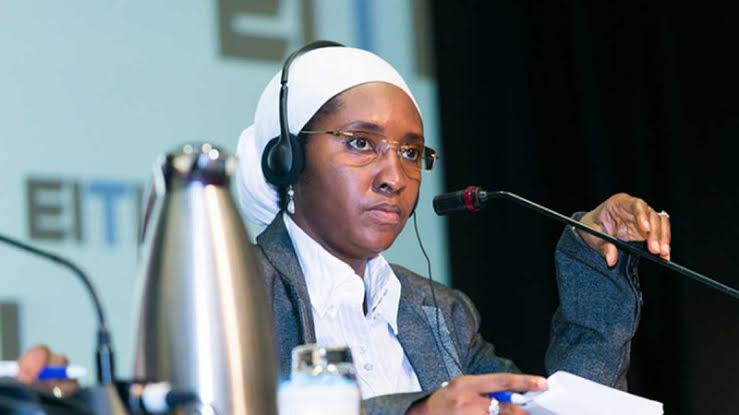
    The Minister of Finance, Budget and National Planning, Mrs. Zainab Ahmed, has unveiled the federal government’s strategic initiative for a robust revenue generation that would meet the federal government’s N10. 74 trillion target, with which to fund the 2022 budget.


    She said at the federal government’s 2022 Budget Public Presentation, in Abuja, on Wednesday, that revenue generation remained the major fiscal constraint of the federal government and that her team would vigorously pursue the administration’s Strategic Revenue Growth Initiatives to improve its fiscal position in the year.


    According to her, “Several measures are being instituted under the Administration’s Strategic Revenue Growth Initiatives to improve government revenue and entrench fiscal prudence with emphasis on achieving value for money.”


    Some of the specific actions under the initiatives, Mrs. Ahmed said would include, “Evaluation of the process and policy effectiveness of Fiscal Incentives, including the review of sectors eligible for Pioneer Tax Holiday Incentives under the Industrial Development Income Tax Relief Act; dimensioning the cost of tax waivers/concessions, and evaluating their policy effectiveness; setting annual ceilings on Tax Expenditures to better manage their impact on already constrained government revenues; and ensuring that MDAs appropriately account for and remit their internally-generated revenue.”


    Besides, the minister said that her team would identify and plug existing revenue leakages to enhance tax compliance and reduce tax evasion, as well as, leverage technology and automation to eliminate fiscal drainers like subsidies.


    Revenue streams


    According to the minister, an oil revenue forecast of N 3.362 trillion to fund the 2022 budget would be higher by N1.350 trillion (67.18%) above the previous year’s target of N 2.011 trillion.


    Similarly, FG share of Non-Oil Taxes would be expected to stand at N 2.132 trillion, this year, which is about 43.27 percent above last year’s budget of N1.488 trillion.


    Mrs. Ahmed said that N2.216 trillion would be earned as Independent Revenue, up from the 2021 budget of 1.061 , which recorded actual collection of N1.1 trillion, as at November, last year.


    Other revenue streams, according to the minister were: Dividend from various investments in companies, N195. 716 billion; NLNG Dividend, N187.397 billion; Share from Share of Minerals & Mining, N2.915 billion; Share of Electronic Money Transfer Levy (formerly called Stamp Duty), 29.367 billion down from 500 billion in the preceding year; and Share of Oil Price Royalty, N96.943 billion.


    The rest were: Revenue from Government Owned Enterprises (GOEs), N3.306 billion, up from N2.173 billion budgeted for 2021; Draw down from Special Levies Accounts, N 300.000 billion; Signature Bonus 280.855 billion; Domestic Recoveries, N 26.933 billion; Grants and Donor Agencies funding, N63.376 billion; and Education Tax, N305.998 billion.


    Source: www.vanguardngr.com

  • Buhari to sign 2022 budget on Friday


    President Muhammadu Buhari will sign the 2022 Appropriation Bill on Friday, his Senior Special Assistant on Media and Publicity, Garba Shehu, has said.


    He said the budget had been transmitted by the National Assembly and that the President would sign the bill into law by 10am on Friday.


    He responded to prodding via WhatsApp message: “Yes, it’s true the President will sign the 2022 budget by Friday.”


    The expected presidential assent to the appropriation bill is coming barely a week after lawmakers in the Senate and House of Representatives passed a budget of N17.126 trillion, increasing the benchmark price of crude from $57 to $62 per barrel.


    100% Natural Herbs to Finally End Premature Ejaculation, Weak Erection and Small Manhood. Click Here Now .

    Those expected to join the president at the signing ceremony include Vice President Yemi Osinbajo; President of the Senate, Dr Ahmad Lawan; Speaker of the House of Representatives, Femi Gbajabiamila, and a host of other presidential aides.


    The 2022 Appropriation Bill was transmitted last Friday by the Clerk to the National Assembly, Amos Ojo and acknowledged by the Office of the Chief of Staff to the President on Saturday.


    The transmission letter, with Reference Number NASS/CNA/37/Vol.1/35, addressed to the President titled “Appropriation Bill 2022” read: “In consonance with the provisions of the Acts Authentication Act Cap. A2, Laws of the Federation of Nigeria, 2004, I wish, with due respect, to forward to Your Excellency, the authenticated copies of Appropriation Bill, 2022, for your consideration and assent.


    Source: www.sunnewsonline.com

  • FEC approves N65.39bn to execute power projects in Nigeria


    The Federal Executive Council meeting has approved N65.39bn in foreign and local denominations to execute power projects in the country.


    The Minister of Power, Abubakar Aliyu, disclosed this to State House Correspondents on Thursday at the end of an extraordinary meeting of FEC presided over by Vice President Yemi Osinbajo at the Presidential Villa, Abuja.

    He said the extraordinary session was to ensure the country begins 2022 on a clean slate in the area of electricity supply.


    Aliyu who presented 16 memos which were all approved by the council, said the Buhari regime had done more than its predecessors to ensure that Nigerians experience improved electric power supply.

    He said “FEC approved$65,606,420, €15,152,651 and N31,360,272,397 respectively for the award of contract for the construction of a 2X60MVA 132/33 KVA substation at Ikare-Akokoand 2×132 KV Lines Bay Extension at Oke-Agbe, Ondo State at the cost of$9,9928,912.80 and N2,037,076,700.00.

    “Supply of 65 Hilux vehicles and20 SUVs nationwide at the cost of N2,741,787,500.00. Procurement of 1,500 drums of transformer oil nationwide at N322,500,000.00. Supply of 19 Sergitransformer explosion and fire protection devices nationwide at €5,326,663,70and N347,629,092.57.


    Source: www.punchng.com

  • FG hires JP Morgan, others on $6.2bn fresh borrowing

    FG hires JP Morgan, others on $6.2bn fresh borrowing

    The Federal Government of Nigeria has appointed transaction advisers to facilitate the issuance of Eurobonds in the international capital market.

    This was contained in a press statement titled ‘Towards financing the 2021 Appropriation Act – FGN appoints transaction advisers for a Eurobond issuance’, which was made available to our correspondent in Abuja on Wednesday by Debt Management Office’s Head of Media, Chinenye Onu.

    The statement read, “Activities by Nigeria towards the issuance of Eurobonds in the International Capital Market inched forward today with the appointment of Transaction Advisers by the Federal Government.

    “Typical of Eurobond issuance, transaction advisers of various categories are required to work with an issuer, in this case Nigeria, to ensure the success of the Transaction.”

    The DMO said certain institutions were approved by the Federal Executive Council at its meeting on Wednesday to advise on the Eurobond issuance.

    The institutions include International Bookrunner (JP Morgan, Citigroup Global Markets Limited), Joint Lead Managers (Standard Chartered Bank and Goldman Sachs), Nigerian Bookrunner (Chapel Hill Denham Advisory Services Ltd), Financial Adviser (FSDH Merchant Bank Ltd), International Legal Adviser (White & Case LLP), and Nigerian Legal Adviser (Banwo & Ighodalo).

    It further stated that the transaction advisers were selected from an Open Competitive Bidding Process in line with the Public Procurement Act, 2007 (as amended).

    It added, “A total of 38 institutions responded to the Expression of Interest, and after rigorous evaluation to ascertain the technical capacities of the responders to execute the transaction, the eight institutions above were selected.”

    According to the press statement, the DMO will speed up Eurobonds issuance activities based on the transaction advisers’ approval.

    On the essence of issuing Eurobonds, the press statement said that it is to raise funds for the New External Borrowing of N2.34tn (about $6.2bn) provided in the 2021 Appropriation Act to part finance the deficit.

    It added that the funds raised would be used to finance different projects in the budget, while boosting foreign exchange inflow, increasing Nigeria’s external reserves and supporting the naira exchange rate.


    Sourceb punchng.com

  • FIRS meals and refreshment budget of N1.4bn for 2021 Condemned


    Civil society organisations have condemned the N1.4bn budget for meals and refreshments by the Federal Inland Revenue Service in the 2021 fiscal year.


    The groups, including Transparency International and the Human Rights Writers Association of Nigeria, accused the tax collecting agency of insensitivity and misplacement of priority.


    Executive Director, CISLAC and Head, Transparency International in Nigeria, Auwal Musa (Rafsanjani), expressed shock that such a huge amount could be set aside for frivolities at a time the nation’s economy was in dire straits.


    He said, “While the nation struggles hard to finance its budget, a significant proportion of the budget slips through mismanagement and reckless spending that intrinsically dominates public sector activities.


    “It is more worrisome that the reckless spending has been normalised with resultant underfunded critical sector that is vital to efficiently revamp the sinking economic development.


    “Given this background, the decision of Federal Inland Revenue Service to spend N1.4bn on meals and refreshment in 2021 is another irresponsible financial decision by a revenue institution preying on weak budgetary process and scrutiny, poor financial management system and inadequate legislative oversight activities associated with the public sector.


    “It is more worrisome that despite the under-funded critical sector with increasingly cost of governance, FIRS has not devised appropriate tax justice system to ensure social-justice and equity in the utilisation of remittances to ensure citizens benefit maximally, but requesting a whopping sum to be lavished on irrelevant activities.


    “We must be wary of reckless financial decisions that manifest in institutionalised mismanagement and revenue deficiency. This must be thoroughly checked by relevant authorities as common Nigerians are currently suffering from questionable mismanagement of public treasury and high cost of governance by successive administrations.”


    He also said, “While efficient governance is about ensuring that each amount of public funds is spent judiciously in a way that social welfare of all the citizens is maximized, the current high cost of governance that permeates Nigeria’s public sector impedes socio-economic development and shows negative impact on macro-economic stability, job creation and other socio-economic activities that drive growth and development.”


    FIRS now a cesspool of filth and corruption –HURIWA

    Speaking in a similar vein, the Executive Director of the Human Rights Writers Association, Emmanuel Onwubiko, described the situation as depressing and utterly unconscionable.


    Onwubiko said, “At a time of massive unemployment, mass poverty and high crime rates caused by lack of capacity on the part of the security forces and particularly the Nigeria Police Force that has collapsed due to poor funding, corruption and indiscipline, it is shocking that an agency of the Federal Government can set aside the sum of N1.4bn for them to feed and make merry all year round.


    “The Federal Inland Revenue Service has always been a cesspool of filth and massive corruption going by the antecedents of that agency with the immediate past head of that agency and many directors facing criminal prosecution for stealing several billions of Naira from the public treasury, so this revelation of a budget of N1.4bn for meals is a continuation of the heritage of corruption in the agency. This is shameful and must never be permitted.


    “There is the need for a clean sweep in that agency because it is clear that corruption is deeply rooted and needs surgical action to eradicate this social menace.”


    EFCC, ICPC must initiate probe

    The convener, Coalition in Defence of Nigerian Democracy and Constitution, Ariyo-Dare Atoye, equally condemned the proposal.


    He said, “This act of cruelty against the Nigerian people must not be allowed to be swept under the carpet. We cannot allow a few persons in our apex revenue generating agency to get away with this attempt to defraud the nation.


    “They must be told in no uncertain terms that they cannot take Nigerians for granted. Staff of this agency are very well paid to do their jobs; it does not make sense for them to swindle the nation using budgetary subheads. We will petition the EFCC and the ICPC to probe the leadership.”


    Source: www.punchng.com