Tag: Bandits

  • New Week, More Abductions and More Deaths

    New Week, More Abductions and More Deaths

    -By Abdul Mahmud

    Another week has opened in Nigeria with blood on the ground and fear in the air. The country wakes up each morning to new tragedies. Each day closes with fresh accounts of death, kidnappings, and retreats. Nigeria is living inside a vortex of violence. Nothing breaks it. Nothing interrupts it. The state has become pusillanimous, a timid spectator.

    The abduction of more than twenty five girls from Government Girls Comprehensive Senior Secondary School, Maga, in Kebbi State, is another grim reminder of how far the security collapse has travelled. The killing of the Vice-Principal in the attacks showed the brutality of the terrorists. These were girls preparing for a future that is constantly denied them. In that region, the education of girls has long been contested by extremists and patriarchal norms. The state promised to protect these children. It failed. Again.

    Across the north, the same story unfolds. In Tsafe Local Government Area of Zamfara State, entire families were taken. Women and children disappeared into forests controlled by terrorists. Homes were emptied without resistance. Communities now live under criminal rule. Citizens whisper not to provoke those who control their roads, markets, and farmlands. The state is absent. In the north east, the shock is deeper. The reported capture and killing of General Muhammed Uba, who the Army High Command assured the country was safe within his battalion, has shaken the country. A General of the Nigerian Army. Seized. Dragged away. Made to sit on the ground by his snatchers. Killed by terrorists who move on motorcycles. A military built on decades of training and investment was breached by a band that holds no formal command structure. It is shameful. It undermines morale. It raises a painful question. Is the Nigerian military still capable of fighting?

    Everywhere Nigerians turn, the failures of the state stare back at them. The military is stretched. The police is overwhelmed. Intelligence gathering is weak. Communities report danger and no one comes. Criminals move from state to state. Terrorists set up camps. They impose taxes. They administer their own justice. The state protects no one. It barely protects itself. The government keeps promising a turning point. Instead, we watch a point that turns in on itself, spinning without direction, circling like the widening gyre of WB Yeats’s The Second Coming. The turning point never arrives. Operations are launched with loud declarations of victory. The terrorists regroup. They reorganise. Villages burn. Schools fall. Families mourn. The cycle continues.

    Our country has normalised tragedy. Nigerians now expect bad news. They wait for the next report of abductions. They wait to hear which community has fallen. Prophet Amos once asked, “When will the new moon be over, so we can sell our corn?” It was a lament about a society rotting from inside. It was an indictment of leaders who worshipped power but abandoned justice. Nigeria carries that lament today. Nigerians now ask when this cycle of death will end. They now ask when the government will act with urgency. They now ask when rulers will remember that the first duty of the state is protection. Instead of answers, Nigerians see a president who governs from behind high walls. The fortress of Aso Rock grows more secure while the rest of the country grows more vulnerable. Terrorists move freely. Terrorists spread across territories untouched by government authority. Villages have no police presence. Cities shrink into islands of guarded estates. Nigerians travel only by daylight. Even then, they travel in fear.

    Nigeria cannot continue this way. Our country cannot survive when its armed forces appear unsure of their own strengths. The military once carried the weight of national pride. It was the symbol of unity. It was the institution that projected the authority of the federal government. Today, Nigerians ask if it is still primed for battle. They ask how a General can be captured. They ask why battalions retreat. They ask why weapons fall into the hands of those who seek to destroy the republic.

    These questions are fair. They must be asked.

    The military needs honest scrutiny. This government needs accountability. Nigerians deserve truth. If the armed forces are under-resourced, Nigerians need to know. If corruption has weakened capacity, the offenders must be punished. If political interference has crippled operations, it must be exposed. The attitude of silence, denial, and deflection is no longer acceptable.

    Nigeria and Nigerians are now trapped between the rock and the hard place. Some cling to patriotism, patience, and faith in the government’s ability to defeat the terrorists, mocking any notion of foreign assistance. Others insist that the country must seek help from beyond its borders. When President Donald Trump promised that he would send troops to our country to wipe out terrorists wherever they found them, Nigerians wondered what such intervention would mean here. They now ask when he intends to send help, since their own President cannot secure the country. It is a question born out of despair. A question rooted in frustration with a state that has abandoned its duties.

    The despair is not only in the number of dead. It is in the absence of hope. A country loses part of its soul when children are stolen from classrooms. A country loses its dignity when Generals are captured. A country loses its direction when leaders stay silent or offer empty speeches. Nigeria is losing too much. The new week has already brought more deaths. More abductions. The next week may bring the same. Nigerians pray it does not. Nigerians ask for a leadership that understands the urgency of the moment. They ask for a military that fights back. They ask for a police force that responds. They ask for a country that feels like a country.

    Nigeria must reclaim its security. It must rebuild its confidence. It must restore the bond between the state and the citizens. It must treat every abduction as an assault on the republic. It must treat every killing as a national injury. It must confront the terror networks with strength and strategy. It must do these things because no country can survive on a wing and on a prayer. The clock is ticking. The country is bleeding. The Nigerians are watching. The world is watching. The Nigerian state must show that it still has the will to protect itself. It must show that it can defend Nigerians. It must show that it is not a defeated republic.

    A new week has begun. The country cannot afford another filled with grief. While Nigerians sink deeper into despair, the pressing question remains: when will President Trump act, if at all, so that Nigerians can once again tend their farms, sell their corn, and bring their wheats to the market without fear? Nigerians are weary of waiting for rescue, yearning for the day they can live without daily encounters with violence, abduction, and the absence of security.
  • Stop Appeasing Criminals, Abaribe Cautions Federal Gov’t

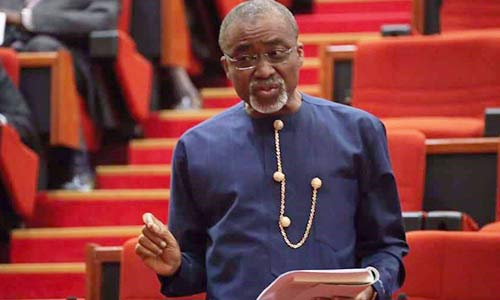
    Stop Appeasing Criminals, Abaribe Cautions Federal Gov’t

    Senator representing Abia South Senatorial District, Sen. Enyinnaya Abaribe, has urged the Nigerian government to end what he described as the appeasement of criminals, warning that the country has “lost its moral compass” and must urgently return to a path of civic and ethical responsibility.

    Abaribe made the remarks while chairing the 5th Frontier Discourse Annual Public Lecture and Awards on Tuesday, November 11, 2025, at the Nigerian National Merit House in Maitama, Abuja.

    He expressed concern over a growing trend of rewarding wrongdoers, citing the recent practice of granting amnesty to armed bandits who abduct children. According to him, such measures signal a dangerous collapse of moral standards.

    “We are in a state where bandits who kidnap children are rewarded with amnesty, which shows we have lost whatever morality we once had,” he said.

    The senator also condemned the reintegration of individuals responsible for killing soldiers in ambushes, noting that they often face no meaningful consequences.

    “You do not reward those who live on ransom and blood,” he said. “When you do, you embolden them. A government that chooses appeasement over justice signs a death warrant for its citizens. Those you appease will see you as weak and continue to perpetrate evil.”

    Turning to Nigeria’s political culture, Abaribe criticized recurring ego clashes among leaders, which he said often derail governance. “No more blame games,” he urged. “Buckle up and do what you were elected to do.”

    The event also featured awards recognizing outstanding individuals and institutions. Honorees included:

    Good Governance (Governor of the Year): H.E. Dr. Peter Ndubuisi Mbah

    Public Sector Person of the Year: Mallam Lanre Issa-Onilu

    Humanitarian Service Award: Mary Dinah Foundation

    Media Person of the Year (TV): Aaron Atsahyel

    Media Person of the Year (Radio): Maryann Okon

    Brand of the Year: Centre for Memories

    Promising Entertainer (Music): Ugochukwu Uneabunso (Une 50)

    Business Person of the Year: Chief Chukwudi Nnaji

    Frontier Person Award: Prof. Udenta O. Udenta, Dr. Ahmad Sajoh

    Literary Icon Award: Abuja Literary Society

    Tech Person of the Year: Gbenga Sesan

    Sports Icon of the Year: Barr. Amobi Ezeaku

    Lifetime Achievement Award: H.E. Dr. Okwesilieze Nwodo

    Other highlights were a saxophone performance and live musical entertainment.

  • Love in the Time of Banditry

    Love in the Time of Banditry

    -By Abdul Mahmud

    They dress it up as negotiation and baptise it as dialogue, but it is nothing more than doublespeak. A masquerade of words. Behind the velvet of their language lies deceit. To call surrender by another name does not change its essence. To dignify capitulation with the vocabulary of peace is to mock both truth and justice. What they parade as dialogue is often a transaction of power, a bargain struck in whispers, where the people, unseen and unheard, are the coin of exchange. Yet, they justify it as the only path to peace. When northern governors sit across from bandits and terrorists, what unfolds is not negotiation in any true sense. It is courtship. It is a series of dates. It is love in the time of banditry. A theatre of intimacy staged under the shadow of violence. A ritual that strips empathy of its nobility, reducing what should be the compassion of leadership to the self-serving whispers of survival and convenience, which recalls obsequious intimacies that surface in times of adversity, only to blur the line between fear and affection. Gabriel García Marquez, in his literary opus, Love in the Time of Cholera, wrote of a love that endured through decay, war, and pestilence; love that was obstinate, enduring, and almost absurd in its persistence. But, what we are witnessing here is its inversion: not fidelity through ruin, but complicity masquerading as affection. It is surrender disguised as closeness; it is the twisted parody of love, showcased as reconciliation. Not love shaped by hardship.

    The first date was awkward. In Zamfara, officials drove into Shinkafi and Dansadau forests to meet warlords who had already massacred villagers and burned farmlands. The state came clothed in the uniform of authority. The bandits came with blood on their hands. Victims were not invited. There was no room for mothers who lost children in Anka or for fathers who buried their sons in Maru. The girls kidnapped from Jangebe Secondary School were absent too. Instead, the state leaned across the table, desperate for calm, while the bandits leaned back, aware of their power. In Katsina, the dates were even more surreal. Former Governor Aminu Masari presided over gatherings in Faskari and Safana, asking men who roamed the forests with Ak-47s to sheathe their swords. He offered them amnesty. He promised them a chance to return to normal life. He said forgiveness was the only way forward. The bandits promised to stop attacks. Weeks later, children were abducted from Kankara school. The romance soured, but the cycle continued. In Niger State, the story was not different. Officials met with gunmen in Shiroro and Rafi, pleading for the release of students kidnapped in Kagara and Tegina. The bandits named their price. Parents sold farmland. Traders emptied their savings. Communities gathered ransom. And still, the killers smiled at state officials, knowing that power sat firmly on their side of the table. Here’s the Babanla of it all. El-Rufai once confessed to sitting with bandits. He called it negotiation. But in truth, it was an act closer to courtship, a ritual of appeasement that gave men of violence the recognition they craved. And like all bad romances, it ended with betrayal of citizens who were left abandoned while the suitors walked away unharmed.

    Every courtship has its rituals. Ours, between the state and bandits, has acquired a disturbing familiarity. It begins with what GenZ lovers now call the talking stage – the tentative exchanges where boundaries are tested and each side pretends to listen. Soon it drifts into the season of promises. Governors, with anxious smiles, place their offerings on the table: amnesty, cash, reintegration into a society they once helped to fracture. Bandits, in turn, whisper their vows of restraint: to slow the killings, to reduce the kidnappings, and to hold their fire for a while. These are not promises of love, but pacts of convenience. They are not born of conviction, but of fatigue. It is less negotiation than seduction; and less about peace than about buying time. And like all rituals of courtship gone wrong, the words exchanged are designed not to bind hearts, but to mask betrayal. Both sides know these promises will be broken. Yet they return to the table again and again, like lovers in a toxic affair. This romance is costly. Citizens are the ones who pay the bill. In Sokoto, villagers in Isa and Sabon Birni sold goats to rescue their daughters. In Kaduna and Abuja, families borrowed money to pay ransom for their sons seized on the Abuja – Kaduna highway. When the ransom was paid, when the family was ruined, when the dead were buried, the government still appeared in public with the men who caused the pain. The same killers were photographed shaking hands with officials. The logic of this courtship is simple: violence seduces. The bandits hold power. They can stop attacks or restart them at will. They control vast forests. They instill fear more effectively than the police. The state, weak and insecure, clings to them in the hope that kindness will tame them. But kindness never tames abusers. It emboldens them. Each meeting shifts the line of what is normal. What once outraged citizens now barely raises eyebrows. A mass abduction? There will soon be talks. A massacre on the highway? Another round of dialogue. The extraordinary has become ordinary. The courtship is now part of our political culture that has taken its own linguistic ascription. Listen closely to the language officials use. They speak of “understandings”. They speak of “forgiveness”. One Zamfara governor once urged citizens to “show love” to bandits. These are not the words of justice. These are the words of romance. They reveal the dangerous intimacy between the state and cold-blooded murderers, while citizens stand abandoned.

    The Constitution does give not blessings to this romance, nor does the Terrorism Prevention (Prohibition) Act, 2022. The law does not say: dine with terrorists. It says: arrest, prosecute, punish, and protect. Yet, governors bend the law in the name of expedience. Federal law enforcement and state security officials who should protect the state and the law do more than keep quiet. They drape a cloak of protection over such encounters, ensuring that the lovers are not disturbed. Their silence is never neutral. Their silence is both complicity and consent. But, here’s the kernel: each time Abuja averts its gaze, it does more than ignore such encounters. It blesses the rendezvous. It sanctions another tryst between power and violence, another betrayal recorded in the register of statecraft. The flashing convoys, the armed escorts, and whispered briefings are not signs of resistance, they are choreography. They turn meetings that should be interrogation into consecrations shielded by the very institutions sworn to protect citizens. And so, with every silence, Abuja redraws the map of loyalty: not to the governed, but to those who terrorise them.

    The human cost is huge. Schoolgirls from Jangebe were abducted with hundreds of classmates. They returned shaken, hungry, and traumatised. When they heard that the governor negotiated with the same men who abducted them, they asked: “Why are they free? Why did they do this to us?” There was no answer. Comrade Muhammad, one of the passengers abducted from the Kaduna-bound train in 2022, once told a chilling story. He said he encountered Abubakar, one of his kidnappers, not in a forest or a hideout, but in a mosque in Kaduna. Face to face. In the open. Among worshippers. The implication is terrifying. For a man who once held a gun to his head to stroll so casually into a mosque suggests more than mere audacity of courage. It suggests assurance. It suggests the confidence of someone shielded by invisible hands. Perhaps, Abubakar had just emerged from one of those secret meetings with the state, the kind where promises are exchanged in whispers and guarantees are offered in silence. Perhaps, he knew he had little to fear. That encounter captured the paradox of our times: victims carry scars into prayer halls while perpetrators walk in with a swagger, as though their crimes had been baptised by power itself.

    There is a point that renders these grotesque courtship tragic, and it is this: the closer the state draws to the bandits, the farther it drifts from its people. Each gesture of appeasement towards killers deepens the abandonment of citizens who look to the state for protection. Every deal struck across the table with gunmen is not a negotiation, it is a betrayal carved into the memory of widows and orphans. Every handshake extended to men of violence lands as a slap across the faces of the grieving, a cruel reminder that the state has chosen to share intimacy with those who spill blood rather than solidarity with those who shed tears. In such rituals of compromise, power becomes complicit, and the line between protector and predator begins to blur. The tragedy further deepens in the symbolism of such encounters. To romance bandits is to abandon the living for the company of death. It is to sit in a room perfumed by the ghosts of the slain, and choose intimacy with murderers. Every concession to the gunmen becomes a mirror in which the people glimpse the frailty of the state that prefers to keep company with killers rather than stand vigil with victims. And so the people learn, slowly but bitterly, that the state is not a fortress built for their defence, but a stage where betrayals are performed in plain sight, leaving citizens to wonder: when their protectors embrace their tormentors, who is left to stand with them, the powerless?

    This toxic romance has no future. The bandits are not changing. They are growing richer and bolder. Each meeting gives them legitimacy. Each promise emboldens them to demand more. The state, meanwhile, grows weaker. With every compromise, it loses moral authority and public trust. If this continues, the state risks becoming indistinguishable from its new partner; a willing accomplice in crime. Nigeria must end this romance. The state cannot keep dating its killers. It must return to its first love to the people. That requires justice, not appeasement. It requires prosecutions, not reintegration. It requires investment in security forces, reform of intelligence, and development in villages long abandoned. Citizens must feel the presence of the state not only through uniforms, but through working schools, safe roads, and real jobs. The only “dates” worth keeping are with survivors, victims, and communities that still hold faith in Nigeria. They are the true partners of the state. They are the ones who deserve love, not the men who burn villages and steal children. What the government has called peace talks are not peace at all. They are surrender disguised as negotiation. They are betrayal dressed as dialogue. The Nigerian state must choose where its heart lies – with citizens or with cold-blooded murderers.

    The dates with bandits must end.

  • Only Atiku can rescue Nigeria from bandits, terrorists — Muazu, Shekarau

    Only Atiku can rescue Nigeria from bandits, terrorists — Muazu, Shekarau

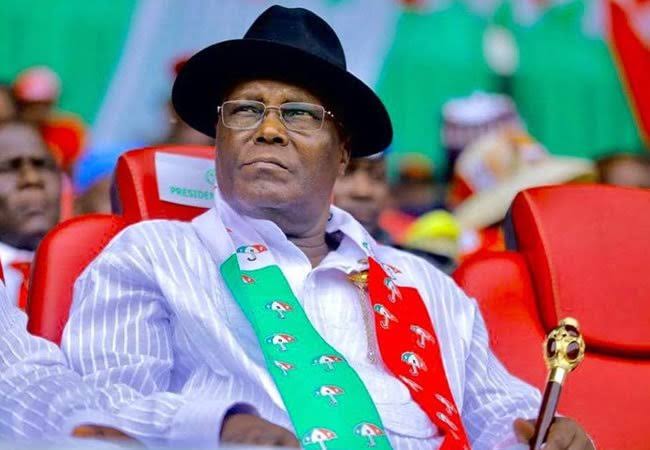
    A former governor of Niger State, Muazu Babangida Aliyu on Monday in Abeokuta, the Ogun State capital described the People’s Democratic Party (PDP), Alhaji Atiku Abubarka as the most qualified person to take over power from President Mohammadu Buhari in 2023.

    Aliyu, who was in Abeokuta in the company of former governors Ibrahim Shekarau (Kano) and Boni Haruna (Adamawa) rallied support for the presidential ambition of Atiku.

    Addressing over 20 volunteer groups that gathered at the PDP Secretarial in Abeokuta to declare their support for the presidential ambition of Atiku, the former governor of Niger State, insisted that Atiku remains the healthiest candidate among those vying for the presidency.

    Aliyu who took a swipe at the Presidential candidate of the All Progressives Congress (APC), Bola Ahmed Tinubu, who was seen in a fitness video, said, Nigerians cannot be deceived by APC and its presidential candidate.

    He insisted that Nigerians know the candidate who he mentally and physically capable of ruling Nigeria.

    “I was looking through newspapers today and I saw a picture of somebody trying to prove he is healthy. If there is health, we don’t need to tell people that we are healthy, but we are aware that Atiku is the healthiest of the presidential candidates in this country”, Aliyu said.

    He noted that, only Atiku can rescue Nigeria from Boko Haram, banditry and other security challenges confronting the country.

    He said, “We need security and only an Atiku presidency can reclaim our land from Boko Haram, can reclaim our land from banditry, from IPOB and all other bad people that are making our lives difficult”.

    “It is only an Atiku presidency that can restructure Nigeria. There must be a state police so as to ensure security in the local areas, only an Atiku Abubakar presidency can do that”.

    “The economy is bad, there is extreme poverty in the land, therefore, members of PDP and fellow Nigerians, on the day of the election in February, elect Atiku Abubakar because the development of any nation depends on the education of that country”.

    “You have seen what has happened to us, today our students in public universities have been at home for more than seven, eight months. Our secondary schools, many of them are so dilapidated that they cannot serve as secondary schools. Our elementary schools, there is no country that has over 20 million children out of school and you expect to be developed, only an Atiku Abubakar presidency can help us solve this problem”.

    “We have become the poverty capital of the world, that should not be. We are expected to everyday produce 2.1 million barrels of crude oil, but only last month, we were able to produce 900,000, it has gone as low as 600,000. What is happening to the rest, some people are stealing it, are we saying that the current government does not know those who are stealing it? They know, therefore, voting for Atiku Abubakar is saving, is rescuing, is developing Nigeria”.

    Also addressing the gathering, Haruna said “I want to appeal to you to join us as you make a commitment towards supporting him and he will deliver. We want to also appeal to you that now that the campaigns have started, we plead that this campaign should go to the wards, should go to the units.”

    In his address, Adebutu urged the South West to support Atiku’s candidacy, saying “PDP is the party that can take you to the mainstream of Nigeria.”

    He said, ” before the primaries, I told people that for the peace of Nigeria, let us all support Atiku Abubakar, some people were adamant, they insisted that it was the turn of Yoruba, but I told them Yorubas have ruled previously”.

    “But some people because of their selfish interest don’t want Atiku to emerge as our candidate. You cannot lose your integrity because of a pot of porridge”.

    “We cannot take Yorubaland out of the mainstream of Nigeria. Yorubaland must remain in the mainstream of Nigeria and PDP is the party that can take you to the mainstream of Nigeria”.

    “I believe in one Nigeria. All those calling for the break up of Nigeria cannot withstand the destruction of war. We don’t want war, we cannot afford to be refugees, what we want is peaceful resolutions of our problems”.

    “We have to move away from the concept of breaking Nigeria, we will not divorce, and our children will not suffer”.

    “Even the countries that have stronger institutions than us can not afford to break up”.

    “From the recent developments, it has shown that Atiku is a true leader. He has put himself in the position of a true elder. We want an elder that can rebuild the party and the country.”

    (Vanguard)

  • Tambuwal describes bandits as ‘devil’s incarnates’


    Sokoto State Governor, Alhaji Aminu Tambuwal, had described notorious bandits terrorising the people of Kebbi and Sokoto states and the entire Northwest of Nigeria as devil’s incarnates who require united forces to be defeated.

    Tambuwal stated this during his condolence visit to Kebbi State Governor, Senator Abubakar Bagudu, over the killing of some vigilante members and military personnel by bandits at Kanya town in Dankowasagu Local Government Area of the state.

    Become a partner with USA companies, promote their offers and get paid in US Dollars weekly, Nigerians are earning about $465 weekly. Click here to see how you too can get paid .

    Tambuwal said: “We are here, in Birnin Kebbi, on behalf of the people and government of Sokoto State, to condole with ourselves because we see ourselves as part of Kebbi state. Sokoto and Kebbi are the same. But we are here to commensurate with the direct families affected by the bandits attack where many lives were lost.

    “And one of the incidents involved His Excellency, the Deputy Governor of Kebbi state. His efforts, that of the governor and other stakeholders in the state are encouraging towards the establishment of peace in the state.

    “We commensurate with you and pray that the souls of the departing heroes and those who have lost their lives will rest in peace. And I pray that Almighty Allah will give the relatives of those who lost their beloved ones the fortitude to bear the losses.”

    Tambuwal, who described the perpetrators of the attacks as agents of the devil, said all stakeholders, irrespective of their religious, tribal and political affiliations, must unite to defeat them.

    The governor donated N30 million to the victims of the bandits attack and prayed to Almighty Allah to grant them Alijanah Firdausi and fortitude for their families to bear the losses.

    In his reaction, Kebbi State Governor, Senator Abubakar Bagudu, commended Tambuwal for the visit and described the incident as a national and global challenge.

    He said: “An attack on one is an attack on all. Regrettably, this is not the first time this would happen, and you are very prompt in coming home to show solidarity, to encourage us.

    “I must commiserate with you as well, and pray to Allah to accept all the prayers for those who lost their lives. May Allah continue to bless you,” he said.

    Bagudu observed that security challenges were highly frustrating but required maximum cooperation, advising that people must avoid coining issues of security into politics, religion or ethnicity.

    “Issue of security is a pure criminality where civilised people need to unite and cooperate with one another and, by God’s grace, we shall defeat them.”

    The governor observed that security challenges still remained a global issue and stressed that all West African countries face one security challenge or the other, which required synergy to effectively tackle the menace.

    (Sun)

  • Bandits align with terrorist organisations to wreak large-scale havoc in the north region. -Niger State Gov


    Niger State Governor, Abubakar Bello, has said that the bandits troubling the north have aligned with terrorist organisations to wreak large-scale havoc in the region.


    Governor Bello stated this weekend at the Ibrahim Badamosi Babangida Specialist Hospital, when he visited some soldiers injured recently following attacks by bandits in Shiroro within the Kagara Rafi Local Government Area of Niger State.


    According to him, “We have every reason to believe we are not dealing with just bandits and with the latest operations and the way they coordinate their attacks, it confirms that they must have some kind of training.


    “So we want to believe we are dealing with some terrorist elements who have decided to have some kind of alliance with bandits for whatever reasons.”


    Bello who also is the chairman of North Central States Governor’s Forum, NCSGF, said the magnitude of recent attacks carried out by bandits calls for a review of the security architecture.


    While noting that the injured soldiers were recuperating, the governor disclosed that two soldiers died in the Shiroro attack


    Governor Bello passed a vote of confidence in the Nigerian Military, stating that the security operatives were capable of curtailing the situation, calling for more support from residents and urged individuals with useful and timely information to come forward.

    Bello’s remarks came a day after gunmen kidnapped the Permanent Secretary at the Niger State Ministry of Transportation, Dr Ibrahim Musa.


    Musa was said to have been abducted from his house along with his son on Friday night in Zungeru, a town in Wushishi Local Government Area, LGA, of the state.


    The Chief Press Secretary to the state governor, Mary Barje, confirmed the abduction of the government official  in a statement on Saturday.


    Source: www.vanguardngr.com

  • Senate asks Buhari to wage war against bandits and declare them terrorists


    The Senate has asked President Muhammadu Buhari to declare bandits operating in different parts of the country terrorists and wage a war against them.


    It also asked the president to approve aerial bombardment of locations of terrorists to annihilate and eliminate them.


    It further urged the President to declare all the known leaders of bandits wanted and track them whenever they are for arrest and prosecution.


    The decision of the Senate followed the consideration and adoption of a motion tagged: “Banditry in Sokoto State, particularly Sokoto East senatorial district”, sponsored by Ibrahim Gobir. He hails from the State.


    In his contribution, Kabiru Gaya, said bandits were now attacking village at would without any resistance bybthe relevant authorities.


    “There are some many people being killed. We have invited security agents here several times and we have approved money. But nothing appears to be happening. Bandits are attacking village and killing people.”


    Lilian Uche Ekwunife, urged President Buhari to address Nigerians, warning that the issue was getting out of hand. She said people in Abuja and other parts of the country are being killed at will


    “Security has gone so bad and we have to to careful. Across the country, Security has be taken seriously. Armed robbers go to hotels in Abuja and kidnap people at will. In the South East and South West, it is the same thing. I think President Muhammadu Buhari must address the nation. Things are getting out of hands.”


    Mohammed Ali Ndume, while contribution, said: “The situation in North West and North Central is worrisome. What we are faced with is very different. What we are faced in the North is also about humanitarian crisis.”


    President of the Senate, Ahmad Lawan, in his remarks, said the National Assembly may increase security budget to N1 trillion in next year’s budget.


    “The issue of security is one we can never stop talking about. As a Government, we need to give our security agencies the needed money they need. Since we have approved about N800 Billion for security agencies, think we can increase it to N1 trillion,” he said.


    The motion was adopted after Lawan put it to a voice vote.


    Source: www.sunnewsonline.com

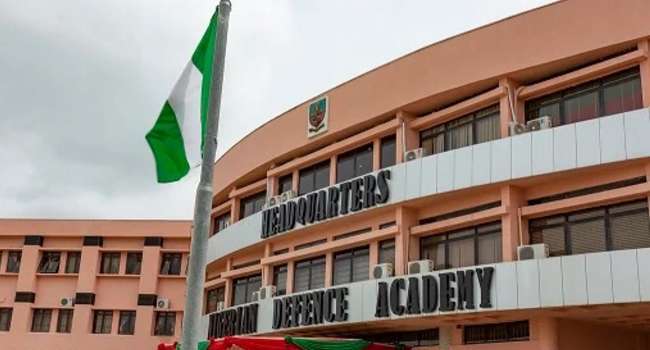
  • Insecurity: Unknown Gunmen invade NDA, kidnap a Major, kill two officers

    Insecurity: Unknown Gunmen invade NDA, kidnap a Major, kill two officers


    The attack on the Nigerian Defence Academy (NDA) in Kaduna by bandits in the early hours of yesterday, which led to the death of two officers and abduction of a Major, has sparked outrage and tension across the country.


    The bandits reportedly entered the NDA premises disguised in military uniforms and passed through the security gate into the academy officers quarters and started shooting sporadically.


    The Academy spokesman, Major Bashir Muhammad Jajira, in a statement said: “The security architecture of the Nigerian Defence Academy was compromised early this morning by unknown gunmen who gained access into the residential area within the Academy in Afaka. During the unfortunate incident, we lost two personnel and one was abducted.”


    The Chief of Defence Staff (CDS), General Lucky Iraboh, who has been on tour of the North East was said to have made a stopover at the NDA, yesterday. Iraboh, who arrived the academy at about past 5pm was taken round the academy by its commandant, Major General Yusuf and other officials to have a first hand information on what really happened.


    Security has been beefed up in and around the academy just as the Academy in collaboration with the 1Division Nigerian Army, Air Training Command and other security agencies have begun pursuit of the gunmen with a view to tracking them and rescuing the abducted personnel.


    Meanwhile, unconfirmed report said the abductors have contacted the NDA demanding N200 million ransom.


    Piqued by the development, the Peoples Democratic Party (PDP) said the citizens has lost hope in the ability of the President Muhammadu Buhari-led All Progressives Congress (APC) administration to combat terrorism.


    In a statement by its National Publicity Secretary, Kola Ologbondiyan, it said security situation has deteriorated so much that suspected bandits now attack military formations.


    “Bandits and terrorists are now freely ravaging our communities in Kano, Kaduna, Kogi, Benue, Zamfara, Adamwa, Taraba, Borno, Yobe, Imo and other states of the federation, including Mr. President’s home state, Katsina, where the governor, Aminu Bello Masari, has now asked victims of terror attacks to defend themselves.


    “It is distressing that having lost hope in the capacity and commitment of the President Buhari-led APC administration to protect their citizens, state governments are now sending vehicles to the University of Jos, Plateau state, to evacuate their citizens,” PDP said.


    This is as the Yoruba Council of Elders (YCE) through its Senior Elders’ Forum, raised the alarm that bandits may overrun Aso Rock, Nigeria’s seat of power in Abuja, if proactive steps are not taken to safeguard the Presidential Villa and the entire country, while the Arewa Consultative Forum (ACF) expressed regret that the nation’s security system was operating on reverse gear. The apex Igbo socio-cultural organisation, Ohanaeze Ndigbo, pan-Yoruba group, Afenifere and the Middle Belt Forum (MBF) described the attack as a national calamity as it showed that bandits were becoming superior to the military.


    Former national president of YCE, Dansaaki Samuel Agbede, who spoke with journalists in Ibadan, Oyo State, said the invasion was unprecedented in the history of the Nigerian military.


    Agbede, retired colonel of the Nigerian Army, stated that the attack signified that “chicken is coming home to roost. All our calls and cries for proactive actions against insecurity have been confirmed by this worrisome invasion. It is very worrisome that bandits could have the audacity to attack military academy and kill officers. This has never happened in the history of the military that bandits could have the effrontery to attack military academy.


    “This is too disgraceful and it is just confirming what we have been saying about the fifth columnist. We have seen why we should not allow those Boko Haram insurgents into the military. It is like putting fire on our thatched roof.


    “It is time to look up and gather elders together to do something about this issue. It is dangerous to leave governance of 200 million people in the hands of one man. To say that we have a Major-General as our Commander-in-Chief and this is happening is worrisome.


    “Just like we have been crying, these bandits are everywhere. We should stop dancing around for politics. It is disgusting. We really have problems and we should not wait until they overrun Aso Rock. We still appeal to the Federal Government to gather people together to address this issue.”


    Reacting, spokesman of ACF, Emmanuel Yawe, said in a statement that the incident was an embarrassment to first generation of northerners who fought hard to bring development to the north.


    “We of the ACF have said it again and again that there is everything seriously wrong with management of our security. The other day, a Nigerian Airforce fighter aircraft was shot down by the so-called bandits. Today, the factory where all Nigerian military officers are produced has been invaded and desecrated. What else do we need to show that our national security system is running on reverse gear?


    “The latest security breach is another embarrassment to the ACF. The NDA is a proud monument of the efforts of the first generation of northerners who fought hard to bring development to the north; the likes of Muhammadu Ribadu, Sir Abubakar Tafawa Balewa and Sir Ahmadu Bello who brought the institution to Kaduna. They did not bring it here for our generation to hand it over to bandits or whatever we call them.


    “This is an institution that is not only a pride of the north but a pride of Nigeria. Many African countries train their military officers here. It is really sad that ordinary street bandits will invade a military institution of such high national and international repute, outwit the security system and men there, kill officers and take one away to an unknown destination.


    “We of the ACF are particularly sad because Kaduna is our home not only because our headquarters is located here, but for a long time, even after the split of our Northern region, Kaduna remained home to all northerners. The NDA is a proud reminder of the achievements of our fathers. Is that how our present generation of northerners will seat and watch as these legacies are destroyed?


    Speaking through its national publicity secretary, Alex Ogbonna, Ohanaeze Ndigbo described the country’s security as scaring to any average Nigeria and called on the government to sit up because the development is threat to the corporate existence of the country.


    “It is a national calamity for this kind of attack to happen to the nation’s defence academy because the armed forces are the symbol of national unity and last line of the country’s defence,” he said.


    For MBF, the fact that the Air Force has not been allowed to bomb the bandits and mop up their bases means there is complicity on the part of the government.


    “Government has to come clean because it is getting worrisome. If the government will allow the bandits to get this far, it means that something is wrong somewhere. To attack a defence academy where military offices are being trained is going too far. Government has to rise up and bomb the bandits out of existence,” national publicity secretary, Alex Ogbonna, submitted.


    The pan-Yoruba socio-cultural organisation, Afenifere, said the development is shocking and disturbing.


    Afenifere National Publicity Secretary, Jare Ajayi, said the NDA is the heart of Nigeria’s military and should elicit fear in the hearts of criminals.


    Ajayi, who spoke on behalf of the group’s leader, Chief Ayo Adebanjo, said for the attack to happen few days after President Muhammadu Buhari had a meeting with his security chiefs was an indictment on the security architecture.


    Source: www.sunnewsonline.com

  • Katsina State Governor urges citizens to take up arms and defend themselves against Bandits

    Governor Aminu Masari has urged Katsina State citizens resident in areas prone to activities of bandits to acquire weapons and defend themselves.Masari noted that it is morally wrong for people to submit cheaply to the bandits without any attempt to defend themselves, according to a statement by his Media Aide, Malam Abdu Labaran,The governor said this during his visit to Jibia town to condole with the families of 10 people that were recently crushed by operatives of the Nigerian Customs Service (NCS) through reckless driving. According to him, security is everybody’s business, pointing out that it is not the responsibility of the government alone.“It is the people’s meek submission that emboldens the bandits to continue with their heinous activities with murderous frequency.“People must divorce their minds from the mistaken notion that security is government’s sole responsibility alone,” Masari said. Meanwhile, the Special Task Force charged with maintaining peace in Plateau and environs has warned against any protest over the attacks on commuters in Jos on Saturday.“In the interest of peace, youths planning any protest over the incident should shelve that plan. There is a curfew in place; no one should attempt to violate it,” Maj. Ishaku Takwa, the Media Officer of the task force, said in a statement in Jos. He said that information at the disposal of the task force indicated that the protest is proposed to commence from the Jos Central Mosque axis to the State House Assembly premises.Takwa warned that the 24-hour curfew imposed by the state government in Jos North Local Government Area had not be lifted, hence anyone found wanting would be decisively dealt with.“Our attention has been drawn to a message circulating on social media calling on Muslim youths to embark on peaceful protest slated for Wednesday, August 18“The message stated that the demonstration is expected to commence from Jos Central Mosque to the State House of Assembly Complex.“While we will not want to join issues with the organisers of the planned protest, it is instructive to state that in view of the fragile nature of peace on the Plateau, this protest is unnecessary and uncalled for. We are fully aware that religious leaders have distanced themselves from the planned message. They have categorically stated that they are not in support of the peaceful demonstration. We are, therefore, sending a strong warning to those planning this demonstration and the originators of the message to have a rethink.”

    Source: www.sunnewsonline.com

  • FG Laments: Abductors of Baptist School students collect xtra N24m


    Recall that bandits on July 5 invaded the school and abducted more than 100 students.


    On  July 25, when 28 of the students were released,  the President of the Nigerian Baptist Convention, Rev Israel Akanji, said 87 of them were still in captivity.


    Giving an update in an interview with The PUNCH on Wednesday, the Kaduna State chapter of the Christian Association of Nigeria said 80 of the students were still being held by the bandits.


    Besides the Bethel Baptist schoolchildren, no fewer than  parents of the 83 students of the Federal Government College, Birnin Yauri, Kebbi State who  were abducted from their school 56 days ago, are still in bandits’ den.


    Also, about 136 pupils, who were abducted from an Islamic school at Tegina, Niger State in May, spent 71 days in bandits’  den on Wednesday.


    Expressing concern about the situation, the Minister of State for Education, Nwajiuba, told The PUNCH that government was working with security agencies to rescue the abducted students.


    We can’t go to bandits’ camps  and bomb them with students – Minister

    The minister stated, “It is a security issue.  You know that the Chibok girls have been held for over seven years. Kidnapping of students is a very serious matter. The government cannot unilaterally go there and start bombing everybody.


    “We don’t want to lose the children. If we have gone ahead and started bombing many people, you may not even have seen some of the Chibok girls back. They would have been killed.


    “The government is first of all responsible to its citizens. The fact that they are held by bandits requires more caution.”


    On his part, the Vice President of the Christian Association of Nigeria (19 Northern States and Abuja) and  Kaduna State chairman, Rev. John Joseph Hayab, told The PUNCH that 80 students of the Bethel Baptist school were still being held by bandits.


    He said, “We still have 80 students of Baptist High School, Damishi, Kaduna  with the bandits and we are appealing to all  loving and caring Nigerians to pray along with us for a miracle very soon.


    “Their parents and siblings want them back. The church also wants to see them back and all lovers of humanity want to hear that these children are back.”


    We contributed N300,000 each for abductors on Friday – Parent

    But a parent, who confided in The PUNCH, said the bandits demanded N300,000 from each of the parents.


    He stated, “The kidnappers asked each parent to pay an additional N300,000 before they could release the children. We contributed the money and sent it to them on Friday last week. They promised to release the students early this week but this is Wednesday and we have yet to see any of them.


    “They have not communicated with us since we gave them the money. The money was sent through the link person they selected although they assured us the children were safe. But they have reneged on their promise twice now, so we are not trusting their words again but we hope the children are safe as they assured us.”


    Recall that The PUNCH had on July 26 reported that the bandits collected a N50m ransom before releasing 28 of the students.


    Kebbi hunters abandon FGC students’ rescue mission as govt reneges on promise

    In Kebbi State, hunters, who were combing forests in the state to rescue the abducted students of the FGC, Birnin Yauri, have stopped their search.


    One of the hunters, who spoke to one of our correspondents,  on the condition of anonymity, said they initially embarked on combing forests, but stopped when government reneged on its promise.


    He said, “Before we embarked on the search of the forests, our leadership held discussion with the government team, but the government did not fully fulfil its part of the discussion.


    “The government gave us N30,000 to take care of our families so that they would not face any difficulty in our absence and each of us(hunters) was given N5,000.


    “We eventually backed out of the rescue mission, when we realised that  government was not forthcoming in providing other logistics we requested such as guns, motorcycles and  weapons.”


    A government house source said from the time the bandits struck in the state, the state government had provided at least 50 Hilux pick-up vans and 300  motorcycles to support the police, army and civil defence in their task of curtailing attacks on the state.


    “You know how expensive security is anywhere in the world. Notwithstanding, the constraint of full control over the security agencies, the state government under Senator Atiku Bagudu is poised to end banditry in the state,” the source stated.


    A mother of one of the students, still in captivity, said parents had resigned to their fate. She stated, “The government has failed us. They keep giving us endless hope. The last time the leadership of the parent–teacher association  met with government officials in Birnin Kebbi, nothing concrete on their  efforts to rescue the children came out of the meeting.”


    Source: www.punchng.com

  • Muslim Cleric negotiates with bandits: Sheikh Ahmad Gumi’s involvement in Wednesday’s release of 27 abducted students


    A prominent Muslim cleric acting as a self-appointed middleman has emerged as a divisive figure in the kidnap-for-ransom crisis plaguing northern Nigeria, which has seen more than 800 students seized in recent months.

    Sheikh Ahmad Gumi, a former army captain, was involved in Wednesday’s release of 27 students abducted in March from a forestry college in Nigeria’s Kaduna state.


    Such is his influence that the parents of the freed students paid him a “thank you” visit where he assured that 16 other students abducted from Greenfield University in Kaduna state in April, would not be killed.


    Their abductors, who had previously killed five of them and released one after a ransom was paid, had threatened to kill the remaining hostages if no ransom was paid at the expiration of a Wednesday deadline but the sheikh said he had talked them out of it.


    ‘Kidnapping is the lesser evil’


    Gumi first emerged on the scene in February after he went on a so-called peace mission to a group of bandits in their forest hideout in Zamfara state.

    Since then, he has undertaken other such visits to Katsina, Kaduna and Niger states, urging bandits to stop carrying out attacks.


    But despite his mediatory role, he has stirred controversy for advocating talks and a “blanket amnesty” for the criminal groups responsible for the recent wave of kidnapping in northern Nigeria.


    “If the country could pardon coup plotters who committed treasonable offences in the era of military administration, the bandits can as well enjoy similar forgiveness even better under democratic rule,” he said.


    On another occasion, he said: “Kidnapping children from school is a lesser evil because in the end, you can negotiate and now bandits are very careful about human lives. Before, the mission of bandits was to go into a town, ransack it and kill people.”


    Such views about the bandits, who have abducted hundreds of civilians, including schoolchildren and other students – and killed some in the process – are seen by many as showing that his sympathies lie with the criminals, fuelling anger and division along religious, regional and ethnic lines.


    media caption’I’m afraid to go to school after being kidnapped’

    In February, a viral online video showed Gumi making remarks alleging that non-Muslim Nigerian soldiers were responsible for insecurity.


    He was censured by the influential Christian Association of Nigeria (CAN) for aggravating long-running religious and ethnic tensions, while the army said he “deliberately wanted to disparage the Nigerian Army to portray it in bad light.”


    Gumi said his comments had been misunderstood and his actual message was manipulated.


    Gumi’s mediation efforts have also made him a target for Islamist militant group Boko Haram, whose leader Abubakar Shekau issued messages threatening the cleric.


    He has also been critical of President Muhammadu Buhari’s perceived mismanagement of the security crisis, which in turn provoked a backlash from the authorities, politicians from the ruling All Progressives Congress (APC), and religious groups.


    The sheikh has often downplayed having any political associations. However, in 2019 he was branded a member of the opposition People’s Democratic Party (PDP) when a photo of him with PDP’s then presidential candidate Atiku Abubakar surfaced.


    Eldest son of the late Sheikh Abubakar Mahmud Gumi, an outspoken Islamic scholar and Grand Khadi (chief judge of the Shariah Court of Appeal) in northern Nigeria

    Studied medicine before enlisting with the Nigeria Defence Academy and serving as a medical officer in the Nigerian Army Medical Corps (NAMC)

    Attained the rank of captain before retiring from military service and moving to Saudi Arabia to study in Mecca, where he obtained a Doctor of Philosophy in Usul ul Fiqh (principles of Islamic jurisprudence)

    Currently the Mufti and Mufassir (scholar and writer) at the Sultan Bello Mosque in Kaduna

    Married with several children

    Since the beginning of the year, Sheikh Gumi has met several bandit leaders to “dissuade them from their militancy”.


    In February he met the leader of a bandit group that kidnapped 42 people, including students, in Niger state. The hostages were released shortly after.


    Following the abduction of about 20 students from Greenfield University in Kaduna state in April, Gumi reportedly urged the Central Bank of Nigeria to pay the group responsible their ransom demand of $260,000 (£190,000) and 10 Honda motorcycles. The payment has not been made and the students remain in captivity.


    Cattle militants and oil militants

    Authorities say Nigeria’s kidnap crisis is being fuelled by such ransom payments and both President Buhari and Governor Nasir El-Rufai of Kaduna state are against it. Instead, they want bandits arrested and prosecuted.


    Gumi has defended himself, saying that: “I am not the first person that started dialoguing with them [bandits]. I only added value… I never visited these bandits without a government official present.

    In a February interview with TV station AIT, he suggested that the bandits had picked up kidnapping from oil militants in Nigeria’s Niger Delta region.


    “They learnt kidnapping from Mend [a Niger Delta militant group]. I do not see any difference. They were the first victims of rustling, their cattle is their oil,” he said.


    In 2009 thousands of Niger Delta militants who surrendered their arms were granted an unconditional amnesty by the government of President Umaru Yar’Adua after years of wrecking havoc on oil installations, abductions and killings in the region.


    A militant examines a machine gun

    IMAGE COPYRIGHTGETTY IMAGES

    image captionMilitants such as the feared Ateke Tom, now a king in Rivers state, were pardoned by the Nigerian government in 2009

    Some people in southern Nigeria have dismissed such comparisons, arguing that the Niger Delta militants had a political cause – greater control of their region’s oil wealth – while the bandits are only after money.


    Others claimed that politicians, activists, security personnel, religious and community leaders who acted as mediators in the Niger Delta militancy profited from it, so they are weary of Gumi’s self-appointed role and the economy being built around the kidnap-for ransom crisis.


    But whatever his critics say, the sheikh’s influence is growing. One indication of this is that in the continuously changing nomenclature for what is happening in northern Nigeria, the armed groups are now being referred to by some as militants, rather than bandits.


    Source: www.bbc.com

  • Gunmen attack commissioner for entrepreneurship, shoots him on his hands and leg

    Fresh facts emerged on Monday on how gunmen shot the Imo State Commissioner for Entrepreneurship and Skill Acquisition, Iyke Ume.


    The PUNCH had reported that there was panic in Owerri, the state capital, as gunmen shot no fewer than four motorists in a Sunday night robbery attack.


    The incident happened at Orji, on Owerri- Okigwe Road very close to the Orji Divisional Police Headquarters.


    One of the motorists who was shot was driving an unmarked security vehicle.


    He was driving in the vehicle, when they double crossed him, shot him before attacking other vehicles, including commercial buses.


    The incident caused abrupt end to commercial activities within the area as people, including those drinking at nearby bars who scampered for safety.


    Investigation by The PUNCH revealed that the commissioner was riding with the Special Adviser on Inter Party Affairs, Domic Uzowuru, to his home in Orji, when the armed robbers double-crossed him and shot him on his leg and hand.


    Investigation by our correspondent also revealed that the attacked commissioner was shot while dropping Uzowuru at his house in Orji after a service of song with another commissioner.


    When contacted, the special adviser to the governor on Inter-Party Affairs, Dominic Uzowuru, confirmed that the Commissioner was shot.


    He said, “I was not shot. The Commissioner was shot. My phone and that of the commissioners were snatched. We were coming from a service of song of one of us, Austin Nnawuihe. He was dropping me when the robbers struck. I am fine to the glory of God.”


    When contacted, the Police spokesperson, Orlando Ikeokwu, said that the victims were evacuated to the Federal Medical Center, Owerri, by the police