Category: Tech

  • Twitter Owner, Elon Musk, Announces Only Verified Users Will Vote In Polls, Have Tweets Recommended

    Twitter Owner, Elon Musk, Announces Only Verified Users Will Vote In Polls, Have Tweets Recommended

    Twitter Boss Elon Musk Announces Only Verified Users Will Vote In Polls, Have Tweets Recommende

    Twitter boss Elon Musk has announced a shake-up of the social media platform’s paid Twitter Blue feature.

    From 15 April only verified subscribers will have posts recommended to other users and be allowed to vote in polls.

    Under the policy, posts from non-paying accounts will not be included in the “For you” stream of recommended tweets.

    Last week, the firm said it would remove the verified status of some “legacy” accounts, which date from before Mr Musk bought the firm.

    Users currently pay $7 (£5.70) a month for blue-tick verification, which also allows access to additional features.

    Mr Musk said the changes were “the only realistic way to address advanced AI bot swarms taking over. It is otherwise a hopeless losing battle.”

    “Voting in polls will require verification for same reason,” he added.

    In an earlier post, Mr Musk said paid verification significantly increases the cost of using bots and makes it easier to identify them.

    However, the move has been criticised by some social media users.

    A former worker on Twitter’s verification team who asked to remain anonymous told the BBC: “Our number one goal for my team was to protect users from real world harm and this screams the complete opposite to me.”

    “Verified users will use their power and their presence on the platform to influence anything from misinformation to actual harm for users all around the world. It’s a silent threat that no one is seeing,” they added.

    When Elon Musk took over Twitter, he was full of lofty ambitions about bringing back “free speech” .

    He wanted the platform to be “maximally trusted” and said this “isn’t a way to make money”.

    Yet Twitter policy now feels very different to those ideals.

    Realising that it was difficult to increase advertising revenue, Musk turned to a subscription based model.

    The sell initially was to give users a “blue tick” verification, if they paid a monthly fee.

    But the paying users didn’t come in their droves. Stuck with flagging advertising revenue, and a stuttering subscription model – Musk has decided to take the nuclear option.

    There are two algorithms on Twitter – the “For you” stream of recommended tweets and stream of tweets from people you follow.

    Elon Musk’s new policy will now essentially preclude non-paying users from taking part in one of those streams.

    It means unverified Twitter users will be far less likely to have their tweets liked or retweeted.

    Combined with Elon Musk’s winding down of misinformation checks – this could be an extremely dangerous moment for Twitter.

    I’ve spoken to former employees who think this could be manna from heaven for trolls and people pushing misinformation.

    It also raises an existential question for Twitter. It was supposed to be fairly meritocratic place – with tweets rising by the quality of their content.

    It was a big part of Twitter’s success. But now, that appears to have been swept away.

    Twitter Blue had a chaotic initial launch in November, as people started impersonating big brands and celebrities and paying for the blue tick badge in order to make them look authentic. Many pretended to be Mr Musk himself.

    Twitter Blue has since been used by controversial groups, including Taliban officials and their prominent supporters in Afghanistan.

    Verified users have their tweets amplified above other accounts. Subscribers also have access to additional features including an edit button, among other perks.

    Previously, the blue tick was used to indicated that high-profile accounts were authentic. It was given out by Twitter without a subscription fee – but only the firm itself decided who got one.

    Last week, Twitter said it would also start phasing out its “legacy verified programme” and remove some “legacy verified checkmarks” from April 1.

    The firm added that users needed to pay to “keep your blue checkmark on Twitter”.

    Bots on social media platforms can hurt their ability to grow advertising revenue or paid-for subscriptions.

    Mr Musk has often expressed concerns about how many fake or spam accounts are on Twitter. At one point he put his $44bn plan to buy the social media platform on hold as he queried the number of bots disclosed by the firm’s previous management team.

    (Arise News)
  • MTN launches 5G, Calls for pre-order of 5G router

    MTN launches 5G, Calls for pre-order of 5G router

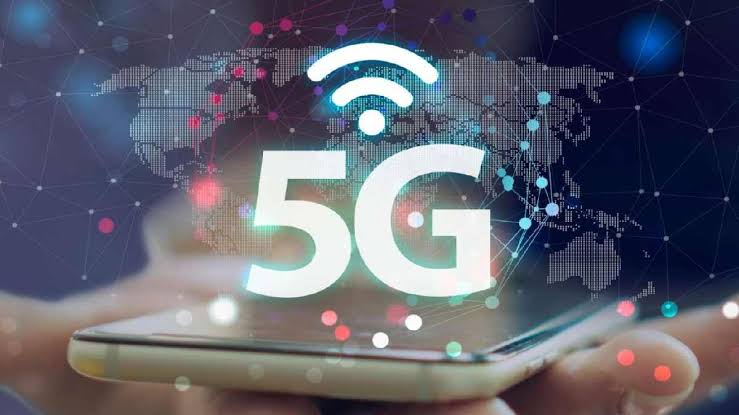
    MTN Nigeria Communications Limited is set to roll out its 5G network today.

    The Chief Executive Officer of MTN Nigeria, Mr Karl Toriola, had said MTN was ready for rollout, having the required 5G equipment on the ground.

    A source close to MTN Nigeria disclosed that MTN kept to its promise by commencing the rollout of its 5G network from Lagos and Abuja, with plans to cover five cities within one month of the rollout. The cities include Lagos, Abuja, Port Harcourt, Enugu and Kano.

    Owing to the development, MTN has called on telecom subscribers to begin pre-order their 5G devices to enable them to enjoy the high-speed internet download with low latency that is associated with 5G, since not all devices can access the 5G network.

    “The wonder of 5G is coming! Be among the first Nigerians to experience this incredible technology. Visit www.mtn.ng/5g-router to pre-order our 5G router now”, this was the message on MTN social media channels on Tuesday, August 23 2022, signalling that the mobile network operator has opened its portal for Nigerians to pre-order for 5G routers.

    Read also: Humane lifestyle earns sales expert honorary doctorate

    Recall that, Mafab Communications and MTN Nigeria last December won the license for the rollout of 5G service and going by the conditions of the license, the two operators were expected to roll out the service effective from today August 24, 2022.

    However, while MTN is forging ahead with its plans today, Mafab has 5 more months to prepare.

    The Director, Public Affairs at NCC, Mr Reuben Muoka, who confirmed the 5-month extension given to Mafab, said that NCC decided to extend the rollout date for Mafab alone because the company does not have an operating licence to roll out a 5G network.

    “The 5G licence comes with frequency licence and not operational licence. So Mafab only has a frequency licence and does not have an operational licence and it needs to apply for a telecom operational licence to enable it to roll out 5G services and other telecom services.

    “The five months extension will enable Mafab to process its telecom operational licence,” Muoka said.

    (Sun)

  • Whatsapp: New update delivers great features for users

    Whatsapp: New update delivers great features for users

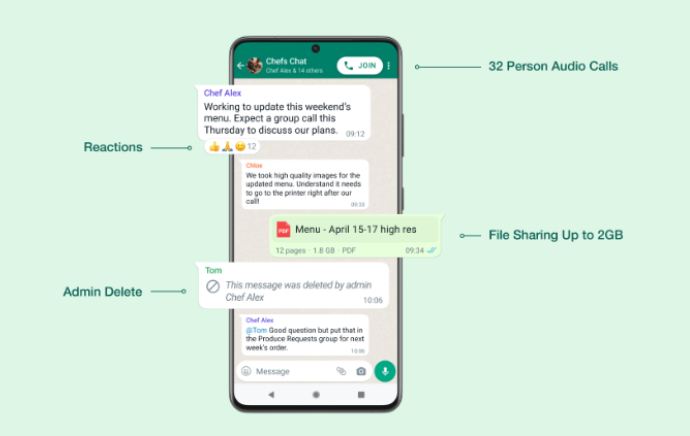
    The social media app, Whatsapp, last week rolled out a series of features that enhance user experience on the app. While Facebook (now Meta) founder, Mark Zuckerberg, took to his Facebook page on May 5, 2022, to announce the rollout of new reaction emojis on Whatsapp, the app followed with the announcement of other features, which include the expansion of group size limit.

    The group limit expansion on Whatsapp may have come as a response to complaints by users and the movement of groups to a competing app, Telegram, which allows up to 2,000 in a group. Still, the increased number is far below what Telegram offers.

    Here are the new Whatsapp features unveiled in the course of the week and which users will be receiving as they update their app:

    Group participants limit increased

    WhatsApp users will now be able to add up to 512 people to a group. This was increased from the maximum 256 earlier fixed by the platform

    Admin Delete

    Although this may be controversial, this new feature allows group admins to remove errant or problematic messages from everyone’s chats. In cases where a group member sends an offensive message, the admin now has the power to ‘delete for everyone’.

    Increased file sharing size

    Whatsapp users will now be able to send files up to 2GB in size at once on the app, which is a massive jump from the previous limit of 100MB.

    WhatsApp Reactions

    The new reaction emojis will allow users to react with six different emojis on the platform: laughing face, red heart, surprised face, thumbs up, teary face, and hands together.

    To use the feature, just long-press on a message and choose one of the displayed emojis. Just like Instagram, users can change their reactions to a different one by long-pressing the same messages and changing the emoji or just clicking on the same one to remove it.

    WhatsApp also notes a few things about the Reaction feature: Users can only add one reaction per message, and it disappears when the messages disappear. Also, users will not be able to hide the reactions or the reaction counts. The recipients might see the reaction before you remove it or if removing it was not successful.

    Larger Voice Calls

    This feature allows a one-tap voice calling for up to 32 people with all-new design for those times when talking live is better than chatting.

    Bottomline

    These new features will, no doubt, enhance user experience on Whatsapp. That users can now send large files up to 2GB is a great improvement over the previous 100MB limit. But the 512 limit for group participants is still a drawback that will continue to push groups with larger numbers to Telegrams.

    (Naira metrics)

  • How Devcareer’s $100,000 grant’ll raise 100 tech engineers

    Africa has a growing youth population; apparently, the rest of the world is looking at it to source talents; especially, technology talents. Unfortunately, the formal education systems are overwhelmed, resulting in a huge deficit of the requisite skilled talents.

    However, to get more youths that could compete on a global stage, African tech start-ups are taking the bull by the horn, developing a pool of African tech talents from very meagre resources.

    One of such start-ups, a Nigeria-based non-profit organisation Devcareer, which recently secured USD100, 000 in grants, has said the money will be invested in training about 100 persons who can take global tech ecosystem by storm.

    Devcareer said it raised the fund to enable upcoming African developers with lean resources graduate from beginners to intermediates within the shortest period possible.

    Devcareer will be assisted by Pledges, an NGO builder, under a campaign tagged: #LAPTOPS4DEVELOPERS.

    The grant was co-contributed by three organisations: a Pan-African technology company, Deimos; digital banking operator, Kuda, and another Nigeria-based start-up, Dojah respectively.

    Head of Engineering at Kuda, Mr. Dipo Aina who is one of the returning sponsors of the campaign, said: “African tech talent has been key to our progress at Kuda, and we are very happy to support DevCareer again as they continue to do the good work of helping young African software developers find their way in the world.

    “The #Laptops4Developers campaign over the last two cohorts focused primarily on Frontend Development, Backend Development, and Mobile Application however, cohort three will accommodate more interns including Product Designers; the application is free and each application will be judged by a three-staged test comprising an aptitude test, coding test and a physical interview.

    “The beneficiaries will gain three months long training and be assigned a mentor who will walk each person through the program. The interns are also registered with hubs fitted with stable power supply and internet access in their locality.

    A Software Engineer and Developer Advocate who is the founder of Devcareer, Mr. Sultan Akintunde said: “The #Laptops4Developers campaign runs a yearly cohort for fledgling software developers with existing knowledge of the subject to benefit from; organized curriculum, mentorship, Laptops, and a conducive learning environment equipped with internet and electricity.

    “The campaign in the last two cohorts has successfully trained 72 interns with a significant number working on-site and remotely in technology companies such as Healthtracka, Flutterwave, Bento, Plentywaka among others.

    “Devcareer in the last cohort received over 6000 applications with Nigeria, Ghana, Kenya, and Zambia featuring as top 4 countries. Rwanda will be joining the list of countries in cohort three. The COVID19 restriction stalled the campaign in 2021 hence in 2022; Devcareer plans to groom 100 persons into employable African tech talent who can compete on a global stage.”

    Also, CEO of Deimos, Mr. Andrew Mori said: “DevCareers and Deimos share a focus on developing and empowering engineers, we are proud to sponsor and support their mission of helping more individuals get a start in technology. At the core of technology adoption and implementation are the developers; with increased digitisation, plus a fast-growing African tech ecosystem, engineers are in high demand which in turn is leaving a gaping hole in supply. Even with this high demand, Africa is starting to cement itself as a region of enormous engineering capability and capacity. Today’s junior software engineers are tomorrow’s seniors and we are proud to play a part in that.”

    Similarly, Grant Portfolio Manager at Pledges, Mr. Enogieru Osasenaga, said: “Today, we are faced with two realities; Africa has a growing youth population and the rest of the world is looking at Africa to source talents.

    “Unfortunately, the formal education systems are overwhelmed resulting in a huge deficit of skilled talents. The silver lining – Tech has provided a solution to this; with minimum barriers to entry and a relatively short learning curve, youths can improve their economic standing as well as those around them.

    (Vanguard)

  • FG to Telcos: Bar outgoing calls from unlinked SIMs

    Federal government has directed telecommunication companies, (MTN, Globacom, Airtel, and 9mobile) to bar all outgoing calls from unlinked Subscriber Identification Module cards, SIMs.

    Disclosing this in a statement signed by the minister of Communications and Digital Economy, Isa Pantami, FG stated that it’s directive will take effect from the 4th of April, 2022.

    Read part of the statement below:

    “Accordingly, Mr. President graciously approved the many requests to extend deadlines for the NIN-SIM linkage.

    “At this point, however, Government has determined that the NIN-SIM Policy implementation can proceed, as machinery has already been put in place to ensure compliance by citizens and legal residents. The implementation impacts on Government’s strategic planning, particularly in the areas of security and socio-economic projections.

    “President Muhammadu Buhari has approved the implementation of the Policy with effect from the 4th of April, 2022. Consequently, the Federal Government has directed all Telcos to strictly enforce the Policy on all SIMs issued (existing and new) in Nigeria.

    “Outgoing calls will subsequently be barred for telephone lines that have not complied with the NIN-SIM linkage Policy from the 4th of April, 2022.

    “Subscribers of such lines are hereby advised to link their SIMs to their NINs before the Telcos can lift the restriction on their lines. Affected individuals are hereby advised to register for their NINs at designated centres and thereafter link the NINs to their SIMs through the channels provided by NIMC and the Telcos, including the NIMC mobile App.”

    (Vanguard)

  • FG applauds NCC on youths’ digital skill

    FG applauds NCC on youths’ digital skill


    The Federal Government has lauded the commitment of the Nigerian Communications Commission (NCC) towards enhancing digital skills development among youths, through the implementation of various Information Communication Technology (ICT) skill acquisition programmes.

    Minister of Interior, Ogbeni Rauf Aregbesola and the Minister of Communications and Digital Economy, Prof Ibrahim Pantami, gave the commendation during the inauguration of a Digital Nigeria Centre (DNC), a project executed by the Universal Service Provision Fund (USPF), an arm of NCC, at the Ijesa Muslim Grammar School, Ilesa, Osun State recently.

    Representing President Muhamadu Buhari at the event, Aregbesola praised the NCC for timely and thorough implementation of the project, saying he was confident that the project will promote the connection of public secondary schools to broadband internet in Ilesa community and ultimately equip beneficiaries with 21st century skills.

    “I would like to thank my very good friend and brother, the Minister of Communications and Digital Economy, Prof. Isa Ali Ibrahim Pantami, for assenting to our request to have the first of this remodeled project in Osun State sited in Ilesa. I will also like to thank the Executive Vice Chairman of NCC, Prof. Umar Garba Danbatta and the entire Management and staff of NCC and the USPF, as well as their technical partners for a timely and successful completion of this laudable project,” he said.

    On the sideline of the commissioning, Aregbesola also announced the establishment of President Muhammadu Buhari N100 million Technology Fund for Youth Empowerment, to nudge the emergence of world class technology experts. The Minister of Interior stated that the Fund targets 2,000 youths in the next two years, who will be provided with devices for training in different areas such as software development and design, amongst others.

    Osun State Governor, Adegboyega Oyetola, who was represented by the state’s Commissioner for Innovation, Science and Technology, Dr. Babatunde Olawale, expressed the gratitude of the State Government to the Federal Government, the Ministry of Communications and Digital Economy and the Nigerian Communications Commission, for initiative and particularly for inaugurating the pioneer remodeled DNC project in Osun State. Oyetola also informed the gathering that the state government was willing and ready to collaborate with NCC to replicate the project in other parts of the State.

    Speaking in the same vein, Pantami, who was represented at the event by the Chairman, Board of Commissioners of NCC, Prof. Adeolu Akande, also commended the NCC and USPF on the delivery of the DNC project on behalf of the Federal Republic of Nigeria. He declared that the project and similarly instituted ones were initiated by government to give expression to its vision to effectively digitise the nation’s economy for increased prosperity for all Nigerians.

    Pantami said the Federal Government is focused on promoting digital economy across the country and that this had informed the renaming of the Ministry of Communications to the Ministry of Communications and Digital Economy. Pantami recalled that the Federal Government emplaced Digital Nigeria-oriented policies to reinforce the focus of existing policies in order to accelerate the delivery of derivable benefits of digital economy to Nigerians, regardless of their locations and circumstances.

    Very central among the policies is the National Digital Economy Policy and Strategy (NDEPS) 2020-2030, a 10-year, eight-pillar focused blueprint for actualising Federal Government’s digital economy agenda unveiled in November,

    Pantami asserted that the DNC inaugurated at Ilesa was a concrete implementation of the Digital Literacy and Skills, the second pillar of NDEPS.

    According to Pantami, the overarching objective of the DNC project is to facilitate adoption of digital lifestyle in the schools as well as in the school communities. The Minister averred that the project’s significance cannot be under-estimated, considering its ability to improve digital skill for the youths and subsequently make them globally competitive.

    Pantami said the Federal Government is determined to arm the youths with digital skills, strong literacy and numeracy skills, critical and innovative thinking skills, complex problem solving aptitude, the ability to collaborate, and deploy socio-emotional skills, which they require to transform their lives and build the economy.

    “We have already made a number of giant strides in the development of our digital economy culture and the deployment of initiatives such as the Digital Nigeria Centre eloquently demonstrates the current administration’s commitment to connecting all Nigerians,” Pantami said as he equally expressed Federal Government’s commitment to its tripartite agenda of improving the economy, curbing corruption and enhancing national security through effective deployment of ICT in all nooks and crannies of the country.

    In his remark, Danbatta, who was represented at the event by the Commission’s Director of Projects, Iyabode Solanke, said all the regulatory activities, initiatives and programmes that the Commission had undertaken since 2019, in collaboration with its critical stakeholders, including its arm, the USPF, have been targeted at giving concrete expression to Nigeria’s deliberate policy to migrate to a full digital economy.

    He said the Commission achieves this by consistently committing itself to expansion of appropriate infrastructure to enhance digital literacy and skills in view of the economic and social impact of digitization on all sectors.

    The NCC Chief Executive restated the Commission’s commitment to the overall objective of bridging the digital divide through the provision of Information Communication Technology (ICT) as well as broadband access to the unserved and underserved institutions and communities in the country.

    Earlier, the Principal of Ijesa Muslim Grammar School, Ramota Ilesanmi, thanked the President Buhari-led Federal Government for the project, saying that it will go a long way in meeting the ICT needs of students and residents of the city.

    The DNC, formerly known as School Knowledge Centre (SKC), is one of the projects in the Access Programme framework of the USPF, conceptualized to promote the availability and utilisation of ICT and resources of the Internet in teaching and learning in public schools in underserved, unserved and rural areas.

    Specific objectives of DNC are to increase ICT literacy among school teachers and students; provide a platform for accessing online educational resources; equip students with ICT skills; facilitate ICT adoption in teaching and learning; as well as increase pass rate in Mathematics, English language and other science subjects.


    Source: www.thenationonlineng.net

  • Cybersecurity Landscape: Protecting Nigeria’s cyberspace from the massive ransomware attacks that affected companies in 2021

    The year 2021 witnessed massive cyberattacks that affected private organisations, government agencies, individuals, and supply chains globally. Nigeria had its fair share of cyberattacks and compromise albeit largely underreported.

    On December 9, an acute Remote Code Execution (RCE) vulnerability was reported in the Apache logging package Log4j 2 versions 2.14.1 that shook the internet.

    By December 10, more than 3.7 million hacking attempts had been made to exploit the vulnerability, according to leading cybersecurity firm Checkpoint, with more than 46% conducted by known malicious groups.

    Meanwhile, President, Cybersecurity Experts Association of Nigeria, CSEAN, Mr Remi Afon has warned that 2022 is expected to witness an escalation in cyberattacks and cybercrime from what was witnessed in 2021.

    Afon said that his prediction was based on cybersecurity trends in Nigeria and around the world, coupled with insights from leaders and global experts who assess the evolving cyber environment and the security threats.

    He said that existing trends show that there will be a spike in Ransomware and Business Email Compromise (BEC) scams, as well as deepfakes.

    He said: “The year 2021 witnessed unprecedented Ransomware attacks with the rise of Ransomware-as-a-Service (RaaS) groups on the Darkweb. The average amount of reported Ransomware transactions per month in 2021 was $102.3 million, according to FinCEN Report. “Approximately 37% of global organisations said they were victims of some form of a ransomware attack in 2021, according to IDC’s 2021 Ransomware Study. “In 2022, the ransomware threat and level of severity of ransomware attacks will grow. “With ransomware becoming the new digital pandemic, we expect to see the highest reported ransom paid by organisations in 2022 and disruption of service with maximum impact in terms of financial loss.

    “The loss would not only be calculated based on ransom paid, but in terms of financial losses due to service unavailability, loss of market share, and a drop in stakeholder confidence, amongst other factors.”

    He also hinted that as the 2023 Nigeria general elections draw nearer, the use of Deepfakes and fake news will rise in 2022. Deepfakes are videos, images, or audio recordings that are manipulated by AI technology.

    In a deepfake, an individual can be presented as saying or doing something that didn’t happen. Deepfakes are typically used to slander targets, manipulate events, falsify statements, or evidence, and create scandals. They’re made with artificial intelligence software that maps targeted people’s faces into scenes and onto other people’s bodies, or otherwise manipulate parts of videos. The Deepfakes threat has also been used to facilitate business email compromise (BEC) fraud. It was also used to bypass Multi-Factor Authentication (MFA) protocols, and Know Your Customer (KYC) ID verification. Afon said in 2022, it will be increasingly used. He warned that the growth of cloud adoption through 2022 will coincide with the increase of cloud compromise and abuse. So, as organisations continue to rely on the cloud and cloud-hosted third-party providers, those third parties face mounting pressure to maintain confidentiality, integrity and availability of customers’ data because Afon predicts that Cloud security misconfiguration and supply chain attacks will rank among the top cyber threats in 2022. “Towards the end of 2020, there was a devastating SolarWinds breach and in July 2021, the REvil ransomware gang exploited a Zero Day in Kaseya VSA to launch a supply-chain attack on its customers. “Neither of these attacks occurred in isolation. In 2022, we can expect that cybercrime gangs will continue to seek ways to hijack the digital transformation of organisations to deploy malicious code, infiltrate networks and gain persistence in systems all over the world.”

    Source: www.vanguardngr.com

  • NCC’s commitment to enhancing digital skills in Youths


    The Federal Government has applauded the commitment and dedication of the Nigerian Communications Commission (NCC) towards enhancing digital skills development among youths, through implementation of various Information and Communication Technology skill acquisition programmes.


    Minister of Interior, Rauf Aregbesola, and the Minister of Communications and Digital Economy, Prof. Isa Ali Ibrahim Pantami, gave the commendation during the inauguration of a Digital Nigeria Centre (DNC), a project executed by the Universal Service Provision Fund (USPF), an arm of NCC, at the Ijesa Muslim Grammar School, Ilesa, Osun State recently.


    Representing President Muhamadu Buhari at the event, Aregbesola commended the NCC for timely and thorough implementation of the project, saying he was confident that the project will promote the connection of public secondary schools to broadband internet in Ilesa community and ultimately equip beneficiaries with 21st century skills.


    “I would like to thank my very good friend and brother, the Honourable Minister of Communications and Digital Economy, Prof. Isa Ali Ibrahim Pantami, for assenting to our request to have the first of this remodeled project in Osun State sited in Ilesa. I will also like to thank the Executive Vice Chairman of NCC, Prof. Umar Garba Danbatta and the entire Management and staff of NCC and the USPF, as well as their technical partners for a timely and successful completion of this laudable project,” he said.


    On the sideline of the commissioning, Aregbesola also announced the establishment of President Muhammadu Buhari N100 million Technology Fund for Youth Empowerment, to nudge the emergence of world class technology experts. The Minister of Interior stated that the Fund targets 2,000 youths in the next two years, who will be provided with devices for training in different areas such as software development and design, amongst others.


    The Governor of Osun State, Adegboyega Oyetola, who was represented by the state’s Commissioner for Innovation, Science and Technology, Dr. Babatunde Olawale, expressed the gratitude of the State Government to the Federal Government, the Ministry of Communications and Digital Economy and the Nigerian Communications Commission, for initiative and particularly for inaugurating the pioneer remodeled DNC project in Osun State. Oyetola also informed the enthusiastic gathering that Osun State Government was willing and ready to collaborate with NCC to replicate the project in other parts of the State.

    Speaking in the same vein, Pantami, who was represented at the event by the Chairman, Board of Commissioners of NCC, Prof. Adeolu Akande, also commended the NCC and USPF on the delivery of the DNC project on behalf of the Federal Republic of Nigeria. He declared that the project and similarly instituted ones were initiated by government to give expression to its vision to effectively digitise the nation’s economy for increased prosperity for all Nigerians.


    Pantami stated that the Federal Government is focused on promoting digital economy across the country and that this had informed the renaming of the Ministry of Communications to the Ministry of Communications and Digital Economy. On the heels of the re-christening, Pantami recalled that the Federal Government emplaced Digital Nigeria-oriented policies to reinforce the focus of existing policies in order to accelerate the delivery of derivable benefits of digital economy to Nigerians, regardless of their locations and circumstances.

    Very central among the policies is the National Digital Economy Policy and Strategy (NDEPS) 2020-2030, a 10-year, eight-pillar focused blueprint for actualising Federal Government’s digital economy agenda unveiled in November, 2019.


    Pantami asserted that the DNC inaugurated at Ilesa was a concrete implementation of the Digital Literacy and Skills, the second pillar of NDEPS.


    According to Pantami, the overarching objective of the DNC project is to facilitate adoption of digital lifestyle in the schools as well as in the school communities. The Minister averred that the project’s significance cannot be under-estimated, considering its ability to improve digital skill for the youths and subsequently make them globally competitive.


    Pantami said the Nigerian government is determined to arm the youths with digital skills, strong literacy and numeracy skills, critical and innovative thinking skills, complex problem solving aptitude, the ability to collaborate, and deploy socio-emotional skills, which they require to transform their lives and build the economy.


    “We have already made a number of giant strides in the development of our digital economy culture and the deployment of initiatives such as the Digital Nigeria Centre eloquently demonstrates the current administration’s commitment to connecting all Nigerians,” Pantami said as he equally expressed Federal Government’s commitment to its tripartite agenda of improving the economy, curbing corruption and enhancing national security through effective deployment of ICT in all nooks and crannies of the country.


    In his remark, Danbatta, who was represented at the event by the Commission’s Director of Projects, Iyabode Solanke, said all the regulatory activities, initiatives and programmes that the Commission had undertaken since 2019, in collaboration with its critical stakeholders, including its arm, the USPF, have been targeted at giving concrete expression to Nigeria’s deliberate policy to migrate to a full digital economy.


    He said the Commission achieves this by consistently committing itself to expansion of appropriate infrastructure to enhance digital literacy and skills in view of the economic and social impact of digitization on all sectors.


    The NCC Chief Executive restated the Commission’s commitment to the overall objective of bridging the digital divide through the provision of Information and Communication Technology (ICT) as well as broadband access to the unserved and underserved institutions and communities in the country.


    Earlier, the Principal of Ijesa Muslim Grammar School, Ramota Ilesanmi, thanked the President Buhari-led Federal Government for the project, saying that it will go a long way in meeting the ICT needs of students and residents of the city.


    The DNC, formerly known as School Knowledge Centre (SKC), is one of the projects in the Access Programme framework of the USPF, conceptualized to promote the availability and utilisation of ICT and resources of the Internet in teaching and learning in public schools in underserved, unserved and rural areas.


    Specific objectives of DNC are to increase ICT literacy among school teachers and students; provide a platform for accessing online educational resources; equip students with ICT skills; facilitate ICT adoption in teaching and learning; as well as increase pass rate in Mathematics, English language and other science subjects.


    Source: www.punchng.com

  • Enugu State Government Committed to Youth Development and Sustainable Growth- Dr. Ugwunta

    Enugu State Government Committed to Youth Development and Sustainable Growth- Dr. Ugwunta

    Enugu State Government Committed to Youth Development and Sustainable Growth- Dr. Ugwunta

    It is said that the youths of a nation are the trustees of posterity; and their power the common wealth for the entire world. Thus the Enugu state government under the leadership of His Excellency Rt. Hon. Dr. Ifeanyi Ugwuanyi has been working tirelessly to ensure that youths are fully involved in sustainable development.

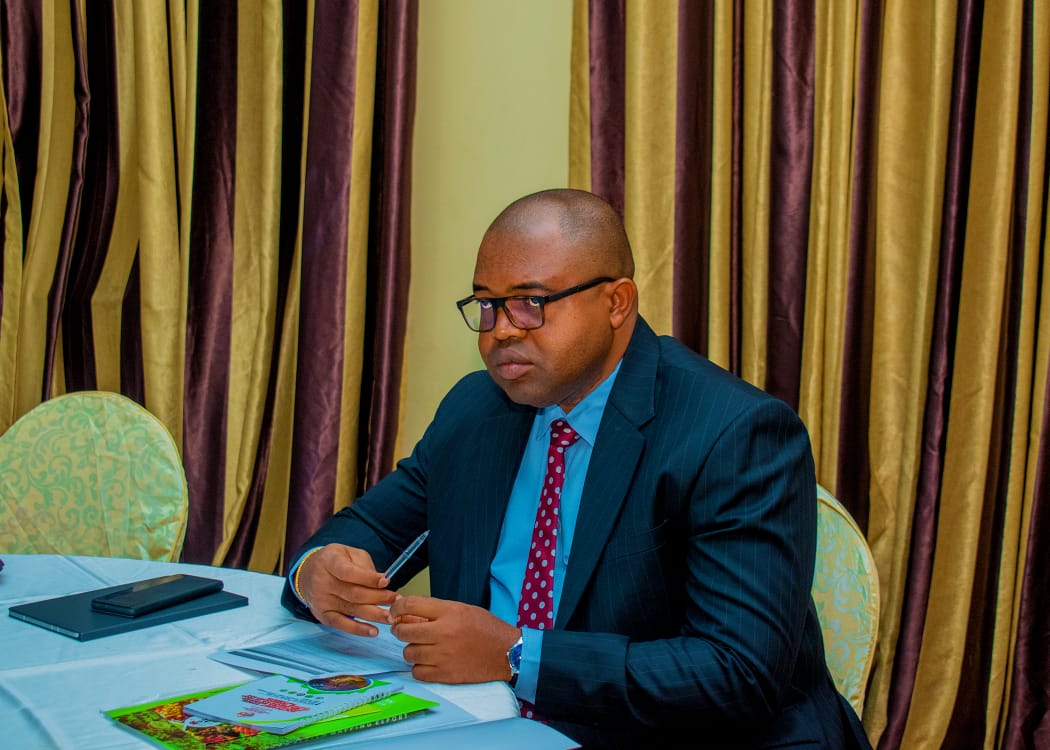
    Dr. David Ugwunta

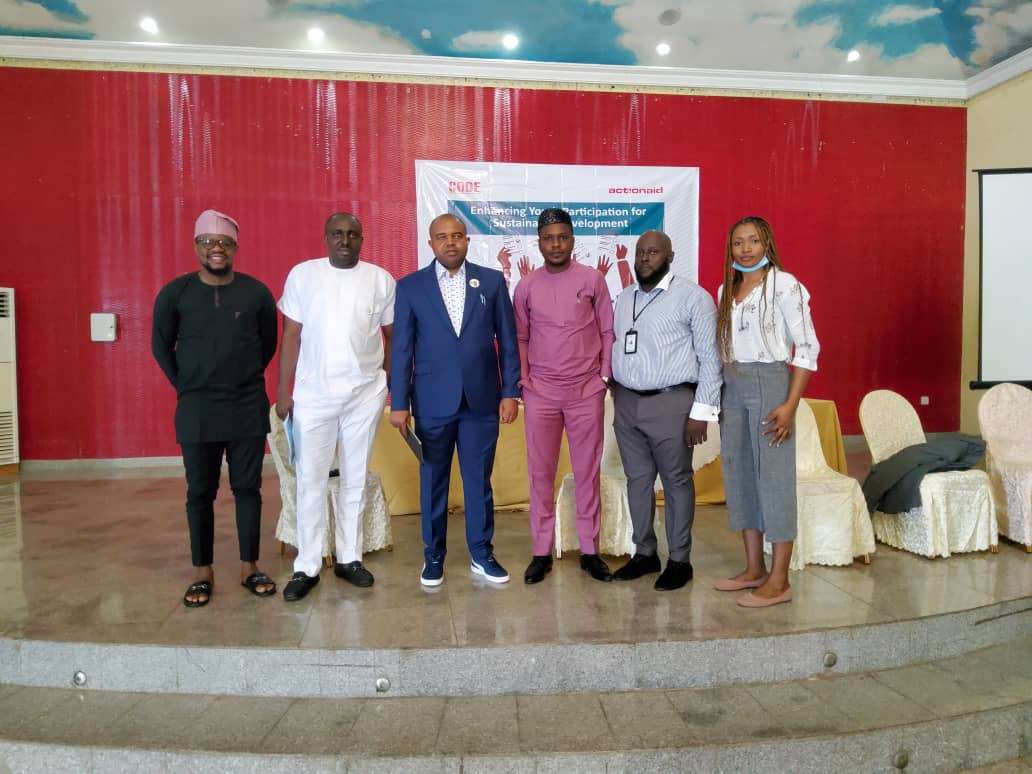
    Speaking at the public hearing event organised by Connected Development, themed “Enhancing Youth Participation for Sustainable Development”, the Honourable Commissioner for Budget and Planning, Dr. David O. Ugwunta reiterated that the administration of Rt. Hon. Dr. Ifeanyi Lawrence Ugwuanyi from inception saw the need to carry the youths along in the development process; and as a result has appointed so many youths into strategic positions. Dr. Ugwunta noted that the State Government has, through the Ministry of Budget and Planning “Citizens Engagement” platform, provided an opportunity where the youths can participate in discussions pertaining to budget preparation and implementation as well as nominate projects and programmes in the budget, they would want the State Government to implement.

    Governor Ifeanyi Ugwuanyi

    Recall that aside the numerous development projects in the Economic Sector of the 2021 budget, Enugu State Government allocated over 2.5billion naira representing 2.5% of its capital size of over 101billion naira for youth oriented programmes in the areas of SME, Agriculture, Science and Technology, Human Capital and Poverty alleviation, labour and productivity amongst others.

    Dr. Ugwunta equally stated that the state government all in a bid to empower the youths for sustainable development through the Enugu State Scholarship and Loans Board runs a mentorship programme where the Board have recruited about six mentors in various institutions across the globe to mentor Enugu State citizens on accessing fully funded scholarships abroad. Both internationally and locally, the State government has been sponsoring young people from the State on scholarship.

    Reacting to questions raised by participants in the public hearing pertaining to the budgetary provision of 10million naira in the 2021 budget for the Tech Hubs, Dr. Ugwunta stated that the State Government recently inaugurated the two Tech and Innovation Hubs as a youth-focused project targeted at alleviating the crippling effects of the COVID-19 pandemic by empowering youths in the State to develop IT skills which will in turn leverage them in the fast changing and competitive world. Thus, the 10million naira allocated to the project in the 2021 budget was for the completion of the construction and equipping of the Hubs which its construction started in year 2020. He clarified that the Tech hub domiciled in the Ministry of Science and Technology is not yet backed by an Act of legislation and this explains the reason why it could not appear in the budget of the State as an Agency of Government. He further noted that the Managers of the Hub which were recently recruited are expected to come up with their programmes / projects for inclusions in the 2022 budget and beyond.

    Further reacting to a question asked on “what the State Government is doing to revive the educational sector in the area of medicine, research and substandard quality of education”, Dr. Ugwunta said that the State Government is currently building a world class teaching hospital, 2Nos 12 classroom faculty buildings, 2nos 10 classroom Faculty Buildings, 2Nos 8 classroom Faculty Buildings and 2Nos 120 rooms Hostel building at ESUT College of Medicine, Igbo-Eno. Recall that as at the end of year 2020 Enugu State through ENSUBEB has constructed, reconstructed and renovated 339 classroom buildings and toilets, providing 1,595 fully equipped classrooms, provided 33,621 lockers, desks and chairs for pupils and teachers, distribution of 54,545 books and instructional materials to all primary and secondary schools in Enugu State as well as massive construction and reconstruction of classroom buildings, offices and hostels in Secondary Schools across the State.

    On the issue of “what the state government is doing to alleviate water scarcity in Enugu state”, Dr. Ugwunta noted that there is an ongoing Solar-powered Water Crash Project located at 9th Mile which is worth about 600million naira and nearing completion. In addition to this, he noted that there is an AFD-funded 3rd National Urban Water Sector Reform Project (3rd NUWSRP) ongoing in the state with a life span of 5-years (2018-2023). The deliverables of the 3rd NUWSRP include rehabilitation of Ajali & Oji River Waterworks, installation of power line, upgrading of water transmission system by installation of a second pipeline (12.8km long and 700mm diameter), replacement of about 240km of asbestos cement pipelines, expansion of the secondary network of 60km, replacement of 16,000 existing connections with new piping and metering and to supply about 40,000 new domestic connections amongst others.

    However, Dr. Ugwunta urged the youths to co-create viable and impactful ideas and innovative programmes alongside appropriate MDAs for inclusion in the 2022 budget and beyond.

    In his address, the South East Lead of the organization, Dr. Daniel Ugwu, noted that the Connected Development, an NGO with support from ActionAid is saddled with the vision of improving access to information, empowering grassroots communities in Africa and working with the government to ensure that government projects are effective, people-oriented and youth-focused through one of its programme tagged, “Follow the Money”.

    Dr. Ugwu commended the Enugu State government for giving youth-focused projects a top priority in the State’s annual budget. He noted that Connected Development, under its Strengthening Youth Focused Public Service Delivery Project, is carrying out this public hearing to engage citizens and government stakeholders to discuss government programs and enhancing youth inclusion in governance for sustainable development. The hearing, now in its third phase, aims to empower young people to influence public expenditure towards gender-responsive public service delivery through budget monitoring and tracking.

    Written by:
    Chukwuka, Ifunanya Judith
    PRO/Information Officer Ministry of Budget and Planning.

  • Why e-Naira is different from the money in your bank account


    The Central Bank of Nigeria’s eNaira website has gone live ahead of the October 1 official launch.

    According to the website, www.enaira.com, “eNaira is a CB -issued digital currency that provides a unique form of money denominated in Naira.”


    Find out what makes the eNaira different from the money in your bank account — according to the apex bank itself.


    What is eNaira?

    eNaira is a central bank digital currency (CBDC) issued by the Central Bank of Nigeria as a legal tender. It is the digital form of the Naira and will be used just like cash.

    What is an eNaira wallet?

    The eNaira wallet is a digital storage that holds the eNaira. It is held and managed on a distributed ledger.

    The eNaira wallet is required to access, hold and use eNaira.


    Is eNaira wallet safe?

    Yes. The eNaira system uses a two-factor authentication system in addition to cryptographic encryption to ensure the safety of customers’ wallets and the eNaira holding.


    How are eNaira wallets created?

    For smartphone users, download the eNaira app (termed “Speed”) from either the Google Play Store or Apple Store and complete the registration process.

    For feature phone users, utilize USSD codes and follow the registration prompts.


    How do I connect my eNaira wallet to my bank account?

    The eNaira app allows customers to identify a bank of their choice, connect to their bank accounts and perform transactions.


    What makes eNaira different from the money in my bank account?

    eNaira is the digital form of the cash and is a direct liability on the Central Bank of Nigeria while the customer deposits are direct liabilities on the financial institutions.


    How do I resolve failed transactions or raise enquiries on eNaira?

    Reach out to the customer support of the bank you selected when registering for eNaira through their available channels which include: phone, email, whatsapp, etc. Disputes will be resolved as soon as possible.

    If issues are not resolved within 48 hours, send an email to CBN’s eNaira Customer Support via helpdesk@enaira.com


    What are the different tiers of eNaira wallets that I can open as an individual?

    These are different tiers of wallets and they include:


    September 2021

    TIERS CATEGORY REQUIREMENT DAILY LIMIT CUMULATIVE LIMIT

    0 No Existing Bank Account NIN verified telephone number 20,000 120,000

    1 No Existing Bank Account 50,000 300,000

    2 Has an Existing Account BVN + valid means of identification 200,000 500,000

    3 Has an Existing Account Tier 2 requirement +  public utility receipt 500,000 5,000,000


    Source: www.punchng.com

  • An anxious wait as CBN launches CBDC (e-Naira) on 1st Oct


    With a few days to the official launch of the Central Bank Digital Currency (CBDC), eNaira, in partnership with Bitt Inc, Nigerians are anxiously waiting to experience a new banking product touted to be a game changer on the local business landscape.

    When the Director of Information Technology, Central Bank of Nigeria (CBN), Rukiya Mohammed, mooted the idea few months ago, it was greeted with mixed feelings. While some people believed it would be a federally administered cryptocurrency, many others, especially the illiterate population, thought it was just another bogus hoax meant to titillate them.

    According to records, 85 per cent of Central Banks globally are working dedicatedly on their digital currencies by gradually weaning themselves off rapidly-declining cash payments; and this forms the reason the CBN joined the fray so that Nigeria is not left in the lurch.


    According to the CBN Governor, Mr Godwin Emefiele, the eNaira, among others, seeks to help it achieve the apex bank’s monetary policy and financial inclusion objectives. It is also expected to increase the exchange of currency and facilitate cross border trade at a lower cost, especially when more countries unveil their own digital currencies.


    Source: www.sunnewsonline.com

  • Cybercrime: Hackers appear to have become predators in cyberspace as the Universe advances in digitalization

    On May 22, 2019, the Economic and Financial Crimes Commission, EFCC, arrested a young proprietor of an alleged internet fraud training school located at 14, Animashaun Street, Progressive Estate, Ojodu Berger, Lagos alongside eight students, while receiving “lectures”.

    Again, in June, 2020, the media reported the arrest by Interpol and FBI of a Nigerian Dubai-based fraudster, Raymond Igbalode, popularly known as Hushpuppi, and his colleague, Mr. Woodbery, for alleged involvement in internet fraud and money laundering of over $100 million meant for native Americans during the coronavirus pandemic.

    Also, on February 18, 2021, Vanguard reported that operatives of the Abuja Zonal Office of the EFCC uncovered an underworld ‘academy’ located in Arab Contractors Area of Mpape Hills, Abuja, for the grooming of internet fraudsters.

    According to EFCC, the 30-year-old coordinator of the internet fraud academy and his 27 ‘students’, mostly young school leavers between ages 18 and 25, were arrested.

    These are the army of hackers who silently prowl the cyberspace, seeking to steal the usernames and passwords we use to digitally deposit and withdraw money from our bank accounts.

    Hackers appear to have become predators in cyberspace as we humans have increasingly settled down to a life of digital transactions of our businesses.

    This ugly situation calls for stronger and concerted efforts to universally evolve foolproof means of warehousing personal or collective wealth to keep online commerce and payment solutions going with minimum risk of losing it to hackers and fraudsters.

    Allowing these fraud schools to exist will enable them to proliferate, as fraud “students” of today will turn into teachers of tomorrow. It is akin to allowing schools that teach armed robbery and kidnapping to exist.


    The banks and internet payment service providers must also be made to take more responsibility and liability for allowing their systems to be infiltrated. Consumers of these services should be constantly kept abreast of developments in cybercrime in order for them to play their roles in protecting their finances.

    However, we strongly believe that law enforcement alone will not solve cybercrime issues. More efforts must be made to give our school leavers opportunities to earn honest living through gainful employment. Nigeria is an infinitely blessed country in terms of human and natural resources.

    The economy must be developed to give jobs to our people. This will vastly reduce the army of the unemployed and the temptation to embrace crime as a whole.

    Many of these young people would ordinarily want to live honest, dignified lives, but due to unemployment which itself is a fallout of bad leadership and public treasury looting, they are forced to channel their energies and genius into the wrong direction.

    Cybercrime must be comprehensively tackled to keep our personal and collective wealth safe.

    (Vanguard)