Category: Press Release

  • [PRESS RELEASE] PDP Govs Recommend Acting National Secretary, Reject Merger Talks, Back Fubara

    [PRESS RELEASE] PDP Govs Recommend Acting National Secretary, Reject Merger Talks, Back Fubara

    COMMUNIQUE ISSUED BY PDP GOVERNORS’ FORUM AFTER ITS 2025/4TH MEETING HELD IN IBADAN ON MONDAY, APRIL 15, 2025

    The Peoples Democratic Party Governors’ Forum (PDPGF) @PDPGovOfficial held its 2025/4th Meeting in Ibadan, Oyo State, and resolved the following;

    1.Noting the nationwide speculations about possible merger of political parties, groups and/or associations, the Forum resolved that the @OfficialPDPNig will not join any coalition or merger. However, the PDP as a major opposition party welcomes any party, persons or groups that are willing to join it with a view to wrestling power and enthroning good leadership in 2027.

    2.The Forum reiterates its position taken in Asaba on the issue of the National Secretary of the party, but in the wake of the Supreme Court judgment, Forum resolved to recommend that the Deputy National Secretary acts as National Secretary, pending the nomination and ratification of a Substantive Secretary from the South East Zone and NEC respectively at its next meeting.

    3.The Forum reasserts our collective determination to avert a rape of our constitutional democracy hence the decision of approaching the Supreme Court to give a clear cut verdict on the interpretation of the provisions of the law on the declaration of State of Emergency in any state.

    The Forum restates its solidarity with His Excellency, Sir Siminalayi Fubara, on the ordeal into which his state and people are being plunged by the declaration of a state of emergency. And we reiterate our commitment to stand with him till the end.

    4. The Forum finds alarming the worsening security situation in the country, as evidenced in parts of the country especially Borno, Plateau, Katsina and Edo States. The Forum calls for review and reordering of priorities and strategies including adopting a bottom up template that guarantees the sub-nationals to constitute an effective line of defence against security breaches. While raising the concerns above, we condemn the recent attacks in Plateau State, and commiserate with the government and people of the state especially those who lost their lives and properties during this unfortunate mishap.

    5. The Forum resolves that working in conjunction with the National Working Committee (NWC) and other relevant organs of the party, to hold a NEC Meeting on the 27th of May, 2025; constitute a Zoning Committee that will address all issues relating to zoning of party offices and hold an early convention in August 2025, precisely on the 28th, 29th and 30th in the ancient city of Kano.

    6. The Forum equally recommends the constitution of the Zoning and National Convention Committees for ratification by the NWC and NEC as follows;

    Zoning Committee: Gov. Douye Diri – Chairman; Gov. Dauda Lawal – Vice Chairman and Gov. Caleb Mutfwang – Secretary, while the National Convention Committee has Gov. Ahmadu Fintiri as Chairman; Gov. Ademola Adeleke as Vice Chairman and Gov. Peter Mbah as Secretary.

    7. The Forum expressed its gratitude to the host Governor, His Excellency, Engr. Seyi Makinde, the government and good people of Oyo state for their hospitality.

    THOSE IN ATTENDANCE WERE:

    1) H.E. Senator Bala Abdulkadir Mohammed, Governor, Bauchi State & Chairman, PDP Governors’ Forum
    2) H.E. Ademola Adeleke, Osun State
    3) H.E. Ahmadu Umaru Fintiri, Adamawa State
    4) H.E. Seyi Makinde, Oyo State
    5) H.E. Douye Diri, Bayelsa State
    6) H E. Dauda Lawal, Zamfara State
    7) H.E. Agbu Kefas, Taraba State
    8) H.E. Senator Dr Akon Eyakenyi, Deputy Governor – Akwa Ibom State
    9) H.E Barr Peter Mbah – Enugu State
    10) H.E Sir Monday Onyeme, Deputy Governor – Delta State.

    Signed:

    H.E. Senator Bala Abdulkadir Mohammed, Governor, Bauchi State & Chairman, PDP Governors’ Forum,
    April 15, 2025.

  • [PRESS RELEASE] INEC Says It Has Received Contact Details of Petitioners for Akpoti’s Recall, Lists Next Action

    [PRESS RELEASE] INEC Says It Has Received Contact Details of Petitioners for Akpoti’s Recall, Lists Next Action

    UPDATE ON THE RECALL OF THE SENATOR REPRESENTING KOGI CENTRAL SENATORIAL DISTRICT

    Further to the statement issued yesterday, Tuesday 25th March 2025, the Commission hereby confirms that the contact address of representatives of the petitioners, their telephone numbers and e-mail addresses have now been provided in a letter addressed to the Chairman of the Commission dated today Wednesday 26th March 2025.

    As provided in Clause 2(a) of the Commission’s Regulations and Guidelines for Recall 2024, a letter has been written to notify the Senator sought to be recalled about the receipt of the petition and delivered to her official address. The same letter has been copied to the presiding officer of the Senate and published on the Commission’s website.

    The next step is to scrutinise the list of signatories submitted by the petitioners to ascertain that the petition is signed by more than one half (over 50%) of the registered voters in the Constituency. This will be done in the coming days. The outcome, which will be made public, shall determine the next step to be taken by the Commission.

    We once again reassure Nigerians that the process will be open and transparent.

    Sam Olumekun mni
    National Commissioner and Chairman, Information & Voter Education Committee
    Wednesday 26th March 2025

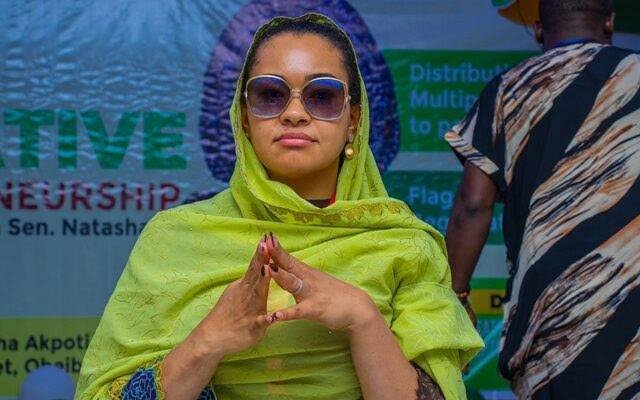
  • [PRESS RELEASE] INEC Speaks on Petition to Recall Sen. Natasha Akpoti

    [PRESS RELEASE] INEC Speaks on Petition to Recall Sen. Natasha Akpoti

    PETITION FOR THE RECALL OF THE SENATOR REPRESENTING KOGI CENTRAL SENATORIAL DISTRICT

    The Commission held its regular weekly meeting today, Tuesday 25th March 2025. Among other issues, the meeting discussed the petition for the recall of the Senator representing Kogi Central Senatorial District.

    The process of recall is enshrined in the 1999 Constitution, the Electoral Act 2022 as well as the Commission’s detailed Regulations and Guidelines for Recall 2024, available on our website. All petitions will be treated in strict compliance with the legal framework.

    The petition from Kogi Central Senatorial District was accompanied by six bags of documents said to be signatures collected from over half of the 474,554 registered voters spread across 902 Polling Units in 57 Registration Areas (Wards) in the five Local Government Areas of Adavi, Ajaokuta, Ogori/Magongo, Okehi and Okene.

    The Commission’s immediate observation is that the representatives of the petitioners did not provide their contact address, telephone number(s) and e-mail address(es) in the covering letter forwarding the petition through which they can be contacted as provided in Clause 1(f) of our Regulations and Guidelines. The address given is “Okene, Kogi State”, which is not a definite location for contacting the petitioners. Only the telephone number of “the lead petitioner” is provided as against the numbers of all the other representatives of the petitioners.

    The Commission wishes to reiterate that the recall of a legislator is the prerogative of registered voters in a constituency who sign a petition indicating loss of confidence in the legislator representing them. Once the petition meets the requirements of submission, as contained in our regulations, the Commission shall commence the verification of the signatures in each Polling Unit in an open process restricted to registered voters that signed the petition only. The petitioners and the member whose recall is sought shall be at liberty to nominate agents to observe the verification, while interested observers and the media will also be accredited. At each Polling Unit, signatories to the petition shall be verified using the Bimodal Voter Accreditation System (BVAS).

    Consequently, if the petitioners fully comply with the requirements of Clause 1(f) of the Regulations and Guidelines regarding the submission of their petition, the Commission will announce the next steps in line with the extant laws, regulations and guidelines. In the absence of a definite contact address, the Commission is making efforts to use other means to notify the representatives of the petitioners of the situation.

    The Commission reassures the public that it will be guided by the legal framework for recall. The public should therefore discountenance any speculations and insinuations in the social media.

    Sam Olumekun mni
    National Commissioner & Chairman
    Information and Voter Education Committee
    Tuesday 25th March 2025

  • [PRESS RELEASE] Suspension of Fubara, Deputy, other Elected Officials is Unconstitutional – NBA

    [PRESS RELEASE] Suspension of Fubara, Deputy, other Elected Officials is Unconstitutional – NBA

    “STATE OF EMERGENCY IN RIVERS: “SUSPENSION” OR OTHERWISE SUMMARY REMOVAL OF A DEMOCRATICALLY ELECTED GOVERNOR AND OTHER ELECTED OFFICIALS IS UNCONSTITUTIONAL”

    The Nigerian Bar Association (NBA) has taken due notice of the declaration of a state of emergency in Rivers State by President Bola Ahmed Tinubu, as contained in his address to the nation today, 18th March 2025. This declaration according to the President is due to the prevailing political tension in the state and due to the “vandalization of pipelines between yesterday and today:” This development has far-reaching constitutional and democratic implications, particularly in light of the provisions of Section 305 of the 1999 Constitution of the Federal Republic of Nigeria (as amended), which governs the procedure for the proclamation of a state of emergency and which the President purported to have relied upon.

    Section 305 of the Constitution indeed vests the President with the power to declare a state of emergency, the Section stipulates strict conditions and procedural safeguards that must be followed to ensure that such extraordinary measures do not infringe on democratic governance and fundamental human rights.

    The NBA is gravely concerned about the purported suspension by the President of the Governor of Rivers State, the Deputy Governor, and the Members of the Rivers State House of Assembly for six months.
    The 1999 Constitution does not grant the President the power to remove an elected governor, deputy governor, or members of a state’s legislature under the guise of a state of emergency. Rather, the Constitution provides clear procedures for the removal of a governor and deputy governor as per Section 188. Similarly, the removal of members of the House of Assembly and dissolution of parliament is governed by constitutional provisions and electoral laws, none of which appear to have been adhered to in the present circumstances.

    A declaration of emergency does not automatically dissolve or suspend elected state governments. The Constitution does not empower the President to unilaterally remove or replace elected officials—such actions amount to an unconstitutional usurpation of power and a fundamental breach of Nigeria’s federal structure.

    The NBA firmly asserts that the situation in Rivers State, though politically tense, does not meet the constitutional threshold for the removal of elected officials.
    For a state of emergency to be declared, Section 305(3) of the Constitution outlines specific conditions, including:
    1. War or external aggression against Nigeria.
    2. Imminent danger of invasion or war
    3. A breakdown of public order and safety to such an extent that ordinary legal measures are insufficient.
    4. A clear danger to Nigeria’s existence.
    5. Occurrence of any disaster or natural calamity affecting a state or a part of it.
    6. Such other public danger that constitutes a threat to the Federation.
    The NBA questions whether the political crisis in Rivers State has reached the level of a complete breakdown of law and order warranting the removal of the Governor and his administration. Political disagreements, legislative conflicts, or executive-legislative tensions do not constitute a justification for emergency rule. Such conflicts should be resolved through legal and constitutional mechanisms, including the judiciary, rather than executive fiat.

    The purported removal of Governor Fubara, his deputy, and members of the Rivers State House of Assembly is therefore unconstitutional, unlawful, and a dangerous affront to our nation’s democracy.
    Furthermore, subsection (2) of Section 305 provides that:
    “A Proclamation issued by the President under this section shall cease to have effect—
    (a) if it is not approved by a resolution of the National Assembly within two days when the National Assembly is in session; or
    (b) if the National Assembly is not in session, within ten days after it reconvenes.”

    These provisions provide that a state of emergency declared by the President does not assume automatic validity. It requires legislative ratification within a defined timeframe to remain in effect. The NBA, therefore, emphasizes that unless the National Assembly duly approves the proclamation, the declaration of a state of emergency in Rivers State remains constitutionally inchoate and ineffective.

    In light of the foregoing, the Nigerian Bar Association:
    • Affirms that the President does not have the constitutional power to remove an elected governor under a state of emergency. Any such action is an unconstitutional encroachment on democratic governance and the autonomy of state governments.
    • Calls on the National Assembly to reject any unconstitutional attempt to ratify the removal of the Rivers State Governor and other elected officials. The approval of a state of emergency must be based on strict constitutional grounds, not political expediency.
    • Warns that suspending elected officials under emergency rule sets a dangerous precedent that undermines democracy and could be misused to unseat elected governments in the future.
    • Demands that all actions taken in Rivers State strictly conform to constitutional provisions and Nigeria’s democratic norms.
    • Encourages all stakeholders, including the judiciary, civil society, and the international community, to closely monitor the situation in Rivers State to prevent unconstitutional governance and abuse of power.

    The NBA remains committed to upholding the Constitution, defending democratic governance, and ensuring that the rule of law prevails in Nigeria. A state of emergency is an extraordinary measure that must be invoked strictly within constitutional limits. The removal of elected officials under the pretext of emergency rule is unconstitutional and unacceptable.

    We call on all relevant authorities to act in accordance with the law and the best interest of the country. Nigeria’s democracy must be protected at all costs, and the Constitution must be upheld as the supreme legal authority in all circumstances.

    Mazi Afam Osigwe, SAN
    President, Nigerian Bar Association

  • BREAKING: Tinubu declares state of emergency in Rivers, Suspends Governor Fubara, House of Assembly

    BREAKING: Tinubu declares state of emergency in Rivers, Suspends Governor Fubara, House of Assembly

    Text of the Broadcast by President Bola Ahmed Tinubu, Commander-in-Chief of the Armed Forces, declaring State of Emergency in Rivers state on Tuesday 18 March 2025

    Fellow Nigerians, I feel greatly disturbed at the turn we have come to regarding the political crisis in Rivers State. Like many of you, I have watched with concern the development with the hope that the parties involved would allow good sense to prevail at the soonest, but all that hope burned out without any solution to the crisis.

    With the crisis persisting, there is no way democratic governance, which we have all fought and worked for over the years, can thrive in a way that will redound to the benefit of the good people of the state. The state has been at a standstill since the crisis started, with the good people of the state not being able to have access to the dividends of democracy.

    Also, it is public knowledge that the Governor of Rivers State for unjustifiable reasons, demolished the House of Assembly of the state as far back as 13th December 2023 and has, up until now, fourteen (14) months after, not rebuilt same. I have made personal interventions between the contending parties for a peaceful resolution of the crisis, but my efforts have been largely ignored by the parties to the crisis. I am also aware that many well-meaning Nigerians, Leaders of thought and Patriotic groups have also intervened at various times with the best of intentions to resolve the matter, but all their efforts were also to no avail. Still, I thank them.

    On February 28, 2025, the supreme court, in a judgment in respect of about eight consolidated appeals concerning the political crisis in Rivers State, based on several grave unconstitutional acts and disregard of rule of law that have been committed by the Governor of Rivers State as shown by the evidence before it pronounced in very clear terms:

    “A government cannot be said to exist without one of the three arms that make up the government of a state under the 1999 Constitution as amended. In this case the head of the executive arm of the government has chosen to collapse the legislature to enable him to govern without the legislature as a despot. As it is there is no government in Rivers State.”

    The above pronouncement came after a catalogue of judicial findings of constitutional breaches against the Governor Siminalayi Fubara.
    Going Forward in their judgment, and having found and held that 27 members of the House who had allegedly defected “are still valid members of Rivers State House of Assembly and cannot be prevented from participating in the proceedings of that House by the 8th Respondent (that is, the Governor) in cohorts with four members”

    The Supreme Court then made some orders to restore the state to immediate constitutional democracy.  These orders include the immediate passing of an Appropriation Bill by the Rivers State House of Assembly which up till now has not been facilitated.

    Some militants had threatened fire and brimstone against their perceived enemy of the governor who has up till now NOT disowned them.

    Apart from that both the House and the governor have not been able to work together.

    Both of them do not realise that they are in office to work together for the peace and good governance of the state.

    The latest security reports made available to me show that between yesterday and today there have been disturbing incidents of vandalization of pipelines by some militant without the governor taking any action to curtail them. I have, of course given stern order to the security agencies to ensure safety of lives of the good people of Rivers State and the oil pipelines.

    With all these and many more, no good and responsible President will standby and allow the grave situation to continue without taking remedial steps prescribed by the Constitution to address the situation in the state, which no doubt requires extraordinary measures to restore good governance, peace, order and security.

    In the circumstance,  having soberly reflected on and evaluated the political situation in Rivers State and the Governor and Deputy Governor of Rivers State having failed to make a request to me as President to issue this proclamation as required by section 305(5) of the 1999 Constitution as amended, it has become inevitably compelling for me to invoke the provision of section 305 of the Constitution of the Federal Republic of Nigeria, 1999 as amended, to declare a state of emergency in Rivers State with effect from today, 18th  March, 2025 and I so do.

    By this declaration, the Governor of Rivers State, Mr Siminalayi Fubara, his deputy, Mrs Ngozi Odu and all elected members of the House of Assembly of Rivers State are hereby suspended for an initial period of six months.

    In the meantime, I hereby nominate Vice Admiral Ibokette Ibas (Rtd) as Administrator to take charge of the affairs of the state in the interest of the good people of Rivers State. For the avoidance of doubt, this declaration does not affect the judicial arm of Rivers State, which shall continue to function in accordance with their constitutional mandate.

    The Administrator will not make any new laws. He will, however, be free to formulate regulations as may be found necessary to do his job, but such regulations will need to be considered and approved by the Federal Executive Council and promulgated by the President for the state.

    This declaration has been published in the Federal Gazette, a copy of which has been forwarded to the National Assembly in accordance with the Constitution. It is my fervent hope that this inevitable intervention will help to restore peace and order in Rivers State by awakening all the contenders to the constitutional imperatives binding on all political players in Rivers State in particular and Nigeria as a whole.

    Long live a united, peaceful, secure and democratic Rivers State in particular and the Federal Republic of Nigeria as a whole.

  • Full Text of Press Conference by Nnamdi Odo Following his Impeachment as Leader, Udenu Legislative Council

    Full Text of Press Conference by Nnamdi Odo Following his Impeachment as Leader, Udenu Legislative Council

    My name is Rt. Hon. Dr. Nnamdi Odo, Ph.D, the constitutionally elected Councillor of Obollo Afor Ward and the Legislative Leader of Udenu Legislative council. Gentle men of the press, I welcome you to this world press conference where I will address some anomaly that is currently going on in my Local Government Area under Aka Eze Aka the council chairman. As you may already know, yesterday, online was awashed with news of my Purported Impeachment by the Udenu Legislative mem-bers.

    Ordinarily, I would have ignored this news as a product of garbage and gutter news but due to several calls and tensions that it has generated beyond Obollo Afor ward, Udenu Local Government and Enugu State, I am holding this world press conference to address my Ward, Local Government, Enugu State and the World at Large.

    1. I am being witch hunted by the Udenu LGA Chairman, Aka Eze Aka for encoura-ging Councillors that I lead to carry out their oversight functions. The plan to im-peach me and suspend the Chairman Committee on Works started on the 20th of February, 2025 following a letter of Invitation the House Committee on Works sent to the HOD Works (Town Engineer) inviting him to appear before them for Oversight functions in his Department. He was requested to come with all necessary docu-ments of projects by the council, for instance the locations, contract papers, specifi-cations of the projects and the Council’s financial obligations.

    Tensions between the Chairman and Councillors started as the Chairman directed the HOD Works not to Honour the invitation of the Councillors so as not to carry out their Legislative Oversight functions. I met the chairman personally at Enugu on the 24th of February, 2025 to plead he allow the Councillors carry out their oversight functions but according to him, he said we were fighting him. I gave him assurances that we were not fighting him except he had things in those documents he didn’t want the public to see. He threatened me with impeachment alongside the Commit-tee Chairman on Works except we withdrew the Invitation letter. I advised him that that would be counter productive that instead he should invite the Councillors and address them but he was adamant and his mind made up that I must be removed.

    On the 3rd of March, 2025, the Chairman summoned all the Councillors in his office, we all thought it was an opportunity for dialogue to de-escalate the tension but ins-tead the Chairman went on threatening that the oversight functions must not take place. Those around demanded that we should kneel down and apologize to the Chairman for writing to the Town Engineer but a Councillor, Rt. Hon. Daniel asked him if we had erred in carrying out our Legislative functions to lead to apology. We didn’t reach a truce. I became the subject of attack from that moment.

    2. This Purported Impeachment is an attempt to intimidate and silence me from ca-rrying out my duely elected functions.

    3. Ndi Udenu should ask the Local Government Chairman the following questions:

    -Is it true that the Uzo-ozorji/Ukwuakpu road that is less than 600 meters in measu-rement was captured in the contract papers as 2KM in order to siphone funds. Is that the reason why he has refused to bring these documents along with other pro-jects papers as demanded by the committee ?

    -Why did the Chairman authorise some individuals to be carrying out Council bu-sinesses with their personal accounts? And even impersonate the council in alloca-ting Revenues illegally without due process.

    -Have the legislative leader not being loyal and supportive enough of his adminis-tration?

    -What could be his crime for the illegal impeachment?

    4. Our oversight functions are in line with the charge the governor gave the 260 ward Councillors On the 25th of October, 2025 during the onboarding of the 260 Ward Councillors at Old Governor’s Lodge. His Excellency, Barr. Peter Ndubuisi Mbah, the Governor of Enugu, emphasized the importance of sustainable develop-ment and the role of Councils in driving change at the grassroots level. The training was to foster the culture of Accountability and Excellence in the Local Government.

    5. Assuming without conceding that I had committed impeachable offences, the due process for such impeachment was not followed hence this will be challenged in the law court. The sham and illegal impeachment will not stand as there was no ground for impeachment. Aside Executive rascality and abuse of power by the Chairman /cohorts and few Councillors bought with peanuts let them tell the world my crime and on which offense was the impeachment carried out.

    6. Over the past few weeks I have advocated for increase in Councillors renumera-tion and better welfare package. I employed several strategies including public awa-reness through radio and television programs, this has not gone down well with a lot of people in the system, they should tell the world if they were part of the scheme to impeach me. In the coming days I will address this too.

    7. I appeal to the Executive Chairman to retrace his steps now before it is too late, those around him beating the drums of war should know they are leading him to fai-lure. Using his office to intimidate and harasse me is not the way forward. If he doesn’t know, he should learn from the governor who engages all shades of opi-nions without confrontation in order to move Enugu state forward.

    8. I wish to use this medium to appeal to the Executive Governor of Enugu State, a governor that has demonstrated great capacity in managing Enugu State and moving it to the path of prosperity to call the Local Government Chairman of Udenu to order. Even though Councillors are the smallest elected office, he should know that we also have our functions and deserve some dignity.

    9. All questions posed to to the HOD Works for purpose of oversight functions must be answered because the Udenu people that elected us deserve to know how their funds are being managed under the Executive Chairman.

    10. I remain the Legislative Leader of Udenu LGA, except the court says otherwise and I urge the good people of Obollo Afor ward to remain calm and peaceful.

    11. Finally these issues raised can be verified by the good people of Udenu and even beyond, Most importantly Ndi Udenu should know that this is not a fight for just my office as a leader but my genuine sacrifice and contribution in Redefining Grass-roots Politics and enhancing accountability at the third tier of the Local Govern-ment. I hope my voice is heard. In the coming days, more revelations about the sys-temic challenges I am facing will be addressed.

  • Remaking of Security in Enugu State

    Remaking of Security in Enugu State

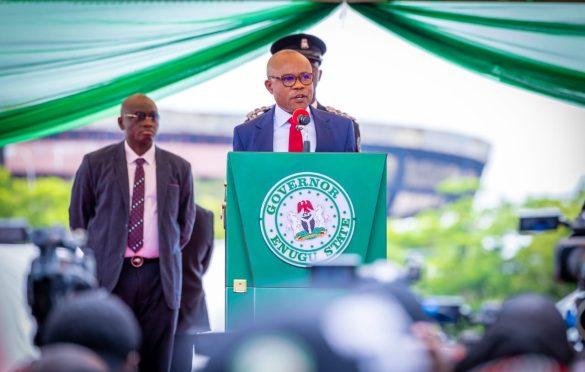
    …Being a Speech Delivered By Gov. Peter Mbah During the Fundraising Dinner by the Enugu State Security Trust Fund

    Those who make history often do not immediately grasp the depth of impact their actions would have on humanity.

    I can sense the unfolding of a remarkable legacy before us, something that looks certain to outlive us, inspire generations, and be cited always as a reference on the power of collaboration – especially between the state, the people and corporate organizations.

    Let me start by expressing my profound gratitude to the Board of Trustees of the Enugu State Security Trust Fund, for the time and zeal they have committed to nurturing this idea to reality.

    I’m particularly delighted by the devotion and inspiring leadership demonstrated by the Chairman of the Board of Trustees, Dr. Ike Chioke, and the Executive Secretary, Engr. Chinedu Joseph Ani.

    You have, alongside other members of the Board, laid out a practical template for collaboration between the state, the private sector and literally everyone, towards creating a formidable funding structure for our security needs.

    Your names will always be etched in gold and celebrated, whenever the labour of love that defined your collective work is recalled. I’m also immensely grateful to Engr. Arthur Eze, for graciously accepting to be the Chief Launcher at this epoch-making event.

    Yours is a name that inspires pride, and we are proud to be associated with you. You are a pillar of industry, a man with a lifetime commitment to noble causes.

    Thank you, sir, for once again leading by example and lending support to a very worthy project.

    I began this speech on a very optimistic note. However, it wasn’t typically a cheery experience speaking about the security situation in Enugu State 20 months ago.

    Let’s try and recall for a moment what the ever-bustling Ogui Road looked like on a Monday morning about 20 months ago. The entire stretch was a picture of desolation as business premises – from banks to retail shops – remained shut for the entire day.

    Of course, it wasn’t a decision borne out of personal choice. They were compelled to do so by the so-called “sit-at-home” order issued by a criminal gang.

    At this time on Ogui Road then, the only sound you may possibly hear is the cry of a child in an apartment. You could indeed imagine the anxious parents consumed by fear as they tried to calm the child. I’ve listened to parents recount the heart-wrenching tale of how their children could not sit for some subjects in a national examination, because those subjects had been slated for Mondays. I received countless messages from parents who lamented how their children could not secure university admission, on account of having not written a compulsory subject required for admission.

    The complaints were mostly relating to Mathematics, because the subject had been scheduled on a Monday. This was a common experience. I’m sure if we sampled opinions, there would likely be someone here who knows a family where a child had experienced such cruel fate. Attacks on security officials almost became the norm, with a significant number of personnel fatalities as a sad reminder of that grim era. Back then, criminals gleefully posted bodies of security personnel and the arms they had stolen through their brazenly regular attacks.

    But what difference 20 months make! Such wanton attacks have been pushed to the darkest recess of history. We have gained control of our streets. The outlaws who once held our people hostage have either been neutralized or fled.

    We have substantially reduced crime rate. Statistics attesting to that abound. We can further glimpse this in the fact that night life has returned in full swing. Streets that were desolate and deserted have regained their groove.

    I still remember a phone call I got at a very odd hour. I thought there was an emergency. It wasn’t an emergency after all. The excited caller was at a popular social spot, and was eager to show me live footage of bustling night life via his phone.

    The pleasant experience arising from the vastly improved security is widespread: The businessman who could not open his shop and incurred losses as a result has found the confidence to do so; the child, who could not go to school every Monday in the past can now confidently do so without any fear; our security men and women can now carry on their law-enforcement duties without any brazen attack. What difference there has been in 20 months! But our job is not done yet; it needs to be sustained.

    The importance of security in any society can never be overstated. Our Constitution clearly emphasizes this when it notes, under the Fundamental Objectives and Directive Principles of State Policy, that “the security and welfare of the people shall be the primary purpose of government”.

    So, the provision of security is a fundamental reason for the existence of the state – or governments, if you will. Security is arguably the single most important sector upon which all socio-economic goals of states and nations rest. It can make or mar our dreams.

    Few things incentivise enterprise as much as a reassuring sense of security. Conversely, nothing kills the spirit of enterprise as fast as a prevailing air of insecurity. We can indeed say that security and development have become inextricably intertwined in the world that we live in today. Investing in development projects without a corresponding investment in security is akin to spending vast sums to build a livestock farm, but yet leaving the doors of the pen open to wolves.

    These points and anecdote resonate particularly for us, because at the heart of our audacious growth plan is the goal to make Enugu State the premier destination for investment, leisure and living. Our targets to make Enugu the conferencing capital of Africa and, also, attract three million annual tourists will seem like mere posturing if those tourists do not feel sufficiently safe on the streets and in their hotels.

    Securing businesses, keeping the people safe, and improving their welfare are our primary motivation. And it is consistent with the pledge I made while seeking the people’s mandate. We have invested substantially in securing our state, and continue to do so, because there are no half measures in the fight against insecurity.

    The various security measures we have put in place underscore this conviction. You actually do not have to search for our interventions in security. They literally stare you in the face. The Enugu State Command and Control Centre is a logistical novelty built via cutting-edge innovation comparable to what exists in more advanced countries. It was a moment of pride for us when it was commissioned in January to national acclaim, by the President and Commander-in-Chief of the Armed Forces, His Excellency Bola Ahmed Tinubu.

    Even when no security official is in sight, our round-the-clock surveillance system that covers our streets and neighbourhoods still ensures strict vigilance. The ultimate goal is to nip crime in the bud.

    This crime-fighting device is complemented by the Distress Response Squad, designed to react swiftly to any security breach or threat of it. It is also further boosted by a large fleet of 150 security vehicles embedded with AI-enhanced cameras deployed across the state. The reassuring sense of security that these measures guarantee should not be for a moment in time only. It is important for it to exist at all time. This is crucial to the attainment of our ambition to grow Enugu State to become a $30 billion economy.

    But enthroning a water-tight security, such as we are implementing in Enugu State, requires a humongous amount of funds to sustain. I dare say, there’s hardly any state that can solely handle such responsibility. The Enugu State Security Trust Fund is therefore a child of necessity. Its emergence is rooted in the increasing realization that an active civic engagement of citizens, offers more enduring solutions to pressing social exigencies normally exclusively borne by the government.

    We are thus witnessing a civic rebirth in Enugu State. I strongly believe this is the day that the timeless campaign that security is everyone’s business finally sinks in. The old saying “all for one and one for all” easily comes to mind here. However, while we take unrelenting steps to squash criminality and threats to businesses, it is just as vital to adopt some non-kinetic strategies.

    It is in this regard that the influence of our traditional rulers and towns union ought to shine forth as moral beacons of the grassroots. The non-kinetic approach should involve constant enlightenment to sensitize the people on the importance of being security conscious. Eternal vigilance by everyone is a boost for security.

    As a government, we are wholly committed to the values of accountability, and do not view any demand for it as an irritant. This citizen-funded initiative will further widen the doors of transparency. Let us donate, buoyed by the knowledge that we are giving to a worthy cause. Let us donate fuelled by the knowledge that we are collectively building the future we desire – and deserve. Let us donate, knowing that the future we dream of is one ruled by certainties – not one ruled by fear.

    This of course includes the certainty that business owners need to flourish, knowing that they no longer have to take extra measures to secure their businesses, which increased their operational costs in the past. No one should be overcome with anxiety whenever they think about travelling to their country-home. This is what we envision; this is what collective action can achieve.

    Such collective resolve will ensure that the target of N20 billion we have set for the Security Trust Fund this year, will not only be achieved – but surpassed.

    I congratulate everyone gathered here. You are all makers of a proud history and witnesses to its birth.

    God bless Enugu State.

    Tomorrow is here!

  • PDP Celebrates Gov. Fubara on Birthday

    PDP Celebrates Gov. Fubara on Birthday

    …Says He’s a Quiet Achiever who Embodies the Aspiration of His People

    The Peoples Democratic Party (PDP) celebrates the Governor of Rivers State and leader of the Party in the State, His Excellency, Sir Siminalayi Fubara as he marks his birthday today.

    Governor Fubara is a humble, peaceful, courageous and insightful leader who deeply loves and respects his people; a democrat to the core, the true man of the people and quiet achiever who elevated the unity, wellbeing and common aspiration of the people of Rivers State over self-conceited considerations and personal aggrandizement.

    Over the years, as a public servant and now a democratically elected Governor of Rivers State, Governor Fubara has, to the admiration of all, distinguished himself as a highly ingenious administrator who employs his dexterity as a financial expert in effectively managing the resources of the State and delivering unprecedented infrastructural and human empowerment projects without any external borrowing.

    Our Party is proud of Governor Fubara who, in spite of the challenges since assumption of office, continues to touch the lives of the people as evident in the massive delivery of life-changing projects and programmes in critical sectors of road infrastructure, healthcare, education, housing, agriculture and food production, oil and gas, security, economic empowerment and employment opportunities across all spheres of endeavors in line with the manifesto of the PDP.

    The PDP applauds Governor Fubara’s effort in restoring, defending and deepening democracy, peaceful co-existence, transparency in government and adherence to the Rule of Law in Rivers State. We also acknowledge his continuing roles with other governors elected on the platform of the PDP in ensuring the unity, stability and growth of our Party at this time.

    On this special occasion, our Party celebrates Governor Fubara and prays to God to continue to protect and keep him in good health, as he leads Rivers State to greater heights to the glory of God and benefit of humanity.

    Happy Birthday Your Excellency!

    Signed:

    Hon. Debo Ologunagba
    National Publicity Secretary

  • Ohanaeze Ndigbo Hails Okonjo-Iweala on Second Term as WTO DG

    Ohanaeze Ndigbo Hails Okonjo-Iweala on Second Term as WTO DG

    PRESS STATEMENT 

    The Ohanaeze Ndigbo Worldwide joins numerous admirers across the globe to felicitate a renowned erudite scholar, development economist, astute administrator, moral edifice, author, two-time Nigerian minister for Finance, trail blazer, and an exemplary Igbo daughter, Dr. Mrs Ngozi Okonjo-Iwuala on her re-election as the Director General of the World Trade Organization (WTO).

    We are not surprised that Okonjo Iwuala has maintained a steady upward trajectory in public life. She is one of the few Nigerians who are committed to a decent life. She not only abhorred corruption and the characteristic mundane hubris in power, she initiated institutional reforms to reduce corruption in Nigeria. She introduced bureaucratic mechanisms to increase transparency in public offices. It was the suave Okonjo- Iwuala that spearheaded negotiations with the Paris Club for a debt relief for Nigeria, including an outright cancellation of US $ 18 Dollars in debt, under President Olusegun Obasanjo. She is one of the few women who have made the Forbes list of 100 Most Powerful Women in the world for seven years; and many more.

    There is no gainsaying her victory for a second term as the Director-General of the WTO derives from her untainted pedigree and stellar performance in the first tenure.

    The Secretary General of Ohanaeze Ndigbo Worldwide, Ambassador Okey Emuchay, MFR qualified Dr. Mrs. Ngozi Okonjo Iweala as the summary of virtues; a quintessential Igbo in character, ingenuity, elegance and integrity.

    We are very confident that you will continue to discharge your duties with requisite prudence and diligence. We are very proud of you.

    On behalf of all the structures of Ohanaeze Ndigbo Worldwide, please accept our felicitations and goodwill as always

    Dr. Chiedozie Alex Ogbonnia,

    National Publicity Secretary, Ohanaeze Ndigbo Worldwide.

  • NNPCL Reaffirms Progress on Port Harcourt Refinery, Addresses Misleading Claims

    NNPCL Reaffirms Progress on Port Harcourt Refinery, Addresses Misleading Claims

    The Board and Management of the Nigerian National Petroleum Company Limited (NNPC Ltd.) express heartfelt appreciation to Nigerians for their support and excitement over the safe and successful restart of the 60,000 barrels-per-day Old Port Harcourt Refinery. This achievement marks a significant step forward after years of operational challenges and underperformance.

    We are, however, aware of unfounded claims by certain individuals suggesting that the refinery is not producing products. For clarity, the Old Port Harcourt Refinery is currently operating at 70% of its installed capacity, with plans to ramp up to 90%. The refinery is producing the following daily outputs:
    • Straight-Run Gasoline (Naphtha): Blended into 1.4 million liters of Premium Motor Spirit (PMS or petrol)
    • Kerosene: 900,000 liters
    • Automotive Gas Oil (AGO or Diesel): 1.5 million liters
    • Low Pour Fuel Oil (LPFO): 2.1 million liters
    • Liquefied Petroleum Gas (LPG): Additional volumes

    It is worth noting that the refinery incorporates crack C5, a blending component from our sister company, Indorama Petrochemicals (formerly Eleme Petrochemicals), to produce gasoline that meets required specifications. Blending is a standard practice in refineries globally, as no single unit can produce gasoline that fully complies with any country’s standards without such processes.

    Additionally, we have made substantial progress on the new Port Harcourt Refinery, which will begin operations soon without prior announcements.

    We urge Nigerians to focus on the remarkable achievements being realized under the able and progressive leadership of President Bola Tinubu, GCFR, and to support efforts aimed at delivering more dividends to the nation. Malicious attacks on clear progress only undermine the significant strides made by NNPC Ltd. and the country.

    Let us move forward together in building a stronger and more self-sufficient energy sector.

    Olufemi Soneye
    Chief Corporate Communications Officer
    NNPC Ltd.
    Abuja

    26th November, 2024

  • [FOR THE RECORD] Experiential Learning: Building The Wealth Of The Nation – Being the Full Text of Lecture Delivered By the Governor of Enugu State at the 1st Distinguished Personalities Lecture Series of ESUT

    [FOR THE RECORD] Experiential Learning: Building The Wealth Of The Nation – Being the Full Text of Lecture Delivered By the Governor of Enugu State at the 1st Distinguished Personalities Lecture Series of ESUT

    I would like to begin this lecture by expressing my profound gratitude to the organizers of this event. I consider my selection to deliver the keynote at the Enugu State University of Science and Technology’s inaugural Distinguished Personalities Lecture Series a huge honour.

    An event such as this is an opportunity to outline a vision for the future and, if you will, carry out some reality checks. Universities, after all, exist for such intellectual engagements.

    The title of this lecture is “Experiential Learning: Building the Wealth of the Nation”. This title has been carefully chosen and was largely inspired by the strong correlation between education and development. It is fitting that a lot of the people gathered here are students.

    What future do our young people dream of? It is probable that the desire to emigrate is a priority dream for most. The word “japa” is a major part of the Nigerian reality. It has come

    to define the aspirations of our youth.

    The reasons, of course, are fairly predictable. Let’s just say that there haven’t been as much economic opportunities or jobs – as there are people in desperate need of gainful employment.

    You may be familiar with my exemplary story of two young men – Emeka and Ikechukwu. Buffeted by life’s harsh realities, Emeka opted for the familiar but perilous exodus via the Mediterranean in search of presumably greener pastures.

    For him, his degree offered little hope. But the sea is never predictable; especially not in a crowded boat. His quest ended tragically like many others.

    Contrast this with the case of Ikechukwu, for whom life was just as cruel even with his university degree. He rather chose to apply his inventive acuity to meet the necessities around him. A digital

    application that he developed was the passport to the good life he dreamt.

    This anecdote calls attention to the social debacle that “japa” represents, and the expediency to view it as a challenge for Nigeria to press the inventive button. Our young people must not merely think outside the box – they have to blow up the box and imagine new possibilities.

    Rather than wait for jobs, our youth must create jobs! This begs the question: how skilled, innovative, and globally competitive are our university graduates?

    Why do Nigerian universities seldom feature on the global ranking list of world’s best universities? Why have they seemed perennially unable to become the ideas factory which universities ought to be? Why are our universities not producing inventive graduates like Ikechukwu?

    The answers to these questions lie in many inconvenient truths, amongst which is the fact that the learning in our schools, from Basic to Tertiary, has for years not imbued our young people with productive skills and competencies. This is a root cause of our underdevelopment.

    All through history, knowledge has always been the prime lever for progress, from the Stone Age to the Industrial Revolution – and it will be no less so as the world gets in the grip of the Fourth Industrial Revolution.

    What role will Enugu youth play in the story of this emerging Fourth Industrial Revolution? What role will Enugu State universities play in preparing our youth to be part of the narrative of a new world order?

    Edward Paice warns us in his book that sub-Saharan Africa is generating the greatest proportion of youth in the world, even as the populations of other continents are shrinking.

    Our present asks human capitayoung and populous demography

    That way, we can create my at Let me dien happy to tell Thathat we are already doing thatrole we share a true story, youut Precious, a 13-year-old girl from Owo. Like many children abour communities, Precious has dreams that stretch far beyond the walls of her father’s house and her traditional classroom.

    But for years, her potential was locked behind a system that taught her to memorize rather than to innovate, to repeat rather than to question. Like millions of children in Nigeria, ria, Precious was in school, but had limited chance to acquire quality and transformative education.

    The Enugu Smart Green School changed Precious’ story. Today, Precious is no longer bound by the limitations of a conventional education system. As a student at the Enugu Smart Green School, Precious learns by solving real-world problems that matter to her community.

    Her classroom is not just a place of learning it is a hub of creativity, innovation, and action. At the Enugu Smart Green School, Owo, Precious worked with her peers and teachers to develop a water purification system that now supplies drinking water to the school. At the Enugu Smart Green School Owo, Precious worked with her peers and teachers to develop a model for a Smart Farm that now supplies eggs to 846 schoolchildren, three days per week.

    This transformation is part of a larger vision-to create an Experiential Learning ecosystem that connects every level of education, from primary schools to vocational schools and universities, to a dynamic pipeline of workforce development, innovation, and sustainability.

    In a globalized world, competition is by no means local, and the meritocracy of ideas is the underlining philosophy that holds sway. To produce globally competitive youth, who can remain here in Enugu and yet, “japa” their skills globally, our education ecosystem must immediately shift from rote learning to

    Experiential Learning!

    Education must be tailored to meet the exigencies of present needs and aspire to solve future challenges. Education is fundamentally, the cornerstone of our progress, the bedrock upon which our future stands.

    History is replete with many compelling cases for the embrace of innovation. Many years ago, making phone calls was a harrowing experience that usually entailed waiting in a long queue. Of course, getting to the front of the queue is no guarantee of a successful phone call. There might not be a dialing tone despite the long wait. But with the emergence of GSM technology, those stories now exist as distant memories from a bygone age. With mobile phones, we now have the world in our pockets.

    The point is that innovation is the fuel of development. But development is never wished into existence. It thrives in an atmosphere of deep respect for learning and pursuit of knowledge to improve the human condition.

    It is no coincidence the countries that invest the most in building a qualitative and experiential education ecosystem are the world’s leading economies United States of America, China, and European Union countries like Germany and Netherlands, are well- known examples.

    So, why are we not fully leveraging the solutions that a wholesome education offers to launch our society onto a new trajectory that fosters growth in critical sectors?

    Education has long been seen as a pathway to job opportunities, but today, it must also be for us, a pathway to innovation and economic leapfrog. For this to happen, Enugu must lead in Experiential Learning in Africa. Our students at all levels from early childhood to tertiary education must be equipped with the tools to not only adapt to the future but to shape it!

    Experiential Learning ensures that education is deeply connected to the challenges and opportunities of the real world. It fosters critical thinking, creativity, and collaboration. It

    empowers students to see themselves not as passive learners but as active problem-solvers.

    As an ecosystem, a flexible and scalable model that can be applied across wide-ranging contexts-from Smart Green Schools and Vocational Schools to Universities, Experiential Learning is bigger than an educational model. It is a strategy for workforce development, innovation, and sustainability.

    We should think of Experiential Learning as an engine that will enable our education system to drive workforce development and productivity. We should see it as the missing link between education, industrialization, and GDP growth.

    By embedding Experiential Learning into our education ecosystem, from Basic to Tertiary education, we are creating a seamless pipeline where students progress from foundational learning to practical innovation.

    Imagine a university student working on a project to design renewable energy solutions for rural communities. Imagine a student in a Science and Technical Vocational School developing skills in precision agriculture to boost food security. These are not hypothetical scenarios; they are the outcomes of an Experiential Learning ecosystem that we are already building here in Enugu State.

    If kids like Precious could achieve Experiential Learning in our Smart Green Schools, why would our universities not deliver Experiential Learning to our youth?

    Our Experiential Learning model aligns education with the Sustainable Development Goals (SDGs), equipping students

    with skills to tackle critical challenges such as:

    Energy: Training students to innovate in renewable energy technologies.

    Agriculture: Equipping them with skills for sustainable farming practices.

    ICT and Technology: Building capacities in robotics, AI, and digital entrepreneurship.

    Moreover, we have been very intentional and bold in our commitment to Experiential Learning. As you know, we have commenced construction of our pilot Center for Experiential Learning and Innovation (CELI) at the Enugu State College of Education Technical.

    It is our vision that every Tertiary Institution in Enugu State will possess such a center which, in addition to equipping teachers and professors with the pedagogical skills to deliver experiential education to our children, will also serve as a bridge between education and industry.

    The Center for Experiential Learning and Innovation

    connects students and teachers to the tools and partnerships that they need to develop technological competencies, innovate and pilot real-world solutions, and drive economic growth and sustainable development.

    For us, it is a no-brainer. Our universities must adapt and harness Experiential Learning to change our story. We owe this much to our young people. Give them a chance!

    It is time to change the development narrative. For too long, we have looked outward for solutions to our challenges. But the truth is clear: those who are closest to the challenges are best poised to lead the solutions.

    And truth be told; Experiential Learning is our oldest traditional system of education – much akin to the Apprenticeship system established by our forefathers – whereby knowledge is transmitted through practice, and knowledge thus gained, fostered innovation and growth.

    As a former colony, this country inherited a design of education rooted in rote learning and mimicry. We gained political independence. The time is overdue to emancipate our education system. Like the Sankofa, we must look to our cherished heritage to forge a formidable future of innovation, progress, and prosperity.

    This is not an impossible task. We have proof. Our smart teachers, like Ogbu Esther, who specializes in Robotics at the Enugu Smart Green School Owo, are already demonstrating the type of leadership we need by guiding students to address local needs. Our students, like Precious, are proving that age is no barrier to innovation. And our communities are showing that with the right support, they can be powerful agents of change.

    We are not just talking about improving education; this is about empowering people to lead their own development. It is about moving away from a narrative of dependency and towards a future of self-reliance and innovation.

    This is a challenge to the government, and universities, as much as it is to our students and our youth for whom “japa” constitute the single most compelling aspiration.

    We must prepare our youth for changing tides, lest they be lost in a tide. “Japa” may be a consequence of longstanding sociological stagnation. And the quest for social mobility is a natural human trait. Yet, all the great inventions the world has seen over the years had arisen, not from a sense of sufficiency, but to fill an abject want. Necessity, it is said, is the mother of invention. As a state, we have necessities, and we have human capital.

    Developing our human capital has been the highest preoccupation of our present government. The degree to which we meet this task is measurable by our investment in ensuring access to quality education and healthcare.

    As I have often emphasized, nations seldom rise above the standard of their public education. And the wealth of a nation depends upon the health of its people. Both education and health define the quality of the human capital the truest measure of every nation’s true wealth.

    So, why is it that infrastructural development often tends to be implemented at a pace that is disproportionate to investment in intangible resources such as education?

    The reason is fairly easy to infer. The sheer physicality of road Infrastructure means that they yield outcomes that are instant, whereas the results arising from investment in education are not immediately discernible. The plaudits are thus immediate. So, governments not all, I dare sayinvest in quick fixes like physical infrastructure, to the detriment of sectors such as education and health.

    Instructively, the most impactful policies are not necessarily those that create the biggest buzz. But they offer the clearest indices of human development.

    Nothing transforms lives and paves a path to a promising future like quality education. It is the reason why one-third of Enugu State’s total annual budget went into funding education.

    This translates to roughly twice UNESCO’s recommended

    benchmark of 15%-20%. What this means is that for every 100 Naira spent, 33 Naira goes to the education budget. This funding has enabled us to implement both infrastructural and pedagogical overhaul of our education system.

    Our will has enabled us to begin a transition from a system where pupils seemed, to all intents and purposes, to be merely going through the motions of learning, to an ecosystem of Experiential Learning

    Through our Basic Education Smart Green Schools, we have introduced the “cut-off point”, whereby we target children from age 3, and begin to inculcate in them social habits, health habits, fine motor skills, and problem-solving competencies, introducing them to an experiential education system that helps them to navigate our rapidly evolving technological knowledge-driven world.

    After three years of Early Childhood Education, having completed Nursery 1-3, our children complete Basic 1-9. During their twelve- year academic study in the Enugu Smart Green Schools, our children learn with interactive digital whiteboards, tablets, and

    computers, they are immersed in Robotics, Artificial Intelligence Virtual/Augmented Reality, and Internet of Things.

    Virtual/Audice technology and rey collaborate with rel They ped modern laboratories. They collaboraturath Civil Society equipnizations and Industry Partners to curate Innovation Organinges and solve community problems aligned with Sustainable Development Goals.

    I dare say that the quality of our Smart Green School compares with the best schools anywhere in the world.

    Upon graduating from the Smart Green Schools, about one- quarter of our children will proceed to Technical and Vocational Schools focusing on key competencies like Industrial and Information Technology, Building and Fabrication Engineering, as well as Industrial Agriculture, with the objective to become respected and skilled professionals, highly valued for their expertise.

    We have commenced the construction of 8 Science, Technical, and Vocational Schools across Enugu State. This includes the Government Technical College (GTC), Enugu. We intend to restore the former glory of this school established in 1948.

    The remainder 75% of graduates from the Smart Green Schools will proceed to Smart Senior Secondary Schools, where they would continue with Experiential Learning, in preparation for Scientific, Arts, and Professional Studies in any of our Tertiary Institutions.

    As you can see, our children will come through a pipeline of Experiential Learning. Our universities must not only be ready for them, but should lead research, development, and innovation in Experiential Learning.

    As a matter of fact, we hereby announce as a policy that all state-owned tertiary institutions in Enugu State must henceforth deliver Experiential Learning to our children. We want to see this change reflected in planning, budget, curriculum reform, assessment and promotions, as well as

    research.

    We must not forget that as Africans, we had been discounted in the Narratives and Histories of the making of this world order, and we must now embrace Disruptive Innovation to ensure that we write the next chapter in the Narrative of a new world system.

    With a population of over 200 million and a median age of 18 years, Nigeria has the 6th largest population of youth in the world. About 70 percent of the population is under 30, and almost half is under the age of 15.

    Among our teeming youth are some Emekas who continue to look to “japa” as salvation. But more and more, we are seeing numerous Ikechukwus, who are applying their intuitive intellect to thrive here at home.

    For us, the youth bulge presents numerous opportunities.

    The inherent potential in our youth bulge can be glimpsed in the fact that a largely young population best guarantees a steady supply stream for our state’s workforce. Our most pressing task now is to ensure that the youth bulge oils the wheels of productivity.

    The solution goes back to the core of this lecture experiential education!

    Given the very disproportionate ratio of students that universities are graduating annually to available jobs, the question has been asked if we have somehow over-idealized education. The answer is an emphatic NO.

    All through our history, the benefits of education have always been self-evident. In our colonial experience, it was a weapon of liberation perfectly wielded in the fight for independence.

    It equally proved a convenient tool of development as premiers of Nigeria’s defunct regions committed substantial funds towards their citizens’ education.

    To a large extent, the the regions in the pre by and post-independence Nigeria were the ective of the amount of resources that each region had deployed to the education sector.

    So, education will always remain an enduring legacy The challenge, however, lies in developing an educational ecosystem chal reflects the demands of the changing times. Today, it is the knowledge economy that reigns supreme. The indicators literally stare us in the face.

    Coal was the single most important element of the Industrial Revolution. But few weeks ago, the United Kingdom the birthplace of the Industrial Revolution – shut down the last of its coal-fired power stations.

    Let’s think about that. If that doesn’t serve as an instructive lesson, nothing else will.

    An education system that fosters disruptive innovation is the solution we need to achieve a leap out of a cycle of underdevelopment. The existential crisis is all around us. Look at the folly of our-near total and decades-long dependence on export of natural resources and agricultural produce. This has made our nation acutely vulnerable to the vagaries of the international market.

    Consider this: From being the prime contributor to Nigeria’s

    economy for decades, oil has fallen off its “glorious” perch. Instructively, the ICT sector has been gaining ascendancy in the last ten years. In 2023, for instance, ICT contribution to Nigeria’s GDP was 16.7 percent. The figure for 2024 looks likely to rise, given the sector’s 19.8 percent second-quarter contribution.

    On a similar note, Artificial Intelligence (AI) is projected to contribute up to $15 trillion to the global economy by 2030.

    So, what would be the next economic turn and how do we prepare for it? As we invest in education, we must be conscious of nurturing an educational curriculum that caters to our pressing development needs, while at the same time, prepares us to feature prominently in the narrative of the next global economic turning point.

    As history shows, to achieve progress, we must challenge the status quo. We are now at a watershed moment in our history. To turn the page, to achieve quantum development, we must now rend the fabrics of complacency and do the unusual and the unexpected. Experiential learning gives us the window of opportunity. And our universities must drive the revolution.

    Ladies and gentlemen, tomorrow is no longer something we wait for-it is here. The challenges we face today, from climate change to unemployment, demand immediate action, and the boldness to think outside the box. The solutions lie in you-your ideas, your resilience, and your capacity to innovate.

    With the Smart Green Schools, and an ecosystem of Experiential Learning, Enugu State will prove that education can be a catalyst for sustainable development.

    We are building not just schools but a new model for development, one that positions education at the heart of economic growth and sustainability.

    Let us not miss this moment. Let us invest in our teachers, our students, and our communities. Let us commit to a vision where every child, no matter where they are born, has the opportunity to lead and innovate.

    Enugu is setting a bold example-not just for Nigeria but for the world. We are showing that education, when rooted in action, can unlock the true wealth of a nation.

    Indeed, tomorrow is here!

    Thank you all for listening.

  • [FOR THE RECORD] Statement by President Bola Tinubu During the 1st Session at the G20 Leaders’ Summit in Brazil

    [FOR THE RECORD] Statement by President Bola Tinubu During the 1st Session at the G20 Leaders’ Summit in Brazil

    Your Excellency, Luiz Inacio Lula da Silva, President of the Federative Republic of Brazil,

    Your Excellencies Heads of State and Government.

    Ladies and Gentlemen.

    It is an honour to address this gathering of the G20 Leaders’ Summit taking place at this beautiful and historic city of Rio de Janeiro.

    2. Let me at the outset, express gratitude to the Government of the Federative Republic of Brazil for extending an invitation to Nigeria to participate as a guest country in the G20 under Brazil’s Presidency.

    3. As this session is devoted to the Fight Against Hunger, I would like to extend my heartfelt congratulations to the government of Brazil for the successful launch of the Global Alliance against Hunger and Poverty.

    4. This bold and visionary step underscores Brazil’s leadership in addressing one of the most urgent and persistent challenges facing our world today. The creation of this Alliance marks a significant milestone in our global efforts to eradicate hunger and poverty, and it also sends a powerful message of solidarity to vulnerable populations around the globe.

    5. By fostering collaboration between governments, international organizations, and civil society, this initiative offers a comprehensive approach not only to addressing immediate needs but also tackling the structural causes of hunger and poverty.

    Excellencies, Ladies and Gentlemen

    6. Brazil’s accordance of priority to the Fight against Hunger and Poverty aligns with Nigeria’s current economic policies. When I took office in 2023, I unveiled an 8-Point Agenda. Priority 3 focused on boosting agriculture to achieve food security, through the development of commodity value chain and the provision of infrastructure support. Priority 6 focuses on education, health and social investment as essential pillars of development.

    7. Nigeria’s endorsement of the declaration of commitment to join the Global Alliance Against Hunger and Poverty is a significant step forward in our ongoing efforts to address hunger and poverty. The endorsement demonstrates our commitment to leveraging international cooperation and resources, to bolster domestic strategies that will deliver inclusive growth and socio-economic development.

    8. Nigeria’s participation in the Global Alliance resonates strongly with the Sustainable Development Goals (SDGs), particularly SDG 1, which focuses on eradicating poverty, and SDG 2, which aims to achieve zero hunger. These goals are at the core of Nigeria’s development agenda, and the Alliance offers a platform to accelerate progress towards them.

    9. By collaborating with international partners, Nigeria aims to leverage best practices, innovative solutions, and financial support to enhance its efforts to combat poverty and hunger. The endorsement reinforces Nigeria’s role as a key player in global efforts to promote sustainable development and improve the quality of life for all its citizens.

    Excellencies, Ladies and Gentlemen

    10. While looking forward to the adoption of the Leader’s Declaration, I would like to reaffirm Nigeria’s commitment to continue to work with G20 member and guest countries, international organisations and the civil society, in the fight against hunger and poverty.

    11. I thank you all for your attention.

    President Bola Ahmed Tinubu, GCFR President, Federal Republic of Nigeria