Category: News

This is an optional category description

  • Tinubu Expected To Sign Amended Electoral Bill This Month – Akpabio

    Tinubu Expected To Sign Amended Electoral Bill This Month – Akpabio

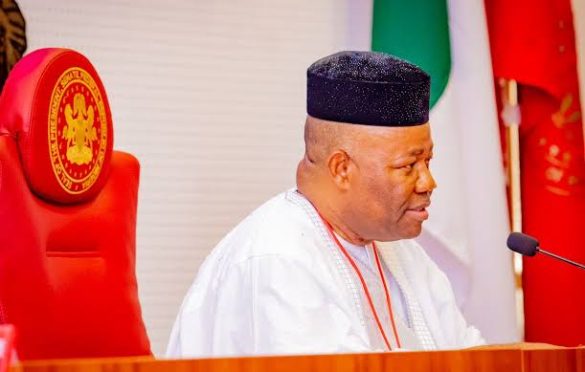
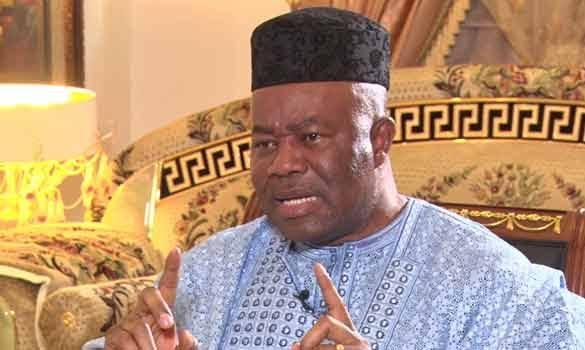
    Senate President Godswill Akpabio has said that President Bola Tinubu is expected to sign the amended Electoral Act into law this month.

    Akpabio made the remark on Tuesday during an emergency plenary session, where lawmakers constituted a 12-member committee to harmonise the Senate’s version of the bill with that passed by the House of Representatives.

    The session followed widespread backlash over some amendments to the Act.

    “I believe that if you are able to conclude this in the next few days or one week, the president should be able to sign this amended Electoral Bill into an Act of Parliament within this month of February,” Akpabio told the lawmakers.

    Recall that the Senate, on Tuesday, rescinded its earlier decision on the Electoral Act (Amendment) Bill, where it rejected the mandatory electronic transmission of election results from polling units to the Independent National Electoral Commission’s (INEC) Result Viewing Portal (IREV).

    Following the reversal, the upper chamber re-amended the Electoral Bill to accommodate the electronic transmission of election results, introducing conditions to guide its implementation.

    Under the new provision, electronic transmission of results is permitted; however, where internet connectivity fails, the manually completed Form EC8A will serve as the primary source for result collation and declaration.

    Despite the amendment, electronic transmission of results is not made mandatory. Instead, the provision allows for electronic transmission while retaining a fallback option in the event of network or technical challenges.

    The decision was reached after the adoption of a motion moved by the Senate Chief Whip, Tahir Monguno (Borno North), during an emergency plenary session.

    Presenting the motion, Monguno said the decision to rescind the Senate’s earlier rejection of electronic transmission was informed by the need to align the Electoral Act with the wishes of Nigerians.

    “This amendment is to bring our laws to make it a replica of the wishes and aspirations of the people,” he said.

    The motion was seconded by the Senate Minority Leader, Senator Abba Moro (Benue South).

    Senate President Godswill Akpabio subsequently put the motion to a voice vote, which was overwhelmingly supported by a majority of lawmakers.

    With the latest amendment, the Senate has effectively acknowledged that its earlier version of the Electoral Act amendment was passed without a provision accommodating electronic transmission of election results.
  • Early Rains to Hit 16 States as Enugu, Lagos, Others Face Longer-Than-Normal Rainy Season — NiMet

    Early Rains to Hit 16 States as Enugu, Lagos, Others Face Longer-Than-Normal Rainy Season — NiMet

    The Nigeria Meteorological Agency (NiMet) on Tuesday predicted an early onset of rainfall in sixteen Nigerian states of Akwa Ibom, Cross River, Benue, Kogi, Nasarawa, Oyo, and parts of Kebbi, Niger, Jigawa, Katsina, Kano, Adamawa, and Taraba.

    It however, said that a late onset is expected over Borno State.

    NiMet gave the hint at its Public Presentation of the 2026 Seasonal Climate Prediction (SCP) event held in Abuja.

    Highlighting the 2026 SCP, the Minister of Aviation and Aerospace Development, Festus Keyamo said that the scientific robustness of the document ensures that the SCP remains a trusted national reference document, supporting policy formulation, investment planning, and risk management at all levels of government and the private sector.

    Keyamo in his keynote address, said the 2026 Seasonal Climate Prediction is built on global best practices of meteorology and climate science, combining weather with long term climatological data and climatic drivers.

    Key global climate drivers such as the El Niño–Southern Oscillation (ENSO) and the Indian Ocean Dipole (IOD), he said were used in the production of this year’s SCP. “For 2026, these indicators point to a predominantly neutral ENSO phase, with important implications for rainfall distribution, temperature.”

    He stressed that the country have already seen some significant rains across the southern parts of the country this year. But, quickly posited, “Let me reiterate that these should not be taken to mean that the rainy season has started in these places.

    “Those engaged in rainfed agriculture and other rainfall-dependent activities in Nigeria are therefore advised to refer to the predicted onset dates in this publication or consult NiMet for proper guidance.

    According to him, “Early onset is expected in Bayelsa, Rivers, Akwa Ibom, Cross River, Benue, Kogi, Nasarawa, Oyo, and parts of Kebbi, Niger, Jigawa, Katsina, Kano, Adamawa, and Taraba States. While a late onset is expected over Borno State.

    “Rainfall cessation is anticipated to be earlier than normal in parts of Ogun, Osun, Ondo, Imo, Rivers, Akwa Ibom, Kogi and Niger States. However, a delayed end of season is expected in Lagos, Ogun, Anambra, Enugu, Cross River, Benue, Nasarawa and Kaduna States.”

    Enugu, Lagos, Others to experience longer-than-normal rainy season

    Keyamo further explained that a longer-than-normal length of rainy season is expected in Lagos, Benue, Enugu, Ebonyi, Ogun, Oyo, Nasarawa, Anambra, Kwara, Kebbi, Kaduna, Gombe and Taraba States. Whereas, parts of Borno, Yobe and Niger States are expected to have a shorter-than-normal length of rainy season.

    He maintained that a normal annual rainfall amount is anticipated in most parts of Nigeria compared to the long-term average as above-normal rainfall is expected in Borno, Sokoto, Kebbi, Kaduna, Enugu, Cross River, Abia, Ebonyi, Akwa Ibom States, and the Federal Capital Territory; while in parts of Katsina, Zamfara, Kwara, Oyo, and Ogun States, below-normal rainfall is expected.

    During the season of March to May, Keyamo said that a severe dry spells exceeding 15 days are likely in parts of Oyo and Ogun States, while moderate dry spells are expected over Ekiti, Kogi, Osun, Ondo, Ogun, Edo, Ebonyi, Abia, Cross River, and Delta states, as well as parts of Kogi and Kwara states.

    He also opined that during the June-July-August season, a severe dry spell that may last up to 21 days is predicted for parts of Bauchi, Borno. Gombe, Jigawa, Katsina, Kano, Kebbi, Kwara, Nasarawa, Niger, Oyo, Plateau, Sokoto, Yobe, and Zamfara states.

    “The Little Dry Season (LDS), also known as ‘August Break,’ is predicted to begin by late July and would be severe and prolonged over Lagos,

    Ogun, Ekiti and parts of Oyo States. The number of days with little or no rainfall will range between 28 and 40 days.

    “A moderate LDS effect is expected over Ondo, parts of Kwara and Edo States. Both daytime and nighttime temperatures are predicted to be warmer than the long-term average over most parts of the country in January, February, March, and May 2026,” the minister concluded.

  • Tinubu Makes Key Appointments Into SHESTCO, NEMSA, RMAFC

    Tinubu Makes Key Appointments Into SHESTCO, NEMSA, RMAFC

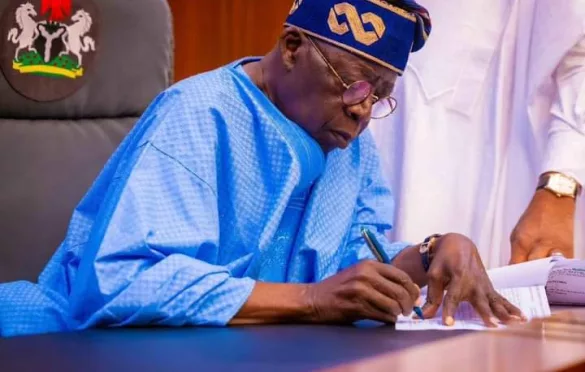
    President Bola Tinubu has appointed Hon. Magaji Da’u Aliyu as the Managing Director of the Sheda Science and Technology Complex, Abuja.

    The Sheda Science and Technology Complex (SHESTCO) is responsible for conducting research and development in technology and for operating a nuclear research facility.

    President Tinubu also appointed Engr. Adesayo Olusegun Michael as the Managing Director/CEO of the Board of Nigerian Electricity Management Services Agency (NEMSA).

    Other Board members of NEMSA appointed by the President include: Engr. Aliyu Abdulazeez (Executive Director, Technical); Ikechi Clara Nwosu (Chairman, South East); Zubair Abdur’rauf Idris (Member); Igba Elizabeth (Member-North Central); Sani Alhaji Shehu (Member–North East); Adeyemi Adetunji (Member–South West); Engr Emmanuel Eneji Nkpe (Member–South South) and Engr. Charles Ogbonna Asogwa (South East).

    The President nominated Amina Gamawa, representing Bauchi, and Abdullahi Muktar, representing Kaduna, as Commissioners to the Revenue Mobilisation Allocation and Fiscal Commission (RMAFC).

    The President has sent the two nominees to the Senate for confirmation.

  • Emefiele’s Alleged Unlawful Naira Redesign: Court Declines Adjournment by Defence Counsel

    Emefiele’s Alleged Unlawful Naira Redesign: Court Declines Adjournment by Defence Counsel

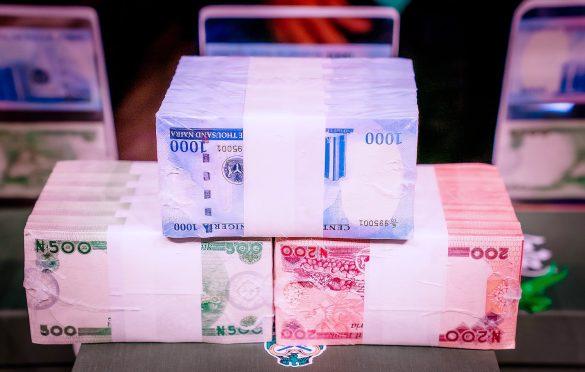
    The trial of the former Governor of Central Bank of Nigeria, CBN, Godwin Emefiele before Justice Maryanne Anineh of the Federal Capital Territory High Court, FCT, High Court, Maitama, Abuja, continued on Tuesday, February 10, 2026 with the refusal of the court to grant a motion of adjournment of proceedings owing to the non-availability of the statement of the managing director of the Nigerian Security  Printing Plc, demanded by the defence counsel

    The EFCC is prosecuting Emefiele on a four-count charge of unlawful printing of new naira notes.

    At Tuesday’s  proceedings, prosecution counsel, Abbas Mohammed, informed the court that the matter is for the continuation of cross-examination of PW7, and he is in court.

    However, defence counsel, Olalekan Ojo, SAN, raised an objection, saying that at the last adjourned date he requested for a statement the witness took from the Managing Director of the Nigerian Security Printing and Minting which he intended to use in court , but the prosecution gave him the document barely 20 minutes before the proceedings.

    According to him, the report was a six-page document which ought to have been made available to the defence 48 or at least 24 hours before the day’s proceedings.

    “My Lord, the investigation report was made available to us barely 20 minutes before today’s proceedings. Even the defendant has not had the opportunity to see it. We have not had the chance to look at the report critically,” he said.

    Ojo, further applied for an adjournment, stressing that the court is a court of record.

    Responding, Mohammed told the court that the prosecution did not deliberately delay the investigation report to disadvantage the defence.

    “My Lord, the decision to bring the investigation report today was not to deny the defence or the defendant access to the document. On the last adjourned date, during the cross-examination of PW7, learned defence counsel asked the witness whether an investigation report was made and demanded that it be produced,” he said.

    He argued that the investigation report was a document meant to be produced by the witness in court.

    Opposing the application for adjournment, Mohammed urged the court to direct the defence to proceed with the cross-examination.

    “My Lord, we have other dates to take issues relating to the investigation report. We pray that today’s proceedings be exhausted,” he said.

    Justice Anineh ruled that the cross-examination of PW7 should continue.

    Following the ruling, Ojo, SAN, resumed cross-examination of the witness.

    He questioned PW7 on an email exchange between the Managing Director of the Nigerian Security Printing and Minting Company and De La Rue.

    Asked who made the email available to the EFCC team, the witness responded: “My Lord, the email was made available to our team by the Managing Director of Printing and Minting.”

    When asked how many statements the Managing Director made, the witness replied: “I cannot remember, but he made statements.”

    Asked to identify the Managing Director, the witness said: “My Lord, his name is Ahmed Halilu.”

    Ojo further asked whether the witness’s team inquired if the Nigerian Security Printing and Minting Company had ever designed currency in Nigeria. The witness responded that he could not remember.

    Asked whether he was the officer who directly interacted with the Managing Director, the witness answered in the affirmative.

    On when his team concluded the investigation, the witness stated that he could not be certain.

    The defence counsel asked whether the witness’s team inquired from CBN officials the quantity of new naira notes released to Nigerians. The witness answered: “Yes, My Lord.”

    Asked how much the CBN said it released to commercial banks across the country, the witness responded: “I do not have that available.”

  • Atiku Faults Mixture of Manual, Electronic Transmission, Says It Will Cause Confusion

    Atiku Faults Mixture of Manual, Electronic Transmission, Says It Will Cause Confusion

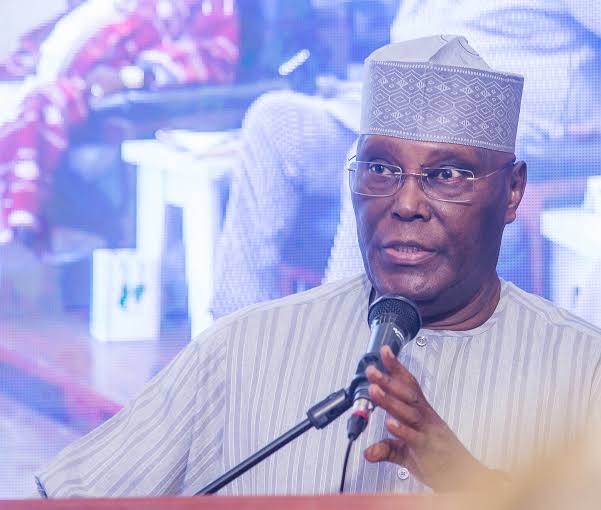
    Former vice president Atiku Abubakar has faulted the Senate over its stance on the Electoral Act, arguing that having both manual and electronic transmission of results in the bill will cause further confusion.

    Atiku spoke on Tuesday after a visit to ex-military President Ibrahim Babangida, alongside Oyo Seyi Makinde, at his residence in Minna, Niger State.

    “Nigerians were expecting real-time electronic transfer to the various levels of the elections. But what we got is a mixture of electronic and manual transmission, which is going to cause more confusion or chaos,” the chieftain of the African Democratic Congress (APC) told reporters after the visit.

    “At this point, this is not about me contesting elections. It is about Nigerians who want electronic transmission of election results,” he said.

    Last week, the Electoral Act (Repeal and Enactment) Bill, 2026, passed third reading, but the Senate removed the requirement for the real-time electronic transmission of election results.

    The lawmakers retained the 2022 Electoral Act provision giving the Independent National Electoral Commission (INEC) power to determine how election results are transmitted.

    That move generated outrage among Nigerians. Critics and opposition leaders faulted the lawmakers’ action, taking their protests to the National Assembly premises on Monday and Tuesday.

    On Tuesday, the Senate, however, reversed its stance on the approval of Clause 60(3) of the Electoral Act. It reviewed the framework, designating electronic transmission as the main mode of uploading results. But the manual submission of results via Form EC8A in cases where there are technical issues.

    But Atiku, a former presidential candidate, said the “preference” of opposition politicians was a “single-tier electoral transmission system”.

    “Then, if we have a single-tier electoral transmission system that is real-time electronic, that would be our preference, and I think there is a need for all the opposition political parties to come together to pursue this issue,” the ADC chieftain said.

    “ I mean, we shouldn’t allow it to rest where they wanted it to rest today. Absolutely not. I don’t support that.” Channels TV

  • FMIST strengthens Benue, EU partnerships to drive agro-processing, innovation

    FMIST strengthens Benue, EU partnerships to drive agro-processing, innovation

    The Federal Ministry of Innovation, Science and Technology (FMIST) has reaffirmed the Federal Government’s commitment to leveraging science, technology and innovation (STI) to drive agro-industrial development, economic transformation and inclusive growth.

    The Minister of Innovation, Science and Technology, Dr. Kingsley Udeh, SAN, stated this during separate courtesy visits by the Deputy Governor of Benue State, Barr. Sam Ode, and the Ambassador of the European Union to Nigeria, His Excellency Gautier Mignot, at the ministry’s headquarters in Abuja.

    Receiving the Benue State delegation, Dr. Udeh highlighted vast opportunities for collaboration between FMIST and the state, particularly in the commercialisation of research outputs and the deliberate pursuit of 30 per cent value addition to raw materials.

    He noted that as the “Food Basket of the Nation”, Benue State occupies a strategic position in Nigeria’s drive to move from raw commodity production to value-driven agro-processing, industrialisation and job creation.

    The minister stressed that translating research findings into market-ready products remains a core priority of FMIST, adding that STI must be positioned to directly support food security, wealth creation and sustainable development at both national and sub-national levels.

    Barr. Ode, who was accompanied by the Commissioner for Science, Technology and Innovation, Hon. Dwem James, congratulated the minister on his appointment and commended his vision and leadership at a critical time for Nigeria’s innovation ecosystem.

    He described science and technology as the bedrock of any serious government, noting that no economy can achieve sustainable growth without deliberate investment in innovation and knowledge-driven systems.

    According to him, Benue State is committed to aligning its policies and programmes with the Federal Government’s STI agenda to maximise impact and ensure coherence in national development efforts.

    In a separate meeting, Dr. Udeh received the European Union Ambassador to Nigeria, Gautier Mignot, who congratulated him on his appointment and reaffirmed the EU’s long-standing strategic partnership with FMIST.

    Discussions focused on strengthening collaboration in research, innovation and technology, with emphasis on job creation, improved livelihoods and sustainable economic growth.

    The EU delegation briefed the minister on key upcoming initiatives, including the first Nigeria–EU Science and Innovation Day scheduled for 24 February at the Wole Soyinka Centre for Creative Arts in Lagos; negotiations toward a Science, Technology and Innovation Agreement between Nigeria and the EU; and the next phase of Horizon Europe Phase IV, which will support Africa Initiative IV with about €600 million.

    Dr. Udeh reaffirmed FMIST’s readiness to deepen collaboration with the European Union to accelerate commercialisation, promote knowledge exchange and position Nigeria as a leading science and innovation hub in Africa.

    Both FMIST and its partners expressed optimism about expanding cooperation and sustaining engagements to ensure effective implementation of joint programmes aligned with President Bola Ahmed Tinubu’s Renewed Hope Agenda.

  • JUST-IN: Senate Approves e-Transmission of Election Results With Conditions

    JUST-IN: Senate Approves e-Transmission of Election Results With Conditions

    The Senate, on Tuesday, rescinded its earlier decision on the Electoral Act (Amendment) Bill, where it rejected the mandatory electronic transmission of election results from polling units to the Independent National Electoral Commission’s (INEC) Result Viewing Portal (IREV).

    Following the reversal, the upper chamber re-amended the Electoral Bill to accommodate the electronic transmission of election results, introducing conditions to guide its implementation.

    Under the new provision, electronic transmission of results is permitted; however, where internet connectivity fails, the manually completed Form EC8A will serve as the primary source for result collation and declaration.

    Despite the amendment, electronic transmission of results is not made mandatory. Instead, the provision allows for electronic transmission while retaining a fallback option in the event of network or technical challenges.

    The decision was reached after the adoption of a motion moved by the Senate Chief Whip, Tahir Monguno (Borno North), during an emergency plenary session.

    Presenting the motion, Monguno said the decision to rescind the Senate’s earlier rejection of electronic transmission was informed by the need to align the Electoral Act with the wishes of Nigerians.

    “This amendment is to bring our laws to make it a replica of the wishes and aspirations of the people,” he said.

    The motion was seconded by the Senate Minority Leader, Senator Abba Moro (Benue South).

    Senate President Godswill Akpabio subsequently put the motion to a voice vote, which was overwhelmingly supported by a majority of lawmakers.

    Recall that during the clause-by-clause consideration of the Electoral Act (Amendment) Bill last Wednesday, Monguno had requested that the Senate retain the provision in Clause 60 of the 2022 Electoral Act, which allows for the transmission of election results to collation centres.

    With the latest amendment, the Senate has effectively acknowledged that its earlier version of the Electoral Act amendment was passed without a provision accommodating electronic transmission of election results.
  • Closing Revenue Leakages Key to Nigeria’s Economic Stability – Gov. Mbah

    Closing Revenue Leakages Key to Nigeria’s Economic Stability – Gov. Mbah

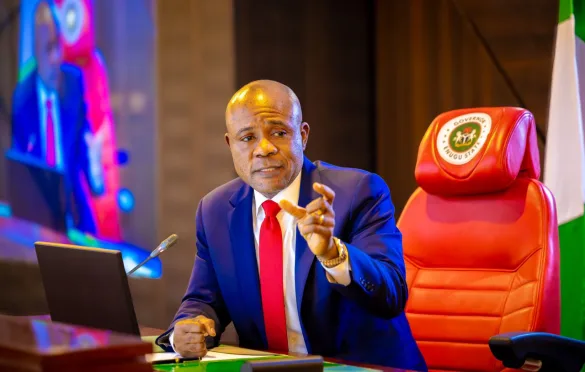
    Enugu State Governor, Dr. Peter Mbah, has said the elimination of revenue leakages in the Federation Account would serve as a critical pathway to Nigeria’s fiscal sustainability and long-term economic stability.

    The governor made the assertion at the opening ceremony of the ongoing retreat of the Federation Account Allocation Committee (FAAC) Postmortem Sub-Committee on Assessing Fiscal and Sectoral Policies for Closing Revenue Leakages in the Federation Account, held at the Enugu International Conference Centre on Monday.

    Governor Mbah, who was represented by the Secretary to the State Government (SSG), Prof. Chidiebere Onyia, described the retreat as timely, noting that Nigeria is at a crucial point where competing development needs require efficient revenue mobilisation, prudent fiscal management, and strong intergovernmental coordination.

    “At a time when the nation is pursuing fiscal sustainability, the challenge of revenue leakages demands urgent, coordinated, and evidence-based solutions,” the governor said.

    He expressed appreciation to the Minister of State for Finance, Dr. Doris Uzoka-Anite, for her leadership and commitment to strengthening fiscal governance, as well as for selecting Enugu State as host of the retreat.

    He also commended the Revenue Mobilisation Allocation and Fiscal Commission (RMAFC) and the FAAC Postmortem Sub-Committee for their sustained efforts in promoting transparency, accountability, and fairness in the management of the Federation Account.

    The governor acknowledged the pivotal roles of the Accountant-General of the Federation, Commissioners of Finance, State Accountants-General, and heads of revenue-generating agencies in leading the cause of safeguarding the nation’s public finances.

    According to him, Enugu State has placed fiscal discipline, efficient resource management, and value-driven governance at the core of its development agenda, stressing that plugging revenue leakages is indispensable to achieving sustainable growth and delivering tangible benefits to citizens.

    He said the retreat provided a unique platform to critically examine existing fiscal and sectoral policies, identify systemic, legal, and administrative loopholes, and propose practical reforms aimed at improving revenue accruals to the Federation Account.

    The governor further reaffirmed Enugu State’s support for national fiscal reforms anchored on equity, fairness, and justice in revenue allocation and management, in line with constitutional and statutory provisions.

    While noting that Enugu’s decision to host the retreat, even at short notice, underscored the state’s commitment to collaborative governance and its readiness to contribute meaningfully to national policy dialogues that promote economic stability, Governor Mbah expressed confidence that discussions at the retreat would translate into tangible fiscal results.

    He encouraged participants to engage in frank discussions, innovative thinking, and peer learning, expressing hope that the outcomes of the retreat would translate into measurable improvements in revenue performance and service delivery nationwide.

    Speaking earlier, the Minister of State for Finance and Chairman of the Federation Account Allocation Committee (FAAC), Dr. Doris Uzoka-Anite, reaffirmed the Federal Government’s commitment to equity, fairness and justice in the management of the Federation Account, noting that the retreat was aimed at critically assessing fiscal and sectoral policies to identify and plug systemic, legal and administrative revenue leakages.

    The Accountant-General of the Federation, Mr. Shamseldeen Ogunjimi, described the Federation Account as the fiscal lifeline of the nation, but lamented that revenue shortfalls, oil price volatility, weak non-oil revenue performance and systemic leakages had continued to undermine its credibility, proposing digital revenue assurance, stronger inter-agency coordination, post-mortem reviews and governance reforms as key solutions.

    Also speaking, the Chairman of the Revenue Mobilisation Allocation and Fiscal Commission (RMAFC), Dr. Mohammed Shehu, said the retreat was convened to shape the future of Nigeria’s revenue mobilisation by closing leakages, enhancing transparency and optimising inflows into the Federation Account.

    In his welcome address, the Chairman of the FAAC Post-Mortem Sub-Committee, Hon. Abdulazeez Idris, said the committee was set up to conduct in-depth analysis of Federation Account statements and reports of revenue-generating agencies to strengthen accountability and fiscal discipline.

    The retreat attracted key fiscal stakeholders, including officials of the Federal Ministry of Finance, RMAFC, the FAAC Postmortem Sub-Committee, and representatives of federal and state revenue institutions.

  • Court of Appeal Upholds Sen. Natasha’s suspension

    Court of Appeal Upholds Sen. Natasha’s suspension

    …faults contempt charge against her, vacates N5m fine 

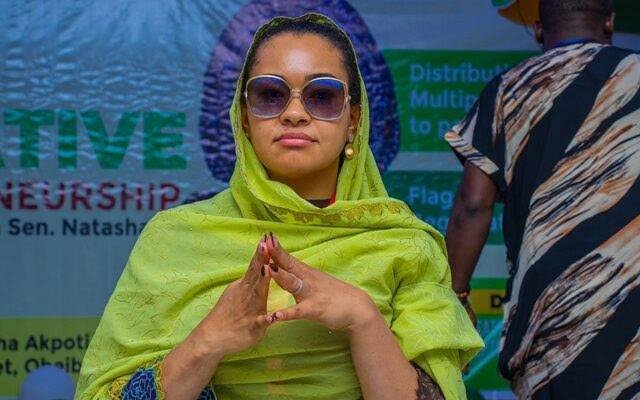
    The Court of Appeal Abuja has held that the Senate acted within its powers when it suspended the lawmaker representing Kogi Central, Senator Natasha Akpoti-Uduaghan for misconduct.

    In a unanimous decision by a three-member panel of Justices, the appellate court said it was satisfied that neither the Appellant’s parliamentary privilege nor her constitutional rights were breached as a result of her suspension from the Senate.

    The court, however, vacated the contempt proceeding and ₦5 million fine that were awarded against Senator Akpoti-Uduaghan over the satirical apology she made to the Senate President, Godswill Akpabio.

    In its lead verdict that was delivered by Justice Abba Muhammed, the appellate court held that the Senate President was not wrong to have denied the Kogi Senator, who was not on the official seat that was allotted to her during plenary on February 20, 2025, the opportunity to speak.

    It held that the Senate President is empowered by the Rules to allocate seats to members, adding that lawmakers are only allowed to speak from seats allocated to them.

  • Peter Obi joins #OccupyNationalAssembly Protest in Abuja

    A leading presidential aspirant of African Democratic Congress (ADC) Peter Obi, on Monday, joined protesters at the National Assembly complex in Abuja under the banner of the #OccupyNationalAssembly movement.

    The protest follows the Senate’s passage of the Electoral Act 2022 (Repeal and Reenactment) Amendment Bill 2026, in which lawmakers removed the phrase “real-time” transmission of election results during the third reading of the bill.

    Although the Senate has issued several clarifications denying that it rejected electronic transmission of election results, protesters insist that the proposed legislation must explicitly mandate real-time electronic transmission.

    Speaking at the protest ground, Obi said the Senate must take concrete steps to prevent a repeat of the technical glitches reported by the Independent National Electoral Commission (INEC) during the 2023 general elections.

    He called for real-time electronic transmission of results to be clearly enshrined in the law.

    Aside Obi, members of civil society organisations, opposition ADC supporters, and women’s groups were also present at the protest.

    The protesters began their march from the Federal Secretariat, proceeding towards the National Assembly gate.

    Security was heavy at the scene, with personnel drawn from the Nigeria Police Force, the Nigerian Army, and the Nigeria Security and Civil Defence Corps. The police barricaded the entrance to the National Assembly.

    However, some civil society representatives told Channels Television that the protesters do not intend to force entry into the complex, noting that the demonstration is planned to take place strictly at the gate. Tribune

  • [EXPLAINER] NBA President didn’t brand judges, lawyers ‘worst bribe takers’

    [EXPLAINER] NBA President didn’t brand judges, lawyers ‘worst bribe takers’

    Contrary to reports suggesting that the President of the Nigerian Bar Association (NBA), Mazi Afam Osigwe, SAN, described judges and lawyers as the “worst bribe takers and givers,” a review of the full text of his speech shows that no such assertion was made.

    Excerpts from the address reveal that Osigwe neither labelled judges as the “worst bribe takers” nor lawyers as the “worst bribe givers.” Rather, he delivered a measured, data-driven call for reforms aimed at strengthening the integrity and credibility of Nigeria’s justice system.

    Osigwe spoke on February 6, 2026, on the theme “Judicial Corruption in Nigeria: A Menace to Democracy and Social Justice,” where he addressed corruption as a systemic challenge affecting democratic governance, public confidence and social justice.

    At the outset, the NBA President acknowledged prevailing public perceptions of the justice system, stating that, “Many Nigerians have steadily lost confidence in the judicial system as it has been widely perceived as being riddled with corruption, inconsistency, and undue influence.”

    He noted that this perception has grave consequences, adding that, “The judiciary, which ought to be the last hope of the common person, is increasingly seen as an arena where justice can be delayed, manipulated, or outrightly purchased by the highest bidder.”

    However, Osigwe was careful to explain that corruption is neither peculiar to the judiciary nor the failing of a single professional group. He described corruption as a broader societal malaise, citing international authorities such as the United Nations Convention against Corruption (UNCAC) and the World Bank.

    Quoting UNCAC, he said corruption is an “insidious plague” that “undermines democracy and the rule of law, leads to violations of human rights, distorts markets and erodes the quality of life.”

    In addressing the justice sector, Osigwe relied on empirical data rather than personal accusations. He cited a 2018–2020 survey by the Independent Corrupt Practices and Other Related Offences Commission (ICPC), which estimated that about ₦9.4 billion was paid as bribes within the justice sector, with lawyers accounting for the highest proportion of bribe-givers.

    He also referenced a 2024 joint survey by the United Nations Office on Drugs and Crime (UNODC) and the National Bureau of Statistics (NBS), which estimated that Nigerian public officials received about ₦721 billion in cash bribes in 2023, with judges listed among several affected public officials.

    Osigwe, however, placed the statistics in context, warning against simplistic conclusions. Adopting the views of Tayo Oyetibo, SAN, he stated: “It takes two to tango. Where there is no ‘offeror’ there can be no ‘offeree’. In other words, corruption persists because there are corruptors and corruptees.”

    He explained that corruption thrives not only because of compromised public officials, but also because citizens, lawyers and litigants sometimes seek to influence outcomes through inducement.

    The NBA President also recalled earlier admissions within the profession to show that the issue is neither new nor concealed. He cited a 2012 statement by former NBA President, J.B. Daudu, SAN, who openly acknowledged corruption within the justice sector.

    Quoting Daudu, Osigwe recalled: “I make no distinction here between the Bar and the Bench. Corruption is now a live issue that is threatening to tear apart the foundations and fabric of society.”

    According to Osigwe, such past admissions demonstrate that the legal profession has long recognised the problem and must confront it with honesty and reform, rather than denial or sensationalism.

    He further noted that public perception, even when exaggerated, can be as damaging as proven misconduct. Referring to remarks by the Sultan of Sokoto, he said: “Today, justice is increasingly becoming a purchasable commodity, and the poor are becoming victims of this kind of justice, while the rich commit all manner of crime and walk the streets scot-free.”

    Osigwe said such perceptions reinforce distrust and inequality, stressing that restoring confidence requires deliberate institutional action.

    Far from attacking the judiciary, the NBA President commended the Chief Justice of Nigeria (CJN), Justice Kudirat Kekere-Ekun, for her reform-driven posture. He quoted her admonition to judges: “Let your judgments be reasoned, impartial and courageous. The Judiciary, as the final arbiter of justice, depends on the credibility of its officers.”

    He also acknowledged the role of the National Judicial Council (NJC) in disciplining erring judges, noting that suspensions, dismissals and compulsory retirements have followed proven misconduct.

    Osigwe warned that judicial corruption undermines democracy, stating that “when courts become instruments for shielding the corrupt or punishing political opponents, elections lose meaning, governance becomes arbitrary, and the social contract fractures.”

    He concluded by stressing that the fight against judicial corruption is a collective responsibility of judges, lawyers, institutions and citizens alike, declaring: “History will judge us not by our eloquence, but by our willingness to act.” Vanguard

  • Enugu Police Bust Vandalism Syndicate, Arrest Four Suspects

    Enugu Police Bust Vandalism Syndicate, Arrest Four Suspects

    The Enugu State Police Command, under the leadership of CP Mamman Bitrus Giwa, PSC, has recorded another significant operational success in its sustained efforts to curb vandalism and other criminal activities across the State.

    In two separate operations, four (4) male suspects were arrested, while vandalised iron bridge components loaded in a 40-foot trailer and pieces of suspected carbon steel oil and gas pipes were recovered.

    On 6th February 2026, at about 6:45 p.m., operatives of the Command serving in the Special Weapons and Tactics (SWAT) Squad, while on routine patrol along the Sagem/Amaechi–Idodo axis of the Enugu–Port Harcourt Expressway, intercepted a white MAN Diesel 40-foot trailer conveying vandalised iron bridge parts.

    Three male suspects, identified as Agbo Okwudili (aged 45), Emmanuel Onyemachi (aged 18), and Evans Ovie Monday (aged 29), were immediately arrested in connection with the incident. Preliminary investigations indicate that the suspects and their cohorts currently at large vandalised the bridge parts at Eziama Bridge, Amechi-Idodo, in Nkanu East Local Government Area.

    In a second operation on the same date at about 11:56 p.m., the same SWAT operatives, while on patrol along Owoh/Ubahu Road in Nkanu East Local Government Area, intercepted and arrested a male suspect, Orjiakor Hyacinth (aged 50), who was found assembling vandalised suspected carbon steel oil and gas pipes. Several pieces of the pipes and one (1) gas cylinder were recovered from him.

    Investigative efforts are ongoing to arrest other suspects currently at large, while the cases will be prosecuted in court once investigations are concluded.

    The Commissioner of Police commends the operatives for their vigilance, prompt arrest of the suspects, and the recoveries made, and reiterates the Command’s unwavering commitment to the protection of lives and property across Enugu State.

    He warns vandals, whose criminal activities cause serious social and economic setbacks, to desist forthwith, as the Command will not relent in its efforts to track down and bring all perpetrators to justice.