Category: News

This is an optional category description

  • How My Refusal of US Asylum Led to My Imprisonment — Obasanjo

    Former President Olusegun Obasanjo

    Former President Olusegun Obasanjo has recounted how he rejected an offer of political asylum from the United States, returned to Nigeria and was subsequently arrested and imprisoned under the regime of the late Head of State, General Sani Abacha.

    Obasanjo said the American government offered him asylum after receiving information that he would be arrested if he returned to Nigeria.

    However, he turned down the offer, insisting that he had committed no offence to warrant seeking refuge outside the country.

    The former president made the revelation while narrating his experience under Abacha’s military government in a video published by BBC News Pidgin on Tuesday.

    Obasanjo, who became military Head of State on February 13, 1976, following the assassination of General Murtala Muhammed, handed over power to civilian President Shehu Shagari on October 1, 1979.

    Explaining why he went into farming after leaving office, the 89-year-old said he had attained the highest positions possible in the military and government by the age of 42, leaving him with little reason to remain in the Army.

    He said, “When I was leaving government as military head of state, there was — I was leaving too early. I didn’t join the army to retire at the age of 42.

    “Now I had to retire at the age of 42. At the age of 42, I had become a four-star general. There’s nothing else I can do in the army. I’ve become the military head of state. That’s the highest political office I could rise.

    “So what can I do? I decided I would go into farming. It really was going well, and it went well until I was arrested.

    “Abacha had decided that I must be liquidated; otherwise he would not be able to have his way. I didn’t know that.

    “I was travelling and coming back, and the American ambassador in Nigeria called me and said his country had offered me political asylum because they knew that I would be arrested if I returned home.

    “This was difficult for me. I don’t— I haven’t done anything. What do they want to arrest me for? Um, I don’t want political asylum.”

    Obasanjo said his passport was seized when he returned to Nigeria, after which he headed for his farm.

    However, one of his security aides warned him that government security operatives had surrounded the property.

    He said a police officer dressed in mufti later approached him and claimed that an Assistant Inspector-General of Police (AIG) wanted him to come in for questioning. Obasanjo rejected the invitation, insisting that the AIG should come to the farm if he wanted to see him.

    He eventually drove himself to the police station, where the AIG informed him that he had been instructed to arrest him.

    Obasanjo also recalled how former United States President Jimmy Carter intervened on his behalf by appealing to Abacha. Following Carter’s intervention, he was moved from confinement to house arrest.

    He said security operatives later arrived at about 1am while he was playing squash and took him away to prison.

    He said, “I didn’t know that it was a decision of Abacha that some of us must not be kept free; otherwise, he would feel unsafe. I was put in a place.

    “Then President Jimmy Carter came. He pleaded, and then they put me under house arrest. Then they came one day; I was playing squash at about 1 am.

    “They came and said they were taking me away. And they took me away, and from there, I went to prison.”

    Abacha ruled Nigeria from November 17, 1993, until his death on June 8, 1998. Obasanjo was released following the former military ruler’s death and went on to win the 1999 presidential election, becoming the first elected president of the Fourth Republic.

    He served two terms in office, leaving power on May 29, 2007. The Sun

  • Passenger Kicked Off Abuja-Bound Flight Following Arson Threat

    A photo of an Air Peace plane. Credit: Air Peace

    FILE PHOTO: An Air Peace plane. Credit: Air Peace

    Air Peace on Monday removed a passenger from flight P47866, bound for Abuja, after he threatened that his anger was capable of burning down the aircraft.

    According to a Twitter post on Monday by the Director of Public Affairs and Consumer Protection at the Nigeria Civil Aviation Authority (NCAA), Michael Achimugu, the passenger, identified as Celestine Ezeudu, allegedly refused repeated instructions from cabin crew to stop taking pictures and put away his device as the aircraft prepared for take-off.

    Achimugu, however, said the situation escalated into an altercation, during which the passenger allegedly threatened that his anger could “burn down” the aircraft.

    The captain was immediately alerted and initiated a ramp return at 15:57 hours, leading to the passenger’s removal from the aircraft.


    The NCAA Boss added that Ezeudu’s travelling companion also voluntarily disembarked from the aircraft.

    “In the crime room, Ezeudu claimed that his anger stemmed from missing an earlier flight, but he did not know that his behaviour would lead to a ramp return”, Achimugu added.

    INCIDENT REPORT

    FLIGHT P47866

    09/11/2026

    Air Peace flight P47866 to ABB experienced a ramp return due to an Unruly Behavior incident that occured onboard. One Celestine Ezeudu refused direct instructions from cabin crew to stop taking pictures and put his device away while the flight attempted to take off.

    The passenger ignored the instructions and when a second member of the crew approached, an altercation broke out and the passenger made a statement: “The anger I am feeling can burn down this plane.”

    The crew immediately alerted the captain who then initiated a ramp return at 1557HRS. The passenger complied with instructions to be removed from the aircraft without further struggle.

    His friend and co-traveller on the same flight also disembarked of his own will, in solidarity with the unruly passenger.

    In the crime room, Ezeudu claimed that his anger stemmed from missing an earlier flight, but he did not know that his behaviour would lead to a ramp return.

    — Michael Achimugu (@mikeachimugu01) November 9, 2026

    Channels

  • NGF Launches 10-year Roadmap For New Leadership Academy

    The Nigeria Governors’ Forum has approved a 10-year plan, spanning 2026 to 2036, to establish a leadership academy as a flagship directorate within its secretariat, offering training, research and advisory services to improve governance and policy delivery across the 36 states.

    NGF, in a statement on Monday, signed by its Director-General, Abdullateef Shittu, explained that the initiative was designed to provide executive capacity development, applied research, governance advisory services, digital innovation and peer-learning opportunities for state-level political and administrative leaders.

    It stated, “The Nigeria Governors’ Forum (NGF) has approved the establishment of the NGF Academy & Leadership Centre as a flagship Directorate within its secretariat, delivering executive capacity development, applied research, governance advisory services, digital innovation and structured peer learning within a unified, non-partisan institutional framework tailored to the governance realities of all 36 states.

    “According to the concept note prepared by the NGF Secretariat, the NGF Academy is designed to build competent, reform-minded and future-ready leaders able to address emerging governance and development challenges at the subnational level.

    “It approaches leadership capability as the route to institutional performance, rather than as a stand-alone activity, and is positioned as the subnational capacity development centre of excellence of the forum, and as a think-tank and global interface for leadership and innovation.

    “The NGF Academy serves three tiers of state leadership. Executive and Strategic Leadership covers governors and their deputies, who are addressed together across a single leadership pathway; cabinet leadership covers Secretaries to the State Government, chiefs of staff, commissioners, special advisers and senior special assistants, local government chairmen and holders of specialised offices; and institutional leadership covers heads of service, permanent secretaries, directors-general, heads of agencies and departments, board chairs and senior technical officers, including those serving in acting capacities.”

    NGF said the academy would introduce specialised leadership programmes for serving, incoming and outgoing governors and their deputies, featuring executive training, policy retreats and structured induction to strengthen governance, ensure smooth transitions and promote sustainable institutional legacies.

    It continued, “The cabinet leadership programme strengthens the state executive council as the engine of policy design and delivery.

    “The institutional governance and sustainability programme supports heads of service, permanent secretaries and senior officials in sustaining institutional continuity, integrity and administrative excellence, and in strengthening the ability of ministries, departments and agencies to translate government policies into measurable development outcomes.

    “The NGF Academy’s provision covers strategic leadership, public-sector ethics, negotiation strategy, adaptive management, change implementation and sector-specific governance challenges, delivered across twelve sector hubs that range from public finance, health and agriculture to infrastructure, trade and investment, security, digital and climate.

    “Its faculty and resource persons are drawn from across Nigeria and around the world, bringing practical, lived and comparative governance experience into every programme.

    “Each programme rests on a shared competency framework, with progress measured through a personal action plan reviewed under the Academy’s Monitoring, Evaluation, Accountability, Learning and Feedback (MEAL-F) framework.

    “The NGF Academy establishes innovation and foresight labs to co-create practical governance solutions through applied research, data analysis, case studies, policy briefs and design thinking, positioning it as a subnational think-tank.”

    NGF Director-General said the academy would support state governments in institutional reforms, fiscal sustainability, investment promotion and performance management, while providing platforms for sharing governance innovations.

    He added that its programmes would combine online courses with physical training sessions, incorporating gender inclusion, digital innovation and sustainability.

    The NGF stated, “The Secretariat deploys the eLMS to provide virtual classrooms, mobile and offline access, artificial-intelligence-enabled learning tools, data analytics, role-based programmes, performance-tracking dashboards and digital certification across the 36 states, and it integrates with the NGF Repository, the NGF e-Library and the NGF website.

    “The NGF Academy operates under a two-tier governance arrangement comprising a Governing Council and the NGF Academy and Leadership Directorate.

    “The governing council, drawn from NGF Secretariat leadership, development partners and sectoral experts, oversees programme quality, approves work plans and budgets, and provides institutional accountability. The directorate coordinates programme implementation, stakeholder engagement, and monitoring and evaluation.

    “The implementation framework covers 2026 to 2036 across four phases. The first phase, from April 2026 to September 2026, establishes strategic planning, institutional arrangements, curriculum development, pilot programmes, and collaborations and partnerships.

    “The second phase, from October 2026 to June 2027, strengthens operational structures, develops the digital learning platform, engages faculty and technical personnel, and formalises strategic partnerships.”

    Shittu said the academy would expand its leadership training, research and governance advisory programmes between 2027 and 2030, before extending nationwide operations and establishing regional learning hubs and an endowment fund by 2036.

    He added that the initiative would partner with national, continental and international institutions, including NIPSS, the Mo Ibrahim Foundation, the World Bank Institute, UNDP and UNICEF, to strengthen research, training and governance capacity.

    The statement read in part, “Over the long term, the NGF Academy aspires to extend its reach beyond Nigeria, across West Africa, sub-Saharan Africa and the wider continent, with the ambition to serve as a flagship institution for subnational governance in Africa, open to any subnational government that shares this governance structure.

    “This aspiration is aligned with the vision of the Nigeria Governors’ Forum. In the immediate term, the NGF Academy operates through the Forum’s existing institutional structures, with a view to becoming a full-fledged subsidiary of the Forum over the long term.

    “This initiative is expected to provide a common institutional platform for strengthening public-sector leadership, improving policy implementation and promoting more effective governance across Nigeria’s subnational governments.” Punch

  • Public Outcry as 4,300 Corps Members Are Packed Into Ogun Camp

    The National Youth Service Corps has come under fire following the emergence of a viral video showing prospective corps members sleeping in overcrowded conditions at its orientation camp in Sagamu, Ogun State, amid growing concerns over their welfare.

    The footage, which surfaced online on Monday, showed graduates packed into a multipurpose hall, with mattresses placed closely together on the floor, leaving little room for movement.

    The hall, ordinarily used for events, was reportedly converted into a sleeping area to accommodate the increasing number of prospective corps members.

    The development sparked outrage on social media, with Nigerians condemning the living conditions and demanding improved welfare arrangements for corps members.

    Nigerians also raised questions about the preparedness of the scheme to provide adequate accommodation for participants.

    The NYSC came under further fire after the Ogun State Government blamed the overcrowding on the scheme’s decision to mobilise more than twice the facility’s normal capacity.

    The government said the camp, popularly known as the Five-Star Camp, which typically accommodates slightly over 2,000 corps members per batch, received more than 4,300 prospective corps members in the current batch.

    Reacting to the controversy, the Special Adviser on Media and Strategy to Governor Dapo Abiodun, Kayode Akinmade, said in a statement on Monday that the video captured a temporary arrangement during the registration exercise, which continued into the night.

    He explained that the registration, screening, credential verification and hostel allocation of corps members were exclusively handled by NYSC officials and did not fall under the direct responsibility of the state government.

    Akinmade said prospective corps members had to undergo credential verification and screening by NYSC officials before being allocated hostels, adding that those whose registration extended into the night were temporarily accommodated in the multipurpose hall, where mattresses were provided.

    He said, “The state received more than 4,300 prospective corps members for the current batch, compared with slightly over 2,000 in previous batches, increasing the pressure on available camp facilities.”

    The government said it had intervened to ease the situation by providing 500 mattresses during the current exercise, while the Akarigbo of Remo donated 100 mattresses, followed by an additional donation of 200.

    Akinmade emphasised that although the NYSC was responsible for managing the registration process and camp accommodation, the state government consistently supported the agency through interventions aimed at improving the welfare of corps members.

    He also recalled that Governor Abiodun had recently approved ₦50,000 each for the 3,050 corps members in the previous 2026 Batch C, Stream I, to assist with their transportation.

    He added that Ogun State had been adjudged the best in the country in NYSC administration, describing the recognition as evidence of the state’s sustained commitment to supporting the scheme.

    The governor’s aide urged members of the public to understand the distinction between the operational responsibilities of the NYSC and the supportive role of the state government, assuring them that the administration would continue to provide assistance to corps members.

    The controversy also drew social media attention to conditions at other orientation camps in the South-West, with users alleging that similar situations existed in other states.

    A video purportedly showing female corps members at the permanent orientation camp in Ikare-Akoko, Ondo State, sleeping in an incomplete building without toilets or bathrooms also circulated online.

    The footage was said to have been recorded during the November 2026 Batch C, Stream II exercise.

    However, the NYSC has yet to provide a substantive public explanation of the reported conditions.

    When contacted for comments, the NYSC Public Relations Officer in Ogun State, Tejumade Awoleye, declined to comment, saying only the state coordinator and the Director-General of the scheme could address the matter.

    Similarly, the NYSC’s national spokesperson had yet to respond to calls or text messages requesting the scheme’s position on the outrage as of the time of filing this report.

    While awaiting the NYSC’s explanation, Nigerians continued to condemn the reported conditions at the camp.

    An X user, Ayohid01 (@ayohid01), who appeared to be among those affected, expressed frustration over the situation, writing, “Bro, I can’t believe I am experiencing this right now at Ogun State camp. Unna no try at all.”

    Another user, Chude (@Chude_ND1), compared the conditions to those in displacement camps, writing, “Imagine NYSC Orientation Camp Shagamu, Ogun State in 2026. Even people in IDP camps in Gaza are not living like this. We have serious problems in this country.”

    Similarly, CandyLove (@DazylingQueen) described the living conditions as unacceptable, saying it was heartbreaking that Nigerian graduates were subjected to such conditions.

    A civic technology and accountability organisation, MonITNG (@monitng), also condemned the reported conditions, describing them as “a national disgrace that demands immediate intervention.”

    In a lengthy post, the organisation alleged that some prospective corps members had been asked to return home because the camp lacked sufficient accommodation, while others struggled to find sleeping spaces.

    It questioned the preparedness of the NYSC authorities, asking, “How can a national programme responsible for receiving thousands of graduates fail to make adequate preparations for their arrival? Was the number of prospective corps members not known beforehand? Why were sufficient accommodation, sanitation and other essential facilities not provided?”

    MonITNG called on the NYSC Director-General, the Federal Ministry of Youth Development and other relevant authorities to investigate the situation and improve accommodation, healthcare, sanitation, feeding and security at orientation camps across the country.

    Economist Pat Utomi also condemned the situation, questioning why Nigerians continued to normalise deplorable conditions in public institutions.

    In a post on his X handle, he wrote, “Why do we keep normalising abnormal conditions in Nigeria? This is the NYSC camp in Sagamu, Ogun State. You could show this video to a foreigner, and they would probably mistake the place for a prison hall. Our young corps members should never be subjected to such deplorable conditions. They deserve dignity, better facilities and a much better camping experience.”

    Meanwhile, some social media users argued that the overcrowding should not be blamed on the Ogun State Government, noting that the NYSC is a Federal Government scheme responsible for posting corps members to states.

    An X user, nba (@nba101i), alleged that some male corps members had been moved out of their hostel to accommodate female corps members.

    The user wrote, “This is currently live at NYSC camp in Sagamu. The boys were sent out from their hostel for no reason, just to bring other females to the only boys’ hostel in this camp. This is unfair. You guys can do better; honestly, I’m currently pissed.” Punch

  • Tinubu, Mbah’s Re-election: Udeh Sets November 14 for ATM Political Group Inauguration

    Tinubu, Mbah’s Re-election: Udeh Sets November 14 for ATM Political Group Inauguration

    Precious Nwonu, Enugu

    The Minister of Innovation, Science and Technology, Dr. Kingsley Tochukwu Udeh, SAN, will on Saturday, November 14, 2026, formally unveil a political support group, As Tinubu and Mbah Move (ATM), alongside the inauguration of its national, state, zonal, local government and ward executives in Enugu.

    The event, scheduled to hold at the Multipurpose Hall of the International Conference Centre, Enugu, at 10am, is expected to bring together prominent political leaders, government officials, party stakeholders and supporters of the All Progressives Congress (APC).

    First Lady, Senator Oluremi Tinubu, and prominent businessman and philanthropist, Prince Arthur Eze, are among the distinguished personalities tipped to attend the event, while Enugu State Governor, Dr. Peter Ndubuisi Mbah, is the Chief Host.

    Other top government officials and political leaders are also expected at the inauguration, which will formally establish the organisational structures of the movement across different levels.

    The ATM initiative, convened by Udeh, is designed to mobilise grassroots support for the re-election of President Bola Ahmed Tinubu and Governor Mbah in the 2027 general elections.

    The Minister had earlier unveiled 17 branded buses to facilitate the movement’s grassroots mobilisation activities, signalling preparations to extend its operations across communities, wards and polling units.

    Speaking at a strategy meeting ahead of the planned inauguration, Udeh expressed confidence in the electoral prospects of both leaders and urged members to focus on practical mobilisation rather than activities that amount to political fanfare.

    “I want this group to be different so that it will not end in noise-making. The aim is to make APC win from top to bottom, especially the President and the Governor,” he said.

    He emphasised the importance of grassroots engagement in securing electoral support, urging members to take responsibility for mobilisation in their respective communities.

    “Politics is local. Everybody should work to ensure that APC wins in their respective wards and polling units,” he said.

    Udeh explained that the movement would provide a platform for members to connect with political leaders and participate actively in the party’s activities, while also creating opportunities to engage government officials on issues affecting their communities.

    He further pledged to devote more time to the South-East during the campaign period to coordinate the movement’s activities.

    The ATM Coordinator, Igboke Onyebuchi, had earlier disclosed that the movement was putting structures in place ahead of the commencement of local government-level mobilisation, scheduled for November.

    The November 14 inauguration is expected to mark the formal commencement of the movement’s structured activities as it positions itself to mobilise support for Tinubu and Mbah ahead of the 2027 elections.

  • FG Amends Charges Against Adeyemi Adeniyi, Four Others In PFIPC Scandal

    Adeyemi
    This combo image shows a gavel and Adeniyi Adeyemi during a court hearing in Abuja on Wednesday, September 30, 2026.

    The Federal Government has filed a fresh 36-count amended charge against the embattled Director-General of the Presidential Foreign Investment Promotion Council (PFIPC), Adeyemi Adeniyi, and four others over alleged forgery, false representation and fraud.

    Adeniyi appeared alongside his co-defendants before Justice Halilu Yusuf of the Federal Capital Territory High Court in Maitama, Abuja, on Monday.

    However, their arraignment on the fresh charges could not proceed due to the absence of the fourth defendant, Florence Omemah, who was reportedly ill.

    Prosecution counsel, Sylvanus Tahir, informed the court that Ms Omemah was receiving treatment at a hospital in Abuja.

    He subsequently requested a seven-day adjournment to enable her to recover and appear in court to take her plea.

    Counsel to Mr Adeniyi, Ibrahim Angulu, however, urged the court to grant a shorter adjournment to allow him to pursue bail for his client. He also told the court that Mr Adeniyi had been in detention for more than 200 days.

    In a brief ruling, Justice Yusuf adjourned the case until November 18 for the arraignment of all the defendants.

    The judge further ordered that Mr Adeniyi be remanded at the Kuje Correctional Centre, while the other defendants should remain in the custody of the Independent Corrupt Practices and Other Related Offences Commission (ICPC).

    Alleged Fake Government Agency

    Adeniyi Adeyemi paraded himself as the DG of the PFIPC. Photo: X@BayoOnanuga.

    The case centres on allegations that Adeniyi established a fictitious federal agency known as the Presidential Foreign Investment Promotion Council and falsely presented himself as its director-general.

    Investigators alleged that the agency had no legal backing and that Mr Adeniyi forged appointment letters and signatures attributed to the Chief of Staff to the President to legitimise his purported position.

    According to investigators, he occupied offices previously used by the defunct Presidential Economic Advisory Council at the Federal Secretariat in Abuja and allegedly held unauthorised meetings with foreign diplomats.

    He was also accused of seeking official visa documentation for United States visas and operating 34 bank accounts.

    Investigators further alleged that he exploited loopholes in the civil service system to secure a proposed allocation of ₦1.302 billion for the fictitious agency in the 2026 budget.

    ICPC Uncovers Other Alleged Fake Agencies

    Following an interim report presented to President Bola Tinubu, the ICPC reportedly uncovered two other allegedly fictitious agencies linked to Mr Adeniyi: the FCT Investment Promotion Agency and the Foreign Investment Promotion Agency.

    The commission also recommended disciplinary action against some public officials suspected of assisting the alleged scheme.

    In October 2026, the Federal High Court in Abuja struck out the initial eight-count charge after jurisdictional concerns prompted the Attorney-General of the Federation to withdraw the case.

    The ICPC subsequently filed a fresh 36-count amended charge, bringing additional defendants into the case over their alleged involvement in the scheme.

    Mr Adeniyi has pleaded not guilty to the allegations of fraud, forgery and impersonation. He remains in custody at the Kuje Correctional Centre as the case proceeds. Channels

  • DisCos Issue Apology To Nigerians Over Persistent Power Outages

    Electricity supply disruptions in Nigeria has affected households and businesses in the country, with electricity distribution companies issuing statements to explain the problems and apologise to consumers.

    Electricity Distribution Companies (DisCos) have apologised to Nigerians over persistent electricity shortages across the country, acknowledging the hardship caused by weeks of prolonged blackouts.

    Managing Director and Chief Executive Officer of the Association of Nigerian Electricity Distributors (ANED), Sunday Oduntan, tendered the apology on Monday during an appearance on Channels Television’s Sunrise Daily.

    “I’d like to first of all start by apologising to Nigerians. Apology is needed; it is essential because Nigerians have been taken through this problem over the past few weeks,” he said.

    Oduntan also criticised what he described as a return to the blame game among operators in the electricity sector, recalling that similar disagreements between stakeholders had characterised the industry between 2016 and 2019.

    He said distribution companies, transmission operators, generation companies and gas suppliers had previously blamed one another for poor electricity supply instead of addressing the underlying problems.

    “Our major problem is that we have started that very wrong route that we went through between 2016 and 2019. What is that? Blame game.

    “Part of what happened at that time is that people will blame the DisCos, DisCos will blame TCN, TCN will blame GenCos, GenCos will blame the gas suppliers, and gas suppliers will blame payment issues. We have returned to that, and I think there is a need to arrest that,”  he said.

    Oduntan Questions Conflicting Explanations

    A combo of the Chief Executive Officer of the Association of Nigerian Electricity Distributors (ANED), Sunday Oduntan and electricity installations.

    The ANED spokesperson also expressed concern over statements issued by the Nigerian Independent System Operator (NISO) and the Nigerian National Petroleum Company Limited (NNPC) regarding the factors responsible for the electricity shortages.

    He said NISO had attributed the supply challenges partly to low water levels and inadequate gas supply, while the NNPC subsequently issued a statement indicating that gas was available.

    Oduntan, however, questioned the information provided by the national oil company, insisting that it should clarify whether outstanding payments were affecting gas supply to power generation companies.

    “From the NNPC statement, it is very clear that they came to tell us half-truths. What I would have expected NNPC to do is to go ahead and talk to us whether there are payment issues. We need to know whether gas was paid for and delivered, who did, who didn’t,” he said.

    The ANED CEO urged the Minister of Power to intervene by bringing the relevant stakeholders together to establish the actual causes of the shortages.

    “This back and forth blame game between gas suppliers, NNPC and, of course, TCN or NISO, I think the Minister of Power needs to take charge. There is a need for this leadership because, at the end of the day, they need to call them together,” he said.

    Prolonged Blackouts

    The apology comes amid growing frustration over inadequate electricity supply, with households and businesses struggling to cope with prolonged outages in recent weeks.

    The shortages have raised questions about the effectiveness of the Band A, B and C electricity tariff classification, which links the amount customers pay to the level of electricity supply they are expected to receive.

    Customers, including those on Band A, who are entitled to a minimum of 20 hours of electricity daily, have continued to complain about inadequate supply.

    The situation has been compounded by intense dry-season heat and the El Niño climate change, leaving many residents struggling to cope without electricity to operate fans and air conditioners.

    Residents have protested the outages, heat and the impact. The crisis has also attracted criticism from public figures.

    A general view of a hybrid mini-grid station in Doma Town, which is mainly powered by solar energy in Doma, Nasarawa State, Nigeria, on October 16, 2023. (Photo by Kola Sulaimon / AFP)

    Veteran actress Kate Henshaw questioned why Nigerians continued to struggle with reliable electricity, lamenting that households had effectively become “mini-factories” because they had to generate their own power.

    Content creator Cute Abiola also appealed to President Bola Tinubu in a video, expressing frustration over the unbearable heat and the difficulties Nigerians face in accessing alternative electricity sources.

    Meanwhile, the rising cost of petrol and diesel has made running generators increasingly expensive, while installing solar panels, batteries and inverters remains unaffordable for many households and small businesses.

    Tinubu’s Electricity Promise

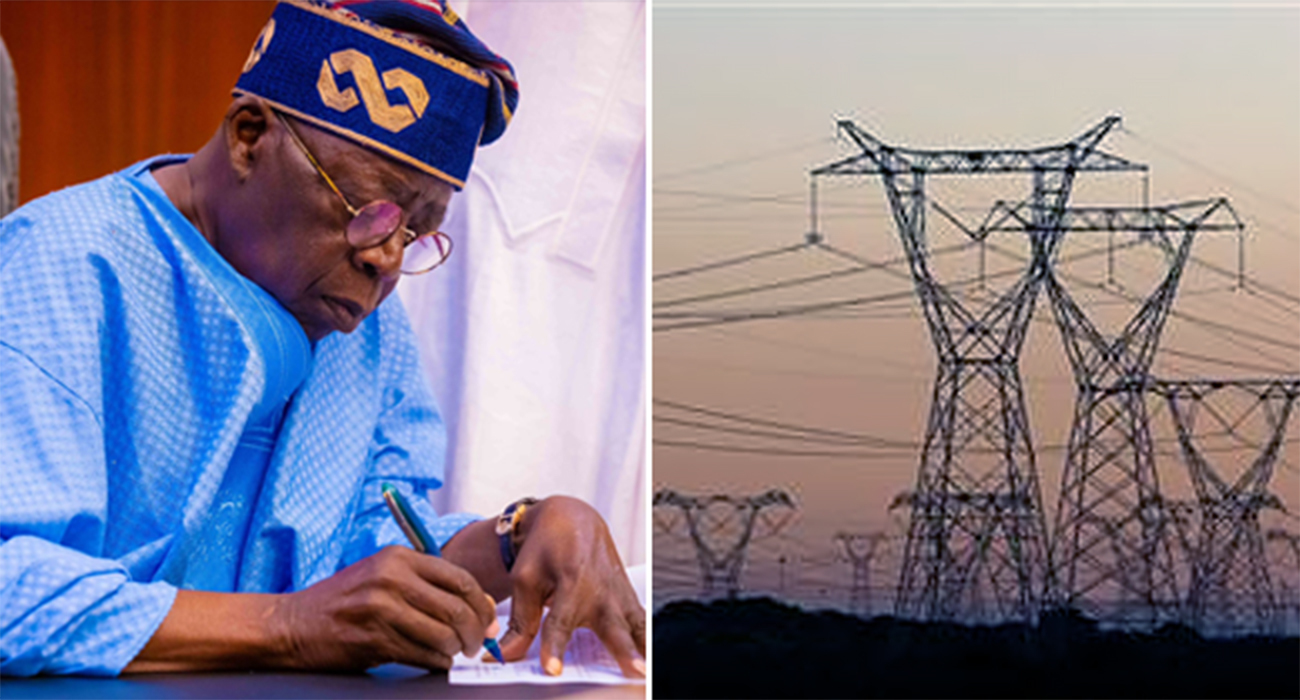
    A photo combo of Tinubu and power infrastructure

    The power crisis has renewed attention to President Tinubu’s campaign promise to address Nigeria’s electricity challenges.

    During his 2023 presidential campaign, Tinubu pledged to improve electricity supply and end estimated billing, telling members of the Organised Private Sector in Lagos that Nigerians should hold him accountable if he failed to deliver.

    “Whichever way, by all means necessary, you will have electricity, and you will not pay for estimated bills anymore. A promise made will be a promise kept. If I don’t keep the promise and I come for a second term, don’t vote for me, unless I give you adequate reasons why I couldn’t deliver,” he said. Channels

  • Peter Obi Accuses NFF Officials Of Stopping Him From Greeting Flamingos

    Peter Obi Accuses NFF Officials Of Stopping Him From Greeting Flamingos

    Precious Nwonu, Enugu

    The 2027 presidential candidate of the Nigeria Democratic Congress, Peter Obi, has accused officials of the Nigeria Football Federation (NFF) of preventing him from greeting members of the victorious Flamingos team at the Abuja airport.

    Obi made the allegation in a statement issued on Monday, titled “A New Dimension of Toxic Politics in Nigeria,” where he expressed concern over what he described as the increasing influence of political divisions in the country.

    According to the former Anambra State governor, he arrived at the Abuja airport around 7 am on Monday to catch a flight to Enugu when he sighted the Nigeria Under-17 women’s team returning from Morocco after winning the FIFA U-17 Women’s World Cup.

    He said he directed his Protocol Officer, Jackie Wayas, to seek permission for him to welcome and congratulate the players but was informed that NFF officials had rejected the request.

    “I was informed that officials of the Nigerian Football Federation had refused and had requested that I not approach,” Obi said.

    He added that the incident was not the first time he had allegedly been prevented from interacting with members of Nigeria’s national football team.

    Obi recalled a similar experience on March 25, 2025, during a World Cup qualifying match in Uyo, Akwa Ibom State.

    He said the state governor had welcomed him at the VIP stand before the match, but he was later prevented from greeting the players after the game.

    “Following the match, other government officials went to greet the players, but I was again prevented from doing so. I was told by the officials that they would lose their jobs if I proceeded,” he said.

    Describing the incidents as examples of what he called toxic politics, Obi lamented what he considered a worsening political atmosphere in Nigeria since 2025.

    He urged Nigerians to build a society where political differences would not lead to hostility, exclusion or discrimination.

    The former governor stressed the need for unity, mutual respect and shared humanity, regardless of political affiliations.

    The NFF had yet to publicly respond to Obi’s allegation as of the time of filing this report.

    The Flamingos returned to Abuja on Monday after defeating Japan 2-1 in Saturday’s final in Morocco to claim their first FIFA U-17 Women’s World Cup title.

    The victory also made Nigeria the first African country to win the competition.

  • Amupitan Tasks INEC Staff, Traditional Rulers on Credible 2027 Elections

    Amupitan Tasks INEC Staff, Traditional Rulers on Credible 2027 Elections

    Precious Nwonu, Enugu

    The Chairman of the Independent National Electoral Commission (INEC), Prof. Joash Amupitan, has called on commission staff and traditional rulers to support efforts towards conducting free, fair and credible general elections in 2027.

    Amupitan stressed that credible elections required adequate preparation, professional conduct, investment in technology and effective administrative processes long before election day.

    He made the call during an interactive meeting with INEC staff in the North-Central zone in Lokoja, Kogi State, as part of the commission’s nationwide assessment of its preparedness for the 2027 general elections.

    The INEC chairman explained that the engagement was necessary to evaluate the commission’s operational capacity and strengthen the readiness of personnel responsible for conducting elections across the country.

    He noted that the commission had recently conducted elections in Anambra, Ekiti and Osun states, as well as Federal Capital Territory council elections, without major challenges.

    According to him, electoral integrity must be built through consistent preparation and professional commitment rather than last-minute efforts.

    Amupitan said the Lokoja meeting marked the conclusion of the commission’s zonal readiness assessment, following similar engagements across the South-West, North-West, South-East, North-East and South-South regions.

    He added that the commission was particularly concerned about strengthening electoral operations across the 121 local government areas and six Area Councils within the North-Central zone and the Federal Capital Territory.

    The INEC chairman urged staff to recognise their responsibility in preserving democratic institutions and ensuring that future generations inherit a stronger electoral system.

    He also quoted American statesman Alexander Hamilton to emphasise that democratic integrity depended on consistent implementation rather than temporary enthusiasm.

    Earlier, Amupitan met with traditional rulers from the 21 local government areas of Kogi State, seeking their cooperation in promoting peaceful political activities before, during and after the 2027 elections.

    He explained that the meeting was organised to sensitise the monarchs on their responsibilities in supporting the electoral process and encouraging peaceful participation among their subjects.

    The INEC chairman appealed to traditional rulers to use their positions and influence to discourage inflammatory political campaigns, character assassination and aggressive conduct among political actors.

    He also urged them to prevent politicians from recruiting young people and other residents as agents of electoral violence or destruction.

    Amupitan maintained that the cooperation of traditional institutions and other stakeholders would be important to the commission’s efforts to deliver credible elections in 2027.

  • Otti Promises Irreversible Reforms as Abia Enters Next Development Phase

    Otti Promises Irreversible Reforms as Abia Enters Next Development Phase

    Precious Nwonu, Enugu

    Abia State Governor, Alex Otti, has said his administration will devote the next four and a half years to strengthening ongoing reforms and consolidating development achievements recorded since assuming office.

    Otti described the progress made in the state over the past three years as the beginning of his administration’s transformation agenda, insisting that more far-reaching changes were ahead.

    The governor spoke on Sunday at the South-East Conference of Dominion City Global, held in Aba, where he assured residents of his commitment to improving infrastructure and accelerating development across the state.

    He described the achievements recorded so far as a “dress rehearsal”, adding that the administration’s priority in its remaining years would be to establish reforms that would be difficult to reverse.

    According to him, the government is focused on implementing practical policies and projects rather than making promises that cannot be fulfilled.

    Otti also disclosed that his administration was working towards providing a stable electricity supply across Abia State as part of efforts to improve economic activities and the living conditions of residents.

    The governor reaffirmed his commitment to fairness and equal opportunities in public service, declaring that residents would not face discrimination based on their state of origin.

    He maintained that everyone living in Abia was regarded as an Abian and entitled to equal treatment, adding that appointments into government positions were determined by merit rather than religious affiliation or other considerations.

    Otti also urged Christians to demonstrate their faith through meaningful actions, emphasising that religious beliefs should be reflected in their conduct and contributions to society.

    Earlier, the President of Dominion City Church, Pastor David Ogbueli, praised the governor for what he described as purposeful leadership and commitment to transforming Abia State.

    Ogbueli described Otti as an answer to the prayers of the people, commending his administration’s projects and approach to governance.

    He encouraged the governor to sustain his development efforts, stressing that leaders who deliver positive results should be recognised and encouraged.

    The cleric further argued that societal progress depended on the willingness of citizens to condemn wrongdoing and appreciate good conduct.

    “If you want society to work, condemn what is bad and those that do it, praise what is good and those that do it,” he said.

    Ogbueli also observed that Abia was attracting increasing positive attention across the country, citing improvements in infrastructure, electricity and the business environment as indications of the state’s changing fortunes.

  • FG Seeks Fresh $500m World Bank Loan Ahead of May 2027 Presidential Inauguration

    FG Seeks Fresh $500m World Bank Loan Ahead of May 2027 Presidential Inauguration

    Precious Nwonu, Enugu

    The Federal Government is seeking a new $500 million loan from the World Bank to establish an infrastructure financing platform, with the proposed approval date set for May 25, 2027, four days before the inauguration of Nigeria’s next president.

    The proposed facility is part of a broader $3.85 billion infrastructure investment programme designed to attract private sector funding into critical areas of the Nigerian economy.

    According to the World Bank’s Initial Project Information Document, the initiative is known as the Nigeria Infrastructure Financing and De-Risking Platform for Growth and Jobs, also called INFRAGROW.

    The document, prepared and updated on November 4, 2026, listed the Federal Ministry of Finance as the borrower and the Nigeria Sovereign Investment Authority as the implementing agency.

    The bank has scheduled a technical design review of the project for January 21, 2027, while May 25, 2027, has been proposed as its approval date.

    The proposed timeline has attracted attention because Nigeria’s presidential inauguration is scheduled for May 29, 2027, meaning the loan could receive approval just days before President Bola Tinubu completes his current four-year tenure.

    However, the proposed financing has not received final approval, and the World Bank’s timetable remains subject to changes. Approval would also not automatically translate into immediate disbursement or commencement of the project.

    The World Bank identified Nigeria’s infrastructure financing deficit as a major obstacle to economic development, estimating the country’s annual funding gap at approximately $100 billion.

    It attributed the challenge not only to inadequate funding but also to poor project preparation and difficulties in developing commercially viable infrastructure investments.

    Under the proposed arrangement, the World Bank’s $500 million contribution would comprise $400 million from the International Bank for Reconstruction and Development and $100 million from the International Development Association.

    The wider $3.85 billion financing structure is expected to attract contributions from government, private investors, commercial lenders and international financial institutions.

    The Nigeria Sovereign Investment Authority is expected to invest $200 million in equity as a founding shareholder, while private investors are projected to contribute another $200 million.

    Commercial lenders are expected to provide $600 million, alongside additional financing and guarantee arrangements.

    The proposed structure also includes $100 million in payment guarantees from the International Development Association and $2.25 billion in guarantees from other international financial institutions.

    The platform will operate through four independently governed subsidiaries established to address different challenges affecting infrastructure investment.

    The first, known as the Project Preparation Facility, will support feasibility studies, risk assessments, transaction structuring and procurement processes to prepare infrastructure projects for investment.

    The second component, the Viability Gap Fund, will provide financial support to economically important projects that cannot generate enough revenue to attract private investors while maintaining affordable service charges.

    The World Bank explained that the fund would operate through an endowment arrangement, preserving its capital while using investment returns to finance projects requiring financial support.

    The third subsidiary, the Risk Capital Facility, will provide equity and long-term investment capital to projects that are commercially viable but face difficulties attracting investors because of their risk levels.

    The fourth, the Credit Guarantee Vehicle, will provide protection against specified credit defaults, failure of public institutions to meet payment obligations and political risks affecting eligible foreign investments.

    The bank said the arrangements were intended to encourage greater participation by commercial banks, pension funds, insurance companies and other institutional investors in Nigeria’s infrastructure sector.

    The project will also support reforms aimed at improving government institutions responsible for identifying, preparing, procuring and supervising public-private partnership projects.

    Its implementation will be divided into four major areas covering institutional development, project preparation, mobilisation of financing and improvements to the regulatory environment.

    The World Bank said the initiative would strengthen the capacity of relevant institutions through professional advisory services, staffing, operational infrastructure and other forms of technical support.

    It also identified the International Finance Corporation as a prospective co-investor, while the Multilateral Investment Guarantee Agency is expected to provide political risk insurance.

    Meanwhile, the proposed project has been classified as having high environmental and social risks because of the nature of infrastructure developments it could support, particularly in the energy, transport and water sectors.

    The bank warned that some of the projects could involve land acquisition, displacement of communities, environmental degradation, occupational hazards and other social concerns.

    It said appropriate safeguards would therefore be required to manage the potential environmental and social consequences of the proposed investments.

  • Enugu Pensioners Recount Past Ordeals as Mbah Pays 26-Year Gratuity Arrears

    Enugu Pensioners Recount Past Ordeals as Mbah Pays 26-Year Gratuity Arrears

    _…Pensioners hail governor as promise keeper_

    _…Mbah: No retiree should go to bed hungry_

    Enugu State pensioners under the auspices of the Nigeria Union of Pensioners (NUP) have hailed Governor Peter Mbah for keeping his campaign promise to clear legacy arrears, describing their decades of disappointment after serving their fatherland as a harrowing experience.

    The pensioners spoke as retirees started receiving their gratuities dating back to the year 2000, with some also extending to the military era, saying the development had restored life to their bodies.

    The Chairman, Enugu State chapter of NUP, Ikechukwu Ekere, confirmed the development at the weekend, describing it as “an emotional moment for pensioners, many of whom had long given up hope of receiving their gratuities in their lifetime.”

    “Yes, I can confirm to you that our members have started receiving the alerts. Governor Mbah is a promise keeper; he has done it again and we can’t thank him enough,” he said.

    In the same vein, the Caretaker Chairman of the Nigeria Union of Pensioners, Local Government Staff Pensions Board Branch, Kenneth Ugwueze, told journalists that the development had restored hope and joy in many homes, saying that Mbah had, once again, proven himself as a leader who could be trusted.

    “You know what it means for a governor to pay debts incurred by many governors before him? It takes a large quantity of milk of human kindness. We are happy to see a day like this in our lifetime. We will continue to pray for him.

    “We are also grateful and happy with the new dimensions brought in by our governor in pension administration, especially in the local government system.

    “Before now, local government workers and primary school teachers who retired had to wait for two years before receiving their pensions. But since the conclusion of the verification exercise in July 2024, no pensioner in the local government system has been denied pension. We have been receiving our pensions as and when due.

    “Now that our people have started receiving alerts for their gratuity, it is a thing of joy,” he said.

    Some beneficiaries of the ongoing payments also expressed gratitude to the governor, describing the development as a rekindling of hope after years and devades of waiting. They said previous governments had not paid them even in the days of excess crude revenues.

    Mr. Luke Obi Ezea, who retired in 2014, said he had since resigned himself to fate and put everything in the hands of God.

    “I put in 35 years in service. Already, I had put everything in the hands of God because previous governors had made promises, but to no avail. They were just empty promises at the end of their eight years. But Peter Mbah is an action governor and keeps his word,” he stated.

    Mr. Sunday Nwadi, a 2015 retiree, described Mbah as a godly and listening governor who does not play politics with the welfare of his people.

    “I am enjoying today because, apart from this gratuity, he is not owing monthly pensions. He is up to date. He is not like the others, who would owe us pensions for many months. Nothing will happen to Mbah. He is returning for a second term.”

    Susanna Emehelu, whose husband retired in 2013, said the man had been sick for a long time, and they had been hoping against hope that the gratuity would come to help ameliorate their challenges.

    “When I broke the good news to him, he was so happy and asked me to rush to the office to confirm. Now, he is so happy that he would eat the fruits of his labour in his lifetime. May God bless our governor,” she stated.

    Mr. Paul Ozoeze, a 2010 retiree, said the gratuity payment had restored life to his body, noting that it had been nearly 20 years of suffering for him.

    Meanwhile, the Accountant-General of Enugu State, Mr. Tony Okenwa, recalled that Mbah had always insisted during discussions leading up to the verification and payment of backlogs that no senior citizen should go to bed hungry.

    “These are old debts. Some of them date back even to the military era. But the governor has said that no retiree will stay without receiving his or her pension and gratuity, and he is very passionate about it.

    “Whenever I went to him, he would ask: ‘Do you mean that people retire and then don’t go home with their gratuity?’

    “He could not understand how somebody would work for many years, retire and still not receive what he had earned,” Okenwa said.

    He said the State Executive Council, after several layers of verification, approved N32bn, with the governor releasing an initial N10bn, assuring that the releases would continue until the entire liabilities were cleared.