Category: News

This is an optional category description

  • APC Removes Alwan Hassan As Campaign Spokesperson After Failed 112 Demonstration

    Precious Nwonu, Enugu

    APC Removes Alwan Hassan as Tinubu Campaign Spokesperson After Failed 112 Demonstration

    The All Progressives Congress (APC) Presidential Campaign Council has removed Alwan Hassan as one of its spokespersons following a controversial television appearance in which he failed to demonstrate the functionality of Nigeria’s 112 emergency number.

    The decision was announced on Wednesday in a statement signed by Femi Gbajabiamila, Chief of Staff to President Bola Tinubu and Deputy Director-General (Administration) of the campaign council.

    Under the new arrangement, only three officials are authorised to speak on behalf of the campaign. They are the council’s Director-General, Abdulaziz Yari; Minister of Solid Minerals, Dele Alake, who retains his position as official spokesperson; and Minister of Information and National Orientation, Mohammed Idris.

    Other previously appointed spokespersons have been relieved of their positions and moved to the Directorate of Media and Strategic Communications as ordinary members.

    Those affected include Hassan, Ayobami Oyalowo, Kemi Asekun-Shittu and Adamu Fanda.

    Hassan’s removal followed his appearance on Channels Television’s *Politics Today* on Tuesday night, where he was discussing the achievements of the Tinubu administration.

    During the interview, he identified the 112 emergency number as one of the government’s major achievements, saying Nigerians could use it to request assistance during medical emergencies, security threats, road accidents and other distress situations.

    He compared the number to the 911 emergency line used in the United States and challenged the programme’s presenter to test it live.

    “Take your phone and call 112. Nobody knows about this. We used to hear it in America, 911. Call 112 now, put it on the speaker, and they’ll ask you what’s your emergency,” Hassan said.

    However, the demonstration did not go as expected, as the calls failed repeatedly when the presenter attempted to reach the emergency service.

    The incident came weeks after Hassan attracted attention during another television interview when he alleged that some ministers paid billions of naira to secure appointments in the Tinubu administration.

  • ESMCL, FAAN Explore Partnership on Cargo Operations at Enugu Airport

    ESMCL, FAAN Explore Partnership on Cargo Operations at Enugu Airport

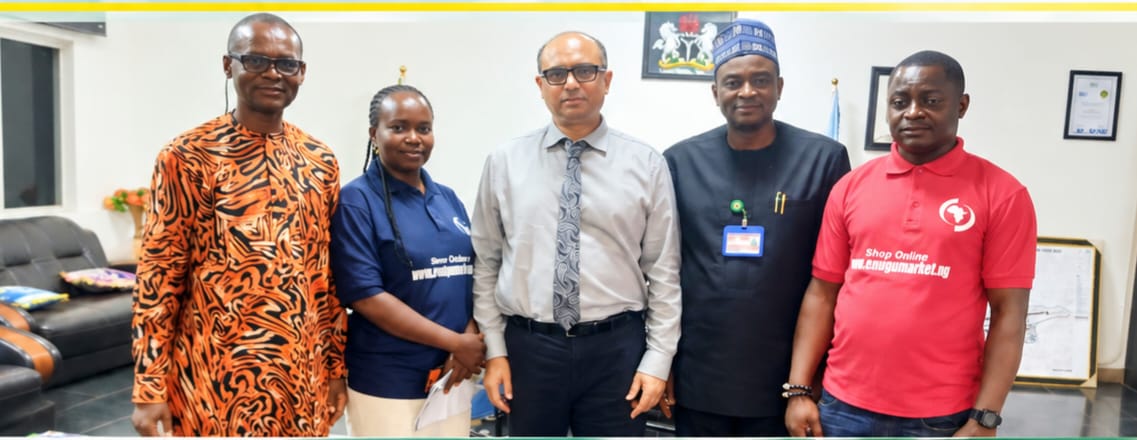
    The Enugu State Marketing Company Limited (ESMCL) has moved to expand its operations into the air cargo and logistics sector following a strategic engagement with the Federal Airports Authority of Nigeria (FAAN) to explore areas of institutional collaboration.

    The engagement, which took place on Tuesday, November 10, 2026, saw the Head of Administration of ESMCL, Aneke Martins Obinna, lead members of the company’s management team on a visit to the Managing Director of FAAN.

    A major outcome of the meeting was a proposed partnership that would enable ESMC to commence cargo clearing and processing operations at the Akanu Ibiam International Airport, Enugu.

    The initiative is expected to leverage the company’s relevant licence and operational capacity to position it as a reliable provider of cargo clearing and logistics services.

    The proposed arrangement is aimed at making cargo clearance more accessible and efficient for individuals, businesses, importers and exporters operating within Enugu State and beyond.

    If implemented, the partnership would expand the company’s operational reach while providing businesses in the South-East with greater access to cargo clearing services through the Enugu airport.

    It is also expected to create opportunities for ESMCL to support trade, commerce and broader economic activities across the region and the country, covering both air and sea freight.

    The development forms part of the company’s drive to strengthen its role in providing marketing, trade and logistics solutions while contributing to the economic growth of Enugu State.

    Analysts observe that the proposed collaboration with FAAN represents a significant step towards expanding the company’s service portfolio and strengthening its capacity to facilitate commercial activities.

    Through the initiative, ESMCL seeks to position itself as an accessible, reliable and professional partner for businesses and individuals requiring cargo clearing and logistics support.

  • Falana Urges INEC to Prosecute Electoral Offenders, Calls for Nigeria’s BRICS Membership

    Falana Urges INEC to Prosecute Electoral Offenders, Calls for Nigeria’s BRICS Membership

    Precious Nwonu, Enugu

    Human rights lawyer and Senior Advocate of Nigeria, Femi Falana, has called for stricter enforcement of electoral laws, prosecution of offenders and accountability for political actors to curb violence ahead of the 2027 general elections.

    He also urged the Federal Government to pursue full membership of the BRICS bloc and adopt alternative economic policies, declaring that Nigeria had no business remaining in poverty.

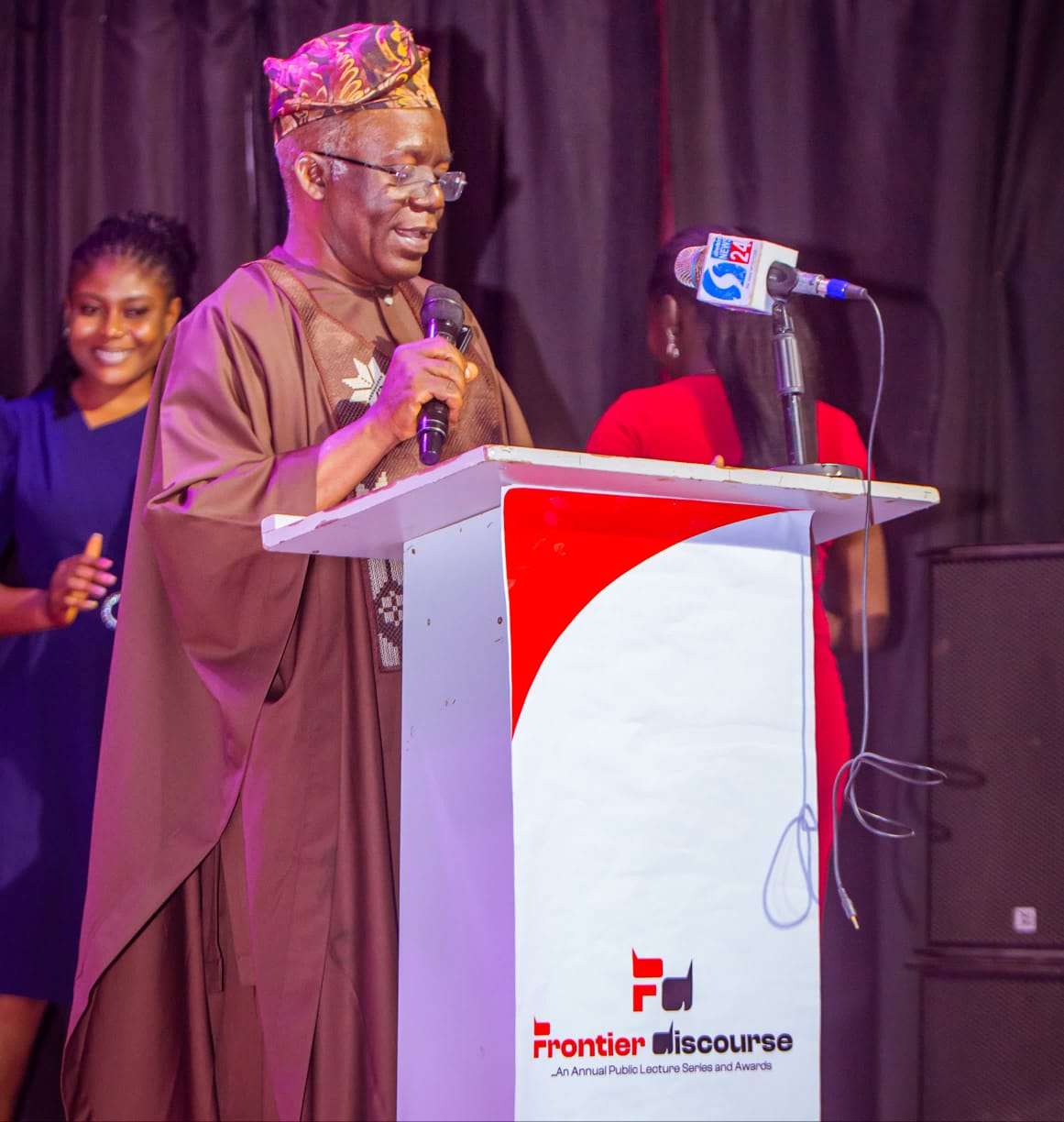
    Falana made the calls on Tuesday while delivering the keynote address at the sixth edition of the Frontier Discourse Annual Public Lecture Series and Awards, organised by Pacesetter Frontier Magazine at Merit House, Maitama, Abuja. He also received the Frontier Person Award at the event.

    The lecture, themed, “Barrel to Ballot: The Naturalisation of Violence, Nigeria’s Polity, and its Democratic Circus,” brought together stakeholders who expressed concern over political thuggery, restrictions on opposition campaigns, unemployment, insecurity and the failure to enforce laws protecting citizens.

    Speaking on electoral accountability, Falana urged the Independent National Electoral Commission (INEC) to establish a dedicated prosecution unit to investigate and prosecute electoral offenders.

    He said the commission should obtain reports from the police and other security agencies, investigate alleged violations and take those found culpable to court.

    Falana argued that the Electoral Act placed the responsibility for prosecuting electoral offenders on INEC, stressing that the commission should not leave the task entirely to the police and other security agencies.

    “I am suggesting that INEC should have a prosecution unit with a view to getting reports from the police and other security agencies about electoral offences and then take them to court,” he said.

    The senior advocate also faulted the National Assembly for failing to implement the recommendation for the establishment of an Electoral Offences Commission, alleging that politicians were deliberately allowing political thuggery to continue because of its usefulness to their interests.

    “The politicians in Abuja, members of the National Assembly have refused, deliberately so, to implement the recommendation that there shall be in the country an electoral offences commission.

    “Politicians do not want to distort the status quo. So they want us to continue to live with thuggery because the thugs are agents of politicians from all the political spectrum,” he said.

    Falana warned against portraying political violence as the exclusive preserve of any political party, noting that supporters of both the ruling party and opposition parties had been involved in attacks and other acts of violence.

    He alleged that opposition parties had been prevented from erecting campaign billboards in some states, while supporters of different political parties had engaged in vandalism and attacks against their opponents.

    He insisted that no political party should claim innocence or justify violence against its opponents, maintaining that all political actors must be held accountable for their actions.

    The lawyer also criticised state governments for allegedly imposing excessive charges on campaign billboards, saying some had introduced guidelines capable of limiting opposition parties’ access to campaign platforms.

    “In some states or many states in the country, state governments have brought out obnoxious electoral guidelines. If you want to erect your billboard, you must pay a fee of about N150m to N200m depending on which position you are contesting for.

    “I have submitted here that no state government has the power under the law to monetise campaign,” he said.

    Falana maintained that INEC was constitutionally empowered to issue guidelines for national elections and monitor political campaigns. He argued that state governments and other authorities should not introduce measures that restrict political participation.

    He called on the electoral commission to intervene and ensure that political parties and state governments withdrew actions capable of interfering with the electoral process.

    Citing the case of Balarabe Musa v. INEC, he argued that electoral guidelines must conform with the Constitution and should not be used to restrict the civic space.

    On the responsibilities of political parties, Falana said the Constitution required them to adopt and implement the fundamental objectives and directive principles of state policy, including provisions relating to education, healthcare and citizens’ welfare.

    Although Chapter Two of the Constitution is generally regarded as non-justiciable, he noted that some of its provisions had been given legal force through specific legislation.

    Citing the Child Rights Act, he said state governments had enacted laws providing for free and compulsory education from primary to secondary school, but poor implementation had left millions of children without access to education.

    He also identified the National Health Insurance Act and the Pension Reform Act as examples of legislation giving practical effect to citizens’ social and economic rights.

    Falana urged young Nigerians to hold political office seekers accountable by questioning their records on employment, security, social protection and education rather than allowing themselves to be recruited for electoral violence.

    He said political campaigns should provide opportunities for citizens to demand clear explanations from candidates on how they planned to address the needs of young people and vulnerable groups.

    He further argued that unemployed Nigerians should be able to approach relevant government institutions, including local government offices and the National Directorate of Employment, for assistance in line with constitutional provisions.

    On social protection, the senior advocate maintained that cash transfers to poor and vulnerable Nigerians should be treated as an obligation rather than merely a government policy.

    Falana Calls for BRICS Membership, Alternative Economic Policies

    Turning to the economy, Falana called on the Federal Government to pursue full membership of the BRICS bloc and adopt alternative economic programmes to address poverty, unemployment and revenue leakages.

    He noted that Nigeria became a BRICS partner country in January 2025 but urged the government to take its participation further by seeking full membership.

    According to him, BRICS provides an opportunity for participating countries to challenge the dominance of the United States dollar and deepen trade and economic cooperation using their national currencies.

    “It’s an organisation set up to challenge the dominance of the dollar, to challenge the West, to mould the full-fledged members so that we can take advantage and trade among ourselves in your own currencies,” he said.

    The lawyer also questioned the abandonment of the Nigeria-China currency swap arrangement, arguing that the country should explore opportunities to strengthen trade and economic relations.

    He identified domestic refining of crude oil as another priority, saying Nigeria could derive greater economic benefits from processing its natural resources locally instead of depending heavily on imported petroleum products.

    “Even within the bourgeois paradigm, within the bourgeois framework, consider some of them, including refining crude oil for domestic consumption in Nigeria,” he said.

    Falana also criticised the economic policies promoted by international financial institutions, particularly the International Monetary Fund (IMF) and the World Bank, arguing that their prescriptions had failed to deliver the desired development outcomes for developing countries.

    “No country in the world, none, has ever been developed by implementing the policies of these Bretton Woods institutions that were set up to underdevelop the economies of third world countries,” he said.

    On revenue losses, he referred to a 2021 government report on cargo tracking, which he said indicated that Nigeria lost $32bn during the 13 years the system was suspended.

    He estimated that the country lost an additional $10bn between 2021 and 2025, arguing that cargo tracking and other revenue-monitoring mechanisms could help address financial leakages.

    Falana questioned the country’s continued reliance on policies promoted by international financial institutions and called for economic programmes that would prioritise local production, self-reliance and improved living conditions.

    He maintained that Nigeria could achieve prosperity within a capitalist economic framework if government policies were designed to benefit the wider population rather than a few individuals.

    “I’m not campaigning here for the socialist reconstruction of Nigeria. That will be done elsewhere. But within your own capitalist ethos, you can run this economy in a way that will be beneficial to the entirety of the Nigerian people,” he said.

    He added that the implementation of neoliberal economic policies could undermine efforts to achieve widespread prosperity.

    “There can be no prosperity when you implement neoliberal policies,” he said.

    Falana declared that Nigeria had no business remaining in poverty and urged the government to reconsider its economic direction, strengthen local production and manage national resources more effectively.

    He concluded by calling on young Nigerians to exercise their sovereign power through the ballot rather than engage in activities capable of undermining the country.

    He urged them to participate actively in the 2027 general elections and vote for candidates of their choice at the federal, state and local government levels.

  • ADC Accuses APC Of Vote Buying, Repackaging Tinubu’s 2023 Campaign Promises

    ADC Accuses APC Of Vote Buying, Repackaging Tinubu’s 2023 Campaign Promises

    Precious Nwonu, Enugu

    The African Democratic Congress has criticised the All Progressives Congress over alleged cash and gift distributions at political events, accusing the ruling party of attempting to buy public support ahead of the 2027 general elections.

    The opposition party also faulted President Bola Tinubu’s administration for allegedly repeating unfulfilled campaign pledges from 2023 in its newly unveiled 2027–2031 manifesto.

    The ADC Presidential Campaign Council made the allegations in two separate statements issued by its Director of Strategic Communication, Phrank Shaibu, and Director of Media and Publicity, Kola Ologbondiyan.

    In its first statement, the council accused APC supporters and political groups of distributing money, food and other gifts at political gatherings to create an impression of widespread support for Tinubu.

    It cited reports of luxury vehicles allegedly given to APC women leaders, cash and cooked food reportedly distributed through the City Boy Movement by the President’s son, as well as videos purportedly showing an APC women leader sharing money and fabrics at a gathering.

    The ADC called on the Economic and Financial Crimes Commission and the Independent National Electoral Commission to investigate the reported incidents and determine whether any electoral or currency laws had been violated.

    It questioned why ordinary Nigerians had faced enforcement action over alleged abuse of the naira while similar concerns surrounding cash distributions at political events appeared to receive different treatment.

    The council argued that political support should not be secured through financial inducements, warning that money and material gifts must not be used to influence voters or undermine credible elections.

    It further accused the Tinubu administration of failing to address rising poverty, insecurity and public debt, arguing that political handouts could not compensate for the economic difficulties confronting Nigerians.

    On the APC manifesto, the ADC described the document as a repetition of promises made by Tinubu during the 2023 presidential campaign.

    It listed affordable food, stable electricity, a stronger naira, employment opportunities for young people and improved security among the commitments it said the President had yet to fulfil.

    According to the opposition council, Nigerians have instead experienced rising food prices, currency depreciation, insecurity and worsening economic hardship since Tinubu assumed office in May 2023.

    The ADC also questioned the government’s management of public finances, demanding explanations on how funds generated through the removal of petrol subsidy, tax policies and increased borrowing had been used to improve infrastructure and citizens’ living conditions.

    It maintained that the administration’s economic reforms had placed considerable pressure on ordinary Nigerians without providing adequate social protection or corresponding relief.

    The council also questioned the government’s borrowing strategy and called for greater transparency over the utilisation of loans and the country’s growing debt obligations.

    It further referred to comments reportedly made by the President’s Chief of Staff, Femi Gbajabiamila, concerning the challenges associated with the administration’s economic reforms, saying they reinforced its criticism of the government’s policies.

    The ADC argued that unveiling a new manifesto at a political event in Jigawa State could not replace measurable achievements in governance.

    It urged Nigerians to reject the APC’s proposals and support the ADC, which it presented as an alternative focused on economic stability, security, accountability and improved living conditions.

    The opposition party said the 2027 general election would give voters an opportunity to assess the Tinubu administration’s performance, particularly on the economy, security, employment and public welfare.

  • 2027 Elections: IG Cancels Police Leave, Orders Crackdown On Bandits

    2027 Elections: IG Cancels Police Leave, Orders Crackdown On Bandits

    Precious Nwonu, Enugu

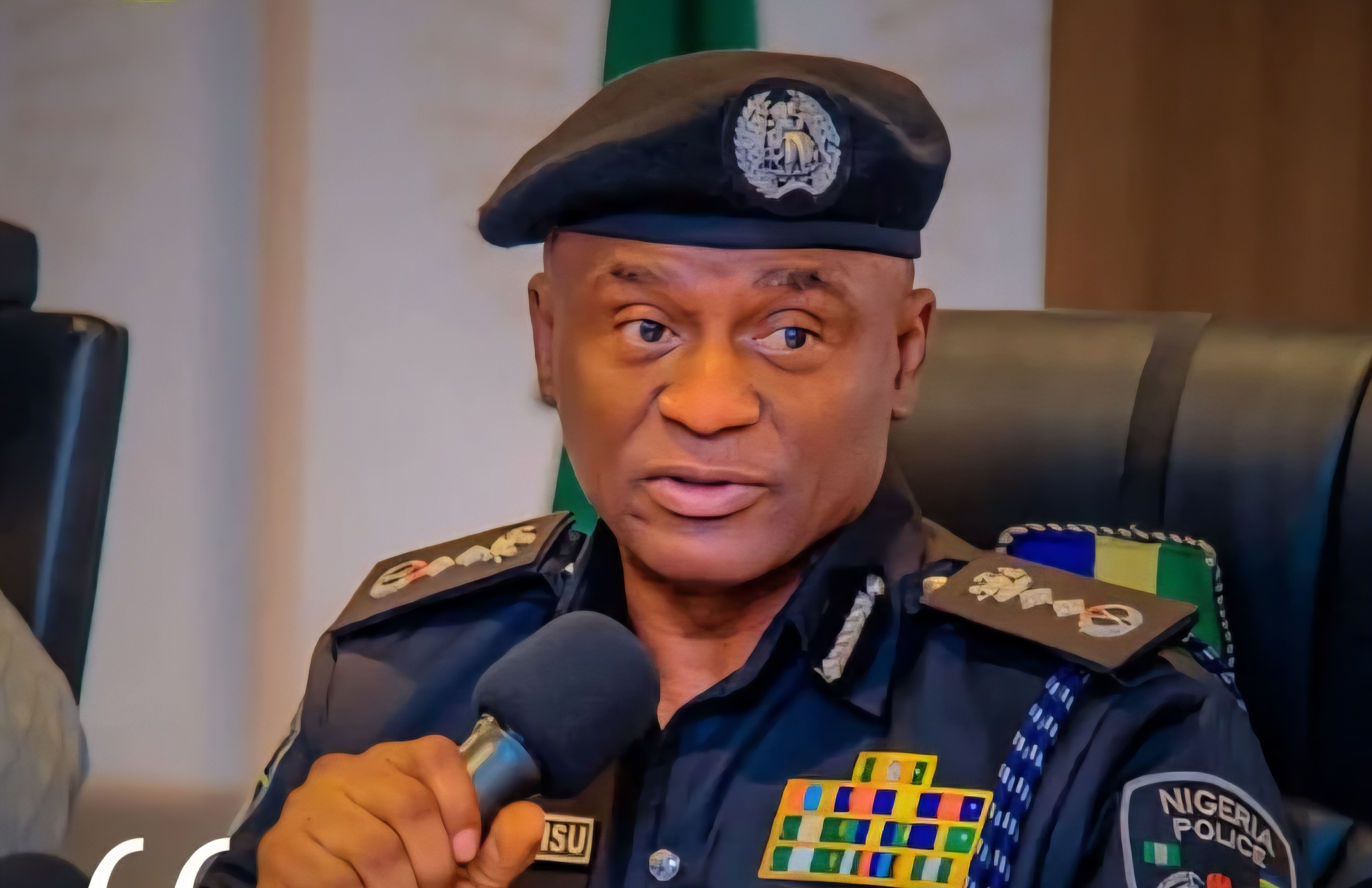
    The Inspector-General of Police, Olatunji Disu, has cancelled leave for police officers assigned to election security duties ahead of the 2027 general elections and ordered a nationwide intensification of operations against bandits.

    Disu also directed the deployment of additional personnel, operational vehicles and air support to communities facing bandit attacks, while giving Commissioners of Police in affected states 72 hours to submit updated security assessments.

    The police chief announced the directives on Wednesday during the monthly conference with senior strategic officers of the Nigeria Police Force in Abuja.

    Acknowledging the continued attacks in some parts of the country, Disu said the Force would strengthen intelligence gathering and work more closely with local communities to address the security challenges.

    He instructed the Deputy Inspector-General of Police in charge of Operations to coordinate the deployment of additional resources to affected areas in consultation with state commands.

    The IGP also directed Commissioners of Police to develop operational plans for high-risk locations and improve intelligence gathering through traditional rulers, community leaders, hunters’ associations and local vigilante groups.

    On preparations for the 2027 elections, Disu ordered all officers assigned to election security duties to suspend their leave immediately.

    He further directed Commissioners of Police and other senior officers to remain in their respective commands until the electoral process is concluded. Any movement outside their areas of responsibility must receive approval from Force Headquarters.

    The police chief also instructed state commands to inspect their election security equipment, communication facilities, vehicles and protective gear, with reports expected before the end of the week.

    He directed police formations to establish direct coordination with the Independent National Electoral Commission, the military, the Department of State Services and the Nigeria Security and Civil Defence Corps.

    Disu warned officers against allowing politicians to influence their conduct or using police authority to undermine the electoral process.

    He stressed that the police would remain neutral and protect all candidates, political parties, supporters and voters, regardless of their political affiliations.

    The IGP threatened disciplinary action against any officer found assisting political thugs, compromising election security or interfering with voters’ rights.

    Meanwhile, Disu disclosed that the police had arrested 218 suspects over alleged banditry and terrorism, 85 suspected armed robbers, 129 murder and culpable homicide suspects, 59 suspected kidnappers and 120 suspected cultists since the last strategic officers’ conference.

    He added that the Force rescued 95 kidnapped victims, recovered 306 firearms, 630 rounds of ammunition and 116 stolen vehicles within the period.

    The police chief also directed Commissioners of Police to ensure that outstanding death benefits and entitlements owed to families of officers killed in the line of duty were paid without further delay.

    He ordered a welfare audit across police commands to identify unpaid entitlements, accommodation shortages and other pressing needs. The reports are expected to reach his office within 30 days.

    Disu urged senior officers to strengthen discipline, supervision and operational efficiency, warning against corruption, extortion, abuse of authority and unlawful use of force.

  • FCCPC Warns Fuel Marketers of Sanctions Over High Pump Prices Despite Falling Crude Costs

    The FCCPC says falling crude oil prices should lead to cheaper petrol and diesel for Nigerian consumers without undue delay.

    The Federal Competition and Consumer Protection Commission (FCCPC), on Tuesday put petroleum refiners and marketers on notice over the continued decline in international crude oil prices.

    The commission warned that it would not tolerate anti-competitive practices that prevent Nigerians from benefiting from lower production and supply costs.

    The commission said the retreat in crude prices from a September peak of $115 per barrel to below $90 this week should begin to translate into cheaper petrol and diesel, insisting that sustained reductions in input costs would make it increasingly difficult for operators to justify maintaining elevated pump prices.

    Speaking against the backdrop of public enquiries over the failure of domestic pump prices to reflect movements in the international oil market, FCCPC Executive Vice Chairman/ Chief Executive, Mr. Tunji Bello, said the commission was closely monitoring crude price movements and their implications for domestic petroleum product pricing.

    Bello maintained that if the decline in crude prices persisted, refiners and marketers would have little justification for keeping petrol and diesel prices at current levels.

    He said, “If the decline in crude prices is sustained, there is no justification for refiners and marketers to continue to keep petrol and diesel prices relatively high. We expect easing in wholesale petrol costs and for the resulting savings to reach consumers at the pump without undue delay.”

    The mive comes amid mounting pressure on households and businesses over the cost of energy, with petrol prices still averaging between N1,405 and N1,420 per litre in Abuja and N1,325 and N1,370 in Lagos.

    The commission’s intervention raises fresh questions over the extent to which international crude price movements are being transmitted to domestic fuel prices, particularly as consumers continue to bear the burden of elevated transportation, production and distribution costs.

    Figures released by the FCCPC showed the sharp divergence between current pump prices and those prevailing before the outbreak of the US-Israel-Iran conflict in February.

    According to the commission, Brent crude futures closed at $72.48 per barrel on February 27, the day before the conflict began, while petrol sold for between N839 and N925 per litre in Lagos and Abuja.

    Since then, escalating geopolitical tensions in the Middle East, particularly the blockade of the Strait of Hormuz, have been cited by petroleum marketers as major drivers of international oil market volatility and rising domestic fuel prices.

    The strategic waterway accounts for at least 25 per cent of global oil traffic, making disruptions to shipping and supply routes a major source of uncertainty for international crude and petroleum product markets.

    However, with Brent prices now retreating below $90 per barrel, the FCCPC is increasingly concerned that consumers may not receive corresponding relief if refiners and marketers fail to adjust their pricing structures.

    Bello said the commission would strengthen collaboration with the Nigerian Midstream and Downstream Petroleum Regulatory Authority (NMDPRA) and other relevant government agencies to track developments in both wholesale and retail petroleum markets.

    In a statement by Director of Corporate Affairs, FCCPC, Ondaje Ijagwu, Bello warned that the commission would invoke its statutory powers where evidence emerges that operators were deliberately frustrating price adjustments through anti-competitive conduct or unfair market practices.

    Bello said, “We are aware of the difficulties high pump prices have caused Nigerians for some time now. Let me reassure that the Commission will continue to work with the Nigerian Midstream and Downstream Petroleum Regulatory Authority and other relevant government agencies to track wholesale and retail petrol prices.

    “Where there is evidence of anti-competitive conduct or unfair practices that prevent consumers from benefiting from lower costs, we will take appropriate action within our mandate.”

    While a fall in crude prices does not automatically translate into an immediate reduction in pump prices, particularly where refiners and marketers are still selling products acquired at higher costs, the FCCPC’s intervention signals that the commission expects operators to demonstrate how changing market conditions are reflected in their pricing decisions.

    The commission’s position places renewed attention on pricing behaviour across the downstream petroleum market, where the relationship between crude oil costs, refining expenses, exchange rates, logistics, product inventories and retail prices remains critical to determining the final cost borne by consumers. Arise News

  • INEC Asks Court to Void Subpoena for Tinubu’s 1999 and 2023 Election Records in Sowore Trial


    INEC seeks to quash subpoena demanding Tinubu’s 1999 and 2023 election records in Omoyele Sowore’s ongoing cyberbullying trial.

    Nigeria’s electoral body, the Independent National Electoral Commission (INEC), has asked a Federal High Court in Abuja to set aside a subpoena compelling it to produce documents relating to President Bola Tinubu’s 1999 Lagos State governorship election and 2023 presidential election.

    INEC Chairman, Professor Joash Amupitan, SAN, filed the application seeking to nullify the subpoena issued on October 26 in the ongoing cyberbullying trial of African Action Congress (AAC) presidential candidate, Omoyele Sowore.

    In the application filed through his counsel, Alex Izinyon, SAN, Amupitan is asking the court to declare the subpoena “void, unenforceable and contradictory.”

    The application argues that the subpoena was not personally served on the INEC chairman as required by law. It also maintains that the documents being requested are either incorrectly described or do not exist in the specified form.

    INEC’s lawyers further contend that the subpoena is irrelevant to the criminal proceedings against Sowore and was issued in “bad faith.”

    One of the grounds of the application states, “The subpoena Duces Tecum dated 6/11/2026 as constituted is void ab initio, ungrantable, inconsistent and contradictory.”

    The documents Sowore wants INEC to produce are “INEC Form CF01 (inclusive of the ‘AFFIDAVIT IN RESPECT OF LOST CERTIFICATES’) of candidate Bola Ahmed Tinubu as candidate for Lagos State Governorship in the Year 1999; and INEC Form CF01 of His Excellency, President Bola Ahmed Tinubu as candidate for the 2023 Presidential election.”

    However, the INEC chairman argues that the electoral commission does not have the requested documents in its custody.

    “There is no form known as INEC CF01 for the Lagos State Governorship Election 1999 and INEC Form CF01 for the 2023 Presidential Election as such form as described are unknown and are not in the custody of the Applicant,” the application states.

    In an affidavit supporting the motion on notice, INEC describes the subpoena seeking the documents as “bad faith, irrelevant, fishy and speculative.”

    The commission’s legal team also argues that the subpoena was intended to embarrass the electoral body and that the requested documents have no direct bearing on the allegations against Sowore.

    The affidavit further notes that “there is a criminal prosecution between the Federal Republic of Nigeria as the Complainant and Omoyele Sowore as Defendant.”

    It adds that “the Applicant (INEC Chairman) is not a party to the criminal prosecutions.”

    Meanwhile, Justice Mohammed Umar has fixed November 17 for the continuation of Sowore’s cyberbullying trial.

    Wednesday’s proceedings at the Federal High Court in Abuja stalled following the judge’s absence due to a cold.

    Apart from the INEC chairman, the court had on Monday granted an application by Sowore’s defence team for a subpoena compelling All Progressives Congress (APC) chieftain, Joe Igbokwe, to appear as a defence witness.

    The defence intends to cross-examine Igbokwe over his public statements and reactions following Sowore’s social media posts in which he referred to President Tinubu as a criminal. Arise News

  • Court Rejects ADC Resignation Letter Attributed To Nafiu Bala

    ADC factional national chairman, Nafiu Bala

    The Federal High Court in Abuja has ruled that a resignation letter allegedly signed by former African Democratic Congress Deputy National Chairman, Nafiu Bala, was not authentic and cannot be used as evidence that he voluntarily left the position.

    Justice Peter Lifu gave the ruling in his judgment delivered on Thursday, November 5, after examining the disputed document alongside other signatures attributed to Bala.

    The judgment, a Certified True Copy of which was obtained on Wednesday, stated that the signature on the purported resignation letter differed materially from those on Bala’s sworn witness statements.

    The judge explained that although a document may be certified as a true copy of the version held by an official authority, such certification does not automatically establish that a disputed signature is genuine.

    He added that courts could compare disputed signatures with established specimens without necessarily requiring expert testimony in every case.

    After comparing the signatures, Justice Lifu rejected the letter, identified as Exhibit ADC-1, as reliable evidence of Bala’s resignation.

    The dispute is connected to the leadership crisis in the ADC, particularly the emergence of the faction led by former Senate President David Mark as the party’s leadership.

    Bala had approached the court in September 2025, challenging the process that produced Mark as national chairman and Rauf Aregbesola as national secretary.

    The Mark-led faction had argued that Bala resigned from his position on May 17, 2025, and that the development was communicated to the Independent National Electoral Commission.

    However, Bala denied writing the letter, insisting that both the document and the signature attributed to him were forged.

    In April 2026, he publicly disowned the resignation letter, maintaining that it did not originate from him.

    The court’s decision undermines a key piece of evidence relied upon by the Mark-led faction to support its position that Bala had relinquished his office before the party’s leadership transition.

    Justice Lifu also ruled that the emergence of Mark and Aregbesola at the party’s 99th National Executive Committee meeting on July 27, 2025, had not been demonstrated to comply with the mandatory requirement for democratic election under Section 82(3) of the Electoral Act 2022.

    He maintained that neither the powers of the party’s National Executive Committee nor the subsequent recognition of the leadership arrangement by INEC could replace compliance with the law.

    The judgment has deepened the ADC’s internal leadership dispute, with the Mark-led faction rejecting the decision and indicating plans to appeal.

    The legal uncertainty also poses further challenges to the party’s preparations for the 2027 general elections, particularly following the nullification of former Vice-President Atiku Abubakar’s nomination as its presidential candidate.

  • Tinubu Awards Flamingos Players ₦100m Each For World Cup Triumph

    Flamingos

    Precious Nwonu, Enugu

    President Bola Tinubu has announced a ₦100m reward for each player of Nigeria’s U-17 women’s football team, the Flamingos, following their historic victory at the 2026 FIFA U-17 Women’s World Cup.

    The reward, presented in the form of savings certificates, was announced by First Lady Oluremi Tinubu at a reception held in honour of the team at the Presidential Banquet Hall in Abuja.

    The First Lady, who represented the President at the event, said the team’s head coach would receive ₦100m in cash, while each member of the technical crew would be given ₦50m.

    She praised the players for their determination and achievement, noting that they won six consecutive matches after losing their opening game. She also commended their discipline, humility and conduct after the final.

    According to her, the victory would encourage young girls across the country to pursue their ambitions and believe in their ability to succeed on the international stage.

    She also acknowledged the contributions of the coaching crew, medical and technical staff, administrators, parents and supporters.

    The Flamingos secured Nigeria’s first-ever FIFA U-17 Women’s World Cup title after defeating Japan 2-1 in the final on November 7. Goals from Awawu Bashiru and Oluebube Umejiaku sealed the historic win.

    Although Nigeria began the competition with a 2-1 defeat to Poland, the team recovered to defeat defending champions North Korea, Puerto Rico and Mexico.

    They booked their first-ever place in the final with a 3-1 victory over Brazil before overcoming Japan to claim the trophy.

    President Tinubu had earlier congratulated the players, describing their achievement as a landmark moment for Nigeria and African women’s football.

    In a statement issued by his spokesperson, Bayo Onanuga, the President said he received news of the victory after returning from campaign engagements in Akwa Ibom and Rivers states.

    The Senate had also pledged ₦100m to reward the team. The commitment followed a motion moved by the Chairman of its Committee on Sports, Senator Abdul Ningi, who praised the players and commended the Nigeria Football Federation for its contribution to their success.

    The Flamingos’ achievement adds to Nigeria’s recent successes in women’s sports, including the Super Falcons’ 10th Women’s Africa Cup of Nations title in 2025 and D’Tigress’ victory at the 2025 FIBA Women’s AfroBasket tournament.

  • INEC Flags Staff In 10 States Over AI-Generated Voter Photos

    INEC Flags Staff In 10 States Over AI-Generated Voter Photos

    The Independent National Electoral Commission has removed artificial intelligence-generated images discovered on the national voters’ register and identified officials in 10 states for disciplinary action over their involvement.

    INEC National Commissioner and Chairman of its Information and Voter Education Committee, Mohammed Haruna, disclosed this on Wednesday during a webinar organised by the PUNCH Media Foundation.

    The webinar was titled, ‘AI, Misinformation and Nigeria’s 2027 Elections: Safeguarding the Truth, Protecting the Vote’.

    Haruna described the use of AI-generated photographs in the voters’ register as a serious challenge, noting that the commission had already taken down images identified as manipulated.

    He explained that while INEC might find it difficult to prevent members of the public from altering their photographs before uploading them, it had greater control over violations involving its employees.

    The commissioner said officials found to have engaged in the practice had been flagged, with their identities established across about 10 states.

    “We have their names across about 10 states, and obviously, they are going to face disciplinary action,” he stated.

    Haruna also disclosed that INEC was developing a policy to guide the use of artificial intelligence in the electoral process ahead of the 2027 general elections.

    He acknowledged that regulating the technology remained challenging because its applications and potential risks were constantly evolving, even in technologically advanced countries.

    According to him, the commission has outlined its proposed approach to AI and is working to finalise the policy, which would subsequently be made available to the public through the media.

  • FG Strengthens Over 200 Dams To Prevent Disasters, Boost Power Supply

    FG Strengthens Over 200 Dams To Prevent Disasters, Boost Power Supply

    Precious Nwonu, Enugu

    The Federal Government has intensified efforts to improve the safety and management of more than 200 large dams across Nigeria to prevent disasters, strengthen water security and increase hydropower generation.

    The Minister of Water Resources and Sanitation, Prof. Joseph Terlumun Utsev, disclosed this at the 2026 National Conference and Annual General Meeting of the Nigerian Committee on Large Dams (NICOLD) in Abuja.

    Utsev, represented by the Director overseeing the Office of the Permanent Secretary, Engr. Ali Ibrahim Dallah, described dams as vital national infrastructure supporting agriculture, electricity generation, flood control and economic development.

    The conference, themed “Sustainable Dams for Water, Energy and Climate Resilience”, examined measures to protect the country’s dam infrastructure from environmental and climate-related threats.

    The minister identified the World Bank-supported Sustainable Power and Irrigation for Nigeria (SPIN) Project as a major government intervention aimed at improving dam safety, upgrading irrigation facilities and expanding the country’s hydropower capacity.

    He called for routine inspections, preventive maintenance and the adoption of climate-resilient engineering practices to reduce the risks associated with dam operations.

    Utsev also stressed the importance of strengthening flood forecasting through the Nigeria Hydrological Services Agency to improve preparedness and protect communities.

    He urged participants to translate discussions at the conference into practical recommendations that would support effective and sustainable dam management.

    Also speaking, the Permanent Secretary of the ministry, Engr. Ali Ibrahim Dallah, represented by the Director II in the Department of Dams and Reservoirs, Stella Arachie, reaffirmed the government’s commitment to improving institutional capacity and ensuring the safety of dams nationwide.

    He praised NICOLD for promoting professional development, technical knowledge sharing and the adoption of international standards, while assuring the committee of continued collaboration with the ministry.

    Earlier, NICOLD President, Engr. Johnson Adewumi, advocated greater private-sector investment and the use of modern technology to tackle challenges posed by climate change, flooding and drought.

    Adewumi also highlighted the committee’s involvement in major dam projects, professional training for Nigerian engineers and partnerships with international organisations, including the Canadian Dam Association.

  • 2027: Tinubu Promises Reliable Electricity, More Jobs, Cheaper Food

    2027: Tinubu Promises Reliable Electricity, More Jobs, Cheaper Food

    Precious Nwonu, Enugu

    President Bola Tinubu has promised to improve electricity supply, create more employment opportunities and reduce food prices if re-elected in 2027.

    Tinubu made the pledges on Tuesday during the All Progressives Congress presidential campaign rally in Dutse, the Jigawa State capital.

    He said his administration would prioritise stable electricity to support businesses, boost industrial production and improve the standard of living across the country.

    “We will lower the cost of living. We will provide reliable power, not the whole privatisation that is not working. We will provide you with reliable power in this Nigeria,” the President said.

    Tinubu also promised to strengthen local industries and expand support for nano, micro, small and medium-sized enterprises to encourage economic growth and generate jobs.

    On his administration’s economic policies, the President said the government would maintain the removal of petrol subsidy and continue programmes such as the Nigerian Education Loan Fund, which provides financial assistance to students in tertiary institutions.

    He further pledged that money recovered by the Economic and Financial Crimes Commission from financial irregularities would be channelled into NELFUND to support students struggling to fund their education.

    Addressing agricultural development, Tinubu announced plans to establish six mechanised farming service centres across the country’s six geopolitical zones.

    He said the government would also increase investment in irrigation and agricultural research to improve farm productivity, strengthen farmers’ capacity and reduce the cost of food.