Category: News

This is an optional category description

  • ‘Prove it or Retract’: El-Rufai Family Gives Gen Musa 7-Day Ultimatum

    ‘Prove it or Retract’: El-Rufai Family Gives Gen Musa 7-Day Ultimatum

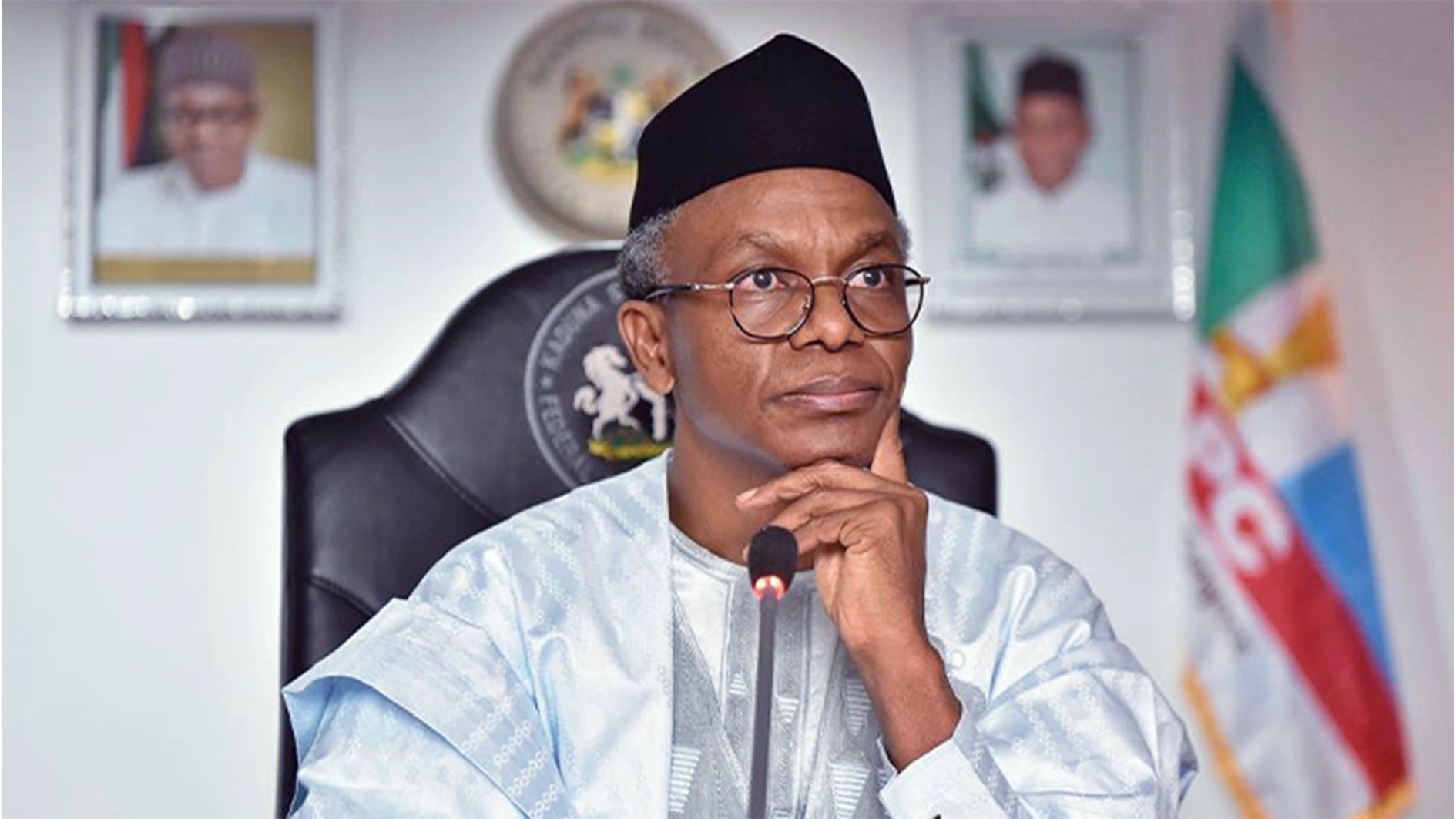
    The family of former Kaduna State Governor, Nasir El-Rufai, has given the Minister of Defence, General Christopher Musa (rtd.), seven days to provide evidence or retract his allegation that the former governor planned killings in Southern Kaduna.

    The family made the demand in a statement issued on Monday and signed by Mohammed Bello El-Rufai on behalf of the family.

    Musa had, during a live edition of Politics Today on Channels Television on September 3, 2026, allegedly accused the former governor of actively planning killings in Southern Kaduna while serving as governor of the state.

    Reacting to the allegation, the El-Rufai family described it as “grave” and expressed concern that Musa did not present evidence to support the claim.

    The family said while the Minister was entitled to express his personal views, it was equally entitled to demand credible evidence to substantiate such a serious allegation.

    The statement said: “In the absence of such evidence, we call on him to publicly retract the allegation through the same medium on which it was made.

    “Accordingly, General Musa (Rtd.) is hereby given seven (7) days from the date of this statement to either provide evidence in support of his allegation or issue a full public retraction and apology.”

    The family warned that failure by the Minister to meet the demand within the stipulated period would compel it to seek legal redress.

    “Failure to do so will leave the family with no option but to pursue all appropriate legal remedies available under the law in response to these unsubstantiated allegations,” it said. Vanguard

  • Dangote Refinery Sets N5,250 Minimum for Public Share Subscription

    Dangote Refinery Sets N5,250 Minimum for Public Share Subscription

    Aliko Dangote, Chief Executive Officer of Dangote Group, has said investors can subscribe to the proposed Initial Public Offering (IPO) of Dangote Petroleum Refinery and Petrochemicals FZE with a minimum of 10 ordinary shares, worth N5,250.

    Dangote disclosed this on Monday during the signing ceremony for the refinery’s IPO at Eko Hotel and Suites, Victoria Island, Lagos.He said the offering comprises 4.1 billion ordinary shares, each with a nominal value of $0.000013, at an offer price of N525 per share.“In this IPO, we intend to raise just a bit more than N2 trillion, which I’m sure is too small, at an offer price of N525 naira, with a minimum subscription of only 10 shares to fund our expansion of the refinery,” he said.Dangote explained that the funds would be used not only to finance the refinery’s expansion but also to give a broad range of Nigerians the opportunity to become shareholders in the company.

    He said the offer was designed to enable “drivers, our cooks, our servants, our managers, and everybody” to own a stake in the refinery.

    According to him, the investment would also provide subscribers with an opportunity to build their future savings through ownership of shares in the company.

    The Dangote Group CEO described the public offer as “the IPO for the people”.

    The IPO is expected to fund the refinery’s expansion while widening public participation in ownership of one of Nigeria’s largest industrial assets. The Nation

  • 2027 Elections: INEC Launches Nationwide Tracker for Election Readiness

    2027 Elections: INEC Launches Nationwide Tracker for Election Readiness

    The Independent National Electoral Commission has unveiled a new operational strategy aimed at strengthening its preparations and identifying potential challenges ahead of Nigeria’s 2027 general elections.

    The strategy centres on a real-time monitoring system that will allow the commission’s headquarters to track the preparedness of its offices across the 36 states and the Federal Capital Territory.

    INEC Chairman, Joash Amupitan announced the initiative while opening a two-day Strategic Operational Workshop for the commission’s Administrative Secretaries in Lagos.

    The commission is introducing an Administrative Secretary Master Operational Tracker Template, described as a data-driven tool that will provide real-time information on the readiness of INEC offices nationwide.

    The system will be linked directly to INEC’s Election Monitoring and Support Centre, enabling the commission to monitor critical aspects of election preparations, including the distribution of materials and training of personnel.

    Amupitan said the initiative was designed to shift the commission towards a more proactive approach to election management by identifying and addressing potential problems before they disrupt the electoral process.

    He described Administrative Secretaries as the “engine room” of INEC’s operations at the state level and urged them to maintain strict operational discipline as preparations for the elections gather pace.

    The INEC chairman said lessons from recent off-cycle elections, particularly the Osun State election, should be expanded and transformed into a national standard ahead of 2027.

    “If you tolerate shortcuts, shortcuts will multiply. If you tolerate political interference, neutrality will deteriorate,” Amupitan told the officials.

    He said the commission needed an administrative culture capable of delivering credible elections and urged its state-level officials to identify and address bottlenecks that could undermine preparations.

    The new strategy will focus on five major areas considered critical to the successful conduct of the elections.

    They include voter registration and the distribution of Permanent Voter Cards, as the national voter register approaches 100 million voters.

    INEC will also examine logistics and election material management, covering the receipt, auditing, storage and deployment of sensitive materials across the country.

    Electoral technology will form another major component of the preparations, with officials expected to improve their understanding and management of systems, including the Bimodal Voter Accreditation System, the INEC Results Viewing Portal and the Candidate Registration and Results Management System.

    Human resources will also receive attention, particularly the recruitment, vetting and technology training of ad-hoc election personnel.

    The commission will additionally focus on financial compliance, including workflow automation and adherence to procurement regulations.

    INEC’s preparations come as political activities ahead of the 2027 elections continue to intensify, with political parties beginning to position themselves for contests at the federal and state levels.

    According to the commission’s timetable, the final register of voters is expected to be published on January 11, 2027, ahead of the presidential and National Assembly elections scheduled to commence on January 16.

    Campaign activities are expected to end on February 18, while a possible presidential run-off has been scheduled for February 28. Governorship and State House of Assembly elections are expected to follow on March 6. The Guardian

  • NELFUND Boss: Student Loan Scheme Has No Political, Religious or Ethnic Bias

    The Managing Director and Chief Executive of the Nigerian Education Loan Fund, Akintunde Sawyerr, has debunked claims that the student loan scheme is biased.

    Sawyerr noted that it was “completely ridiculous” to make such an allegation.

    He also said the electronic process for loan application required basic information such as the student’s name and matriculation number, which, according to him, wasn’t programmed to detect political affiliations.

    The NELFUND boss stated this on Sunday during his interview on Channels Television’s Sunday Politics programme.

    “I have not heard this allegation, but I can tell you that it’s a completely ridiculous idea that the administration of Bola Tinubu is focused on trying to fund people who support the party. We are talking about students; many of them are yet to vote, some of them are going to be voting for the first time, [and] many of them are not party members.

    “How, in any event, do we determine who is a party member and who isn’t? Even if you are running a manual process, how do you do that? You can’t. It’s unlikely to yield you any result.

    “It is a process you have to apply for this loan electronically. If you don’t have a name, you can’t apply for this loan. You provide your matriculation number; you have to be in a public institution,” he said.

    Sawyerr, who stated that loan demands had been “overwhelming,” further stressed the transparency of the loan scheme, saying it only grants application requests to students who are deemed worthy of the loan, as he played down any bias in religious or ethnic affiliations.

    He explained, “We have a system that is focused on people who are Nigerians and meet the standard. The system doesn’t recognise your gender. There is no bias in the system at the front end or the back end.

    “This is a system that doesn’t care whether you are of one tribe or the other. This system does not have a view or an opinion on whether you are a Christian, a Muslim, or an African traditional religionist; it doesn’t want to know.”

    On Sunday, the Fund labelled as “fake news” a circulating image claiming that the President had announced life imprisonment for students who fail to repay their education loans after graduation.

    The agency administers interest-free loans to eligible Nigerian students in public tertiary institutions to cover institutional fees and provide monthly upkeep allowances. Punch

  • Ciara Pregnant With Fifth Child, Fourth With Russell Wilson

    Ciara and Russell Wilson share their pregnancy announcement online, revealing they are expecting their fifth child and fourth together.

    US singer and Grammy winner Ciara is expecting her fifth child, and her fourth with husband and former NFL quarterback Russell Wilson.

    The couple announced the pregnancy in a joint Instagram post on Sunday, sharing photos and videos of Ciara showing her baby bump.

    “One more person to Love,” Ciara and Wilson captioned the post.

    In the announcement, the couple posed outdoors beside four shirts hanging on a clothesline, with a blank baby onesie symbolising the newest addition to their family.

    Ciara and Wilson also held up five fingers in one of the photos, signalling the arrival of their fifth child.

    The couple are already parents to daughters Sienna Princess and Amora Princess, and son Win Harrison.

    Ciara also has a son, Future Zahir, from her previous relationship with rapper Future.

    The pregnancy announcement comes as Ciara continues to balance motherhood with her music career.

    In a 2024 interview with PEOPLE, she reflected on taking her children on tour and having them travel with her.

    “My kids travelled with me, and I couldn’t have done it any other way,” she said.

    “It was the most amazing time with my babies. I was like, ‘This is what life is about.’ So, the little joys in life. I’m so grateful,” she added.

    Ciara and Wilson married in 2016 and have since built a blended family.

    The forthcoming baby will be Ciara’s fifth child and her fourth with Wilson.

    Wilson, 37, announced his retirement from professional football in June after a 14-season career as an NFL quarterback.

    The couple’s latest announcement was shared jointly on their Instagram accounts, celebrating the impending arrival with the message, “One more person to Love.” Arise News

  • Five Killed as Amazon Plane Crashes Into Vehicles at Miami Airport

    Five Killed as Amazon Plane Crashes Into Vehicles at Miami Airport

    At least five people were killed and five injured when an Amazon cargo plane overshot a runway after it landed on Sunday at Miami International Airport, crashed into vehicles and caught fire, officials said.

    According to media reports, Miami-Dade County fire chief, Ray Jadallah, told reporters that in addition to five fatalities, three people were transported to trauma centers “in critical condition” and two more were treated at a local hospital.

    “The airplane did strike a couple of vehicles, which left a couple of victims that were actually trapped in the vehicles,” Jadallah said.

    He also said, “A complex extrication with our technical rescue team was needed, including a search and rescue of the pilot and co-pilot that were trapped in this aircraft.”

    Jadallah did not clarify whether the pilot or co-pilot survived, and officials declined to answer questions after brief statements were made.

    Video showed thick smoke billowing from the blue and white Boeing 767 after it arrived at 1:58 pm (1758 GMT) from Puerto Rico, as fire trucks raced to the scene.

    The plane operating as Prime Air Flight 7598 caught fire as a result of the “crash,” fire officials said.

    “A total of 60 fire apparatuses arrived, just short, just shy of 200 men and women from Miami-Dade Fire Rescue, to begin the actual search and rescue and firefighting,” Jadallah said.

    “The actual cause of the incident will be determined by the FAA, he added, referring to the Federal Aviation Administration and National Transportation Safety Board.

    In a statement posted to X Sunday evening, fire officials said they used foam to extinguish a fire in the engine compartment.

    “One person was trapped under one of the involved vehicles and had to be extricated by specialized technical rescue personnel. Specialized hazardous materials (HazMat) units safely shut down the aircraft’s engine and worked to control a fuel leak,” the statement said.

    The NTSB said in an X post on Sunday that the B-767-300 cargo airplane was flying into Miami from San Juan, Puerto Rico, and they have “launched a go team to investigate Sunday’s runway excursion accident.”

    Amazon spokesperson Kelly Nantel said in a statement the tech giant will cooperate with any investigation into the incident.

    “We’re heartbroken to learn that five people lost their lives in today’s incident at Miami International Airport. Our deepest sympathies go out to the families, loved ones, and all those affected by this devastating loss,” Nantel said.

    Miami Sheriff, Rosie Cordero-Stutz told reporters Sunday that her officers encountered a “really tragic scene,” but there was “no apparent threat to public safety.”

    The airport closed all runways and taxiways because of the incident and posted an update to its website Sunday evening that travelers should check directly with their airline before heading to the airport.

    After hours of holding all flights at the international airport Sunday, with numerous delays and canceled flights for commercial airline passengers, the Miami Herald newspaper reported that two of the airport’s four runways had reopened Sunday.

    In a statement on X, Mayor Daniella Levine Cava thanked first responders for their speedy response, saying “our fire rescue team was there within seconds of the crash, so we’re deeply grateful.” This Day


  • FCCPC Probes Uber’s Exit as Nigeria Fear Higher Fares, Fewer Ride Options

    Tunji Bello

    The Federal Competition and Consumer Protection Commission (FCCPC) has commenced an investigation into Uber’s abrupt exit from Nigeria, as commuters and transport workers raise concerns over fewer choices, possible higher fares and the fate of drivers following the ride-hailing giant’s withdrawal after 12 years.

    Chief Executive Officer of FCCPC, Mr. Tunji Bello, said the commission was examining the manner of the company’s departure, particularly its outstanding obligations to Nigerian consumers.

    Officials, he said, were “looking into the manner of their exit, particularly in respect of unfulfilled services to the customers.”

    The regulatory intervention comes amid growing public reaction to Uber’s September 2 shutdown, with some commuters fearing that removing a major competitor from the market could put pressure on other ride-hailing platforms and ultimately affect fares and service.

    Uber, which entered Nigeria in 2014, said it took the “difficult decision” to wind down operations after reviewing its business priorities and investment focus. The company did not give detailed reasons for leaving, although Nigeria’s ride-hailing industry has been grappling with rising fuel costs, inflation, currency volatility and intense competition. Uber said its help centre would remain available until September 23 to address outstanding account-related issues.

    “After a thorough review, we have taken the difficult decision to wind down operations in Nigeria and Uganda, effective September 2, 2026,” the company said.

    “This decision is limited strictly to these two markets and does not impact our operations across the rest of the continent.”

    For some Nigerians, however, the concern goes beyond why Uber left to what its departure could mean for their daily movement.

    Lagos resident and banker, Edith Nwafor, said losing one of the major platforms could reduce commuters’ bargaining power at a time when household incomes are already under pressure.

    “There is the need for healthy competition among taxis. Having different options allows us, as customers, to compare prices and decide which service works best for us,” she said.

    Nwafor recalled occasions when Uber offered her a cheaper fare than competing platforms.

    “That is why, for me, Uber leaving this country is not good news for commuters. Competition is important, especially with the current economic situation,” she said.

    Businesswoman Funke Ajijala shared the concern, arguing that Uber had carved out a distinctive place in Nigeria’s transport system. “Though we have other e-hailing transport companies, the place of Uber has been different.”

    She feared its departure would create a vacuum that rivals might not immediately fill.

    Another Lagos resident, journalist Florence Okonkwo, said commuters who previously relied on Uber would now migrate to other platforms, potentially increasing pressure on their available drivers.

    She was particularly concerned about drivers whose livelihoods depended heavily on the platform.

    “Although Uber has announced financial support for affected drivers, the assistance might not provide sustainable livelihoods for them,” Okonkwo said.

    “If there is a way to accommodate them back into the transport system, it will be a good thing.”

    Journalist Ola Akanni argued that Nigeria’s e-hailing market has grown beyond any single company and that affected drivers could simply switch platforms.

    “We have InDrive, LagRide and other e-hailing operators; so, I do not think Uber’s exit will put anybody out of job,” he said.

    That view has also featured prominently in online reactions, where some Nigerians see the departure as an opportunity for indigenous technology companies to fill the gap. Former senator Shehu Sani, for instance, described the exit as an opportunity for local startups and even traditional taxi unions to develop home-grown alternatives.

    But the Amalgamated Union of App-Based Transporters of Nigeria (AUATON) has taken a much harder position, condemning the manner of Uber’s withdrawal as “unprofessional.”

    Its national spokesperson, Jossy Adaraniwon, alleged that drivers were given inadequate notice or opportunity for consultation despite helping to build the platform’s Nigerian business over the years.

    The union argued that thousands of drivers deserved a proper transition arrangement rather than an abrupt shutdown.

    AUATON also warned surviving operators, particularly Bolt and inDrive, against what it described as exploitative practices that could worsen conditions for drivers.

    According to the union, poor working conditions in the industry have already contributed to lower earnings, fewer active drivers and longer waiting times for passengers.

    Uber’s withdrawal has meanwhile triggered a scramble among competitors for its former drivers and passengers. Bolt and inDrive have signalled plans to strengthen their Nigerian operations, with inDrive describing the country as a key African market where its active user base has continued to grow year-on-year.

    The company said it remained committed to investing in service quality, safety, technology and local communities.

    Industry analysts say Uber’s departure comes from an increasingly competitive market in which rising fuel prices and other operating costs have squeezed both drivers and platforms.

    The company’s exit is particularly significant because Uber helped popularise app-based transportation after launching in Lagos in 2014 and subsequently expanding to other Nigerian cities.

    Its operations were, however, repeatedly dogged by disputes with drivers over commissions, fares and working conditions.

    Now, with Uber gone, commuters like Nwafor fear one of the immediate casualties could be the competitive tension that allowed passengers to move between apps in search of cheaper rides while others, like Akanni, believe the market will quickly adjust.

    For the FCCPC, however, the more immediate question is whether Uber met its obligations to consumers before switching off its Nigerian operations.

    The commission’s investigation is expected to establish what unfulfilled services or outstanding consumer obligations remain and how they should be resolved.

    For millions of Nigerians navigating already expensive urban transportation, the longer-term question is different: will Uber’s exit simply redistribute riders and drivers among competitors—or ultimately leave commuters paying more for fewer choices? The Sun


  • Enugu CP Named Best Crime-Busting Police Chief in West Africa, Police PRO Wins Best PRO in Nigeria

    Enugu CP Named Best Crime-Busting Police Chief in West Africa, Police PRO Wins Best PRO in Nigeria

    The Commissioner of Police, Enugu State Command, CP Mamman Bitrus Giwa, psc, mspsp, smicm, has received the 2025 Best Crime Busting Police Chief in West Africa award, while the Command’s Police Public Relations Officer (PPRO), SP Daniel Ndukwe, mnipr, mnisma, has been named the Best Police Public Relations Officer in Nigeria.

    Both awards were presented by the Security Watch Africa Initiative at the State Command Headquarters, GRA, Enugu, according to a press release issued on Sunday, September 6, 2026, and signed by SP Ndukwe.

    Award Presentation

    Presenting the awards, the International Coordinator and Chief Executive Officer of the Initiative, Mr. Patrick Agbambu, said “the recipients were selected following a review of their respective policing antecedents and professional contributions in Enugu State.”

    He urged CP Giwa to “sustain his proactive approach to crime prevention and combating,” while encouraging the PPRO to “maintain his strategic and effective police-public relations activities.”

    Recipients Respond

    Responding, CP Giwa expressed appreciation to the organizers for the recognition, attributing his achievements in Enugu State to “Almighty God and the support of the State Government, law-abiding citizens and other stakeholders.”

    SP Ndukwe also appreciated the organizers and dedicated the award to “Almighty God, CP Giwa and the people of Enugu State for their continued support.”

    Part of 19th Africa Security Watch Awards

    The awards were presented as part of the 19th Africa Security Watch Awards, following the 19th Africa Security Watch Conference held in July 2026 at the Sir Dawda Kairaba Jawara International Conference Centre, Banjul, The Gambia.

  • NEMA Monitors Cameron’s Lagdo Dam Over Fresh Flood Threat

    The National Emergency Management Agency has said it is closely monitoring the water level in Cameroon’s Lagdo Dam over the likelihood of flooding along the River Benue.

    The agency disclosed this in its scorecard for July and August 2026 submitted to the Office of the National Security Adviser, detailing its flood preparedness, emergency response and humanitarian interventions during the period.

    According to NEMA, the monitoring of the Lagdo Dam forms part of measures to proactively manage the 2026 flood season and mitigate potential disasters in communities along the River Benue.

    The agency said it had intensified coordination with relevant federal and state institutions, strengthened monitoring of high-risk locations and sustained public sensitisation on flood safety.

    It added that flood early-warning information and advisories were being disseminated to communities across the country in collaboration with State Emergency Management Agencies, Local Emergency Management Committees, traditional institutions and other stakeholders.

    NEMA said the initiative was focused on translating national forecasts into actionable community-level information and encouraging residents in high-risk communities to take precautionary measures, including relocation to safer areas where necessary.

    The agency also dismissed reports circulating on social media alleging an imminent collapse of the Kagini Dam in Kaduna, which it said could cause massive flooding downstream in Kaduna and Niger states.

    “NEMA, in a joint assessment conducted with relevant stakeholders, confirmed that there was no immediate threat of any potential collapse of Kagini Dam in Kaduna that could result in massive flooding downstream in Kaduna and Niger States, as alleged in viral social media posts,” it stated.

    NEMA said its response teams remained on standby to coordinate responses to flooding and other climate-related incidents with SEMAs, LEMCs and other stakeholders.

    It disclosed that it responded to flood and windstorm incidents in several locations, including Uyo, Eket, Ringim, Calabar, Kaduna, Riyom, Yenagoa and Southern Ijaw.

    As part of efforts to improve emergency preparedness, the agency said its Director-General, Zubaida Umar, activated the National Emergency Operations Centre in August to strengthen coordination, information management and analysis of reliable data on the 2026 flood situation and other climate-induced emergencies.

    “The Centre serves as a coordination hub for processing operational information and producing timely and reliable data to support planning, decision-making and effective emergency response,” the agency said.

    NEMA also disclosed that it conducted a flood simulation exercise in Calabar, Cross River State, and participated in a joint exercise in Adamawa State with the Presidential Committee on Flood Relief and Rehabilitation/AATF and other stakeholders.

    The agency said the exercises were designed to test emergency response procedures, inter-agency coordination, communication and operational readiness for potential flood emergencies.

    Meanwhile, NEMA said it provided relief assistance to 24,625 households, representing 147,750 persons, across the country in July and August.

    It also said it upgraded three Emergency Response and Ambulance Bays within the FCT and its environs as a pilot initiative to improve emergency response time, inter-agency coordination and emergency medical support.

    The latest monitoring of the Lagdo Dam comes against the backdrop of previous flooding incidents associated with water releases from the facility.

    In 2012, NEMA warned that a sudden release of water from the dam posed a serious risk to communities along the River Benue, while the 2022 flood disaster was again aggravated by excess water released from the facility.

    In September 2022, NEMA said Cameroon commenced the release of excess water from the Lagdo Dam on September 13, warning that the water would cascade into Nigeria through the River Benue and its tributaries.

    The scale of the 2022 disaster was enormous, with NEMA’s then Director-General putting the national toll at 665 deaths, 2,437,411 displaced persons and 4,476,867 people affected.

    The recurring concern over Lagdo has therefore made monitoring of the dam an important component of Nigeria’s flood preparedness, particularly for communities and states along the River Benue. Punch

  • Fake Products Flood Nigerian Markets as NAFDAC, SON Face Fresh Pressure

    The National Agency for Food and Drug Administration and Control and the Standards Organisation of Nigeria have come under pressure over proliferation of counterfeit products as Nigerians take to social media to expose food, drugs, cosmetics and other consumer goods suspected to be fake, substandard and dangerous.

    The online campaign also brought renewed scrutiny to the effectiveness of the country’s regulatory system, with Nigerians questioning how such products continue to make their way into markets despite the statutory responsibilities of NAFDAC and SON to regulate products and protect consumers.

    While some of the social media claims have yet to be independently verified, the reports have increased fears among consumers and intensified calls for stronger surveillance and enforcement from the regulatory agencies.

    Fake food, toothpaste, drink, drug

    Findings by Saturday PUNCH showed that the online campaign took a different dimension following the recent deaths of some celebrities, including veteran Nollywood actor Taiwo Hassan, popularly known as Ogogo, from cancer.

    Also, increasing reports of sudden deaths have drawn attention to possible links between the tragedies and consumption of counterfeit products.

    In the last few months, Nigerians have taken to social media platforms like X (formerly Twitter), TikTok, and Instagram to share awareness videos highlighting counterfeit products in local markets.

    The clips often feature side-by-side comparisons, market investigations, and practical tips for spotting fakes.

    Ordinary citizens, doctors, content creators, and even regulatory voices have amplified the messages and turned personal discoveries into viral public service announcements.

    One of the most prominent recent examples involves suspected fake Oral-B toothpaste.

    In September, a Nigerian doctor, Somto Okonkwo, posted a detailed comparison video showing genuine and counterfeit Oral-B tubes side by side.

    The clip, which highlighted differences in packaging quality, seals, texture, translucency, and taste, was widely shared by different accounts.

    In the video, Okonkwo demonstrated how the fake versions often feature seals absent on originals, thicker and less translucent paste, and a less minty flavour, while warning viewers of the potential dangers.

    The video gained significant traction when United Kingdom-based Nigerian physician, Dr Olufunmilayo Ogunsanya, amplified it.

    Okonkwo recounted visiting five to seven shops where all stocked counterfeit Oral-B toothpaste, with many sellers unaware of the fakes.

    He explained that genuine products typically use safe glycerine, while some counterfeits may substitute the toxic chemical diethylene glycol.

    Around the same period, other toothpaste-related alerts circulated.

    Fake food products have also featured heavily in recent awareness clips.

    Videos circulating in early September showed counterfeit Hollandia yoghurt being packaged in unsanitary conditions.

    Accounts such as @_InsideNigeria and @KosoNwa1 shared the disturbing footage, questioning NAFDAC’s response and urging consumers to remain vigilant about product safety.

    Earlier comparisons by individuals, including couples who poured genuine and suspected fake yoghurt into clear cups to demonstrate differences in thickness, creaminess, and the presence of barcodes, further fuelled online discussions and warnings.

    On September 4, Olufunmilayo posted about paracetamol tablets: photos of two tablets allegedly from the same company that differ clearly in colour when placed side by side.

    He noted that consumers would only notice the discrepancy by direct comparison, warning that “one is fake, or both are fake” and that Nigerians rely on such products when ill.

    He blamed NAFDAC for failing in its duties, stating the agency “has killed thousands of people by failing to do their job.”

    Multiple X users reported personal experiences and broader lists of fakes: dyed palm oil, painted apples (green to red), fake soy sauce/olive oil, substandard or fake chicken/fish, fake water/soda, fake drinks/alcohols, and varying textures/tastes of Hollandia bought from different spots.

    One user noted realising he had been using fake Oral-B after seeing related posts and listed dyed palm oil, painted apples, and fake Hollandia as part of a longer pattern.

    Others tagged NAFDAC directly, urging action against alleged producers of fake drinks, alcohols, and medicines.

    Additional recent commentary includes frustration over the volume of counterfeits (malt drinks, spaghetti in older raids), calls to buy only from trusted sources, and expressions that everyday staples now require extreme caution.

    Some posts link the issue to health risks like kidney problems and general distrust of open-market goods.

    An X user, Oluwole Olofintuyi, @OluOlofin1, alleged that the scale of counterfeit products suggested possible compromise within the regulatory system.

    “Wherever you go: fake milk, fake yoghurt, fake bread, fake palm oil, fake/plastic rice, fake medicines, fake toothpaste, fake baby formulas, fake beverages, fake toothbrushes, fake bottled and sachet water, fake vehicle parts, fake tyres,” he wrote.

    Olofintuyi alleged that some regulatory officials, distributors and importers could be complicit in the circulation of counterfeit products, adding that NAFDAC and SON had failed Nigerians.

    Similarly, Chinedu Samuel, @Chimextech, questioned NAFDAC’s effectiveness, saying the proliferation of counterfeit products posed both economic and health risks.

    “Where is NAFDAC in all of this? What they are concerned about is sachet alcohol, no focus. That’s the result of nepotistic appointments,” he wrote.

    One Uche Samuel said the reports about fake toothpaste had heightened concerns about the safety of everyday consumer products.

    Another user, Mac Araga, claimed that the regulatory agencies had become more focused on revenue generation than their core responsibilities.

    “We blame only NAFDAC, what is SON doing? What about CPC? Let them collaborate, even with NDLEA and the police. They should declare a state of emergency on fake drugs,” Abou Opeyemi wrote.

    Others called for stronger surveillance at ports, warehouses, markets and online platforms, as well as tougher prosecution of manufacturers, importers and distributors of counterfeit products.

    NAFDAC’s seizures

    Recent NAFDAC operations uncovered counterfeit antimalarial drugs, antibiotics, injections, contraceptives and other pharmaceutical products.

    In February 2026, the agency reported seizing more than 10 million doses of fake malaria medicines, alongside other pharmaceutical products at the Lagos Trade Fair Market.

    The agency also uncovered warehouses hidden inside an uncompleted building in Apapa, Lagos, crammed with banned, fake and unregistered medicines worth over N3bn.

    Also found were cartons of prohibited injectable anti-malarial products, antibiotics, sachet drugs and blister packs, which sat alongside assorted perfumes, body oils and even cooking oils.

    In 2025, NAFDAC revealed that 30 per cent of drugs in open markets were fake or substandard.

    In March 2025, the agency seized and destroyed N1tn worth of confiscated drugs, including banned Analgin and high-dose Tramadol (225mg), after an operation across the notorious drug markets in Onitsha, Ogbo-Ogwu, and Aba, Ekumi/Tenant Road.

    Counterfeits pose health risks – Doctors

    The Director of Medical Services at the Medical Centre of the Federal College of Education, Akoka, Lagos, Dr Rotimi Adesanya, said counterfeit drugs, foods and drinks could contain contaminants capable of damaging vital organs, particularly the liver and kidneys.

    He said, “Some of the health hazards, such as liver failure, kidney failure, heart problems and even infertility and low sperm count, that are endemic in our society now are as a result of the usage of counterfeit products because of the chemicals in them.”

    He blamed the widespread circulation of counterfeit products on poverty, saying many Nigerians resort to cheaper alternatives because of economic hardship.

    Adesanya said, “Most of them put ‘best before’ on the products, which is different from an expiry date. The expiry date means that once it is expired, it cannot fully perform the purpose for which it was produced. Whereas, best before means you get the best part of that product before the particular day.

    “The reason for this is that some products disintegrate if they are left for some time. Some of them may lose moisture or the chemicals in them, depending on how they are stored.

    “While expired drugs may not actually kill a person, they will not do the work they were intended to do because the potency of the drug will have reduced with time.”

    He urged NAFDAC to intensify routine checks and surveillance of products, particularly those on shop shelves.

    “As a result of counterfeiting that is happening in the public, including local products like palm oil, the chemicals used for them are destroying organs. Some of them cause renal failure, which is shutting down the kidneys. They can shut down the liver, and that’s why NAFDAC has to be on top of its game.

    “NAFDAC should do routine checks and analyses of these products, which they normally do in their industry. They must go on surveillance from time to time. They must check all the products on the shelves randomly. They must continue to see if they have expired or are still effective.

    “Also, counterfeiting usually happens with expensive products because they are not affordable to people. The public should look for products from different brands,” Adesanya said.

    A former Chairman of the Nigerian Medical Association, Lagos State, Dr Saheed Babajide, attributed the proliferation of counterfeit drugs to poor enforcement by government agencies.

    He said, “It is unfortunate that governments have allowed this issue to go on for a very long time. You will recall that NAFDAC recently went to Idumota in Lagos and Aba in Abia State to close some shops. Despite that, it still continues because there is no regulatory body whatsoever and the law enforcement agencies are not doing what they are supposed to do.”

    Babajide said the use of substandard and fake medicines could cause serious health problems, including renal damage, kidney and heart complications, as well as mental health challenges.

    He noted that it could also add to the burden on the country’s frail healthcare facilities, as patients may fail to respond to treatment when the medicines they have taken are ineffective or contain insufficient active ingredients.

    “The use of ineffective or partially effective antimalarial drugs, for instance, can prolong illness and increase the likelihood of hospital admission. This ultimately places an additional financial burden on patients, who may end up spending more on treatment than they would have if they had initially obtained effective medicines. The problem is largely driven by greed and the quest for financial gain by unscrupulous individuals,” Babajide added.

    The medical practitioner called on the legislative arm of government to make laws to punish anyone found culpable of circulating fake drugs.

    “What the government should do is to ensure the relevant government agencies and regulatory bodies like NAFDAC and SON carry out their duties. There should be no bail and fine because anybody can be a victim of these counterfeit drugs. This should be treated as a matter of urgency,” he added.

    ‘Overhaul NAFDAC, SON’

    A Lagos-based commentator, Segun Odunewu, while speaking with Saturday PUNCH, called for an overhaul of NAFDAC, alleging that the agency had failed to effectively protect Nigerians from dangerous counterfeit products flooding the market.

    He said the worsening proliferation of the products showed that the country could no longer afford weak enforcement of regulations.

    “We have not had it this bad until inefficiency crept into NAFDAC. The agency needs a complete overhaul for effectiveness. If not, we will all die of cancer and kidney disease.

    “NAFDAC is not the NAFDAC of Dora Akunyili’s era. Her efforts are being wasted,” Odunewu said.

    He also called for greater accountability from the agency’s leadership, arguing that NAFDAC must return to its core responsibility of protecting public health.

    “The NAFDAC Director-General should resign. NAFDAC is now becoming a money-generating agency while neglecting its primary responsibility,” Odunewu alleged.

    A public affairs analyst, Adebayo Abubakar, however, said scrapping NAFDAC or SON would not solve the problem.

    According to him, the two agencies were created precisely to protect consumers and enforce standards, and the priority should be to strengthen their capacity and hold them accountable.

    “We have NAFDAC to protect us from fake and dangerous food, drugs and other regulated products, and SON to enforce standards and protect consumers from substandard and counterfeit goods.

    “These are not ornamental agencies; the law gives them precisely the powers required to police the marketplace,” Abubakar said.

    He, however, expressed concern over the continued presence of counterfeit products in markets across the country.

    “Walk through Nigerian markets and the uncomfortable truth stares you in the face: counterfeit medicines, adulterated foods, fake electrical products, substandard building materials and imitation consumer goods are everywhere.

    “NAFDAC itself has identified counterfeit and falsified products as a continuing problem, while the National Assembly has had to call on NAFDAC and SON to intensify surveillance and enforcement,” Abubakar said.

    He noted that the situation raised fundamental questions about the effectiveness of the regulatory system.

    Another public affairs analyst, Musa Aliyu, called for a review of the National Policy on the Contamination of Drugs and Unwholesome Practices of Pharmaceuticals, arguing that the policy was overdue for review.

    He said the problem of counterfeit and contaminated products extended beyond medicines and required stronger collaboration among government agencies and communities.

    “The National Policy on the Contamination of Drugs and Unwholesome Practices of Pharmaceuticals is quite overdue for review because the issue extends beyond that.

    “What we need is partnership in ensuring that communities are aware of the effects of contamination of drugs and unwholesome practices, and that people take the issue of drugs seriously because it is a very big challenge in Nigeria,” Aliyu said.

    According to him, the problem begins at the grassroots, making community-level enforcement and awareness essential.

    He called for the decentralisation of NAFDAC’s operations to improve monitoring and enforcement across the country.

    Lawyers demand tougher sanctions

    A Lagos-based dispute resolution lawyer, Muhammed Adam, told Saturday PUNCH that the Federal Government should declare a state of emergency on fake and substandard products in the country.

    He said the proliferation of counterfeit goods had gone beyond ordinary market offences, describing it as organised economic and public-health sabotage that required the same urgency applied to other serious national security threats.

    “A group of greedy, organised criminals cannot keep poisoning this country while they smile to the bank. What is happening in our markets is not petty trading. It is organised economic and public-health sabotage.

    “It should be treated with the seriousness we reserve for terrorism because the outcome is the same: Nigerians are being killed slowly, quietly and profitably,” Adam said.

    Adam said the trend was particularly disturbing because the most commonly counterfeited products were those Nigerians relied on for their health and daily wellbeing.

    “That means the things we put on our skin, put in our children’s mouths and swallow when we are sick are among the products being most heavily faked,” he said.

    The lawyer also cited seizures by the Nigeria Customs Service involving expired medicines and products bearing allegedly fake NAFDAC labels, including a seizure in the Apapa area reportedly valued at N53.4bn.

    He further referred to the interception of fake anti-malaria drugs worth N1.2bn, which were allegedly concealed under a declaration of “spare parts”, saying counterfeiters were increasingly exploiting online transactions and groupage cargo to evade detection.

    According to him, the scale of the problem meant that the fight against counterfeit products could no longer be treated as an issue restricted to market enforcement.

    “People die from malaria that the ‘treatment’ never treated, from antibiotics that never fought infection, from cosmetics loaded with mercury and steroids, and from electrical and auto parts that fail when lives depend on them,” he said.

    Adam said the consequences extended beyond individual deaths and injuries to public confidence in the Nigerian market.

    “When citizens cannot trust medicine, food or water, the social contract itself is damaged,” he said.

    The lawyer argued that the seizure of counterfeit goods would have limited impact if those behind the products were not consistently prosecuted and convicted.

    Another lawyer, Ibrahim Adebayo, accused regulatory agencies, particularly NAFDAC, of failing to sustain the aggressive campaign against counterfeit products that characterised some previous administrations.

    Adebayo recalled a period when NAFDAC embarked on what he described as a “total war” against counterfeiters, with warehouses raided, fake products seized and suspects arrested and prosecuted.

    He alleged that the agency had become less effective in recent years.

    “What we have now is an alleged collusion between some NAFDAC officials and these criminals. They only issue directives, bark sometimes, and nothing is done afterwards,” Adebayo alleged.

    He said the Federal Government needed to demand greater accountability from regulatory agencies, particularly given the public resources allocated to them.

    “This is an agency that receives billions of naira yearly through the Federal budget. Nigerians deserve to see the impact of that funding in terms of enforcement, prosecution and the protection of public health,” he said.

    Adebayo called for stronger coordination among NAFDAC, SON, the Nigeria Customs Service, the Federal Competition and Consumer Protection Commission and security agencies.

    The lawyer urged the Federal Government to strengthen surveillance of ports, warehouses, markets and online marketplaces while ensuring that offenders face prosecution.

    He also called for stronger intelligence-sharing among regulatory and security agencies, arguing that counterfeiters were increasingly exploiting gaps between institutions to move their products through the country.

    Adebayo said enforcement should also extend to the digital space, where counterfeit products can be advertised and sold to unsuspecting consumers without the physical presence of the seller.

    NAFDAC mute, SON passes buck

    When contacted, NAFDAC’s Head of Enforcement, Dr Martin Iluyomade, declined to comment.

    Calls placed to his mobile phones were neither answered nor returned, while WhatsApp messages sent to him seeking his response were not acknowledged as of press time.

    Efforts to obtain the reaction of SON proved abortive, as a highly placed source in the agency, who spoke on condition of anonymity, directed Saturday PUNCH to NAFDAC, adding that the regulation and circulation of fake, substandard and falsified medicines fell within the latter’s purview.

    The source said, “Please note that matters relating to the regulation and circulation of fake, substandard and falsified medicines fall under the purview of the National Agency for Food and Drug Administration and Control. We would therefore advise that you direct your inquiry to NAFDAC for the appropriate response.

    “For further communication or inquiries relating to the mandate and activities of the Standards Organisation of Nigeria, kindly address your correspondence to the Director-General/Chief Executive in writing.” Punch
  • VDM Apologises to Security Agencies Over ‘Unknown Gunmen’ Remarks

    VDM Apologises to Security Agencies Over ‘Unknown Gunmen’ Remarks

    Social media activist Martins Vincent Otse, popularly known as VeryDarkMan, has apologised to soldiers, policemen, customs and immigration personnel over his controversial remarks at the Nigerian Bar Association’s 66th Annual General Conference.

    Otse, in a video shared on Friday, said he had reflected on his speech and realised that he was unfair to security personnel who were genuinely risking their lives to protect Nigerians.

    The activist had, while speaking at the conference in Port Harcourt, Rivers State, described the military, police, immigration and customs personnel as “unknown gunmen” in his discussion on insecurity.

    However, in Friday’s video, Otse said his remarks were not intended to accuse all security personnel of involvement in criminal activities.

    “I don’t think I was fair to a lot of people, particularly the speech where I said that the military are the unknown gunmen, the police are the unknown gunmen, you know, the immigration, the customs.

    “I know exactly what I was trying to say because, I mean, I have evidence to back up my claim, but I wasn’t fair to a lot of people in that speech,” he said.

    He said he was particularly concerned about soldiers fighting Boko Haram and other threats in the bushes.

    “That speech was not fair, especially to the soldiers that are in the bushes fighting Boko Haram to protect our lands, to protect our lives, and to protect our families.

    “I don’t think it’s fair to say they are also the unknown gunmen, to be very honest, because these people have laid down their lives,” he said.

    Otse said his intention was to draw attention to alleged corruption and sabotage by some personnel within the security agencies.

    “My speech was not to discourage you.

    “My speech was entirely to talk about the bad eggs in our security operative, our security forces, is to put attention on the bad eggs, so that the leaders in these security settings will look inward and to see that sometimes information are being leaked and their own people are sabotaging them,” he said.

    He, however, admitted that the way he presented his argument made it appear as though he was generalising.

    “But by passing that speech, like I said, it seems like I was generalising and it’s not fair to the fallen soldiers,” he said.

    Otse subsequently apologised to the Chief of Defence Staff and the leadership of the security agencies.

    “So I will go further to say to the Chief of Defence Staff, Sir, I really want to apologise for that speech, and I don’t want to discourage your boys.

    “Please extend my apologies to your boys, to the ones that are in the bush protecting our lands,” he said.

    He also apologised to the police, customs and immigration authorities, as well as the families of fallen security personnel.

    “To the families of these heroes that might have also felt offended by this speech, knowing fully well that their brother, their sister, their son, their husband fought and died for this country, I am really, really sorry,” he said.

    The activist maintained that there were still “a lot of good people” within the security agencies despite his allegations against some personnel.

    “Yes, a lot of bad eggs there, like I said, a lot of bad eggs, a lot of them are there.

    “A lot of corrupt generals, a lot of high-ranking police officers are corrupt, a lot of junior officers are corrupt, a lot of them are there. But there’s still a lot of more good people, a lot of more good people, and I know a lot of them,” he said.

    Otse said he feared his comments could discourage a soldier fighting in the bush who came across the video.

    “Imagine a soldier fighting in the bush and he watches VDM’s video, and he’s like, ‘Ah, VDM is one of us now, unknown gunman.’ That would discourage him, to be honest,” he said.

    The activist, who has previously spoken about alleged misconduct by security personnel, said his relationship with some policemen had also exposed him to the challenges facing the force.

    “Me and police, we work steady. I give, sometimes I share police information, tell them, ‘Oh, this is what is happening here, please, can you intercept,” he said.

    He urged security personnel who were genuinely protecting the country not to be discouraged by his comments.

    “And please don’t be discouraged, please, please, don’t be discouraged.

    “We’re there behind you now, and we’ll always support you. You know, and we are part of this thing, security is for all of us,” he said.

    Otse, however, maintained his warning to personnel allegedly involved in sabotage, arms supply and leaking information to terrorists.

    “But then again, to the bad eggs, your days are numbered.

    “To all of you in the military that are sabotaging and causing deaths to your officers, your days are numbered,” he said.

    The apology comes amid controversy over Otse’s appearance at the NBA conference, where his participation and comments generated criticism.

    Senior Advocate of Nigeria, Femi Falana, had rejected the defence of Otse’s role at the conference and called for experienced speakers to handle specialised discussions at the event.

    Otse subsequently responded to critics by defending his invitation to the conference and explaining why he was invited to speak.

    He later mocked the backlash by appearing in a lawyer’s wig and gown in a video.

    His latest apology also comes after a separate controversy over his claims that some police officers at checkpoints allegedly pass information about wealthy travellers to kidnappers.

    The police had challenged him to provide evidence for the allegation, while Otse responded by daring the authorities to charge him to court, saying he would present his evidence.

    In Friday’s video, however, Otse stressed that his criticism of alleged misconduct should not be interpreted as hostility towards the security agencies as a whole.

    “I actually know more than the people I was trying to communicate with, so it was not really communicated properly,” he said.

    He concluded by urging Nigerians to support security personnel genuinely fighting to protect the country.

    “And to the patriots, to the heroes, to our fallen heroes that have died to protect this country… I am really, really sorry.

    “Keep on fighting for our beloved country, God bless all of you. We Nigerians are with you,” he said. Punch

  • ‘Young Nigerians Should Sell Dreams, Not Kidneys’ – Atiku

    ‘Young Nigerians Should Sell Dreams, Not Kidneys’ – Atiku

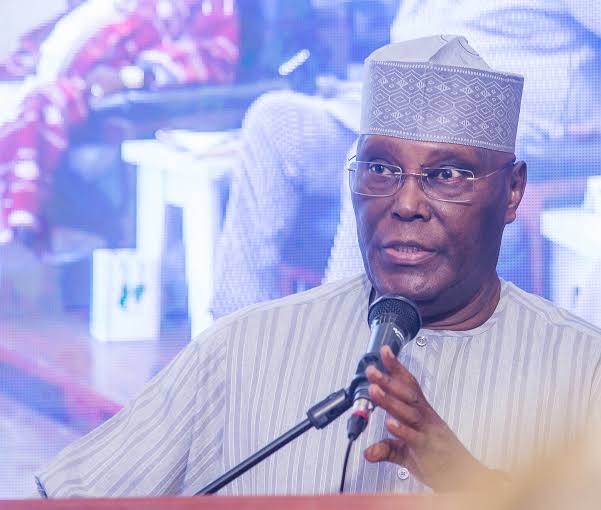
     Former Vice President Atiku Abubakar has raised alarm over what he described as a growing trend of young Nigerians selling their kidneys to survive amid the country’s cost-of-living crisis, blaming President Bola Tinubu’s economic policies for the development.

    The Africa Democratic Congress presidential candidate, in a post on X on Thursday, said he had heard “disturbing stories” of young Nigerians resorting to selling body organs, particularly kidneys, in desperate attempts to raise money.

    “I have heard disturbing stories about the extent to which young Nigerians are being driven simply to survive. Perhaps the most horrifying are the growing reports of young people selling parts of their bodies: kidneys in particular, in desperate attempts to raise money,” Atiku wrote.

    He said young Nigerians ought to be “selling dreams, ideas and innovation, not their body organs,” adding that the trend should “offend the conscience of every Nigerian.”

    Atiku claimed that young Nigerians were reportedly being driven to sell their kidneys for as little as ₦1.7m, a figure he did not attribute to any specific report or agency.

    PUNCH could not independently verify the figure as of the time of this report.

    The former Vice President linked the trend to the rising cost of living under the Tinubu administration, listing food, transport, rent, school fees, medicine and electricity as items that have become increasingly unaffordable for ordinary Nigerians.

    He said, “In Tinubu’s Nigeria, almost everything required to live with dignity is becoming more expensive by the day: food, transport, rent, school fees, medicine and electricity.

    “Yet young Nigerians are reportedly being driven to sell their kidneys for as little as ₦1.7 million.

    “That should break the heart of a nation.

    “Young Nigerians should be building careers, starting businesses, raising families and pursuing their dreams, not calculating how much parts of their bodies can fetch simply to stay alive.

    “When young Nigerians begin to see their kidneys as emergency savings, we are no longer talking about ordinary economic hardship. We are talking about desperation at its most frightening.”

    Atiku acknowledged that Nigeria already has laws prohibiting commercial organ sales and organ trafficking, but argued that “laws alone cannot cure the poverty and desperation that make vulnerable young people easy prey for criminal networks.”

    He called for economic reforms with “a human face,” including affordable food, cheaper transportation, accessible healthcare, decent jobs and “renewed hope for the next generation.”

    The former Vice President capped the statement with a direct jab at the President: “Tinubu made Nigeria expensive. I will make Nigeria affordable again.”

    Atiku’s remarks come amid a spate of reports and unverified claims about organ trafficking in parts of the country in recent weeks.

    The Nigeria Police Force recently paraded four suspects, including two nephrologists, over the alleged operation. Police said one of the suspects, Emmanuel Ode, allegedly admitted to recruiting victims and disclosed that a 22-year-old man had been lured to a hospital in Abuja in April, where his kidney was allegedly harvested for $1,250, equivalent to about N1.7m.

    Investigators said the alleged syndicate targeted vulnerable and financially desperate young people in Nasarawa and neighbouring areas. Punch