Category: News

This is an optional category description

  • Terrorism In Nigeria Has Global Implications, Defence Minister Says

    Terrorism In Nigeria Has Global Implications, Defence Minister Says

    Precious Nwonu, Enugu

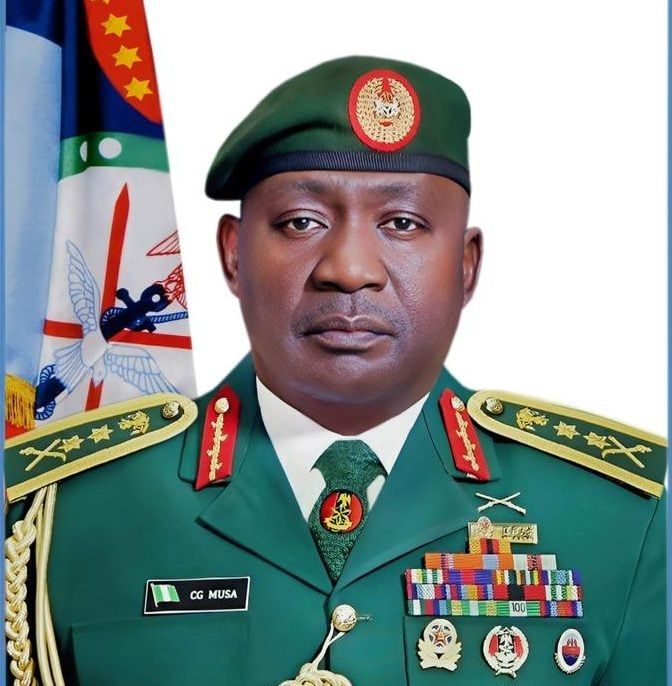
    Minister of Defence, Gen. Christopher Musa (retd.), has said terrorism, banditry and other emerging security threats in Nigeria extend beyond the country’s borders, with consequences for the wider region and the international community.

    Musa spoke during a high-level security discussion organised by the Ministry of Defence on the sidelines of the 81st United Nations General Assembly High-Level Week in New York.

    The meeting brought together diplomats, security experts and representatives of the United Nations, African Union and Economic Community of West African States to examine Nigeria’s evolving security challenges and possible responses.

    According to a statement by the minister’s Special Assistant on Media, Leah Katung-Babatunde, Musa called for stronger international cooperation and a whole-of-society approach to tackling insecurity in Nigeria and the wider Sahel.

    He said the complexity of modern security threats made collaboration among governments, security institutions, communities and international partners essential.

    Musa said sustainable security could not be achieved through military action alone, stressing the importance of resilient communities, effective institutions, inclusive development and good governance.

    The minister outlined measures being pursued by the Federal Government to strengthen Nigeria’s security architecture, including the recruitment of an additional 22,000 personnel into the Armed Forces.

    He also cited the expansion and restructuring of the Nigerian Army’s divisional structure, efforts towards establishing state police and dedicated forest guards, particularly for rural and border communities, as well as a unified intelligence and reconnaissance programme approved by President Bola Tinubu.

    According to him, the intelligence programme is intended to improve information sharing among government agencies, eliminate operational gaps and enhance coordination in responding to security threats.

    Musa also highlighted efforts to strengthen Nigeria’s domestic defence industry through increased support for the Defence Industries Corporation of Nigeria.

    He said the initiative was aimed at improving local production of military equipment and reducing the country’s reliance on foreign sources for arms and other defence materials.

    The minister further pointed to the deployment of technology, including drones for surveillance and improvised explosive device detection, as well as the development of a comprehensive national criminal database.

    The discussions also focused on intelligence gathering and border security.

    Major General Adeyinka Famadewa (retd.), Special Adviser on Homeland Security, called for better integration of intelligence and response systems, alongside mechanisms that would protect citizens who provide information about emerging threats.

    Former Force Commander of the Multinational Joint Task Force, Major General A.K. Ibrahim (retd.), advocated stronger community-based approaches to border security and the implementation of the Office of the National Security Adviser’s Border Management Strategy.

    He also called for the revitalisation of the MNJTF and intensified efforts to disrupt terrorist financing networks and systems through which armed groups impose illegal taxes.

    Economic security was another major issue discussed at the meeting.

    Former Deputy Governor of the Central Bank of Nigeria, Dr Kingsley Obiora, argued that economic stability should be treated as a central component of national security.

    He proposed the establishment of designated economic zones in conflict-affected areas to encourage businesses to return and support economic recovery.

    Professor Mvemba Phezo Dizolele of Johns Hopkins University, meanwhile, urged African countries to develop security responses based on their own circumstances rather than relying solely on foreign models.

    Cybersecurity expert Omosigho Ozo-Eso also warned against excessive dependence on foreign artificial intelligence systems, stressing the need to protect Nigeria’s critical national infrastructure and develop indigenous cyber-defence capabilities.

    Musa, in his closing remarks, reaffirmed the Federal Government’s commitment to combating terrorism and banditry and acknowledged the support Nigeria has received from international partners, including the United States and European Union.

    He, however, said African countries must increasingly take ownership of regional security arrangements by providing greater domestic funding for mechanisms such as the MNJTF.

    The minister also highlighted government efforts to strengthen relevant laws, protect health workers operating in high-risk areas and create a more stable environment for investment.

    He urged participants to move beyond identifying security challenges and focus on practical cooperation, clearly defined responsibilities and implementable solutions.

    The meeting, themed **“Confronting Nigeria’s Multidimensional Security Challenges: A Whole-of-Society and Partnership-Based Approach,”** was opened by the Director overseeing the Office of the Permanent Secretary, Mrs Bosede Olaniyi.

    Olaniyi called for constructive engagement among participants, saying discussions should produce concrete outcomes capable of contributing to Nigeria’s national development.

  • FG Set To Launch African Global Festival In October

    FG Set To Launch African Global Festival In October

    Precious Nwonu, Enugu

    The Federal Government is set to launch the African Global Festival Nigeria, popularly known as AGLOFEST, in October 2026 as part of efforts to promote Nigeria’s cultural diplomacy and expand economic and international partnerships.

    The Permanent Secretary, General Services Office in the Office of the Secretary to the Government of the Federation, Dr Ibrahim Kana, disclosed this in a statement issued in Abuja on Friday.

    Kana said President Bola Tinubu had approved the initiative, with the approval formally conveyed to the project’s partners.

    According to him, AGLOFEST will create an international platform for cultural exchange, investment and economic cooperation by bringing together government officials, investors, businesses, cultural organisations, creative industry practitioners, entrepreneurs and development partners.

    He said the festival would comprise three major events: the Black Diaspora Economic Forum, Black Diaspora Cultural Presentation, and the Renewed Global Hope and Peace Concert.

    Kana explained that the economic forum would provide opportunities for discussions and partnerships in trade, investment and business, while the cultural presentation would highlight Africa’s heritage and creative expressions.

    The peace concert, he added, would use music and entertainment to promote peace, unity and positive engagement among people across different parts of the world.

    The permanent secretary said AGLOFEST was being developed through a public-private partnership involving the Federal Government and other stakeholders.

    He noted that the Ministries of Art, Culture, Tourism and Creative Economy; Trade, Investment and Industry; and Foreign Affairs would be among the government institutions involved in the initiative.

    Kana said the festival would also be used to showcase Nigeria’s cultural heritage, tourism attractions, creative industries and investment opportunities to an international audience.

    He added that the initiative would strengthen Nigeria’s links with other African countries and people of African descent across the world.

    The October launch is expected to form part of the Federal Government’s broader efforts to use culture and the creative economy to deepen international relations, attract investment and expand economic cooperation.

  • Obi Vows To Jail Anyone Who Rigs Election Under His Presidency

    Obi Vows To Jail Anyone Who Rigs Election Under His Presidency

    Precious Nwonu, Enugu

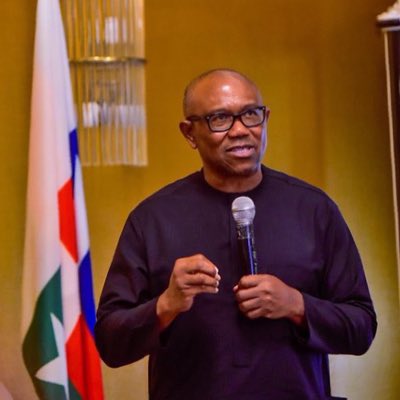
    Presidential candidate of the Nigeria Democratic Congress, Peter Obi, has vowed to prosecute and jail anyone found to have rigged an election under his administration, regardless of the number of votes involved.

    Obi made the declaration during an interview with ARISE News on Thursday as he outlined his plans for electoral reform, opposition politics and democratic governance ahead of the 2027 presidential election.

    The former Anambra State governor said electoral malpractice would attract serious consequences under his administration.

    “If I am the serving president of this country, whoever rigs election will be in jail. Even for one vote, you will be in jail,” Obi said.

    He also promised that opposition political parties would be allowed to operate freely and would not be subjected to harassment by his administration.

    According to him, opposition parties would be consulted on major national issues, arguing that governance should involve all political interests.

    Obi said such consultations would continue even when the president was outside the country on official trips, stressing the need for inclusive decision-making.

    He also pledged to remain accessible to Nigerians and said he would prioritise staying in the country rather than spending extended periods abroad.

    “Nobody will look for me and say, ‘Where is Peter?’ I won’t be on holiday; I must be in Nigeria,” he said.

    ## Obi Recalls Campaign Access For Opponents

    The NDC candidate criticised what he described as restrictions on political campaigns in some states, arguing that candidates should be allowed to campaign freely regardless of the political affiliation of the incumbent governor.

    Obi cited his tenure as Anambra governor, saying he allowed political opponents to campaign in the state and provided support for their activities.

    He recalled giving then-Lagos State Governor Babatunde Fashola access to his official convoy when Fashola visited Anambra to campaign.

    Obi also said he accompanied former President Olusegun Obasanjo during a campaign for another candidate in Anambra, adding that he did not regard political competition as a reason to prevent opponents from seeking votes.

    He similarly recalled receiving former Abia State Governor Orji Uzor Kalu when Kalu campaigned for Uche Ekwunife.

    According to Obi, such interactions reflected the democratic principle of allowing voters to hear from competing candidates before making their choices.

    Obi Rejects $123m Anambra Debt Claim

    The NDC candidate also rejected claims that he left Anambra State with about $123 million in debt after leaving office.

    Obi maintained that he did not approach any financial institution to borrow money or issue bonds on behalf of the state during his tenure as governor.

    He said that when he left office in March 2014, the state was not owing salaries, gratuities, pensions or contractors and suppliers whose completed projects had been certified and verified.

    Obi further disputed the treatment of World Bank and International Fund for Agricultural Development facilities in the debt figures, arguing that they were concessionary development facilities obtained by the Federal Government and subsequently made available to qualifying states.

    He said Anambra’s foreign debt stood at about $18 million when he assumed office and rose to about $30 million by the time he left office.

    Obi also claimed that he left more than $150 million in dollar-denominated funds and investments, which he said could have generated substantial returns for the state.

    He challenged the Anambra State Government and relevant institutions to verify his claims using official records, including his handover documents and banking records.

    The controversy comes amid an ongoing public dispute over the financial obligations inherited by successive administrations in Anambra. Anambra State Information Commissioner Law Mefor has separately alleged that eight loans associated with the former administration remain liabilities being repaid by the state.

    Obi Says No Rift With Soludo

    Addressing his relationship with Governor Chukwuma Soludo, Obi said he had no dispute with the incumbent governor.

    “I don’t have any dispute, talk less of being bitter, with my very respected elder brother, Governor Soludo,” he said.

    “We remain brothers. He’s the governor of my state, and I respect him.”

    Obi Questions Tinubu’s Absence

    Obi also criticised President Bola Tinubu’s prolonged absence from Nigeria, arguing that the president’s physical presence was important during periods of national difficulty.

    “The CEO being present is critical at a time of crisis, not delegation,” Obi said.

    “Yes, you have a chain of command, but where is the president? Nigerians ought to know.”

    Obi Disowns Campaign Council

    The NDC presidential candidate also said he was not aware of a reported campaign council linked to the Obedient and Kwankwasiyya movements.

    Obi said support groups should complement the political party rather than establish parallel structures.

    He said the NDC remained the political platform and that any support group should operate within its role of supporting the party.

    Obi also expressed willingness to discuss cooperation among opposition politicians ahead of the 2027 election, including discussions that could involve an aspirant stepping aside.

    He said his priority was not necessarily to become president but to see Nigeria function effectively.

    “I’m not desperate to be president; I’m desperate to see Nigeria work,” Obi said.

    He urged opposition parties to work towards credible elections, prevent political violence and focus their campaigns on issues affecting Nigerians.

    “What I’m saying is that we should all come together and save democracy, ensure that election is free, fair, and credible, violence-free, and that we campaign on issues affecting ordinary Nigerians,” he said.

  • Nigeria Demands Permanent African Representation On UN Security Council At 81st UNGA

    Nigeria Demands Permanent African Representation On UN Security Council At 81st UNGA

    Precious Nwonu, Enugu

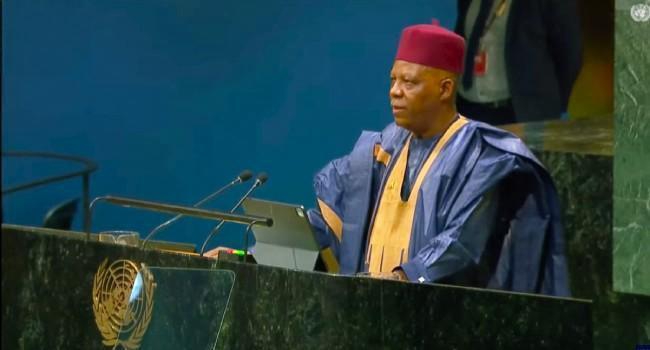
    Nigeria has renewed its demand for permanent representation for Africa on the United Nations Security Council, with Vice President Kashim Shettima calling for a reform of the global body to reflect the realities of the 21st century.

    Shettima made the call on Thursday in New York while delivering Nigeria’s national statement at the 81st United Nations General Assembly on behalf of President Bola Tinubu.

    The Nigerian delegation argued that the existing structure of the Security Council no longer reflects the distribution of global power and influence, noting that Africa remains without a permanent seat despite its significant role in international affairs.

    Nigeria called for at least two permanent seats for Africa, with the same rights and responsibilities enjoyed by existing permanent members, including veto powers for as long as the veto remains in existence.

    It also demanded five non-permanent seats for African countries on the Security Council.

    Shettima said Nigeria was prepared to take on greater responsibilities within the international system, citing the country’s contributions to peacekeeping and regional security efforts in Africa.

    He referenced Nigeria’s involvement in peace and security operations in countries including Liberia, Sierra Leone, Darfur, Mali and The Gambia.

    The Vice President also highlighted the roles of the Economic Community of West African States, the African Union and Gulf of Guinea partnerships in promoting mediation, democratic governance, counter-terrorism and maritime security.

    On development, Shettima identified inadequate financing as one of the major obstacles confronting sustainable development, particularly in developing countries facing significant debt-servicing obligations.

    Nigeria therefore called for reforms to the international financial architecture, greater access to concessional financing and debt sustainability frameworks that take the development needs of poorer countries into account.

    The Vice President also advocated innovative financing mechanisms involving private capital, blended finance, South-South cooperation and strategic partnerships.

    On climate change, Shettima rejected what he described as a false choice between economic development and climate action.

    He said developing countries should be allowed to industrialise, reduce poverty and expand access to energy while pursuing low-carbon development supported by technology transfer, capacity building and climate finance.

    He reiterated Nigeria’s commitment to achieving net-zero emissions by 2060 and outlined the country’s focus on renewable energy, clean cooking, gas as a transitional fuel, climate-smart agriculture and nature-based solutions.

    Shettima also addressed the growing influence of artificial intelligence, calling for technology to be directed towards improving human welfare rather than fuelling conflict.

    He said Nigeria was investing in digital infrastructure, broadband connectivity, innovation, research and technology entrepreneurship while urging international partners to collaborate with the country’s young population.

    The Vice President further called for stronger international cooperation against terrorism, organised crime, cyberattacks and illicit financial flows.

    He said Nigeria’s experience in combating Boko Haram, ISWAP and other armed groups had demonstrated that military responses alone were insufficient without education, economic opportunities, accountable governance and protection of citizens’ rights.

    Turning to conflicts around the world, Shettima called for urgent diplomatic action to address crises including the war in Sudan.

    He urged all parties to respect international humanitarian and human rights law, protect civilians and ensure humanitarian assistance reaches those in need.

    Nigeria also reaffirmed its support for peaceful dispute resolution, dialogue, mediation, peacebuilding and institution-building under the UN Charter.

    Shettima said the African Continental Free Trade Area remained an important opportunity to deepen regional integration, strengthen intra-African trade, promote industrialisation and attract investment.

    He called for greater value addition to Africa’s natural resources, arguing that the continent should move beyond its traditional role as an exporter of raw materials.

    The Vice President concluded by calling for a more inclusive and effective United Nations, saying international cooperation remained essential to addressing conflicts, climate change, technological transformation, development financing and other global challenges.


    Full Text of Nigeria’s Statement At The 81st UN General Assembly

    The Secretary-General of the UN, the Deputy Secretary-General, Excellencies, Heads of State and Government, Distinguished Delegates, Ladies and Gentlemen.

    I extend my warmest congratulations to you, Mr. President, on behalf of President Bola Ahmed Tinubu, on your election as President of the 81st Session of the United Nations General Assembly, and assure you of Nigeria’s full cooperation and support.

    I commend your predecessor’s stewardship of this Assembly. I also salute the Secretary-General, His Excellency Antonio Guterres, and the Deputy Secretary-General, Amina J. Mohammed, for steering the United Nations through storms that have sharpened our awareness of the cause of inaction.

    None of us can pretend that conflicts within our borders or in lands far beyond them do not exact a price from us. Such is the reach of our interdependence. Such is the agency of this Session’s sacred duty to restore trust in the international institutions we establish to reconcile our differences and advance our common interests.

    The persistence of conflicts across the world recalls the purpose for which the United Nations was founded, to spare succeeding generations the devastation of war. We must, therefore, return to the founding principles of dialogue, mutual respect, and collective responsibility.

    Nigeria stands by the Charter and its promise of a world in which diplomacy prevails over coercion, cooperation over isolation, and international law over arbitrary exercise of power.

    Mr. President, the reform of this institution must begin with the reconstitution of the Security Council, for the world of 2026 cannot remain captive to the distribution of power in 1945. Africa cannot continue to fill the council’s agenda while remaining absent from its permanent membership.

    Nigeria demands, in accordance with the Ezulwini Consensus and the CFTA Declaration, at least two permanent seats for Africa, with all the rights and responsibilities of permanent membership, including the veto, for as long as it exists, and five non-permanent seats in total.

    The authority to speak for humanity carries an obligation to represent it. Nigeria stands ready to assume greater responsibility on the strength of obligations honoured and sacrifices made over decades in the service of peace. From Liberia and Sierra Leone to Darfur, Mali, and The Gambia, we have committed personnel and resources when international solidarity required action.

    Through ECOWAS, the African Union, and our Gulf of Guinea partnerships, we continue to advance mediation, democratic governance, counter-terrorism, and maritime security.

    Mr. President, our foreign policy rests on the same conviction that guides our economic reforms. Through sound macroeconomic management, stronger institutions, private sector development, and strategic public investment, we seek to give practical meaning to our sustainable development commitments.

    This purpose binds our national advancement to our continent’s progress and to our responsibility to contribute to a peaceful, equitable, and prosperous world. We understand that governments and multilateral institutions earn trust when their decisions improve lives. Yet, none of these gains will matter if we turn a deaf ear to the trace gathering around our borders and further appeal.

    We inhabit the only planet known to sustain human life, and as long as that scientific path holds, we cannot pretend that we are insulated from conflicts as well. Geography offers no exemption from the consequences of a fractured world.

    Mr. President, we reject the false choice between development and climate action. Developing countries must industrialise, eradicate poverty, and expand energy access through low-carbon pathways supported by technology transfer, capacity building, and climate finance.

    Africa contributes less than four per cent of the greenhouse gas emissions, yet we have disproportionate consequences. Nigeria remains committed to the Paris Agreement and an equitable energy transition that reflects historical responsibility and capacity while protecting people’s right to development.

    Under our energy transition plan, we are working towards net-zero emissions by 2060 while expanding access to affordable, reliable, and sustainable energy. This approach combines renewable energy, clean cooking, and gas as a transitional fuel, with climate-smart agriculture and nature-based solutions.

    Finance must be governed by equity and shared responsibility, rather than charity, with international commitments translated into accessible, predictable, and adequately funded mechanisms that enable developing countries to pursue climate action without compromising development objectives.

    Excellencies, we refuse to surrender our technological future to paranoia. An invention can be destructive or beneficial depending on the purpose it serves and the judgment of those who use it. A knife can take life in the hands of an assailant and can save one in the hands of a surgeon.

    We can deploy artificial intelligence to wage war or use it to transform healthcare, agriculture, governance, and economic productivity. Much of the anxiety surrounding AI reflects the distrust we have allowed to grow amongst us.

    Nigeria is investing in digital public infrastructure, broadband connectivity, innovation systems, research institutions, and technology entrepreneurship. We invite the world to work with our inventive, resourceful, and enterprising young people to direct AI towards humanity’s advancement rather than its destruction.

    Mr. President, one of the greatest obstacles to sustainable development is inadequate financing. Many developing countries devote substantial resources to debt servicing at the expense of education, healthcare, and infrastructure.

    Nigeria therefore calls for reform of the international financial architecture, wider access to concessional financing, and debt sustainability frameworks that recognise developmental needs. We also support innovative financing through private capital, blended finance, South-South cooperation, and strategic partnerships for sustainable development, climate adaptation, and resilient infrastructure.

    Nigeria further recognises the African Continental Free Trade Area as one of the continent’s most transformative opportunities. It can strengthen regional value chains, expand intra-African trade, promote industrialisation, and attract investment.

    Africa must move beyond its historical role as an exporter of raw materials for greater value addition, manufacturing, technological innovation, and knowledge-driven growth. Our abundant natural resources must become engines of shared prosperity rather than sources of perpetual dependency.

    Mr. President, no nation, however formidable its defences, can secure itself completely against dangers sustained beyond its borders. Terrorism, organised crime, cyber attacks, and illicit finance exploit the gaps between our national responses, drawing strength from the divisions that weaken collective action.

    Nigeria’s prolonged struggle against Boko Haram, ISWAP, and other armed groups has taught us that military victories require enduring foundations in education, economic opportunity, accountable governance, and communities whose rights and dignity are protected. Development cannot take root while violence repeatedly uproots livelihoods, and peace cannot endure while injustice and exclusion replenish the ranks of those who threaten it.

    Our common security, therefore, demands cooperation equal to the reach of the trade before us. We must exchange intelligence, strengthen institutional capacity, interrupt the financing of violence, and prevent weapons from crossing borders that our responses too often fail to cross.

    The turmoil in the Sahel illustrates how insecurity in one territory can imperil its neighbours, displace populations, and frustrate commands, regional integration, and democratic governance. As a founding member of ECOWAS, Nigeria upholds regional solidarity and African leadership in resolving these challenges, reinforced by principal international partnerships.

    No country can claim lasting safety while the forces capable of destabilising it retain sanctuary, resources and recruits elsewhere.

    Excellencies, Nigeria remains committed to the peaceful settlement of disputes under the United Nations Charter. The conflicts in Sudan and other war-torn countries demand urgent diplomacy to address their humanitarian, economic, and geopolitical consequences.

    All parties must uphold international humanitarian and human rights law, protect civilians, and facilitate humanitarian access. Negotiated settlements must respect sovereignty and territorial integrity. Within and beyond our continent, no claim of security can justify starving children, denying relief to civilians, or erasing communities from the land they call home.

    We should all be afraid of a world in which we can no longer tell the victim from the aggressor. When our investment in propaganda shields perpetrators from justice to the point that telling the truth becomes a crime, the promise of this institution stands betrayed.

    We place our faith in diplomacy because military victories alone cannot secure lasting peace. Dialogue, reconciliation, and inclusive political processes must give people a stake in ending violence and preserving the agreements that follow.

    The United Nations must therefore strengthen peacekeeping and give greater attention to peacebuilding, mediation, institution building, and sustainable development. Prevention must command greater resources and political attention.

    Mr. President, Africa is ready for the future. Our resilience, our ingenuity, our useful population, our natural wealth, and our expanding markets can make us a major driver of global growth in this century. The African Continental Free Trade Area offers exceptional scope to deepen regional integration, accelerate industrialisation, and strengthen our place in global value chains.

    Developing countries must be recognised as indispensable partners, whose contributions to global solutions and shared prosperity extend far beyond their need for assistance. Such a partnership requires a United Nations that evolves with the aspirations of the present and future generations, institutions that adapt, preserve their relevance, those that resist change imperil it.

    Nigeria remains optimistic because history shows that countries acting with common purpose and determination can overcome obstacles once considered insurmountable. Our generation has the privilege of shaping the future and the responsibility to answer for it.

    Those who follow us will judge our courage in evolving outdated institutions, building cooperation across divisions, protecting the planet, and directing technology responsibly.

    Mr. President, Excellencies, Distinguished Delegates, Nigeria pledges cooperation over confrontation, dialogue over division, hope over fear, and partnership over isolation. These choices must shape institutions that respond to the legitimate aspirations of all. Restoring trust requires us to honor our obligations to one another, and to manage the changes before us with justice, wisdom, and compassion.

    The world looks to this Assembly for leadership, and our debates must lead to action worthy of that expectation. Nigeria believes that the humanity we share is stronger than the divisions we have met, and that cooperation remains wider than conflict.

    A reformed, inclusive, and effective United Nations is indispensable to the peaceful, just, and sustainable world that future generations deserve. Whatever our differences, I repeat, whatever our differences, we must remember that humanity is our oldest citizenship, and peace is the inheritance we owe every child.

    I thank you for your kind attention.

    Thank you.
     

  • NECO Releases 2026 SSCE Results, 58.67% Record Five Credits Including English, Mathematics

    NECO Releases 2026 SSCE Results, 58.67% Record Five Credits Including English, Mathematics

    Precious Nwonu, Enugu

    The National Examinations Council has released the results of the 2026 Senior School Certificate Examination (SSCE) Internal, with 58.67 per cent of candidates obtaining at least five credits, including English Language and Mathematics.

    The Registrar and Chief Executive of NECO, Professor Dantani Wushishi, announced the results on Thursday at the council’s headquarters in Minna, Niger State.

    Wushishi said 1,378,048 candidates registered for the examination, comprising 682,352 males and 695,696 females.

    According to him, 1,371,992 candidates eventually sat for the examination.

    He disclosed that 1,162,118 candidates, representing 84.70 per cent, obtained five credits and above irrespective of their performance in English Language and Mathematics.

    The examination was conducted across Nigeria’s 36 states and the Federal Capital Territory, as well as six countries outside the country.

    The foreign centres were located in Benin Republic, Equatorial Guinea, Niger Republic, Côte d’Ivoire, Togo and Saudi Arabia.

    The 2026 SSCE Internal was conducted between June 15 and July 23, while the nationwide marking exercise took place from August 17 to September 4.

    Wushishi also announced a significant decline in examination malpractice cases recorded during the exercise.

    He said 1,406 candidates were involved in various forms of examination malpractice in 2026, compared with 3,878 candidates recorded in 2025.

    This represents a 64.74 per cent reduction in the number of candidates involved in malpractice.

    The NECO boss attributed the decline to improved examination procedures, enhanced monitoring and increased collaboration with security agencies and other stakeholders.

    He said the measures were aimed at protecting the integrity and credibility of the examination.

    Wushishi further disclosed that 1,334 candidates with special needs participated in the 2026 examination.

    He said the council remained committed to providing necessary arrangements to promote inclusiveness in its examinations.

    The NECO registrar commended the Federal Government, the education ministers, the council’s governing board, the National Assembly, security agencies, state governments, schools and other stakeholders for their support during the examination process.

    He also praised NECO staff for their commitment to the successful conduct, marking and release of the results.

    Wushishi formally declared the 2026 SSCE Internal results released and directed candidates to access their results through the NECO website using their examination registration numbers.

    He urged candidates to remain committed to their academic pursuits, assuring stakeholders that the council would continue to uphold the credibility, fairness and integrity of its examinations.

  • FG Reduces Interest Rate On Late Tax Payments From October

    FG Reduces Interest Rate On Late Tax Payments From October

    Precious Nwonu, Enugu

    The Federal Government has introduced a new tax administration order that will reduce the interest charged on late payment of taxes from October 1, 2026.

    The Nigeria Tax Administration Order 2026 was signed by the Minister of Finance and Coordinating Minister of the Economy, Taiwo Oyedele, according to a statement by the Federal Ministry of Finance.

    The order was issued pursuant to Section 65 of the Nigeria Tax Administration Act, 2025, which provides for interest on tax liabilities that remain unpaid after the due date.

    Under the new framework, the interest rate for taxes payable in naira will be linked to the Central Bank of Nigeria’s Monetary Policy Rate, with an additional one percentage point.

    Oyedele explained that the new rate represents a reduction from the previous five-percentage-point spread.

    However, the applicable interest rate will not fall below the yield on 364-day Nigerian Treasury Bills, reflecting the government’s cost of borrowing when tax payments are delayed.

    For tax liabilities denominated in foreign currencies, the order sets the interest rate at the Secured Overnight Financing Rate, a benchmark for US dollar borrowing, plus six percentage points.

    The order further provides that if SOFR is discontinued, its officially recognised successor rate will be used.

    The Nigeria Revenue Service has been directed to publish the applicable interest rates on its website by the third business day of every month.

    The minister said the new system would give taxpayers greater certainty about the financial consequences of delaying tax payments while ensuring that late payment does not become a cheaper source of financing than borrowing from the market.

    Oyedele said the reform was also designed to promote fairness and predictability in tax administration by ensuring that taxpayers know the applicable rates in advance.

    The new rates will apply to interest accruing from October 1, 2026, including interest on tax liabilities that became due before that date.

    However, interest that accrued before October 1 will remain subject to the rules applicable at the time, where specifically provided for under the previous regime.

    The 2026 order replaces the 2017 notice on interest charged on unpaid taxes, as well as other earlier notices dealing with the same subject.

    The reform does not alter the 10 per cent penalty for late payment prescribed under Section 65 of the Nigeria Tax Administration Act.

    Tax authorities will also retain the power under Section 66 of the Act to waive penalties or interest where sufficient grounds are established.

    Oyedele urged taxpayers to file their returns and settle their tax obligations on time, while advising those with outstanding liabilities to make payments promptly or engage the relevant tax authority to address their obligations.

    The minister also encouraged taxpayers to regularly check the Nigeria Revenue Service website for the monthly applicable interest rates.

  • Enugu LG Polls: Police, Govt Announce Movement Restrictions, Massive Security Deployment

    Enugu LG Polls: Police, Govt Announce Movement Restrictions, Massive Security Deployment

    The Enugu State Government and the Enugu State Police Command have announced movement restrictions and heightened security measures ahead of Saturday’s local government elections across the state.

    The Enugu State Independent Electoral Commission (ENSIEC) is scheduled to conduct chairmanship and councillorship elections in the state’s 17 local government areas and 260 wards on September 26, 2026.

    In a statement on Thursday, September 24, the Commissioner of Police, Enugu State Command, CP Mamman Bitrus Giwa, ordered the massive deployment of police personnel, operational and intelligence assets across the 17 LGAs and 260 wards ahead of the elections.

    The Police Command said CP Giwa also ordered the restriction of human and vehicular movements across the state from 8am to 4pm on election day, except for persons on essential duties and duly accredited election officials.

    He further barred quasi-security outfits from participating in election security and directed all armed security personnel on VIP escort duties not to escort VIPs to polling units.

    The Commissioner assured voters and the public of adequate security before, during and after the elections, in collaboration with other security agencies.

    He urged eligible voters to turn out and exercise their franchise peacefully, while warning political parties, candidates and their supporters against electoral malpractices and acts capable of disrupting the conduct of the elections.

    According to him, violators would face the full weight of the law.

    The Police Command also urged residents to report suspicious persons and activities capable of undermining the peaceful conduct of the elections to the nearest police station or through 08032003702, 08086671202 or 08021709005.

    The statement was signed by the Police Public Relations Officer, SP Daniel Ndukwe, on behalf of the Enugu State Command.

    State government announces 6am restriction

    In a separate Public Service Announcement signed by the Secretary to the Enugu State Government, Prof. Chidiebere Onyia, on Thursday, the state government announced a restriction of vehicular movement and other forms of transportation from 6am to 4pm on Saturday.

    The government said the restriction was intended to ensure the peaceful, orderly, secure and hitch-free conduct of the local government elections.

    It said there would be no vehicular movement on roads or other forms of transportation within the state during the period, except persons and vehicles performing essential election-related and emergency services.

    Those exempted include ENSIEC officials and accredited election personnel, security personnel deployed for election duties, accredited election observers, authorised media practitioners, health workers, ambulances, firefighters and other persons expressly authorised to perform essential election or emergency duties.

    The government urged residents, political parties, candidates, supporters and other stakeholders to comply with the directive and conduct themselves peacefully and responsibly before, during and after the elections.

    It also encouraged residents to exercise their civic responsibilities in accordance with guidelines issued by ENSIEC and other relevant authorities.

    “Security agencies have been directed to ensure strict enforcement of this directive and to maintain law and order throughout the elections,” the statement said.

    The state government acknowledged that the restriction could cause temporary inconvenience but appealed for the cooperation and understanding of residents as it works with ENSIEC and other relevant authorities to ensure peaceful and orderly elections.

    The government statement was signed by Prof. Chidiebere Onyia, Secretary to the State Government, and dated September 24, 2026.

  • NIMC Denies NIN Database Breach, Urges Nigerians To Ignore Viral Video

    NIMC Denies NIN Database Breach, Urges Nigerians To Ignore Viral Video

    Precious Nwonu, Enugu

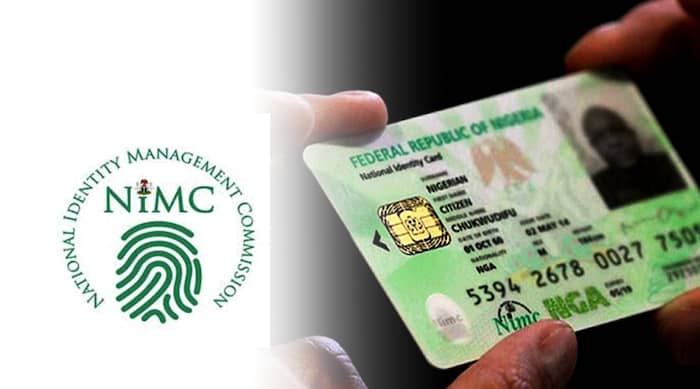
    The National Identity Management Commission has denied claims that Nigeria’s National Identification Number database was compromised and that citizens’ NIN and Bank Verification Number details were being sold online.

    The commission described the allegations as false and unfounded, urging Nigerians to disregard a viral video making the claims.

    The video circulating on social media alleged that NIN and BVN details could be obtained for as little as N100. It also claimed that some NIMC officials in Lagos were selling individuals’ identification information for N1,000 outside the commission’s office.

    However, in a statement issued on Thursday, NIMC said the claims were recycled from a report published in 2024, which it had previously dismissed.

    The commission said its National Identity Database had not been breached or compromised.

    NIMC explained that it operates multi-layered security systems designed to protect the personal information of registered citizens and legal residents.

    It expressed concern that the circulation of unverified information could mislead members of the public and create unnecessary panic over the safety of their personal data.

    The commission advised Nigerians to rely on information published through its official communication channels for updates concerning the National Identity Management System.

    NIMC also drew attention to its NIN Authentication service, known as NINAuth, which it said was developed to improve the security and privacy of identity verification.

    According to the commission, the service allows NIN holders to give explicit consent before their information is shared for Know Your Customer processes and other verification purposes.

    NIMC said NINAuth can be used for identity verification in areas including SIM registration, passport and immigration services, tax-related processes and financial transactions without unnecessarily exposing a person’s raw NIN or other personal information.

    The commission said the initiative was in line with provisions of the NIMC Act, 2026, and the Nigeria Data Protection Act, 2023, which require personal data to be handled fairly, lawfully and transparently.

    NIMC added that it would continue to work with security agencies and other relevant institutions to strengthen its systems and tackle the spread of misinformation.

    It advised anyone with concerns about their NIN or personal information to contact the commission through its official channels.

  • Kingibe Fires Back At Wike: You Can’t Intimidate Me Into Silence

    Kingibe Fires Back At Wike: You Can’t Intimidate Me Into Silence

    Precious Nwonu, Enugu

    Senator Ireti Kingibe has rejected comments by the Minister of the Federal Capital Territory, Nyesom Wike, that she will not return to the Senate after the 2027 elections.

    Kingibe, who represents the FCT in the Senate, said no individual politician could determine her political future, insisting that the people of the territory would decide who represents them.

    Wike had on Tuesday said Kingibe would not return to the Senate, while expressing support for former senator Philip Aduda for the FCT senatorial seat. He made the remarks while inspecting ongoing road projects in Abuja.

    The disagreement between the two politicians followed Kingibe’s criticism of the FCT Administration over alleged borrowing without the required approval of the National Assembly.

    Wike dismissed the allegation, arguing that government borrowing for infrastructure projects must form part of the budget and receive the necessary legislative approval. He also criticised Kingibe’s understanding of the borrowing process and said she had little to offer residents of the FCT.

    Responding on Thursday, Kingibe said she would not be intimidated by political pressure, stressing that questioning government actions was part of her responsibility as a legislator.

    She maintained that raising concerns about public borrowing and the use of public funds should not be interpreted as disrespect to the FCT minister or the administration.

    Kingibe challenged Wike to produce the Senate’s Votes and Proceedings showing when the loans she questioned were presented to and approved by the chamber.

    She said she was aware that the matter had not been brought before the Senate, while noting that she could not speak for the House of Representatives.

    The senator also insisted that no public office holder was beyond scrutiny, regardless of the position occupied.

    Her latest response adds to an increasingly public disagreement between the senator and the FCT minister over the administration of the territory, its financing and the 2027 Senate election.

  • UNGA 81: Udeh Woos Silicon Valley Investors for $1bn Nigeria Research Deal

    UNGA 81: Udeh Woos Silicon Valley Investors for $1bn Nigeria Research Deal

    Nigeria is seeking up to $1 billion in investments and commercial partnerships from Silicon Valley investors over the next 12 months as the Federal Government moves to turn locally developed research into marketable products and services.

    The Minister of Innovation, Science, and Technology, Dr. Kingsley Udeh, SAN, disclosed this in New York after a series of meetings with technology executives and investors on the sidelines of the 81st United Nations General Assembly (UNGA).

    Udeh said the engagements focused on the Federal Government’s Energize Commercialisation Now (ECoN) programme, which seeks to bridge the gap between research conducted in Nigerian institutions and the commercial production of innovative goods and services.

    “We engaged with big players in Silicon Valley who are interested in investing in Nigeria, particularly as it relates to our flagship programme called Energize Commercialisation,” Udeh said.

    According to the minister, the proposed partnership is expected to attract private capital and expertise into Nigeria’s science, technology and innovation ecosystem while creating opportunities for job creation and economic growth.

    He said the initiative also supports President Bola Tinubu’s ambition of building a $1 trillion economy by expanding the contribution of technology, innovation and private-sector investment.

    “Consistent with Mr. President’s agenda of taking our economy to a $1 trillion GDP, we have been able to meet key players from Silicon Valley,” he said.

    Udeh said an agreement between Nigeria and prospective partners had already been drafted, with the memorandum of understanding (MoU) forwarded to Abuja for review.

    He said the parties were expected to sign the agreement during the UN General Assembly meetings, subject to the completion of the necessary processes.

    Although the minister did not disclose the names of the companies or investors involved, he said the proposed collaboration could deliver “substantial value” to Nigeria’s science and innovation sector and the wider economy.

    He put the potential value of the investments, commercial partnerships and other economic opportunities arising from the discussions at as much as $1 billion within one year.

    “From the discussions we have had, if we pull in the various opportunities that have been discussed and are already reflected in the MoU, Nigeria can get from this intervention as much as $1 billion in the course of one year,” he said.

    Udeh also highlighted the involvement of Nigerians working in Silicon Valley as a significant aspect of the discussions, saying their expertise and connections could help open opportunities for Nigeria.

    “A very interesting and cheering aspect of the engagement I had in the course of UNGA is that key members of the Silicon Valley players are Nigerians,” he said.

    “It is impressive that we have Nigerians making things happen in Silicon Valley, and they are happy to bring these opportunities home to add value to Nigerian science, technology and innovation.”

    The proposed deal comes as the Federal Government seeks to attract diaspora expertise and private investment to strengthen the commercialisation of research and reduce the gap between innovations developed in Nigerian institutions and their adoption in the marketplace.

  • CCB Verifies Assets Of Over 20 Ministers, 30 Permanent Secretaries

    CCB Verifies Assets Of Over 20 Ministers, 30 Permanent Secretaries

    Precious Nwonu, Enugu

    The Code of Conduct Bureau has investigated and verified the assets of more than 20 ministers and 30 permanent secretaries as part of efforts to strengthen accountability among public officials.

    The Chairman of the CCB, Abdullahi Bello, disclosed this on Wednesday in Abuja at an anti-corruption and asset-tracing stakeholders’ workshop organised by the Human and Environmental Development Agenda in collaboration with the Platform to Protect Whistleblowers in Africa.

    Bello said the bureau had moved beyond simply collecting asset declaration forms, noting that it now scrutinises declarations, investigates suspected violations and prosecutes offenders where necessary.

    According to him, the bureau’s verification exercise has focused particularly on senior government officials.

    He said the CCB had also interviewed and verified the assets of officials linked to more than 20 ministers, 30 permanent secretaries, 32 health agencies and other high-profile public officers.

    Bello explained that officials could be invited to the bureau for face-to-face examination of their declarations and supporting records.

    He said the bureau compares officials’ assets at the beginning and end of their tenure to identify unexplained changes that may warrant further investigation.

    The chairman, however, stressed that the CCB does not have to wait until an official leaves office before commencing an investigation.

    He said allegations or intelligence concerning a public officer could trigger an investigation at any point during the person’s tenure.

    Bello also described asset tracing as a key component of the bureau’s anti-corruption work, saying the process helps investigators follow suspected illicit wealth and pursue recovery.

    He disclosed that the CCB had secured convictions and obtained forfeiture of properties and funds in cases involving breaches of the Code of Conduct.

    Bello further explained that sanctions for violations could include removal from office, disqualification from holding public office for up to 15 years and forfeiture of assets acquired through a breach.

    At the workshop, HEDA Executive Secretary, Arigbabu Sulaimon, called for stronger cooperation among government agencies, civil society organisations and other stakeholders involved in the fight against corruption.

    Sulaimon said the workshop was designed as a technical platform for improving intelligence sharing and strengthening collaboration between state institutions and civil society.

    He said civil society organisations could support investigations through grassroots monitoring and open-source intelligence, which could provide leads for law enforcement agencies.

    The HEDA executive secretary also advocated greater use of the Proceeds of Crime Act and the CCB’s statutory powers to trace, recover and transparently manage assets linked to criminal activities.

    He urged authorities to make asset declaration a more effective mechanism for detecting unexplained wealth and abuse of public office, rather than treating it as a routine administrative exercise.

    Sulaimon also called for stronger legal protection and safer reporting channels for whistleblowers, arguing that individuals who expose corruption need adequate safeguards against retaliation.

  • First Niger Bridge To Reopen Next Week, Umahi Assures

    First Niger Bridge To Reopen Next Week, Umahi Assures

    Precious Nwonu, Enugu

    The Federal Government has announced plans to reopen the First Niger Bridge to motorists next week following the completion of major rehabilitation works on the bridge connecting Anambra and Delta states.

    The Minister of Works, David Umahi, gave the assurance on Wednesday after inspecting the repair works at the Onitsha Bridge Head.

    The bridge was shut earlier in September after vandals reportedly removed critical components, including bolts, nuts and sections of the steelwork forming part of the expansion joint.

    The closure was initially scheduled to last until September 21 but was extended by another week due to persistent rainfall, which disrupted repair activities.

    Umahi said the contractor, SKECC, had made considerable progress on the rehabilitation, adding that the vandalised bolts had been replaced and firmly secured.

    He also disclosed that the specialised expansion joint removed from the bridge had been manufactured and transported to Nigeria for installation.

    The minister said the progress recorded within about 10 days was encouraging but stressed that the bridge would only be reopened after the necessary structural works had been completed.

    “We are not going to be stampeded to open the bridge until the major structural work has been achieved,” Umahi said.

    He directed the contractor to carry out additional improvements, including repainting structural components, bridge caps and sections within the carriageway.

    The minister also ordered the removal of unauthorised advertisements mounted on the bridge and directed the installation of additional solar-powered streetlights.

    He further instructed the contractor to complete the installation of CCTV cameras, with the surveillance system to be connected to the Second Niger Bridge to strengthen monitoring and security around the facility.

    Umahi also ordered a comprehensive assessment of the bridge’s structural components, including elements above and below the water level.

    According to him, the assessment report must be submitted before the current rehabilitation phase is brought to an end.

    The minister also directed a review of the proposed asphalt works on the bridge approaches, saying concrete should be used on portions that would require future reconstruction.

    He explained that the measure would prevent government resources from being wasted on asphalt that might later have to be removed when reconstruction works commence.

    Umahi added that one carriageway could be opened to traffic once the concrete achieved the required strength, while rehabilitation work continued on the other carriageway.

    Meanwhile, the Delta State Commissioner for Works, Rural Roads and Public Information, Charles Aniagwu, commended the Federal Government for the pace and quality of the rehabilitation.

    Aniagwu recalled that Umahi had inspected the bridge on August 28 and directed the immediate replacement of the vandalised bolts, nuts and expansion-joint components.

    He said the contractor had complied with the directives, while damaged sections of the asphalt surface had also been removed and replaced.

    “We are pleased with the speed of work. We also appreciate our people who demonstrated a whole lot of patience to understand that you are after their safety,” Aniagwu said.

    The commissioner said the rehabilitation had significantly improved the condition of the bridge and expressed confidence in the quality and durability of the repairs.

    He also commended motorists and other road users for their cooperation during the closure, saying their patience had contributed to the smooth execution of the rehabilitation works.