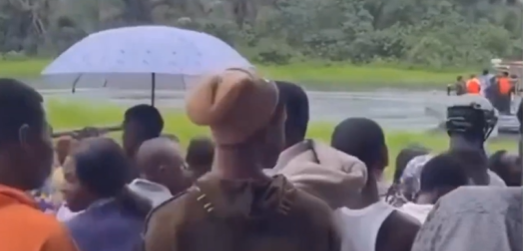
Many people were feared dead after a helicopter reportedly crashed in Igbokoda, headquarters of Ilaje Local Government Area of Ondo State, on Monday.
Vanguard gathered that the incident, which occurred in the coastal community, sparked panic among residents, although details of the crash remained sketchy as of press time.
The identity of the helicopter and the number of people on board could not be immediately ascertained.
Relevant agencies contacted for confirmation pleaded for time to establish the facts surrounding the incident.
A community leader, who spoke in confidence, confirmed the crash but said residents were yet to establish the exact location and other details.
According to him, “Yes, it is true. A helicopter crashed at Igbokoda, Ondo State, but we don’t know the exact place and other details.”
The state Police Public Relations Officer, DSP Jimoh Abayomi, said he was not aware of the incident when contacted.
Abayomi, however, said he would get back to journalists after conducting further checks.
As of press time, there was no official confirmation of the reported casualties or details of the aircraft involved. Vanguard
A joint security operation involving the Nigerian Army, Department of State Services and the Western Nigeria Security Network, codenamed Amotekun, has killed a senior commander of the Islamic State West Africa Province in Ondo State.
The terrorist leader, identified as Abdussamad Ohida, also known as Anwar, was reportedly eliminated during an intelligence-led operation in a forest in Owo at the weekend.
Security sources said the operation targeted an ISWAP hideout following intelligence on plans by the group to carry out attacks in parts of southern Nigeria.
Ohida was reportedly killed alongside several other members of the terrorist group after security operatives launched a surprise assault on the camp.
Sources said Ohida previously served as deputy to the ISWAP Central Nigeria commander, Abu Ikrimah, also known as Abu Uwais, who was arrested by the DSS in 2023.
Following Ikrimah’s arrest, Ohida allegedly took over the coordination of ISWAP activities across parts of the North-Central and southern regions.
According to the sources, intelligence obtained during the interrogation of Ikrimah helped security agencies uncover Ohida’s alleged plans to launch attacks during the forthcoming Yuletide period.
The sources further claimed that the planned attacks were intended to target civilians and disrupt preparations for the 2027 general elections.
The intelligence was reportedly corroborated by international partners, including the United Kingdom, before the operation was carried out.
Ohida was also accused of involvement in several attacks on security formations in the country.
One of the sources alleged that he planned and executed the December 31, 2025 attack on Ipele Divisional Police Station in Owo, where eight AK-47 rifles were reportedly taken before the facility was destroyed with an explosive.
He was also linked to the July 28, 2022 attack on a military checkpoint along the Suleja-Zuba Road in Niger State, which reportedly resulted in the deaths of soldiers, security personnel and civilians.
The sources further attributed the July 11, 2022 attack on Kuje Correctional Centre in Abuja and attacks on police formations in Kogi State to the deceased ISWAP commander.
These included the April 23, 2022 attack on Ogaminana Police Station in Adavi Local Government Area, where five police officers were reportedly killed, and the February 7, 2022 attack on the Okene Area Command.
Ohida was also accused of planning and executing the December 24, 2020 attack on a naval checkpoint in Okene, Kogi State, which resulted in the death of two naval officers.
A security source described the operation as a significant setback to ISWAP’s leadership and expansion efforts in central and southern Nigeria.
The source said Ohida’s death, coming months after the reported killing of ISIS leader Abu Bilal al-Minuki, could further disrupt the terrorist group’s efforts to expand its operational network in Nigeria.
The operation highlights the increasing cooperation among security agencies in intelligence gathering and counter-terrorism operations across different parts of the country.
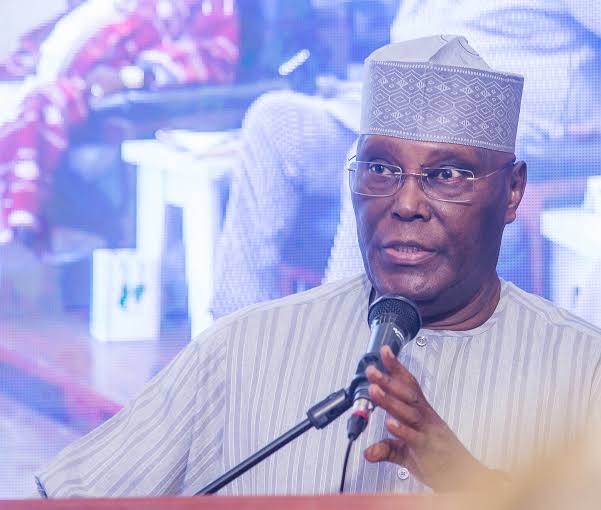
Former Vice President and African Democratic Congress presidential candidate, Atiku Abubakar, has called on the Federal Government, Imo State Government and security agencies to urgently secure the release of prospective National Youth Service Corps members abducted in the state.
Atiku made the call on Monday in a post on X, describing the abduction as “heartbreaking” and urging authorities to ensure that all those still in captivity return home safely.
The incident occurred on Thursday, October 1, when gunmen attacked two commercial buses carrying prospective corps members along the Owerri-Onitsha Road in the Umunoha area of Mbaitoli Local Government Area of Imo State.
The victims were travelling from Ibadan, Oyo State, to NYSC orientation camps in Abia and Akwa Ibom states when the attackers struck at about 6:30am.
According to Atiku, some of the abducted travellers had been rescued, while others remained in captivity.
“The abduction of 20 travellers, including prospective corps members, in Imo State is heartbreaking. Some have been rescued, but others remain in captivity,” he said.
“I urge the Federal and Imo State governments, and all security agencies, to act with urgency and bring everyone still being held home safely.”
The Imo State Police Command initially reported that 10 passengers had been rescued and the two buses recovered, while other passengers were still missing. However, accounts from families later indicated that 20 prospective corps members were among those being held by the abductors.
Security agencies have since intensified efforts to locate and rescue the victims.
The Inspector-General of Police, Olatunji Disu, deployed the Deputy Inspector-General of Police in charge of Operations, Shehu Nadada, alongside two commissioners of police, to coordinate the operation.
The Imo State Commissioner of Police, Audu Bosso, also disclosed that security operatives had traced the suspected kidnappers to a bush hideout through intelligence gathering and drone surveillance.
The planned assault on the hideout was reportedly delayed after intelligence indicated that the area had been fitted with improvised explosive devices. Security agencies are expected to deploy specialised equipment to safely access the location.
Atiku also raised concerns over the continued captivity of schoolchildren abducted from Mussa and Lassa communities in Borno State.
He said more than 70 pupils and students abducted from the two communities remained in captivity, adding that their families deserved regular updates on efforts to secure their release.
The Mussa incident occurred on May 15 when suspected insurgents attacked schools in the Askira/Uba Local Government Area and abducted dozens of children. The number of missing pupils has varied, with the Borno State Government previously putting the figure at about 44.
On June 29, suspected insurgents attacked Government Day Secondary School in Lassa while students were taking their National Examinations Council examinations. Ten students were rescued during an immediate military operation, while subsequent reports indicated that 36 students and a teacher remained in captivity.
By late September, the Borno State chapter of the Christian Association of Nigeria was calling for the rescue of 78 schoolchildren from Mussa and Lassa who had spent more than 100 days in captivity.
Families and community leaders have repeatedly called for stronger government action to secure the release of the children.
Atiku also criticised the security record of the administration of President Bola Tinubu, arguing that Nigerians remained vulnerable to attacks on roads, in communities and around schools despite previous assurances that funds saved from the removal of the fuel subsidy would strengthen national security.
He said the insecurity affecting young Nigerians extended from attacks on students to the abduction of prospective corps members travelling to orientation camps.
The ADC presidential candidate also questioned the award of pipeline security contracts to companies he described as politically connected, arguing that the government’s primary responsibility should be the protection of lives and property.
The Independent National Electoral Commission will on Tuesday hold a World Press Conference and National Stakeholders’ Meeting to update Nigerians on its preparations for the 2027 general elections.
The engagement, scheduled for October 6 at the Bola Ahmed Tinubu International Conference Centre in Abuja, will come as the commission marks the 100-day milestone to the first ballot of the 2027 elections.
INEC said its Chairman, Prof. Joash Amupitan, SAN, would address the gathering alongside other stakeholders involved in the electoral process.
The commission is expected to provide updates on the voters’ register, candidate nominations, logistics and measures being implemented to protect the integrity of the elections.
INEC said the meeting was part of its efforts to strengthen transparency, public communication and collaboration with institutions and groups involved in the electoral process.
Political party leaders, security agencies under the Inter-Agency Consultative Committee on Election Security, members of the diplomatic corps, development partners, civil society organisations and election observer groups are expected at the event.
Also expected are disability rights advocates, religious and traditional leaders, youth organisations and media executives.
The meeting comes as INEC moves into a critical stage of preparations for the elections, with the commission expected to address administrative, logistical and other operational issues ahead of polling.
INEC’s official timetable lists February 20, 2027, as the date for the presidential and National Assembly elections, while the governorship and State Houses of Assembly elections are scheduled for March 6, 2027.
The electoral body has also continued preparations around voter services and other election-related processes, with its official platform providing information on voter registration, polling units and other services.
The Tuesday event is scheduled to begin at 10am, with attendance at the venue restricted to invited participants.
INEC said the proceedings would be broadcast live on major national television networks and streamed through its official social media platforms to allow Nigerians who are unable to attend to follow the discussions.
Accredited journalists and invited guests will be required to present their invitation cards or accreditation badges at security checkpoints, the commission said.
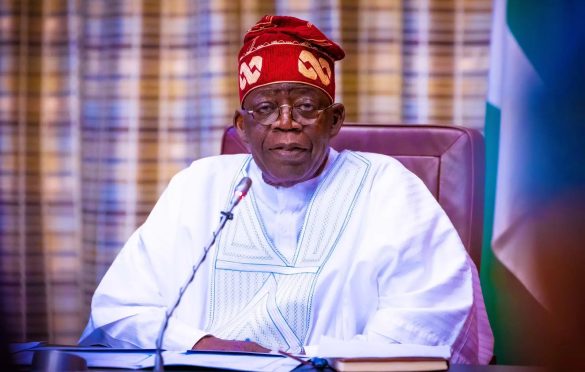
President Bola Tinubu has said the operationalisation of new Nigerian Army formations in Zamfara, Kebbi, Oyo and Osun states will strengthen the military’s ability to respond to security threats and protect vulnerable communities.
Tinubu disclosed this in a statement posted on his official X account on Sunday, as he highlighted measures by his administration to improve the operational capacity and welfare of the Armed Forces.
According to the President, positioning the new formations closer to communities would enable troops to respond more quickly when residents come under attack.
The development is part of a broader restructuring of the Nigerian Army. In July, Tinubu approved the expansion of the Army from eight to 12 divisions, alongside the recruitment of 28,000 additional personnel and the acquisition of military equipment to strengthen national security operations.
Under the new structure, the Army has reorganised its areas of responsibility, with the 2 Division in Ibadan covering Oyo, Osun, Ekiti and Ondo states, while the 8 Division in Sokoto is responsible for Sokoto, Kebbi and Zamfara.
Tinubu said the Federal Government was also accelerating the construction of new military barracks and depots in Abuja, Ekiti, Ebonyi and Kogi states, while the project in Osun State had been completed.
He said the infrastructure projects were necessary to improve the working and living conditions of military personnel and their families.
“As we demand more from our men and women in uniform, we must do more to support them and their families,” the President said.
Tinubu also pointed to the recent increase in military personnel’s salaries, saying feedback from servicemen and women indicated that the adjustment was improving their welfare.
The President stressed that military service affects not only personnel but also their families, particularly when troops are deployed away from home.
“Every deployment is a sacrifice made by a family too,” he said.
Tinubu added that, as Commander-in-Chief, he had a responsibility to ensure that members of the Armed Forces had the resources and support required to perform their duties.
The expansion of the Army’s structure comes amid continued security challenges in different parts of the country, including banditry, kidnapping and attacks on communities.
The Presidency had said the creation of the additional divisions was intended to enable the military to respond more rapidly to insecurity wherever it occurs.
The Army has also adopted a phased approach to operationalising the new structure, with newly established divisions expected to progressively attain initial and full operational capability.
The House of Representatives Public Accounts Committee is set to question officials of the Nigerian National Petroleum Company Limited and the Independent National Electoral Commission over alleged financial irregularities amounting to more than N802.19 billion.
The queries are contained in reports of the Auditor-General for the Federation covering the 2021, 2022 and 2023 financial years.
The reports raised concerns over procurement procedures, revenue management, payments and compliance with financial regulations by the two government institutions.
The committee, chaired by Bamidele Salam, who represents Ede North, Ede South, Egbedore and Ejigbo Federal Constituency of Osun State, is expected to summon accounting officers and relevant technical officials of both agencies to provide explanations and supporting documents.
A member of the committee, who spoke on condition of anonymity, said the NNPCL and INEC would appear before the lawmakers on Tuesday at the National Assembly Complex.
He said the committee would begin its public hearings on Monday with several other government institutions, including the Code of Conduct Tribunal, Federal Capital Territory Judicial Service Commission, Federal Colleges of Education in Okene and Gombe, and the University Teaching Hospital, Ilorin.
According to the lawmaker, the Auditor-General’s 2021 report raised queries of about N514 billion against the NNPCL, while the 2022 audit report contained alleged financial breaches of approximately N288.19 billion involving INEC.
The NNPCL queries reportedly include N343.64 billion in alleged irregular deductions from domestic crude oil sales.
The Auditor-General also reportedly flagged N83.66 billion allegedly kept in a sinking fund account from miscellaneous revenue, as well as N82.95 billion in alleged unauthorised deductions from Federation revenue.
Another N3.75 billion was reportedly identified as a shortfall linked to the sale of petroleum products.
The committee is expected to demand records and explanations from the NNPCL concerning the transactions and determine how the issues raised in the audit report were addressed.
INEC is also expected to respond to queries relating to procurement processes, payments to contractors and the alleged failure to remit statutory deductions.
The lawmaker said some of the issues relate to expenditure during the tenure of former INEC Chairman, Prof Mahmood Yakubu, who has since been appointed an ambassador.
He said the committee would examine financial transactions associated with preparations for and conduct of previous elections, including expenditure dating back to the 2019 general election.
One of the issues identified in the Auditor-General’s 2022 report was an alleged N5.31 billion payment for the supply of smart card readers for the 2019 general election without prior approval from the Bureau of Public Procurement.
The smart card readers were used by INEC during the 2019 elections before the commission adopted the Bimodal Voter Accreditation System for the 2023 polls.
Other agencies expected to appear before the committee on Tuesday include the National Mathematical Centre, National Power Training Centre, National Research Institute for Chemical Technology and the National Biotechnology Research and Development Agency.
The investigation is part of the constitutional mandate of the Public Accounts Committee to examine the findings of the Auditor-General and require public institutions to account for public expenditure.
However, the audit queries do not in themselves establish that the affected agencies or officials committed wrongdoing. The institutions are expected to respond to the allegations and provide relevant records and explanations before the committee reaches any conclusion.
Efforts to obtain a response from the committee chairman, Salam, were unsuccessful as calls and messages sent to him were unanswered.
The Benue State Budget and Economic Planning Commission (BSBEPC), in collaboration with the United Nations Children’s Fund (UNICEF) Nigeria, Enugu Field Office, has strengthened the capacity of Local Government Committees on Food and Nutrition (LGCFNs) to coordinate nutrition interventions and translate policy priorities into action at the grassroots.
The four-day capacity-building workshop, held at the NANN Complex Hall in Makurdi, brought together local government chairmen, LGCFN members and other stakeholders to strengthen multisectoral coordination, resource mobilisation, data management, accountability and nutrition planning across the state’s Local Government Areas (LGAs).
The training also focused on mapping available resources and interventions, including opportunities under the Domestic Resource Mobilisation (DRM) and Child Nutrition Fund (CNF) frameworks, as well as developing practical annual nutrition work plans for the LGAs.
Speaking at the workshop, the Director General of BSBEPC, Professor Jerome Andohol, underscored the need to strengthen nutrition interventions against the backdrop of Nigeria’s unfavourable infant mortality situation.
He said the Benue State Government was investing resources in addressing malnutrition because of the critical role nutrition plays in child survival, growth and development.
He stressed that investment in children was an investment in the future of Nigeria and called for early action involving government and relevant stakeholders.
Professor Andohol also emphasised the need to ensure that child nutrition resources were effectively utilised and translated into tangible benefits in communities.
He urged participants to apply the knowledge and skills acquired during the training in their respective LGAs.
He appreciated the Executive Governor of Benue State, the Very Rev. Fr. Dr. Hyacinth Iormem Alia, for providing an enabling environment that contributed to the successful organisation of the workshop.
The Permanent Secretary of BSBEPC and Chairman of the State Committee on Food and Nutrition, Mr. Orinya Orgenyi, described food and nutrition as fundamental to the wellbeing, productivity and future development of the population.
Orgenyi said Benue’s agricultural potential must be matched by improved nutrition outcomes, calling for greater attention to children, pregnant and breastfeeding women and other vulnerable groups.
He stressed that improved nutrition could not be achieved through the health sector alone, noting the need for collaboration across health, agriculture, education, water resources, social protection, and women and social development.
He also urged LGCFNs to make nutrition a priority in their plans, budgets and development programmes.
The collaboration with UNICEF Nigeria, Enugu Field Office, supports government-led efforts to improve nutrition outcomes through technical assistance, capacity strengthening, resource mobilisation, evidence-based planning, accountability and multisectoral coordination.
UNICEF’s technical support also focused on strengthening systems for financing, coordinating, implementing and monitoring nutrition interventions.
Participants were guided on how LGCFNs could identify nutrition priorities, map available resources, advocate for domestic budget allocations, strengthen linkages with the CNF, improve accountability for funds and commodities, and use data to guide decision-making.
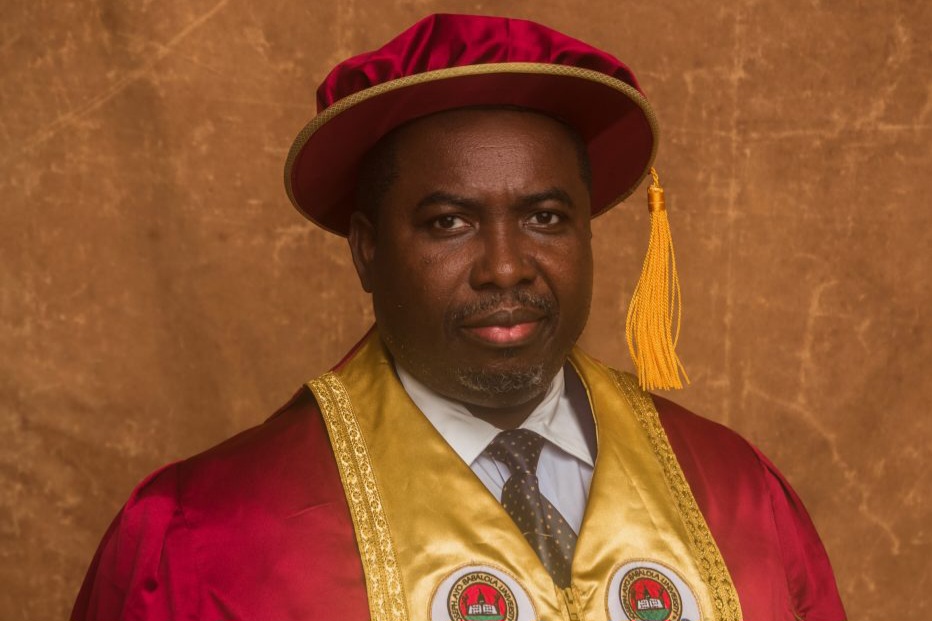
The Lead Facilitator and UNICEF Independent Consultant on Public Finance for Children (PF4C), Dr. David Okelue Ugwunta, provided a practical framework linking nutrition governance with financing, implementation and accountability.
Dr. David Ugwunta
Dr. Ugwunta emphasised that nutrition was a shared responsibility requiring collaboration among government institutions, sectors, development partners and community structures rather than being treated solely as a health-sector concern.
He explained that effective multisectoral coordination enables stakeholders to identify gaps, minimise duplication, maximise available resources and ensure that interventions are better targeted to vulnerable populations.
He also linked coordination to resource mobilisation and public financial management, urging participants to go beyond identifying nutrition needs to translating them into costed activities, budget lines, domestic resource mobilisation actions and realistic annual work plans.
Dr. Ugwunta highlighted the importance of budget advocacy, nutrition budget tagging and accountability for releases and expenditure, stressing that securing a budget allocation is only the beginning.
He said nutrition resources must be tracked from budget to release, expenditure and implementation, while commodities must be monitored through the supply chain to ensure that intended beneficiaries receive them.
He further connected domestic financing to the CNF, emphasising the importance of understanding eligibility requirements, counterpart financing and the steps LGAs need to take to access co-financing opportunities.
He also stressed the need to protect nutrition funds and commodities from diversion and weak controls, noting that effective nutrition financing goes beyond mobilising resources to ensuring they are properly managed and ultimately reach the women and children for whom they are intended.
In his goodwill message, the Benue State Team Lead of Helen Keller International, Mr. Wilson Ameh, emphasised the importance of nutrition-specific interventions, particularly those addressing micronutrient deficiencies and providing essential vitamins.
He said the training would strengthen LGCFNs’ understanding of their responsibilities and improve coordination with relevant sectors, while stressing the importance of effective monitoring and evaluation and the use of implementation evidence to strengthen decision-making at the local government level.
The workshop also featured technical presentations from government institutions and academia.
Mrs. Ann Tor of the State Primary Health Care Board highlighted the importance of the first 1,000 days of life, from conception to a child’s second birthday, for physical growth, brain development and long-term health.
Mrs. Apeh Martha, Director in the Planning and Development Department of BSBEPC, presented on the National and Benue State Nutrition Policy and Strategy, with emphasis on the role of LGAs in translating policy priorities into grassroots programmes and activities.
Dr. Mrs. Evelyn Tersoo Abiem of Joseph Sarwuan Tarka University, Makurdi, addressed nutrition governance, focusing on the coordination and accountability relationship between the State Committee on Food and Nutrition (SCFN) and LGCFNs, as well as the importance of clearly defined institutional roles.
Mrs. Ruth Asor, Monitoring and Evaluation Officer, led a session on nutrition data, monitoring, evaluation and reporting under the theme “From Data to Decision,” emphasising the importance of generating reliable data and using it to inform planning, resource allocation and effective programme implementation.
The four-day workshop provided participants with an integrated understanding of nutrition governance, policy implementation, resource mobilisation, data management, monitoring and evaluation, accountability and annual work planning.
A key outcome was the clarification of the respective roles of SCFNs and LGCFNs and the strengthening of the link between state-level policy and grassroots implementation.
The organisers expect participants to return to their LGAs with improved capacity to coordinate nutrition activities, mobilise resources, strengthen community participation, improve reporting and accountability, and develop realistic nutrition work plans that respond to local needs.
The workshop underscored the importance of sustained collaboration among the Benue State Government, local governments, UNICEF and other development partners, traditional institutions, civil society organisations and communities in improving nutrition outcomes and advancing the survival, development and future productivity of children in the state.
Kidnappers of 20 prospective National Youth Service Corps members abducted in Imo State have demanded N1 billion ransom for their release, giving the victims’ families 24 hours to raise the money.
The victims were abducted on Thursday after gunmen attacked two buses conveying prospective corps members along the Owerri-Onitsha Road in the Umunoha area of Mbaitoli Local Government Area of Imo State.
The young Nigerians were travelling from Ibadan, Oyo State, to NYSC orientation camps in Abia and Akwa Ibom states when the attackers intercepted the buses and took the passengers into the bush.
The ransom demand was disclosed by relatives of the victims during a visit to the Olubadan of Ibadanland, Oba Rashidi Ladoja, in Ibadan on Saturday.
The families said the abductors had contacted them using the mobile phones of some of the victims and demanded N50 million for each person.
Speaking on behalf of the families, Alhaja Akande and Oyebola Akande said the kidnappers had threatened to harm the victims if the ransom was not paid within the stipulated period.
The parents appealed to Ladoja, the police and other authorities to intervene, saying the families could not afford the amount demanded.
Ladoja assured the relatives that efforts were being made to secure the victims’ safe release, while the Oyo State Commissioner of Police, Olugbenga Abimbola, said he had been in contact with his Imo counterpart over the incident.
Meanwhile, the Imo State Police Command said it had identified the location where the victims were being held but had delayed a direct assault because of intelligence suggesting that the area had been planted with improvised explosive devices.
The Commissioner of Police in Imo State, Audu Garba Bosso, said security operatives tracked the kidnappers into the bush and used drones to identify their suspected hideout.
Bosso said the police were preparing to enter the area with specialised equipment, including bulldozers and armoured personnel carriers, to minimise the risk to the hostages and security personnel.
He said the priority remained rescuing the victims alive while ensuring that the operation did not expose them to additional danger.
In a separate development, the Inspector-General of Police, Olatunji Disu, has deployed senior police officers to Imo State to coordinate the search-and-rescue operation.
The Force Public Relations Officer, Anietie Iniedu, said the Deputy Inspector-General of Police in charge of Operations, Shehu Nadada, had been directed to take charge of the tactical operation in Owerri.
Nadada arrived in the state alongside two commissioners of police to assess the security situation and review the deployment of tactical assets around identified criminal hideouts.
The police said additional tactical teams had also been deployed, while intelligence-led operations were being intensified to track the kidnappers and secure the safe release of the victims.
The abduction has triggered renewed concerns over the safety of prospective corps members travelling to orientation camps across the country, particularly as the NYSC scheme requires participants to travel outside their home states.
The incident has also attracted political reactions, with the Makinde/Daura Presidential Campaign Organisation accusing the Federal Government of failing to adequately protect Nigerians from kidnappers, bandits and other criminal groups.
In a statement issued by its Director of Strategic Communications, Richard Ihediwa, the organisation described the abduction as another indication of what it called the failure of the administration to guarantee the security of citizens.
The campaign organisation urged the Federal Government to strengthen intelligence gathering, coordination among security agencies and rapid-response mechanisms to prevent further attacks on Nigerians.
It also expressed solidarity with the affected families and called for the immediate and safe release of the abducted prospective corps members.
Security agencies have continued to maintain a presence in the area as the search for the victims and their abductors intensifies.
The Independent National Electoral Commission has warned Nigerians against a fraudulent website falsely claiming that the commission has reopened nationwide voter registration ahead of the 2027 general elections.
INEC said the fake platform was advertising a purported registration window from September 28 to October 27, 2026, and had no affiliation with the electoral body.
The commission, in a public notice, urged Nigerians not to click on the website or submit personal information, photographs or documents through it, warning that such details could be harvested and misused by fraudsters.
According to INEC, the website falsely presents itself as a platform for a “Final Phase of Nationwide Online Voter Card Registration” and claims to offer services including updating voter information, transferring voters to different polling units and replacing lost or damaged Permanent Voter Cards.
The electoral body stressed that the nationwide Continuous Voter Registration exercise ended on July 26, 2026, and that there is currently no new nationwide online registration exercise.
INEC had earlier reaffirmed that the July 26 deadline would not be extended, urging eligible Nigerians to complete their registration or update their voter information before the close of the exercise.
The commission’s official voter registration portal also currently states that the Continuous Voter Registration exercise has ended, while allowing registered voters to check their voter status and PVC collection information.
The warning comes as political activities intensify ahead of the 2027 general elections. INEC’s revised timetable provides for the publication of the official register of voters on December 15, 2026, while the presidential and National Assembly elections are scheduled for January 16, 2027.
The commission advised Nigerians to be cautious of websites and social media posts that claim to offer voter registration or PVC-related services outside its officially announced processes.
INEC urged members of the public to verify election-related information through its official website, verified social media accounts and other recognised communication channels before providing personal information.
The commission also provided its Citizens Contact Centre for enquiries and complaints, urging Nigerians to report suspicious electoral information through its established channels.
INEC said vigilance was particularly important as the country approaches the 2027 elections, warning that fraudulent platforms could not only mislead eligible voters but also expose sensitive personal information to criminal elements.
The Executive Chairman of Nkanu East Local Government Area, Hon. Engr. Mike Chikosolu Ogbuekwe, has inaugurated a dedicated committee to monitor the activities, facilities and operational condition of Smart Green Schools across the council, alongside the establishment of a situation room designed to track developments and facilitate rapid response to emerging issues.
The initiative is part of the council administration’s effort to ensure that the Smart Green Schools remain properly monitored, functional and capable of delivering the educational objectives for which they were established.
Speaking during the inauguration, Ogbuekwe charged members of the committee to approach their assignment with diligence, professionalism and a strong sense of responsibility, stressing the importance of regular monitoring and prompt reporting of issues requiring attention.
He explained that the situation room would provide a coordinated platform for receiving information from the schools, identifying challenges in real time and ensuring that necessary interventions are initiated without avoidable delays.
The committee is chaired by the Head of Works, Engr. Ngene Chukwuemeka, while Engr. John Ogbu serves as a member. The Public Relations and Strategy officer, Dr. Eneh Kingsley, is the Secretary, with the Head of Education, Ajaegbu Theresa, also serving as a member.
The composition brings together personnel from works, education and administrative functions, reflecting the council’s emphasis on technical supervision, educational standards and effective coordination.
Ogbuekwe said the monitoring framework was intended not merely to identify faults, but to create a responsive system in which issues affecting the schools could be documented, escalated and addressed promptly.
He urged the committee to maintain accurate records of their inspections and observations, work closely with relevant personnel in the schools and provide regular reports to the council leadership.
With the committee and situation room now in place, the Nkanu East administration expects the monitoring of Smart Green Schools to become more systematic, responsive and data-driven, while strengthening accountability around the facilities and services provided in the schools.
Head of the ECOWAS Electoral Assistance Division, Serigne Mamadou Ka, disclosed this at the 5th edition of the Sectoral Reflection Series on elections and democracy organised by the Peering Advocacy and Advancement Centre in Africa (PAACA)in collaboration with Legis360.
Ka said ECOWAS had piloted the youth election observer initiative in Côte d’Ivoire and subsequently replicated it in Benin, with plans to extend it to other countries, including Nigeria.
“Definitely, we are not going to leave Nigeria out in January,” Ka said.
He said the initiative was part of ECOWAS’ broader efforts to promote youth representation in electoral processes, particularly against the backdrop of low political participation among young people across West Africa.
Ka, however, identified lack of access to finance as the biggest obstacle confronting young people seeking to participate in politics.
He listed other barriers as inadequate education and training, social and cultural factors, gender bias and weaknesses in internal democracy within political parties.
He said:”There are many barriers. There are social and cultural barriers, and we have gender bias against women and girls, for instance. But I think the nerve of everything is finance.
“Unless young people can access finance, I don’t think they can do much about political participation.”
The ECOWAS official blamed political parties for restricting opportunities for young people to participate in politics, arguing that exclusion at the party level inevitably affects participation at the national level.
Ka said access to finance must be complemented with education and training, noting that empowering young people with the necessary resources and knowledge would enable them to confront some of the barriers themselves
He said: “There are also legal barriers, especially where political parties do not promote internal democracy. That is part of the problem.
“But to me, finance comes first, alongside education and training. If we can help young people get more access to finance, education and training, they can even solve some of these problems themselves”.
He added that technological advancement was gradually helping to weaken some cultural barriers by exposing young people to political developments and experiences in other parts of the world.
“Cultural barriers, I think, are beginning to disappear because of technology. Technology is helping more people understand what is happening in other places and learn from those experiences,” Ka added.
On youth participation in elections across West Africa, Ka said it remained low despite young people constituting the majority of the population in many countries.
He said: “Participation is low in every country you take in West Africa.
“Young people form the majority of the population. In some countries, they constitute 70 per cent; in some countries, they are 60 per cent; and in some countries, 50 per cent or more. But their participation is always low.”
Ka said the problem started with political parties, which he accused of failing to create sufficient opportunities for young people within their structures.
“As I said, it starts from the political parties themselves. They don’t allow young people to participate. And if they cannot participate within the political parties, how do you expect them to participate at the national level?” he asked.
He said ECOWAS was promoting greater inclusivity from the party level to the national level, but urged young people to take greater responsibility for advancing their participation.
“We can promote it, yes, but the hope is now on young people to take it further,” he said.
Ka urged young people to become more organised and committed to political participation, stressing that ECOWAS could provide support but could not take up the responsibility on their behalf.
“We can push, but we want young people also to be more organised and committed
“If you don’t help yourselves, nobody will help you.”
Executive Director of PAACA, Ezenwa Nwagwu, said mainstreaming young people into ECOWAS election observation was important to strengthening democratic participation and ensuring that young people were adequately represented in electoral processes.
Nwagwu spoke on the initiative at a Sectoral Reflection Series, which also examined the outcomes of the Youth Democracy Conference in Dakar, Senegal.
He said the initiative would help integrate young people into an election observation system where they had historically not been sufficiently represented.
Nwagwu stated: “It is also about how to mainstream young people into the election observation network of ECOWAS,”
“This has been going on in ECOWAS for as long as possible, but young people have not actually been mainstreamed.”
Nwagwu said greater youth participation was necessary because democracy provided citizens with opportunities to influence decisions affecting their lives.
He urged young people taking part in election observation to acquire sufficient knowledge of electoral laws and regulations, warning against treating elections as an activity in which anyone could participate without understanding the governing framework.
“The first thing is knowledge. If you invest in knowledge, then you can observe the electoral process according to the regulations and the laws that guide it,” he said.
“Election is a law-guided activity.”
He also urged young observers to familiarise themselves with ECOWAS protocols on youth participation, saying knowledge of the regional instruments could help promote inclusion.
On concerns over declining youth participation in elections, Nwagwu disputed the impression that young people were withdrawing from political engagement, arguing that social media activity did not provide a complete picture of youth participation. The Guardian
The Federal Government says Nigeria’s annual wheat production has risen from 120,000 metric tonnes to 420,000 metric tonnes through the implementation of the National Agricultural Growth Scheme and Agro-Pocket (NAGS-AP).
The government said the scheme is part of President Bola Tinubu’s Renewed Hope Agenda.
Prof. Ademola Adenle, Senior Special Adviser on Agriculture and Innovation to the Minister of Agriculture and Food Security, disclosed this in an interview with the News Agency of Nigeria in Abuja on Saturday while reviewing achievements in the sector.
NAN reports that NAGS-AP is a flagship project of the Federal Government aimed at bridging food supply gaps and achieving national food sovereignty by providing subsidised high-quality agricultural inputs directly to smallholder farmers.
Adenle said the initiative was designed to help farmers access the inputs needed to boost productivity.
According to him, the sector is focused on ensuring that farmers have access to critical inputs.
He identified fertilisers, improved seeds and essential extension services as key components of transforming the agricultural sector.
“We have implemented NAGS-AP under the Renewed Hope Agenda.
“The whole idea is to provide imputs to farmers, such as fertilisers, chemicals and good essential services, through agro-dealers,” he said.
He added that through the initiative, there had been a 300 per cent increase in production across various crops that farmers were cultivating, especially wheat.
“We have recorded about a 300 per cent increase in wheat production.
“Before, we were producing around 120,000 metric tonnes annually, which was the baseline.
“But with the introduction of inputs provided under the Renewed Hope Agenda, wheat farmers have enjoyed a 300 per cent increase in production.
“So, that is massive, from 120,000 tonnes to 420,000 tonnes annually, that is huge,” he said.
Adenle added that the ministry would soon begin reforms covering various aspects of the agricultural sector, aimed at strengthening the system.
He decried the country’s low agricultural productivity and blamed it on the obsolete Land Use Act.
“We are going to address the issue of the Land Use Act, which is one of the structural problems of the agricultural sector in Nigeria.
“The Land Use Act is quite old, we are currently using the 1978 Land Use Act which, obviously, vests power in the hands of state governments and has an inefficient traditional system of accessing land.
“That has affected smallholders, because smallholder farmers only cultivate an average of 0.5 to two hectares of land.
“So, how do we increase that to enhance production is what we are going to be working on,” he said.
He emphasised that the reform would touch every segment of the agricultural sector.
According to him, it would help address challenges across the value chain, from production and processing to distribution and marketing.
“With that reform in place, it will help enhance productivity and increase the level of income among farmers, among others,” he added. Punch