Category: Health

  • TOBI AMUSAN: Before her story changed in 2015

    TOBI AMUSAN: Before her story changed in 2015

    TOBI AMUSAN: Before her story changed in 2015

    Coach tells her captivating narrative as a local athlete he begged to be included in teams and the irony of Oregon where she missed World Junior Championships because of visa hitches

    Nigeria’s participation at the 2022 World Athletics Championship in Oregon, USA was made special by the outstanding performance and the iconic showing of Tobi Amusan who did not only win the 100 metres hurdles event but also created a world record with a time of 12.12s in the semi finals. She blasted that record two hours later in a wind-aided time of 12.06s.

    Amusan’s performance and another female athlete Ese Brume who picked up a silver medal in the long jump event at the championships redesigned Nigeria’s declining status among great athletics nations in the world.

    Her story with Oregon started years back, when, as a junior athlete, she was billed for the World Junior Athletics Championships but could not travel because the American Consular office in Abuja delayed the issuance of her visa.

    According to coach Solomon Aliyu, who was her coach then, “the rest of the team had travelled and her visa was still being processed. She had a visa interview on Friday and her event was on Monday. As of Friday, her visa was yet to be issued. I stayed back to wait for her because she could not travel alone as she was still a minor.

    “When at the end of Friday the passport was still not out, I decided to leave for the USA to join the rest of the team. But before I left, I advised her not to worry, that there were going to be many more championships she would attend in future because she had a very bright future.” That was how Tobi missed her first trip to Oregon.

    Incidentally, it was that same venue, where she was supposed to launch her athletics career as a junior international that the 25-year old chose to stun the athletics world and on a bigger stage.

    “When I saw her in the semi final of the World Championships when she ran the new world record of 12.12s, I said, wow. I quickly remembered that it was the same venue in 2014/2015 when she was supposed to go for the world Junior Championships held at the same Oregon which she missed. I also remembered telling her that the   America you were denied, you will get tired flying to the place. Little did I know that she would even become a resident in the US. It is very ironic that the same place and same event she missed launching her international career in the junior category became where she conquered the world in the senior category. She broke an African record in the heats, world record in semi final and finally she beat her own world record, even though they said it was wind aided.”

    The story of Oluwatobiloba Ayomide Amusan is like a script for the big screen. Born in Ijebu Ode, Ogun state 25 years ago to parents who were both teachers, she grew up under a very strict regime. Her venture into athletics was not an all smooth affair in the home front as her father didn’t sanction it. At one instance, he burnt her running kits and warned that he should never see her run again. But she found a strong ally in her mother, who saw something different in her. When she was going for an out-of-state competition, she would lie to her father that she was going for an inter-school debate.

    “My mom would cover for me that I was going for inter-school debates in Shagamu and then she would drive down there to give me my outfit,” the athlete told BBC Africa.

    In the beginning, Tobi Amusan’s coach was Ayodele Solaja, a grassroots athletics coach in Ogun state. He honed her skills in track and field, but typical of a grassroots coach, his ward was like  Jack of all trades master of none. “She was competing in the relays, 100 metres and long jump,” coach Aliyu recalled. Indeed, Amusan herself told the BBC that she began as a footballer but when her coach discovered her high work rate because she was always everywhere on the pitch during training, the coach then advised that she should take to athletics because she would be better off there. That was how she fell in the hands of coach Ayodele Solaja.

    Coach Aliyu recalled his first meeting with young Tobi.

    “My first encounter with Tobi was when she was invited to the national camp at Sapele ahead of the African Youth championships. That was 2013 or 2014.

    “We had a long camping in Sapele for both juniors and seniors. There were about 11(male and female) hurdlers in camp. We were leaving camp, at times for national competitions, then we would return after such engagements. We attended one competition in Warri. From Warri, we left for national trials in Calabar that year. I inherited Tobi with 14.60s and by the time we were done with camping in Warri and Sapele she ran 13.70s.”

    Coach Aliyu said Amusan’s progression owed largely to her commitment, dedication, discipline and being focused. “This is an athlete that will always remind her coach about training time,” Aliyu said.

    With her steady progress, she could not be ignored any longer. In 2015, she was invited again, this time, for the All Africa Games, her first at the senior level. Being a home-based athlete without much experience, Tobi was always overlooked by officials.

    Her ordeal in the Port Harcourt camp before the 2015 All Africa Games speaks volumes. Coach Aliyu narrates: “My next encounter with her again was when she was also called to camp for the 2015 All Africa Games. Before the All Africa Games camp in Port Harcourt, she came second in our national trials with 13.60s behind Lindsay Lindley, our 100mH from the US. Lindsay had a 12.90s to her credit even before the national trials and was the favourite to win the All Africa Games gold in the event.

    While in camp in Port Harcourt before the African Games, our head coach Gabriel Okon called us, all the coaches of the various disciplines. We normally have meetings intermittently but on this day we were called to discuss our athletes and their(our) medal chances before the Games.

    So, for each group of athletes, the coaches would talk about the athletes and their medal chances: gold, silver or bronze, based on their performances and the coach’s assessment. When it got to the turn of hurdles, even before I said Jack, the other coaches said Lindsay had the brightest chance for the gold medal.

    I told them if by their own assessment Lindsey would win a gold medal in that event, my own gold medalist would be Tobi Amusan. They were surprised at my assessment and asked why would I, as a coach, say an athlete with 13.60s had better chances of winning a gold medal than one with a 12.90s. I told them my assessment was based on my encounters with the two athletes. I insisted, by my own assessment, it would be Tobi for gold at the All African Games. I told them that based on what I had seen and by the level of their progress, I tipped Tobi for gold because of her progression.

    I pleaded with the team selectors to include her name in the team for the All Africa Games. One thing I asked of them was not to put any medal against her name because I didn’t want the young girl to be under any pressure. They said there was no problem. That was how they added her name as second hurdler, behind Lindsay.

    It happened that we were to go to China for the World Championships-some coaches and some selected athletes were excused from camp to attend the Senior World Athletics Championship. Tobi started nursing the feeling that if I left for China, they were going to decamp her. Her fears were genuine because some of the 4x400m hurdlers that were in camp had been decamped as they were assessed to have no medal chances.

    She feared that with my absence, it would be easier for them to drop her. I assured her that nothing like that would happen because I had gotten her name in the team already and if there was any new development, the team going to China would be in the know. But should that happen, she could reach me via WhatsApp.

    “True to her words, while we were in China she called and said she had been dropped. The list eventually got to us in China because the AFN President, Chief Solomon Ogba, was part of the trip, the secretary general, Olumide, Kayode Thomas, then a board member,Yusuf Ali and coach Gabriel Okon were all in China.

    So I quickly alerted Yusuf Ali to help me speak with the AFN president and the other board members that were present in China. I had also talked to the girl in camp that she was the only home-based hurdler I had in the camp. I said they should just trust my word and allow her to be part of the team to travel for the All Africa Games in Congo.

    So I was lucky the AFN president listened and her name was included in the final team. That was her first major international outing that changed the whole narrative and that was the platform she actually needed. It took her to the USA. I’m sure you already know the story of her performance in Congo where she won Gold at 13,15s, the same time she ran in the finals Lindsey placed third.. By that same year, she had her scholarship and in January 2016 she left for the US where she has blossomed and achieved her potential.

    Amusan was also frustrated by officials in the relays. As good as she was in the relays, she was always overlooked. At most meets, she would be ready to run but the coaches were always dropping her from the team because she was considered a risk because she was small and considered inexperienced. Coach Solomon Aliyu admitted that she is a sprinter and hurdles being her specialty was an advantage in the sprints and relays.

    He recalls: “Yes, for you to be able to run that fast over the hurdles, you must have a very good speed. In fact, most countries include hurdlers in their relay teams because if there are any good hurdlers in the team, they are always returning good times.

    We have this belief in this part of our world that you must be experienced, to be able to stand the big stage. So the relay crew then, in their own wisdom, felt she was still a novice and that she might not be able to stand up when it mattered most . They normally excuse her from the relay team even though whoever was coming to replace her would not be better than her.

    On two occasions she pleaded with me in a competition venue to say that team coaches have refused to feature her in the relay team and that she didn’t like what they were doing to her. And I would tell her Tobi, you still have a lot of years ahead of you.

    This relay you are being denied, you will be the one to choose when to run the relay when the time comes. And I think that has also manifested itself already because she was supposed to be part of the relay team in the world championships but she actually said she needed to stay fresh and fit for her main event and that contributed to her blistering form in her event.“

    (Vanguard)

  • Monkey Pox: Bauchi records outbreak, govt says no cause for alarm

    Monkey Pox: Bauchi records outbreak, govt says no cause for alarm

    Monkey Pox: Bauchi records outbreak, govt says no cause for alarm

    Bauchi State has recorded a case of monkey pox as well as two other suspected cases that are currently under investigation and observation.

    This was confirmed on Friday by the State Primary Healthcare Development Agency (BASPHCDA) through its Executive Chairman, Dr Rilwanu Mohammed while speaking with Journalists.

    Dr Mohammed was speaking with Journalists at Anguwan Galadima, Tirwun shortly after flagging off the Oral Polio Vaccination campaign, July outbreak response (OBR).

    Mohammed said that, “Yes, there is an outbreak of monkey pox in Bauchi, one person has been diagnosed with the disease while 2 others are still under close observation, therefore, they are suspects of the disease for now”.

    The BASPHCDA EC added that, “The victim is not from Bauchi State, he came from Adamawa State, he is presently receiving medical management at one of the facilities. We will not allow him to go until we are satisfied with his condition”.

    According to him, “Unlike Cholera where you have to wait for about 15 cases before you declare outbreak, with just one confirmed case, you can declare outbreak of monkey pox”.

    He however assured that his Agency in collaboration with others concerned about healthcare delivery services are working round the clock to ensure that the disease did not spread beyond what it is at present.

    Mohammed said that, “Our surveillance has been reinvigorated to ensure that suspected cases are immediately dealt with. Bauchi State is a gateway to the North-East subregion, we are therefore at alert to ensure that no suspected case of monkey pox go unnoticed”.

    He then appealed to the people to immediately report to the nearest health facility any symptoms of the disease for effective medical management which he said the disease requires for now.

    The Symptoms of monkeypox according to him can include: Fever; Headache;

    Muscle aches and backache; Swollen lymph nodes; Chills and Exhaustion.

    Others are respiratory symptoms (e.g. sore throat, nasal congestion, or cough) while a rash that can look like pimples or blisters that appears on the face, inside the mouth, and on other parts of the body, like the hands, feet, chest, genitals, or anus.

    (Ripples)

  • [OPINION] G.O.C. @ 60: THE BEGINNING OF SERVICE TO HUMANITY AND GOD

    [OPINION] G.O.C. @ 60: THE BEGINNING OF SERVICE TO HUMANITY AND GOD

    By Professor Dan O. Chukwu

    In his autobiography, My Odyssey, Dr. Nnamdi Azikiwe recalls his first meeting with Dr. Kwegyir Aggrey of the Gold Coast and the impact that meeting was to have on him and Africa in the later years. According to Azikiwe, Aggrey’s sermon during that encounter was not only symbolic and suave, but it was also one which found his heart a ready soil for the dreams of a new social order in Africa in the 20th century and beyond. In the years after that memorable meeting with Aggrey, Azikiwe was to inaugurate his “Argonauts” consisting of Nigerians who sailed across the Atlantic ocean to acquire the proverbial golden fleece in the United States of America.

    The return of the “Argonauts” to Nigeria in the 1940s was probably a game changer in the course and contents of the nationalist movement on the continent of Africa – and what with their intellectual contributions to this end? The incise pen of Akweke Abyssinia Nwafor-Orizu, as made manifest in his epic, Without Bitterness: Western Nations in Post-War Africa (Creative Age, 1944) made and impressionable impact on the quest for Nigeria’s independence. For instance, the book was known to have led to the formation of the Zikist Movement, a youth vanguard of the National Council of Nigeria and the Cameroons (NCNC). Formed in 1946, the movement’s demand for the immediate restoration of Nigeria’s independence was known to have shaken the foundation of colonial rule in Nigeria.

    Also, the return of the “Argonauts” was to further give a credence to Aggrey’s prophecy and charge to Azikiwe to the effect that unless there was a reorientation of values in Africa, the continent was certainly doomed. Dr. Aggrey had in conclusion of his message to Azikiwe underlined the following immortal words: “If I, one of you, could go to the new world [USA], and make a man of myself, then you can too. May God help you, Amen.”

    The likes of Dr. Gabriel Ogbuife Chukwubuike Ajah (mni) may have undeniably been inspired by the thoughts and actions of great philosophers, nationalists and leaders of all ages – some of them western philosophers; others African thinkers such as the names mentioned in the foregoing paragraph. To Dr. Ajah, who until very recently, was the chairman, Enugu State Science, Technical and Vocational Schools Management Board, his philosophy about man and life is captured in “service to the society”.

    Born sixty years ago (precisely on 24th July, 1962) in a sleepy Umuika village of Enuogu Nkerefi, Nkanu East Local Government Area of Enugu State, Ajah had his primary education in Enuogu, Nkerefi, between 1970 and 1973; secondary education at the Colliery Comprehensive Secondary School, Ngwo (1974-1979); University of Benin, Benin City, where he studied English and Literary Studies for his Bachelors degree in English Education (1984-1986); and M.A. in English as a second language (1987-1990).

    Also, between 1995 and 2002, Dr. Ajah was at the University of Nigeria (Enugu Campus) for his Bachelor of Law (LL.B) programme; in 2016 he earned a Ph.D in Education Management from the Enugu State University of Science and Technology. Earlier in 2002, Dr. Ajah had attended the National Institute for Policy and Strategic Studies, Kuru, near Jos, for a Senior Executive Course No. 24.

    But what is the use of knowledge if not for service, especially in a knowledge-driven society like ours where Aristotle’s transcendental concept of the unmoved mover is greatly in dire need to be able to bridge the yawning gaps in human relations. We thus can evaluate Dr. Ajah’s numerous educational trainings in the light of his work experiences and contributions to the society, which include (but not invited) to the following:
    Special Assistant to the Enugu State Government (1991-1992); Director, Civil Service Commission as at 2001; Permanent Secretary, Ministry of Environment, Enugu State (2001 – 2002); Permanent Secretary, PSD, Office of the Head of Service (2002-2003); and Permanent Secretary, General Administration SSG’s Office Enugu State (2003-2004).

    Also, in 2004 Dr. Ajah served as Permanent Secretary in the State’s Ministry of Education; between 2005-2007, he was Permanent Secretary in the Enugu State Universal Basic Education Board (ENSUBEB); he later served as Permanent Secretary, Ministry of Agriculture (2008-2010); and Permanent Secretary/Chief Administrative Officer to the Governor, Governor’s Office (2011-14th May, 2015). On 15th May 2015, Dr. Ajah assumed office as the Secretary to the Enugu State Governor – a position he held with aura, tenacity of purpose and professionalism as an experienced technocrat, for four years.

    Outside government circles where, as we have recounted in the foregoing paragraphs, Dr. Ajah is known to have acquitted himself greatly, empirical evidence appears to show that he has established unbroken records in community and philanthropic services. In the sub-sector of the society, Dr. Ajah is known to have singlehanded founded the Girls Comprehensive Secondary School, Enuogu, Nkerefi. Now known as the Science Technical College, Enuogu, the school which began in 2004, has, during the past eighteen years, trained young minds for university education and technical expertise in the business world.

    Reliving his days as, what some commentators wound prefer to describe as “super-permanent secretary”, Permanent Secretary and acting Chairman, Enugu State University Basic Education Board (ENSUBEB), Dr. Ajah, who enjoys the title of the “Ambassador of the Kingdom” conferred on him in 2019 by the General Council, Assemblies of God Nigeria, quipped: “I usually thank God for every opportunity in life, especially the opportunity to have served my state (Enugu) and my community (Nkerefi) in various capacities”.

    As Permanent Secretary and Chairman of ENSUBEB, Dr. Ajah was said to have advanced the cause of revolutionising and constructing new classroom blocks in parts of Enugu States, including his community, Nkerefi. Among the schools, which benefited from the bonanza, were the Community Secondary School, Amofu; Primary School, Umuika; Community School, Enuogu; Igbokeocha Primary School, Imeoha; Igwebuike Secondary School, Imeoha; Primary School, Umunnama Etiti; and Primary School, Mgbanaocha.

    One area, among many, individuals, groups and public corporations (including government agencies) in modern African societies seem to have failed the people is in building the bond of confidence and social contract, as the French philosopher, Jean Jacques Rousseau, would advocate. The spirit of social contract presupposes that individual members of the society have agreed to surrender their natural liberty to one another, and by extension have fused individual wills into a combined general will which now becomes that of the sovereign, a true sovereign power. At this point, the sovereign power should in turn be expected to provide the basics of life to these individuals (the citizens) who have surrendered their liberty and will to him/her. The basics of life expected to be supplied to the citizens by the sovereign may include protection of lives and property; provision of social amenities like pipe-borne water, electricity, road network, education, among others. It is probably because government agencies in Nigeria have abdicated their duties that made the likes of Dr. Ajah to undertake to create job opportunities and secure employments for employable individuals of the various Nigerian communities when occasions demanded.

    A lawyer, educationist, management consultant and administrator, Dr. Gabriel Ajah appreciates the worth of skilled manpower training for societal growth and development, hence the demonstration of his benevolence in securing admissions into institutions of higher education, for potential leaders of tomorrow. Investigation shows that this is one of his areas of strength. According to him: “I always feel fulfilled each time God uses me to facilitate admission into the university, polytechnic or college of education for students X, Y or Z. This is because the challenge of tomorrow’s leadership belongs to them, and they must, therefore, be sufficiently equipped today for that challenge.”

    In thinking and writing about Dr. Gabriel Ogbuife Chukwubuikem Ajah and his contributions to the growth of human society, one factor that has remained constant is his family, comprising the wife and the children. The wife, Mrs. Anthonia U. Ajah (Nee Offiah), leading the children, has always stood supportive of Ajah’s modest achievements. In other words, as Mark Douglas would posit: “When a man has done his best, has given his all and in the process supplied the needs of his family and his society, that man has succeeded.” “Such a man,” in the words of Bishop Paul C. Nwachukwu, “is both a public and private success.” These would have perhaps been the lot of Dr. G. O. C. Ajah during the past sixty years, even as he re-dedicates his life for more quality services to man and God in the years ahead.

    One another factor that goes for Dr. Gabriel Ajah is that even though he had a humble beginning, his sense of optimism has always made him to assert that if Aggrey, Azikiwe, Nwafor-Orizu, among others, could succeed the way they did, he possesses a much brighter chance to be a success, and subsequently make others succeed, too.

    Chukwu is a professor of History at Nnamdi Azikiwe University, Awka, Nigeria.

  • Nigeria At Risk Of Marburg Virus –NCDC

    Nigeria At Risk Of Marburg Virus –NCDC

    Nigeria at risk of Marburg virus –NCDC

    The Nigeria Centre for Disease Control and Prevention (NCDC) says Nigeria is at moderate risk of the importation and impact of the Marburg virus ( MVD).

    In a statement on Wednesday, the Director General of NCDC , Dr. Ifedayo Adetifa, said this is based on the organization’s assessment following the outbreak in Ghana.

    The Marburg virus causes a rare, highly infectious disease and severe haemorrhagic fever in humans and non-human primates just like the Ebola virus.

    Dr Adetifa said, “Based on available data, the overall risk of both importation of the disease and its potential impact on the Nigerian population is said to be moderate as assessed by NCDC experts and partners given the following:

    “The proximity (same region), high traffic from Ghana and countries that share borders with Ghana, the incubation period of 21 days of the virus, heightened surveillance at point of entry, Nigeria’s capacity to respond to the outbreak in country and the fact that persons with MVD transmit the virus when they become symptomatic unlike for SARS-CoV-2 that causes COVID-19 that can also be transmitted by infected persons without symptoms.”

    He said there was currently, no case of Marburg virus in Nigeria, adding that several measures are being put in place to prevent an outbreak of the disease in-country.

    While saying that NCDC is on high alert, he said Nigeria has the capacity to test for the virus presently at the National Reference Laboratory in Abuja and the University of Lagos Teaching Hospital laboratory Centre for Human and Zoonotic Virology.

    He said diagnostic capacity can be scaled up to other laboratories if required as Nigeria had the resources (human, technical and laboratory) for prompt identification and management in the event of a single imported case.

    However, he said the risk of importation may be further reduced as the current situation in Ghana is under control as reported by Ghana Health Service.

    According to him, point of entry surveillance has been heightened, trained rapid response teams are on standby to be deployed in the event of an outbreak and the NCDC’s Incident Coordination Centre (ICC) is on alert mode.

    He said the NCDC is also amplifying risk communication efforts and continues to work with states and partners to strengthen preparedness activities which include– review of risk communication protocols, plans and messages in the event of an outbreak.

    He advised Nigerians to avoid non-essential travel to locations where the outbreak is reported for the moment, and also avoid direct contact with blood, saliva, vomit, urine, and other bodily fluids of people with suspected or confirmed Marburg virus.

    The outbreak in Ghana is the second incidence of the virus in West Africa following the previous incidence in Guinea in August 2021.

    The disease was first discovered in 1967 following outbreaks in Marburg and Frankfurt in Germany, and Belgrade, Serbia.

    Since then, outbreaks and sporadic cases have been reported in some African countries.

    (Daily Trust)

  • Why I wore traditional worshippers’ attire to Supreme Court proceedings- Lawyer

    Why I wore traditional worshippers’ attire to Supreme Court proceedings-Lawyer

    A human rights lawyer, Malcolm Omoirhobo, on Thursday, caused a stir at the Supreme Court for wearing an African traditional worshippers’ attire to the court’s proceedings.

    Omoirhobo stated that he wore the clothing to court to exercise his fundamental human rights following a recent judgment by the Supreme Court which permits all Nigerians to express their way of worship and the use of hijab in schools and public places.

    It was reported that the Supreme Court had, on Friday, June 17, 2022, granted the use of hijab by female Muslim students in government-owned schools in Lagos.

    The Court issued its judgement following an appeal – Lagos State Govt. and Ors V. Asiyat AbdulKareem with suit number SC/910/16.

    The lawyer, who was barefooted with feathers attached to his wig, was said to have arrived at the court at about 9:05 am.

    He also wore a gourd with cowries around his neck and a red wrapper tied around his waist.

    Addressing journalists at the court, Omoirhobo expressed his gratitude to the Supreme Court for its decision on Section 38 of the 1999 Constitution (as amended), which allows for the freedom of expression of religious beliefs.

    He said, I am very grateful to the Supreme Court just last week Friday they made a very resounding decision that promotes Section 38 of the constitution. That is our right to freedom of thought, conscience, and religion.

    “That we are free to express our way of worship in our schools and in our courts. That decision was reached on Friday and that has encouraged me.

    “Because I am a traditionalist and this is the way I worship. Based on the decision of the Supreme Court this is how I will be dressing henceforth in court because I am a strong adherent to ‘Olokun’, the god of rivers.”

    Omoirhobo added that the judgement implied that every Nigerian, no matter their profession could express their religious beliefs with their mode of dressing.

    (Punch)

  • Comedian Funnybone weds lover in Enugu

    Nigerian comedian, Stanley Chibunna, popularly known as Funnybone has tied the knot with his lover in Enugu.

    The star-studded ceremony had in attendance Nollywood stars and other entertainers.

    Celebrities such as footballer Wilfred Ndidi, actor Akah Nnani, Stan Nze, and a plethora of Nigerian stars were present at the colourful traditional wedding ceremony.

    Nollywood veteran, Pete Edochie, who was also at the event, gave a special prayer for the couple during the event.

    A series of videos on Nnani’s Instagram story revealed that it ‘rained’ money as the couple hit the dance floor with their guests.

    (Punch)

  • Kano varsity establishes research laboratory for cervical cancer screening

    Yusuf Maitama Sule University, Kano (YUMSUK), has established a Human Papilloma Virus (HPV) DNA Modular Research Laboratory for screening of cervical cancer in women.

    The university’s Vice-Chancellor, Prof. Mukhtar Atiku-Kurawa, said while commissioning the laboratory on Wednesday that it was established at the main campus for research due to the increasing cases of cervical cancer among women.

    According to him, the laboratory, which is first of its kind in Northern Nigeria, will assist in research and treatment of women with cervical cancer, especially those from Kano, Jigawa, Katsina and other states of the federation.

    The VC stated that the center was established with a grant from the Tertiary Education Trust Fund (TETFund), adding that state-of-the-art facilities were provided to ensure better service delivery.

    He tasked researchers to take advantage of the centre by conducting scientific researches to achieve the set objectives.

    The VC assured continuous support for the centre, saying that “researches are now conducted not only for academic progression, but also for economic development”.

    He expressed optimism that the centre would excel and achieve its objective.

    Atiku-Kurawa disclosed that the institution had achieved a lot in spite of being among the new generation universities.

    He commended the state government, under the leadership of Gov. Abdullahi Ganduje, for its continuous support in moving the university to greater heights.

    The Lead Researcher and Dean, Faculty of Clinical Sciences of the university, Dr. Iman Usman-Haruna, said “the centre is established to provide free services to women with cancer problems.”

    She said about 1,500 patients were expected to benefit during the first phase of its programme.

    ‘’This research is a multi-centre study to be conducted in Kano, Katsina and Jigawa, and is mainly on cervical cancer screening.

    ‘’We will be performing pap smear and HPV test for 1,500 women, samples will be transported to Yusuf Maitama Sule University for processing.

    ‘’This is through a grant from TETFund and with great support from the University management,” she said.

    She applauded the Vice-Chancellor and TETFUND for their support for the actualisation of the project, describing it as a welcome development for the betterment of the society. (NAN)

    (Sun)

  • WHO to rename Monkeypox

    WHO to rename Monkeypox

    WHO to rename Monkeypox

    The World Health Organisation (WHO) says it is working with partners on renaming monkeypox and its variants, and also to put in place a mechanism to help share available vaccines, more equitably, as the need arises.

    WHO Director-General Tedros Ghebreyesus disclosed this at a news conference on Tuesday in Geneva.

    He said WHO had published guidelines on vaccination against monkeypox and also published recommendations for governments regarding case detection and control of the disease.

    Speaking to journalists in Geneva, WHO smallpox expert, Rosamund Lewis, said it was crucial to raise awareness in the population about the level of risk and explain the recommendations to avoid infecting close contacts and family members.

    Ms Lewis explained that although the disease sometimes only produced mild symptoms, such as skin lesions, it could be contagious for two to four weeks

    “We know that it is very difficult for people to isolate themselves for so long, but it is very important to protect others. In most cases, people can self-isolate at home and there is no need to be in the hospital,” explained Ms Lewis.

    Monkeypox is transmitted through close physical contact with someone who has symptoms. The rash, fluids, and scabs are especially infectious. Cloths, bedding, towels, or objects such as eating utensils or dishes that have been contaminated with the virus can also infect others.

    However, it is not clear whether people who do not have symptoms can spread the disease, the expert reiterated.

    While some countries have maintained strategic supplies of older smallpox vaccines – a virus eradicated in 1980 – these first-generation vaccines held in national stockpiles are not recommended for monkeypox at this time.

    This is because they do not meet the current safety and manufacturing standards.

    Newer and safer (second and third generation) smallpox vaccines are also available, some of which may be useful for monkeypox and one of which (MVA-BN) has been approved for the prevention of the disease.

    According to the UN health agency, the supply of these new vaccines is limited, and access strategies are being discussed.

    “At this time, the WHO does not recommend mass vaccination. Decisions about the use of smallpox or monkeypox vaccines should be based on a full assessment of the risks and benefits in each case,” the guidelines noted.

    For the contacts of sick patients, post-exposure prophylaxis with a second- or third-generation vaccine is recommended, ideally within four days of first exposure to prevent disease onset.

    Pre-exposure prophylaxis is recommended for healthcare workers at risk, laboratory personnel working with orthopoxviruses, clinical laboratory personnel performing diagnostic tests for monkeypox, and others who may be at risk.

    Ms Lewis explained that most of the data on the smallpox vaccine was old or from animal studies.

    “There aren’t a lot of [current] clinical studies,” she added.

    WHO underlined the importance of the vaccination programme being supported by comprehensive surveillance and contact tracing, and accompanied by information campaigns and robust “pharmacovigilance,” ideally with collaborative studies on vaccine efficacy.

    (NAN)

  • Blood Donor Day: WHO urges African Govts to prioritise national blood transfusion services

    Blood Donor Day: WHO urges African Govts to prioritise national blood transfusion services

    As Nigeria joins the rest of the world to celebrate this year’s World Blood Donor Day, today, the World Health Organisation, WHO has urged African governments and political leaders to prioritise the provision of adequate human and financial resources to secure the future of national blood transfusion services.

    Making the call in her message to mark the day, WHO Regional Director for Africa, Dr Matshidiso Moeti also called for more people to become regular blood donors.

    According to her, a blood service that gives patients access to safe blood and blood products, in sufficient quantities, is a key component of an effective health system.

    The theme of this year’ is “Donating blood is an act of solidarity. Join the effort and save lives,” this highlights the critical role of voluntary blood donations in saving lives, and enhancing community solidarity and social cohesion by donating just one unit of blood can save the lives of up to three patients.

    The WHO Regional Director stated that compared to other regions globally, the African region sees a disproportionate number of conditions requiring donor blood, impacting as many as seven million patients every year.

    She listed some of the conditions to include haemorrhage associated with pregnancy and childbirth, severe anaemia due to malaria and malnutrition, bone marrow and inherited blood disorders, trauma and accidents, as well as man-made and natural disasters.

    She said: “While the need for donor blood is universal, access for everyone who needs it is not. In the African Region, demand regularly outstrips supply, negatively impacting timely access for all patients who need safe and quality-assured blood to save their lives.

    “As a consequence of the COVID-19 pandemic, voluntary unpaid blood donations dropped significantly. Malawi, for example, registered a 46 per cent decrease in donations.

    “Countries across the African Region have worked hard to improve blood donation frequency, and the situation is showing signs of stabilizing. Blood transfusion services in many countries reached out to blood donors through public awareness campaigns, transporting donors from and to their homes, using digital platforms and establishing call centres.”

    She further stated that the situation remains challenging, and exacerbated by issues such as staff shortages and limited funding from governments and partner organisations for effective blood donor education, recruitment, and retention.

    She said in the region, WHO provides support to countries at various levels, including resource mobilisation for the implementation of national blood transfusion plans, advocacy for integrating blood safety in these plans, and strengthening the legal and regulatory framework for blood safety.

    She added that seeking out opportunities for partnerships and collaborations with media, the private sector, and faith-based and non-governmental organizations, will help increase the recruitment and retention of voluntary unpaid blood donors.

    “I want to sincerely thank Africa’s blood donors for their selfless contribution to national health systems, through this life-saving gift to patients who need transfusion therapy.

    “I also want to acknowledge the tireless efforts of blood services staff who are deeply committed to maintaining critical blood supplies, of the research and development professionals pursuing new technologies and uses for donated blood, as well as the medical teams who use blood rationally to save lives.

    “Donating blood is an act of solidarity. By becoming a blood donor, you will help ease the pressure on health systems still struggling under the burden of the COVID-19 pandemic,” she stated.

    (Vanguard)

  • The outbreak of Monkey pox

    The outbreak of Monkey pox

    Nigeria Centre for Disease Control and Prevention (NCDC) has activated Emergency Operations Centre (EOC) in response to the spread of Monkeypox.

    NCDC in a statement by its Director General, Ifedayo Adetifa, explained that the action was to strengthen in-country preparedness and to contribute to the global response to the disease.

    He also confirmed that as at May 29, 21 confirmed cases with one death had been reported from nine states and the Federal Capital Territory (FCT) – Adamawa (5), Lagos (4), Bayelsa (2), Delta (2), Cross River (2), FCT (2), Kano (2), Imo (1), Rivers (1).

    He said the death was reported in a 40-year-old patient who had underlying co-morbidity and was on immunosuppressive medications.

    Adetifa noted that genomic surveillance was ongoing at NCDC’s National Reference Laboratory in Abuja, and so far, all of the cases have been confirmed to be caused by West Africa clade Monkeypox virus.

    He said among the 21 cases reported in 2022 so far, there has been no evidence of any new or unusual transmission of the virus, nor changes in its clinical manifestation documented (including symptoms, profile and virulence).

    “Prior to the activation of the Monkeypox EOC, a multi-agency Technical Working Group coordinated at the NCDC-led Nigeria’s efforts to improve the detection, prevention and control of Monkeypox.

    “Nigeria’s national surveillance system, the Surveillance Outbreak Response Management and Analysis System was first deployed in response to the 2017 Monkeypox outbreak to improve the timeliness and completeness of case reporting, as well as facilitate the overall response,” he said.

    However, airlines and airports are yet to receive any health guidelines or protocols from NCDC over the outbreak of monkeypox.

    A source within the Nigerian Civil Aviation Authority told Daily Sun that the agency has not yet received any directive on what the monkeypox health protocol would be from the NCDC and as such, cannot give any directives to airlines.

    President of the National Association of Nigeria Travel Agencies, Susan Akporiaye, told Daily Sun that so far, the outbreak is not affecting flights as travel agents have not received any travel guidelines from airlines.

    “The monkeypox outbreak is not affecting flights because so far, there has been no official communication either by any airline or the World Health Organisation on the issue which means the industry hasn’t been affected,” she said.

    On whether the Federal Government has adjusted the COVID guidelines for travel, Akporiaye said: “The COVID protocol for passengers coming into Nigeria has not changed and it is still the same cost for those that have not been vaccinated. You would require a COVID test before you can come in and you would still need to require a day one and day two test. It is only those who are fully vaccinated that do not need to do the test, you just fill in your record locator and travel permit, that is all.

    “For those travelling outside, when you are leaving Nigeria, it is the COVID protocol of the country you are going to that you would abide by. We are hoping that the Federal Government does something about the COVID protocol. The UK has lifted the COVID rules for everyone whether vaccinated or unvaccinated, US, Canada, Nigeria and some other countries have not lifted for non-vaccinated,” she said.

    (Sun)

  • Whatsapp: New update delivers great features for users

    Whatsapp: New update delivers great features for users

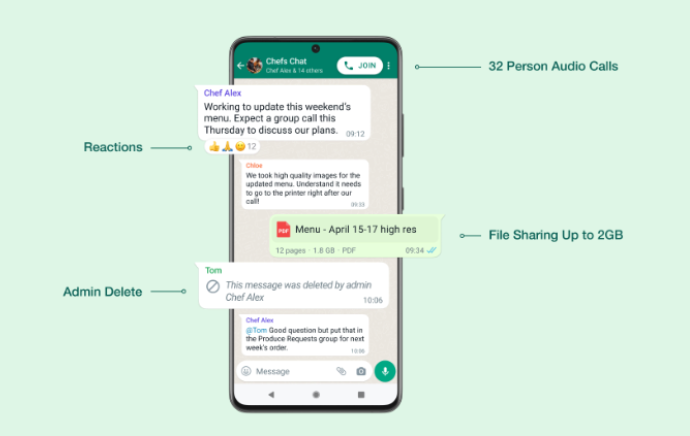
    The social media app, Whatsapp, last week rolled out a series of features that enhance user experience on the app. While Facebook (now Meta) founder, Mark Zuckerberg, took to his Facebook page on May 5, 2022, to announce the rollout of new reaction emojis on Whatsapp, the app followed with the announcement of other features, which include the expansion of group size limit.

    The group limit expansion on Whatsapp may have come as a response to complaints by users and the movement of groups to a competing app, Telegram, which allows up to 2,000 in a group. Still, the increased number is far below what Telegram offers.

    Here are the new Whatsapp features unveiled in the course of the week and which users will be receiving as they update their app:

    Group participants limit increased

    WhatsApp users will now be able to add up to 512 people to a group. This was increased from the maximum 256 earlier fixed by the platform

    Admin Delete

    Although this may be controversial, this new feature allows group admins to remove errant or problematic messages from everyone’s chats. In cases where a group member sends an offensive message, the admin now has the power to ‘delete for everyone’.

    Increased file sharing size

    Whatsapp users will now be able to send files up to 2GB in size at once on the app, which is a massive jump from the previous limit of 100MB.

    WhatsApp Reactions

    The new reaction emojis will allow users to react with six different emojis on the platform: laughing face, red heart, surprised face, thumbs up, teary face, and hands together.

    To use the feature, just long-press on a message and choose one of the displayed emojis. Just like Instagram, users can change their reactions to a different one by long-pressing the same messages and changing the emoji or just clicking on the same one to remove it.

    WhatsApp also notes a few things about the Reaction feature: Users can only add one reaction per message, and it disappears when the messages disappear. Also, users will not be able to hide the reactions or the reaction counts. The recipients might see the reaction before you remove it or if removing it was not successful.

    Larger Voice Calls

    This feature allows a one-tap voice calling for up to 32 people with all-new design for those times when talking live is better than chatting.

    Bottomline

    These new features will, no doubt, enhance user experience on Whatsapp. That users can now send large files up to 2GB is a great improvement over the previous 100MB limit. But the 512 limit for group participants is still a drawback that will continue to push groups with larger numbers to Telegrams.

    (Naira metrics)

  • Cardiovascular Diseases: Enugu govt calls for sustained advocacy against trans-fatty acids

    Cardiovascular Diseases: Enugu govt calls for sustained advocacy against trans-fatty acids

    Enugu State government on Saturday urged journalists and Civil Society Organisations (CSOs) to sustain current advocacy against trans-fatty acids to check rising cardiovascular diseases.

    The state Commissioner for Health, Ikechukwu Obi, made the call while addressing a journalism training session on trans-fat reporting organised by Corporate Accountability and Public Participation Africa (CAPPA), a CSO.

    Trans-fatty acids, also called trans-unsaturated fatty acids, are a type of unsaturated fat that naturally occurs in small amounts in meat and milk fat.

    Mr Obi noted that journalists were critical stakeholders in health education and awareness and charged them to ensure they give factual and understandable health information that would benefit the public.

    He said journalists should not allow medical professionals to dazzle them with health terminologies but always ask the medical professionals to break down their technical jargon for easy comprehension.

    “Journalists should try as much as possible to simplify medical terms for clear understanding by the layman.

    “Accurate information passed in an easily understandable language will ensure that misconceptions and misinterpretation are checked in health reporting,’’ he said.

    The commissioner also said that Nigerians have to be mindful of what they eat and check fatty and oily intakes to stem the tide of cardiovascular diseases.

    Mr Obi lauded NAFDAC for producing a draft regulation to check the use and consumption of industrial TFAs.

    He assured journalists and other stakeholders in the fight against TFAs of the government’s collaboration to ensure that “we conquer, as we have done in Ebola, Polio and other diseases’’.

    (NAN)