Category: World News

  • Canada Hits US With Up to 50% Tariffs as Trade Talks Collapse

    Canada Hits US With Up to 50% Tariffs as Trade Talks Collapse

    Canada imposes tariffs of up to 50% on US goods after trade talks collapse, escalating tensions between the two allies.

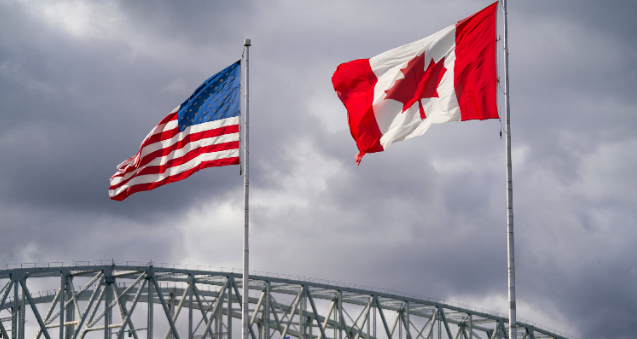
    Canada has imposed new retaliatory tariffs on a broad range of US goods after trade negotiations with Washington collapsed, further straining relations between the two long-standing allies.

    The new duties, which took effect on Tuesday, range from 15% to 50% and cover about $27.6 billion worth of US products, including dairy, agricultural equipment, paper, household appliances and electronics.

    Canada has also doubled its tariffs on US steel, aluminium and iron products to 50%, while furniture and clothing face the highest tariff rate.

    Ottawa described the measures as a “dollar for dollar” response to US tariffs imposed on Canadian goods under Section 338. Canada’s Department of Finance said the measures were intended to protect Canadian workers, producers and manufacturers and help them compete with US products in the domestic market.

    The latest tariffs are in addition to existing Canadian counter-tariffs, including a 25% duty on US automotive products.

    Trade negotiations between the two countries broke down at the end of August, with officials from both sides blaming each other for the failure to reach an agreement and publicly disagreeing over the issues that prevented a deal.

    The dispute escalated further on Monday when US President Donald Trump called for a boycott of Canadian aircraft manufacturer Bombardier, declaring on Truth Social: “NO MORE SELLING BOMBARDIER IN THE UNITED STATES!”

    The intensifying trade tensions come as the US and Canada remain deeply interconnected economically. The US exported $333.6 billion worth of goods to Canada and imported $381.9 billion from its northern neighbour.

    The two countries share extensive trade across sectors including energy, vehicles, heavy machinery, aircraft, pharmaceuticals, gems and jewellery, furniture, clothing, food and beverages.

    Economists have warned that although the newly targeted goods account for a relatively small share of overall bilateral trade, the tariffs could deliver a significant blow to small and medium-sized businesses and companies operating in the most affected sectors.

    In response to the economic impact of the trade dispute, Ottawa announced a $7.5 billion support package for businesses and workers last month.

    The package builds on an existing $25 billion in support introduced in response to the US global tariff offensive that began in April 2025. Arise News
     

  • Iran Strikes Back After US Attacks Three Oil Tankers in Hormuz

    Iran Strikes Back After US Attacks Three Oil Tankers in Hormuz

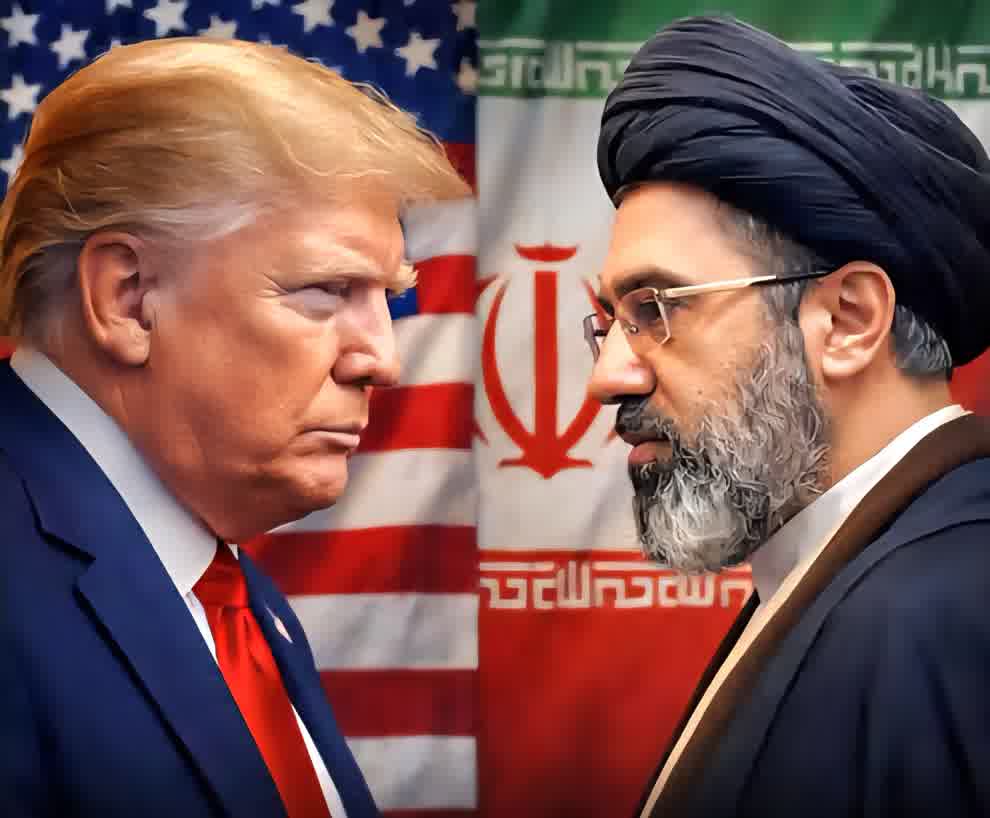
    Iran said Sunday that its forces attacked a US naval drone trying to enter the Strait of Hormuz, hours after targeting ships in retaliation for American strikes on three oil tankers.

    The latest round of clashes, which began with US raids last week, comes amid a deadlock in their six-month war.Iran has maintained its stranglehold on the strategic Strait of Hormuz while Washington continues a counter-blockade of Iranian ports.

    Washington is also seeking to choke Iran’s economy, rolling out sanctions on entities with financial links to the Islamic republic in a bid to force it into submission.

    The Islamic Revolutionary Guard Corps, the ideological arm of Iran’s military, said Sunday it “attacked an American military unmanned surface vessel” attempting to enter the strait, according to a statement carried by state television.

    Hours earlier, the IRGC said its naval forces “targeted three oil tankers on the unauthorised route of the Strait of Hormuz and three vessels affiliated with the child-killing America in other areas”.

    It warned ships not to attempt to transit by unapproved routes.

    This photo shows a general view of a damaged boatyard that was hit in recent days by strikes carried out by the US military at the Five-Step local fishing harbour in the port city of Bandar Abbas in southern Iran on September 5, 2026. (Photo by Atta KENARE / AFP) /

    On Saturday, US Central Command (CENTCOM), which oversees American military operations in the region, said it struck tankers linked to the Iranian Guards, accusing the most powerful arm of the Iranian military of unsuccessfully firing at American warships.

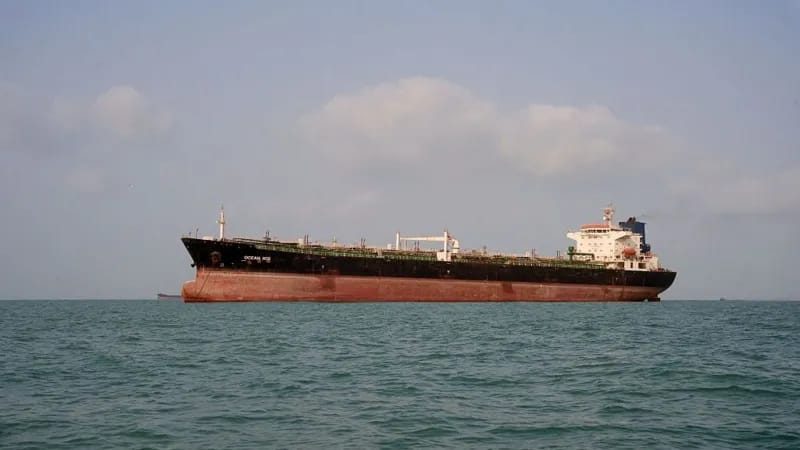
    “Following Iran’s failed attacks, CENTCOM permanently disabled the IRGC crude oil carriers M/T Downy off the coast of Kharg Island and M/T Stark 1 near Jask,” it said.

    “American forces also completely destroyed the unladen crude oil carrier M/T Kylo… in the Gulf of Oman, striking the vessel in multiple critical locations to render it inoperable after the crew was directed to abandon ship.”

    Video posted by CENTCOM showed large fireballs and billowing flames after projectiles slammed into the ships.

    The three vessels were “part of a multibillion-dollar shadow network that funds the IRGC and its regional proxies”, it said.

     ‘Higher economic cost’

    The Guards meanwhile claimed the two American warships they targeted had been “forced to retreat” after “suffering damage”, but CENTCOM said those ships successfully evaded Iranian attacks.

    CENTCOM commander Admiral Brad Cooper said after the operation: “If you shoot at two of our ships, we will impose an even higher economic cost — taking out three of yours.”

    The Iranian foreign ministry hit out at Washington over the strikes on oil tankers, calling them “illegal and aggressive actions”.

    A correspondent for Iranian state TV in Jask in the southern province of Hormozgan said one of the tankers was empty and the second was carrying oil. The crews were transported to shore on lifeboats, they said.

    Another state TV correspondent on Kharg Island said the attack there caused no casualties.

    Iran’s Khatam-al Anbiya central military command warned that if the US continued its attacks, then Tehran’s retaliation against US warships would be “more severe than before, and there is a possibility of their expansion”.

    The administration of US President Donald Trump has tried to downplay the significance of the six-month conflict, which has proven increasingly unpopular at home as midterm elections near.

    US Vice President JD Vance went so far as to say that he “wouldn’t call it a war”.

    Trump reiterated that view on Friday, calling the war “small potatoes” for Washington.

    Iran’s Security Chief Mohsen Rezaei warned this week that the Islamic republic had adopted a “new strategy” against Washington that “will shatter your foundations”.

    The US has been trying to step up pressure on Tehran in a bid to wrestle control of the Hormuz strait, through which one-fifth of world oil supplies previously flowed.

    A fragile ceasefire between the two sides collapsed in July after attacks on commercial ships in the strategic waterway.

    Trump has in recent weeks repeatedly threatened to claim sovereignty over the strait, even posting a map showing it as “new US territory”.

    Vance has insisted the US will not reopen talks with Iran until it ends attacks on commercial shipping in Hormuz. AFP

  • US Strikes Three Iranian Oil Tankers After Warships Targeted

    US Strikes Three Iranian Oil Tankers After Warships Targeted

    The US military says it has hit three Iran-linked oil tankers after ballistic missiles were launched towards two of its warships in the region.

    US Central Command (Centcom) said on Saturday it had “permanently disabled” a tanker near Kharg Island and another near the Strait of Hormuz, and “completely destroyed” a third in the Gulf of Oman.

    Centcom said it “successfully evaded” multiple attacks from the Islamic Revolutionary Guard Corps (IRGC) targeting a US aircraft carrier and guided-missile destroyer. No American troops were harmed, it said in a statement.

    Iranian state media earlier reported that one of its tankers had been struck off the coast of Kharg Island.

    Tehran did not immediately acknowledge attacks on US ships.

    Admiral Brad Cooper, Centcom’s commander, said in a statement on Saturday: “Let the message to the IRGC be clear: If you shoot at two of our ships, we will impose an even higher economic cost – taking out three of yours.”

    “We will not hesitate to defend American forces, and if necessary, destroy Iran’s limited and exposed oil fleet.”

    Centcom, which oversees US military operations in the Middle East, claimed that the three Iranian oil tankers were “part of a multibillion-dollar shadow network that funds the IRGC and its regional proxies”.

    The strikes come nearly a week after renewed attacks between the US and Iran, which followed a period of relative calm between the warring sides.

    Earlier this week, US Vice-President JD Vance said the US military was investigating Iranian claims that American strikes killed at least four people including two children at a wedding in southern Iran.

    Humanitarian group the Iranian Red Crescent Society said shrapnel from a missile hit the ceremony at a home in Sirik on Tuesday, prompting Tehran to declare it a “war crime”.

    A 60-day ceasefire between the US and Iran formally expired last month, with little sign of a further diplomatic settlement on the horizon.

    Days after the ceasefire expired, US President Donald Trump said the US would launch tougher economic measures against Iran, as well as any country that helps or does business with it.

    The US and Israel first launched wide-ranging strikes on Iran on 28 February, with Iran responding by attacking Israel, US bases and allied states in the Gulf, and effectively closing the Strait of Hormuz to marine traffic.

    The conflict over the strait has raised energy prices globally. And, ahead of the US midterm elections in November, Trump is facing pressure over how much the war is costing American consumers. BBC


  • Starmer Leaves Downing Street as Andy Burnham Becomes UK Prime Minister

    Starmer Leaves Downing Street as Andy Burnham Becomes UK Prime Minister

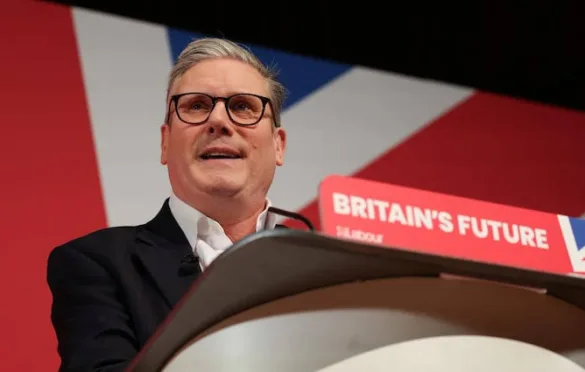
    After becoming leader of the Labour party, Andy Burnham will officially become prime minister of the UK as Keir Starmer leaves Number 10. That many people considered this day an inevitability doesn’t make it any less momentous.

    Six years ago, Starmer inherited a Labour party that had failed to win four general elections and was battling a tarnished reputation. In the month he took over as leader, Labour were polling at 29%, 22 points behind Boris Johnson’s Conservative party. Starmer was described as “ruthless”, which he occasionally admitted himself, in turning the party around. He expelled those associated with anti-semitism or who disavowed Labour and spent four years preparing to fight a winning electoral campaign.

    The scandals and changes in leadership for the then-governing Conservative party certainly helped Starmer. Labour became more popular than the Tories in November 2021 and held that lead until the July 2024 general election. Starmer looked to persuade voters by promising “national renewal” and a principle of “country first, party second”.

    It worked, to a degree. Labour did win a landslide victory in 2024, but it was just as much a function of the electoral system as a Starmer success story. Two thirds of those who voted – and swathes of people didn’t – opted for parties that weren’t Labour. Yet they started the parliament with 412 MPs in the party’s second-biggest ever win.

    It turned out that perhaps “country first, party second” isn’t the best principle to govern by. Early in his premiership, Starmer made decisions that were not well received by his party. This included policies on welfare reform, winter fuel payments and farmers’ inheritance taxes, alongside accusations of parroting the rhetoric of right-wing Reform UK, a party that was rapidly rising in the polls.

    The backlash from both country and party led to a series of U-turns. The Peter Mandleson scandal added more uncertainty to his ability to command authority over his party.

    Starmer’s popularity with the public dwindled too. It took less than a year for Labour to lose its lead in the polls. While Starmer was praised on the international stage, his domestic standing weakened. Finally, it was a poor performance in the 2026 local elections and a series of cabinet resignations that put the writing on the wall.

    Burnham was given the opportunity to become an MP and won the seat in Makerfield. Hours before he was sworn into parliament, Starmer stood outside Number 10 to announce his resignation. An end to six years as Labour leader, two years as prime minister, and a replacement already on his way to London.

    What happens now?

    The changeover follows a script that the UK has grown familiar with, having had six prime ministers in a decade. The outgoing leader travels to Buckingham Palace to formally resign as prime minister to King Charles – a short audience with no ceremony beyond it. His authority officially ends the moment the king accepts.

    The incoming prime minister then makes the same journey. The king formally invites him to form a government, in the ritual still known as “kissing hands” even though it’s really just a conversation. Only at that point are they legally the prime minister. For Burnham, Friday’s special conference made him leader of the Labour party, but not yet leader of the country.

    From the palace, Burnham heads to Downing Street for his first speech as PM outside Number 10, the traditional moment to set a tone rather than announce policy. Cabinet appointments tend to follow fast: a new PM wants their top team in place before the day’s news cycle moves on. So we can expect a reshuffle through Monday afternoon and evening.

    If a week is a long time in politics, then two years is an age. The series of policy decisions taken by Labour since the general election have garnered criticism from almost all of the electorate. Though some decisions commanded consensus, like the refusal to join US president Donald Trump’s attacks on Iran, most were divisive.

    The Employment Rights Bill was watered down enough to frustrate the unions who wanted it. Welfare reform split the party between MPs who thought it went too far and disability campaigners who thought it didn’t go nearly far enough. Strikes still ongoing across the NHS and higher education sector are nudging some traditional Labour voters toward the Greens. And on asylum and immigration, echoing Reform’s rhetoric didn’t stop voters drifting to Nigel Farage, while alienating those who hoped for something different from the Conservative years.

    Winning back an argument on three fronts at once – Reform on the right, the Greens on the left, and the “don’t knows” in the middle – while also demonstrating the basic competence and decisiveness Starmer was accused of lacking, would be difficult for anyone.

    And the qualities that made Burnham popular don’t automatically survive the move to Number 10. As a metro mayor, he had the freedom to pick fights, claim credit and stay closely identified with one city. Government means trade-offs, collective responsibility and a public that’s watching the whole country – not just Manchester.

    Starmer, too, arrived with genuine goodwill and a historic majority. Whether Burnham fares differently will depend less on the “buzz” around him now than on how fast he can show that he governs differently, not just talks differently. The Conversation

  • Andy Burnham Becomes New UK Labour Leader, Vows to ‘Renew Hope’ as Next Prime Minister

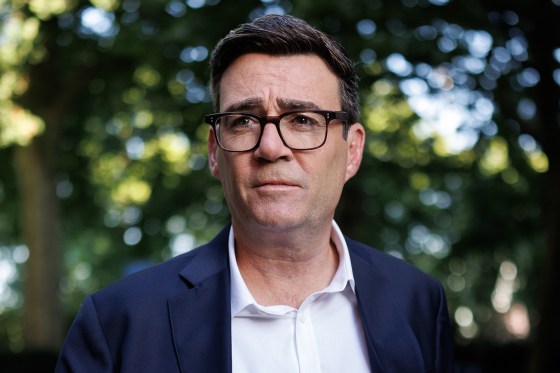
    Andy Burnham, nicknamed the ‘King of the North,’ became leader of Britain’s governing Labour Party on Friday, the final step before becoming its seventh prime minister in a decade on a pledge to thwart the rise of the populist Reform UK.

    At a “special conference” on Friday, Burnham, who earned the regal moniker for his determination as mayor of Greater Manchester to defend the region’s interests, was elected after gaining overwhelming support from Labour lawmakers.

    The event was little more than a formality before he replaces Keir Starmer as Britain’s leader on Monday, when the party will be eager to find out his cabinet team and learn more about his approach to government.

    Burnham, 56, used his speech to press his message that his government will be “authentically Labour,” overseeing economic renewal, more public control, re-industrialization and putting power back in the hands of local communities.

    “We’re going to give them hope back,” Burnham said “This is a proud moment you have given me and my family today, and an emotional one, but it is one for which I am ready.”

    “We are united and we put ​the ⁠power that comes from that unity at the service of people and places who have been waiting too long for politics to let them hope again,” he told the ⁠room full of Labour lawmakers and party officials.

    “And that’s what we’re going to do, everybody, we’re ​going to ⁠give them hope back.”

    He also paid tribute ‌to Keir Starmer, the man he will replace as British prime minister on Monday, when the party will be eager to find out his cabinet team and learn more about his approach to government.

    “I haven’t made any decisions yet about who will be in that top team. But I will soon, and ‌when I have, you ​will see it reflects ‌all parts ⁠of our party, ⁠all communities,” Burnham said.

    But there is still much to learn about how he will govern.

    He has given one speech since returning to parliament last month after winning a parliamentary seat in Makerfield, the start of a four-week process to install him as prime minister and remove Starmer, whose unpopularity across Britain turned his lawmakers against him.

    Centre-left Labour retains an overwhelming majority in parliament after the 2024 elections, so the leader of the largest party becomes the country’s prime minister, without new polls being held.

    On Monday, he will become the UK’s seventh prime minister in a decade, with Labour MPs betting Burnham is the party’s best chance of reining in Nigel Farage’s anti-immigrant Reform UK party, tipped in the polls to win the next general election, expected in 2029.

    Nicknamed “King of the North” for winning three successive elections to the Greater Manchester mayoralty, Burnham’s flagship idea is devolving powers to other cities in a bid to fire up Britain’s economy, including by setting up a “Number 10 North” office.

    He said the past four decades since “the 1980s have not been kind to the places that built our party, nor to the communities across the UK in rural and coastal areas. So we pledge today, to them, to be better.”

    “If we want an economy and a country that works for all people and places … then it requires a new path to the one we’ve been on for the last 40 years,” he said.

  • US-Iran Tensions Continue to Escalate as Strikes, Missile Attacks Intensify

    US-Iran Tensions Continue to Escalate as Strikes, Missile Attacks Intensify

    Tensions between the United States and Iran have escalated further following a fresh wave of US military strikes on Iranian targets and retaliatory missile attacks claimed by Tehran against American military facilities in the Middle East.

    The latest developments also saw Iran activate air defence systems in Tehran after explosions were reported in several parts of the country, while neighbouring Jordan said it intercepted multiple Iranian missiles headed toward its territory.

    The US Central Command (CENTCOM) announced that it had completed a new round of precision strikes targeting Iranian command centres, air defence systems, missile and drone sites, and coastal surveillance facilities.

    According to CENTCOM, the operation was designed to degrade Iran’s capability to threaten commercial shipping through the strategic Strait of Hormuz.

    Among the targets reportedly struck was the southern port city of Bandar Abbas, which hosts key Iranian naval assets and facilities belonging to the Islamic Revolutionary Guard Corps (IRGC).

    Reports also indicated that some of the attacks reached parts of northern Iran for the first time since the latest round of hostilities began.

    As the strikes unfolded, Iranian authorities activated air defence systems in parts of the capital, Tehran.

    Iranian state media reported explosions in the northern province of Semnan and the western province of Lorestan.

    The Islamic Republic News Agency (IRNA) said no casualties had been reported in Tehran, while officials were assessing the impact of the explosions in other affected areas.

    In what appeared to be a retaliatory move, Iran’s military claimed it had launched attacks on US military facilities at the Azraq Air Base in Jordan.

    According to Iranian state media, the strikes targeted American military communications systems and fuel storage facilities at the base, which hosts US personnel.

    However, neither the Jordanian government nor the US Central Command immediately confirmed the Iranian claim.

    Meanwhile, Jordan said its air defence systems intercepted eight Iranian missiles that were heading toward the kingdom.

    The Jordanian Armed Forces, quoted by the state-run Petra News Agency, said the missiles were destroyed before reaching their intended targets, adding that no casualties or property damage were recorded.

    The missile interceptions came amid reports that Iran had launched missile and drone attacks targeting several US allies in the region, including Bahrain and Kuwait.

    The latest exchange of military actions marks another significant escalation in the confrontation between Washington and Tehran, raising concerns over the possibility of a wider regional conflict involving US allies across the Middle East.

  • Concerns Heighten as US, Iran Trade New Strikes in Fight over Control of Strait of Hormuz

    Concerns Heighten as US, Iran Trade New Strikes in Fight over Control of Strait of Hormuz

    The United States and Iran traded strikes on Thursday for the second day running as Washington and Tehran battled over the strategic Strait of Hormuz.

    The vital oil shipping corridor is a flashpoint in the Middle East war, with Tehran insisting on control of the strait despite it being open to free passage before the US-Israeli attacks in February.

    After the foes traded attacks on Wednesday, US President Donald Trump said the ceasefire with Iran was “over”, but left the door open to more talks and added any strikes would end quickly.

    US forces said the latest attacks against Iran were aimed at “their ability to threaten the freedom of navigation in the Strait of Hormuz”, citing recent strikes against commercial ships in the waterway.

    The US Central Command said they had struck approximately 90 military targets, including missile and drone storage as well as military logistics sites along Iran’s coastline.

    Iran’s reprisals came quickly, with the Revolutionary Guards (IRGC) saying they had struck “key infrastructure and facilities” at US bases in Arifjan and Ali Al Salem in Kuwait, and Juffair and Sheikh Isa in Bahrain.

    An AFP journalist heard blasts in Bahrain’s capital Manama and Kuwait reported intercepting “hostile missile and drone attacks”.

    American strikes hit a railway bridge in Iran’s northeast, according to several official media, and the official IRNA news agency reported strikes on a military base in coastal Bushehr, which hosts the nation’s only civilian nuclear power plant.

    Earlier, warplanes were heard over Iran’s Kish Island and explosions rocked the port cities of Bandar Abbas, Konarak and Chabahar, part of which lost electricity, IRNA reported.

    “This is in retribution for yesterday’s bombing of ships by Iran,” Trump said in a post on Truth Social on Wednesday. “If it happens again, it will get much worse!”

    Late on Wednesday, while speaking to reporters aboard Air Force One, Trump said the Iranian side had “called a little while ago,” and that they wanted “to make a deal so badly”.

    Trump did not provide further details of the call — including who was on the line — but went on to cast doubt over the value of any deal, calling the Iranians “sort of crazy”.

    Iran’s chief negotiator said Thursday that the Strait of Hormuz would be opened only under “Iranian arrangements”.

    “The United States still has not learned that bullying and breaking its promises no longer come without consequences,” Mohammad Bagher Ghalibaf said on X. “Let me be clear: If you strike, you will be struck.”

    Since US-Israeli strikes triggered war in February, Tehran has insisted on controlling the strait, saying it will charge fees for passage and threatening to hit vessels that deviate from its authorised route.

    Its military struck at least three ships in recent days, prompting extensive US strikes against Iranian targets on Tuesday.

    The latest strikes come just ahead of the Thursday burial of Ali Khamenei, Iran’s former supreme leader, who was killed at the outbreak of the war on February 28.

    UN chief Antonio Guterres meanwhile called “on all parties to exercise maximum restraint” — as did Pakistan, a key mediator in the US-Iran talks.

    Iran said Foreign Minister Abbas Araghchi and Qatar’s prime minister had spoken over the phone on Wednesday and “underscored the importance of using diplomatic means to resolve regional issues”.

    Both the United States and Iran said they had hit dozens of targets in the initial wave of attacks, which Iranian state television said had killed eight Iranian military personnel.

    CENTCOM said its forces struck more than 80 targets on Tuesday, while the Guards said they hit dozens of US military facilities in Kuwait and Bahrain.

    The latest attacks by Iran did not result in any American casualties or cause major damage to facilities, a US military official said on Wednesday.

    Oman, which sits on the other side of Hormuz from Iran, condemned the targeting of Bahrain and Kuwait as well as the strikes on ships, but without blaming Iran.

    The former mediator has not blamed Iran for attacks throughout the war, in an effort to maintain its neutrality, which is being tested by talks with Tehran over the administration of Hormuz.

    Washington wants free passage for ships while Iran is insisting on fees and has refused to allow vessels to pass through Omani waters.

    All three vessels recently struck were sailing close to Oman, which had proposed a temporary transit corridor hugging its coastline.

    Maritime traffic had tentatively resumed after Washington and Tehran signed the deal to end hostilities last month.

    But almost 6,000 seafarers remain stranded in the area, International Maritime Organisation chief Arsenio Dominguez said Wednesday. AFP

  • UK Prime Minister Starmer Resigns as Britain Faces its 7th leader in 10 Years

    UK Prime Minister Starmer Resigns as Britain Faces its 7th leader in 10 Years

    U.K. Prime Minister Keir Starmer announced Monday that he will stand down as Labour leader and prime minster, ending months of political turmoil and opening a contest to replace him.

    The announcement follows mounting pressure on the prime minister after Labour suffered heavy losses in local elections in May and faced an increasingly vocal rebellion from his own lawmakers over his leadership and policy agenda.

    The move comes less than two years after Starmer led Labour to one of its largest parliamentary majorities in the 2024 general election.

    In a statement outside 10 Downing Street shortly after 9:30 a.m. in London, Starmer said he would remain in post until any leadership contest is completed, which he said would help ensure an orderly handover of power.

    In a short speech, a visibly emotional Starmer said that entering 10 Downing Street had been the “proudest moment of my life,” adding that, under his tenure, Britain’s reputation in the world had been restored, with investment secured and improvements in workers’ rights delivered.

    However, Starmer conceded that Labour colleagues had since been asking whether he was best placed to lead the party into the next general election.

    “I have heard the answer from my parliamentary party. I accept that answer with good grace. I will resign as leader of the Labour Party.”

    Labour’s former Greater Manchester mayor, Andy Burnham, won a decisive victory in a special election on June 18, potentially setting up a challenge for the party’s leadership and, by extension, the U.K.’s premiership.

    Starmer and Finance Minister Rachel Reeves have been battling discontent over fiscal policy within their own ranks, while welfare reforms and the appointment of Peter Mandelson — an associate of the late sex offender Jeffrey Epstein — as U.S. ambassador, further damaged intra-party relations.

    An Ipsos poll published on Friday suggested that 52% of the British public think Starmer should stand down as prime minister, five percentage points higher than in May, while 35% think he should continue.

    U.K. gilt yields jumped on Friday following Burnham’s by-election win. However, he has been keen to placate markets lately, distancing himself from previous statements in which he suggested the U.K. was “in hock to the bond markets.”

    Kallum Pickering, chief economist at Peel Hunt, said that the U.K. is borrowing too much and that its public debt levels are too high, but he stressed that the country is not a “fiscal outlier” in this regard relative to other G7 countries.

    He said that, under Starmer’s leadership, the U.K. had opened itself up to the world, signing new trade deals and delivering 1.5% real GDP growth.

    However, Pickering said the U.K. still has the highest borrowing costs in the G7, and has remained the most inflationary economy in the G7 on average for most of the past 10 years.

    “This is the thing that the market is concerned about,” Pickering told CNBC’s “Squawk Box Europe” shortly after Starmer’s announcement. “The market now has to price in what a Burnham premiership looks like.” CNBC

  • JUST-IN: Iran declares the Strait of Hormuz closed again

    Iran re-closed the Strait of Hormuz Friday instead of heading to Switzerland for nuclear negotiations, citing Israel’s refusal to pull forces out of southern Lebanon and US forces’ ongoing presence in the region.

    In a statement read over maritime radio channels, the Islamic Revolutionary Guard Corps (IRGC) said the US was in violation of the memorandum of understanding between Washington and Tehran, which President Trump and Iranian President Masoud Pezeshkian signed Wednesday.

    “Since Israel’s withdrawal from Lebanon, the complete lifting of the naval blockade, and the withdrawal of American terrorist forces from the Persian Gulf and the region are among the main conditions of the agreement between Iran and the United States, the Strait of Hormuz will remain closed until these conditions are met,” it said. “All ships are requested, for the sake of their security and safety, not to approach the Strait of Hormuz. Any vessel that defies this directive will be targeted.”

    US Central Command said Thursday it had formally lifted its two-month blockade on Iranian ports. It was not immediately clear what the IRGC meant by the embargo removal not being “complete.”

    Shortly after the IRGC announcement, a US official claimed Israel and Hezbollah had reached a cease-fire agreement, despite Israeli Prime Minister Benjamin Netanyahu claiming Thursday that the Jewish state’s forces would continue hunting terrorists.

    “We will restore security and prosperity to northern towns,” Netanyahu said. “That requires maintaining the security zone in southern Lebanon.”

    The Israel Defense Forces also published a new map showing an expanded zone of occupation, deploying troops more than 6 miles across the Lebanese border, including north of the Litani River.

    The MOU signed Wednesday promised the US and Iran, “along with their allies,” would respect Lebanon’s territory and sovereignty and end all hostilities there.

    Simcha Brodsky, president of the open source intelligence organization OSINT613, told The Post Iran is taking advantage of the way the MOU was designed and the time it takes for the US to remove a blockade.


    “What we’re seeing is a direct result of the wording in the US-Iran MoU. The deal lifts the US blockade in phases (‘fully within 30 days’), so the US is mid-process by design,” he said. “Iran is using that gap: It says the strait stays closed until the blockade is ‘completely lifted,’ so it can claim the lift isn’t done and call this a re-closure.”

    “Iran has now bolted the Israel-Lebanon fighting onto that pretext to hard-stop the whole deal, roping Israel into an agreement it never approved or negotiated.”

    The IRGC announcement came hours after the first round of US-Iran nuclear talks achieved through the MOU and scheduled for Friday were called off.

    The US has not given a reason for the postponement.

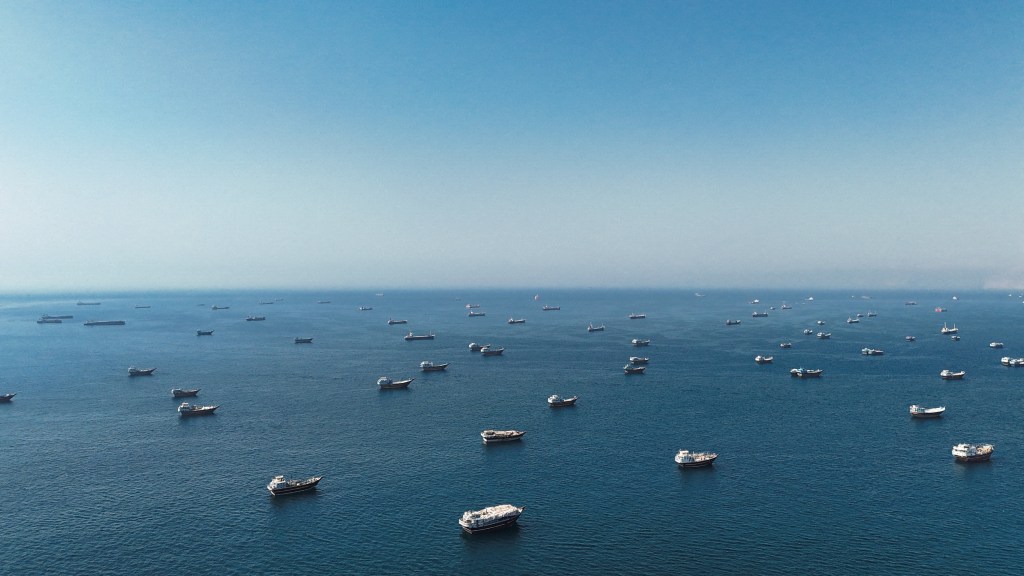
    Drone view of numerous vessels on the Strait of Hormuz.

    A regional source claimed Wednesday some hardliners in the Iranian regime were arguing against attending a since-canceled MOU signing ceremony set for Friday until Israel removed its troops from southern Lebanon.

    Meanwhile, Iran’s Persian Gulf Strait Authority (PGSA) — which Tehran recently formed so it could control the strait and, critics say, charge fees — released a set of new “terms and conditions” for ships passing through the vital waterway.

    While the MOU requires Iran not to demand payment from shipping firms for the next 60 days, the document explicitly states Tehran “reserves the right to introduce” new fees in the future.

    The document also requires all ships to get a permit from the PGSA to pass through the strait, which was not required before the war began Feb. 28, as the strait is considered international waters. NYP

  • US-Iran ‘peace deal’ announced; Trump says Strait of Hormuz reopening

    US-Iran ‘peace deal’ announced; Trump says Strait of Hormuz reopening

    United States President Donald Trump has announced that a ceasefire deal with Iran has been agreed to and that toll-free shipping through the Strait of Hormuz will now begin.

    The agreement, later confirmed by Iran’s deputy Foreign Minister Kazem Gharibabadi on Sunday, will immediately end hostilities between Iran and the US.

    Trump, who turned 80 on Sunday, said the deal allows for toll-free shipping through the Strait of Hormuz, which has been largely closed since the US and Israel launched an assault on Iran on December 28.

    “The Deal with the Islamic Republic of Iran is now complete,” Trump wrote on Truth Social.

    “Congratulations to all! I hereby fully authorize the toll free opening of the Strait of Hormuz, and, simultaneously herewith, authorize the immediate removal of the United States Naval blockade. Ships of the World, start your engines. Let the oil flow!”

    He later said in a separate post, “This Great Deal will bring Peace and Security to the whole Region”, and hinted that a more comprehensive peace agreement with Iran would follow.

    “Many presidents have tried to make Peace with Iran, and all have failed before me. The Leaders of the Region have, for the first time, found a President who can help them achieve real Peace. With the opening of the Strait upon the signing of the Deal on Friday, for purposes of mine removal, oil will flow on both ends again for the Region, and the World!” he wrote.

    He also warned Iran, in an interview with The New York Times, that the US could restart military operations or become “the guardian of the Middle East” in exchange for 20 percent of the region’s revenues. It is not apparent if the interview was conducted after the deal was announced.

    Trump’s announcement came after Pakistani Prime Minister Shebaz Sharif announced the deal on X, saying it is to end fighting on all fronts, including in Lebanon.

    “Following intensive talks, we are pleased to announce that the Peace Deal between the United States of America and the Islamic Republic of Iran has been REACHED. Both sides have declared the immediate and permanent termination of military operations on all fronts, including in Lebanon,” Sharif wrote.

    An official signing ceremony will take place in Switzerland on Friday, June 19, he added.

    “We would like to thank the United States of America and the Islamic Republic of Iran for their commitment to finding a diplomatic solution to the conflict. We would also like to extend our sincere appreciation to our brothers in this mediation effort, the great leadership of the State of Qatar, for their support in reaching this agreement,” Sharif wrote.

    “I would also especially thank the visionary leadership of the Kingdom of Saudi Arabia and the Republic of Türkiye for their immense contributions in this regard. With the agreement now in place, mediators will facilitate a series of meetings this week. These pre-implementation discussions will lay the foundation for the technical talks and the official signing ceremony.”

    The announcement follows days of speculation that a deal would be reached. Trump had said earlier that a ceasefire agreement would be announced on Sunday, until Israel launched an air raid on Beirut’s southern suburbs, leading to fears that the agreement could be sabotaged.

    Then, after repeated warnings by Iranian leaders that Tehran was ready to strike Israel for bombing Beirut – a red line for Tehran – Pakistan’s prime minister posted his announcement on X that a deal had been agreed upon, with other countries welcoming the news.

    BEIJING, CHINA - MAY 25: Pakistan's Prime Minister Shehbaz Sharif arrives for a meeting with Chinese President Xi Jinping at the Great Hall of the People on May 25, 2026 in Beijing, China. (Photo by Tingshu Wang - Pool/Getty Images)

    Qatar credited its partnership with Pakistan in helping a memorandum of understanding come to fruition, following intense mediation in recent days.

    “The State of Qatar welcomes the agreement reached on the Memorandum of Understanding between the United States of America and the Islamic Republic of Iran on addressing the outstanding issues between them, including ensuring freedom of navigation in the Strait of Hormuz, and considers it an important step towards consolidating sustainable peace and promoting economic growth regionally and internationally,” Qatar’s Ministry of Foreign Affairs wrote on X.

    UK Prime Minister Keir Starmer said he was ready to aid the further technical talks between the US and Iran, adding that he hopes the reopening of the Strait of Hormuz will stabilise energy markets.

    “Attention must now turn to fully implementing the memorandum of understanding to ensure the Strait reopens and remains fully and permanently open, and that the detailed elements of the nuclear agreement are finalised,” Starmer said in a statement on X.

    “We are clear that toll-free freedom of navigation must now be restored,” in the Strait of Hormuz, he added.

    A ‘new era’

    French President Emmanuel Macron also praised the deal and said that Paris would support the Lebanese government.

    “I welcome the agreement reached between the United States and Iran, the result of a diplomatic effort to which several partners contributed. I call for its swift and full implementation by all parties to the conflict,” Macron said in a social media post.

    “This agreement must allow for the urgent and unconditional reopening of the Strait of Hormuz, which the international mission established with the United Kingdom is ready to support. The resources are in place and ready to be deployed,” he added.

    “The resumption of maritime traffic, without restrictions or tolls, is essential for regional stability and the global economy.”

    France “will also continue to provide its full support to the determined efforts of the Lebanese authorities to restore the sovereignty of the State, which alone can ensure Lebanon’s stability and territorial integrity and meet the needs of its populations”, he added.

    US Vice President JD Vance, meanwhile, said the ceasefire deal could mark a “new era” in the Middle East and praised Trump for the agreement.

    “What the president has done is create the real space to transform that region. And now, hopefully a new era with the Iranians,” Vance said.

    “I think we can safely say, with confidence, that Iran will never have a nuclear weapon… This is just a great thing for the American people.”

    Vance said he hoped energy prices would decrease, and that he plans to attend the signing ceremony next week in Switzerland. Aljazeera

  • Middle East Tensions Escalate as Israel and Iran Exchange Fresh Attacks

    Middle East Tensions Escalate as Israel and Iran Exchange Fresh Attacks

    Israel has carried out airstrikes in western and central Iran after Iran fired missiles at northern Israel, marking the first direct exchange of attacks between the two countries since a ceasefire came into effect two months ago.

    Fresh explosions were reported in Tehran after Israel announced that dozens of its fighter jets had completed strikes on Iranian defence systems. In response, Iran declared that its attacks marked the beginning of a full week of continuous strikes.

    Iran said it launched the attacks after Israel carried out airstrikes on Beirut, Lebanon, on Sunday.

    The Israeli military stated that the strikes targeted Hezbollah positions in the southern suburbs of the city and were carried out in response to rocket attacks allegedly launched by Hezbollah into Israel.

    The renewed hostilities come despite reports that United States President Donald Trump had urged Israeli Prime Minister Benjamin Netanyahu not to retaliate against Iran’s earlier missile attack.

    Donald Trump had reportedly urged Israel not to attack Iran, saying on Sunday he was going to call Benjamin Netanyahu “right now and tell him not to retaliate”

    Meanwhile, Iran’s Foreign Ministry spokesman, Esmail Baghaei, accused the United States of bearing responsibility for Israel’s actions. According to Iranian state media, Baghaei said Israel’s actions and conflicting positions from US officials had negatively affected the atmosphere surrounding ongoing negotiations.

    Baghaei warned that any consequences arising from the renewed escalation would not be limited to Israel and Iran alone, insisting that the United States would also bear responsibility for the fallout

  • Google requests permission to release 32m mosquitoes in California, Florida

    Google wants to “stop bad bugs with good bugs”, and it’s not talking about coding. The tech company has asked the US government for permission to release up to 32 million sterilized mosquitoes in California and Florida.

    As part of its successful “Debug” program, Google is tapping into its tech expertise to raise an army of sterile male mosquitoes to lower the number of illness-spreading bugs. Mosquitoes – the world’s deadliest animal – kill more people than any other creature in the world every year by spreading lethal diseases such as dengue, West Nile virus, Zika, chikungunya and malaria.

    A notice from the federal register shows the US Environmental Protection Agency (EPA) is reviewing Google’s request to release up to 16 million mosquitoes annually, in Florida and California, over the span of two years. The EPA will decide whether to greenlight Google’s request for an experimental use permit after a public comment period, which ends on 5 June.

    Male mosquitoes don’t bite or carry disease. One of the main approaches Google is testing involves rearing male mosquitoes with a naturally occurring bacteria, called wolbachia, which stops them from having offspring with wild female mosquitoes. When an infected male tries to mate with a wild female, her eggs won’t hatch; Google explains in a blogpost: “the population gets smaller with each generation.”

    While it may sound unusual for big tech to venture into labs and rear bacteria-infected mosquitoes, Google’s parent company – Alphabet – is no stranger to science. Verily Health, a health and AI company that began as a “moonshot” project at Google X, has been a key driver behind the Debug program for years. Verily, an Alphabet subsidiary until earlier this year, uses technology and data science to combat diseases and other global health problems. As of December 2024, Google fully acquired Debug – removing it from Verily’s portfolio, Verily said in an email to the Guardian.

    A 2016 blogpost for the Debug project notes the program started exploring tech-driven solutions to combating deadly mosquitoes about a decade ago.

    Google says other ways of attacking mosquitoes haven’t done the job: spraying them with pesticides can be toxic and less effective over time, and it’s difficult to find, and clear, all the water sources that have become breeding grounds for mosquitoes.

    Google’s approach isn’t unique. The company is drawing on a scientific method called the sterile insect technique, which experts have used on a variety of problematic bugs for decades. Eric Caragata, an assistant professor at the University of Florida who specializes in mosquito-microbe interactions, told USA Today that using the wolbachia bacteria for sterilization had been done for about 15 years.

    For now, Google is focusing their initial efforts on one species of mosquito known as Aedes aegypti, which is responsible for spreading most cases of dengue, Zika, yellow fever and chikungunya. Google’s engineers and scientists are using data analytics and sensors to build “automated rearing systems” for the fragile creatures, the company says. Part of the challenge entails using AI-powered computer vision to precisely separate males from females and releasing the males “in the right place and in the right numbers”.

    The Debug project has made some progress in Singapore, the program’s first international research and development hub. The company said in an 11 May blogpost, citing the country’s national environment agency, that by releasing millions of male wolbachia mosquitoes in Singapore, the country has “achieved 80-90% suppression” of the Aedes aegypti mosquito population and more than 70% reduction in dengue incidents after 6 to 12 months of releases.” Google announced in May that it would be expanding the Singapore site.

    “When we first launched Debug in Singapore, our goal was to advance mosquito production and releases through technology and bring Debug to more communities in Asia, where 70% of the global dengue burden occurs,” said Linus Upson, the head of Debug. “Our success in Singapore gives us the confidence to expand.”