Category: World News

  • US Polls: Biden Reelection Bid Faces Resistance from Some Democrats

    US Polls: Biden Reelection Bid Faces Resistance from Some Democrats

    Steve Shurtleff was at Joe Biden’s side in 2019 when he filed papers in the New Hampshire State House to run for president.

    He repeatedly trekked across the state with Biden to court primary voters. And when Biden ultimately won the presidency, it was Shurtleff, then the Democratic state House speaker, who proudly sealed the envelope that carried New Hampshire’s four electoral votes — including his own name — to the U.S. Senate.

    But on the eve of a new election season, Shurtleff, like a majority of Democrats across the country, feels that one term is enough.

    “In my heart of hearts, no,” Shurtleff said when asked if he wants Biden to run again. “I think a lot of people just don’t want to say it.”

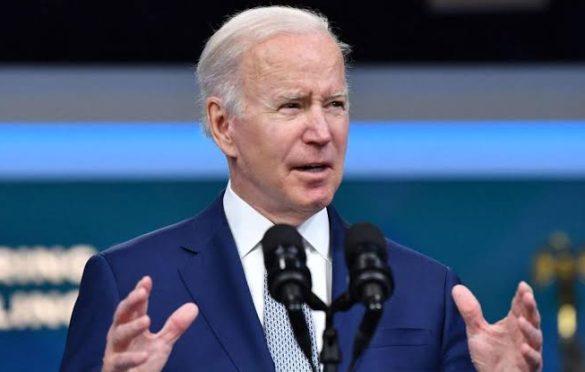
    Democrats across New Hampshire are upset with the Democratic president for trying to end the state’s status as home to the first-in-the-nation presidential primary. But their concerns about Biden run much deeper, in line with a majority of Democratic voters nationwide, who question the 80-year-old president’s plans to soon launch his reelection campaign.

    Just 37% of Democrats nationwide want the president to seek a second term, according to a poll released last month by The Associated Press-NORC Center for Public Affairs Research. That was down from 52% in the weeks before last year’s midterm elections.

    Many worry about Biden’s age. Others, like Shurtleff, are upset about the administration’s messy withdrawal from Afghanistan. And the party’s progressive wing has never been enthusiastic about Biden, who is perceived as a moderate, despite his lengthy list of achievements.

    The White House cast Biden’s perceived weakness within his own party as an exaggerated narrative that he has repeatedly proven wrong.

    “We’re aware pundits’ attitude toward President Biden is unchanged from before he earned the nomination faster than anyone since 2004, won the most votes in American history, built the strongest legislative record in generations and led the best midterm outcome for a new Democratic president in 60 years,” Biden spokesman Andrew Bates said. “Based on comparing the accuracy of our predictions versus theirs, we are happy for this dynamic to continue.”

    Still, there’s a risk of a disconnect between rank-and-file Democrats and the party’s establishment. While voters are signaling unease about the prospect of another Biden campaign, Democratic governors, senators and congressional representatives are virtually unanimous in supporting Biden’s reelection.

    One exception may be New Hampshire, a small swing state whose electoral votes could be critical in a tight general election. The state has challenged Biden before.

    Voters here served Biden an embarrassing fifth-place finish in the 2020 Democratic primary. New Hampshire polls were still open when he decamped to South Carolina, where his presidential ambitions were revived by a decisive win. That state is now Biden’s pick to lead the 2024 presidential primary calendar.

    Interviews with angry New Hampshire Democrats across state government and local Democratic committees suggest there is some appetite for a serious primary challenger in 2024. But top-tier prospects don’t seem to be interested.

    So far, only Democratic activist and author Marianne Williamson has entered the 2024 primary field. Robert F. Kennedy Jr., the son of the late New York senator and known for railing against vaccines, met with New Hampshire voters on Friday. He’s also leaning toward a bid.

    But the likes of Vermont Sen. Bernie Sanders, Biden’s fiercest primary challenger in 2020, has vowed to back the president in 2024. So has Illinois Gov. J.B. Pritzker, whose appearance at last year’s New Hampshire’s Democratic convention still comes up in conversation. California Rep. Ro Khanna, a progressive favorite, has also said he would not challenge Biden, although he has been a vocal advocate for New Hampshire’s place atop the primary calendar.

    In an interview, Khanna said it was “political malpractice” for the Democratic National Committee, under Biden’s direction, to threaten New Hampshire’s status.

    “New Hampshire is a state where retail politics still matter and where voters have an independence that can’t be controlled by the party establishment in DC,” Khanna said. The primary shakeup “could cost us four electoral votes and hurt our chances to win in the 2024 election.”

    Meanwhile, Biden’s allies privately believe the primary dispute will be long forgotten by the time voters cast ballots in November 2024, especially with former President Donald Trump or one of his Republican acolytes on the ballot.

    Biden supporters also note that some of the nation’s most popular two-term presidents confronted opposition from within their own parties ahead of their reelection.

    President Ronald Reagan faced grumbling from dissatisfied Republicans leading up to the 1984 contest, which turned out to be the most lopsided general election victory in U.S. history. Democrats openly encouraged a primary challenge against President Bill Clinton after the disastrous 1994 midterms. He went on to a commanding reelection win in 1996. And President Barack Obama’s campaign worried about losing support from his political base — especially Black voters — before he cruised to victory in 2012.

    “We had a lot of work to do, but the fundamentals were there,” said Stephanie Cutter, who helped managed Obama’s 2012 reelection.

    Obama’s outlook changed as his team worked to remind voters what they liked best about him compared to a Republican opponent.

    “Elections are about two people,” Cutter said. “Once Republicans start hitting the campaign trail and that craziness begins, the contrast between that crazy train and Joe Biden’s steady leadership and even hand fixing some of the nation’s biggest problems become clear as day.”

    Biden has presided over significant accomplishments that could boost a reelection campaign.

    He signed into law a sweeping pandemic relief bill, a massive infrastructure package, the first new federal gun safety law in decades and a comprehensive health and environmental plan that allowed Medicare to lower prescription drug prices and dedicated billions of dollars to combating climate change. Job growth and unemployment have also improved during his administration.

    But he is grappling with acute challenges related to inflation, illegal immigration, crime and foreign affairs.

    North Carolina Gov. Roy Cooper, a Democrat, attributed Biden’s political challenges to Democratic leaders who haven’t done enough to promote his accomplishments.

    “The real disconnect right now is communication,” Cooper said in an interview. “President Biden has accomplished in two years what many presidents would only hope to do in eight. His success has meant real wins for working families. People are going to begin to see real improvement in their lives. It’s our job to make sure that they know it was President Biden who got it done.”

    “Democrats came together once before in 2020 to ask him to do a job, and he accomplished it — he beat President Trump,” Cooper added. “And now he’s gonna do it again.”

    Despite such optimism, Democrats across New Hampshire believe it will be difficult for Biden to match his 2020 victory of 7 percentage points in the state in 2024. Former Gov. John Lynch, a Democrat, declined to say whether he wanted Biden to seek reelection when asked directly.

    Biden’s push to change the primary calendar, Lynch said, has created such anti-Biden furor that it puts New Hampshire’s four electoral votes at risk in the 2024 general election. He was quick to note that four electoral votes would have tipped the 2000 presidential election in Al Gore’s favor.

    “It could cost Democrats the presidency,” Lynch said. “Republicans won’t let voters forget. They’ll hammer the Democrats on this.”

    Indeed, New Hampshire’s current governor, Republican Chris Sununu, called the primary calendar shift “a horrible miscalculation” for Biden that exposes him to a legitimate primary challenge.

    “He’s made it harder to win in November ’24 — if he’s the nominee,” Sununu said in an interview. “But because of what he did here, he very well may not be the nominee.”

    The Democratic concerns were easy to see inside the monthly meeting of Laconia Democrats on the shores of Lake Winnipesaukee late last week, where just a half-dozen people gathered to discuss party business. Most of the participants, especially older ones, said they favored Biden’s reelection, even if they weren’t passionate about it.

    Lois Kessin, a 73-year-old Laconia resident, has been volunteering for Biden in New Hampshire since Obama first tapped him as his running mate. She has a picture of herself and Biden hanging in her hallway.

    “I am very happy with Joe Biden,” she said, acknowledging that some Democrats are worried about his age — a concern she said was offensive. “Perhaps there’s somebody as brilliant as he and as compassionate and as knowledgeable out there. But until that person shows up, I’m happy with Joe Biden.”

    The Laconia committee chairman, 43-year-old Eric Hoffman, was less enthusiastic.

    “The party kind of lined up because he was the nominee, but he obviously wasn’t our first four choices,” Hoffman said, referring to Biden’s finish in the 2020 primary. “People would prefer to see a change.”

    But like many Democrats, he said he would vote for Biden in the 2024 general election to ensure Republicans don’t retake the White House. Just don’t expect him to be excited about it.

    (Arise News)

  • Magnitude 6.3 earthquake strikes southern Turkey, 2 weeks after massive quake killed thousands

    Magnitude 6.3 earthquake strikes southern Turkey, 2 weeks after massive quake killed thousands

    A magnitude 6.3 aftershock struck southern Turkey on Monday injuring eight people, according to an official, two weeks after a massive earthquake killed tens of thousands of people in Turkey and Syria.

    Turkish Vice President Fuat Oktay told a press conference Monday that eight people were injured following the aftershock, adding that a tsunami warning has been removed.

    “We have eight injured people brought to our hospitals,” he said as he asked the public “not to enter the damaged buildings, especially to take their belongings.”

    The quake struck Turkey’s southern Hatay province, near the Syrian border, Turkey’s Disaster and Emergency Management Agency (AFAD) said Monday.

    The United States Geological Survey (USGS) initially reported the quake as being of magnitude 6.4 at a depth of 10 kilometers before revising it down to 6.3 magnitude.

    AFAD warned people to stay away from the coastline as a precaution on Monday as the country’s vice president urged residents to stay away from damaged buildings.

    The mayor of the town of Samandag, near where the quake hit, said some buildings had collapsed and that the mood was one of panic following the AFAD warning.

    The powerful aftershock follows a deadly magnitude 7.8 earthquake on February 6 that left more than 46,000 people dead in Turkey and Syria.

    CNN teams in Adana, Turkey felt the quake, as did eyewitnesses in Gaziantep and Mersin.

    On Sunday, Turkey’s disaster management authority said it had ended most search and rescue operations nearly two weeks after the earthquake struck as experts say the chances of survival for people trapped in the rubble this far into the disaster are unlikely.

    Some efforts remain in the provinces of Kahramanmaraş and Hatay. On Saturday, a couple and their 12-year-old child were rescued in Hatay, 296 hours after the earthquake, state news agency Anadolu reported.

    Efforts to retrieve survivors have been hampered by a cold winter spell across quake-stricken regions, while authorities grapple with the logistical challenges of transporting aid into northwestern Syria amid an acute humanitarian crisis compounded by years of political strife.

    (CNN)

  • Turkey rescuers say voices are still being heard under the rubble; more than 36,000 confirmed dead

    Rescue teams in southern Turkey say they are still hearing voices from under the rubble more than a week after a devastating 7.8 magnitude earthquake, offering a glimmer of hope of finding more survivors.

    Live images broadcast on CNN affiliate CNN Turk showed rescuers working in two areas of the Kahramanmaras region, where they were trying to save three sisters believed to be buried under the debris.

    In the same region, rescuers pulled an 18-year-old boy and a man alive from the rubble on Tuesday – a day after they saved a 10-year-old girl believed to have been buried for around 185 hours.

    Eight days after the tremor and its violent aftershocks, more than 36,000 people have been confirmed dead and survival stories are becoming few and far between.

    On Monday, United Nations aid chief Martin Griffiths said during a visit to the northern Syrian city of Aleppo that the rescue phase of the response was “coming to a close.”

    “And now the humanitarian phase, the urgency of providing shelter, psychosocial care, food, schooling, and a sense of the future for these people, that’s our obligation now,” he said.

    After announcing an end to their search and rescue operation last week, the “White Helmets” group, officially known as Syria Civil Defense, on Monday declared a seven-day mourning period in rebel-controlled areas in the north of the country.

    International aid has been slow to arrive in rebel-held parts of Syria, complicated by years of conflict and an already existing humanitarian crisis that has led to extra difficulties for survivors who lack food, shelter and medicine as they face freezing conditions.

    On Monday, the UN said it welcomed Syrian President Bashar al-Assad’s decision to open two more border crossings between Turkey and Syria to allow aid into the north of the country.

    Meanwhile, Turkey’s Vice President Fuat Oktay on Tuesday denied reports of food and aid shortages. There were “no problems with feeding the public” and “millions of blankets are being sent to all areas,” he said on live television.

    Turkey’s Foreign Ministry said more than 9,200 foreign personnel are taking part in the country’s search and rescue operations, while 100 countries have offered help so far.

    (CNN)

  • Death toll in Turkey and Syria from earthquake surpasses 17,000

    The death toll from the devastating earthquake that struck Turkey and Syria on Monday is now at least 17,176, according to authorities.

    In Turkey, the death toll has risen to at least 14,014, Turkish President Recep Tayyip Erdogan said Thursday while visiting impacted areas in the southern city of Gaziantep.

    The total number of deaths in Syria stands as at least 3,162, including 1,900 in rebel-held areas in the northwest according to the ‘White Helmets’ civil defense group, and 1,262 deaths in government-controlled parts of Syria, according to Syrian state media.

    Tens of thousands more have been reported injured in both countries, as rescue workers struggle to locate survivors in the rubble of fallen buildings amid a cold winter blast.

    Firefighters battle blaze at Turkey’s Iskenderun port 

    Firefighters are working to extinguish a fire at Turkey’s Iskenderun port, according to a CNN team on the ground Thursday.

    Heavy smoke continues to rise from the port as firefighters and at least two firefighting aircraft attempt to put out the flames.

    The southern Turkish port remained closed following heavy damage from Monday’s earthquake and the subsequent fire which broke out among containers at the terminal.

    Turkey’s Ministry of Agriculture and Forestry said Wednesday that efforts to fight the blaze were ongoing.

    “Our teams are working continuously at the Iskenderun Port to cool down the fire from air and land,” the ministry tweeted.

    (CNN)

  • Russia-Ukraine: UK releases fresh sanctions on Russian businesses

    Russia-Ukraine: UK releases fresh sanctions on Russian businesses

    Several manufacturers, companies, and top figures have been targeted by Britain in the latest round of sanctions to hit Russia since the invasion of Ukraine.

    The sanctions come as Ukrainian President Volodymyr Zelensky visits Britain, meeting Prime Minister Rishi Sunak and addressing parliament.

    Foreign Secretary James Cleverly said that the new sanctions would “accelerate the economic pressure on (Russian President Vladimir) Putin.”

    Among those sanctioned are CST, a manufacturer of Russian drones, as well as RT-Komplekt, which produces parts for helicopters deployed in the conflict.

    Oboronlogistics, which the Foreign Office said organises transport and delivery for Russian military equipment, was also hit with sanctions alongside Universalmash and Lipetsk, both linked to anti-aircraft missile infrastructure manufacturing.

    Software company Topaz was also sanctioned.

    “Ukraine has shown Putin that it will not break under his tyrannical invasion.

    “He has responded by indiscriminately striking civilian areas and critical national infrastructure across the country,” Cleverly said.

    “We cannot let him succeed. We must increase our support.

    “These new sanctions accelerate the economic pressure on Putin, undermining his war machine to help Ukraine prevail.

    “I am determined, consistent with our laws, that Russia will have no access to the assets we have frozen until it ends, once and for all, its threats to Ukraine’s territorial sovereignty and integrity,” he added.

    The group of individuals sanctioned, including presidential commissioner for entrepreneur’s rights Boris Titov and Aerostart owner Viktor Myachin, were connected to Putin through “opaque financial networks”, according to the Foreign Office.

    IT services company Moscoms LLC was also targeted.

    Nikolay Egorov, until recently the deputy chairman of the largest privately owned oil refinery in Russia, as well as pro-Kremlin news outlet Regum owner Sergey Rudnov, were also sanctioned.

    Svetlana Krivonogikh, a shareholder in Bank Rossiya and the National Media Group, has also been targeted alongside chairman of the board of Russian pharmaceutical company R-Pharm, Alexey Repik.

    Evgeny Shkolov, a former presidential aide and deputy chairman of the board of directors for JSC System Operator of the Unified Energy System, and Pavel Titov, President of Delovaya Rossiya, an association that represents entrepreneurial interests and set up by his father Boris Titov, will also be hit with sanctions.

    Over 1,300 individuals and entities have been sanctioned by Britain since the invasion of Ukraine, through a combination of asset freezes, travel bans and transport sanctions.

    (PA Media/dpa/NAN)

  • Quake death toll surpasses 5000 in Turkey and Syria 

    At least 5,034 deaths have now been confirmed in Turkey and Syria after a powerful magnitude 7.8 earthquake rocked the region early on Monday.

    Turkey’s death toll rose to at least 3,432, Turkey’s Disaster Coordination Center (AKOM) said Tuesday.

    The deaths were reported in the provinces of Kahramanmaraş, Gaziantep, Şanlıurfa, Diyarbakır, Adana, Adıyaman, Osmaniye, Hatay, Kilis and Malatya, AKOM said.

    At least 21,103 people have been reported injured, AKOM added. Almost 26,000 search and rescue personnel have been involved in operations, along with 360 vehicles and 3,361 pieces of equipment, including more than 600 cranes, it said.

    Additionally, 2,769 personnel from 65 countries have been deployed to the disaster area, according to AKOM.

    In Syria, the death toll has risen to at 1,602 across government-controlled areas and opposition-controlled areas, officials said.

    At least 3,649 people have been reported injured across the country, according to officials.

    (CNN)

  • Death toll in Turkey, Syria earthquake rises to over 2,300 

    The most powerful earthquake to strike Turkey and Syria in nearly a century killed over 2,300 people on Monday, sparked frantic rescues and was felt as far away as Greenland.

    The 7.8-magnitude early morning quake, followed by dozens of aftershocks, wiped out entire sections of major Turkish cities in a region filled with millions who have fled Syria’s civil war and other conflicts.


    Rescuers used heavy equipment and their bare hands to peel back rubble in search of survivors, who they could in some cases hear begging for help under the debris.

    “Since I live in an earthquake zone, I am used to being shaken,” said Melisa Salman, a reporter in the Turkish city of Kahramanmaras.

    “But that was the first time we have ever experienced anything like that,” the 23-year-old told AFP. “We thought it was the apocalypse.”

    The head of Syria’s National Earthquake Centre, Raed Ahmed, called it “the biggest earthquake recorded in the history of the centre”.

    At least 810 people died in rebel and government-controlled parts of Syria, state media and medical sources said, while Turkish officials reported another 1,498 fatalities.

    The initial quake was followed by dozens of aftershocks, including a 7.5-magnitude tremor that jolted the region in the middle of search and rescue work on Monday afternoon.

    Shocked survivors in Turkey rushed out into the snow-covered streets in their pyjamas, watching rescuers dig through the debris of damaged homes with their hands.

    “Seven members of my family are under the debris,” Muhittin Orakci, a stunned survivor in Turkey’s mostly Kurdish city of Diyarbakir, told AFP.

    “My sister and her three children are there. And also her husband, her father-in-law and her mother-in-law.”

    The rescue was being hampered by a winter blizzard that covered major roads in ice and snow. Officials said the quake made three major airports in the area inoperable, further complicating deliveries of vital aid.

    Turkey’s last 7.8-magnitude tremor was in 1939 when 33,000 died in the eastern Erzincan province.

    Monday’s first quake struck at 4:17am (0117 GMT) at a depth of about 18 kilometres (11 miles) near the Turkish city of Gaziantep, which is home to around two million people, the US Geological Survey said.

    Denmark’s geological institute said tremors from the main quake reached the east coast of Greenland about eight minutes after the tremor struck Turkey.

    Osama Abdel Hamid, a quake survivor in Syria, said his family was sleeping when the shaking began.

    “I woke up my wife and my children and we ran towards the door,” he said. “We opened it and suddenly all the building collapsed.”

    A spokesman for Syria’s civil defence said teams were scrambling to rescue trapped people.

    “Many buildings in different cities and villages in northwestern Syria collapsed… Even now, many families are under the rubble,” said Ismail Alabdallah.

    The United States, the European Union and Russia all immediately sent condolences and offers of help.

    Ukrainian President Volodymyr Zelensky offered to provide “the necessary assistance” to Turkey, whose combat drones are helping Kyiv fight the Russian invasion.

    Images on Turkish television showed rescuers digging through rubble across city centres and residential neighbourhoods of almost all the big cities running along the border with Syria.

    Some of the heaviest devastations occurred near the quake’s epicentre between Kahramanmaras and Gaziantep, where entire city blocks lay in ruins under the gathering snow.

    Turkey is in one of the world’s most active earthquake zones.

    The Turkish region of Duzce suffered a 7.4-magnitude earthquake in 1999, when more than 17,000 people died – including about 1,000 in Istanbul.

    Experts have long warned a large quake could devastate Istanbul, a megalopolis of 16 million people filled with rickety homes.

    (Daily Trust)

  • Britain experiences biggest strike in over 10 years; schools shut, rail networks disrupted

    Britain experiences biggest strike in over 10 years; schools shut, rail networks disrupted

    More than half a million British workers are due to take strike action through Wednesday, with unions across a range of sectors in industrial disputes over pay and working conditions.

    They include 300,000 teachers in England, who the National Education Union says have experienced at least a 23% real-terms pay cut since 2010; teachers across two unions in Scotland; around 100,000 civil servants across more than 100 departments, including driving instructors, coastguards and Department of Work and Pensions staff; 70,000 university workers, including lecturers and security staff; and roughly 100,000 train drivers.

    Such widespread strike action has not taken place since a dispute over public sector pay in 2011, when more than a million workers are estimated to have taken industrial action.

    Tens of thousands of schools will be closed or partially closed, travel and other services will be disrupted, while workers will set up hundreds of picket lines and hold rallies.

    Demands vary by union but include inflation-beating pay rises, including to redress historic real-terms pay falls; pensions reform; and no cuts in redundancy terms. The NEU says teaching is in “crisis” as staff are driven from the profession and is calling for an above-inflation pay rise.

    Protests will also be over a bill that was passed in the lower house of Parliament on Tuesday which seeks to enforce minimum service levels in some sectors, with some workers able to be fired if they refuse to work when required on strike days.

    Most unions are holding several days of strikes, some, like rail, spread across months. Wednesday has been co-ordinated by the unions as a day of mass walkouts to send a message.

    It follows strikes by National Health Service ambulance drivers and nurses, who are calling not only for a pay rise but say labor shortages have made working conditions near-impossible.

    Postal workers have also been on strike, and firefighters have voted for future strike action.

    Average pay excluding bonuses rose by 2.7% in the public sector between August and October, as inflation rose above 10%. That compared with a 6.9% pay increase in the private sector, according to national statistics.

    While inflation has begun to cool slightly it remains at historic highs, and acute in areas that most impact workers on lower salaries. Grocery price inflation hit a record 16.7% in the four weeks to Jan. 22.

    The Trades Union Congress has described the bill as “wrong, unworkable, and almost certainly illegal.”

    On Wednesday’s widespread strike action, a government spokesperson told CNBC: “Ever since these strikes were threatened, the government has been preparing to do all it can to mitigate any disruption caused and we have extensive contingency plans in place.”

    “Of course, the best mitigation would be for union bosses to call off planned strikes, to keep talking and to come to an agreement.”

    (CNBC)

  • America Decides: Trump kicks off 2024 White House bid

    America Decides: Trump kicks off 2024 White House bid

    …says he’s more committed than ever

    Former President Donald Trump kicked off his 2024 White House bid with stops Saturday in New Hampshire and South Carolina, events in early-voting states marking the first campaign appearances since announcing his latest run more than two months ago.

    “Together we will complete the unfinished business of making America great again,” Trump said at an evening event in Columbia to introduce his South Carolina leadership team.

    Trump and his allies hope the events in states with enormous power in selecting the nominee will offer a show of force behind the former president after a sluggish start to his campaign that left many questioning his commitment to running again.

    “They said, ‘He’s not doing rallies, he’s not campaigning. Maybe he’s lost that step,’” Trump said at the New Hampshire GOP’s annual meeting in Salem, his first event.

    But, he told the audience of party leaders, “I’m more angry now and I’m more committed now than I ever was.” In South Carolina, he further dismissed the speculation by saying that ”we have huge rallies planned, bigger than ever before.”

    While Trump has spent the months since he announced largely ensconced in his Florida club and at his nearby golf course, his aides insist they have been busy behind the scenes. His campaign opened a headquarters in Palm Beach, Florida, and has been hiring staff. And in recent weeks, backers have been reaching out to political operatives and elected officials to secure support for Trump at a critical point when other Republicans are preparing their own expected challenges.

    In New Hampshire, Trump promoted his campaign agenda, including immigration and crime, and said his policies would be the opposite of President Joe Biden’s. He cited the Democrats’ move to change the election calendar, costing New Hampshire its leadoff primary spot, and accused Biden, a fifth-place finisher in New Hampshire in 2020, of “disgracefully trashing this beloved political tradition.”

    “I hope you’re going to remember that during the general election,” Trump told party members. Trump himself twice won the primary, but lost the state each time to Democrats.

    Later in South Carolina, Trump said he planned to keep the state’s presidential primary as the “first in the South” and called it “a very important state.”

    In his speech, he hurtled from criticism of Biden and Democrats to disparaging comments about transgender people, mockery of people promoting the use of electric stoves and electric cars, and reminiscing about efforts while serving as president to increase oil production, strike trade deals and crack down on migration at the U.S-Mexico border.

    While Trump remains the only declared 2024 presidential candidate, potential challengers, including Florida Gov. Ron DeSantis, former Vice President Mike Pence and former South Carolina Gov. Nikki Haley, who was Trump’s ambassador to the United Nations, are expected to get their campaigns underway in the coming months.

    After his South Carolina speech, Trump told The Associated Press in an interview that it would be “a great act of disloyalty” if DeSantis opposed him in the primary and took credit for the governor’s initial election.

    “If he runs, that’s fine. I’m way up in the polls,” Trump said. “He’s going to have to do what he wants to do, but he may run. I do think it would be a great act of disloyalty because, you know, I got him in. He had no chance. His political life was over.”

    He said he hasn’t spoken to DeSantis in a long time.

    Gov. Henry McMaster, U.S. Sen. Lindsey Graham and several members of the state’s congressional delegation attended Trump’s event at the Statehouse.

    Trump’s team has struggled to line up support from South Carolina lawmakers, even some who eagerly backed him before. Some have said that more than a year out from primary balloting is too early to make endorsements or that they are waiting to see who else enters the race. Others have said it is time for the party to move past Trump to a new generation of leadership.

    South Carolina House Speaker Murrell Smith was among the legislative leaders awaiting Trump’s arrival, although he said he was there not to make a formal endorsement but to welcome the former president to the state in his role as speaker.

    Otherwise, dozens of supporters crammed into the ceremonial lobby between the state House and Senate, competing with reporters and camera crews for space among marble-topped tables and a life-sized bronze statue of former Vice President John C. Calhoun.

    Dave Wilson, president of conservative Christian nonprofit Palmetto Family, said some conservative voters may have concerns about Trump’s recent comments that Republicans who opposed abortion without exceptions had cost the party in the November elections.

    “It gives pause to some folks within the conservative ranks of the Republican Party as to whether or not we need the process to work itself out,” said Wilson, whose group hosted Pence for a speech in 2021.

    But Gerri McDaniel, who worked on Trump’s 2016 campaign, rejected the idea that voters were ready to move on from the former president. “Some of the media keep saying he’s losing his support. No, he’s not,” she said. “It’s only going to be greater than it was before because there are so many people who are angry about what’s happening in Washington.”

    The South Carolina event was in some ways off-brand for a onetime reality television star who typically favors big rallies and has tried to cultivate an outsider image. Rallies are expensive, and Trump added new financial challenges when he decided to begin his campaign in November — far earlier than many had urged. That leaves him subject to strict fundraising regulations and bars him from using his well-funded leadership political action committee to pay for such events, which can cost several million dollars.

    Trump’s campaign, in its early stages, has already drawn controversy, most particularly when he had dinner with Holocaust-denying white nationalist Nick Fuentes and the rapper formerly known as Kanye West, who had made a series of antisemitic comments. Trump also was widely mocked for selling a series of digital trading cards that pictured him as a superhero, a cowboy and an astronaut, among others.

    He is the subject of a series of criminal investigations, including one into the discovery of hundreds of documents with classified markings at his Florida club and whether he obstructed justice by refusing to return them, as well as state and federal examinations of his efforts to overturn the results of the 2020 election, which he lost to Biden.

    Still, early polling shows he’s a favorite to win his party’s nomination.

    “The gun is fired, and the campaign season has started,” said Stephen Stepanek, outgoing chair of the New Hampshire Republican Party. Trump announced that Stepanek will serve as senior adviser for his campaign in the state.

    (Arise News)

  • Russia-Ukraine: Zelensky reiterates rejection of negotiations with Putin

    Russia-Ukraine: Zelensky reiterates rejection of negotiations with Putin

    Ukrainian President Volodymyr Zelensky has reiterated his rejection of negotiations with Russia before a withdrawal of Russian troops.

    “Talks would only be possible if Russia withdraws its soldiers, admits its mistake and there is a new government in Moscow,’’ Zelensky said on Thursday.

    “Only then would talks be possible,’’ he said.

    The president had already banned negotiations with Russian President Vladimir Putin by decree at the end of September 2022.

    Zelensky stressed that a meeting with Putin made no sense. “It is not interesting for me. Not interesting to meet, not interesting to speak,” he said.

    “They don’t want talks, and that was the case even before the invasion. President Putin decided so.”

    He said he was convinced that Ukraine was only the first step for Putin.

    “Before the war there were meetings with Putin.

    “I saw a man who said one thing and then did another,” Zelensky said.

    “Who is he now? After a full-scale invasion, for me he is a nobody.”

    (Vanguard)

  • Putin confident Russia will win in Ukraine

    Putin confident Russia will win in Ukraine

    Russian President Vladimir Putin said Wednesday he had “no doubt” Moscow would emerge victorious in Ukraine, despite military setbacks in the nearly year-long offensive.

    Putin sent troops to Ukraine in February last year, and in September announced a military mobilisation to prop up Moscow’s forces in the pro-Western country.

    Despite a number of military defeats, victory was “guaranteed, I have no doubt about it,” Putin told workers at a factory in Russia’s second city Saint Petersburg.

    “The unity and solidarity of the Russian people, the courage and heroism of our fighters and, of course, the work of the military-industrial sector” will secure victory, he added.

    Putin also praised the Russian defence industry as he spoke at the plant, which is part of Russian missile manufacturer Almaz-Antey.

    “We have something to rely upon and this cannot but inspire that victory will be ours,” he said.

    Putin was visiting his native Saint Petersburg to mark the 80th anniversary of Soviet forces breaking the siege of Leningrad as the city was known at the time.

    His comments came a week after he replaced Russia’s top commander in Ukraine, a move that followed a string of defeats on the battlefield in Ukraine last year.

    There is some concern in Russia over how long Moscow’s so-called “special military operation” in Ukraine has gone on for, with the offensive’s anniversary approaching.

    Putin once again defended his goals in Ukraine, where he initially sent troops to “de-Nazify” the pro-Western country.

    “We are absolutely justified in saying that we are fighting neo-Nazism,” he said.

    (Vanguard)

  • JUST IN: Former Pope Benedict XVI Dies at 95

    Former Pope Benedict XVI has died at his Vatican residence, aged 95, almost a decade after he stood down because of ailing health.

    He led the Catholic Church for less than eight years until, in 2013, he became the first Pope to resign since Gregory XII in 1415.

    Benedict spent his final years at the Mater Ecclesiae monastery within the walls of the Vatican.

    His successor Pope Francis said he had visited him there frequently.

    Although the former pontiff had been ill for some time, the Holy See said there had been an aggravation in his condition because of advancing age.

    On Wednesday, Pope Francis appealed to his final audience of the year at the Vatican to “pray a special prayer for Pope Emeritus Benedict”, whom he said was very ill.

    Born Joseph Ratzinger in Germany, Benedict was 78 when in 2005 he became one of the oldest popes ever elected.

    For much of his papacy, the Catholic Church faced allegations, legal claims and official reports into decades of child abuse by priests.

    Earlier this year the former Pope acknowledged that errors had been made in the handling of abuse cases while he was archbishop of Munich between 1977 and 1982.

    (Arise News)