Category: Education

  • WAEC announces plan to release certificates with results

    WAEC announces plan to release certificates with results

    The West Africa Examination Council has announced plans to make its certificates available to candidates of the West African Senior School Certificate Examination once their results are released.

    The Head of National Office, Patrick Areghan, made this known on Tuesday at a luncheon organised by the exam body in Lagos.

    He also noted that the digital certificate set to be launched on Thursday, October 20, 2022, applies to those who wrote the exams between 1999 till date, adding that the preceding years would be considered much later.

    According to him, the new the digital certificate cannot be tampered with or falsified, just as it would send fakers out of the market.

    He said, “Whether your certificate was burnt or lost to flood or eaten by termite, you don’t have to go through the stress of recovering it. Just pick your phone and log on to our website and it comes straight from the WAEC database.

    “We have solved the problem of theft. We have saved you the headache of carrying the hard copies of your certificate. And the good thing that will come out of this is, by the time we take a final decision and perfect everything, if we release the results today, I can tell you that the certificates are ready. It is just to roll them out. If we announce the release of results today, the certificates will automatically be ready for release. It may just take a year to transit, because the certificates we have now is going to be treated, but immediately they are treated, they will be available in the database. The next one, that will be 2023 or 2024, immediately we release the results the certificate will be ready.”

    He, however, listed insecurity as one of the challenges the body was facing in conducting exams across the country.

    He said, “Places where you go to by road, you now have to fly because of insecurity. Almost everybody in WAEC now flies. We are the greatest movers of leg and materials. We stay in hotels. And you know for security reasons you can no longer stay in anyhow hotel. You have to stay in a safe area. There are some places you cannot conduct exams without the physical presence of the police and the Nigerian Army.

    “When you go to the East due to what I will call ethnic separatism; you go to the north where you have banditry and insurgency; how do you conduct exams in those areas? Thank God some state governments cooperate with us. If not for the military and the brigade command in Yobe and Borno States, we would not have been able to conduct examination. In the East, we thank the DSS. And generally all over the country, we thank the Inspector-General of Police. We take the exam to every nook and cranny of the country. Our exam is not such that you gather people together in one central location. There is no facility like that in Nigeria. Wherever the school is located, you must go there to conduct the examination. That is a great challenge. Even in some places where you don’t have banditry, gunmen or insurgency, the roads are not good. These are the challenges we have in trying to serve the Nigerian child.”

    (Punch)

  • BREAKING NEWS: ASUU finally calls off 8-month old strike

    BREAKING NEWS: ASUU finally calls off 8-month old strike

    At last, the Academic Staff Union of Universities (ASUU) has suspended its eight-month-old industrial action conditionally, paving way for immediate resumption of academic activities.

    The decision was taken in the early hours of Friday during a meeting of its leadership that began on Thursday night.

    The meeting was called by the union to determine its next line of action after its state branches met over the Court of Appeal ruling last week.

    The Court of Appeal had ordered ASUU to suspend the strike before its appeal of the ruling ordering lecturers to resume work can be heard.

    Members of the union’s National Executive Committee, which comprises the chairmen of the state chapters and members of the national executive, attended the meeting at the ASUU National Secretariat in Abuja.

    ASUU has been on strike since February 14 this year

    (Sun)

  • ASUU branches begin voting to decide on calling off strike

    Branches of the Academic Staff Union of Universities will commence traditional voting today (Tuesday)and tomorrow (Wednesday) over the ongoing strike by the union, The reporter gathered.

    The decision of the various branches will be transmitted to the National Executive Council for final decision.

    A highly-placed source within the NEC disclosed this in a chat with our correspondent in Abuja on Tuesday.

    “We got the directive after the meeting with the speaker yesterday(Monday). The intervention was timely. Branches will vote between today and tomorrow after which the decisions will be convened to the NEC,” the source said.

    It was reported that the new development comes on the heels of the meeting with the speaker of the House of Representatives, Femi Gbajabiamila, who called several meetings between the union and the side of the Federal Government.

    The lead counsel to ASUU, Femi Falana, SAN had also explained to The PUNCH that the strike would be over in a few days.

    ASUU had on Monday, February 14, 2022 embarked on a strike over what the union described as the failure of the government to meet lingering demands of the union.

    The minister of labour and employment, Chris Ngige after what he described as “failed negotiations” dragged the striking lecturers to the National Industrial Court.

    The National Industrial Court had on 21 September ordered ASUU to call off the strike.

    The court granted the motion on notice filed by the federal government, directing the lecturers to return to classrooms.

    Ruling on the interlocutory injunction, the trial judge, Polycarp Hamman, restrained ASUU from continuing with the industrial action pending the determination of the suit filed against ASUU by the federal government.

    Displeased by the ruling, the union headed to the appeal court to appeal the ruling.

    It also filed a stay of execution of the ruling of the industrial court.

    The Court of Appeal ordered the striking lecturers to “immediately” call off the eight months strike, having struck out ASUU’s application for a stay of execution of the lower court’s order.

    It said it was within ASUU’s right to appeal the decision of the industrial court.

    Agreeing with the federal government’s argument that ASUU cannot approach the appellate court with “dirty hands”, the panel held, “should the applicant fail to obey the order (of the lower court), the leave granted shall be automatically vacated.”

  • ASUU ready to call off strike – Falana

    A senior human rights lawyer and counsel for the Academic Staff Union of Universities, Femi Falana, on Monday stated that his clients were ready to call off its nearly eight-month strike. He revealed this at a book launch ‘Breaking Coconut With Your Head’ by Lanre Arogundade on Monday in Lagos.

    He hinted that the industrial action will be concluded outside the courtroom in his reaction to the appellate court’s order that the public universities’ lecturers should return to classrooms.

    In a terse message to our correspondent, the Senior Advocate of Nigeria also called on the Federal Government to fast track and finalise its negotiations with ASUU.

    He expressed confidence that the meeting between the Speaker of the House of Representatives, Femi Gbajabiamila, and the presidency over the matter, would yield positive results.

    Responding to enquiry on the state of the ASUU strike, Falana said, “Our clients are ready to call off the strike. The Federal Government should fast track the and finalise the negotiations.

    The federal government and ASUU since February 14 have been at loggerheads over demands of proper funding of the university educational system to a global standard.

  • 60% of candidates pass with 5 credits, as NECO releases results

    60% of candidates pass with 5 credits, as NECO releases results

    The National Examination Council (NECO) says no fewer than 727,864 representing 60.74 per cent of the 1,198,412 candidates who sat for this year’s Senior School Certificate Examination (SSCE) got five credits and above including English language and Mathematics.

    A total of 889,188 candidates out of the number who sat for the school-based examinations that sat for this year got five credits for English language, representing 74.89 per cent.

    In the same vein, 929,140 candidates scored credits and above in Mathematics.

    The Registrar and Chief Executive Officer of NECO Professor Ibrahim Dantani Wushishi who announced the release of the result at the NECO headquarters in Minna Niger State capital on Thursday said a total number of 1,209,703 with males 636,327 and females 573,376 registered for this year’s Senior Secondary Certificate Examinations.

    (Sun)

  • ASUU: Nigerian govt withdraws directive asking VCs to reopen universities

    ASUU: Nigerian govt withdraws directive asking VCs to reopen universities

    The Nigerian government has withdrawn its earlier directive asking the management of federal universities to reopen the institutions “to ensure that the striking members of the Academic Staff Union of Universities (ASUU) resume and commence lectures immediately.”

    The latest development was contained in another letter by the National Universities Commission (NUC) and dated 26 September.

    Like the earlier copy containing the “marching order,” the new letter was also signed by NUC’s Director of Finance and Accounts, Sam Onazi, on behalf of the Executive Secretary, Abubakar Rasheed.

    The agency had earlier on Friday directed the management of all federal universities to comply with the order of the National Industrial Court (NIC) directing ASUU members to return to classrooms pending the determination of the substantive matter before it.

    The government had asked the pro chancellors and vice-chancellors to ensure that the striking lecturers resume and commence lectures immediately.

    U-turn

    The government’s directive had caused confusion for the university management as the vice-chancellors were unsure of how to go about the decision.

    The confusion is reinforced by the pending application for a stay of execution at the appeal court by the counsel to the striking union, Femi Falana, a Senior Advocate of Nigeria.

    Femi Falana (SAN)

    But the new letter by the NUC which was addressed to the pro-chancellors and vice-chancellors of the federal universities is titled; “Withdrawal of Circular Ref: NUC/ES/138/Vol.64/135 Dated 23rd September 2022.”

    The new letter referenced NUC/ES/138/Vol.64/136 and dated 26 September, reads in part; “I have been directed to withdraw the National Universities Commission (NUC) circular Ref, NUC/ES/138/Vol.64/135 and dated 23rd September 2022 on the above subject. Consequently, the said Circular stands withdrawn.

    “All Pro-Chancellors and Chairmen of Governing Councils, as well as Vice-Chancellors of Federal Universities are to please note. Further development and information would be communicated to all relevant stakeholders.”

    The letter, however, did not give reasons for the withdrawal but it might not be unconnected to the criticisms by many Nigerians who have taken to social media to comment on the development.

    Backlash

    Many Nigerians including the members of the management of various institutions had earlier on Monday condemned the government’s directive for reportedly “ignoring the stay of execution application filed at the appeal court against the NIC order by the lecturers’ union.”

    While some university management members spoken to on the phone on Monday by PREMIUM TIMES said they were yet to take a decision on the matter, others said they were unaware of the development.

    An official of NUC who spoke to this newspaper on condition of anonymity earlier on Monday said the agency only carried out the instruction by its supervising ministry and that it was not in a position to query the decision.

    “On how the directive would be implemented NUC has no say on that. It is a different matter entirely. We were only asked to communicate the decision and we did,” the official who does not want to be quoted for fear of sanction said.

    True to the source’s claim, the earlier directive issued by NUC was a follow-up to an earlier letter by the Minister of Labour and Employment, Chris Ngige, conveying the enrolment order of the NIC to his counterpart at the Ministry of Education, Adamu Adamu.

    Minister of Education, Adamu Adamu

    Mr Ngige had written to request that the NUC and the universities be directed to “immediately re-open all the universities, recall the students of the various Universities, ensure that ASUU members immediately resume/commence lectures, restore the daily activities and routines of the various University campuses.”

    In response to Mr Ngige’s letter, Mr Adamu, through his ministry’s Director of Human Resource Management, David Gende, told the NUC to carry out the instruction.

    Background

    The government through the labour ministry had referred the dispute between it and ASUU to the NICN. The government counsel, James Igwe, a Senior Advocate of Nigeria, subsequently filed an application seeking the court to order ASUU to suspend the strike while the court heard the dispute.

    Despite ASUU’s objection, the court granted the government’s application ordering the lecturers’ union to suspend its seven-month-old strike. ASUU has appealed the judgement and filed an application for a stay of execution.

    ASUU embarked on the ongoing industrial action on 14 February, to compel the government to fulfil its part of the 2009 agreement, the Memorandum of Action signed in 2020 and to implement the recently concluded negotiations with the government-constituted committee which renegotiated the 2009 agreement.

    (Premium Times)

  • ASUU: FG directs VCs to reopen universities, resume academic activities

    ASUU: FG directs VCs to reopen universities, resume academic activities

    The Federal Government has directed all vice-chancellors of its institutions to re-open schools and allow students to resume academic activities.

    The directive came through the National Universities Commission (NUC), following the National Industrial Court ruling last week ordering the striking Academic Staff Union of Universities (ASUU) to call off the over seven months of industrial action.

    This was contained in a letter signed by the Director, Finance and Accounts of the NUC, Sam Onazi, on behalf of the Executive Secretary of the commission, Professor Abubakar Rasheed.

    The letter was addressed to all vice-chancellors; Pro-Chancellors and chairmen of governing councils of federal universities.

    The letter partly reads: “Ensure that ASUU members immediately resume/commence lectures; Restore the daily activities and routines of the various University campuses”.

    Recall that the National Industrial Court of Nigeria on Wednesday ordered the Academic Staff Union of Universities to call off its ongoing nationwide strike.

    ASUU had been on strike since February 14 to press home the demands for improved funding for universities, and a review of salaries for lecturers, among other issues.

    Details later…

    (Tribune)

  • BREAKING NEWS: National Industrial Court Orders ASUU To Call Off Strike

    BREAKING NEWS: National Industrial Court Orders ASUU To Call Off Strike

    The National Industrial Court has ordered the Academic Staff Union of Universities (ASUU), to call off the ongoing Strike.

    Delivering a ruling on the interlocutory injunction filed by the Federal government , Justice Polycarp Hamman restrained ASUU from continuing with the industrial action pending the determination of the suit.

    Justice Polycap who is a vacation judge ordered that the case filed be returned to the president of the Industrial Court for reassignment to another judge.

    This order comes a few hours after the National Association of Nigerian Students (NANS) threatened not to allow any political campaign hold across the country till students of public universities return to classrooms.

    Chairman, NANS National Taskforce, Ojo Olumide, announced this at a press conference in Abeokuta, the Ogun State capital, on Wednesday, some days to September 28, the official date for candidates to kick-off campaign as announced by the Independent National Electoral Commission.

    “Our blocking of access to public roads and ports is just a warning. If the government fails to conclude all the negotiation and agreement with ASUU within the frame of two weeks, they will witness more protests and rallies all over the country, they will also witness the annoyance, anger and frustration of Nigerians Students who have been at home for the past seven months.

    “As we promise them that we will not allow any political campaign to hold across the country until we are back to class. This government has pushed so many Nigerians students into depression. We say enough is enough; we can no longer bear the brunt from this avoidable crisis in our nation public ivory towers again,” he said.

    The Academic Staff Union of Universities (ASUU) has been on strike since February 14, 2022 as talks between the Federal Government and lecturers of public universities have not yielded a comprise upon which students can return to class.

    More details shortly…

    (Channels TV)

  • ASUU strike: Students block Lagos-Ibadan Expressway in protest

    Commuters were yesterday stranded on Lagos-Ibadan Expressway as students protesting the ongoing strike by members of the Academic Staff Union of Universities (ASUU) blocked the road.

    The students in their hundreds under the aegis of the National Association of Nigerian Students (NANS) brought traffic flow to a halt.

    Led by the chairman of NANS, Ogun State, Simeon Damilola, the students gathered at the Redeem axis and blocked both sides of the highway thereby preventing traffic flow both inward and outside Lagos.

    Many travellers were trapped in the logjam and commercial activities grounded for hours following the protest.

    The convoy of a prominent traditional ruler in the South West, the Olowu of Kuta, Adekunle Makama Oyelude, Tegbosun III was caught in the protest.

    The monarch who addressed the students’ body urged them to open the expressway to ensure free flow of traffic while promising to take up the issue with the authorities concerned.

    He appealed to the federal government to resolve the lingering crisis without further delay.

    Speaking on behalf of the students, Simeon lamented what he described as the death of tertiary education in the country following the strike.

    “There is no point arguing about who is at fault or what is to be done. It is very clear that the rulers underfund education and the Buhari government is failing in its promises to revamp education.

    “As it is today, no higher institution in Nigeria is world class! Yet, our so-called public servants travel all over the world spending billions to send their kids abroad for studies.

    “As major stakeholders in the educational sector, we are the ones who can save ourselves. Our lecturers suffer the same hardships and mal-developments we suffer,” he said.

    While the blockade lasted, the Federal Road Safety Corp (FRSC) spokesperson in the state, Florence Okpe, advised motorists to use alternative routes in order not to compound the logjam.

    (Daily Trust)

  • We will no longer negotiate with FG – ASUU

    There are strong indications that members of the Academic Staff Union of Universities (ASUU) may have declared an indefinite strike following the federal government’s failure to meet their demands.

    ASUU President, Osodeke

    It was learnt that the lecturers made the resolution during their National Executive Council meeting, which began at about 12:15am on Monday and lasted for hours at their National Secretariat at the University of Abuja.

    The communiqué of the meeting, which will give details of the decisions taken had not been released yet, but credible sources said the majority of the ASUU chapters across universities keyed into the decision to go on indefinite strike.

    It was also learnt that beyond the indefinite strike, some lecturers had advised that the union should boycott further talks with the federal government until when another government is formed after the exit of President Muhammadu Buhari on May 29, 2023. ASUU had declared the commencement of a strike on Monday, February 14, 2022, and has been lingering for over six months.

    When our correspondent visited UniAbuja, on Sunday, an ASUU member said the meeting was not for coverage by the media.

    However, a member of the National Executive Committee (NEC) of the union, who spoke to Daily Trust in confidence because he was not authorised to speak, said with the declaration of indefinite strike, “There would be no more negotiations with the federal government.”

    When asked to explain what he meant by that, the NEC member declined further comments.

    He had earlier told our correspondent that there was a shouting match among ASUU members at the beginning of the meeting over some issues, including a comment credited to the ASUU President, Prof. Emmanuel Osodeke when he appeared on Arise Television where he reportedly called state universities “quacks”.

    The official explained, ‘’Some people faulted him for saying that, while others backed him. The two camps shouted at each other but we later resolved everything. Let me tell you, no more negotiations until when our demands are met.”

    ‘Some members want negotiation stopped until Buhari leaves office’ 

    A source close to the ASUU leadership at the Ahmadu Bello University (ABU), Zaria said that even though there was no resolution yet at the top level, some members of the union were of the opinion to stop negotiation with the federal government until when President Muhammadu Buhari leaves office in May 2023.

    “I can assure you that this view is gathering momentum in many universities,” the lecturer said.

    “Many lecturers believe that there is no need to keep dissipating energy talking to government officials because they are not ready to listen.

    “I know that many lecturers here in ABU and others at BUK, Federal University, Dutse and in the South are of the opinion that ASUU should also foreclose talking to the government until after this government leaves.

    “It is not that we don’t have empathy. We are all affected. I am also affected because I have children in the public university and they have been at home for over six months. I have also not been receiving my salary but the fact is that the government should do the right thing to save the universities from collapsing,” he said.

    Another NEC member also said that ASUU members would ensure they mobilise against current public office holders during the 2023 general elections.

    When contacted, the ASUU president told our correspondent yesterday that an official statement would be issued after the meeting but the statement had not been issued as at the time of filing this report.

    It would be recalled that after one month following the February 14 strike, ASUU extended the strike by two months on March 15. When the 8 weeks rollover strike ended, the union added another 3 months.

    ASUU President, Prof. Osodeke had explained that the action to roll over the strike became inevitable, given that the federal government’s “Failure to satisfactorily address all the issues raised in the 2020 FGN/ASUU Memorandum of Action (MoA).”

    (Daily Trust)

  • ASUU: Minister for Education jets out of country amidst strike

    Amid unresolved issues between the federal government and members of the Academic Staff Union of Universities (ASUU), Minister of education, Adamu Adamu has jetted out of Nigeria.

    According to reports, Adamu is expected back on 2 September.

    Adamu is said to have been mandated by President Muhammadu Buhari to lead talks with a view to resolving the long-running ASUU strike.

    But, the minister’s trip has further dragged the reconciliation moves by the government without meaningful offers to resolve the strike.

    Meanwhile, ASUU plans to declare an indefinite strike on 29 August, backed by its branches in federal and state universities, to escalate an industrial action that began on 14 February after all warnings failed to yield any result.

    Earlier, president of ASUU, Emmanuel Osodeke declined calls by the National Parents-Teachers Association of Nigeria (NAPTAN) that parents of higher institution students be levied N10,000 each per session to fund tertiary education.

    Osodeke rather enjoined parents to join ASUU to press down its demands on the federal government to prioritise education by funding the sector in order to thrive.

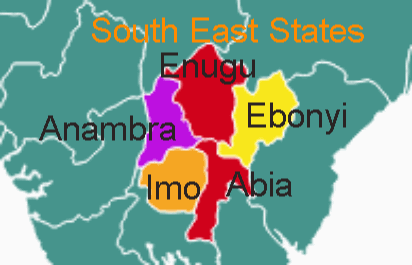
  • WASSCE Results: Enugu leads, as South-East states dominate in performance

    WASSCE Results: Enugu leads, as South-East states dominate in performance

    The National Bureau of Statistics has released a breakdown of the results of West African Senior School Certificate Examination (WASSCE) from 2019 to 2021 in Nigeria.

    According to NBS, a total of 1.53 million candidates sat for the West African Senior School Certificate Examination in 2020, indicating a decline of 3.25% compared to 1.58 million in 2019.

    Of this, private and public schools recorded 707,478 and 830,756 candidates, lower compared to 710,552 and 879,431 respectively in 2019.

    By 2021, the total candidates who sat for the examination was 1.56 million, an increase of 1.42% from 1.53 million in 2020. Out of this, 721,666 sat in private schools, indicating an increase of 2.01% compared to the preceding year, while 838,486 sat in public schools, showing an increase of 0.93%.

    This further shows a higher number of candidates in public schools than in private schools.

    Analysis by geo-political zone shows that the South-West recorded the highest candidates over the reporting period, followed by the South-South.

    Breakdown of performance

    Analysis of performance trend shows a higher percentage success rate among private schools than public.

    NBS data showed that in the 2021 examination 73 percent of public school’s candidates scored a total with 5 credits and above including English and Mathematics.

    While Private schools’ candidates recorded a 86.55 percent exam success with 5 credits and above including English and Mathematics.

    Breakdown of performance by States

    On a state-by-state basis, data show the overall best States for private schools candidates are Edo (92.8%), Enugu (92.7%), and Anambra ( 92.2%).

    Other states in the top 10 are Benue: 91.5%, Ebonyi: 90.5%, Cross river: 90.2%, Delta: 89.5%, Rivers: 89%, Sokoto: 87.3% and Nasarawa: 87.1%.

    For the Public schools the best States are led by Enugu: 93.9%, Edo: 93.5%, Benue: 91.7%, Ebonyi: 91.3%, Anambra: 91.2%, C/river: 90.6%.

    Others are Rivers: 88.1%, Delta: 87.7%, Bayelsa: 86.4% and Abia: 86.1%.

    Breakdown of performance by zone

    When it comes to performance by zones, private candidates who scored above 5 credits including Mathematics and English are South-South: 89.4%, South East: 87.8%, North Central: 81.0%, South West: 76.2%, North East: 71.2% and North West: 69.3%.

    For public school candidates, the performance by zones stands at:

    1, South East — 89.8%

    2, South South — 88.1%

    3, North Central — 76.5%

    4, North East — 68.1%

    5, South West — 62.9%

    6, North West — 61.5%

    Take aways from candidates’ performance

    This aggregation of data is very consequential in many ways, especially for candidates of public schools.

    No northern State’s performance features in the list of top 10 States and the average performance is dropping yearly.

    The gap in performance between the north and south is now also widening.

    This, again, shows the impact of insecurity and other factors in the quality of education in the region.

    In all, the most curious part of the data is the performance of students from South-West States.

    The average performance of public schools in South-West region is the lowest in the last five years.

    (Ripples)