Category: Education

  • EDUCATION: Plateau state revokes licences of private primary, secondary schools

    EDUCATION: Plateau state revokes licences of private primary, secondary schools

    The Plateau Government has revoked the licence of all Nursery, Primary and Secondary schools operating in the state.

    The State Commissioner of Education, (secondary), Elizabeth Wampum, disclosed this at a press conference on Thursday.

    According to the commissioner, the decision was taken after the realisation that over 5000 private schools were operating without license.

    She said 90% of private schools in Plateau do not adhere to government policies and mandates, adding that 85% of the 495 private schools earlier granted licenses had compromised.

    She said, “This is to inform the general public that the operating license of all private Nursery/Pre-primary, Primary, Junior Secondary and Senior Secondary Schools in the State will have to revalidate their certification.”

    The commissioner however said the exercise was to check the proliferation of illegal Private Schools and to support those that operate within the ambit of the law, to achieving quality education for all.

    (Daily Trust)

  • ASUU strike: Atiku bemoans closure of varsities; promises students’ loans if elected president

    ASUU strike: Atiku bemoans closure of varsities; promises students’ loans if elected president

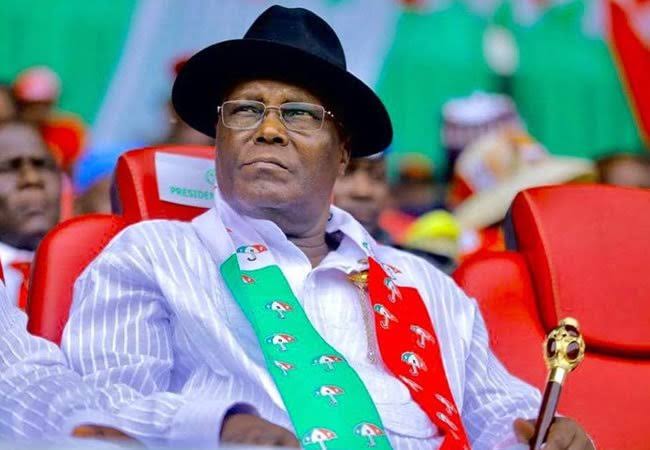
    Atiku Abubakar, the presidential candidate on the platform of the Peoples Democratic Party (PDP), says he is worried about the ongoing ASUU strike, promising Nigerian youths students’ loans if elected president in 2023.

    He also called for increased collaboration between the UK and Nigeria on issues of mutual benefits. He made the call on Monday in Abuja when he hosted a delegation of the British high commission in Nigeria, led by High Commissioner Catriona Laing at his residence.

    Mr Abubakar in a statement he personally signed said the meeting discussed a wide range of issues bordering on security, education, agriculture, economy and how to foster national unity in Nigeria.

    “Bilateral ties between Nigeria and the United Kingdom have a rich history and it is important for both countries to leverage on that to promote issues that are of mutual concern,” explained Mr Abubakar. “I expect the UK to play a more active role for the survival of democracy in Nigeria.’’

    Mr Abubakar thanked the delegation and expressed confidence that the 2023 presidential election in Nigeria would be free and fair.

    He, however decried the worsening insecurity plaguing Nigeria, and solicited the UK’s assistance, especially in providing training and intelligence sharing.

    On the economy, Mr Abubakar said if given the opportunity, he would, among other things, end multiple exchange rate regimes and reduce tax to encourage genuine manufacturers and promote real investments.

    He also promised to boost agriculture to create employment for the country’s teeming population. In addition, the PDP presidential candidate expressed concern over the lingering ASUU strike and the rot in the education sector, promising to carry out reforms, including loan schemes for Nigerian students.

    According to the statement, Ms Laing said the meeting was part of the ongoing engagement of the UK government to enhance democracy and credible elections in Nigeria.

    (NAN)

  • JAMB approves cut-off marks for varsities, polytechnics

    JAMB approves cut-off marks for varsities, polytechnics

    THE Joint Admissions and Matriculation Board, JAMB, and heads of tertiary education institutions in the country have pegged the minimum cut-off mark for admissions in the 2022/2023 academic session.

    The minimum cut-off mark for universities is 140 while that of polytechnics and colleges of education, respectively, were pegged at 100.

    These were announced at the ongoing Policy Meeting on Admissions, presided by the Minister of Education, Adamu Adamu, in Abuja, Thursday.

    JAMB’s registrar, Professor Ishaq Oloyede, who announced the cut-off after after a thorough debates and votes by vice chancellors of universities, rectors of polytechnics and provosts of colleges of education, said the implication was that “every institution has the right to fix its own cut-off mark even up to 220 but no one would be allowed to go less than the agreed minimum marks of 100 for colleges of education, 100 for polytechnics and 140 for universities.”

    The meeting also called for the review of admission criteria to give 10per cent discretional power of admission to heads of tertiary institutions.

    (Vanguard)

  • ASUU tackles Ngige, says strike continues

    The Academic Staff Union of Universities (ASUU) has ruled out any possibility of suspending its six months old strike.

    The ASUU President, Prof. Emmanuel Osodeke, made the call at a news conference at the University of Abuja, on Tuesday,

    Osodeke accused the Ministry of Labour and Employment, headed by Dr. Chris Ngige, as “Conciliator” for continuously creating more chaos in the resolution process.

    ASUU had, on February 14, embarked on strike to press home its demand, on government’s investment in the nation’s university infrastructure, and payment of members’ salaries through the University Transparency and Accountability Solution (UTAS), among others.

    According to ASUU President, the Union will never suspend its strike, but ensure it comes to a permanent end to to the lingering strike.

    “ASUU, therefore, makes bold to say that the Minister of Labour and Employment has taken upon himself the role of unabashed protagonist in our ongoing dispute with the government of Nigeria for some inexplicable reasons.

    “Dr Ngige earlier told whoever cared to listen that he was not the employer of university academics and advised the union to march to the Ministry of Education.

    “Nigerians may wish to know why he has suddenly turned around to constitute himself into impediment to an amicable resolution of the ongoing crisis.

    “The union said it remains focused on its goal of making the Nigerian university system internationally competitive and getting its products to stand shoulder-to-shoulder with their peers in any part of the world.

    “We appreciate the teeming Nigerians for identifying with our vision in this respect and we specifically acknowledge the support and sacrifices of our students (including our members who are running their postgraduate programmes).

    “We are as bothered as you are because we share a common interest in the Nigeria project.

    “However, ASUU shall continue to be guided by the sacred canons of integrity, objectivity, and responsibility to which both academics and media practitioners subscribe.

    “It is our fervent hope and desire that the current groundswell of interests would culminate in a convergence of solutions to this avoidable crisis in the overall interest of Nigeria Together, we shall win. The struggle continues,” he said.

    He maintained that if Ngige meant well as a “conciliator, he won’t be putting roadblocks on the path to completing a process that has dragged for more than five years.

    “The Ministry of Labour and Employment, as the chief labour ministry of the country, is principally expected to apprehend disputes between employers and employees with a view to settling such disputes.

    “The ministry shall normally await reports of disputes by either side to the disputes for settlement. When the Minister apprehends a dispute, he/she must communicate to the parties or their representatives, his or her own proposal for the resolution of the dispute.

    “However, ASUU has always had serious reservations about the claim of “conciliation” by someone who has taken sides in the dispute, or by unabashed protagonist in the crisis such as the current Minister of Labour and Employment. It is antithetical to the International Labour Organisation (ILO) Conventions (98, 151 & 154) on collective bargaining.

    “It is against the principle of natural justice and the doctrine of equality for Dr. Ngige who carries himself as if he has personal scores to settle with ASUU and shoots down the Union everywhere it matters to assume the role of conciliator,” he added.

    On the issue of funding of public universities, he said it has become the pastime of government officials to talk tough about billions and trillions of naira whenever the thorny issues of education and health sectors’ funding come up for mention.

    However, he lamented that various sums of money in the same region which could have been deployed for human capacity development and public good usually develop into the thin air at the end of the day!

    “We are therefore, not surprised the leadership of the Ministry of Labour and Employment could condescend to the point of denigrating the import of massive injection of fund into the University Education sub-sector as they tried to miserably dismiss the vexed issue of funding Nigerian public universities and uplifting the country’s intellectual capital.

    “ASUU believes that the idea of availability of funds is a dynamic process. For instance, government can mobilize funds from different sources including non budgetary outlets like stamp-duty, GSM and alcoholic taxes.

    “We are appalled by the recent calls by top government functionaries at both federal and state levels to establish more universities at a time agencies run by same Chief Executives are tightly squeezed for funding,” he said.

    Reacting on the acclaimed breakaway faction of ASUU, Congress of University Academics (CONUA), Osodeke said the union was not aware of any recognised official faction. (NAN)

    (Vanguard)

  • ASUU: Buhari gives Education Minister, Adamu 2-weeks ultimatum to resolve strike

    ASUU: Buhari gives Education Minister, Adamu 2-weeks ultimatum to resolve strike

    ASUU: Buhari gives Education Minister, Adamu 2-weeks ultimatum to resolve strike

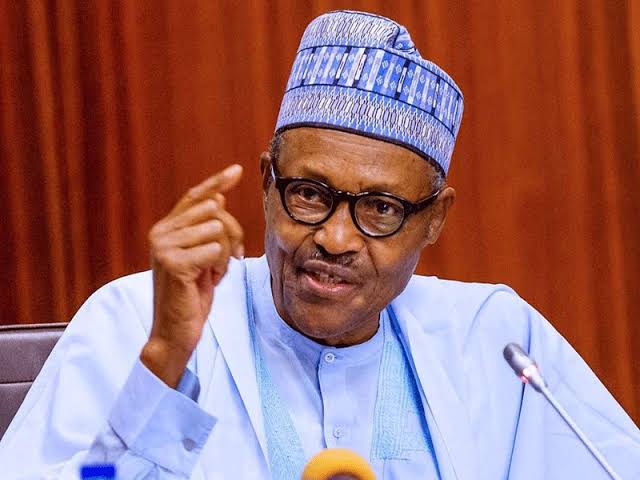
    PRESIDENT Muhammadu Buhari has directed the Minister of Education, Mallam Adamu Adamu to resolve the prolonged strike embarked upon by the four university-based unions and report back to him in two weeks time.

    President Buhari gave the directive on Tuesday after he received briefings from the relevant government Ministries, Agencies and Departments involved in resolving the face-off with the university unions.

    Recall that the Academic Staff Union of Universities, ASUU, had proceeded on one month warning strike on February 14, and other unions also withdrew their services after that as a result of the alleged inability of the federal government to meet up with their demands.

    The three other unions that embarked on strike are the Senior Staff Association of Nigerian Universities, SSANU, the Non-Academic Staff Union of Allied and Educational Institutions, NASU and the National Association of Academic Technologists, NAAT.

    President Buhari summoned the Tuesday meeting to receive briefing from the government team on why the strike had lingered for too long.

    The President after hearing from the relevant MDA’s directly involved ordered the Minister of Education to ensure that the impasse was resolved within two weeks and report back to him.

    Sources at the meeting also said that President Buhari directed that the Minister of Labour and Employment, Senator Chris Ngige must be in any of the meetings to resolve the crisis.

    The sources further said that the Secretary to the Government of the Federation, SGF, Mr. Boss Mustapha should be part of the team to interface with the striking unions.

    One of the sources, said that the President commended Ngige on his efforts so far to resolve the face-off.

    Those at the meeting were the Minister of Education, Mallam Adamu, the Minister of Finance, Budget and National Planning, Dr. Zainab Ahmed, the Minister of Labour and Employment, Senator Ngige, the Minister of Communications and Digital Economy, Isa Pantami, the Head of Service of the Federation, Dr. Folashade Yemi-Esan, the Chairman of National Salaries Income and Wages Commission, Ekpo Nta, the Director-General Budget Office, Ben Akabueze.

    (Vanguard)

  • FG to ASUU: Buhari doesn’t sign collective bargaining agreement

    FG to ASUU: Buhari doesn’t sign collective bargaining agreement

    The Federal Government has stated that there is no Collective Bargaining Agreement (CBA) between it and the Academic Staff Union of Universities (ASUU) which currently awaits signing by the President.

    A statement by the Minister of Labour and Employment, Senator Chris Ngige, signed by the Deputy Director Press and Public Relations in the Ministry, Olajide Oshundun, said even when such agreement is produced between unions and the Federal Government, it is not the president that signs but by the government side, MDAs led by the direct employer with the concillliating ministry witnessing.

    “This clarification has become necessary in view of the deluge of deliberate misinformation being dished out to Nigerians by the President of ASUU, Prof. Osodeke as well as his branch leaders, calling on President Buhari to sign an agreement which they claimed to have reached with the Federal Government.

    “We wish therefore to inform Nigerians that there is no such Collective Bargaining Agreement(CBA) that has been reached between the Federal Government, ASUU and other university unions on the renegotiation of their salaries and allowances(wages). What is in existence is a proposal. Even when such CBA is made , it is not the President that signs it. From available records, no Nigerian President or sovereign signs such

    “The true position is that Nigerians are aware that ASUU has been on strike since February 14, 2022 and locked in negotiations on their demand , especially of their conditions of service – wages , salaries, allowances and other public service matters, that should be guided by relevant Federal Government Ministries and agencies – Ministry of Finance, Ministry of Education, Ministry of Labour and Employment, Budget office of the Federation , National Salaries Income and Wages Commission, Office of Head of Service of the Federation, through the newly set up Prof. Nimi Briggs Committee.”

    (Sun)

  • Strike: ASUU hits back at Buhari

    Strike: ASUU hits back at Buhari

    Academic Staff Union of Universities (ASUU), yesterday, mocked President Muhammadu Buhari over his enough is enough comment and description of ongoing five-month-old strike as inimical to future generation of Nigerians.

    The union claimed the president’s statement was not only comical but a clear sign of leadership failure claiming the Federal Government had reduced public universities to glorified secondary schools.

    In a statement addressed to President Buhari entitled: “Mr President Sir: When and why Enough cannot be Enough”signed by ASUU Zonal Coordinator, Lagos, Dr. Adelaja Odukoya, the union taunted the President for waking up from his slumber to the reality that the strike had grounded public universities and taken a toll on parents, students and other stakeholders in the sector.

    ASUU accused the Buhari’s administration of constantly resorting to window-dressing and buck-passing saying the inability to rise up to occasion and resolve issues was affecting the country, particularly the education sector.

    “Your Excellency, your position is to be on top of issues and solve national problems no matter how tough the situation instead of hopeless lamentation and sermonising.”

    ASUU said its ongoing industrial action was occasioned by the insensitivity, nonchalant disposition, ineptitude and indifference to the fate of public university education in the country under his leadership.

    The union said other sister unions in the nation’s public university system and unions in other tertiary institutions were on strike for similar reasons, belied and exposed the ridiculous disposition and propaganda to paint ASUU black in the face of the Nigerian public who have seen through the shenanigan, deliberate, systemic and orchestrated agenda of the present government.

    “The fact that the president unfortunately and sadly taken and embraced an attitude of mute indifference and unedifying quietude in the face of calamitous consequences a neglected education sector could foist on generations of Nigerians, including those yet unborn is a clear signpost of leadership failure.”

    The union said the target of the Buhari government was “to undermine and destroy public university education in unpatriotic obedience to the slavish and destructive command of the neo-liberal high command to which the soul of this administration and her forbears seems to be irrevocably sold.

    “Nigerian public university students remain at home while our dear president and his cronies lavish valuable time on partisan party political activities, family egoistic ceremonies and global junketing, and to have finally woken up to address the issue of the national strike in the nation public universities in a season of Eid Adha celebration, season that calls for utmost and supreme sacrifices exemplified by Prophet Ibrahim should elicits both spiritual and popular condemnation.

    “Mr. President sir, for ASUU this strike should not have lasted beyond the first week after it was declared because the issues at stake were neither new nor do they require rocket science to resolve given that there had been Memorandum of Understandings (MOUs) and Memorandum of Actions (MOAs) as well as a duly renegotiated ASUU-FGN agreement completed way back 13th May, 2020 before your government which you and your administration neglected and refused to implement and signed.

    “Our Commander –in – Chief, if only your administration has taken the sacred responsibility for education and the future of the Nigerian youth seriously, this latter day unconvincing lamentation without doing anything would have been unnecessary…

    “Therefore Mr. president, saying that enough is enough is mere wishful thinking and will not resolve the present decadence in our universities nor stop the present struggle to reposition our public universities. For the records, Mr. President, enough will not be enough in the struggle to reposition the public university education in Nigeria under this present administration and beyond as long as; the Nigerian public universities are reduced to a glorified secondary schools for the production of poor quality and globally uncompetitive, rejected and unemployable graduates and Nigerian academics remain one of the poorest paid scholars not only in Africa but the world.”

    Odukoya reminded the president that enough would not be enough until he does the needful and act presidentially by signing the renegotiated agreement before him, authorize the end to the use of IPPIS and the adoption of University Transparency and Accountability Solutions (UTAS) and payment of outstanding allowances.

    (Sun)

  • ASUU strike enters 140th day, SERAP, others lampoon FG

    The Socio-Economic Rights Accountability Project and other education rights groups, such as the Reform Education Nigeria and Education Rights Campaign, have knocked the regime of the President, Major General Muhammadu Buhari (retd.), over the prolonged shutdown of academic activities in the nation’s tertiary institutions.

    The PUNCH reports that the strike declared by the Academic Staff Union of Universities entered its 140th day on Monday (today), while the strike declared by the Joint Action Committee of the Senior Staff Association of Nigerian Universities and the Non-Academic Staff Union of Education and other Allied Institutions, which began on March 25, 2022 also entered the 68th day today.

    While the National Executive Council of Academic Staff Union of Polytechnics is currently meeting in Jigawa State after calling off a two-week warning strike, the Colleges of Education Academic Staff Union just commenced a two-month strike.

    In a statement made available to journalists on Sunday, SERAP’s Deputy Director, Kolawole Oluwadare, noted that the government’s failure to meet ASUU’s demands, implement the agreement it had with the union and satisfactorily resolve the issues, has kept poor Nigerian children at home while the children of the country’s politicians attend private schools.

    So This Happened (123) reviews Osinbajo’s Pentecost tax advice, othersSo This Happened (134) reviews construction of N21bn 14-bed presidential clinic, otherWhy Baba Ijesha Hasn’t Been Released From Police Custody -LawyerDolphins Basketball Team Honours Late PUNCH Chairman, Wale Aboderin | Punch

    Oluwadare said, “Inequalities in education have a rolling effect, leading to even more and continued inequalities in the future.

    “Apart from being a right in itself, the right to education is also an enabling right. Education creates the voice through which rights can be claimed and protected, and without education, people lack the capacity to achieve valuable functioning as part of the living.

    “If people have access to education, they can develop the skills, capacity and confidence to secure other rights. Education gives people the ability to access information detailing the range of rights that they hold together with the government’s obligations.”

    Speaking in an interview with our correspondent on Sunday, the Programme Director, Reform Education Nigeria, Ayodamola Oluwatoyin, faulted the silence of critical stakeholders on the academic shutdown.

    Oluwatoyin said, “It is saddening that the government has continued to allow negotiations to linger with no concrete end in sight. The Presidency must, as a matter of urgency, take over the negotiations with the unions.”

    Also, the co-Convener, Education Rights Campaign, Michael Lenin, said, “The blame for these strike actions that have grounded tertiary education must be placed at the door-step of the government.

    “It is quite unprecedented that all the major unions in the tertiary education sector are all on strike; however, it shows the level of damage that the negligence of successive governments has done to the educational sector through chronic under-funding.”

    Efforts to get the Minister of Labour and Employment, Chris Ngige, who has described himself as the reconciliation minister between the Federal Government and the unions, proved abortive as calls and texts sent to his telephone number on Sunday remained unanswered as of the time of filing this report.

    When contacted, the National President, ASUP, Dr. Anderson Ezeibe, noted that the union’s National Executive Council would commence its meeting on Tuesday.

    “Our NEC is commencing meeting on Tuesday, if we are still not satisfied with the level of implementation of demands so far, a strike may be declared,” he said.

    The National President, ASUU, Prof Emmanuel Osodeke, could not be immediately reached for comments on Sunday evening.

    Similarly, , the National President, Joint Action Committee of SSANU, NASU and NAAT, Muhammed Ibrahim, did not answer calls and texts sent to his line.

    (Punch)

  • FG moves to end ASUU, poly lecturers strikes, begins arrears payment

    The Federal Government has commenced the payment of minimum wage arrears, which it owed lecturers under the aegis of the Academic Staff Union of Polytechnics and Academic Staff Union of Universities as part of efforts to end ongoing strikes by the unions, The PUNCH has learnt.

    The National President of ASUP, Dr. Anderson Ezeibe, and the Chairman, ASUU FUTMinna, Dr. Gbolahan Bolarin, confirmed this in separate interviews with our correspondent in Abuja on Thursday.

    The PUNCH reported that the two unions are currently on strike following the inability of the government to meet their demands including the payment of minimum wage arrears and release of revitalisation funds, among others.

    While ASUU commenced its strike on February 14, 2022, ASUP is currently on an initial two-week warning strike.

    Confirming the payment on Thursday, Ezeibe, however, said that was just the beginning.

    He said, “The government has started responding. They just started paying the salary/minimum wage arrears, the one they have refused to pay.

    “However, that is just one of the demands, so we have not reached anywhere. They have not attended to the others, but I can confirm that people have started receiving alerts of the arrears owed.”

    Also, Bolarin, said, “Some of my members got alert of their minimum wage arrears; their salaries are still pending.”

    Meanwhile, Ladoke Akintola University of Technology’s management has announced that the school would resume academic activities on Thursday, May 26, 2022.

    A circular which was signed by the Registrar of the school, Kayode Ogunleye, partly read, “Upon the directive of the visitor to the university, the management hereby informs all staff and students that the university will continue its academic activities for the first semester of the 2021/2022 academic session on Thursday, May 26, 2022.

    “The amended academic calendar for the session will soon be made available. Staff and students are hereby enjoined to abide by this directive.”

    Varsity students barricade roads in Ekiti

    The President, National Association of Nigerian Students, Sunday Asefon, on Thursday led university students in Ekiti State to protest continuous closure of public universities in the state over the industrial action embarked upon by ASUU.

    Asefon, who said he joined the protest organised by NANS/ Joint Campus Committee, Ekiti axis to compel the Federal Government to hearken to the striking university teachers’ demands in solidarity, said, “The rally being planned by NANS national body is coming soon. I decided to join this because I am from Ekiti and I have to partake in solidarity.”

    The protest carried out by students from Ekiti State University, Ado Ekiti and Federal University, Oye Ekiti caused discomfort along major roads in Ado Ekiti, the state capital, as the students trekked from the Adebayo area to Fajuyi Park in the heart of the city as they mounted barricades at intervals along Ado – Adebayo – Iworoko Road.

    Asefon, who lamented that the country’s education was being stifled by protracted closure of universities, said, “What we are saying is that we are tired of staying at home. Our students want to return to school.”

    (Punch)

  • ASUU Strike: Chaos as angry students shut highways

    Nigerian students, yesterday, made good their threats to cripple socio-economic actives in the country as they barricaded major highways and obstructed movements in continuation of their protest over ongoing nationwide strike by the Academic Staff Union of Universities (ASUU).

    In 2020, the union embarked on a nine-month strike, the longest since 1999 and about two years later on February 14, it went on a four-week warning strike. It declared another eight weeks strike, saying it was giving the government more time to attend to its demands. Upon it expiration, it announced additional 12 weeks roll-over with effect from May 9, to end in August. The students have so far spent three months at home owing to the lecturers’ strike.

    Following the protracted industrial action which has lasted over 90 days, the students had last week released an action plan which include disruption of socio-economic and political activities to force government and the lecturers back to the dialogue table with a view to speedily resolving the disputes and ensure the return to classrooms. Yesterday’s protest forced motorists on major routes linking the South West to the South East and the north to spend several hours while others had to find alternatives routes out of the logjam. Most commuters were forced to trek long distances to their destinations.

    In Ibadan, Oyo State, the protesting students barricaded the highway in front of the University of Ibadan (UI) and hampered free flow of traffic along the busy Ojoo-UI-Molola Road and the road leading from UI to Bodija. The students also went to the entrance of Oyo State Government Secretariat, Ibadan, and prevented vehicular movement.

    Leader of the Ibadan protest, Solomon Emiola, said: “We are here because of ASUU, NASU SSANU strike. We want the Federal Government to use this as the last strike. We want all the strikes to finish. This should be the last strike in the history of Nigerian students.”

    One of the protesting students, Damilola Olubunmi, said: “I am here because we need to tell the Federal Government that students must resume. The strike is not affecting the students alone. It is also affecting our parents. The essence of this is that when the road is blocked, people cannot move and they will trend it for us. Then, the government will know that we protesting.”

    In Ogun, a joint protest by students of Olabisi Onabanjo University (OOU), Ago-Iwoye; Tai Solarin University of Education, Science and Technology (TASUED) Ijagun and Federal University of Agriculture (FUNAAB), Abeokuta, saw the students block the Sagamu-Benin Expressway.

    Carrying placards with inscriptions such as “#End ASUU strike now#”, “We say no to educational stagnancy”, “We are tired of deadlock meetings” and “Education should not be this difficult” among others, the students blocked the expressway leaving many motorists stranded and travellers trapped.

    Chairman, National Association of Nigerian Students (NANS) in the state, Damilola Simeon, appealed to the Federal Government to respond urgently to the yearnings of ASUU. He stressed that it was high time the Federal Government and members of ASUU agreed and reach a compromise to end the strike.

    ”We have been clamouring since the commencement of this ASUU strike that something should be done with immediate effect, but both ASUU and the federal government are not listening to us.They have to understand the fact that Nigerian students will always be at the receiving end at the end of the day. Our students are suffering, our students are fed up. This whole issue is getting out of hand. We do not pray that our students end up engaging themselves in criminal activities as we all know that an idle hand is the devil’s workshop,” he said.

    The NANS chairman begged the two parties to do the needful and call off the strike.

    Don Ayomide, President, Student Union Government of TASUED, said the protest was necessary to let both the federal government and ASUU be aware of the plight of Nigerian students.

    Similarly, students of the Federal University of Technology Akure (FUTA) also blocked major roads in Akure, the Ondo State capital in protest to the ASUU strike.

    The students who trooped out as early as 6.30am moved in enmass on major roads in the town chanting various solidarity songs.

    The protest caused serious crisis for transporters and commuters as the busy Ilesa-Akure express road was temporarily blocked.

    For hours, transporters plying the busy road were stranded as a result of the protest, just as commercial activities in the affected areas were halted. Some of the roads blocked aside the Ilesa-Akure express road include Benin-Owo road and Orita Obele road among others.

    The students hinged their action on the attitude of the Federal Government on the strike by the university teachers, condemning the attitude of President Muhammadu Buhari’s administration on the plight of both the university students and teachers.

    While appealing to the Federal Government to accede to the demands of ASUU and other staff unions of university, the students threaten to continue with the protest until the universities are opened for academic work.

    In Benin, Edo State, students of the University of Benin (UNIBEN) shut the Federal Secretariat, Benin, stormed the secretariat at Aduwawa area and declared a work free day for workers.

    They cooked at the secretariat and threatened to shut Federal Government offices in the state to press home their demand for the resolution of the ASUU crisis.

    “We have told the workers that today is a free day for them because they can’t be working while we are out of our classes. All the Federal offices would be shut down. We have also written to INEC to let them know that election will not take place in Edo until we return to our classes. The police is here with us to ensure that the protest is not hijackedby hoodlums because the students are peace-loving people,” said Foster Amadin, president, UNIBEN Student Union Government.

    “Education has been taken to an unserious level and the Federal Government is busy with election, forgetting that there are many students at home due to the ASUU strike. We are here today, we have protested at the Airport, Ring Road and Nigeria Union of Journalists (NUJ) office. We will keep going round until they find a solution and we go back to our classes,” Amadin said.

    (Sun)

  • Enugu: Ugwuanyi promises to pay N30,000 minimum wage

    Enugu: Ugwuanyi promises to pay N30,000 minimum wage

    Enugu: Ugwuanyi promises to pay N30,000 minimum wage

    Ifeanyi Ugwuanyi

    Governor Ifeanyi Ugwuanyi of Enugu State

    The Enugu government says it is putting final modalities in place to pay primary teachers the N30,000 minimum wage following their threat to go on strike.

    Commissioner for Education, Uchenna Eze, said on Friday that ongoing negotiations between the government and Nigeria Union of Teachers (NUT) had been “fruitful and progressive.”

    The teachers’ union embarked on an indefinite strike over non-payment of the N30,000 minimum wage by Governor Ifeanyi Ugwuanyi’s government.

    The union directed that primary school teachers in the state should not resume for the 2021/2022 academic session’s third with effect from May 9 until the N30,000 minimum wage was paid.

    ”The state government has already begun the process of implementing the new wage for primary school teachers. The leadership of the union is participating in ongoing negotiation to that effect which is at its final stages,” explained the education commissioner.

    Mr. Eze, however, noted that the ministry was surprised to hear of the ongoing indefinite strike.

    “It is impatience on the part of the primary school teachers to embark on the strike when we were making serious progress. We are at the final stage of concluding on the ongoing negotiations,” said Mr. Eze, chastising the protesting workers.

    “The ministry and the union will definitely resolve the issue very soon and our children will get back to school to resume the third term academic activities.”

    The commissioner assured parents and guardians that the state government would resolve to settle the matter very soon.

    The government had in an originating summons with number NICN/EN/01/2022, against the NUT, asked the court to bar the teachers from embarking on any strike on the ground that they were essential workers.

    The government, however, lost the suit, as the National Industrial Court ruled that the teachers could go on strike as they were not “essential duty workers,” as alleged by the government.

    However, dismissing the suit, the NIC accused Mr. Ugwuanyi’s government of discriminating against primary school teachers.

    The NIC, presided over by Oluwakayode Arowosegbe, had in an interlocutory injunction restrained the teachers from embarking on any form of industrial action pending the determination of the substantive suit and ordered an accelerated hearing.

    Delivering its judgment in the suit, Mr Arowosegbe, dismissed the suit and ordered the Enugu government to go back and negotiate with the teachers, describing it as discriminatory for the claimant to pay some workers in the state the minimum wage, from February 2020, while refusing to pay the teachers the same.

    The judge noted that the state could not stop the teachers from venting their grievances by going on strike.

    The court in the judgment delivered on March 8, held that the primary school teachers in Enugu did not fall within the categories of workers who provide essential services.

    (NAN)

  • ASUU NEC extends rollover strike by 12 weeks

    The Academic Staff Union of Universities (ASUU) early Monday morning extended the ongoing strike by 12 weeks.

    The decision was taken at an emergency National Executive Council (NEC) held at ASUU Secretariat in Abuja.

    The emergency meeting, which had in attendance principal officers and branch chairmen, started on Sunday and ended early Monday morning.

    The two month rollover strike declared in March 14, 2022 by ASUU ended today (May 9th), thus NEC felt the need to extend it by 12 weeks after initial agitation for indefinite strike because of failure to address the issues in contention.

    The implication of the extension of the strike is that public universities would remain close.

    At the last meeting with government negotiation team led by Prof. Nimi Briggs, ASUU officials worked out but there is indication that the both parties would meet next week.

    ASUU’s demands include the non-implementation of the Memorandum of Action (MoA) signed with government in December 2020 on funding for revitalisation of public universities (both federal and states), renegotiation of the 2009 FGN/ ASUU Agreement and the deployment of the University Transparency and Accountability Solution (UTAS).

    Other outstanding issues are earned academic allowances; state universities, promotion arrears, withheld salaries, non-remittance of third-party deductions and rejection of UTAS that ASUU technical team developed to replace the Integrated Personnel Payroll Information System (IPPIS)

    (Sun)