Category: Education

  • WASSCE Result Verification Fee Now Set At N4,000

    Precious Nwonu, Enugu

    Candidates seeking admission into Nigerian tertiary institutions will now pay N4,000 only once to verify their West African Senior School Certificate Examination O’Level results, the Joint Admissions and Matriculation Board and the West African Examinations Council have said.

    The clarification was contained in a joint press statement issued by JAMB and WAEC on Tuesday, following consultations on the recently introduced system allowing candidates to upload and verify their O’Level results remotely.

    Under the new arrangement, candidates whose admissions are regulated and coordinated by JAMB are required to verify their WAEC results once through JAMB, after which the outcome will be made available to the tertiary institution where they are seeking admission.

    The two examination bodies stressed that candidates would not be required to pay another verification fee to their chosen institutions.

    The joint statement said, “Candidates are to pay N4,000 only, once, for the verification of their WASSCE O’ Level results on the specified platform and not through their desired institutions.”

    JAMB and WAEC further directed tertiary institutions to utilise the verified results transmitted by JAMB for admission screening, processing and other administrative purposes.

    According to the statement, “Tertiary institutions are to utilise the verified results shared by JAMB for screening, processing candidate admission and other administrative purposes. Candidates shall not be required to pay for another verification.”

    The development followed JAMB’s recent introduction of a system that enables candidates to upload and verify their O’Level results from home or any internet-enabled location, eliminating the need to routinely visit JAMB-approved Computer-Based Test centres solely for the exercise.

    JAMB had explained that the new arrangement initially commenced with WAEC results and was designed to enable the board to verify candidates’ results directly with the examination bodies.

    The initiative was presented as part of efforts to make admission-related services easier, faster, safer and more convenient for candidates.

    With Tuesday’s clarification, however, the two bodies have now established that the verification conducted through JAMB will be a one-off exercise, with the verified result available for subsequent use by the relevant institution.

    WAEC has also authorised JAMB to share the outcome of the verification with the tertiary institutions concerned.

    The joint statement said, “WAEC has agreed to permit JAMB to share the outcome of the verification exercise with the relevant tertiary institutions” for admission and related administrative purposes.

    The agencies said the arrangement was intended to prevent candidates from being subjected to multiple verification exercises by different institutions after completing the process through JAMB.

    They added that the policy would also reduce the financial and logistical burden associated with repeated verification.

    “Candidates who have successfully verified their WASSCE O’ Level result through the Verification Service platform will not be required to repeat the same verification exercise,” the statement said.

    The bodies urged candidates to take advantage of the arrangement by completing their WASSCE O’Level verification through the JAMB-provided platform once, noting that the verified result would subsequently be utilised by the relevant institution.

    The latest development comes as thousands of Nigerian youths continue to navigate the 2026/2027 tertiary admission process, with O’Level results remaining a critical component of admission screening and eligibility.

    In the past, candidates have had to upload their O’Level results through approved channels and, in some cases, undertake additional verification processes required by individual institutions. JAMB’s new technology-driven approach is aimed at reducing such repeated processes and limiting visits to CBT centres.

    The two examination bodies said the collaboration was also intended to strengthen the integrity of academic records and reduce opportunities for the presentation of fake or altered certificates during the admission process.

    They stated, “This collaboration underscores the commitment of both JAMB and WAEC to putting the interests of candidates first, reducing unnecessary costs and simplifying the admission process while maintaining the integrity and security of candidates’ academic records.”

    The agencies therefore advised candidates to ensure that they complete the verification through the designated JAMB platform and retain their verification information for the admission process.

    The clarification effectively means that the N4,000 payment is not an annual or institution-by-institution charge, but a one-time payment for candidates covered by the JAMB admission process.
    Before the new arrangement, O’Level result verification was largely fragmented, with candidates required to upload their WAEC, NECO or other O’Level results to the JAMB platform as part of the admission process, while individual tertiary institutions could impose additional screening and document-verification requirements.

    WAEC also operated a separate result-verification system, meaning candidates could face further verification of academic credentials already submitted during the admission process.

    This created additional costs, movement between institutions and JAMB-approved Computer-Based Test centres, and the possibility of repeated checks of the same result.

    The new arrangement is designed to centralise the process, as candidates will pay N4,000 once to verify their WASSCE O’Level results through JAMB, after which the verification outcome will be made available to the relevant tertiary institution.

    The institutions are expected to rely on the verified result and will not be permitted to demand another verification payment from candidates.

    The two examination bodies said the “one verification, multiple uses” system would reduce costs, ease the admission process and spare candidates the stress of repeatedly visiting institutions or CBT centres.

    Punch News

  • Nkanu West’s Obe Smart Green School Wins Spelling Bee, Debate Competitions

    Nkanu West’s Obe Smart Green School Wins Spelling Bee, Debate Competitions

    …Ogbodo celebrates pupils, backs Mbah’s education reforms

    …Says Smart Green Schools in Nkanu West fully operational

    Obe Smart Green School in Nkanu West Local Government Area has emerged winner of the Spelling Bee and Debate competitions at the 2026 Computer Appreciation Test Competition held in Enugu.

    The school recorded the highest score to defeat Queens Smart Green School, Enugu Campus 1, at the grand finale organised by Eco Ventures Nigeria Publishers Limited in collaboration with the Enugu State Universal Basic Education Board (ENSUBEB).

    The competition, held at the ENSUBEB headquarters in Enugu on Wednesday, August 5, brought together pupils and education stakeholders from across the state to promote academic excellence, computer literacy, digital skills and innovation.

    Participants were drawn from public primary schools in 12 of Enugu State’s 17 local government areas, with winners in various categories receiving prizes, while all participants received exercise books in recognition of their participation.

    Reacting to the feat, the Executive Chairman of Nkanu West Local Government Area, Hon. John Ogbodo, described the achievement by the pupils of Obe Smart Green School as a validation of Governor Peter Mbah’s education reforms.

    “This feat by the students of Obe Smart Green School is worthy of celebration because it has proven that Gov. Peter Mbah’s vision in the education sector is gradually being realized,” Ogbodo said.

    He said the state government’s sustained prioritisation of education was an indication of its commitment to developing the human capital of Enugu State.

    LEADERSHIP Governor of the Year Award: Nkanu West Council Boss Celebrates Gov. Mbah's Award, Says "We're Proud of You"
    A collage of Nkanu West Council Boss, Hon. John Ogbodo (L) and Gov. Peter Mbah of Enugu State (R)

    “For three consecutive years, Education has taken the lion share in the state’s budgetary allocation and it speaks to the fact that Mbah is intentional in ensuring that the children of Enugu State are educated,” he said.

    Ogbodo added that Nkanu West was committed to aligning with the governor’s education agenda, noting that the Smart Green Schools across the local government’s wards were now fully operational.

    “Pupils and teachers have been onboarded and learning is taking place in a world class environment embracing the needs of the 21st century and deploying the tools that solve today’s tasks and consider emerging technologies,” he said.

    Speaking at the event, the Chief Executive Officer of Eco Ventures Nigeria Publishers Limited, Dr. Augustine Okoh, said the competition was part of the organisation’s efforts to promote computer literacy and support the Enugu State Government’s education transformation agenda.

    Okoh commended Mbah’s investments in education, particularly the Smart Green Schools initiative, which he said was redefining teaching and learning through technology, innovation and digital skills acquisition.

    He said the reforms aligned with the company’s vision of preparing pupils for a technology-driven future.

  • Mbah Approves Recruitment of Over 6,500 Teachers, Donates 400 Computers to ESUT

    Mbah Approves Recruitment of Over 6,500 Teachers, Donates 400 Computers to ESUT

    Governor Peter Mbah of Enugu State has approved the recruitment of over 6,500 teachers and other education personnel for the state’s Smart Green Schools, even as the state government donated 400 modern desktop computers to the Enugu State University of Science and Technology (ESUT) to strengthen experiential learning and digital education.

    The twin interventions form part of the administration’s drive to deepen education reforms, expand access to quality learning and equip institutions with the human and technological resources required to produce globally competitive graduates.

    In a statement, the Executive Chairman of the Enugu State Universal Basic Education Board (ENSUBEB), Prof. Hyginus Okibe Banko, said the recruitment would fill various academic, technical and administrative positions in public primary and secondary schools, particularly the state’s 267 Smart Green Schools.

    According to him, applicants for degree and HND positions must possess either a Bachelor’s Degree in Education, a Bachelor’s Degree or Higher National Diploma in a relevant discipline with a Postgraduate Diploma in Education (PGDE), or a Nigerian Certificate in Education (NCE) in the relevant subject areas.

    He added that registration or proof of ongoing registration with the Teachers Registration Council of Nigeria (TRCN) is mandatory, while vacancies are also available for OND and SSCE/WASSCE holders in relevant positions.

    Banko further stated that applicants for degree and HND positions must possess a valid NYSC Discharge or Exemption Certificate and demonstrate practical proficiency in Information and Communication Technology (ICT) across all cadres.

    He directed interested applicants to submit a formal application letter alongside a detailed curriculum vitae, copies of academic and professional credentials, a birth certificate or sworn declaration of age, and valid contact details.

    According to the statement, hard-copy applications should be submitted to the Office of the Executive Chairman of ENSUBEB in Enugu, while electronic applications, compiled into a single PDF document, should be sent to ensubebofficial@outlook.com.

    The deadline for the submission of applications is Friday, August 14, 2026.

    Meanwhile, the Enugu State University of Science and Technology (ESUT) has commended Governor Mbah following the donation of 400 desktop computers to the institution to support experiential learning, research and technology-driven education.

    Receiving the equipment on behalf of the university, the Vice-Chancellor, Prof. Aloysius-Michaels Okolie, described the intervention as another demonstration of the governor’s commitment to repositioning ESUT as a leading centre for innovation, digital education and academic excellence.

    He disclosed that 200 computers would be deployed to the ESUT College of Medicine, while the remaining units would be installed at the university’s 500-capacity ICT Centre at the Main Campus in Ebeano City, Enugu.

    According to the Vice-Chancellor, the ICT Centre will become operational before the commencement of the 2026/2027 academic session and will support academic activities as well as computer-based examinations conducted by bodies such as the Joint Admissions and Matriculation Board (JAMB), the National Examinations Council (NECO), the Joint Universities Preliminary Examinations Board (JUPEB), and other digital assessment platforms.

    “We sincerely thank His Excellency, Governor Peter Mbah, for this generous intervention, which will significantly enhance scholarship, research and digital learning in ESUT. Our students will maximally utilise these facilities as we fully implement experiential learning across the university,” Okolie said.

    He also revealed that the university had commenced comprehensive curriculum reforms ahead of the new academic session, with plans to strengthen the practical component of the Core Curriculum and Minimum Academic Standards (CCMAS) by incorporating emerging fields such as Artificial Intelligence, Cyber Security, Data Science and other newly approved programmes of the National Universities Commission (NUC).

    The Vice-Chancellor added that ESUT would play a strategic role in supporting the state’s Smart Green Schools initiative by producing technologically competent teachers capable of driving the government’s education reforms.

    Also speaking, the Provost of the ESUT College of Medicine, Prof. Uchenna Ekwochi, described the donation as “a game changer” that would significantly improve teaching, learning and research, particularly through the college’s electronic library.

    He said the computers arrived at a critical time and assured the state government that they would be properly utilised and maintained.

    “Our excitement is overwhelming because this intervention came at the right time. The computers will be deployed to our e-library, where students will maximise their use, especially with the internet infrastructure already in place. Some units will also support administrative offices that require modern digital facilities,” he said.

    The state government noted that the computers were manufactured at the Haier Computer Assembly Factory in Enugu, one of the flagship projects established under Governor Mbah’s industrialisation agenda to promote local manufacturing, create jobs and support the state’s ambition of becoming Nigeria’s leading technology and innovation hub.

    The government said the recruitment of additional teachers and the deployment of digital infrastructure to tertiary institutions underscore its commitment to strengthening experiential learning and building a technology-driven education syst em across Enugu State.

  • Ebonyi okays Smart education for 43 schools

    Ebonyi okays Smart education for 43 schools

    The Ebonyi State Executive Council has approved a Smart Education project for 43 secondary schools across the state to transform teaching and learning through digital technology and artificial intelligence (AI).

    Commissioner for Information and State Orientation in the state, Chief Ikeuwa Omebeh, made the disclosure during a press briefing in Abakaliki, the state capital, on the outcome of this week’s executive council meeting.

    He explained that the project would see the deployment of 989 HUAWEI IdeaHub Smart Interactive Boards in classrooms and laboratories, alongside the establishment of 43 dedicated artificial intelligence education classrooms.

    He noted that the initiative also includes virtual laboratories for Physics and Chemistry with over 500 pre-installed experiments, learning management systems, AI education platforms, and 5,000 wireless number pads to enhance classroom interaction.

    The commissioner said the project is designed to equip students with digital literacy, artificial intelligence knowledge, and the technological skills required to compete in the rapidly evolving global digital economy, thereby positioning Ebonyi State as a leader in technology-driven education in Nigeria.

    Omebeh said governor Francis Nwifuru revealed that the proposed HUAWEI Factory at the state ICT University, Oferekpe, would serve as a technology and innovation hub for the state and the African continent when completed.

    He further disclosed that the Council approved the submission of the 2025 Ebonyi State Business Enabling Reforms Action Plan (BERAP) Progress Report, a critical requirement for the state to qualify for the implementation of the World Bank-supported State Action on Business Enabling Reforms (SABER) Programme in 2026 emphasising that the report reflects the state’s commitment to improving the ease of doing business, attracting private investment, and strengthening economic development.

    The commissioner also announced that the meeting commenced with the swearing-in of Mrs. Rita Polycarp Nwite as Special Assistant to the Governor on Women Mobilisation, where in Governor Nwifuru commended members of the Executive Council for their improved performance since the cabinet reshuffle and urged them to sustain the momentum in delivering quality governance under the administration’s People’s Charter of Needs.

  • Mbah Advocates Experiential Learning, Unveils Enugu’s Human Development Model at UNN Convocation Lecture

    Mbah Advocates Experiential Learning, Unveils Enugu’s Human Development Model at UNN Convocation Lecture

    Governor Peter Mbah of Enugu State has called for a fundamental overhaul of Nigeria’s education system, urging schools to focus on producing problem-solvers and innovators rather than graduates armed only with certificates.

    Speaking on Thursday while delivering the 55th Convocation Lecture of the University of Nigeria, Nsukka (UNN), Mbah said education must become the driving force for restoring human dignity through experiential learning, innovation and inclusive prosperity.

    Delivering the lecture titled, “Restoring the Dignity of Man: Enugu’s Quantum Leap in Human Development and Inclusive Prosperity Through Experiential Learning,” the governor described UNN’s motto as a timeless mission whose relevance has become even greater in the era of artificial intelligence, biotechnology and the knowledge economy.

    He argued that true development should be measured by citizens’ ability to transform knowledge into productivity and shared prosperity rather than by physical infrastructure alone.

    “True dignity exists when people possess not merely the freedom to aspire, but the capability to transform aspiration into achievement, potential into productivity, and possibility into shared prosperity,” he said.

    Mbah said Enugu’s education reforms were inspired by the Igbo apprenticeship system, which, according to him, embodies learning by doing, mentorship, trust, discipline and entrepreneurship.

    “Our purpose is not to romanticise the past, but to apply its deepest principle to the future. This is why we embraced experiential learning—not as a foreign educational idea, but as a modern expression of our knowledge tradition and a twenty-first-century development imperative,” he said.

    The governor explained that through experiential learning, the state seeks to democratise opportunities by ensuring that access to quality education, technology, healthcare, infrastructure, mentorship, capital and connectivity is no longer determined by birthplace, income or social status.

    He disclosed that the Centre for Experiential Learning and Innovation (CELI), Enugu, is driving reforms in curriculum development, teacher training, research, digital literacy, technical education and industry partnerships to bridge what he described as the “activation gap” between knowledge and opportunity.

    Mbah said his administration’s vision of growing Enugu’s economy from about $4.4 billion to $30 billion is anchored on human capital development rather than conventional infrastructure projects alone.

    He noted that about one-thirds of the state’s annual budget has consistently been allocated to education, leading to the construction of 268 Smart Green Schools across the state’s 260 political wards, equipped with smart classrooms, laboratories, digital libraries, innovation studios, clinics, smart farms, solar power and internet connectivity.

    According to him, over 23,000 teachers have undergone digital literacy training, while the state has approved the recruitment of 4,698 teachers to strengthen the Smart Green School initiative.

    The governor added that students in the state’s Technical and Vocational Education and Training (TVET) colleges were already receiving practical industry training in ICT, mechatronics, aquaponics, precision welding, fashion and design through partnerships with industries, including the Enugu Haier Factory.

    He also announced plans to establish three specialised universities dedicated to Artificial Intelligence and Technology, Education and Technology, and Agriculture, Agro-industrialisation and Technology, while new degree programmes in Automation, Artificial Intelligence and Mechatronics have already been introduced at ESUT and IMT.

    To demonstrate the impact of experiential learning, Mbah narrated the story of Arinze Edeoga, a pupil of a Smart Green School in rural Owo community, who recently taught digital literacy to pupils in Enugu metropolis.

    “A village child became a teacher of urban peers. In Arinze, you see restored confidence, democratized opportunity and a child once defined by geography becoming a creator of knowledge rather than merely a consumer of it. You see the dignity of man,” he said.

    Mbah, however, said education reforms alone would not guarantee prosperity unless supported by investments in healthcare, electricity, roads, aviation, tourism and technology, stressing that Enugu’s development strategy integrates all sectors into a single human development architecture.

    He cited projects such as the 300-bed Enugu International Hospital, the transport terminals, Enugu Air, the expansion of primary healthcare centre, the Enugu Command tourism infrastructure, and the proposed 660-megawatt power plant, as interconnected investments designed to unlock productivity, attract investment and improve citizens’ quality of life.

    Mbah concluded by urging governments, universities, communities and the private sector to reject what he described as the “poverty of imagination,” insisting that the future belongs to societies willing to invest boldly in human capability.

    “Let us measure leadership by the capabilities it develops in others, education by the lives learners become able to shape, and development by the dignity and opportunity it extends to every citizen,” he said.

    Meanwhile, in their various remarks, the Vice Chancellor of UNN, Prof. Simon Ortuanya and Chairman of the event and former Minister of Power, Prof. Chinedu Nebo commended Mbah’s milestones in human capital development.

    They noted that Mbah had, in three years, made a resounding impact in development across all sectors.

    The event was attended by notable dignitaries, including the Deputy Governor of Enugu State, Barr. Ifeanyi Ossai; Deputy Speaker, Enugu State House of Assembly, Hon. Ezenta Ezeani; Minister of Innovation, Science and Technology, Dr. Kingsley Udeh and Catholic Bishop of Nsukka Diocese, Most Rev Godfrey Igwebuike Onah and Senator Ikeje Asogwa.

  • NUC Approves AI, Cyber Security, Three Other Undergraduate Programmes for ESUT

    NUC Approves AI, Cyber Security, Three Other Undergraduate Programmes for ESUT

    The National Universities Commission (NUC) has approved the establishment of five new full-time undergraduate programmes at the Enugu State University of Science and Technology (ESUT), effective from the 2026/2027 academic session.

    The approval followed a resource verification exercise conducted by a panel of experts that assess the adequacy of the university’s human and material resources for the proposed programmes.

    In a letter signed by the Director of Academic Planning, Abubakar M. Girei, on behalf of the Executive Secretary of the NUC, the Commission approved the introduction of Bachelor of Science (B.Sc.) degree programmes in Artificial Intelligence, Cyber Security, Intelligence and Security Studies, Data Science, and Software Engineering.

    The Commission, however, clarified that the approval is limited to the full-time mode of study and does not extend to part-time delivery at this stage.

    It added that the university must notify the Commission and obtain the requisite approval before introducing part-time or postgraduate components of any of the newly approved undergraduate programmes.

    The NUC further urged ESUT to continue providing adequate human and material resources to ensure the effective implementation, development, and sustainability of the programmes.

    The approval comes at a time Governor Peter Mbah’s administration has consistently committed more than 33 per cent of Enugu State’s annual budget to education, with a strong emphasis on science, technology, innovation, and digital skills development to prepare young people for the demands of the future workforce.

    Governor Mbah had earlier disclosed that his administration was redesigning the state’s education system to equip learners—from the primary school level to the university—with the capacity to develop technology-driven innovations, create globally competitive solutions, and participate effectively in the digital economy through curricula anchored on the Smart Green Schools initiative.

    As part of realising the vision, the governor recently sponsored a high-level academic delegation led by the Vice Chancellor of ESUT, Prof. Aloysius-Michaels Okolie, to Doha, Qatar, to understudy global best practices in artificial intelligence, applied learning, and innovation ecosystems, with a view to adapting and implementing the models at the university.

  • Gov. Eno Approves ₦1.96bn Examination Fees for Akwa Ibom Students

    Gov. Eno Approves ₦1.96bn Examination Fees for Akwa Ibom Students

    …Commits Over ₦3.2bn to Education

    Akwa Ibom State Governor, Pastor Umo Eno, has approved the release of ₦1.968 billion for the payment of examination fees for students in basic and secondary schools, bringing the state government’s recent investment in the education sector to more than ₦3.2 billion.

    According to a statement signed by the Akwa Ibom State Commissioner for Information, Hon. Aniekan Umanah, the approval is part of the administration’s commitment to expanding access to quality education, sustaining free and compulsory education, and reducing the financial burden on parents and guardians across the state.

    The statement said Governor Eno had directed the Ministry of Education and other relevant departments and agencies to immediately implement the approval to ensure the prompt payment of all examination-related fees and prevent any eligible student from being denied the opportunity to sit for examinations because of financial constraints.

    It stated that ₦1.368 billion of the approved funds would cover the West African Senior School Certificate Examination (WASSCE) and related expenses, including National Identification Number (NIN) registration, online and offline biometric registration, science practical examinations, Continuous Assessment (CASS), monitoring, and examination administration.

    The government also approved ₦50 million for National Business and Technical Examinations Board (NABTEB) examination fees, while ₦550 million was earmarked for the conduct of key state examinations, including the Common Entrance and Placement Examination, Basic Education Certificate Examination (BECE), Senior Secondary II Promotion Examination, the Entrance Examination into Senior Science Colleges, and the Entrance Examination into Government Model Girls’ Secondary School.

    The intervention, according to the statement, is expected to benefit thousands of students across Akwa Ibom State by removing financial barriers to education, improving learning outcomes, and promoting equal opportunities regardless of socio-economic background.

    The statement further noted that the latest approval comes in addition to the ₦1.3 billion already committed to the 2025/2026 students’ bursary scheme, underscoring the administration’s continued investment in human capital development and its resolve to build an education system that equips young people with the knowledge and skills needed for future success.

    It added that the Akwa Ibom State Government remains committed to implementing policies and programmes that place education at the centre of sustainable development and social transformation while ensuring that no child is denied educational opportunities because of financial limitations.

  • How Cultural, Educational Factors Influence Engineering Students: Lessons From Okoani’s Research

    At Arizona State University (ASU), USA, one of America’s most innovative research institutions, Ogochukwu Okoani, is pursuing a second doctorate – not because the first was insufficient, but because the problems she seeks to solve have grown larger.

    A recipient of the highly competitive Ira A. Fulton Fellowship, Okoani is currently pursuing a Ph.D. in Engineering Education Systems and  Design at ASU after already earning a Ph.D. in Chemical Engineering in Nigeria.

    Her journey from investigating carbon dioxide capture technologies and environmental remediation to studying how engineers are educated and developed may appear unconventional. Yet, in reality, it reflects a profound understanding of one of the most important truths of the twenty-first century: nations do not advance merely because they possess technologies; they advance because they cultivate people capable of creating, adapting, and sustaining those technologies. Beyond all this, her research.

    No doubt, the cultural and social challenges faced by international students cannot be overemphasized. She told Daily Sun in an interview: “There is evidence that international students contribute immensely to research and innovation wherever they find themselves, but many experience significant social and cultural adjustment.”

    She added: “Common challenges include adapting to a new culture, overcoming language barriers, building social networks, and coping with homesickness. Personally, I have had to deal with some of these issues myself. For women and underrepresented groups, these challenges can be compounded by experiences of bias, exclusion, and stereotyping. So I think that creating inclusive learning environments and strong mentoring systems is essential for student well-being and success

    Today, as countries around the world confront climate change, industrial transformation, workforce shortages, technological disruption, and educational inequities, Okoani’s work sits at the intersection of two critical domains: engineering innovation and human development. Her career embodies a growing global movement that recognizes that solving society’s grand challenges requires not only scientific breakthroughs but also educational systems capable of producing the next generation of innovators.

    A scholar shaped by environmental challenges

    Long before discussions about carbon neutrality, circular economies, and sustainable development became mainstream policy priorities, Okoani’s research focused on practical environmental solutions relevant to developing nations. Born and educated in Nigeria, she earned her bachelor’s, master’s, and doctoral degrees in Chemical Engineering. Across nearly two decades of research, her work has consistently addressed pressing environmental and industrial problems: oil spill remediation, wastewater treatment, pollution control, carbon capture, renewable fuels, heavy metal removal, sustainable materials, and waste valorization. Her master’s research investigated the acetylation of corn cobs for oil spill remediation, transforming agricultural waste into useful adsorbent materials capable of cleaning contaminated environments. At a time when oil pollution remains a persistent challenge across many developing economies, such work highlighted how local resources can be leveraged to address environmental degradation while reducing dependence on expensive imported technologies.

    Her doctoral dissertation, partly funded by the prestigious Petroleum Trust Development Fund (PTDF) in Nigeria, moved into another globally significant area: post-combustion carbon dioxide capture using amine-impregnated zeolites. Carbon capture technologies are increasingly viewed as essential tools in achieving global net-zero emissions targets. Okoani’s work explored how locally sourced clay materials could be transformed into engineered adsorbents capable of capturing carbon dioxide, offering pathways toward more affordable climate mitigation technologies. This research aligns closely with some of the world’s most urgent priorities. According to international climate experts, carbon capture and storage technologies are expected to play a significant role in reducing industrial emissions during the transition to cleaner energy systems. For countries such as Nigeria, where industrial growth, energy demand, and environmental sustainability must be balanced, research into affordable carbon capture technologies has profound strategic importance.

    A teacher multiplying impact

    Perhaps Okoani’s most significant contribution extends beyond laboratories and scholarly journals. Since 2010, she has served as a lecturer in Chemical Engineering at the Institute of Management and Technology (IMT), Enugu, Nigeria. During this period, she taught a broad range of engineering courses, including materials science, polymer science, corrosion science, heat transfer, entrepreneurship, gas absorption, and separation processes. Her influence is perhaps best measured not only by publications but by people. Over the years, she supervised dozens of undergraduate research projects addressing issues such as wastewater treatment, biodiesel production, plastic recycling, activated carbon development, environmental remediation, corrosion prevention, and sustainable materials engineering.

    Each supervised project represented more than an academic requirement. “For me, it was an opportunity to develop problem-solving skills, research capacity, and technical competence among future engineers. This multiplier effect is particularly important for developing countries where shortages of highly trained STEM professionals continue to limit industrial and technological growth,” she told Daily Sun. “Every engineer trained, mentored, and inspired becomes part of a larger ecosystem of national development,” she added.

    As Head of the Chemical Engineering Department at IMT from 2020 to 2023, Okoani further expanded her influence by helping shape academic programs, supporting faculty development, and strengthening student engagement.

    Why engineering education matters more than ever

    It is perhaps this realization – that human capital drives technological progress – that explains Okoani’s transition into engineering education research. Today, many countries face a paradox.

    While demand for engineers continues to rise, educational institutions struggle to recruit, retain, and support diverse populations of students in STEM fields. International students encounter cultural and social challenges. Rural students face identity and belonging barriers. Women and underrepresented groups continue to experience obstacles that affect persistence and success.

    These issues are no longer viewed as peripheral concerns. They have become central to national competitiveness. Recognizing this, Okoani’s current research at Arizona State University examines how social, cultural, and educational factors influence engineering students’ experiences and success. Her recent and ongoing studies explore the motivations of West African doctoral students pursuing STEM education in the United States, the development of engineering identities among rural students, and the factors affecting persistence among women in STEM doctoral programmes. These topics align directly with emerging national priorities in higher education, workforce development, and global talent mobility.

    My current doctoral research focuses on broadening participation in STEM education, particularly through understanding the factors that influence persistence and success among students in engineering. I am interested in creating educational systems that improve inclusion, strengthen workforce development, and prepare engineers to meet society’s evolving challenges. This work is especially important today because STEM solutions depend not only on technology but also on ensuring that diverse talents are able to enter, remain, and thrive in STEM,” she told Daily Sun.

    Of course, around the world, governments are increasingly concerned with building robust STEM talent pipelines capable of supporting innovation-driven economies. Understanding why students choose STEM fields, what challenges they encounter, and how institutions can better support them has become a matter of strategic importance. To some observers, moving from carbon capture research to engineering education might appear like a dramatic shift. In reality, Okoani’s work reveals a powerful continuity. Her chemical engineering research sought to solve environmental problems through technological innovation. Her engineering education research seeks to solve societal problems by understanding how innovators themselves are developed. One focuses on capturing carbon. The other focuses on cultivating human potential. Both ultimately address national development.

    The same systems-thinking mindset that underpins chemical engineering also informs modern engineering education research. Chemical engineers study complex systems involving materials, energy, interactions, and optimization. Engineering education scholars study equally complex systems involving students, institutions, cultures, policies, identities, and learning environments. In both domains, success depends on understanding how interconnected variables influence outcomes. Okoani’s career, therefore, represents not a departure from engineering but an expansion of its scope – from designing technologies to designing educational ecosystems capable of producing technological leaders.

    Building bridges between continents

    As an international scholar, Okoani also occupies a unique position in global higher education. Her work connects African and American educational contexts at a time when international collaboration is increasingly important for scientific advancement. Her ongoing research examining the experiences of West African doctoral students “provides insights into how global talent navigates educational systems, cultural transitions, and professional aspirations”, she said. She believes  “such knowledge can help universities better support international students while strengthening international research partnerships.” She also remarked: “In an era defined by global challenges – from climate change to energy security – cross-border collaboration has become indispensable. Researchers capable of bridging different educational, cultural, and disciplinary traditions are uniquely positioned to contribute to solutions with global relevance.”

    Leadership beyond the classroom

    Okoani’s impact extends beyond teaching and research. Throughout her career, she has participated in institutional leadership, research administration, mentoring, conference reviewing, professional societies, and community service. She has served on academic boards, research committees, and development units while also mentoring students across multiple educational levels. At Arizona State University, she has become a visible advocate and mentor for graduate students and international scholars, participating in panels that help students navigate doctoral education and secure academic opportunities. These contributions reflect a broader philosophy of leadership rooted in service, empowerment, and community building.

    The future of development Is human-centered engineering

    The story of Dr. Ogochukwu Okoani is ultimately a story about evolution. It begins with a young chemical engineering student studying environmental contamination. It advances through years of teaching, leadership, and research focused on sustainability and industrial development. It now enters a new phase centered on understanding how future engineers are educated, supported, and inspired. Her work illustrates a critical lesson for nations seeking sustainable development in the twenty-first century: technological progress alone is not enough. Countries need cleaner energy systems, more sustainable industries, and innovative environmental solutions. But they also need educational systems capable of producing the scientists, engineers, and innovators who will create those solutions.

    By connecting environmental engineering with engineering education, Okoani’s scholarship addresses both sides of this equation. Her earlier research asked: How can we build technologies that improve society? Her current research asks: How can we develop people who will build those technologies? For nations striving to compete in an increasingly knowledge-driven world, few questions could be more important.

  • Bowie State University Experts Discuss Strengthening Educational, Diplomatic Ties With Nigerian Ambassador to US

    Bowie State University Experts Discuss Strengthening Educational, Diplomatic Ties With Nigerian Ambassador to US

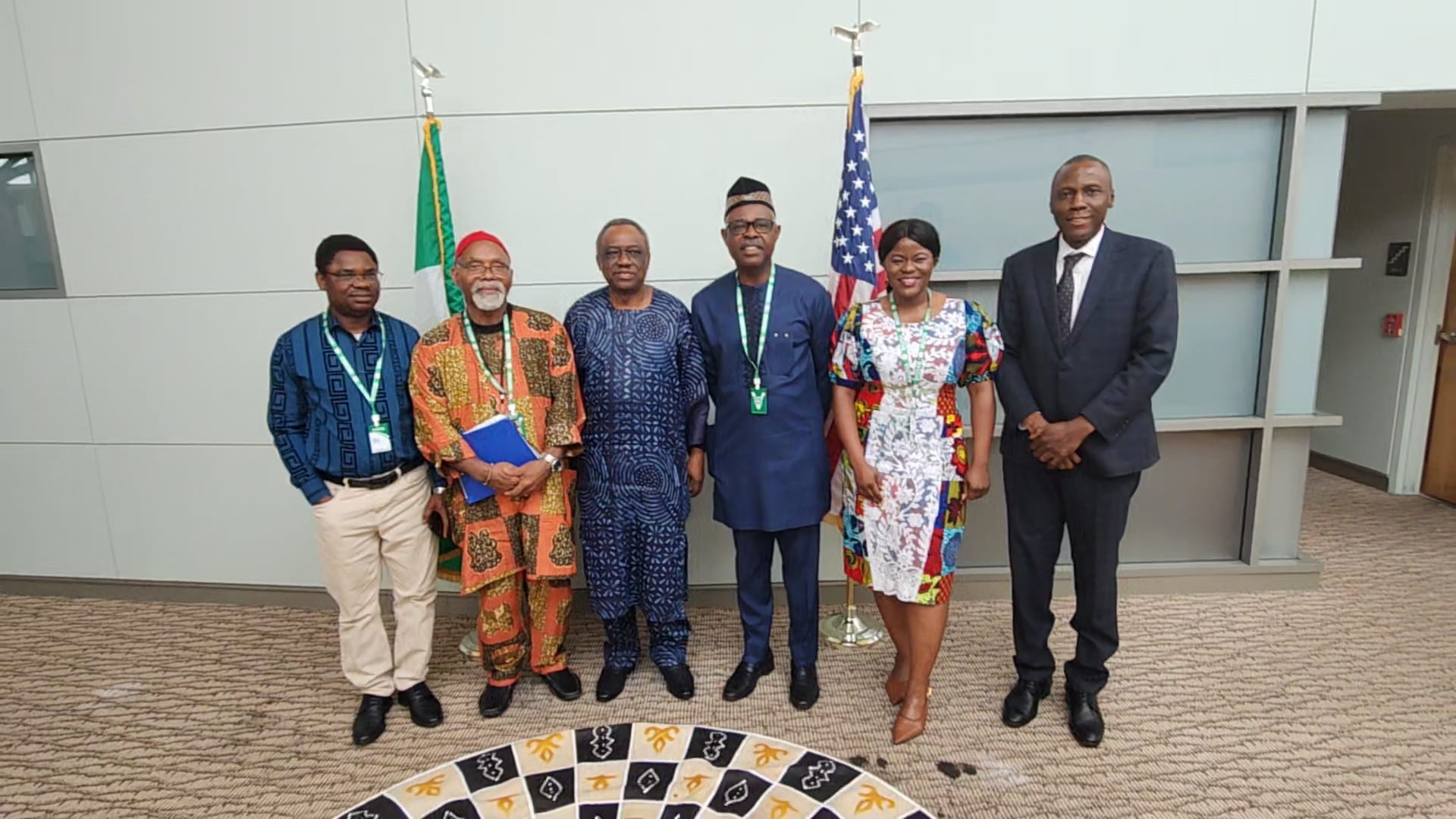
    A delegation from Bowie State University has met with Nigeria’s Ambassador to the United States, Ambassador Colonel Lateef Kayode Are, to explore closer collaboration in education, research, innovation, and diplomatic engagement aimed at strengthening human capital development in Nigeria.

    The delegation, led by Prof. (Dr.) George Ude, Chair of the Department of Natural Sciences at Bowie State University and Chairman of the Board of Trustees of DNA Learning Center Nigeria, was received by Ambassador Are alongside Mr. Chukwudi N. Igboeli, Nigeria’s Head of the Ministry of Education in the United States. Other members of the delegation included Associate Dean Dr. Benjamin Arah, Dr. David Igwe, and Dr. Chimdimnma Esimai.

    Discussions centred on expanding educational opportunities for Nigerian students while strengthening research collaboration between Nigerian and American institutions.

    Presenting the university’s vision, Prof. Ude highlighted four flagship initiatives designed to transform science education and workforce development.

    They include the Course-based Undergraduate Research Experiences (CURE) Programme, which annually engages more than 1,000 students in hands-on research across STEM and non-STEM disciplines; the Back to Science (BATOSCIN) Initiative, which has trained more than 200 Nigerian secondary school students and 40 teachers in molecular biology through a partnership involving Bowie State University, Godfrey Okoye University, DNA Learning Center New York, and funding support from the United States Embassy in Nigeria; the DNA Learning Center Nigeria at Godfrey Okoye University; and the Centre for DNA Forensics and Criminal Investigations (CEDFOCI).

    Prof. Ude said CEDFOCI, established through collaboration between Godfrey Okoye University, DNA Learning Center Nigeria, and the Enugu State Government, is strengthening Nigeria’s capacity in forensic science, genomics, criminal investigations, research, and specialised training.

    He recalled that during the centre’s inauguration on June 24, 2026, Governor Peter Mbah said the facility had significantly enhanced Enugu State’s ability to combat crime through modern DNA technology, while commending the university’s leadership and Prof. Ude for driving the initiative.

    Ambassador Are praised the university’s efforts, describing the initiatives as closely aligned with Nigeria’s development priorities in education, science, innovation, and human capital development.

    A key outcome of the meeting was the proposed partnership between the Nigerian Embassy and Bowie State University to create structured admission pathways for Nigerian international students and children of embassy staff.

    The parties also explored strategies for sustaining research institutions through diversified funding, stronger industry partnerships, and continuous innovation, while identifying emerging opportunities arising from the United States’ growing emphasis on trade, investment, education, research, and technology partnerships with Nigeria.

  • Mbah Awards Scholarships to Over 760 Undergraduates, Postgraduates, Teachers

    Mbah Awards Scholarships to Over 760 Undergraduates, Postgraduates, Teachers

    Enugu State Governor, Dr. Peter Mbah, has approved scholarships for over 760 beneficiaries under the 2025/2026 Local Scholarship Scheme, in a move that further underscores his administration’s commitment to expanding access to quality education and developing the state’s human capital.

    The Executive Secretary of the Enugu State Scholarship and Education Loans Board, Chukwuemeka Mbah, disclosed this on Monday in Enugu.

    According to him, the beneficiaries, drawn from the 17 Local Government Areas of the state and across various academic disciplines, comprise over 500 undergraduate students, 100 postgraduate students, and 160 public sector teachers.

    He explained that successful candidates who passed the Computer-Based Test (CBT) are already being contacted via text messages and email on an LGA-by-LGA basis for verification and documentation.

    Mbah said the scholarship scheme reflects Governor Mbah’s unwavering commitment to investing in education, empowering young people, and equipping the workforce with the knowledge and skills needed to drive the state’s transformation agenda.

    He urged successful applicants to promptly respond to the messages sent to them to facilitate the verification process.

    According to him, the scholarship award is one of the key education initiatives of the Mbah administration aimed at ensuring that financial constraints do not stand in the way of academic excellence and human capital development in Enugu State.

    “More beneficiaries will be captured in the next phase of the scholarship programme. It’s open to the people of Enugu State, and I want to urge our people to continue to apply. This is not the time to say you’re unable to get quality education because of funding. The governor has made it easy for our people to access free, quality education,” he added.

  • JAMB fixes 150 cut-off for universities, exempts NCE, agriculture candidates from UTME

    JAMB fixes 150 cut-off for universities, exempts NCE, agriculture candidates from UTME

    The Joint Admissions and Matriculation Board (JAMB) says universities in Nigeria will admit candidates with a minimum score of 150 for the 2026 academic session.

    The board also announced that colleges of nursing would maintain a minimum admissible score of 150, while polytechnics would admit candidates from 100.

    The decisions were reached during the 2026 policy meeting involving heads of tertiary institutions held in Abuja on Monday.

    JAMB further stated that the minimum age for admission into tertiary institutions in Nigeria remains 16 years.

    At the meeting, the board announced a major policy adjustment exempting candidates seeking admission into education programmes and agriculture-related non-engineering courses from sitting the Unified Tertiary Matriculation Examination (UTME).

    According to the Minister of Education, Tunji Alausa, candidates applying for the National Certificate in Education (NCE) programme with at least four credit passes would no longer be required to take the UTME.

    “Candidates seeking admission into the NCE programme, who possess a minimum of four credit passes, will no longer be required to sit for the UTME,” Alausa said.

    He, however, noted that such candidates must still register with JAMB for screening and admission processing through the Central Admissions Processing System (CAPS).

    “However, it is imperative to emphasise that such candidates shall mandatorily register with JAMB, and their credentials shall be duly screened, verified, and certified for the issuance of admission letters through CAPS, in accordance with extant regulations,” he stated.

    The minister added that the exemption also applies to National Diploma candidates seeking admission into agriculture-related courses outside engineering and technology fields.

    The new policy marks a significant shift in Nigeria’s admission process, where UTME has traditionally been compulsory for admission into universities, polytechnics, and colleges of education.

  • A BOOK REVIEW: “The Kiss That Never Was”

    A BOOK REVIEW: “The Kiss That Never Was”

    AUTHOR: Rudolf Ogoo Okonkwo

    BOOK REVIEWER: MO Ene

    PREAMBLE

    Was this “The kiss in Collins eyes” [that] ::: “Haunts me night and day” (as in ‘The Look’ by Sara Teasdale)? No, this kiss belongs to a more recent time and in a different clime, though the Missouri-born lyric poet, Sara, lived in New York City, as does Rudolf.

    Anyone who has read his works, as I have for three decades, knows that Rudolf has a way with words. He tapped into Igbo idioms and spirituality, extensive experiences, undiluted understanding of politics and society, his engineering background, and years of media management. The result is a book of poems that has earned its place on the bedside table.

    Our ancestors said a lot about the philosophy of life. The major problem is that many writers have not mastered the imposed vernaculars of European colonists to the point of producing apt English equivalents or French forms. Now you know the genius of Chinua Achebe: He served some pop idioms in a simple sauce of captivating clauses.

    Rudolf serves a good one in why the heart of humans is not so smart: “When we’re somewhere, we long for where we are not.” (As Oliver de Coque sang: “Onye nọrọ ebe ọ nọ, ebe ọ na-anọghị ana-agụ ya.”) We long to go to an imaginary heaven in the skies while we screw up a real heaven on earth!

    LOVE

    In “Author’s Note,” Rudolf notes that men (and women) “express extreme passion when they are in love and when they are contemplating suicide” since “both spring from the same lake of madness.” I don’t know about suicide; my culture abhors it. Of love, I agree: Love is a passing psychosis, a momentary mental mess in a spectrum all its own.

    In “Invitation to Madness,” we read:

    Love is agwu

    Especially when it is dangerous.

    Even when it hurts,

    There is a divine purpose why it exits. [62]

    Also,

    Love is an addiction like no other. [34]

    Love is all things to all people; to no two is it the same. St. Paul devoted 1 Corinthians 13 to love but failed to give an exact meaning. King Solomon in Song of Songs still could not nail it, not even with hundreds of wives and flings, including Makeda the Queen of Sheba.

    “MADNESS”

    Rudolf Okonkwo is driven by Agwụ, the patron spirit of creativity. The term is often misused in its blanket application to any behavior that is not mainstream. We accept it as ‘madness’ because many think it is abnormal. We are all mad; the degree of madness depends on where we find ourselves on the sanity-insanity spectrum: Some are at the far end of the spectrum; others, in-between.

    From the beginning, Rudolf lets go of a missile across the Strait of Hormuz:

    “A madman looking forward leaps through the hoop like a dancing mantis to become a poet. And a poet who looks backward spins webs like a spider crawling back into madness.”

    So, a poet who looks back becomes a madman, whereas a madman who looks forward becomes a poet? Interesting!

    THE KISS

    Rudolf flies beyond the south side of the Moon and, often, away from human reality. It’s no wonder “The Kiss That Never Was” requires repeated reading. You enjoy the work but wonder what it was all about: fact or fiction? The killing of Uwalaka by area boys 30 years ago was especially haunting. “They probably killed him because he reminded them of themselves: Dirty. Rotten. Stinking. Dead.” [34] Sadly, many Uwalakas are murdered needlessly every day in Nigeria.

    HE DIED FOR ME

    Th story of Bruce Maylock is the stuff with which religions start: A Jew dies a martyr for people he never knew. His death and that of millions starved to death by the actions and inactions of Nigeria’s notorious prodigal parent, Yakubu Gowon, remain a stinking stain that neither distance nor time will erase.

    He died for me.

    He did not have to

    But he did

    Because nobody listened

    And nobody is listening even now. [53]

    No one is listening even as the same scenarios that caused the human tragedy builds up daily in Nigeria. It is for this reason, to avoid a repeat, that I instituted the Nigerian-Biafra War Memorial Lectures in 1996. Contrary to my explicit intention, we relive it.

    Throughout the book, Rudolf has nuggets of quotable quotes, anecdotes, and phrases that relay voices from beyond our realm.

    I can’t sit in my room and crush my testicles.

    Emergency surpasses the brave;

    Emergency is ::: a test of bravery.

    If [the penis] dies not prematurely

    It will eat that bearded snail. [69]

    In “Wait, Make I Baff” [70], Rudolf tries a Mamman Vatsa ‘poetri’ jam. The image of a woman suckling her one-month-old “pikin” with two nipples in the mouth is hilarious. You wonder why; me too!

    The book is an easy read but, do not be deceived; it is deep. You formulate your own understanding, but you must dig deeper to get the full gist, as in “I See the Traps Set for Me,” “Aba Ngwa,” etc.

    The cover is comely. The wilting bouquet of flowers depicts love that blossomed but did not sustain nor attain the fullness of expectations: A kiss that never was or Nigeria as-is. Rudolf Okonkwo has written a serious book to peruse and ponder what would happen when “our black gold is gone—Gone with its heavenly curse.”

    For now,

    Let someone advertise our poverty

    To those who love the word liberty,

    And stop borrowing foreign insanity

    In exchange for our nation’s sovereignty. [84]

    I recommend the book. The poems, prophecies, and proposals will offer you the enjoyment of written words and thought-provoking perceptions.

    Sara Teasdale won a Pulitzer Prize for her poetry collection, Love Songs (1917). May Rudolf nail literary awards for this collection and, when the kiss happens, may he return with “The Kiss That Never Ends.”

    @OkaaMoe

    Sun, 04.26.2026