Author: Editor

  • Beyond Independence: Building the Nigeria We Want

    Beyond Independence: Building the Nigeria We Want

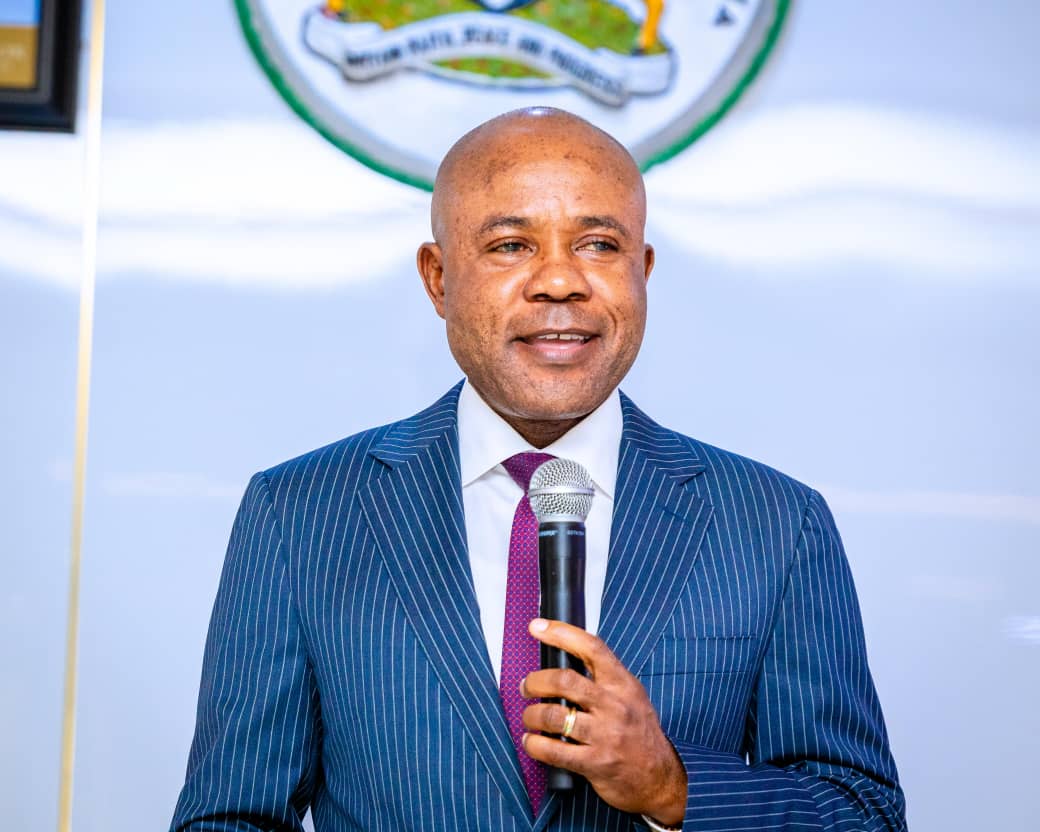
    Keynote Address by Hon. Oseloka H. Obaze,

    MD/CEO Selonnes Consult and Former Secretary to the State Government of Anambra

    At the NAIJA AT 66 Unity Independence Fest,

    The Military Cantonment, Onitsha

    4th October, 2026

    Protocols

    I am glad to be here today. It’s an honour to offer my humble perspective on our country as we celebrate her 66th Independence Anniversary. I salute our host, the Commander of the Onitsha Military Cantonment. I thank the organizers of Naija @66-Unity, Legacy & Prosperity for finding me worthy of this assignment.

    I have been asked to speak on a particular title; Beyond Independence: Building the Nigeria We Want. I will be direct brief, so that the panelists can also share their views.

    Two Nigerians friends met recently after a long while.

    The first asked his friend: “How country?”

    The second replied: “Country is hard. We are trying to make ends meet.”

    Then first retorted: “Your own better. For us, we are no longer trying to make ends meet. We are trying to make ends see each other from a distance.”

    That anecdote, my friends, is the sad reality of life in Nigeria today. Country is hard!

    In 66 years, Nigeria’s history has been remarkable, mostly for the wrong reasons. We are at risk of becoming a single story narrative. That narrative has always been about bad leadership. But that should not be the case.

    We are all consciously aware of the state of Nigeria – our dear native land. The reality and optics are not good. Indeed, they are bad. All is not well with Nigeria. Those who say that all is well with us are not being optimistic; they are either in denial or being untruthful.

    Yet if the truth be told, Nigeria is not perfect! No nation is. And no human being is perfect. Nigeria could be better. God Almighty gave us the potentials to be great, but Nigeria today, is what we the people, have made it.

    If as Nigerians we acknowledge that our country is in trouble, then we must respond accordingly to fix it. And since nobody from the outside will do it for us; we cannot fail. We must not fail.

    As I look around this hall, I see Nigeria at its very best. I see Nigeria’s mosaics; our people, our diversity, our distinct ethnicities, our proud national colours and cultures. I see our strength as a people and the ties that bind us. But then, I must also honestly ask; what are we all celebrating today? Are we truly happy? Beyond Independence, are we building the Nigeria we want? Are we really building a nation our children can be proud of? I don’t think so.

    A recent book by C.O. Makeme titled, Dependent-Independence, placed Nigeria among the nations classified as politically independent, but still largely dependent on external influences and largesse. The greater danger confronting us today is that we can no longer trust and depend on our leaders; we no longer trust ourselves. We have allowed our country to be too fractured and too polarized. Some are no longer proud to be Nigerian.

    As a nation, we are suffering from a huge trust deficit. We continue to pay lip service to our national unity. That reality affects every facet of our daily lives, especially our politics.

    From my vantage point, I understand that nation-building is not a one-off event. Rather it is a long process of commitment, sacrifice, inclusivity and tolerance. It is about religious, ethnic, political and gender and class sensitivity and tolerance, without exception.

    As a diverse and secular nation, we must celebrate our shared values, responsibilities and diversity. Further to our demands for good leadership and good governance, we must strive at all levels for security of life and properties, as well as economic and political freedoms in Nigeria, regardless of who is in power.

    So what do we want?

    If I asked that question in Oshogbo, in Kaduna, in Warri, in Lokoja, Zungeru or here in Onitsha, there will be similar answers. Most will say we want a better and working country. But what does a better and working country mean? AI defines a working country as “a nation where the g0vernment provides basic public goods, economic stability and the rule of law so people can live safely and earn a living.”

    By that definition, a better country or society is one that guarantees for every man, woman and child; food, clean water and air, affordable housing, basic and affordable healthcare, ownership of a private home, physical safety and security, basic and affordable education, and financial security.

    Financial security is not about being rich. It is that a person should never use the money meant for food to buy medicine, or the money meant for medicine to pay school fees. It means that no matter how difficult things are, no child should go to bed hungry; and that a family should be able to have a little cash–or what is called disposable income for emergencies. Government must also provide safety nets for the national population.

    There are other aspects a better society. Law, order and stability are important. We must always keep the law; whether here in the barracks, on the streets, in the market, mosques, churches or schools. This also means that as citizens, we cannot take laws into our hands; neither can we enforce it, or tolerate situations where those who are not law officers engage in jungle justice. We must also not tolerate law enforcement officers abusing any citizen.

    In a better society there must be peaceful co-existence and acceptance of community. What does this mean? It means that whether you belong to the Yoruba, Hausa, Efik or Kanuri ethnic groups, if you decide to reside here in Onitsha, you must be accepted, respected and protected. Every Nigerian has the right to reside where he or she so desires. Even foreigners in our country, have rights that must be protected by law. Accordingly, graduates from our tertiary institutions should not worry about their safety regarding where they posted for their National Youth Service. That, sadly, is no longer the case.

    It’s that rights of acceptance to earn a living freely that guarantees that you can transport any material to any part of the country for the purposes of commerce, insofar as it is not a contraband, just as you are free to travel to any part of the federation. So the herdsman from Sokoto is free to take his cattle to Gboko, Sapele, Awka, or Uyo, so long as he does not engage in destructive activities or trespass on people’s farms. A man from Aba ought to be able to hawk his wares or water on the streets of Katsina or Kebbi without let or hindrance.

    Since every Nigerian is first and foremost a citizen; it goes without saying that every man, woman and child must enjoy equal rights and equal protection under the law.

    For example, this a military barrack. But not everyone who lives or works here is a soldier. Some are civilians. Yet; the law stipulates that once you obey the rules guiding the barracks, the military authorities here must recognize your status as a civilian, respect it and protect you accordingly. By practice and convention, no civilian should be subjected to marshal law. Similarly, each state government has an obligation to protect non-indigenes.

    Another fundamental right critical to a better society is your right to privacy; this is often referred to as the “the right to be forgotten.” This means that the government and her agents cannot enter your house, store, or office and search it or seize any of your belongings without a Court order. In an orderly society, the same principles should apply to your vehicle, computer and phones, except in special circumstances recognized by law.

    What does this all say?

    The office of the citizen is the highest office in the land. Our constitution has given us the rights and necessary instruments to build the best possible society that we want.

    Unfortunately, we are mostly unaware of this, or tend to mortgage our fundamental rights by being docile, by not complaining enough, not protesting and indeed, by tolerating bad governance and injustice, when we are not directly affected. We also tend to forfeit our fundamental rights dues to consideration of our tribes or religions. Sometimes we even mistreat the least fortunate amongst us: especially the poor, and persons with physical disabilities. We forget that they too, have rights in any good society.

    We face a Catch-22 situation. As Nigerian citizens we have also abandoned our responsibility to hold public office holders accountable. If there is so much failure in governance today, it’s because the office of the citizen has been abdicated in Nigeria. Consequently, failure in governance is the endpoint of the political titration resulting from the Government abdicating its accountability and responsibility to protect her citizens.

    The distrust gap between Nigerian leaders and the led has become huge. Our society and nation will continue to be bad so long as we look the other way and not hold our leaders accountable, just because they are from our tribes or religion, or are our relatives. Bad things also happen when good men do nothing. That, I am afraid, is our sad reality!

    We need to return to the good old days.

    Since we are supposed to be celebrating, I will not go into the litany of woes and challenges that we face nationally. However, some realities must be acknowledged in the context of our desire to rebuild our country. The state of our nation is not strong. I’m sure most of us here and some others outside, have experienced in one form or another, the negative impact of our broken system which results to many broken lives.

    Traveling in Nigeria is now hazardous. Accidents now occur in almost every facet of our lives. Everywhere around us, we sense, feel and witness various forms of weariness, high inflation, high food and fuel prices, a grossly devalued naira, a very poor economy, vast insecurity, bloodlettings, kidnappings, impunity, corruption and State Capture. These are all orchestrated by bad leadership and bad governance. Hunger and poverty are now so common that Nigerians have become habitual beggars. Our sense of hopelessness is real.

    Be that as it may, one of my favourite lines in our national anthem says: “Though tribe and tongue may differ, in brotherhood we stand.” That exhortation has since our independence in 1960, been the singular focal point and clarion call to true nation-building. It is also the moral, civic, social and political driver that should compel us to look and think beyond being independent, in order to build the Nigeria we want. That line must push us to return to the good old days; to the dreams and visions of our founding fathers. We must be our brothers’ keeper, so that the labours of our heroes past will not be in vain.

    Conclusions

    Let me conclude on this somewhat optimistic note. Nations thrive when they have Peace, Unity, Prosperity and Tangible Legacies. Nigeria is still a rich but mismanaged country. Nigeria is not bereft of the required human capital required for good leadership. Neither is Nigeria bereft of good governance ideas and plans. Surely, there are some missing gaps; some fault lines and some pitfalls. But let this be said. Hope is not lost and should not be lost. We must rediscover good governance for the sake of our children’s future.

    Those who seek to lead us henceforth must have a transformative mindset and the complementing commitment. They must prioritize the people and national interests. They need to cut cost of governance and cost of living, by robustly tackling impunity and corruption. Such leadership needs to eradicate waste, leakages, and theft of public funds. That leadership must return Nigeria to export-driven manufacturing that will also create numerous jobs. It must also provide Nigeria with uninterrupted electricity and create a strategic fuel reserve. Above all, the protection of Nigerians must be their top priority.

    Quite often, my thoughts about the state of our nation conjure up those eternal words of President John F. Kennedy of the United States of America: “Ask not what your country can do for you; ask what you can do for your country.” Therefore, as citizens we have a role to play. We must recalibrate in the ways we relate to our leaders. We don’t necessarily need handouts or palliatives. We also don’t need to sell our votes for paltry sums. The answers we seek are just arm’s length away. First, we must all accept that the persons seated next to you, despite, his or her tribe, language, religion, gender, or political affiliation, is first and foremost a compatriot and a partner in the Nigerian project. To realise the Nigeria we want, there should be no “us” and there should be no “them.”

    Second, we must individually resolve that building the Nigeria of our dreams is a shared responsibility. It requires our collective efforts to be well organized to work effectively for the economic rebirth of Nigeria; by being the best we can individually be in our respective fields of human endevour. Contributing proactively requires our engaging constructively.

    Finally, advancing Nigeria’s sustainable development requires equity and building blocks. Each of us must first ascribe to ourselves the role of being a true patriot. Only in doing so, can we muster the resolve to seize the moment and collectively do the heavy lifting required to change course and place Nigeria on the trajectory of becoming the great nation God Almighty has ordained it to be. I thank you for your attention. God bless Nigeria.

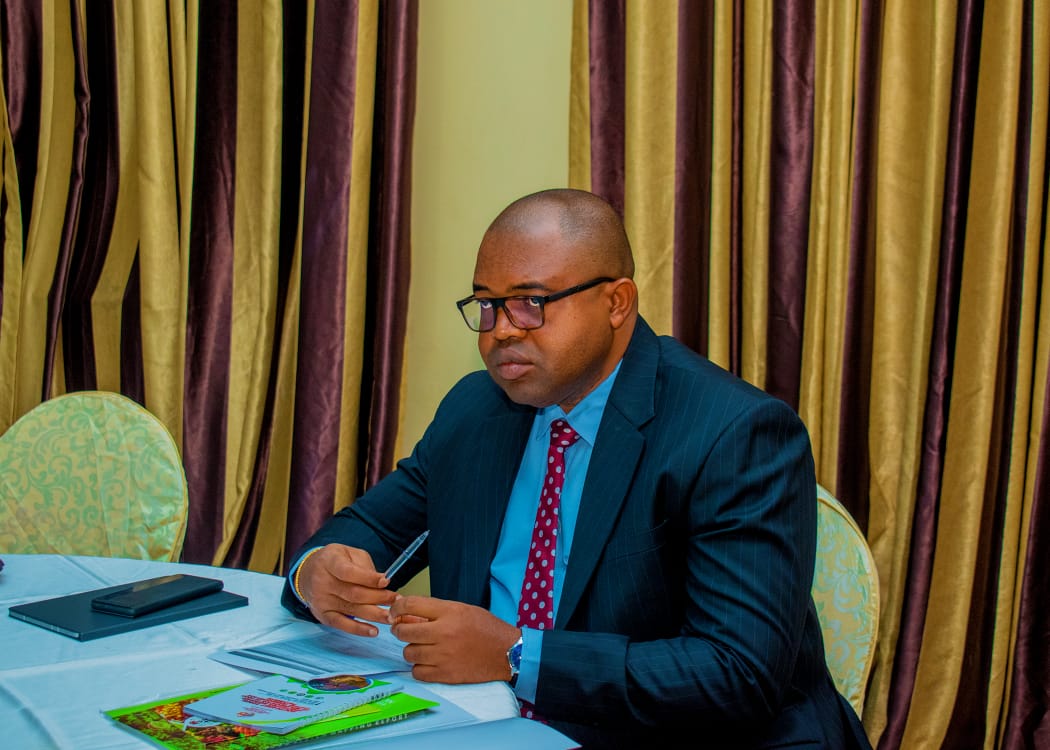
  • UNICEF, BSBEPC Boost Grassroots Nutrition Planning, Accountability

    UNICEF, BSBEPC Boost Grassroots Nutrition Planning, Accountability

    The Benue State Budget and Economic Planning Commission (BSBEPC), in collaboration with the United Nations Children’s Fund (UNICEF) Nigeria, Enugu Field Office, has strengthened the capacity of Local Government Committees on Food and Nutrition (LGCFNs) to coordinate nutrition interventions and translate policy priorities into action at the grassroots.

    The four-day capacity-building workshop, held at the NANN Complex Hall in Makurdi, brought together local government chairmen, LGCFN members and other stakeholders to strengthen multisectoral coordination, resource mobilisation, data management, accountability and nutrition planning across the state’s Local Government Areas (LGAs).

    The training also focused on mapping available resources and interventions, including opportunities under the Domestic Resource Mobilisation (DRM) and Child Nutrition Fund (CNF) frameworks, as well as developing practical annual nutrition work plans for the LGAs.

    Speaking at the workshop, the Director General of BSBEPC, Professor Jerome Andohol, underscored the need to strengthen nutrition interventions against the backdrop of Nigeria’s unfavourable infant mortality situation.

    He said the Benue State Government was investing resources in addressing malnutrition because of the critical role nutrition plays in child survival, growth and development.

    He stressed that investment in children was an investment in the future of Nigeria and called for early action involving government and relevant stakeholders.

    Professor Andohol also emphasised the need to ensure that child nutrition resources were effectively utilised and translated into tangible benefits in communities.

    He urged participants to apply the knowledge and skills acquired during the training in their respective LGAs.

    He appreciated the Executive Governor of Benue State, the Very Rev. Fr. Dr. Hyacinth Iormem Alia, for providing an enabling environment that contributed to the successful organisation of the workshop.

    The Permanent Secretary of BSBEPC and Chairman of the State Committee on Food and Nutrition, Mr. Orinya Orgenyi, described food and nutrition as fundamental to the wellbeing, productivity and future development of the population.

    Orgenyi said Benue’s agricultural potential must be matched by improved nutrition outcomes, calling for greater attention to children, pregnant and breastfeeding women and other vulnerable groups.

    He stressed that improved nutrition could not be achieved through the health sector alone, noting the need for collaboration across health, agriculture, education, water resources, social protection, and women and social development.

    He also urged LGCFNs to make nutrition a priority in their plans, budgets and development programmes.

    The collaboration with UNICEF Nigeria, Enugu Field Office, supports government-led efforts to improve nutrition outcomes through technical assistance, capacity strengthening, resource mobilisation, evidence-based planning, accountability and multisectoral coordination.

    UNICEF’s technical support also focused on strengthening systems for financing, coordinating, implementing and monitoring nutrition interventions.

    Participants were guided on how LGCFNs could identify nutrition priorities, map available resources, advocate for domestic budget allocations, strengthen linkages with the CNF, improve accountability for funds and commodities, and use data to guide decision-making.

    The Lead Facilitator and UNICEF Independent Consultant on Public Finance for Children (PF4C), Dr. David Okelue Ugwunta, provided a practical framework linking nutrition governance with financing, implementation and accountability.

    Dr. David Ugwunta

    Dr. Ugwunta emphasised that nutrition was a shared responsibility requiring collaboration among government institutions, sectors, development partners and community structures rather than being treated solely as a health-sector concern.

    He explained that effective multisectoral coordination enables stakeholders to identify gaps, minimise duplication, maximise available resources and ensure that interventions are better targeted to vulnerable populations.

    He also linked coordination to resource mobilisation and public financial management, urging participants to go beyond identifying nutrition needs to translating them into costed activities, budget lines, domestic resource mobilisation actions and realistic annual work plans.

    Dr. Ugwunta highlighted the importance of budget advocacy, nutrition budget tagging and accountability for releases and expenditure, stressing that securing a budget allocation is only the beginning.

    He said nutrition resources must be tracked from budget to release, expenditure and implementation, while commodities must be monitored through the supply chain to ensure that intended beneficiaries receive them.

    He further connected domestic financing to the CNF, emphasising the importance of understanding eligibility requirements, counterpart financing and the steps LGAs need to take to access co-financing opportunities.

    He also stressed the need to protect nutrition funds and commodities from diversion and weak controls, noting that effective nutrition financing goes beyond mobilising resources to ensuring they are properly managed and ultimately reach the women and children for whom they are intended.

    In his goodwill message, the Benue State Team Lead of Helen Keller International, Mr. Wilson Ameh, emphasised the importance of nutrition-specific interventions, particularly those addressing micronutrient deficiencies and providing essential vitamins.

    He said the training would strengthen LGCFNs’ understanding of their responsibilities and improve coordination with relevant sectors, while stressing the importance of effective monitoring and evaluation and the use of implementation evidence to strengthen decision-making at the local government level.

    The workshop also featured technical presentations from government institutions and academia.

    Mrs. Ann Tor of the State Primary Health Care Board highlighted the importance of the first 1,000 days of life, from conception to a child’s second birthday, for physical growth, brain development and long-term health.

    Mrs. Apeh Martha, Director in the Planning and Development Department of BSBEPC, presented on the National and Benue State Nutrition Policy and Strategy, with emphasis on the role of LGAs in translating policy priorities into grassroots programmes and activities.

    Dr. Mrs. Evelyn Tersoo Abiem of Joseph Sarwuan Tarka University, Makurdi, addressed nutrition governance, focusing on the coordination and accountability relationship between the State Committee on Food and Nutrition (SCFN) and LGCFNs, as well as the importance of clearly defined institutional roles.

    Mrs. Ruth Asor, Monitoring and Evaluation Officer, led a session on nutrition data, monitoring, evaluation and reporting under the theme “From Data to Decision,” emphasising the importance of generating reliable data and using it to inform planning, resource allocation and effective programme implementation.

    The four-day workshop provided participants with an integrated understanding of nutrition governance, policy implementation, resource mobilisation, data management, monitoring and evaluation, accountability and annual work planning.

    A key outcome was the clarification of the respective roles of SCFNs and LGCFNs and the strengthening of the link between state-level policy and grassroots implementation.

    The organisers expect participants to return to their LGAs with improved capacity to coordinate nutrition activities, mobilise resources, strengthen community participation, improve reporting and accountability, and develop realistic nutrition work plans that respond to local needs.

    The workshop underscored the importance of sustained collaboration among the Benue State Government, local governments, UNICEF and other development partners, traditional institutions, civil society organisations and communities in improving nutrition outcomes and advancing the survival, development and future productivity of children in the state.

  • Kidnappers Demand N1bn Ransom For 20 Prospective Corps Members

    Kidnappers Demand N1bn Ransom For 20 Prospective Corps Members

    Precious Nwonu, Enugu

    Kidnappers of 20 prospective National Youth Service Corps members abducted in Imo State have demanded N1 billion ransom for their release, giving the victims’ families 24 hours to raise the money.

    The victims were abducted on Thursday after gunmen attacked two buses conveying prospective corps members along the Owerri-Onitsha Road in the Umunoha area of Mbaitoli Local Government Area of Imo State.

    The young Nigerians were travelling from Ibadan, Oyo State, to NYSC orientation camps in Abia and Akwa Ibom states when the attackers intercepted the buses and took the passengers into the bush.

    The ransom demand was disclosed by relatives of the victims during a visit to the Olubadan of Ibadanland, Oba Rashidi Ladoja, in Ibadan on Saturday.

    The families said the abductors had contacted them using the mobile phones of some of the victims and demanded N50 million for each person.

    Speaking on behalf of the families, Alhaja Akande and Oyebola Akande said the kidnappers had threatened to harm the victims if the ransom was not paid within the stipulated period.

    The parents appealed to Ladoja, the police and other authorities to intervene, saying the families could not afford the amount demanded.

    Ladoja assured the relatives that efforts were being made to secure the victims’ safe release, while the Oyo State Commissioner of Police, Olugbenga Abimbola, said he had been in contact with his Imo counterpart over the incident.

    Meanwhile, the Imo State Police Command said it had identified the location where the victims were being held but had delayed a direct assault because of intelligence suggesting that the area had been planted with improvised explosive devices.

    The Commissioner of Police in Imo State, Audu Garba Bosso, said security operatives tracked the kidnappers into the bush and used drones to identify their suspected hideout.

    Bosso said the police were preparing to enter the area with specialised equipment, including bulldozers and armoured personnel carriers, to minimise the risk to the hostages and security personnel.

    He said the priority remained rescuing the victims alive while ensuring that the operation did not expose them to additional danger.

    In a separate development, the Inspector-General of Police, Olatunji Disu, has deployed senior police officers to Imo State to coordinate the search-and-rescue operation.

    The Force Public Relations Officer, Anietie Iniedu, said the Deputy Inspector-General of Police in charge of Operations, Shehu Nadada, had been directed to take charge of the tactical operation in Owerri.

    Nadada arrived in the state alongside two commissioners of police to assess the security situation and review the deployment of tactical assets around identified criminal hideouts.

    The police said additional tactical teams had also been deployed, while intelligence-led operations were being intensified to track the kidnappers and secure the safe release of the victims.

    The abduction has triggered renewed concerns over the safety of prospective corps members travelling to orientation camps across the country, particularly as the NYSC scheme requires participants to travel outside their home states.

    The incident has also attracted political reactions, with the Makinde/Daura Presidential Campaign Organisation accusing the Federal Government of failing to adequately protect Nigerians from kidnappers, bandits and other criminal groups.

    In a statement issued by its Director of Strategic Communications, Richard Ihediwa, the organisation described the abduction as another indication of what it called the failure of the administration to guarantee the security of citizens.

    The campaign organisation urged the Federal Government to strengthen intelligence gathering, coordination among security agencies and rapid-response mechanisms to prevent further attacks on Nigerians.

    It also expressed solidarity with the affected families and called for the immediate and safe release of the abducted prospective corps members.

    Security agencies have continued to maintain a presence in the area as the search for the victims and their abductors intensifies.

  • INEC Warns Nigerians Against Fake Voter Registration Website

    INEC Warns Nigerians Against Fake Voter Registration Website

    Precious Nwonu, Enugu

    The Independent National Electoral Commission has warned Nigerians against a fraudulent website falsely claiming that the commission has reopened nationwide voter registration ahead of the 2027 general elections.

    INEC said the fake platform was advertising a purported registration window from September 28 to October 27, 2026, and had no affiliation with the electoral body.

    The commission, in a public notice, urged Nigerians not to click on the website or submit personal information, photographs or documents through it, warning that such details could be harvested and misused by fraudsters.

    According to INEC, the website falsely presents itself as a platform for a “Final Phase of Nationwide Online Voter Card Registration” and claims to offer services including updating voter information, transferring voters to different polling units and replacing lost or damaged Permanent Voter Cards.

    The electoral body stressed that the nationwide Continuous Voter Registration exercise ended on July 26, 2026, and that there is currently no new nationwide online registration exercise.

    INEC had earlier reaffirmed that the July 26 deadline would not be extended, urging eligible Nigerians to complete their registration or update their voter information before the close of the exercise.

    The commission’s official voter registration portal also currently states that the Continuous Voter Registration exercise has ended, while allowing registered voters to check their voter status and PVC collection information.

    The warning comes as political activities intensify ahead of the 2027 general elections. INEC’s revised timetable provides for the publication of the official register of voters on December 15, 2026, while the presidential and National Assembly elections are scheduled for January 16, 2027.

    The commission advised Nigerians to be cautious of websites and social media posts that claim to offer voter registration or PVC-related services outside its officially announced processes.

    INEC urged members of the public to verify election-related information through its official website, verified social media accounts and other recognised communication channels before providing personal information.

    The commission also provided its Citizens Contact Centre for enquiries and complaints, urging Nigerians to report suspicious electoral information through its established channels.

    INEC said vigilance was particularly important as the country approaches the 2027 elections, warning that fraudulent platforms could not only mislead eligible voters but also expose sensitive personal information to criminal elements.

  • Ogbuekwe Inaugurates Committee, Situation Room to Monitor Smart Green Schools in Nkanu East

    Ogbuekwe Inaugurates Committee, Situation Room to Monitor Smart Green Schools in Nkanu East

    The Executive Chairman of Nkanu East Local Government Area, Hon. Engr. Mike Chikosolu Ogbuekwe, has inaugurated a dedicated committee to monitor the activities, facilities and operational condition of Smart Green Schools across the council, alongside the establishment of a situation room designed to track developments and facilitate rapid response to emerging issues.

    The initiative is part of the council administration’s effort to ensure that the Smart Green Schools remain properly monitored, functional and capable of delivering the educational objectives for which they were established.

    Speaking during the inauguration, Ogbuekwe charged members of the committee to approach their assignment with diligence, professionalism and a strong sense of responsibility, stressing the importance of regular monitoring and prompt reporting of issues requiring attention.

    He explained that the situation room would provide a coordinated platform for receiving information from the schools, identifying challenges in real time and ensuring that necessary interventions are initiated without avoidable delays.

    The committee is chaired by the Head of Works, Engr. Ngene Chukwuemeka, while Engr. John Ogbu serves as a member. The Public Relations and Strategy officer, Dr. Eneh Kingsley, is the Secretary, with the Head of Education, Ajaegbu Theresa, also serving as a member.

    The composition brings together personnel from works, education and administrative functions, reflecting the council’s emphasis on technical supervision, educational standards and effective coordination.

    Ogbuekwe said the monitoring framework was intended not merely to identify faults, but to create a responsive system in which issues affecting the schools could be documented, escalated and addressed promptly.

    He urged the committee to maintain accurate records of their inspections and observations, work closely with relevant personnel in the schools and provide regular reports to the council leadership.

    With the committee and situation room now in place, the Nkanu East administration expects the monitoring of Smart Green Schools to become more systematic, responsive and data-driven, while strengthening accountability around the facilities and services provided in the schools.

  • ECOWAS to Deploy Youth Observers for Nigeria’s 2027 General Elections

    The Economic Community of West African States (ECOWAS) has said it will deploy youth-only election observers for Nigeria’s 2027 general election as part of efforts to deepen young people’s participation in electoral processes across the region.

    Head of the ECOWAS Electoral Assistance Division, Serigne Mamadou Ka, disclosed this at the 5th edition of the Sectoral Reflection Series on elections and democracy organised by the Peering Advocacy and Advancement Centre in Africa (PAACA) in collaboration with Legis360.

    Ka said ECOWAS had piloted the youth election observer initiative in Côte d’Ivoire and subsequently replicated it in Benin, with plans to extend it to other countries, including Nigeria.

    “Definitely, we are not going to leave Nigeria out in January,” Ka said.

    He said the initiative was part of ECOWAS’ broader efforts to promote youth representation in electoral processes, particularly against the backdrop of low political participation among young people across West Africa.

    Ka, however, identified lack of access to finance as the biggest obstacle confronting young people seeking to participate in politics.

    He listed other barriers as inadequate education and training, social and cultural factors, gender bias and weaknesses in internal democracy within political parties.

    He said:”There are many barriers. There are social and cultural barriers, and we have gender bias against women and girls, for instance. But I think the nerve of everything is finance.

    “Unless young people can access finance, I don’t think they can do much about political participation.”

    The ECOWAS official blamed political parties for restricting opportunities for young people to participate in politics, arguing that exclusion at the party level inevitably affects participation at the national level.

    Ka said access to finance must be complemented with education and training, noting that empowering young people with the necessary resources and knowledge would enable them to confront some of the barriers themselves

    He said: “There are also legal barriers, especially where political parties do not promote internal democracy. That is part of the problem.

    “But to me, finance comes first, alongside education and training. If we can help young people get more access to finance, education and training, they can even solve some of these problems themselves”.

    He added that technological advancement was gradually helping to weaken some cultural barriers by exposing young people to political developments and experiences in other parts of the world.

    “Cultural barriers, I think, are beginning to disappear because of technology. Technology is helping more people understand what is happening in other places and learn from those experiences,” Ka added.

    On youth participation in elections across West Africa, Ka said it remained low despite young people constituting the majority of the population in many countries.

    He said: “Participation is low in every country you take in West Africa.

    “Young people form the majority of the population. In some countries, they constitute 70 per cent; in some countries, they are 60 per cent; and in some countries, 50 per cent or more. But their participation is always low.”

    Ka said the problem started with political parties, which he accused of failing to create sufficient opportunities for young people within their structures.

    “As I said, it starts from the political parties themselves. They don’t allow young people to participate. And if they cannot participate within the political parties, how do you expect them to participate at the national level?” he asked.

    He said ECOWAS was promoting greater inclusivity from the party level to the national level, but urged young people to take greater responsibility for advancing their participation.

    “We can promote it, yes, but the hope is now on young people to take it further,” he said.

    Ka urged young people to become more organised and committed to political participation, stressing that ECOWAS could provide support but could not take up the responsibility on their behalf.

    “We can push, but we want young people also to be more organised and committed
    “If you don’t help yourselves, nobody will help you.”

    Executive Director of PAACA, Ezenwa Nwagwu, said mainstreaming young people into ECOWAS election observation was important to strengthening democratic participation and ensuring that young people were adequately represented in electoral processes.

    Nwagwu spoke on the initiative at a Sectoral Reflection Series, which also examined the outcomes of the Youth Democracy Conference in Dakar, Senegal.

    He said the initiative would help integrate young people into an election observation system where they had historically not been sufficiently represented.

    Nwagwu stated: “It is also about how to mainstream young people into the election observation network of ECOWAS,”

    “This has been going on in ECOWAS for as long as possible, but young people have not actually been mainstreamed.”

    Nwagwu said greater youth participation was necessary because democracy provided citizens with opportunities to influence decisions affecting their lives.

    He urged young people taking part in election observation to acquire sufficient knowledge of electoral laws and regulations, warning against treating elections as an activity in which anyone could participate without understanding the governing framework.

    “The first thing is knowledge. If you invest in knowledge, then you can observe the electoral process according to the regulations and the laws that guide it,” he said.

    “Election is a law-guided activity.”
    He also urged young observers to familiarise themselves with ECOWAS protocols on youth participation, saying knowledge of the regional instruments could help promote inclusion.

    On concerns over declining youth participation in elections, Nwagwu disputed the impression that young people were withdrawing from political engagement, arguing that social media activity did not provide a complete picture of youth participation. The Guardian

  • Nigeria’s Wheat Output Jumps to 420,000 Tonnes, FG Discloses

    The Federal Government says Nigeria’s annual wheat production has risen from 120,000 metric tonnes to 420,000 metric tonnes through the implementation of the National Agricultural Growth Scheme and Agro-Pocket (NAGS-AP).

    The government said the scheme is part of President Bola Tinubu’s Renewed Hope Agenda.

    Prof. Ademola Adenle, Senior Special Adviser on Agriculture and Innovation to the Minister of Agriculture and Food Security, disclosed this in an interview with the News Agency of Nigeria in Abuja on Saturday while reviewing achievements in the sector.

    NAN reports that NAGS-AP is a flagship project of the Federal Government aimed at bridging food supply gaps and achieving national food sovereignty by providing subsidised high-quality agricultural inputs directly to smallholder farmers.

    Adenle said the initiative was designed to help farmers access the inputs needed to boost productivity.

    According to him, the sector is focused on ensuring that farmers have access to critical inputs.

    He identified fertilisers, improved seeds and essential extension services as key components of transforming the agricultural sector.

    “We have implemented NAGS-AP under the Renewed Hope Agenda.

    “The whole idea is to provide imputs to farmers, such as fertilisers, chemicals and good essential services, through agro-dealers,” he said.

    He added that through the initiative, there had been a 300 per cent increase in production across various crops that farmers were cultivating, especially wheat.

    “We have recorded about a 300 per cent increase in wheat production.

    “Before, we were producing around 120,000 metric tonnes annually, which was the baseline.

    “But with the introduction of inputs provided under the Renewed Hope Agenda, wheat farmers have enjoyed a 300 per cent increase in production.

    “So, that is massive, from 120,000 tonnes to 420,000 tonnes annually, that is huge,” he said.

    Adenle added that the ministry would soon begin reforms covering various aspects of the agricultural sector, aimed at strengthening the system.

    He decried the country’s low agricultural productivity and blamed it on the obsolete Land Use Act.

    “We are going to address the issue of the Land Use Act, which is one of the structural problems of the agricultural sector in Nigeria.

    “The Land Use Act is quite old, we are currently using the 1978 Land Use Act which, obviously, vests power in the hands of state governments and has an inefficient traditional system of accessing land.

    “That has affected smallholders, because smallholder farmers only cultivate an average of 0.5 to two hectares of land.

    “So, how do we increase that to enhance production is what we are going to be working on,” he said.

    He emphasised that the reform would touch every segment of the agricultural sector.

    According to him, it would help address challenges across the value chain, from production and processing to distribution and marketing.

    “With that reform in place, it will help enhance productivity and increase the level of income among farmers, among others,” he added. Punch

  • Presidency: Tinubu’s Reforms Saved Nigeria From Total Economic Collapse

    Presidency: Tinubu’s Reforms Saved Nigeria From Total Economic Collapse

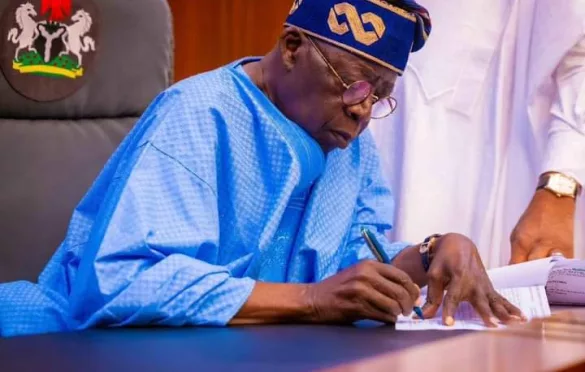
    Presidential aide Bayo Onanuga says Tinubu’s reforms confronted longstanding economic distortions and warns against returning to subsidy policies.

    The Presidency on Friday  rose in stout defence of the reforms embarked upon by President Bola Tinubu’s administration over three years ago.
    According to Onanuga, previous administrations focused on the symptoms of Nigeria’s economic problems while allowing deeper structural weaknesses to take hold.

    “They focused on symptoms while allowing the disease to take hold deep within the fabric of our society. We spent enormous sums sustaining inefficient arrangements that were never intended to last. We hid from difficult truths and passed the consequences from one generation to the next”, he said.

    The presidential media aide said one of the key points critics appeared to ignore was the President’s argument that his administration’s reforms did not create Nigeria’s economic weaknesses but were designed to confront them.
    Onanuga, while quoting Tinubu said “our reforms did not create the weaknesses in our economy. They confronted them. Now, as certain influential but regressive voices would have us abandon the treatment and return to the abuse of addictive subsidies, we must resist their siren song. We must remember why we began this journey and how far we have already come”.

    The President, in the Independence Day address, said Nigeria’s economy had grown by more than four per cent this year, with both the oil and non-oil sectors contributing to what he described as a renewed period of stable growth. NigeriaInvestment Guide

    According to Tinubu: “For too long, the promise of Nigeria was undermined by choices that postponed difficult decisions and allowed deep economic distortions to grow.

    “By 2023, poverty was rising, and hope was nearly gone. The country’s situation was darker than ever. We had no choice but to act”, Tinubu said in the address.

    The President likened the country’s economic condition to that of a cancer patient faced with the choice of undergoing painful treatment with the prospect of recovery or relying on painkillers while the underlying illness continued to spread.

    “Nigeria’s leaders chose morphine while praying for a miracle that never came”, Tinubu said.
    In another post, Onanuga accused politicians criticising President Tinubu’s Independence Day broadcast of preparing their reactions before the speech was broadcast on Thursday morning.

    According to him, the criticisms suggested that some of the President’s opponents either did not read or properly listen to the October 1 address before issuing their responses.

    Onanuga pointed out “immutable truths” from the speech, particularly Tinubu’s defence of his administration’s economic reforms and his warning against a return to the subsidy regime. Arise News

  • Bomb Threat Halt Police Raid on Kidnapped NYSC Corpers’ Camp in Imo

    Bomb Threat Halt Police Raid on Kidnapped NYSC Corpers’ Camp in Imo

    The Imo State Police Command has identified the location where 19 prospective National Youth Service Corps members abducted in the state are being held, but security operatives have delayed moving into the camp over fears that it is planted with improvised explosive devices.

    The Commissioner of Police in the state, Audu Garba Bosso, disclosed this on Saturday in a media interview while giving an update on the search-and-rescue operation.

    Bosso said the police used drones on Friday to locate the suspected camp after security operatives trailed the abductors into the bush.

    He, however, said the security agencies were being cautious because intelligence indicated that the camp had been mined with IEDs.

    “Any moment, we’ll still move into the bush. Yesterday, we were in the bush, we trailed them up to a particular location.

    “But at that point in time, we couldn’t move in to where the coordinate showed us where they are because we ran drones yesterday. And the drone actually showed us exactly their location.

    “But our predicament is that with the intel we have, the IED is—the camp is mined with IEDs,” the commissioner said.

    Bosso said the security agencies were preparing to move into the area with heavy equipment, including bulldozers and armoured personnel carriers, in an effort to rescue the victims safely.

    “We are moving in there with high, you know, high-velocity vehicles, that is, bulldozers, we’re moving in with bulldozers and APCs to see how we’re going to rescue these victims unhurt,” he added.

    The development comes two days after gunmen abducted prospective corps members travelling from Ibadan, Oyo State, to orientation camps in Abia and Akwa Ibom states.

    The victims were travelling in two buses when the attackers struck along the Owerri-Onitsha Road in the Umunoha area of Imo State on Thursday.

    The Managing Director of Uko Akwa Ibom Motors Nigeria Limited, Isiah Akpan, had told Saturday PUNCH that the abductors took 19 passengers, all prospective corps members, into the bush.

    He said the drivers escaped and alerted security personnel at a nearby checkpoint, prompting security agencies to commence a search of the area.

    The abductors have reportedly demanded N50m for each of the 19 victims, amounting to N950m, with some families contacted through the phones of their abducted relatives.

    One of the victims’ mothers, Mrs Oladosu, had told Saturday PUNCH that the abductors contacted her family through her daughter’s phone and that the family saw some of the victims during a video call.

    The Imo State Police Command had earlier said 10 victims were rescued, although its spokesperson, Henry Okoye, could not confirm whether the rescued persons were among the abducted prospective corps members.

    The latest development indicates that security operatives have narrowed down the location of the remaining victims as efforts continue to secure their release. Punch

  • INEC Records Over 9.3 Million New Youth Voters Ahead Of 2027 Election

    INEC Records Over 9.3 Million New Youth Voters Ahead Of 2027 Election

    Precious Nwonu, Enugu

    The Independent National Electoral Commission has disclosed that 9,324,349 young Nigerians registered during the 2026 Continuous Voter Registration exercise ahead of the 2027 general elections.

    INEC Chairman, Prof. Joash Amupitan, disclosed the figure on Wednesday at the investiture of newly appointed INEC Youth Ambassadors in Abuja.

    Amupitan, who was represented by National Commissioner, Prof. Rhoda Gumus, said the number demonstrated the growing involvement of young Nigerians in the country’s electoral process.

    In a statement issued on Thursday by INEC Director of Voter Education and Publicity, Victoria Eta-Messi, the chairman said youth participation remained important to strengthening democracy and building public confidence in elections.

    He explained that the appointment of the Youth Ambassadors was part of efforts to strengthen INEC’s engagement with young Nigerians and encourage greater participation in electoral activities.

    “The appointment of these distinguished young Nigerians as INEC Youth Ambassadors is therefore a deliberate step towards strengthening the connection between the Commission and the youth population,” he said.

    Amupitan added that young people were more likely to engage with electoral information when it was communicated through credible and relatable individuals within their communities and social networks.

    He urged the ambassadors to use their platforms to promote voter education, peaceful participation and responsible electoral conduct, while also helping to counter misinformation.

    The chairman further encouraged them to mobilise young Nigerians to take an active role in shaping the country’s democratic process.

    Also speaking, the National Commissioner and Chairman of INEC’s Outreach and Partnership Committee, Prof. Kunle Ajayi, urged the ambassadors to speak out against electoral violence and manipulation.

    Ajayi cautioned young Nigerians against allowing themselves to be used for activities that could threaten their lives or disrupt the electoral process.

    The Minister of Youth Development, Ayodele Olawande, represented by the Deputy Director of Network and Social Mobilisation, Lami Bature, also charged the ambassadors with promoting voter awareness, peaceful participation and responsible citizenship.

    Similarly, the Director-General of the National Orientation Agency, Lanre Issa-Oniru, represented by the Director of Civic Values and Democracy Education, Dr Olukemi Afolayan, urged the ambassadors to promote civic responsibility, electoral integrity and peaceful participation ahead of the 2027 elections.

    Meanwhile, INEC has presented a Certificate of Return to the winner of the Gombe/Kwami/Funakaye Federal Constituency by-election held on September 19, 2026.

    The certificate was presented to the member-elect, Kallamu MaiJama’a, by the National Commissioner supervising Gombe State, Rear Admiral Jamila Malafa (retd.), at the commission’s headquarters in Abuja on Thursday.

    MaiJama’a commended INEC for the conduct of the election, describing the exercise as free, fair and credible.

  • NNPC Launches Nationwide ₦66 Fuel Discount Promo

    NNPC Launches Nationwide ₦66 Fuel Discount Promo

    Precious Nwonu, Enugu

    The Nigerian National Petroleum Company Limited has introduced a ₦66 fuel discount promotion for customers using its NNPC Fuel App.

    The promotion, which commenced on October 1, will run until October 7 across NNPC retail stations nationwide, according to a post shared by the company on its X account on Friday.

    NNPC said the initiative was part of activities marking the period and encouraged customers to use the Fuel App when purchasing petrol during the promotional window.

    “The ₦66 Discount Promo is ongoing and the excitement is already happening across our stations nationwide,” the company said.

    It added that customers in different parts of the country had already begun participating in the promotion.

    The company also shared highlights from the first day of the campaign, showing activities at some of its filling stations.

    NNPC urged customers to continue fuelling and carrying out transactions through the NNPC Fuel App to benefit from the offer before the promotion ends.

    “Keep fueling, keep transacting and keep your eyes on our pages,” the company said.

    The company said it would continue to share updates and highlights from participating stations throughout the promotional period.

    The ₦66 discount is available to eligible customers through the NNPC Fuel App from October 1 to October 7.

  • Independence: Gov Mbah Pardons, Commutes Sentences of 13 Inmates

    Independence: Gov Mbah Pardons, Commutes Sentences of 13 Inmates

    In commemoration of Nigeria’s 66th independence anniversary, Governor Peter Mbah of Enugu State has approved the pardon, release, and commutation of sentences of 13 inmates of the Nigerian Correctional Centres, Enugu State.

    This is in the exercise of his power of Prerogative of Mercy under Section 212 of the 1999 Constitution (as amended) and in consultation with the Advisory Council on Prerogative of Mercy, Enugu State.

    According to a statement released by the Mbah’s media aide, Uche Anichukwu, on Independence Day, the Governor’s approval was conveyed to the Comptroller, Nigerian Correctional Service, Enugu State Command by the Attorney General and Commissioner for Justice, Barr. Osinachi Nnajieze.

    The beneficiary inmates are Kenneth Ozioko, Moses Saliyat, Promise Ndudim Olung, Chijioke Ugwu, Samuel Ani, and Eugene Odo.

    Others are Celsus Emeachi, Caleb Jatto, Calistus Eze, Gabriel Onu, Timothy Ani, Ernest Okeke, and Ejike Nwodo.

    While some of the inmates were pardoned and released, some had their death sentence commuted to life imprisonment.

    Mbah’s decision was predicated on reports of ill health and or proven reform in character, and following recommendation by the Correctional Services to the Advisory Council on Prerogative of Mercy, chaired by the State Attorney-General and Commissioner for Justice.

    Membership of the Council equally comprises representatives of the Nigerian Correctional Service, Carmelite Prisoners Interest Organisation (CAPIO), and the Catholic Institute for Development, Justice and Peace (CIDJAP), among other reputable bodies in the justice sector.

    Section 212 (1) of the 1999 Constitution (as amended) provides that: “The Governor may (a) Grant any person concerned with or convicted of any offence created by any law of a state a pardon, either free or subject to lawful conditions; (b) grant to any person a respite, of the execution of any punishment imposed on that person for such an offence; (c) substitute a less severe form of punishment for any person for such an offence; or (d) remit the whole or any part of punishment for any punishment imposed on that person for such any offence or of any penalty forfeiture otherwise due to the state on account of such an offence.”

    Section 212 (2), however, provides that the powers of the governor under subsection (1) shall be exercised after consultation with an advisory council of the state on the prerogative of mercy as may be established by law of the state.