Author: Editor

  • Oyedele Warns Against Taxing Poor Nigerians, Urges AfCFTA Policy Alignment

    Oyedele Warns Against Taxing Poor Nigerians, Urges AfCFTA Policy Alignment

    Precious Nwonu, Enugu

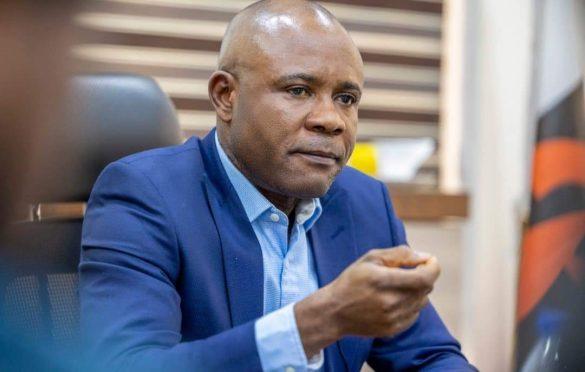
    The Minister of Finance, Taiwo Oyedele, has warned African governments against imposing additional taxes on vulnerable citizens and productive businesses to address fiscal challenges, saying such measures could worsen hardship and undermine economic growth.

    Oyedele also called for stronger policy coordination among African countries to remove trade barriers and maximise the benefits of the African Continental Free Trade Area.

    He made the remarks during discussions at the Annual Meetings, where he addressed taxation, economic reforms, employment, development financing and regional trade integration.

    The minister said governments should focus on improving domestic revenue mobilisation and eliminating inefficient expenditure rather than introducing tax measures that place additional pressure on low-income households and businesses.

    According to him, excessive taxation could leave vulnerable families with fewer resources for essential needs, including food, healthcare and education, while placing pressure on businesses that generate jobs and economic activity.

    He noted that both taxation and borrowing had consequences, adding that governments needed to strike a balance that ensured sustainable public finances without compromising citizens’ welfare.

    “The essence of tax and of debts is to cater for the people. If you put people always at the centre of your policies, you will not be perfect, but you are likely to strike a balance that works and is sustainable,” he said.

    Oyedele also stressed that economic growth should be measured by its ability to create jobs, promote inclusion and improve living standards rather than by macroeconomic indicators alone.

    He warned that the growing adoption of artificial intelligence could affect employment opportunities if governments failed to develop appropriate policies to manage its impact.

    The minister said economic stability remained essential for sustainable growth, investment and prosperity, noting that governments needed a stable foundation to implement structural reforms and infrastructure programmes.

    On regional integration, Oyedele said the AfCFTA offered African countries an opportunity to combine their fragmented national markets into a larger continental market capable of attracting investment, expanding production and boosting trade.

    He, however, warned that the agreement would achieve limited results unless governments addressed barriers to cross-border commerce, particularly non-tariff restrictions.

    “The AfCFTA is trying to turn 54 countries into one market, so that way it’s easy for us to scale. But that will not happen until we remove the barriers, and many of them are actually non-tariff,” he said.

    Oyedele explained that effective implementation required consistent regulations, clear standards, supporting infrastructure and coordinated economic policies across the continent.

    He cited Nigeria’s National Single Window initiative as an effort to simplify border procedures and improve trade facilitation through technology.

    The minister also disclosed that Nigeria was developing an economic policy framework that incorporates its international commitments, including regional agreements.

    He said differences in trade, fiscal and monetary policies among African countries could make regional integration difficult, stressing the need for governments to align their approaches.

    Oyedele further identified policy consistency, strong institutions and public trust as essential conditions for attracting private investment to Africa.

    “Capital follows trust before it follows returns. They need to be able to plan and predict what you are going to do,” he said.

    Reflecting on Nigeria’s economic reforms, he said governments must clearly explain policy changes, communicate the consequences of inaction and implement reforms in the right sequence.

    He argued that reforms should be supported by legislation and strong institutions to ensure continuity beyond changes in political leadership.

    Oyedele also emphasised the need to protect vulnerable citizens from the immediate effects of economic adjustments while waiting for the benefits to materialise.

    He cited cash transfers reaching more than 10 million households and education funding supporting over 1.5 million students as examples of measures introduced to cushion the effects of reforms in Nigeria.

    The minister maintained that sustainable economic progress depended on combining macroeconomic stability with inclusive growth, reliable institutions, social protection and stronger regional cooperation.
  • ENUGU STATE: FROM STOMACH INFRASTRUCTURE TO SUSTAINABLE ECONOMIC DEVELOPMENT

    ENUGU STATE: FROM STOMACH INFRASTRUCTURE TO SUSTAINABLE ECONOMIC DEVELOPMENT

    By Dr. John Egbo, Deputy Sheriff (Rtd)

    “Building Today for the Prosperity of Tomorrow.”

    The administration of His Excellency, Dr. Peter Ndubuisi Mbah, Governor of Enugu State, has placed infrastructure, industrialization, digital technology, and human capital development at the centre of its development agenda.

    The objective is to lay a solid foundation for a productive economy capable of creating jobs, attracting investment, and sustaining the needs of present and future generations.

    The era when politics revolves primarily around stomach infrastructure must give way to a development philosophy that empowers citizens to become economically self-reliant. Temporary handouts cannot substitute for sustainable investments in roads, electricity, water, healthcare, digital education, agriculture, technology, and industries that generate employment and wealth.

    As the popular saying goes, “Give a man a fish, and you feed him for a day; teach him how to fish, and you feed him for a lifetime.”

    This principle captures the importance of equipping our people with the skills, opportunities, infrastructure, and productive capacity to earn a living to earn a living overseas and at home, create businesses, and contribute meaningfully to the society.

    THE EVIDENCE BASED DEVELOPMENT

    Enugu State’s development trajectory under Governor Peter Ndubuisi Mbah encompasses a broad range of infrastructure and economic initiatives, including the completion, rehabilitation, or development of projects inherited from previous administrations, alongside new investments intended to position the state for the geometrical growth, today and tomorrow.

    These initiatives include:

    1. Revamping Critical Infrastructure and Urban Development such as:

    Water infrastructure and improved access to potable water.

    The International Conference Centre (ICC).

    The reconstructed 5-Star Hotel Presidential.

    The Abandoned State Secretariat undergoing completion.

    Rehabilitation and redevelopment of the Nnamdi Azukiwe stadium.

    Construction of multiple Intra-city and inter-city road networks to improve access to agricultural products and development.

    Tourism infrastructure located across the State

    The proposed Enugu Smart City of the Future.

    2. Industrialization and Energy,

    Coal Fired Power Generating Plant will soon be on the ground.

    Best Niger Gas Plant fully functional.

    Palm oil processing plants.

    Modern farming equipment Assembly Plant.

    Haier-related Digital Assembly and Manufacturing Company.

    Industrial investments intended to expand economic activity and create employment opportunities.

    Agriculture and Food Security: Modern farms and Farm Estates across Enugu State local government areas.

    Agricultural processing and value-addition projects designed to strengthen food production and support agro-industrial development.

    3. Digital Technology, Security, and Artificial Intelligence

    A digital Command and Control Security Centre.

    A forensic laboratory initiative.

    Enugu Talent City and Artificial Intelligence Institute initiatives.

    The deployment of 150 AI-enabled Distress Response Squad units.

    4. Education, Healthcare, and Human Capital Development

    Smart Green Schools in all 260 wards of tge state.

    Type 2 healthcare centres in all wards of the state.

    An International Hospital initiative to curb medical tourism.

    Upgrading and strengthening healthcare services at Parklane Hospital.

    Development initiatives relating to the Igbo-Ano Teaching Hospital.

    5. Modern Transportation initiatives

    The 5 Modern Bus Terminals for seamless and secure transportation ecosystem in the state.

    Enugu Air – the Airline that has made Enugu a frequent destination for all and powering access for investors.

    The deployment initiative for 200 CNG-powered buses and a city taxi fleet to ease transportation and empowerment.

    WHY THIS DEVELOPMENT PHILOSOPHY MATTERS

    The future of Enugu State cannot depend solely on political promises or short term interventions. Sustainable prosperity requires disruptive innovations and investments that expand the productive capacity of the economy that power employment for the Enugu residents.

    When roads connect communities and markets, businesses can operate more efficiently. When industries are established, they create opportunities for direct and indirect employment. When young people acquire digital and technical skills, they become better positioned to work overseas while living in Nigeria as well as participate in the emerging technology driven economy worldwide. When healthcare and education improve, human capital becomes stronger.

    These are the foundations upon which a more resilient and self-sustaining society can be built not on stomach infrastructure that is a mere handout.

    The real test of development, however, is not simply the announcement of projects or making promises. It is their verified completion, effective operation, accessibility to citizens, measurable economic impact, evidence of resources and capacity to deliver lasting public value.

    That is why evidence-based governance should be central to political accountability. Citizens deserve to evaluate administrations by what has been delivered, what is genuinely under construction, what remains proposed, and the measurable benefits of public investment.

    THE FUTURE OF ENUGU IS A COLLECTIVE RESPONSIBILITY

    The development of Enugu State should transcend partisan divisions. Citizens, community leaders, investors, professionals, and political stakeholders all have a role to play in sustaining productive investments and holding public institutions accountable for results.

    Governor Peter Ndubuisi Mbah’s “Tomorrow Is Here” mantra places the future of Enugu at the centre of public discourse. The important question for every citizen is how today’s policies, infrastructure, and investments will improve the opportunities available to the next generation.

    As the state approaches another electoral cycle, the conversation should focus on verifiable achievements, unfinished projects, economic outcomes, employment creation, and credible plans for the future.

    Enugu deserves a development conversation anchored in evidence, accountability, industrial growth, digital innovation, and sustainable prosperity not merely political rhetoric, creating fear or temporary handouts without indicating projects and how to realize the funds to achieve the projects.

    Tomorrow is not built by promises alone. It is built through purposeful investment, measurable results, and the collective commitment to secure a better future for the good people of Enugu State.

    The future of Enugu depends on the continuity of Governor Peter Ndubuisi Mbah as the Governor of Enugu State.

    Our tomorrow is indeed here and we must protect it.

  • Tinubu Urges Judges To Close Legal Gaps Used To Delay Corruption Trials

    Tinubu Urges Judges To Close Legal Gaps Used To Delay Corruption Trials

    Precious Nwonu, Enugu

    President Bola Tinubu has called on Nigerian judges to address legal and procedural loopholes exploited by politically exposed persons and organised crime groups to delay or frustrate criminal trials.

    Tinubu made the call on Tuesday in Abuja at the eighth annual capacity-building workshop for judges and justices, organised by the Economic and Financial Crimes Commission and the National Judicial Institute. He was represented by Vice President Kashim Shettima.

    The President urged the judiciary to review prosecution strategies, reconsider outdated legal precedents and assess existing laws against emerging forms of financial crime.

    He said the fight against corruption should not be treated as the responsibility of the executive alone, noting that its effects cut across the judiciary, legislature, public institutions and the wider society.

    “We must no longer permit legal pyrotechnics and procedural pedantry to shelter criminality,” Tinubu said, describing the fight against corruption as essential to the country’s survival.

    He maintained that courts must uphold the spirit of the law and prioritise public interest over attempts by individuals to exploit technicalities to escape justice.

    Tinubu added that meaningful progress against corruption required an independent and reform-minded judiciary, pledging the executive’s support for efforts to strengthen justice delivery.

    The workshop, themed “Investigation and Prosecution of Economic and Financial Crimes in a Digital Age,” focused on the growing challenges posed by technology-driven criminal activities.

    Tinubu said the emergence of blockchain technology and artificial intelligence had made financial crimes more sophisticated, requiring law enforcement agencies and judicial officers to continually improve their skills.

    He commended the EFCC for its efforts against cryptocurrency-related fraud, citing recoveries and forfeitures linked to digital asset investigations.

    According to the President, the commission secured the forfeiture in 2025 of $22,417.91 in Bitcoin, 1,001,301.87 USDT in digital assets and $5.6m connected to the CBEX scheme.

    He also disclosed that 192 foreign nationals arrested over alleged cyber-terrorism and cryptocurrency fraud were prosecuted and deported.

    Tinubu further said the EFCC filed 14,476 cases and secured 10,872 convictions within the first 34 months of his administration, representing a conviction-to-filing ratio of 75.1 per cent.

    He added that the commission recorded 1,370 convictions from 1,889 cases filed in the first half of 2026.

    The President said the EFCC also recovered ₦1.233tn, $684.48m, £373,905.78 and €9.34m in monetary assets during the period under review.

    He urged the judiciary to strengthen its capacity to handle digital evidence and complex financial crime cases, while commending Chief Justice of Nigeria, Justice Kudirat Kekere-Ekun, for her judicial reform efforts.

    In her remarks, Kekere-Ekun said technological advances had transformed how digital evidence was obtained and documented, making effective case management increasingly important.

    She added that continuous judicial training had contributed to improvements in the conduct of judicial officers, particularly in managing cases.

    The Chairman of the Senate Committee on Anti-Corruption and Financial Crimes, Emmanuel Udende, described the workshop as timely, citing the increasing sophistication of financial crimes and the delays associated with cases involving politically exposed persons.

    Udende pledged the National Assembly’s support through legislation aimed at strengthening the fight against corruption.

    The Attorney-General of the Federation and Minister of Justice, Lateef Fagbemi, represented by the Director of Public Prosecutions, Rotimi Oyedepo, said tackling corruption required cooperation among all arms of government.

    He urged judges and lawyers to use the workshop to improve investigations and ensure more diligent prosecutions.

    The Administrator of the NJI, Justice Babatunde Adejumo, described the EFCC-NJI partnership as an important part of efforts to combat financial crimes.

    EFCC Chairman Ola Olukoyede also described the workshop as a national necessity, saying the commission had recorded significant convictions and recoveries under his leadership.

    Olukoyede assured participants that recovered funds and property would be managed transparently and responsibly.

  • Alausa Directs Universities To Complete Four-Year Courses Within Four Years

    Alausa Directs Universities To Complete Four-Year Courses Within Four Years

    Precious Nwonu, Enugu

    The Federal Government has directed tertiary institutions to ensure that four-year degree programmes are completed within the stipulated period, as it moves to strengthen monitoring of agreements with staff unions to prevent strikes.

    The Minister of Education, Dr Tunji Alausa, gave the directive on Tuesday in Abuja during the unveiling of the 2026 agreements between the Federal Government and unions in universities, polytechnics and colleges of education.

    Alausa said the agreements were designed to fulfil President Bola Tinubu’s promise that students should complete four-year courses within four years.

    “Today, through his leadership, these agreements give practical expression to that pledge: A promise made, a promise kept, and trust restored,” the minister said.

    He said the government was determined to address recurring disputes over the implementation of agreements with unions, which have disrupted academic calendars and delayed students’ graduation.

    As part of the measures, Alausa announced plans to expand the existing Implementation and Monitoring Committee, initially established to oversee the agreement with the Academic Staff Union of Universities, to cover academic and non-academic unions across tertiary institutions.

    The proposed expanded committee will monitor implementation, track agreed milestones, identify challenges and issue periodic reports to promote accountability.

    According to the minister, the arrangement will help resolve disagreements at an early stage before they escalate into industrial disputes capable of disrupting academic activities.

    He urged union leaders to use the committee to address complaints rather than resort to public confrontations or threats of strikes.

    “We must strengthen early consultation and resolve differences through constructive dialogue, mutual respect and good-faith engagement,” he said, adding that students and their families must remain central to the process.

    Alausa also disclosed that the agreements provide for reviews every three years, allowing the government and unions to revisit emerging issues and consider mutually agreed adjustments.

    Meanwhile, the National President of the Academic Staff Union of Polytechnics, Shammah Kpanja, described the negotiation process as the fastest in the union’s history.

    Kpanja said negotiations began in December 2025 and resulted in the signing of the agreement in April 2026.

    He disclosed that implementation had started, with members receiving outstanding arrears between July and September, but called on the government to fulfil the remaining provisions.

    The ASUP president also welcomed plans to inaugurate a joint implementation committee, expressing hope that it would speed up the process before the end of the year.

    Similarly, the President of the Colleges of Education Academic Staff Union, Lawal Bazza, said more than 70 per cent of the agreement for the subsector had been implemented.

    Bazza expressed confidence that the monitoring committee would help resolve outstanding issues and ensure the full implementation of the agreement.

    The Chairman of the Federal Government Negotiation Team, Yayale Ahmed, had also stressed the need for both parties to honour their commitments, warning against threats of indefinite strikes over unpaid entitlements.

    Ahmed said the success of the agreements would depend on the government’s commitment to implementation and the unions’ willingness to exercise patience.

    He further disclosed that discrepancies had been identified in some parts of the agreements and would be addressed in collaboration with the Ministry of Education and the National Salaries, Incomes and Wages Commission.

  • INEC Gives Pantami, Adebutu, Others October 24 Deadline To Challenge Omission

    INEC Gives Pantami, Adebutu, Others October 24 Deadline To Challenge Omission

    Precious Nwonu, Enugu

    The Independent National Electoral Commission has given political parties until October 24, 2026, to report alleged errors involving the omission of their candidates from the final list for the 2027 governorship elections.

    The commission said the deadline was based on Section 32(2) of the Electoral Act, 2026, which allows political parties 14 days from the publication of the candidates’ list to notify it of any alleged wrongful exclusion.

    INEC disclosed this in a statement issued on Tuesday by its National Commissioner and Chairman of the Information and Voter Education Committee, Mohammed Haruna.

    The clarification follows protests by political parties over the omission of several candidates from the final list for the governorship and State Houses of Assembly elections.

    Those affected include the Peoples Democratic Party’s governorship candidates in Ogun and Gombe states, Oladipupo Adebutu and Isa Ali Pantami, respectively.

    The Nigeria Democratic Congress governorship candidate in Kano State, Aminu Gwarzo, was also missing from the list. In Jigawa State, the African Democratic Congress protested the exclusion of its endorsed deputy governorship candidate, Aminu Ringim, and several other candidates.

    Some affected parties and candidates have demanded explanations and threatened legal action to secure their inclusion.

    INEC attributed its decision to the Supreme Court judgment delivered on September 24, 2026, in the case of *INEC v. Zenith Labour Party*, which upheld the constitutionality of provisions in the Electoral Act governing party membership registers and candidate nominations.

    According to the commission, the Supreme Court upheld Sections 77(5), 77(6) and 77(7) of the Electoral Act, 2026. The provisions require political parties to submit their membership registers within the stipulated period and use them for primaries, congresses and conventions.

    The electoral body said the court also upheld its timetable requiring parties to submit their membership registers between April 21 and May 10, 2026.

    INEC added that the judgment established that parties which failed to comply with the membership-register requirements were ineligible to sponsor candidates for the elections.

    The commission said it applied the ruling when preparing the final governorship candidates’ list, excluding parties that failed to meet the requirements.

    It maintained that the action was consistent with Section 287(1) of the 1999 Constitution, as amended, which requires relevant authorities to enforce court decisions.

    However, INEC noted that the final lists of presidential and National Assembly candidates had been published on September 12, 2026, before the Supreme Court delivered its judgment.

    The commission urged parties that believe their candidates were wrongly excluded from the governorship list to notify it before the October 24 deadline.

    INEC reaffirmed its commitment to transparency, the rule of law and the credibility of the electoral process ahead of the February 6, 2027, governorship elections.

  • 2027: Renewed Hope Ambassadors Strengthen Enugu Structure as Igwesi Inaugurates 17 LG Coordinators

    2027: Renewed Hope Ambassadors Strengthen Enugu Structure as Igwesi Inaugurates 17 LG Coordinators

    In preparedness for the re-election of President Bola Ahmed Tinubu in 2027 and as part of efforts to strengthen grassroots mobilisation and promote the achievements of the Tinubu administration, the Enugu State Coordinator of the Renewed Hope Ambassadors, Rt. Hon. Ikemba USA Igwesi, has inaugurated coordinators for the 17 local government areas of the state.

    The inauguration took place on October 8, 2026, in Enugu, with the newly inaugurated coordinators expected to work with party structures and key stakeholders to advance the Renewed Hope Agenda across the state.

    The initiative also seeks to establish ward-level coordination structures and disseminate information about the Tinubu administration’s achievements in the South-East geopolitical zone.

    Recall that Igwesi was recently appointed to the position following his nomination by Governor Peter Mbah of Enugu State, and backed by the Tinubu presidency.

    Igwesi’s appointment as the Enugu State Coordinator was described by supporters as recognition of his political experience and record in public service. He previously served as Majority Leader of the Enugu State House of Assembly before representing Nkanu East/Nkanu West Federal Constituency in the House of Representatives.

    He currently serves as Chairman of the New Enugu Smart City Development Authority.

    Full List of the LGA Coordinators

    The 17 local government coordinators inaugurated are:

    1. Aninri: Hon. Dr. Odi Joseph
    2. Awgu: Hon. Egbo Nnagozie Solomon
    3. Isi-Uzo: Hon. Barr. Odo Azubuike Robert
    4. Nkanu West: Hon. Barr. Ani Chideibere
    5. Enugu North: Hon. Agu Kenneth Tochukwu
    6. Igbo-Eze South: Hon. Uba Uthman Onah
    7. Udenu: Hon. Odo Brandan Ogechi
    8. Udi: Barr. Onwusi Godwin Nnaemezie
    9. Enugu East: Hon. Ugwu Cornelius Okey
    10. Nkanu East: Hon. Barr. Onuma Fidelis
    11. Igbo-Etiti: Hon. Amulu Amuche Adanna
    12. Enugu South: Hon. Barr. Francis Ben Agwu
    13. Nsukka: Hon. Onogwu Festus Chibuike
    14. Igbo-Eze North: Hon. Tijani Sule Omeh
    15. Uzo-Uwani: Hon. Okonkwo Vitalis N.
    16. Ezeagu: Hon. Eke Joel Chinedu
    17. Oji River: Hon. Jideofor IK Onyemaechi

    Igwesi charged the coordinators to liaise with party structures at all levels, engage critical stakeholders and support the communication of the Federal Government’s programmes and achievements across the 17 local government areas.

    Following the inauguration, Igwesi led the local government coordinators on a courtesy visit to the Deputy Chairman of the Association of Local Governments of Nigeria (ALGON), Enugu State chapter, Barr. Ugo-Ferdinand Ukwueze, at the association’s office in Enugu.

    The visit was part of efforts to engage relevant stakeholders and strengthen collaboration in implementing the initiative’s objectives at the grassroots.

    Political analysts believe the inauguration marks a step towards establishing a coordinated grassroots network for the Renewed Hope Ambassadors in Enugu State.

  • Akpabio Opposes Suicide Decriminalisation As Senate Bill Passes Second Reading

    Akpabio Opposes Suicide Decriminalisation As Senate Bill Passes Second Reading

    Precious Nwonu, Enugu

    The Senate has advanced a bill seeking to decriminalise attempted suicide in Nigeria and establish a national suicide prevention framework, despite opposition from Senate President Godswill Akpabio, who insists that offenders should continue to face imprisonment.

    The bill, sponsored by Senator Asuquo Ekpenyong, representing Cross River South, seeks to replace criminal punishment for attempted suicide with a health-focused approach that prioritises treatment, rehabilitation and support for survivors.

    Presenting the proposal, Ekpenyong said Nigeria’s existing laws contained a contradiction, as the National Mental Health Act recognises attempted suicide as a psychiatric emergency requiring care, while Section 327 of the Criminal Code and Section 231 of the Penal Code criminalise the act.

    He argued that criminalising suicide attempts discourages people experiencing psychological distress from seeking help and often forces families to conceal such incidents.

    The senator also warned that the threat of prosecution could worsen the situation by making vulnerable individuals afraid to seek medical attention after surviving an attempt.

    “At the heart of this bill is a simple question: when a Nigerian survives a suicide attempt, should the first response of the state be prosecution or protection?” he asked.

    The proposed legislation provides for mandatory assessment, referral, treatment and follow-up support for survivors instead of imprisonment.

    It also seeks to introduce crisis helplines, train police officers, teachers and healthcare workers to respond to suicide risks, promote public awareness and establish a national data system to support prevention efforts.

    However, Akpabio opposed removing criminal penalties, arguing that decriminalisation could encourage attempted suicide.

    “If you attempt suicide, make sure you die. Anyone who attempts and fails will go to jail,” the Senate President said.

    Akpabio also noted that the issue involved provisions in both the Criminal Code and the Penal Code, stressing the need to involve state legislatures during a public hearing to prevent legal conflicts.

    Despite the disagreement, the bill passed its second reading and was referred to the Senate Committees on Judiciary and Health for further legislative consideration and a public hearing.

    The proposed law will undergo further scrutiny before the Senate decides on its next legislative steps.

  • Shell Sells Nigerian Gas Distribution Business To Vaaris Energy

    Shell Sells Nigerian Gas Distribution Business To Vaaris Energy

    Precious Nwonu, Enugu

    Shell Petroleum B.V. has agreed to sell its entire interest in Shell Nigeria Gas Group to Nigerian energy company Vaaris Energy Limited as part of efforts to streamline its business portfolio.

    The company announced the transaction in a statement on Tuesday, saying the deal would transfer its domestic gas distribution operations in Nigeria to Vaaris Energy, subject to regulatory approvals and other conditions.

    The agreement covers Shell Nigeria Gas Holding B.V., established in 2019, which owns all but one of the shares in SNG Limited.

    Shell’s Country Chair in Nigeria, Elohor Aiboni, said Shell Nigeria Gas had supplied industrial and commercial customers for more than 25 years, supported by its workforce.

    She said the agreement would provide a stronger platform for the business to grow under new ownership.

    “Shell continues to focus on strategic Deepwater and Integrated Gas positions in Nigeria,” Aiboni added.

    The company said Shell Nigeria Gas Group would continue operating normally and serving its customers until the transaction is completed.

    Shell explained that the divestment aligns with its strategy to simplify its portfolio and concentrate investments on areas where it has competitive advantages.

    Its continued focus on deepwater operations and integrated gas in Nigeria, including its interest in Nigeria LNG, forms part of that strategy.

    The company clarified that Shell Nigeria Gas does not operate in upstream gas production, liquefied natural gas or international gas trading.

    Established in 1998, Shell Nigeria Gas supplies natural gas to industrial and commercial customers and operates approximately 170 kilometres of pipeline infrastructure across Ogun, Abia and Rivers states.

    Vaaris Energy is a Nigerian energy company with interests across the oil and gas value chain and an existing operational presence in the country.

  • NAF Crash: Senate, Reps Launch Probe Into Military Aircraft Maintenance

    NAF Crash: Senate, Reps Launch Probe Into Military Aircraft Maintenance

    Precious Nwonu, Enugu

    The Senate and House of Representatives have resolved to investigate the maintenance and airworthiness of Nigerian Air Force aircraft following a crash in Igbokoda, Ondo State, which reportedly claimed 25 lives.

    The Senate adopted the resolution on the resumption of plenary after a motion sponsored by the Chairman of its Committee on Air Force, Senator Osita Ngwu, who raised concerns over recurring military aircraft accidents and aviation safety.

    Ngwu recalled that an Air Force ATR-42 aircraft, with registration number NGR 931, crashed near the Naval Base in Igbokoda, headquarters of Ilaje Local Government Area, on October 5, 2026, while on a routine flight from Benin City to Lagos.

    Lawmakers expressed concern over the loss of military personnel in aircraft accidents, questioning the maintenance of military planes, the condition of ageing fleets and compliance with operational safety requirements.

    The Senate stressed that the airworthiness of military aircraft was essential to national security, intelligence operations and defence readiness.

    It warned that failure to conduct a thorough and transparent investigation into the latest crash could undermine efforts to prevent similar incidents.

    As part of its resolutions, the Senate urged the Federal Government to increase funding for regular aircraft maintenance and the replacement of ageing planes.

    It also mandated its committees on Air Force and Aviation to visit the crash site, engage with Air Force authorities and conduct a comprehensive assessment of the serviceability and airworthiness of aircraft in the presidential and military fleets.

    The upper chamber further called on the Nigerian Air Force and the Nigerian Safety Investigation Bureau to investigate both the immediate and underlying causes of the crash and make their findings public.

    The House of Representatives also resolved to investigate the incident following a motion sponsored by the Chairman of its Committee on Air Force, Kabiru Rurum.

    The House equally called for an audit of aircraft in the Air Force fleet and improved funding to ensure proper maintenance.

    The investigations are expected to examine aircraft safety and maintenance practices, with the aim of identifying possible lapses and preventing future accidents.

  • Tinubu Sends NDLEA Reform, Safety Investigation Bills To Senate

    Tinubu Sends NDLEA Reform, Safety Investigation Bills To Senate

    Precious Nwonu, Enugu

    President Bola Tinubu has forwarded several bills to the Senate for consideration, including proposals to reform the National Drug Law Enforcement Agency and amend the Nigerian Safety Investigation Bureau Act.

    The bills were conveyed to the Senate by its President, Godswill Akpabio, in line with the provisions of the 1999 Constitution, as amended.

    One of the proposals, the NDLEA Bill 2026, seeks to provide a consolidated legal framework for the agency’s operations and strengthen its powers, including its capacity to investigate individuals suspected of involvement in illicit drug-related activities.

    Another proposal, the Nigerian Safety Investigation Bureau Amendment Bill 2026, seeks to amend the existing 2022 law to make the bureau an independent authority and expand its mandate.

    The bill also proposes transferring supervisory oversight of the bureau to the Presidency and restructuring its administration.

    Tinubu also transmitted the National School of Government Bill 2026, which seeks to repeal the Administrative Staff College of Nigeria Act and establish a National School of Government.

    The proposed institution is expected to serve as a centre for governance training, public sector capacity development and institutional strengthening.

    In addition, the President submitted a bill seeking to domesticate the four Geneva Conventions of 1949 and their two Additional Protocols of 1977, which provide protections for victims of armed conflict.

    The proposal also covers the Rome Statute of the International Criminal Court, which provides the legal framework for prosecuting genocide, war crimes, crimes against humanity and the crime of aggression.

    The bills will be considered by the Senate as part of the legislative process.

  • Mbah Calls for Impartial Probe Into Enugu Political Gathering Violence

    Mbah Calls for Impartial Probe Into Enugu Political Gathering Violence

    Enugu State Governor Peter Mbah has called on the police to conduct a thorough and impartial investigation into the violence that erupted during a recent political gathering in the state, leaving a citizen injured.

    Mbah, in a broadcast to the people of Enugu, expressed concern over the incident and sympathised with those injured, affected by fear or otherwise impacted by the violence.

    He said every citizen, regardless of political affiliation, must be able to exercise their political rights without fear or intimidation.

    The governor acknowledged the anxiety generated by the incident, noting that the safety and security of residents remained a priority for his administration.

    “The Enugu State Government has made its position clear regarding allegations of involvement in this violence,” he said, adding that the government’s responsibility was to protect lives, uphold the law and ensure that justice was pursued without favour.

    Mbah said he expected the police to carry out a thorough and impartial investigation based on the preliminary findings regarding the incident.

    He also warned that anyone found responsible for the violence would be held accountable through the appropriate legal process, regardless of their political connections.

    The governor urged residents to remain confident in the state’s commitment to peace, security and the rule of law.


    Apologise for Lying to Nigerians, Observing a Minute’s Silence for the Living – Enugu APC Tackles NDC

    Meanwhile, the All Progressives Congress (APC) has picked holes in the reaction of the Nigeria Democratic Congress (NDC) to the position of the Enugu State Government on the airport and party secretariat incidents involving the NDC at the weekend.

    The party said that “persons and institutions that lay claim to integrity should be able to admit their mistakes, confess their transgressions, and apologise to the people.”

    The Enugu NDC had, at a press conference addressed by its State Party Chairman, Emmanuel Chukwujekwu Nebo, in Enugu faulted some of the positions of the Enugu State Government on the weekend incident as were marshalled by the Secretary to the Enugu State Government (SSG), Prof. Chidiebere Onyia, on Sunday.

    Principally, the NDC claimed that it had only planned an airport reception for its governorship candidate, Chinyeaka Ohaa, not a ‘Grand Statewide Campaign Flag-off’ at the airport as stated by the government.

    The party added that it notified various law enforcement agencies of its plans and made payments to the Federal Airports Authority of Nigeria (FAAN).

    On the alleged shooting at NDC’s state secretariat, the party said that the NDC was “still verifying the final medical status of all injured persons.”

    However, responding to NDC, the state Publicity Secretary of Enugu State chapter of the APC, Chief Uche Obute, insisted the NDC must tender unreserved apologies to the people of Enugu and Nigerians in general “for lying to them for political gains.”

    “The question is: since the NDC was still verifying the final medical status of person or persons injured in their party fracas, how come they declared and observed a minute’s silence to mourn the living?

    “The answer is simple: it was true to the factionalised Enugu NDC’s pattern to orchestrate violence among themselves and attribute it to Enugu APC to extract cheap political capital.

    “It is also a validation of the commonly held view among the people that the Enugu State NDC and their governorship candidate, Chinyeaka Ohaa, would stop at nothing in their quest for power,” Obute said.

    The party’s spokesman equally faulted NDC’s claim that it only planned to hold an airport reception, not a mega rally.

    Supporting the party’s position with a screenshot of a Facebook post by NDC’s governorship candidate, Chinyeaka Ohaa, Obute said, “Promotional materials and posts by Ohaa clearly read, ‘Grand Statewide Campaign Flag-off 2026. Date: Saturday, 10th October 2026; Venue: Akanu Ibiam International Airport, Enugu; Time: 9:00am,’” he added.

    The party commended the Governor Peter Mbah Administration for upholding the freedom and democratic rights of the good people of Enugu State, irrespective of political affiliation.

    “Rather than stoking political tension to undermine the security and peace built by the Mbah Administration, we advise the Enugu opposition parties to present their manifestoes and campaign on them,” he stated.

  • Rochas Okorocha Released on Bail Following One-Hour Police Interrogation in Abuja

    Former Imo State Governor, Senator Rochas Okorocha, was arrested by the Nigeria Police Force (NPF) on Monday night; the Nigeria Police Force Public Relations Officer, CSP Aniete Iniedu, confirmed the development to Channels Television.

    Okorocha, who was arrested at REIZ Continental Hotel in central Abuja, was, however, released on bail by the NPF following an hour of interrogation over allegations of criminal conspiracy, forgery and impersonation.

    CSP Iniedu, who confirmed the arrest and subsequent release on bail to our correspondent, noted that the former governor was asked to return to the Force Headquarters on Tuesday for further interrogation as investigations into the allegations continue.

    The arrest reportedly followed Okorocha’s failure to honour previous police invitations in connection with the ongoing investigation.

    He was initially invited to the Force Headquarters on September 2, but the appointment was rescheduled to September 8 at the request of his lawyers, a date he reportedly failed to honour. Channels