Title of Book: My Diplomatic Sojourn-The Full Story – By Ambassador Chudi Newington Okafor, OON
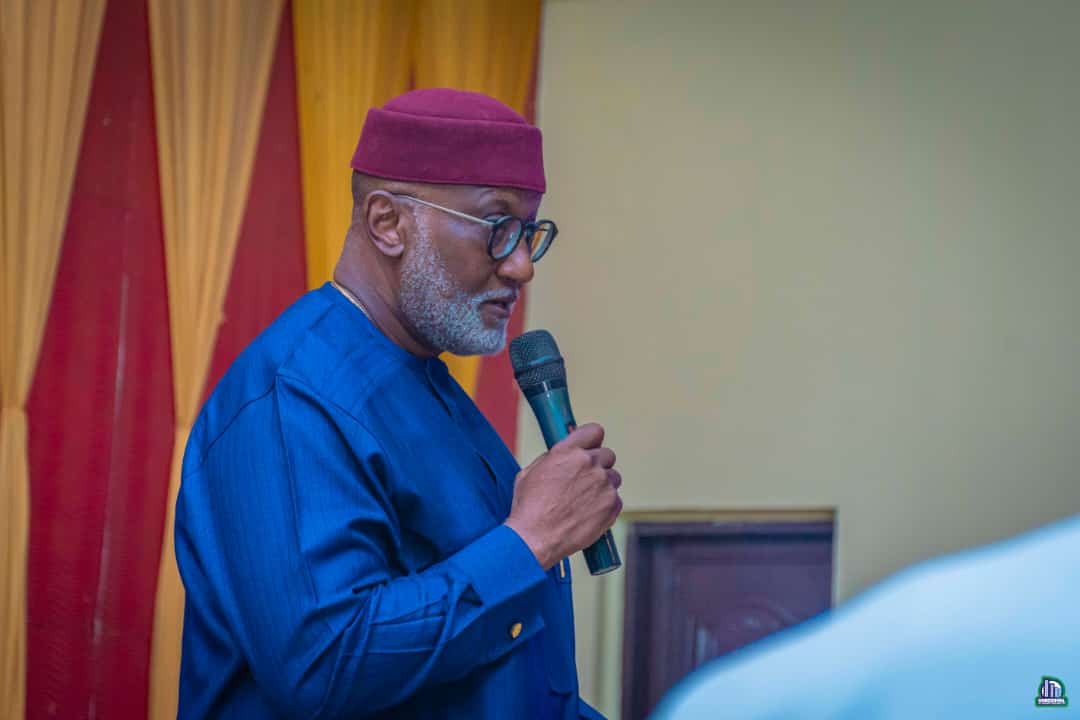
A Book Review By Oseloka H. Obaze Diplomat, Author and Politician
At the Ministry of Foreign Affairs Abuja, FCT 4th November, 2026
Protocols
We are gathered here to celebrate one of our own; one of our finest, Ambassador Chudi Newington Okafor, OON, who has written his memoir as a Nigerian career Foreign Service Officer. In doing so, he wittingly elected to “rush into the realm where angels fear to tread.”
My task as the book reviewer is very simple. It is to say just enough about the book, without revealing too much. Hopefully, those of you present will be sufficiently enticed to purchase a copy and indeed, read it. After all, an appropriate book review is like an appropriate lady’s skirt: long enough to cover the bare essentials, but sufficiently short, to leave much to the imagination.
In publishing My Diplomatic Sojourn-The Full Story, Chudi Okafor, a dear friend, brother and colleague, has adroitly taken his place in the pantheon of Nigerian diplomats who memorialized their service to the nation. My Diplomatic Sojourn-The Full Story, though an all-too familiar rendition of a diplomatic Odyssey, is intensely personal and rendered in a frank and lucid language. It is pleasantly easy to read.
The volume is expansive with 377 odd pages. Out of the book’s thirteen chapters, the first two chapters are devoted to the author’s adolescent and National Youth Service years. Chapter 3 to Chapter 12 documents the author’s postings and the diplomatic career trajectory that took him to Trinidad and Tobago, Malaysia, Russian Federation, United States of America, Thailand and Myanmar, with statutorily mandatory intermittent duty tours at Headquarters in Lagos and Abuja, including a stint at the Office of the Secretary to the Government of the Federation.
In Chapter 12, the author renders his insider’s perspective on the status of Nigerian Foreign Policy and the Ministry of Foreign Affairs. Naturally, he is nostalgic about years gone by, and while recalling some seminal achievements, he also laments the vagaries that confront the present day Foreign Service and the Foreign Ministry. The concluding Chapter 13 is devoted to the numerous testimonials and accolades the author garnered – all well deserved, I might add – in his meritorious thirty-five years in the public service as a career diplomat. Ambassador Okafor did not just write a straight-laced diplomatic memoir; at various junctures he deployed and adopted theoretical and academic constructs to buttress issues he was discussing, relative to the practice of diplomacy. And that is the structural gist and layout of the memoir.
Essence of Memoirs
As George Meredith contends, “memoirs are the back stairs of history.” This suggests that in reading memoirs, we gain unfettered access into the mindset of the author. The implication is that coming through the backstairs, there is no varnish, no embellishments or no facade: what you see is what you get. In that context, I believe that memoirs are like nostalgic poems – while enlightening, they also demythologize events, places and personalities. Above all, memoirs provide insights to the essence of making policy decisions and support the use history as a tool for future decision making.
Relatedly, Diplomatic Memoirs are habitual, and conventionally uncanny. Pause and reflect briefly. Why would any diplomat- some of who were uncanny sleuths- whose stock-in-trade and professional craft were hinged on confidentiality, suddenly want to go public and become an amebo? So from where I stand, I am of the view that diplomatic memoirs are firsthand stories retold out of necessity and after the fact; with varying degrees of circumspection, if not altogether contrived stealth and legerdemain.
Diplomatic memoirs tend to crisscross a broad spectrum. Often, they intersect the official, unofficial and personal conducts of a diplomat, who is supposedly trained and posted abroad to lie on behalf of his or her country: but who in the after years, as if an afterthought, is expected to render tales of his or her predilections, demarches, heady encounters and consular ministrations and demands, with absolute vivacity and candour. One may ask in that context, whatever happened to plausible deniability? I suspect, however, that whatever gets published as a diplomatic memoir is only what the official censors at the Cabinet Office might have permitted.
But really, besides vanity and historical value, why do people write memoirs? Expert opinion, including those rendered by (AI) Artificial Intelligence, suggests that “the greatest value of a memoir lies in its emotional intimacy and thematic truth, connecting readers through shared human experiences.”
Hence, it will be safe to surmise that the essence of a diplomatic memoir, like the one before us, is to document historical facts from a personal perspective. In that context, the task of the author is to be as honest and factual as possible – and to do so, without betraying National secrets and National interests. I am convinced that Ambassador Okafor passed that litmus test.
Remarkable diplomatic memoirs are therefore, not just assembled nuggets of hitherto unknown and perhaps, confidential tidbits, but an assemblage of rib-cracking anecdotes, and renditions of diplomatic successes, vagaries, institutional distrusts, diplomatic blunders, scapegoating, faux pas, devilment – and their attendant ripple effects. Added to this, most captivating diplomatic memoirs are abidingly branded; with catchy, seductive and audacious tittles. Pause for a moment, and think of a title like Diplomatic Bedlam. That is indeed very catchy.
But there are many other catchy titles reflecting the intrigues, complexity and opacity of the diplomatic craft. Consider these international titles: Lessons from the Edge, An Accidental Diplomat, The Back Channel, In from the Cold, Diplomatic Baggage, Vodka and Apple Juice, Dragon by the Tail, The Education of an Idealist, Hell and Other Destinations, Against the Stream, Minority of One and Rogue Ambassador.
From our national diplomatic stable, we have a list of equally remarkable realist memoirs. Ambassador John Mamam Garba’s The Time Has Come, Ambassador Olujimi Jolaoso’s In the Shadows, Ambassador MK Ibrahim’s Heart and Might, General Joe Garba’s Diplomatic Soldiering, Ambassador Olufemi George’s Rookie to Mandarin, Ambassador Eineje Onobu’s Fragments of Time, and Ambassador Lawrence Agubuzu Zero Hour Graduate, certainly resonate, as does Ambassador Abdul Rimdap’s Confidence in Diplomacy. None of these titles, of course, rivals Diplomatic Bedlam in audacity and irreverence. I’m told this latter title is hardly a loss leader. I shall leave it at that and attend to matters of the day.
My Diplomatic Sojourn-The Full Story, by Ambassador Chudi Newton Okafor, is hardly an orphan. Neither is it a novelty. As the title connotes, “diplomatic sojourn” translates to total diplomatic immersion over three decades. It is a story many here can relate to or are familiar with some of its finer details.
As a genre, the present memoir follows a pattern long laid out by Ambassador (Chief) Simon Adebo, who titled his memoir, Our Unforgettable Years. Embedded betwixt and between Adebo’s memoir and Okafor’s, is a slew of other rich memoirs by several career and non-career Nigerian diplomats, who served well in the Nigerian Foreign Service over the past sixty-eight years. Notable among these, besides the ones I mentioned earlier, are memoirs by Ambassador Olu Sanu, Ambassador L.O. Oyelakin, Ambassador J.J. Lewu, Ambassador Bello Kazaure, Ambassador Ade Adefuye, Ambassador Lawrence Agubuzu, and Ambassador Lillian Onoh. It is possible that I might have missed a few. If that is the case, please accept my unreserved apologies.
Former Nigerian Foreign ministers, namely Joe Garba, Emeka Anyaoku, Ibrahim Gambari and MT Mbu, have also added vim to this growing collection of diplomatic memoirs. There are also some diplomatic books, which in the strict sense, are not memoirs or biographies, but nonetheless offer some glimpses that enrich our national diplomatic history. One such book is Joe Garba’s Legacy, which Garba’s daughter Fatima, his former Aide de Camp, Captain Karmarudeen Olatunde and yours truly, co-authored in 2012 to mark the tenth anniversary of his passing.
In my recent conversations with Ambassador Joe Keshi, who I am glad is present- and who by the way, wrote the foreword to the present volume – I have prodded him to complete his memoir, considering his role as Permanent Secretary and his long interface with other parts of our national government and ECOWAS Member states. I have also had similar discussions with Ambassador Umunna Humphrey Orjiako, who has assured me that he is working expeditiously on his memoir.
It is gratifying to learn that a few more memoirs are already in the works, including that by Ambassador Ignatius Olisaemeka, one of the few ranking Nigerian Foreign Service Officers, who rose to become Foreign Minister. I understand that memoirs by former foreign ministers, Professor Bolaji Akinyemi and General Ike Nwachukwu are also imminent. We can be certain that their years of being at the helm of the Nigerian Foreign Ministry and Nigeria’s diplomacy, will receive adequate attention.
As we applaud My Diplomatic Sojourn-The Full Story, I am sure, that many here present, will share my humble view that the number of memoirs so far published by former Nigerian Foreign Service Officers, pales in comparison to the prospective potentialities of those yet to be written. I dare to add that this slack and dearth of diplomatic memoirs, begs to be redressed. One can only pray that our retired colleagues would promptly put pen to paper.
As a still maturing nation, Nigeria can ill-afford for her brilliant minds who served meritoriously in the Foreign Service and elsewhere, to pass on without bequeathing their unique diplomatic experiences and institutional knowledge to posterity. For having done so already, we must once again applaud Ambassador Chudi Okafor.
Why Diplomatic Memoirs Are Important
Permit me to digress briefly into why diplomatic memoirs are important. They are, because they offer deep insights into lessons learned and missed opportunities for those who form the first line of defense for any country- the diplomats. As such memoirs such as My Diplomatic Sojourn-The Full Story are critically important and instructive.
As an author and a life-long student, I do like many others, read memoirs for my personal edification. But I also read them out of curiosity and because they contain instructive anecdotes. Many years back, a friend of mine who was the ambassador of Turkey to the United Nations told me an anecdotal diplomatic story, the type that enriches brilliant memoirs such as this.
After my friend was recruited into his national Foreign Service, he was posted to London as a Third Secretary. When my friend reported for duty, his ambassador, a ranking career diplomat, asked him how he managed to make it into the Foreign Service, since he was neither the son of a Turkish army General nor the son of a Turkish Ambassador. Without waiting for an answer, his ambassador concluded that he must be very brilliant and as such, was recruited strictly on merit.
But then the ambassador expressed a second concern: “Why were you posted to London, which is such a choice posting?” It was a rhetorical question. Getting no immediate response, the ambassador went on to surmise: “I can see two merits in your being posted here to London. First, it will help you brush up on your English. And secondly, it will help you to understand the British better; and to learn that with the British, nothing is ever white or black. There are shades of white and shades of black.” That instructive anecdote, to my mind, is the stuff of which rich and brilliant diplomatic memoirs are made. I can assure you that there are several worthy anecdotes in Ambassador Chudi Okafor’s memoir.
I do recall also that as a young Foreign Service Officer, we were awed by the story that Ambassador Olujimi Jolaoso, then the Nigerian Ambassador to the United States, had declined to deliver a letter from President Shehu Shagari to the U.S. president, on account that it had a minor typo. While the action seemed audacious, a lesser professional, or perhaps a non-career ambassador might have acted differently. This singular legendary story was why I made sure I purchased Ambassador Jolaoso’s memoir once it was published, to ascertain the veracity of the story.
One of the most intriguing books on diplomacy that I’ve come across is The 21 Century Ambassador Plenipotentiary to Chief Executive, in which Kishan S. Rana, recounts how in 2003, Thailand (where incidentally Ambassador Okafor served) as part of her public sector reform, announced a “CEO ambassador policy.” Essentially, those appointed as ambassadors were to “act as CEO in their assigned countries” and “were also expected to be held accountable in their assigned countries in the implementation of government strategies abroad.”
Considering that at different times, Nigeria’s diplomatic strategies were anchored on various frameworks such as “Conservative and Accommodationist Diplomacy,” “Afrocentric Diplomacy,” “Liberationist Diplomacy,” Concentric Circle Diplomacy,” “Medium Powers Diplomacy,” “Citizen Diplomacy,” and “Economic Diplomacy,” I presume it would be the ultimate dream, and perhaps, also the ultimate nightmare of any Nigerian ambassador at post, to have the leverage of serving as an “independent” resident “CEO ambassador,” who along with his embassy team would represents the cutting edge of Nigeria’s diplomatic system.
How, for instance, would such a CEO ambassador run perennially under-funded Nigerian missions without breaching the Financial Rules and Regulations? What would the boundaries be, and some initiatives not considered an overreach or a breach in diplomatic decorum? In the immortal words of Mark Twain, “you can’t depend on your judgment when your imagination is out of focus.”
In any case, any memoir emanating from such a setting would either be a thriller, and perhaps, a fodder for various renditions of “diplomatic bedlam” memoirs. It could also, be a trip wire that might eventually elicit a shock and awe type of the “Rafindadi Treatment” for any unsuspecting but dedicated, diligent, proactive, and innocent diplomat.
The point is that as attractive and elitist as being a diplomat is, that career and associated tasks, will always be fraught with imponderables; a point Ambassador Okafor reiterated eloquently. History will recall eternally, for instance, that it was a non-committal response by former U.S. Ambassador to Iraq, April Glaspie to an innocuous question by Saddam Hussein during a meeting on 25 July, 1990 that led to Iraq’s invasion of Kuwait and the consequent Gulf War. In that vein, stories are often told by some former Nigerian diplomats of how they became “scapegoats” in the cause of their duties. I will not divulge if that was ever Ambassador Okafor’s fate.
I have take liberty to spend ample time on the flourish of this review, because if in the course of this review, I disclosed everything consequential in Ambassador Okafor’s memoir, some of you may not buy copies; or may buy one, but not read it. However, I can safely divulge that some persons in this room were probingly mentioned.
Now, let me also share with you a small “secret” I learnt from Prof. Wole Soyinka several years ago. When you obtain a copy of Ambassador Okafor’s memoir, please go immediately to the index page. You will find out quickly if you were mentioned; how many times, and if the mention was honourable or ignoble.
The Beef and Takeaways from the Memoir
I will now quickly turn to the “beef” and takeaways from this memoir before returning to my seat. Ambassador Okafor states from the very onset, that his reason for painstakingly writing this memoir is the propriety of documenting and sharing his “experience in the Foreign Service for posterity.” As a standalone that motivation is laudable, since writing can be quite tedious.
Beyond that singular motivation, the author also shares his personal experiences, unique stories, challenges and lessons garnered during his long diplomatic career. As he admitted, each posting and each country came with their peculiarities. The shared commonality all through, remained his statutory obligation to represent Nigeria to the best of his abilities in a fast evolving world replete with vast competing interests.
This memoir has huge value in the context it was written. In his case, it was the near fairy tale of a young man from a strict middle-class family in Ajalli in present-day Anambra State, who was educated locally before entering University of Nigeria Nsukka to study political science. His education and strict upbringing in post-independent Nigeria mirrors the live of stability most Nigerians experienced well before the nation became dysfunctional. His strict upbringing and interest in diplomacy and foreign affairs is clearly linked to his dad’s stories on his World War 2 military services in Burma and India and his seeming addiction to listening to BBC and VOA news daily.
Ambassador Okafor’s compulsory National Youth Service took him to Oyo: a transplant that broadened his cultural, culinary and linguistic horizons. Besides his love for the language and culture- the lure of the local cuisine of amala and inyan ended in several gastric bouts due to the very “spicy food served in the camp.” On the brighter side, he admits that his editorial and drafting tutelage at Daily Sketch in Ibadan under legendary Segun Osoba did pay off many years later.
Ambassador Okafor recounts that as an impressionable young man, he joined the Nigerian Foreign Service in 1981, at a time when recruitment was very “elitist and competitive” and aimed for the “best and brightest” with equal numbers selected from the 19 states of the federation. That was a time when Federal Characters was respected. He was a member of the pioneer set to attend the newly established in-house Foreign Service Academy for one year, before going to the in-house attachment at an Embassy. His Foreign Service academy year under the charge of Ambassador A.O. Omatsene ended with a national tour replete with domestic travel challenges and human foibles. A night of utter discomfiture in Suleja has remained vividly with him.
For a person well regarded for his promptitude, Ambassador Okafor also reprises how embarrassingly, while enroute to his first posting to Trinidad and Tobago, he missed his Nigerian Airways flight from Lagos to New York, while saying his goodbyes to friends and family members, despite having arrived at the airport sufficiently early. His recount of the ripple effects of his diplomatic luggage traveling to New York unaccompanied, cancelled hotel rooms and an indefinite wait for another flight are quite hilarious. He would, indeed, agonize as to whether the incident was a bad omen. Luckily, it was not.
His first posting Port of Spain was a learning curve. As a bilateral post then under the leadership of High Commissioner Ayo Ajakaiye, his sojourn and service was generally heartwarming during an attachment that was later converted to full posting lasting two and half years. The posting offered the author his initial glimpse of how national interests often drove foreign policies in seemingly irrational ways.
Nigeria’s opposition to apartheid and apartheid sports teams visiting Trinidad and Tobago led the Foreign Minister of the host country to issue a veiled threat to the Nigerian High Commissioner in a language the author considered less than diplomatic. Indeed, an interview by the High Commission on the dalliance by the host country with sports teams from apartheid South Africa had created a high drama at high noon in the Foreign Ministry, with the foreign minister accusing the High Commissioner of “overreach and unwarranted interference in our internal affairs.”
Ambassador Okafor’s second posting in 1991 took him to Malaysia. Indeed, he was a pioneer officer and member of the team that opened the Nigerian High Commission in Kuala Lumpur. As far as comparative politics goes, he observed that even though Malaysia and Nigeria were peer nations, the “Malaysia Incorporated Policy” resulted in the nation being run efficiently. Junkets by Nigerian officials to Malaysia and their acquired knowledge of their best practices did not help Nigeria actualize her various Vision frameworks.
However, as Ambassador Okafor fondly recalls, Lateef Jankande’s visit as Honourable Minister of Works, yielded sustainable dividends: the construction of Malaysian model housing estates in Gwarimpa, Lugbe and Kado. In recalling the vagaries of FSOs returning from life of luxury at post to no accommodation in Lagos or Abuja, resulting in squatting or separated families the author admits that Lady Luck had treated him differently. His interaction with Minister Jakande, while at post led to his being assisted by the minister to buy an FHA built home in Abuja. He gets a brownie point for the full disclosure.
Chap 5: The darkest part of the memoir coincided with Nigeria’s darkest political and diplomatic era; the Abacha years. This was for the author, a period of immersion into Africans Affairs at headquarters, serving directly under Ambassador Emeka Azikiwe. It was an equally “very tumultuous period in the ministry under Tom Ikimi.” But there was a paradox. Okafor recalls, while the Abacha years and Nigeria pariah status led to “defensive diplomacy”; Nigeria showed unprecedented leadership and made enormous sacrifice in robustly tackling the crises in Sierra Leone and Liberia, thus living up to her expected role as a regional hegemon.
Chap 6: It is devoted to Ambassador Okafor’s posting to Russia in 1998. Moscow, a Class A post was unquestionably, a hardship post. This chapter grapples with the endemic and systemic challenge that still bedevils Nigerian Embassies: the conflict between a political appointee as Head of Mission and practice of appointing experienced career Foreign Service Officers with ambassadorial rank as Deputy Head of Mission. It did not help matters that the Head of Mission in this case was a retired army general and the deputy, a well-regarded female career diplomat. As Okafor asserts, such conflictual situations often resulted in the “Dilution of foreign service standards.”
Whereas the ground norm of diplomacy is reciprocity, glaring and inexplicable imbalances tend to manifest. President Obasanjo visited Russia in March 2001. It was a successful state visit. Yet, President Vladimir Putin after being in power for 25years has never visited Nigeria despite visits to Egypt, South Africa, Algeria and Libya. That’s some lessons learned.
Chap 7: Is devoted to Ambassador Okafor’s deployment at headquarters to the Permanent Secretary’s Office in 2003; he would fortuitously serve as a Director under Ambassadors TD Hart, Nkem Nwadibia-Anyanwu and Hakeem Baba-Ahmed. Working with the three skilled permanent secretaries on policy and administrative matters, he wrote, “left me with impactful hands-on experience on diplomacy, staff management, strategic corporate communications and policy planning.” It was a complex and problem solving office..that routinely dealt with the “good, bad and ugly.”
Chap 8: Ambassador Okafor’s posting in 2006 took him to Atlanta, Georgia, in the U.S. Being the Consul-General charged with 17 states mostly in South-East of United States, was very demanding. Beyond, addressing everyday concerns about prevalent information and knowledge gap, consular issues tended to dominate his dossier. These included visa lottery winners, who on arriving in the U.S. had become despondent; and conflicts within various Nigerian community-based organizations. Yet, he considered as positive highlights, the productive investment interface with Nigerian organised private sector and the inaugural Delta Airline flight to Nigeria on 3 December 2007.
Chap 9: Here the author recounts his secondment to the Presidency as Chief of Staff to the Secretary to the Government of the Federation (SGF). The stint exposed the author to policymaking and coordination at the highest levels. He observed that not all good or positive policies get implemented in the end. Citing for instance the Oronsaye Report on the Rationalization and restructuring of Federal Government Parastatals, Commissions and Agencies, he deemed the non-implementation of the report “a missed opportunity” especially with regards to reducing the cost of governance.
One of the issues tackled during his sojourn at the presidency, was vexatious persistent practice of Ministers “inviting Envoys accredited to Nigeria for meetings and attending their National Day receptions, without clearance from the Ministry of Foreign Affairs.” The appropriate policy and practice protocol was reestablished and also extended to State Governors “who routinely invited Envoys to their states without reference to the Ministry of Foreign Affairs.” Working in OSGF came with undue public expectation of being “In a position to give jobs and contracts.”
Chap 10: The 2012 posting to Thailand was the author’s second assignment to South East Asia. Resorting to comparative politics, the author evaluated what he witnessed in Thailand against the realities in Nigeria. He calls Thailand’s successes in national development and her robust economy “a reference study for the other developing countries.” Consular challenges were at the fore, with relations between the mission and the Nigerian community having been badly strained; fence mending and stewardship became priorities, as were the attraction of foreign direct investments to Nigeria. A team of 32 Thai Investors would consequently visit Anambra State in 2014 and the Thai Metropolitan Energy had signed a MOU to offer technical assistance to Enugu Electric Distribution Company. Because the Thai legal system did not allow execution of drug traffickers, there had become an exponential growth in the number of Nigerians arrested for drug trafficking and languishing in Thai jails. That problem regrettably persists.
Chap 11: Dealt with the author’s concurrent accreditation to Myanmar. Funds Nigeria had pledged to the country at a UN conference in New York after the 2008 Nargis cyclone that killed 140,000 persons had remained ever since in the Mission’s account, due to prevailing sanctions. The author eventually facilitated its transfer.
Chap 12: In this chapter the author concerned himself with introspective and retrospective assessment of Nigeria’s foreign policy and the Ministry of Foreign Affairs “against the uncertain current global order.” After 35 years immersion in the Foreign Service, and serving in five countries, he was well qualified to do so.
That chapter also served as an epilogue to the memoir. The author analytically dissects the inherent values and shortcoming of the various foreign policy frameworks: from “Afrocentricism” through “Concentric Circle Diplomacy,” “Medium Powers Diplomacy,” “Citizen Diplomacy,” and “Economic Diplomacy,” juxtaposing them as it were, with the latter day framework of 4-Ds; Democracy, Development, Demography and the Diaspora.
Contextually, he looked ahead at the prospects and challenges confronting Nigeria and offered reform options open to the nation. He averred that “Nigeria should not be a spectator” globally, in Africa or in West Africa. His words: “There is an urgent need for Nigeria to retool its foreign policy machinery to address emerging trends and challenges” with a view to achieving “a thorough root and branch reform” that would “bring the Ministry back to its glory.” Naturally, he happed on the need to overcome the perennial underfunding of Nigerian Missions.
Ambassador Okafor has written with the deep insights of a veteran; the unvarnished perspective of an insider and the candour and love of a patriot. He has added his voice to that of those before him, and in doing so, has wittingly exhorted others to do likewise. My Diplomatic Sojourn-The Full Story is a salutary fillip to contemporary memoirs by Nigerian diplomatists. It should earn a well-deserved niche within the ranks of diplomatic memoirs. It is by that virtue, recommended to those here present and beyond.
I thank you for your kind attention.
Leave a Reply