Precious Nwonu
The Special Adviser to the President on Economic Affairs, Dr Tope Fasua, has urged Nigerians, particularly young people, to understand the country’s political history and avoid narratives that portray Nigeria as hopeless despite its economic and democratic challenges.
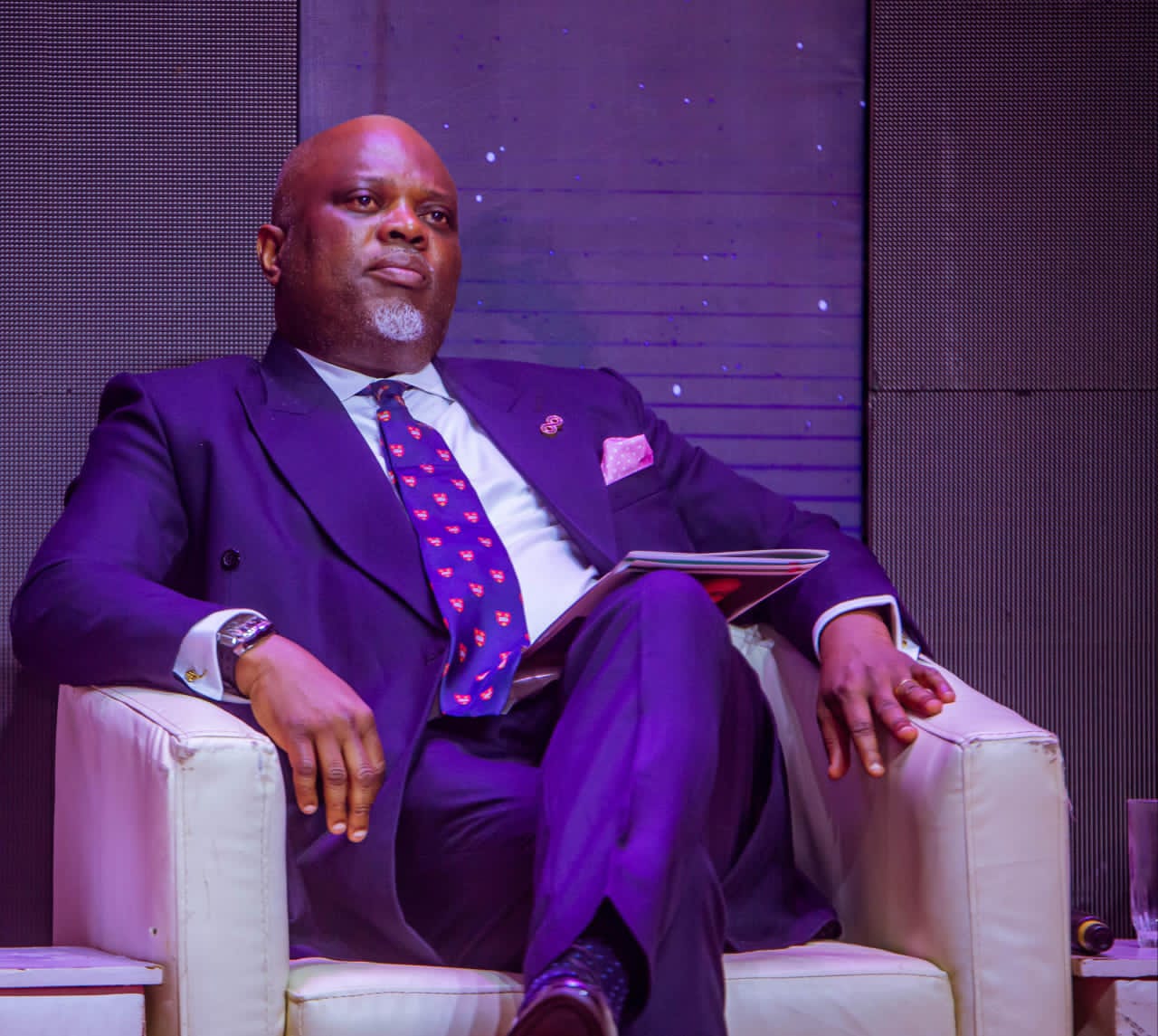
Fasua made the call during a panel discussion at the sixth edition of the Frontier Discourse Annual Public Lecture Series and Awards, organised by Pacesetter Frontier Magazine at Merit House, Maitama, Abuja.
Speaking on the relationship between economic challenges, insecurity and political violence, the presidential aide said although Nigeria faced economic difficulties, such challenges were not peculiar to the country.
He also expressed reservations about the event’s theme, “Barrel to Ballot: The Naturalisation of Violence, Nigeria’s Polity, and its Democratic Circus,” arguing that political violence should not be described as something Nigeria had accepted as normal.
“I actually came to this conference because I disagree with the theme and the topic, ‘Barrel to Ballot: The Naturalisation of Violence.’ I think, hopefully, when they are not talking about Nigeria, I don’t think we have naturalised violence, and we shouldn’t,” he said.
Fasua also urged Nigerians to view democracy positively, noting that describing it as a circus could create the impression that the democratic system was a joke.
He said discussions about Nigeria’s political challenges should be informed by an understanding of the country’s historical experiences, particularly the political crises, military coups and civil war that shaped its development.
Tracing the country’s political history, he recalled that Nigeria experienced political violence in the Western Region in 1962, barely two years after independence.
According to him, political disagreements later contributed to the military coup of January 1966, during which several political leaders, including the then Prime Minister, Sir Abubakar Tafawa Balewa, were killed.
He also recalled the July 1966 counter-coup, which claimed the life of then Head of State, General Johnson Aguiyi-Ironsi, among others, before the country descended into civil war in 1967.
Fasua noted that the war lasted until 1970, leaving lasting consequences for the country.
He explained that these historical experiences influenced Nigeria’s decision to adopt the presidential system of government following the 1978 constitutional conference and the return to civilian rule in 1979.
According to him, the presidential system was chosen partly to ensure that the country’s leader enjoyed a broader national mandate rather than emerging solely from a parliamentary constituency.
However, he noted that the system was expensive to operate because presidential candidates had to campaign across the country and build extensive political structures to secure votes.
Drawing from his experience as a presidential candidate in the 2019 election, Fasua said the financial demands of contesting elections in Nigeria were enormous.
He added that although the Independent National Electoral Commission had prescribed spending limits for political offices, candidates often spent considerably more than the stipulated amounts.
Fasua therefore urged organisers of public discussions to be mindful of the messages they communicate to young people, warning against creating the impression that Nigeria had no future.
He said young Nigerians needed to prepare for opportunities and competition in an increasingly globalised world, particularly with the growing influence of artificial intelligence.
“Anywhere we gather young people like this, we have to be careful about the kind of messaging we give, the kind of narrative,” he said.
He added, “We must not let them believe that there is no hope in this country and that the advantages we have, those things that we believe make us exceptional, have disappeared.”
The presidential aide also urged young people to recognise that economic difficulties were not limited to Nigeria and to acknowledge the progress the country had made despite its challenges.
He further stressed the importance of historical knowledge in understanding the country’s political and economic development, encouraging young Nigerians to study Nigeria’s past rather than make decisions based solely on present frustrations.
Leave a Reply