Tag: Yoruba

  • NASS Plans Translation Of Laws Into Igbo, Hausa, Yoruba

    NASS Plans Translation Of Laws Into Igbo, Hausa, Yoruba

    Precious Nwonu, Enugu

    The National Assembly is set to expand access to legislative information by translating Nigerian laws into major indigenous languages, including Igbo, Hausa and Yoruba.

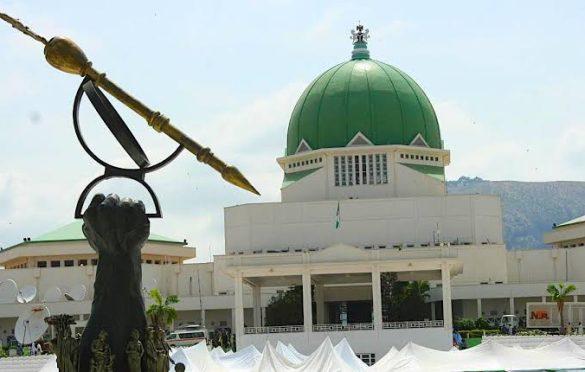
    The Executive Secretary of the National Assembly Library Trust Fund, Henry Nwawuba, disclosed this on Monday in Abuja while declaring open the 2026 National Assembly Library Week.

    The three-day event, themed “Parliamentary Memory: Connecting Records, Legislation and the People,” is aimed at promoting legislative research, access to information and effective use of the National Assembly Library.

    Nwawuba said the library was more than a collection of books, describing it as a key knowledge institution responsible for preserving parliamentary records and supporting legislative work.

    He said efforts were underway to ensure lawmakers, legislative aides, researchers and other stakeholders could access authoritative records, including Order Papers, Votes and Proceedings, committee reports and Acts passed by the National Assembly.

    According to him, the Trust Fund is investing in electronic repositories and upgrading the National Assembly’s e-library, while also developing a mobile application that will provide easier access to legislative information.

    Nwawuba also announced plans for a Bills Tracker that would allow users to monitor bills and follow their progress through the legislative process.

    He said the library was developing infographics, audiovisual materials and video explainers to make bills, Acts and legislative procedures easier for Nigerians to understand.

    The planned translation of laws into indigenous languages, he added, would further widen access to legislation and help citizens understand laws affecting their daily lives.

    Nwawuba said the library would also organise public policy dialogues to encourage greater citizen participation in public hearings and promote interaction between lawmakers, citizens, researchers and other stakeholders.

    He explained that the initiatives were also designed to address inconsistencies in parliamentary records and prevent the circulation of fake or unauthorised National Assembly documents.

    Akpabio Urges Lawmakers To Use Library

    The President of the Senate, Godswill Akpabio, represented at the event by Senator Osita Ngwu, urged lawmakers to make greater use of the National Assembly Library, particularly amid growing misinformation, disinformation and advances in artificial intelligence.

    Akpabio described the library as an important link between knowledge, evidence and legislative decision-making and called for continued investment in its development.

    The Speaker of the House of Representatives, Abbas Tajudeen, represented by the House Leader, Julius Ihonvbere, said parliamentary records were essential for preserving Nigeria’s legislative history and strengthening democratic governance.

    Tajudeen said the effectiveness of a legislature should not be measured only by the laws it passes, but also by its ability to document proceedings, preserve institutional knowledge and make such information available to future generations.

    He said technology and artificial intelligence could strengthen legislative research, preservation of records and public access, but stressed that their use must be guided by accuracy, security and professional judgment.

    Clerk Warns Against Fake Parliamentary Documents

    The Clerk to the National Assembly, Kamoru Ogunlana, said the legislature could not be fully independent without the capacity to generate, preserve, retrieve and authenticate its institutional records.

    Ogunlana identified the Order Paper, Votes and Proceedings and Hansard as important components of Nigeria’s democratic memory.

    He warned against the circulation of incomplete, outdated, altered or unauthorised bills, Acts and other parliamentary documents, noting that digital technology had made it easier to manipulate and distribute such materials.

    The Clerk stressed that the authenticity of an Act depended not only on the existence of a document but also on the ability to establish the authoritative version and the legal process through which it was enacted.

    He cited the continued use of the Laws of the Federation of Nigeria, LFN 2004, as an example of the challenges involved in maintaining an updated and authoritative collection of federal legislation.

    According to him, the LFN 2004 reflected the laws covered by the relevant revision exercise and was not automatically updated whenever new legislation was passed.

    Ogunlana said the National Assembly must strengthen cybersecurity, digital preservation, authentication systems, access controls, backups and staff training as parliamentary records become increasingly digitised.

    He warned that while digitisation could make legislative information easier to access and search, it could also expose records to cyberattacks, manipulation and impersonation of official sources.

    The Clerk called for digital platforms that are both accessible and secure, with electronic records maintained in a manner that ensures they remain available, authentic and traceable.

    He said the National Assembly Library should evolve from simply storing documents into an institution that preserves, authenticates and provides access to parliamentary knowledge for lawmakers, researchers, journalists, civil society organisations, students and the wider public.

    The President of the Nigerian Library Association, Lawal Umar, called for sustained investment in libraries and modern information technology to improve access to legislative information.

    Umar also urged stronger collaboration between the National Assembly and state Houses of Assembly.

    The Secretary-General of the Conference of Speakers of African Legislatures, Debo Oyewale, said African legislatures could learn from one another in developing institutions capable of preserving legislative memory.

  • Sunday Igboho: Yoruba Nation rally on 3rd July

    Yoruba Nation agitator Sunday Adeyemo aka Sunday Igboho has vowed to proceed with the planned Yoruba Nation rally in Lagos.


    The Nation reports Igboho will storm Lagos on Saturday July 3 alongside other agitators for the Yoruba Nation rally.


    Hinged on the heels of similar rallies held across southwest States including Osun, Ogun, Ekiti, and Ondo, the pro-Yoruba nation protesters vowed not to back down or get intimated by any threats.


    Igboho, who spoke through his spokesperson, Olayomi Koiki during a live video chat monitored by The Nation, stated that there is no going back on the Yoruba Nation peaceful rally slated for Ojota Park, Lagos.


    He said: “We are sending a peaceful message to Governor Sanwo-Olu. We do not mind any other person who is saying we should not come to Lagos.


    “Sanwo-Olu is the chief security officer of the land and we are coming to Lagos.


    “July 3rd is the most important date; nobody cannot say we should not come to Lagos. It is a peaceful rally.


    “We have gone to Ogun, Ondo, Osun, Ekiti and we had peaceful rallies, so nobody can stop us from not coming to Lagos.”


    His ardent supporter Ololade Alaba Shomuyiwa aka Baba Confirm, Prophet of El Adonai Cherubim and Seraphim International Bible Ministries, berated those discouraging Yoruba Nation protesters from participating in the p lanned Lagos rally.


    Source: www.sunnewsonline.com

  • Afenifere @ 70: A pressure group with legitimate force


    Afenifere, described by many as a pressure group with legitimate force, serving interests and maintaining the waning influence of Yoruba people in the Nigerian Federation, today clocks 70years of its existence.


    Afenifere. founded 70 years ago as a socio-cultural organization for the Yoruba people of Nigeria, with Chief Abraham Adesanya as its leader and Chief Bola Ige as deputy leader. Other founding members included Pa Onasanya, Chief Reuben Fasoranti, Adegbonmire, Okurounmu Femi, Ganiyu Dawodu, Olanihun Ajayi, Olu Falae, Adebayo Adefarati, Alhaji Adeyemo


    During the 70years of its existence, Afenirefe, a movement of the defunct Action Group, precedes Nigeria’s political independence and has gone through circumstantial, existential, external threats, assaults and self-inflicted injury of fractionalizations,(Papa Fasoranti/Adebanjo; Late Senator Fasanmi; Senator Durojaiye; Afenifere Renewal) and still counting in spite of its current limitations over time.


    The demise of its Spokesperson, Mr Yinka Odumakin, revealed that The Pan-Yoruba group does not only serve the interest of the Yoruba people of southwest Nigeria alone but serves the interest of every Nigerian as shown with the tributes poured in from all corners of Nigeria and indeed the world.


    Pertinent to note as the group hits Platinum, is the fact that the Action Group as a National Political Party was the brainchild of the late sage, Chief Jeremiah Obafemi Awolowo, SAN, GCFR and his untiring efforts, grim determination to prepare and get Western Nigeria ready for productive responses to the then on-coming constitutional exigencies which the Richard Constitution provisions would demand on Nigerians.


    But as AFENIFERE hits Platinum, it is worthy of note that from its inception remained to date, a movement of people who are committed to the greatest welfare of the people as enunciated by Chief Obafemi Awolowo SAN, under the philosophical caption of EGALITARIANISM, LIFE MORE ABUNDANT. Afenifere was never a registered political party but it was the propelling Movement of people behind the Action Group that was registered.


    During its 70years of existence, there had been no time when Afenifere was a cultural organization. Egbe Omo Oduduwa which was a cultural organization decided not to transform into a political party after exhaustive discussion because they believed that such a transformation into partisan politics could compromise the organization and divide the Yoruba nation, which was the very people it set itself up to protect and defend. Interested readers can Google the internet to be familiar with the names of the Yoruba distinguished leaders who collaborated with Chief Awolowo to establish the Egbe first in London and later in Nigeria in order to provide a credible voice for the Yoruba people in the immediate nationalist struggle for self-determination.


    Afenifere as a Movement of ideas, the burden of standing in the gap for Nigeria against the successive military dictatorship and their military in civilian dress tyrannies have been a lot of Yoruba Nationalists and Activists principally along with other compatriots since pre-independence till the present time.


    At any critical time of strong opposition against the tyrannical rule of the successive Nigerian state, the greatest majority of the Leading Activists that are usually oppressed, dehumanized, incarcerated and sometimes declared missing are mostly from the South West along with Kwara and Kogi activists. There are statistical records to prove this assertion.


    Since we have historically and factually established that Action Group was the registered political party but Afenifere had always been a Movement in Yorubaland of those who subscribe to Chief Awolowo’s Political Philosophy of Life more Abundant and that it was the Registers of Afenifere membership in the Yoruba States including Kogi and Kwara that were used to register AD in 1998, it stands to reason that those who may still desire to pursue their political ambition outside whatever the “progressive” political camp adopted as close to the Action Group tendency should be bold and honest enough to leave Afenifere. The platform should no more be used for political expediency.


    As Afenifere hits Platinum, a majority of the Yoruba people of southwest Nigeria see the pressure group as a legitimate force that is both serving their interests and maintaining the waning influence of Yorubaland in the Federation. They consider it to be a necessary body to preserve the ethnic identity of the Yorubas.


    Source: www.vanguardngr.com