Tag: World Bank

  • FG Disputes World Bank’s N7.7tn Interest Payments Figure

    FG Disputes World Bank’s N7.7tn Interest Payments Figure

    Precious Nwonu, Enugu

    The Federal Government has challenged the World Bank’s assessment of Nigeria’s debt burden, arguing that reports suggesting interest payments exceeded government revenue in the first half of 2026 were based on an incomplete fiscal picture.

    The Federal Ministry of Finance said the reported N7.7tn interest payments, equivalent to about 124 per cent of the N6.2tn revenue recorded during the period, did not accurately reflect the government’s debt position.

    The ministry stated its position in a statement issued on Sunday and shared on X by the Minister of Finance and Coordinating Minister of the Economy, Taiwo Oyedele.

    The response followed public discussions surrounding the World Bank’s October 2026 Nigeria Development Update, which reported Federal Government revenue of N6.2tn and interest payments of N7.7tn between January and June 2026.

    An analysis of the published figures showed that interest payments exceeded revenue by N1.5tn, representing approximately 124.2 per cent of revenue. The ratio was calculated from the figures in the report rather than expressly stated by the World Bank.

    However, the ministry argued that the calculation was misleading for three reasons, including the inclusion of debt obligations serviced on behalf of state governments, incomplete revenue figures and the timing of revenue collections.

    According to the ministry, the interest-payment figure included external loans serviced by the Federal Government on behalf of other tiers of government.

    It maintained that comparing such obligations exclusively with federal revenue inflated the ratio because debt and revenue figures should cover the same level of government.

    The ministry also argued that the revenue figure excluded income generated by government agencies and enterprises but not yet remitted to the Treasury.

    It added that statutory payment schedules meant some taxes were collected predominantly in the second half of the year, making the first six months an incomplete basis for evaluating annual debt obligations.

    To support its position, the ministry compared the figures for the first half of 2025 with those for the corresponding period in 2026.

    It said Federal Government revenue increased by 72 per cent, from N3.6tn to N6.2tn, while interest payments rose by 38 per cent, from N5.6tn to N7.7tn.

    The ministry said the interest-to-revenue ratio consequently declined from 156 per cent in the first half of 2025 to approximately 124 per cent in the first half of 2026.

    It also stated that the full-year debt-service-to-revenue ratio had fallen below 60 per cent, compared with 97 per cent before the current administration’s reforms.

    The ministry described the figures as evidence of improved fiscal management, arguing that the gap between interest payments and revenue had narrowed from N2tn to N1.5tn.

    “This is the result of reforms working, not a sign of fiscal distress,” the ministry stated.

    It further rejected the use of a six-month fiscal snapshot as a definitive measure of debt sustainability, pointing instead to the World Bank’s full-year projection.

    “The same World Bank report projects Nigeria’s full-year 2026 debt service, covering both interest and principal, at 46 per cent of revenue. This is the appropriate benchmark, and a guide to avoid the invalid conclusions being drawn,” the statement read.

    The ministry also defended the administration’s borrowing programme, insisting that all loans obtained by the government were lawful and had received the necessary approvals.

    It said borrowing complied with the limits authorised by the National Assembly under the 2026 Appropriation Act and the approved borrowing plan.

    The ministry added that the government’s borrowing activities were guided by the Fiscal Responsibility Act 2007 and the Debt Management Office (Establishment) Act 2003, while details of public debt were regularly published by the Debt Management Office.

    However, the ministry did not provide revised revenue and interest-payment figures or an alternative ratio to support its challenge to the World Bank’s assessment.

     FG to Begin Repaying $1.25bn World Bank Loan in 2031

    Meanwhile, the Federal Government is scheduled to begin repaying the principal on a $1.25bn World Bank loan in December 2031, with the final instalment on one of the facilities due in June 2060.

    The financing, obtained under the Nigeria Actions for Investment and Jobs Acceleration Development Policy Financing programme, is designed to support reforms targeting access to credit, electricity supply, trade competitiveness and government revenue.

    The facility comprises a $750m concessional credit from the International Development Association and a $500m loan from the International Bank for Reconstruction and Development, both members of the World Bank Group.

    The loan was approved in 2026 amid concerns about Nigeria’s rising debt burden and calls for the government to limit external borrowing.

    The World Bank said the financing would support Nigeria’s transition towards more inclusive economic growth, improve competitiveness and create jobs.

    The reforms cover capital markets, digital services, electricity access, trade barriers, agricultural inputs and domestic revenue mobilisation.

    According to the financing agreements reviewed by *The PUNCH*, principal repayments on both facilities will begin on December 15, 2031, although their repayment periods differ.

    The $750m IDA credit is scheduled to be fully repaid by June 15, 2051, while the $500m IBRD loan will run until June 15, 2060.

    Under the IDA agreement, Nigeria will repay 2.5 per cent of the credit every six months, amounting to $18.75m per instalment, or $37.5m annually during full repayment years.

    For the IBRD facility, the government will make semi-annual principal payments of 1.72 per cent from December 2031 through December 2059, followed by a final instalment of 1.96 per cent in June 2060.

    The regular IBRD instalments amount to approximately $8.6m every six months, while the final payment is about $9.8m.

    Combined, the two facilities will require principal repayments of approximately $27.35m every six months between December 2031 and June 2051, equivalent to about $54.7m annually during full repayment years.

    The repayment schedules will extend across several administrations, with the final principal payment on the IBRD facility due nearly 34 years after the agreements were signed.

    The figures cover principal repayments only and exclude interest and other applicable charges.

    Under the IBRD agreement, the interest rate is based on a reference rate plus a variable spread. The IDA credit’s interest charge is calculated using the reference rate and variable spread, less 250 basis points, subject to applicable conditions.

    The IBRD loan also carries a front-end fee of 0.25 per cent, equivalent to $1.25m, and an annual commitment charge of 0.25 per cent on the undisbursed balance.

    The IDA agreement provides for a maximum annual commitment charge of 0.5 per cent on the undisbursed financing balance.

    The agreements do not specify a fixed dollar amount for total interest payments over the repayment period, meaning the eventual borrowing cost will depend on applicable rates and other contractual provisions.

    The IDA credit is structured for disbursement in a single tranche, subject to the World Bank’s assessment of Nigeria’s economic policies and implementation of agreed reforms.

    The IBRD facility is divided into two withdrawal tranches of $249.375m each, with the remaining $1.25m allocated to the front-end fee.

    Release of the second tranche depends on satisfactory progress in implementing the programme, maintaining an adequate macroeconomic framework and completing agreed policy actions.

    The IBRD agreement also allows the lender to cancel part or all of the undisbursed balance if the government fails to take satisfactory corrective measures within 90 days of receiving notice.

    Both agreements have a closing date of December 31, 2027.

    Loan Tied to Tax, Electricity and Trade Reforms

    The financing agreements outline two broad reform areas: improving access to credit, digital services and electricity, and strengthening economic competitiveness through trade, taxation and agricultural measures.

    Among the recognised measures are the Investment and Securities Act 2025, the National Integrated Electricity Policy, electricity metering reforms and regulations designed to encourage private investment in interconnected mini-grids.

    The government also committed to implementing trade reforms under the African Continental Free Trade Area, including the gradual liberalisation of 90 per cent of tariffs on goods from African countries over 10 years.

    Other measures include removing import bans on specified essential food products and inputs, reducing import adjustment taxes on selected commodities by at least 25 per cent in 2026, and progressively eliminating applicable adjustment taxes between 2027 and 2036.

    In taxation, the agreements recognise the introduction of mandatory electronic invoicing for Value Added Tax, a 15 per cent minimum effective tax rate for large companies and multinational enterprises, and an increase in the maximum personal income tax rate from 24 to 25 per cent.

    The financing arrangements also impose reporting and accountability requirements on Nigeria.

    The government is required to maintain dedicated dollar accounts for receiving loan proceeds and ensure that equivalent amounts are reflected in its budget management system.

    The Federal Ministry of Finance must report amounts received, relevant account details and transaction records to the World Bank within 30 days of each withdrawal.

    The agreements further require the accounts to be audited by auditors of the Central Bank of Nigeria acceptable to the World Bank. Certified audit reports must be submitted within four months of withdrawal and made publicly available.

    The World Bank’s financing is intended to support Nigeria’s economic reform programme, with disbursement subject to satisfactory implementation of the agreed measures and maintenance of an adequate macroeconomic policy framework.
  • Tinubu Says World Bank Report Validates Economic Reform

    Tinubu Says World Bank Report Validates Economic Reform

    Precious Nwonu, Enugu

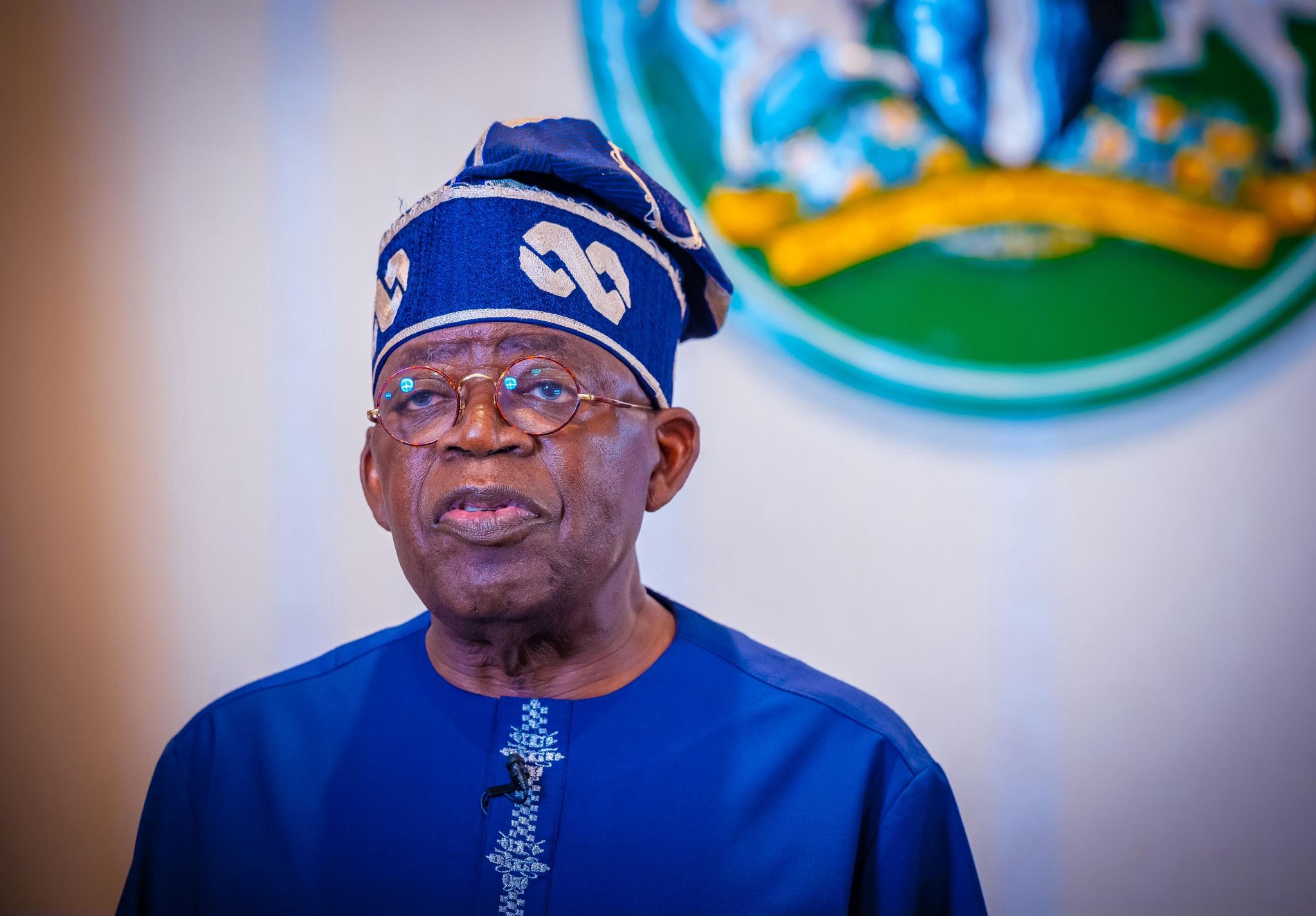
    President Bola Tinubu has described the World Bank’s latest assessment of Nigeria’s economy as evidence that his administration’s economic reforms are yielding results, citing improvements in economic growth, government revenue and external reserves.

    Tinubu’s position was contained in a statement issued on Sunday by his Special Adviser on Information and Strategy, Bayo Onanuga, following the release of the World Bank’s October 2026 Nigeria Development Update, titled Beyond the Federal Purse: How Higher Revenues Reshaped State Priorities.

    The President said the report indicated that the country’s economy was becoming more stable and better positioned for sustained growth, while noting that poverty had stabilised for the first time since 2019.

    According to the statement, the World Bank reported that Nigeria’s economy grew by 4.2 per cent in the first half of 2026, compared with 3.9 per cent during the corresponding period in 2025.

    The bank projected that economic growth would average at least 4.4 per cent between 2026 and 2028, while poverty was expected to decline gradually as economic growth outpaced population growth.

    On inflation, Tinubu said the report showed that the rate fell from 27.6 per cent in January 2025 to 15.2 per cent in December of the same year.

    However, the statement noted that higher global fuel prices linked to the conflict in the Middle East had slowed the decline in inflation. The World Bank expects inflation to ease to about 12 per cent by 2028.

    The President also highlighted improvements in Nigeria’s external position, saying the country’s current account surplus rose to $12bn, representing seven per cent of gross domestic product, in the first half of 2026.

    This compared with $8.6bn recorded in the corresponding period of 2025.

    According to the statement, gross external reserves increased from $45.5bn at the end of 2025 to $53.8bn at the end of August 2026.

    Tinubu further said the World Bank attributed a 69 per cent real-term increase in federation revenue between 2023 and 2025 to reforms introduced by his administration, with state governments emerging as the largest beneficiaries.

    He said states used the additional revenue to increase capital expenditure by 151 per cent in real terms over the same period.

    The statement identified roads and other transport infrastructure, agriculture, energy and housing as major areas that benefited from the increased spending.

    It added that 29 of 33 states shifted more of their spending towards economic infrastructure, while real social spending per person increased in all but one state.

    The President also cited the report’s findings that internally generated revenue rose in real terms in 31 of 35 states, while 21 states reduced their debt-to-GDP ratios between 2021 and 2025.

    Nigeria’s overall public debt was projected to decline from 40 per cent of GDP in 2025 to 38.1 per cent in 2026, according to the statement.

    Tinubu said the findings reinforced his administration’s position that the removal of petrol subsidy, unification of the foreign exchange market and efforts to strengthen fiscal discipline had increased government revenue and created more resources for public investment.

    “The dividends of reform are becoming visible. But more work remains to ensure they fully translate into better living standards for every household, starting with lower food prices and decent jobs for our young people,” he said.

    He added that the government would continue implementing its Renewed Hope Agenda, with a stronger focus on inclusive growth and improved living conditions.

    Tinubu said the administration would expand targeted cash transfers, which he stated had reached more than 10 million households, accelerate the deployment of compressed natural gas, improve agricultural productivity and widen access to affordable healthcare and quality education.

    He also urged state governments to manage their increased revenues prudently and prioritise projects that would improve living standards, healthcare and education.

    The President commended the Economic Management Team, led by the Minister of Finance and Coordinating Minister of the Economy, alongside state governors and other stakeholders, for their role in implementing the reforms.

    He said the government remained committed to accelerating the delivery of shared prosperity under the Renewed Hope Agenda 2.0.

  • FG Seeks Fresh $1.5bn World Bank Loans As Public Debt Hits N166.79tn

    FG Seeks Fresh $1.5bn World Bank Loans As Public Debt Hits N166.79tn

    Precious Nwonu, Enugu

    The Federal Government is seeking $1.5bn in fresh financing from the World Bank as Nigeria’s total public debt rose to a record N166.79tn at the end of June 2026.

    Documents from the World Bank indicate that the proposed borrowing consists of three separate $500m facilities targeting climate resilience, social protection and early childhood development.

    The first facility is an additional $500m for the Agro-Climatic Resilience in Semi-Arid Landscapes project, known as ACReSAL.

    The World Bank is expected to consider the facility on October 29, 2026. The Federal Republic of Nigeria is listed as the borrower, while the Federal Ministry of Environment will implement the project.

    If approved, the additional financing will increase ACReSAL’s total funding from $700m to $1.2bn, with the new facility to be provided through the International Development Association, the World Bank’s concessional lending arm.

    According to the World Bank, the additional funds will be used to expand the project’s results and strengthen arrangements for sustainable landscape management.

    The proposed interventions include land restoration, watershed rehabilitation, erosion and flood control, irrigation and drainage, water harvesting and storage, reforestation and other climate adaptation measures.

    Of the $500m, $310m is earmarked for dryland management, $165m for community climate resilience and $25m for institutional strengthening and project management.

    ACReSAL currently operates in 19 northern states and the Federal Capital Territory, focusing on land degradation, water insecurity, climate vulnerability and declining agricultural productivity.

    The World Bank estimates that desertification and land degradation affect about 43 per cent of Nigeria’s land area. It also projects that climate change could reduce the country’s gross domestic product by about 2.6 per cent annually by 2030 and as much as 6.7 per cent by 2050 if not adequately addressed.

    ### $500m Social Protection Loan

    The second proposed facility is a $500m IDA credit for the Household Prosperity and Empowerment-Social Protection Project.

    The project is still under preparation, with a technical design review scheduled for October 30, 2026. The World Bank has tentatively set March 16, 2027, for consideration of the project.

    The Federal Ministry of Finance is listed as the borrower, while the Federal Ministry of Humanitarian Affairs and Poverty Reduction will implement the programme.

    The project comprises a $420m results-based financing component and an $80m investment project financing component.

    It is designed to establish regular social assistance for poor and vulnerable households while gradually increasing the contribution of federal and state governments to social protection financing.

    The proposed programme will include targeted conditional and unconditional cash transfers, an upgrade of the social registry, integration of the National Identification Number into the social protection information system and stronger implementation at federal, state and local government levels.

    The World Bank said Nigeria spent only 0.14 per cent of its GDP on social safety-net programmes in 2021, compared with a global average of 1.5 per cent and 1.2 per cent among lower-middle-income countries.

    The lender also estimated that the proportion of Nigerians living in poverty rose from 40 per cent in 2019 to 56 per cent in 2023 and could reach 62.5 per cent in 2026.

    It attributed the deterioration to factors including the COVID-19 pandemic, inflation, natural disasters and conflict, while noting that the removal of fuel subsidy and foreign exchange reforms increased living costs in the short term.

    ### Third Loan Targets Early Childhood Development

    The third proposed $500m loan is for the Nigeria Early Childhood Development Programme.

    The project is expected to undergo technical design review on October 30, 2026, with tentative approval scheduled for March 15, 2027.

    The Federal Ministry of Finance will serve as the borrower, while the Federal Ministry of Budget and Economic Planning is expected to implement the programme.

    The project will cover all 36 states and the FCT and focus on improving access to healthcare, nutrition, early learning, childcare, water and sanitation and other essential services for children aged zero to five.

    The proposed financing consists of a $400m programme-for-results component and $100m in investment project financing.

    The World Bank said the programme was necessary because 40 per cent of Nigerian children under five are stunted, fewer than half are developmentally on track and only 36 per cent of children aged 36 to 59 months attend organised early learning.

    ### Public Debt Rises By N14.39tn

    The proposed borrowing comes amid a sharp increase in Nigeria’s public debt.

    According to the Debt Management Office, the country’s total public debt rose from N152.40tn in June 2025 to N166.79tn in June 2026.

    The N14.39tn increase represents a 9.44 per cent rise within one year.

    In dollar terms, total public debt increased from $99.66bn to $120.93bn, representing a $21.27bn or 21.35 per cent increase.

    The difference between the naira and dollar growth rates was partly linked to the exchange rate used to value Nigeria’s external debt. The DMO used an exchange rate of N1,379.1842 to the dollar in June 2026, compared with N1,529.2105 in June 2025.

    On a quarterly basis, public debt increased from N159.35tn in March 2026 to N166.79tn in June, representing a rise of N7.44tn or 4.67 per cent.

    Domestic debt accounted for the larger share of the portfolio at N91.59tn, or 54.91 per cent, while external debt stood at N75.20tn, representing 45.09 per cent.

    Domestic debt increased from N80.55tn in June 2025 to N91.59tn in June 2026, while external debt rose from N71.85tn to N75.20tn over the same period.

    ### Treasury Bills Drive Domestic Borrowing

    Federal Government domestic debt increased from N76.59tn in June 2025 to N87tn in June 2026.

    Federal Government bonds remained the largest component at N64.84tn, representing 74.53 per cent of domestic debt.

    However, Treasury bills recorded a significant increase during the period.

    Outstanding Nigerian Treasury Bills rose from N12.76tn in June 2025 to N19.48tn in June 2026, representing a N6.72tn or 52.64 per cent increase.

    Their share of Federal Government domestic debt consequently increased from 16.67 per cent to 22.39 per cent.

    Between March and June 2026, Treasury bills increased by N2.92tn, or 17.60 per cent, from N16.57tn to N19.48tn.

    Meanwhile, the securitised Ways and Means balance declined from N22.72tn in March to N22.11tn in June.

    FGN Savings Bonds increased from N91.53bn to N122.45bn during the year, although they remained a small portion of the government’s domestic debt.

    ### World Bank Exposure Hits $20.73bn

    The DMO figures show that Nigeria’s outstanding debt to the World Bank Group stood at $20.73bn at the end of June 2026.

    The amount comprises $19.12bn owed to the International Development Association and $1.61bn owed to the International Bank for Reconstruction and Development.

    The combined exposure increased by $1.34bn, or 6.93 per cent, from $19.39bn in June 2025.

    World Bank exposure also increased by $907.09m between March and June 2026.

    At $20.73bn, World Bank obligations accounted for about 38 per cent of Nigeria’s $54.52bn external debt at the end of June.

    Nigeria’s total multilateral external debt stood at $24.76bn, representing 45.42 per cent of the country’s external debt.

    The African Development Bank, African Development Fund, Islamic Development Bank and International Fund for Agricultural Development were among Nigeria’s other multilateral creditors.

    Commercial creditors accounted for $23.16bn, or 42.47 per cent of external debt, with Eurobonds alone accounting for $18.55bn.

    Bilateral debt stood at $6.61bn, representing 12.12 per cent of external obligations. China remained Nigeria’s largest bilateral creditor.

    The proposed World Bank facilities would therefore further increase Nigeria’s borrowing from the multilateral institution if approved and subsequently disbursed.

    ### Atiku Demands Debt Reconciliation

    The latest debt figures have also drawn criticism from former Vice-President Atiku Abubakar, who called for a reconciliation of Nigeria’s public debt.

    In a statement issued by his Director of Strategic Communications, Phrank Shaibu, Atiku asked the Federal Government to account for newly recorded debt, changes in the naira value of foreign obligations and loans contracted since the Tinubu administration came into office.

    He also questioned the cost of servicing the country’s growing debt burden and its implications for public spending.

    Meanwhile, economist Adewale Abimbola said borrowing from multilateral institutions such as the World Bank could support development when the financing was concessional and directed towards productive projects.

    He said the key issue was how borrowed funds were utilised rather than borrowing itself.

    According to him, loans tied to viable projects and capable of supporting economic growth could have a positive impact, provided they were properly managed.

  • World Bank has approved $2.25b support package for Tinubu’s economic programs – Edun

    World Bank has approved $2.25b support package for Tinubu’s economic programs – Edun

    President Bola Ahmed Tinubu’s efforts at stabilising the economy and scaling up support for the most vulnerable citizens have received a $2.25 billion World Bank boost.

    Minister of Finance and Coordinating Minister of the Economy, Mr. Wale Edun, broke the news of two major financial support packages in a statement last night.

    They include $1.5 billion for the Nigeria Reforms for Economic Stabilisation to Enable Transformation (RESET) Development Policy Financing Programme (DPF) and $750 million for the Nigeria Accelerating Resource Mobilisation Reforms (ARMOR) Programme-for-Results (P-for-R).

    The statement reads: “This combined total of $2.25 billion will offer essential financial and technical support as the government continues to address economic distortions.

    “These reforms will create quality jobs and economic opportunities for all Nigerians.

    “We welcome the support of the RESET and ARMOR programmes as we further consolidate and implement our policy reforms, consistent with accelerating investment and using public resources more sustainably to achieve our development goals.”

    When it took the baton last year, the Tinubu Administration faced huge economic challenges.

    It recognised the need for urgent reforms to reboot the economy and strengthen Nigeria’s financial outlook.

    The unification of the multiple exchange rates and the stoppage of opaque subsidy payments on petrol were the initial measures taken to rescue the economy.

    The Central Bank of Nigeria (CBN) has refocused on its core mandate of price stability, tightening monetary policy by increasing interest rates to reduce inflation.

    A targeted cash transfer programme is being rolled out to cushion the impact of high inflation on poor and economically insecure households.

    Ousmane Diagana, the World Bank Vice President for Western and Central Africa, hailed Nigeria’s efforts, stating: “Nigeria’s comprehensive macro-fiscal reforms are placing the country on a new path that can stabilise the economy and lift people out of poverty.

    “It is essential to maintain the momentum of these reforms and continue to provide support to the poor and vulnerable to mitigate the impact of the cost-of-living crisis.

    “This financing package strengthens the World Bank’s strong partnership with Nigeria and supports efforts to rejuvenate the economy and expedite poverty reduction, serving as an example for Africa.”

    The focus areas of the programmes are RESET DPF, designed to strengthen the economic policy framework, create fiscal space and protect the poor and vulnerable.

    The ARMOR P-for-R supports tax and excise reforms, improves tax revenue and customs administration, and safeguards oil revenues.

    The International Development Association (IDA), the World Bank’s fund for the poorest countries, provides highly concessional funding with a 40-year term and an interest rate of just over one per cent.

    IDA resources help boost economic growth, reduce poverty, and improve lives in the world’s 76 poorest countries, 39 of which are in Africa.

    The approval of these financial packages marks a significant step in Nigeria’s efforts to stabilise its economy and create a sustainable path for growth and poverty reduction.

    In April, Edun said Nigeria was seeking up to $2.25 billion facility from the World Bank and in a television chat monitored in Lagos on June 2, the minister hinted that the loan would be ready in two weeks. He assured Nigerians that in no distant time, the various reforms introduced by the government, will return the economy to the path of sustainable growth and drive down inflation drastically.

    Edun listed the milestone achievements triggered by the reforms as including the gradual return of domestic and foreign investors’ confidence to the economy.

    He said the government has paid N7.3 trillion overdraft from the Central Bank of Nigeria (CBN) under the “Ways and Means” policy in line with government’s fiscal discipline priorities.

    On declining inflation and naira stability, the minister added that more foreign capitals have made inroads to the economy to boost FX liquidity.

    He said: “I would say Mr. President Bola Tinubu has in his first year achieved relative stability of the economy. He has put it on a track of growth. And he has put together a package of intervention measures in agriculture in particular, which needs to be redoubled.

    “They need to be re-emphasised and they need to be further extended in order to have the full effect. So, on the one hand, the macroeconomic measures which everybody knows were taken to save the economy, basically and bring it back from the edge of financial bankruptcy and in the foreign exchange markets from chaos, and illiquid.”

    He, however, admitted that the initial measures taken to stabilise the economy has led to an inflationary spike in terms of the cost of fuel and secondly, in terms of the exchange rate, and also in terms of interest rates.

    According to him, the CBN’s measures against inflation have started bearing fruit at a time when interest rates are high, which normally means that businesses find it hard to borrow and invest.

    He said: “The economy is growing. People are finding sources of funding sources of equity, including government, putting in its own share of private public sector, funding for infrastructure in particular, and that is helping to create jobs and grow the economy.

    “But on the other hand, inflation is high at 33.69 per cent and food inflation at 40.5 per cent, which is worrisome, but the fact is that inflation is coming down month by month, for it’s down to about 2.3 per cent month-on-month from nearly three per cent.”

    Nation

  • Naira appreciates against US dollar after CBN rejects IMF, World Bank reform advice

    The Nigerian currency appreciated against the United States currency after the Central Bank of Nigeria (CBN) boldly rejected the call by International Monetary Fund (IMF) and World Bank to allow market forces to determine the exchange rate.

    Data from FMDQ securities at the last trading day of last week showed naira closed at $418.33 to a dollar compared to the N419.50/$ it exchanged a day before.

    The improved performance on Friday last week happened on the back of improved forex supply at the official market.

    CBN on Friday pumped $169.06 million to the official market to meet Investors’ and Exporters’ forex needs.

    Godwin Emefile, CBN governor had last week insisted on a homegrown solution to managing Nigeria’s exchange rate and continue with its intervention in the forex market despite IMF, World bank saying it was putting pressure on the naira.

    “The IMF and World Bank provide advice that we work with. But even at some of our private meetings, we realise that there are challenges, leading us to adopt homegrown solutions to address them. We cannot adopt what is being proposed; we cannot adopt a free float of our currency,” Emefiele said.

    Similarly, the value of the naira also appreciated against the British Pound Sterling on Friday by N6.70 to N536.58/£1 from N543.28/£1

    Naira also gained against the Euro, by 29 kobo closing Friday at N450.28/€1 compared with the previously quoted value of N450.57/€1.

    At the Peer-to-Peer (P2P) segment, the Naira gained 0.17 per cent or N1 against the American currency last week to trade at N585/$1 in contrast to the previous day’s N586/$1.

    (Ripples)

  • World Bank: Nigeria owes China $3bn


    The total amount of money owed to the Chinese government by the Federal Government as at March last year rose to $3. 121 billion (N1,126.68 trillion at USD/N361). The amount represents only 3.94 per cent of Nigeria’s total public debt of $79.21 billion as at September 2021.


    Similarly, in terms of external sources of funds, loans from China accounted for 11.28 per cent of the External Debt Stock of USD27.67 billion as at the same date.


    According to document from World Bank, the total borrowing from China of USD3.121 billion as at March 31, 2020, are concessional loans with interest rates of 2.50 per cent per annum with a tenor of 20 years and grace period (moratorium) of seven years.


    “These terms are compliant with the provisions of Section 41 (1a) of the Fiscal Responsibility Act, 2007. In addition, the low interest rate reduces the interest cost to government while the long tenor enables the repayment of the principal sum of the loans over many years. These two benefits, make the provisions for debt service in the annual budget lower than they would otherwise have been if the loans were on commercial terms” the document, said.

    Setup your own platform that allows you to earn a minimum of ₦100,000 daily, payments are in US dollars, 100% legitimate .Click here to start now .

    “The $3.121 billion loans, the document, explained, are project-tied loans. The projects, (eleven – 11 in number as at March 31, 2020), include: Nigerian Railway Modernisation Project (Idu-Kaduna section), Abuja Light Rail Project, Nigerian Four Airport Terminals Expansion Project (Abuja, Kano, Lagos and Port Harcourt), Nigerian Railway Modernisation Project (Lagos-Ibadan section) and Rehabilitation and Upgrading of Abuja – Keffi- Makurdi Road Project.

    “The impact of these loans is not only evident but visible. For instance, the Idu – Kaduna Rail Line has become a major source of transportation between Abuja and Kaduna. Also, the new International Airport in Abuja, has improved air transportation for the populace, while the Lagos – Ibadan Rail line when completed, will ease traffic on the busy Lagos -Ibadan Expressway.

    “The projects also have the added benefits of job creation, not only by themselves but through direct and indirect service providers, a number of which are Small and Medium Enterprises” the document, further explained.

    Although, these loans are project-tied, Nigerians still rejected a request by President Muhammadu Buhari for a fresh loan, prompting the Minister of Finance Budget and National Planning, Zainab Ahmed to assure the nation that the country’s debt is still sustainable. “Nigeria’s debt is still very much within sustainable limits. “We need to roll out infrastructure now, and grow the economy now— not later,” she said.


    Source: www.sunnewsonline.com

  • World Bank lists Nigeria Among the first three countries with the largest electricity Inadequacy and default


    The World Bank has listed Nigeria among the three countries with the largest electricity deficits in the world.


    It said during the last decade, a greater share of the global population gained access to electricity than ever before, but the number of people without electricity in Sub-Saharan Africa increased.


    The bank disclosed this on Monday in a report, titled ‘Universal access to sustainable energy will remain elusive without addressing inequalities’.


    It said, “Significant progress has been made since 2010 on various aspects of the Sustainable Development Goal 7, but progress has been unequal across regions.


    “While more than one billion people gained access to electricity globally over the last decade, COVID’s financial impact has made basic electricity services unaffordable for 30 million more people, the majority located in Africa.


    “Nigeria, the Democratic Republic of Congo and Ethiopia had the biggest electricity access deficits, with Ethiopia replacing India in the top three.”


    According to the bank, unless efforts are scaled up significantly in countries with the largest deficits, the world would still fall short of ensuring universal access to affordable, reliable, sustainable, and modern energy by 2030.


    Nigeria was also listed among the top 20 countries that lacked access to clean fuel and technologies for cooking.


    The World Bank added, “Of the top 20 countries with greatest number of people lacking access to clean fuel and technologies for cooking, 10 are located in Sub-Saharan Africa (Nigeria, Ethiopia, Democratic Republic of the Congo, United Republic of Tanzania, Uganda, Kenya, Mozambique, Madagascar, Ghana, Niger).


    “Six are in Eastern Asia and South-eastern Asia (China, Indonesia, Philippines, Myanmar, Viet Nam, the Democratic Republic of Korea) and four are in Central Asia and Southern Asia (Afghanistan, Bangladesh, India, Pakistan).”


    The World Bank said during the period of 2010 of 2019, the top five most populous low- and middle-income countries (China, India, Indonesia, Brazil, and Pakistan) increased their combined access rate by two per cent while progress in all other LMIC remained unchanged or stagnant over the same period.


    According to the report, to ensure no one is left behind, the political commitment and financial incentives must be prioritised in all access-deficit countries to achieve the universal target of SDG 7.


    Source: www.punchng.com