Tag: Wike

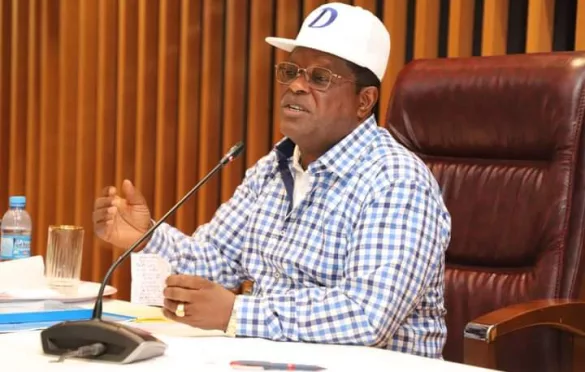
  • Umahi Dismisses Rift With Wike, Says They Need Each Other

    Umahi Dismisses Rift With Wike, Says They Need Each Other

    Precious Nwonu, Enugu

    Minister of Works, Dave Umahi, has dismissed reports of a strained relationship between him and the Minister of the Federal Capital Territory, Nyesom Wike.

    Umahi described Wike as a progressive politician and member of the same political family, insisting that there was no serious disagreement between them.

    The minister spoke on Wednesday in Abuja during a press conference where he addressed reports of divisions within the All Progressives Congress and speculation over his relationship with Wike.

    “We need Wike as Wike needs us. So, it’s one family,” Umahi said.

    He said political opponents had exaggerated whatever differences existed between them, adding that their relationship remained cordial.

    Umahi urged political actors to focus on national development rather than allow political disagreements to distract from the work of government.

    Wike, who remains a member of the Peoples Democratic Party, had said in January that his rainbow coalition represented a departure from conventional party politics towards a broader political movement focused on the interests of Rivers State.

    However, the Progressive Governors Forum has maintained that it would not support political alliances that could undermine President Bola Tinubu’s re-election bid or the party’s candidates in the 2027 elections.

    Speaking on the activities of his ministry, Umahi said the Federal Government inherited 2,068 ongoing projects valued at approximately N13 trillion.

    He said the administration was working to close the country’s infrastructure gap, adding that borrowing for infrastructure should be considered an investment where the projects could generate returns and stimulate economic growth.

    On the Lagos-Calabar Coastal Highway, the minister defended the procurement process, saying Nigerian law permits open competitive tendering, selective tendering and special procurement.

    He explained that special procurement was adopted for the first phase of the coastal highway because of the complexity of the terrain and the need for a contractor with specialised experience in coastal engineering.

    According to him, the procurement process was approved by the Bureau of Public Procurement and the Federal Executive Council.

    Umahi also disclosed that the external financing component of the project attracted more than $100 million in excess commitments from international financiers, which he said demonstrated confidence in the project and its handling.

    The minister further disclosed that the Federal Government had commenced “Operation Rescue” on the Asaba-Benin road following difficulties associated with its concession.

    He said the government had intervened in seven sections of the route to restore movement, while plans were being made to redesign and reconstruct the road with concrete pavement.

    Defending the use of concrete for major highways, Umahi said the method offered greater durability and could last for several decades, potentially up to 100 years, when properly designed and maintained.

    He added that the first 119-kilometre section of the Abuja-Kaduna-Zaria-Kano highway had been completed, while the second section, measuring 164 kilometres, was expected to be completed by November 15.

    Umahi said the infrastructure projects being undertaken across the country reflected the Tinubu administration’s commitment to tackling the infrastructure deficit and improving connectivity between communities and regions.

    “There is no part of this country, there is no state that is not a construction site under President Bola Tinubu,” he said.

  • Rainbow Coalition: Wike, Chinda Hold Talks With Fubara

    Minister of the Federal Capital Territory, Nyesom Wike, and some leaders of the Rainbow Coalition met with the Rivers State Governor, Siminalayi Fubara, at the latter’s private residence in Port Harcourt on Tuesday.

    Also at the meeting were the state governorship candidate of the All Progressives Congress, Kingsley Chinda and Senator Magnus Abe.

    Though the purpose of the meeting could not be immediately ascertained, it was the first time the FCT minister had visited the governor since the beginning of the political crisis that rocked the state and even after the feud between them was resolved.

    Recall that after peace returned to the state, a reconciliation committee headed by former Senator Magnus Abe had met with Fubara twice at the Government House on how to accommodate the governor’s supporters in the new political arrangement.

    Fubara himself had, during a public function in Port Harcourt, declared that he had returned to his political family.

    On the latest visit to the governor’s private residence, which Wike led, sources described the meeting as “strategic and part of the ongoing fence-mending by the minister ahead of the Rainbow Coalition’s campaign for the 2027 general elections.”

    A source who pleaded anonymity said, “It is also part of measures to cement the renewed peace in the state. You know the Senator Magnus Abe-led reconciliation committee has met with the governor twice.

    “Now, maybe it’s time for the FCT minister to visit the governor to show that peace has truly returned.”

    The coalition had yet to officially kick-start its campaign for the forthcoming poll.

    It was learnt that the meeting brought together core supporters of Fubara and Rainbow Coalition leaders in the state.

    They were said to have agreed to collaborate and strategise on how to work together for the common purpose of winning the next general elections in the state. Punch

  • APC State Chapters Reject Wike’s Coalition, Urge Him To Join Party

    APC State Chapters Reject Wike’s Coalition, Urge Him To Join Party

    Precious Nwonu, Enugu

    Several state chapters of the All Progressives Congress have rejected the political coalition being promoted by the Minister of the Federal Capital Territory, Nyesom Wike, insisting that he should formally join the ruling party if he intends to support President Bola Tinubu’s bid for a second term in 2027.

    The disagreement centres on Wike’s continued membership of the Peoples Democratic Party while supporting Tinubu, an APC president, and building a political coalition that could back candidates from different parties in state and legislative elections.

    The development has widened differences within Tinubu’s political camp over how support for the President’s 2027 re-election should be organised and whether such support should extend to APC candidates contesting other elective positions.

    Wike, a former Rivers State governor and PDP presidential aspirant in 2023, was appointed Minister of the FCT by Tinubu after the 2023 election.

    The controversy intensified after Zamfara State Governor Dauda Lawal called on Wike to choose between joining the APC and continuing with the coalition.

    Speaking on Channels Television’s *Inside Sources* on the sidelines of the 81st United Nations General Assembly in New York, Lawal said Wike could not simultaneously support the APC and candidates of other parties.

    “Our message is very, very clear: Be on one side. You can’t be on two sides. If you’re in APC, please come out and support APC,” Lawal said.

    Asked whether the governors wanted Wike to join the APC, Lawal replied, “Exactly. What’s the essence?”

    He added that he would discuss Wike’s political position with Tinubu, insisting that the minister should clearly identify with one political platform.

    ### APC Chapters Push Back

    The position of the APC governors has received support from several state chapters.

    In Imo State, APC Publicity Secretary Jones Onwuasoanya said Wike should formally identify with the ruling party if he was committed to Tinubu’s re-election.

    He argued that supporting the President while remaining outside the APC created an ambiguous political position.

    Onwuasoanya also said the Imo APC did not recognise the Rainbow Coalition as an alternative political structure in the state.

    In Gombe, APC Publicity Secretary Murtala Usman similarly called on Wike to join the ruling party, warning that the coalition could create confusion among APC stakeholders.

    He noted that the recent movement of some PDP politicians into the APC had already created tensions within some state chapters.

    ### Ondo Demands Support For APC Candidates

    The Ondo State APC also rejected the idea of supporting Tinubu for president while backing candidates from other parties in governorship and legislative elections.

    State party secretary Alex Kalejaiye said the APC’s objective was to mobilise support for all its candidates.

    According to him, the party planned to support Tinubu as well as its senatorial, House of Representatives and state House of Assembly candidates.

    Kalejaiye urged Wike to collapse his coalition into the APC so that the party could present a common political platform during the elections.

    ### Jigawa Open To Wike

    The position was different in Jigawa, where the APC welcomed Wike’s support for Tinubu and said it would accept him if he chose to join the party.

    The state APC Publicity Secretary, Bashir Kundu, said the party appreciated Wike’s efforts in promoting Tinubu’s 2027 presidential bid.

    Kundu also argued that the APC itself emerged from a coalition of political parties and therefore had the capacity to accommodate politicians from different political backgrounds.

    ### Divided Position In Benue

    In Benue State, APC members expressed differing views.

    James Orgunga, an organising secretary of one of the APC factions, praised Wike’s support for Tinubu but said he would prefer the minister to formally join the party.

    However, Daniel Ihomun, publicity secretary of another faction aligned with Secretary to the Government of the Federation George Akume, argued that Wike should remain in the PDP.

    Ihomun said Wike’s activities had weakened the PDP and claimed that a political arrangement involving APC, PDP and Labour Party members existed in the state in support of Tinubu.

    ### Rivers APC Backs Governors

    In Rivers State, where Wike remains a major political figure, the factional APC led by Emeka Beke backed the Progressive Governors Forum’s position.

    The faction’s publicity secretary, Darlington Nwauju, argued that voters could become confused if encouraged to support different parties for various positions during the same election.

    Nwauju said Wike should either join the APC or refrain from interfering in the party’s internal affairs.

    ### Anambra, Kwara Reject Coalition

    Anambra State APC Chairman Emmanuel Anosike described Wike’s coalition as unacceptable to the party, arguing that the minister remained a PDP member.

    He said APC governors already had political structures for mobilising support for Tinubu ahead of 2027.

    In Kwara State, APC Chairman Sunday Fagbemi questioned how the coalition’s proposed voting arrangement would work when presidential, senatorial and House of Representatives elections are held simultaneously.

    He said APC members were expected to support the party’s candidates across the ballot.

    ### Plateau, Nasarawa Also Oppose Arrangement

    Plateau State APC Chairman Rufus Bature said the party had no knowledge of a Rainbow Coalition structure in the state.

    Bature said Wike was free to join the APC but could not simultaneously maintain political ties with the PDP while operating within the APC’s political space.

    In Nasarawa, APC Publicity Secretary Augustine Ogaba also urged Wike to join the ruling party, while acknowledging his support for Tinubu.

    Ogaba said the state chapter did not recognise coalitions that were not endorsed by the party leadership.

    ### Some Chapters Remain Neutral

    Not all APC chapters have taken a position.

    In Osun State, APC spokesman Kola Olabisi said the decision on whether Wike should join the party was a matter for the national leadership.

    Delta State APC Chairman Solomon Arenyeka similarly said the state chapter was awaiting a formal position from the national leadership.

    In Bayelsa, APC chieftain Doubara Joseph urged Wike to join the APC if he remained committed to Tinubu, while state chairman Warman Ogoriba declined to comment.

    Sokoto APC Chairman Haruna Adiya said the state chapter had no member in the Rainbow Coalition and declined to take a broader position on the matter.

    In Niger State, APC spokesman Musa Sarkin-Kaji said the state chapter had no formal relationship with Wike but acknowledged his association with the ruling party.

    Bauchi APC spokesman Shehu Dauda also said the party did not support divided loyalty.

    ### Wike Defends Coalition

    Wike has rejected the argument that his political coalition is an APC structure or that it is intended to undermine the ruling party.

    Through his Senior Special Assistant on Public Communications and Social Media, Lere Olayinka, the minister said the coalition’s support was specifically for Tinubu’s presidential re-election and did not prevent other parties from fielding candidates for governorship and legislative elections.

    Wike has also pointed to his role, alongside members of the former G5 governors, in supporting Tinubu during the 2023 presidential election without formally defecting to the APC.

    He has maintained that “politics is local” and that political actors should be allowed to determine their alliances at the state level.

    ### Umahi Rejects Coalition In Ebonyi

    Minister of Works David Umahi, a former Ebonyi State governor who moved from the PDP to the APC, said there was no Rainbow Coalition in Ebonyi.

    “If Wike has candidates here, he has not told me,” Umahi said, adding that any candidate associated with Wike was not part of his political relationship with the minister.

    Umahi also warned politicians against hate speech and actions capable of creating political tension in the state.

    Despite the opposition from several APC figures, PDP officials continue to maintain that Wike remains a member of the opposition party.

    In Abia State, PDP deputy governorship candidate Abraham Amah described the APC’s invitation to Wike as political courting and insisted that the FCT minister remained a PDP member and national leader.

    The conflicting positions have placed Wike at the centre of an emerging debate within Tinubu’s political camp over whether support for the President in 2027 should be organised through the APC alone or through a broader coalition involving politicians from different parties.
  • Kingibe Fires Back At Wike: You Can’t Intimidate Me Into Silence

    Kingibe Fires Back At Wike: You Can’t Intimidate Me Into Silence

    Precious Nwonu, Enugu

    Senator Ireti Kingibe has rejected comments by the Minister of the Federal Capital Territory, Nyesom Wike, that she will not return to the Senate after the 2027 elections.

    Kingibe, who represents the FCT in the Senate, said no individual politician could determine her political future, insisting that the people of the territory would decide who represents them.

    Wike had on Tuesday said Kingibe would not return to the Senate, while expressing support for former senator Philip Aduda for the FCT senatorial seat. He made the remarks while inspecting ongoing road projects in Abuja.

    The disagreement between the two politicians followed Kingibe’s criticism of the FCT Administration over alleged borrowing without the required approval of the National Assembly.

    Wike dismissed the allegation, arguing that government borrowing for infrastructure projects must form part of the budget and receive the necessary legislative approval. He also criticised Kingibe’s understanding of the borrowing process and said she had little to offer residents of the FCT.

    Responding on Thursday, Kingibe said she would not be intimidated by political pressure, stressing that questioning government actions was part of her responsibility as a legislator.

    She maintained that raising concerns about public borrowing and the use of public funds should not be interpreted as disrespect to the FCT minister or the administration.

    Kingibe challenged Wike to produce the Senate’s Votes and Proceedings showing when the loans she questioned were presented to and approved by the chamber.

    She said she was aware that the matter had not been brought before the Senate, while noting that she could not speak for the House of Representatives.

    The senator also insisted that no public office holder was beyond scrutiny, regardless of the position occupied.

    Her latest response adds to an increasingly public disagreement between the senator and the FCT minister over the administration of the territory, its financing and the 2027 Senate election.

  • Wike Rejects Uzodimma’s Reported Senate Presidency Ambition

    Wike Rejects Uzodimma’s Reported Senate Presidency Ambition

    Precious Nwonu, Enugu

    Minister of the Federal Capital Territory, Nyesom Wike, has said he will not support Imo State Governor Hope Uzodimma’s reported ambition to become President of the Senate after the 2027 general elections.

    Wike made the declaration on Monday during an appearance on TVC’s Journalists’ Hangout, amid an escalating disagreement between him and some governors of the All Progressives Congress over political arrangements ahead of the 2027 elections.

    The FCT minister also alleged that Uzodimma was seeking to influence the emergence of senators and members of the House of Representatives who could support his reported bid to lead the Senate.

    According to Wike, some APC governors were attempting to determine which lawmakers would emerge from the 2027 elections, a move he linked to the reported Senate presidency ambition.

    “He wants to run for Senate president, and what he does is to say to his colleagues, let us be the ones, governors, to produce the senators and members of the House of Representatives,” Wike said.

    Wike further alleged that some politicians who were denied tickets during the APC nomination process had moved to other political platforms to contest the 2027 elections.

    He argued that lawmakers who emerged through alternative platforms would not necessarily be obliged to support Uzodimma’s reported ambition.

    The disagreement is unfolding amid tensions over Wike’s Rainbow Coalition, a cross-party political arrangement he has been promoting ahead of the 2027 elections.

    Uzodimma, who chairs the Progressive Governors Forum, has been among the APC governors opposing political arrangements that they believe could affect the party’s candidates or its electoral interests.

    The Progressive Governors Forum recently said it would not support alliances or political arrangements capable of undermining President Bola Tinubu’s re-election bid or the APC’s candidates in the 2027 elections.

    Wike, however, has maintained that his Rainbow Coalition is not an APC structure and has argued that political parties should remain free to field candidates for legislative and governorship elections while the coalition works to support Tinubu’s presidential bid.

    His latest comments have brought the reported Senate presidency ambition of Uzodimma into the wider political dispute, although the eventual leadership of the Senate after the 2027 elections will depend on the composition of the National Assembly and the subsequent choice of senators.

    Uzodimma has not, in the reports reviewed, publicly confirmed that he will contest for the Senate or formally declared a bid to become Senate President.

  • 2027: Wike Tipped as APC Campaign Council Coordinator for FCT, Rivers

    2027: Wike Tipped as APC Campaign Council Coordinator for FCT, Rivers

    … President moves to streamline ex-governor’s role in 2027 journey

    … Keyamo tipped as campaign spokesperson

    … To avoid clashes, Akpabio, Barau will not report to Yari

    President Bola Tinubu has moved to give the Federal Capital Territory (FCT) Minister, Nyesom Wike, a clearly defined role in his 2027 re-election campaign, with the former Rivers state governor expected to emerge as coordinator of the campaign structure in Rivers State and the FCT, although he retains his membership of the Peoples Democratic Party (PDP).

    The emerging arrangement, according to sources familiar with the developing campaign structure, is designed to harness Wike’s political network without formally placing him inside the hierarchy of the All Progressives Congress (APC), a party he has repeatedly said he does not belong to.

    It also comes against the backdrop of a growing disagreement between the minister and several APC governors over how support for Tinubu should be organised ahead of the 2027 elections.

    Wike has repeatedly insisted that he does not require membership of the APC or a position in the party’s Presidential Campaign Council (PCC) to work for Tinubu’s re-election. He has also rejected suggestions that he was seeking the director general’s position in the campaign council, saying his concern was to deliver Rivers State and the FCT for the President.

    THISDAY learnt last night that the arrangement would, in effect, give the minister a defined presidential campaign responsibility in two strategic territories where he has repeatedly claimed substantial influence.

    But even as the campaign structure is being assembled, the sources said there would not be a single chain of command running through the entire council.

    Former Zamfara State Governor, Abdulaziz Yari, will serve as Director General of the Presidential Campaign Council, but Senate President Godswill Akpabio and Deputy Senate President, Jibrin Barau, are not expected to report to him, according to sources familiar with the proposed structure.

    The arrangement, THISDAY understood, reflects the political weight of the two presiding officers of the National Assembly and the desire to accommodate the different power centres expected to participate in Tinubu’s re-election campaign for next year.

    Rather than a conventional military-style structure in which every senior campaign official reports to the director general, the emerging framework is expected to give some of the party’s most influential figures distinct spheres of responsibility.

    Although Yari is expected to coordinate the day-to-day operations of the presidential campaign council as director general, Akpabio and Barau will operate independently of him and are expected to have direct lines of responsibility within the bigger campaign structure.

    The arrangement, according to highly placed sources, is part of the effort to accommodate the various political blocs and influential figures expected to play prominent roles in Tinubu’s 2027 re-election campaign without creating unnecessary overlaps in authority.

    According to a very reliable source, that same logic underpins the proposed role for Wike, who will be in charge of the FCT and River as Tinubu plans to ensure that clashes do not happen among the key drivers or top echelon of his campaign.

    Only this month, Wike described himself as the “General Commander of the Political Infantry” and declared that he remained in charge of political structures in Rivers and the FCT.

    “You do not need to be governor before you can be in charge. I am the General Commander of the Political Infantry; therefore, I am in charge. So also in FCT. I owe the President to give these two,” he said.

    That assertion, however, brought him into direct conflict with politicians within the APC who believe elected governors should retain control of their respective party structures.

    The disagreement has become particularly pronounced in recent weeks, with Wike accusing some APC governors of working against him, specifically naming Imo State Governor Hope Uzodimma and Kwara State Governor AbdulRahman AbdulRazaq.

    Wike has also promoted the “Rainbow Coalition”, a cross-party political arrangement designed to mobilise support for Tinubu beyond the formal APC structure. His argument is that politicians should be free to support the President at the presidential level while backing candidates of their choice in state and other elections.

    However, that proposition has proved difficult for APC governors to accept. Reading the resolutions of the Progressives Governors Forum a few days ago, the Imo State Governor and Chairman of the Forum, Uzodimma, declared that the governors unanimously resolved not to have anything to do with the Rainbow Coalition.

    “The forum unanimously resolved that its members won’t participate in, support or endorse any alliance or political arrangement capable of undermining the reelection of Mr President, weakening the APC or adversely affecting any candidate of the party at all levels.

    “In other words, the forum has no intention of supporting anybody at any level, that’s not an APC candidate because our candidates are being sponsored by our party. The governors affirm that commitment is exclusively to all APC candidates.

    “Any arrangement that can create confusion, divided loyalty or competing interests will not be entertained. All levels of the party campaign architectures must align with the expectations of Mr President and objectives of the APC,” the APC governors’ bloc maintained.

    However, Wike has reiterated that his support for the reelection of President Tinubu remained sacrosanct, saying he never promised that the PDP will not field candidates in governorship, National Assembly and States House of Assembly elections. He also said that Tinubu knew about the rainbow coalition.

    But the position exposed a central fault line between Wike and the governors. While the minister’s immediate political objective appears to be Tinubu’s re-election, he does not appear willing to subordinate his wider political network to the APC’s candidates in every state.

    According to the source, it is this brewing chaos that Tinubu is seeking to nip in the bud by quickly streamlining the role that Wike, who has become his close ally, should play in the upcoming presidential polls.

    The former Rivers governor’s relationship with Tinubu dates back to the 2023 election, when he and four other aggrieved PDP governors refused to support the party’s presidential candidate, Atiku Abubakar. The group, popularly known as the G5, demanded that the PDP resolve its internal zoning and power-sharing disputes before the election. Wike subsequently supported Tinubu, despite remaining in the PDP.

    Since Tinubu assumed office, the relationship has deepened. The President appointed Wike as FCT minister, making him one of the most prominent opposition-party politicians serving in the federal cabinet.

    Wike has since defended the administration’s policies, promoted federal projects in the FCT and repeatedly campaigned for Tinubu’s re-election.

    In Rivers, he has also argued that Tinubu has demonstrated sufficient commitment to the state to deserve the support of its people. But his growing proximity to Tinubu has not translated into an uncomplicated relationship with the APC establishment.

    Similarly, the proposed campaign coordination role is expected to navigate an unusual arrangement in which the current governor of Rivers, Siminalayi Fubara and his predecessor are members of ‘different’ political parties but are both aligned with the same presidential candidate.

    Sources said the proposed structure was intended to reduce this ambiguity by defining Wike’s responsibility around Tinubu’s presidential vote rather than handing him control of the APC’s wider state organisation.

    As the minister responsible for the federal capital, Wike has developed a highly visible political and administrative profile there and has already declared that he would personally coordinate efforts to secure Tinubu’s victory in the territory.

    Although it has become a tradition that ruling parties lose the seat of power during presidential polls, Wike has promised to reverse the trend in the coming presidential election.

    Meanwhile, the Minister of Aviation and Aerospace Development, Festus Keyamo, is being tipped for a prominent spokesperson role in the campaign. A versatile campaigner whose experience in presidential campaign remains second to none in the landscape.

    He has been a thorn in the flesh of opposition figures, describing them as lacking direction, coordination and the gravitas to oust Tinubu.

    Keyamo brings considerable campaign communication experience to the emerging structure. He served as a spokesperson and Director of Public Affairs in Tinubu’s 2023 presidential campaign and previously played a senior communications role in Muhammadu Buhari’s 2019 re-election campaign.

    His experience has also extended beyond electioneering into government, having served as Minister of State for Labour and Employment under Buhari before becoming the current Minister of Aviation and Aerospace Development under Tinubu.

    Keyamo’s possible return to the frontline campaign communications team is therefore expected to provide continuity with the President’s previous campaigns, while putting one of the administration’s most experienced political communicators at the centre of the campaign’s public messaging, it was gathered. THISDAY

  • PDP Defends Wike, Accuses APC Governors of Fear of 2027 Contest

    PDP Defends Wike, Accuses APC Governors of Fear of 2027 Contest

    The Peoples Democratic Party has defended the Minister of the Federal Capital Territory, Nyesom Wike, following the rejection of his political support for President Bola Tinubu by the All Progressives Congress Governors’ Forum.

    The PDP said Wike remained a major political force whose support could contribute significantly to Tinubu’s re-election bid, insisting that the minister had the constitutional right to decide whom he would support politically.

    The party stated this in a press release issued on Tuesday and signed by its National Publicity Secretary, Jungudo Haruna Mohammed.

    The statement followed the position of the APC governors that their members would not participate in, support or endorse any political arrangement capable of undermining the APC or its candidates ahead of the 2027 general elections.

    The PDP argued that Wike was not the problem of the APC governors, but that their concerns were rooted in their governance records and fear of facing strong opposition candidates at the polls.

    “The APC Governors’ Forum should understand that Wike is not their problem; their problem is their poor governance and failure to meet the expectations of their people,” the party said.

    According to the PDP, Wike’s support for Tinubu did not amount to an endorsement of the APC or require him to abandon his membership and political relationships within the PDP.

    It said the minister, who is serving in the APC-led Federal Government, could legitimately support Tinubu while retaining his political identity.

    The opposition party accused the APC governors of initially misinterpreting Wike’s support for Tinubu as support for the ruling party.

    “The APC governors had initially misconceived Wike’s support for President Bola Ahmed Tinubu as an endorsement of the APC. They are now beginning to realise that supporting the President does not mean abandoning the PDP or surrendering the political space to the APC,” the statement said.

    The PDP also rejected what it described as the governors’ attempt to prevent Wike from supporting or fielding candidates capable of challenging APC candidates in the 2027 elections.

    It argued that political parties had the right to field candidates for elective positions and that voters should be allowed to determine the outcome.

    “Elections are contests, and every political party has the democratic right to present candidates before the electorate,” the party said.

    The PDP further claimed that the APC governors’ position reflected anxiety over the prospect of facing strong PDP candidates in the next general elections.

    It maintained that the PDP had stabilised and was preparing candidates across elective positions who could challenge APC incumbents and their preferred candidates.

    The party questioned why governors who were confident in their records would be concerned about opposition candidates contesting against them.

    “If they have truly performed and retained the confidence of their people, they should welcome a contest and allow the electorate to decide,” the PDP said.

    The party also highlighted Wike’s political record as a former governor of Rivers State and his performance as FCT minister, describing him as a political organiser and mobiliser whose influence could not simply be ignored.

    It argued that rejecting Wike’s support would be counterproductive for anyone seeking Tinubu’s victory in 2027.

    “It is therefore politically irrational for anyone claiming to support the President to reject a political leader of Wike’s stature and the votes and mobilisation capacity he can bring to the President’s campaign,” the statement said.

    The PDP questioned whether the APC governors were more interested in securing their own political victories than ensuring Tinubu’s re-election.

    “A governor who truly wants the President to win should welcome every credible political force capable of contributing to that victory,” it said.

    The party urged the governors to focus on governance, accountability and their performance in office instead of attempting to determine whom Wike should support politically.

    It also challenged them to account for resources accruing to their states through the Federation Account Allocation Committee and ensure that local governments receive funds due to them.

    Describing Wike as an “asset” to Tinubu’s political project, the PDP said his political influence and mobilisation capacity could contribute to the President’s electoral prospects.

    It, however, maintained that the ultimate decision would rest with voters in 2027.

    “At the appropriate time, Nigerians will decide with their votes. Those who have performed will present their records, while those who have failed will face the judgment of the electorate,” the party said.

    The PDP said it would not be intimidated into withdrawing from the electoral contest, adding that it would field candidates and campaign for an alternative ahead of the 2027 elections.

    “The message to the APC Governors’ Forum is simple: Chief Barrister Nyesom Wike is a force to reckon with, not a force to reject,” the party said.

    It added, “The PDP will not be intimidated into abandoning the electoral field. We will field credible candidates, mobilise Nigerians and offer the electorate a genuine alternative come 2027.”

  • 2027: APC Governors Reject Alliance With Wike’s Rainbow Coalition

    2027: APC Governors Reject Alliance With Wike’s Rainbow Coalition

    Precious Nwonu, Enugu

    Governors elected on the platform of the All Progressives Congress have ruled out any political alliance with individuals or opposition groups ahead of the 2027 general elections.

    The governors said they remained committed to the APC and would support only candidates sponsored by the ruling party in the forthcoming elections.

    Chairman of the APC Governors Forum and Imo State Governor, Hope Uzodimma, disclosed this after the forum’s meeting in Abuja on Monday night.

    Uzodimma said the governors had not entered into any formal agreement with any individual or opposition party ahead of the elections.

    The position comes amid the growing activities of the Minister of the Federal Capital Territory and Peoples Democratic Party leader, Nyesom Wike, who has been promoting a political movement known as the Rainbow Coalition in Rivers State.

    Wike, who is serving in the APC-led Federal Government, has declared his support for President Bola Tinubu’s re-election bid in 2027 while maintaining that his Rainbow Coalition is separate from the APC.

    The minister has also been at odds with some APC governors over political matters.

    During a recent media chat, Wike alleged that Uzodimma and Kwara State Governor, AbdulRahman AbdulRazaq, were among those behind the political challenges he had faced.

    He attributed the alleged opposition to the growing influence of his Rainbow Coalition, which he said was attracting politicians interested in contesting against some APC governorship and senatorial candidates in 2027.

    However, the APC governors, in a communique read by Uzodimma after their meeting, said they would not support any political arrangement that could undermine the party or its candidates.

    The forum said its campaign efforts would be directed exclusively towards APC candidates at all levels.

    Uzodimma said, “The APC Governors Forum unanimously resolved that its members will not participate in, support or endorse any alliance or political arrangement capable of undermining the re-election of Mr President, weakening the APC or adversely affecting any candidate of the party at all levels.”

    He added that the governors would not support candidates outside the APC.

    “In other words, the forum has no intention to support any candidate at any level that is not an APC candidate because our candidates who are contesting the election are being sponsored by our party,” he said.

    According to the Imo governor, the forum’s campaign strategy would remain aligned with President Tinubu and the leadership of the APC.

    “The governors’ campaign commitment is exclusively to all APC candidates. All levels of the party campaign architecture will align with the expectations of Mr President and the strategic objectives of the party,” he said.

    The declaration effectively draws a line between the APC governors’ official political activities and Wike’s Rainbow Coalition, despite the minister’s support for Tinubu’s second-term bid.

    The 2027 elections are expected to produce further realignments as political parties and influential politicians intensify efforts to consolidate support ahead of the polls.

  • “If Tinubu Loses, Atiku, Obi Will Haunt Me” – Wike

    “If Tinubu Loses, Atiku, Obi Will Haunt Me” – Wike

    Precious Nwonu, Enugu

    The Minister of the Federal Capital Territory (FCT), Nyesom Wike, has stated that he would be the primary target of political retaliation from opposition figures, specifically Atiku Abubakar and Peter Obi, if President Bola Tinubu fails to secure re-election in 2027.

    Wike made the remarks during a live media chat in Port Harcourt, Rivers State, on Wednesday, September 2, 2026, where he fiercely defended his unrelenting campaign for Tinubu’s second term despite remaining an official member of the Peoples Democratic Party (PDP).

    The minister has been locked in a bitter political battle with Atiku, who is now the 2027 presidential candidate for the African Democratic Congress (ADC), dating back to 2022 when Wike lost the PDP presidential ticket to him.

    Meanwhile, Peter Obi, who has emerged as the 2027 presidential candidate for the Nigeria Democratic Congress (NDC), had previously sought Wike’s support for his 2023 run on the Labour Party platform, though the minister ultimately chose to openly back Tinubu.

    Acknowledging the extreme personal and political exposure that comes with his vocal stance, Wike made it clear that his loyalty to Tinubu has left him personally exposed should the President’s re-election bid fail.

    “My concern is, I will support Mr President. If you watch what is happening today and look at it, peradventure anything happens and Mr President fails today, I will be the first politician that Atiku or Obi will hunt for his head. I challenge anybody. So, I won’t make that mistake of sleeping to see that the President loses the election,” Wike warned.

    The minister argued that his aggressive posture against opposition figures meant that a Tinubu defeat in 2027 would not only be a loss for his coalition but would also leave him personally vulnerable to political reprisal from a new administration.

    As political activities begin to gather momentum ahead of the January general elections, Wike vowed that he would not remain passive and allow Atiku to win the presidency, asking, “You want me to fold my hands for Atiku Abubakar to come and win the election?”

    During the parley, Wike also dismissed widespread reports suggesting he is planning to permanently relocate to Rivers State, explaining that his frequent visits home are part of deliberate efforts to stay politically engaged with his grassroots base.

    The minister argued that he has no intention of abandoning his cabinet responsibilities in Abuja, but refused to manage his political
    base by proxy or rely blindly on assurances from political associates ahead of the 2027 polls.

    “It’s not about relocating; it’s about coming home to relate with the people and talk to them, and also do those things you know how to do very well, not to take chances. So, I’m not relocating. I don’t need to relocate, but I also have to be in touch with my people so that I don’t just sit in Abuja and then say that everything is going on well there,” Wike explained, adding, “I don’t want to sit in Abuja, and candidates are saying, ‘Oh, don’t bother, everything is going on well’. I have to come home and see that all those things are going on. ‘Have you done this? What about this?’”

    Shifting focus to his performance as FCT Minister, Wike assured that all capital projects initiated under the current administration in the nation’s capital will be fully completed before the expiration of their tenure, highlighting the infrastructure projects executed by the FCT Administration under the Renewed Hope Agenda.

    “Before this tenure expires, every project started under Bola Tinubu would have been completed,” Wike vowed. He broke down the progress of 107 total capital projects initiated under the Tinubu administration in the FCT, noting that 76 projects have already been completed, 10 more projects will be inaugurated before the January elections, and the remaining 21 projects will be delivered before the end of the tenure.

    “The President’s administration under Bola Tinubu commissioned 107 capital projects. We have completed 76. Before the January election, we will commission 10, and before the end of his tenure, we would have commissioned all the projects,” he stated.

    Furthermore, the minister disclosed that the FCT Administration had made significant progress on legacy projects inherited from previous administrations. Specifically, he stated that 23 out of 25 projects inherited from the administration of former President Muhammadu Buhari have been completed,
    with work ongoing on the final two.

    Additionally, his administration inherited eight projects from the administrations of former Presidents Goodluck Jonathan and Umaru Yar’Adua, successfully completing six while two remain ongoing.

    “We inherited 25 projects from President Buhari and completed 23, while two are currently ongoing. We inherited eight projects from the administrations of President Jonathan and President Yar’Adua. We have completed six, while two are ongoing,” Wike detailed.

    Reaffirming the commitment of the FCTA to finishing all Tinubu-initiated developments, the minister concluded by challenging his critics to compare his infrastructural record with past governments, asserting, “In the history of the FCT, no government has done what we have done in Abuja. I challenge anyone to come out.”

  • Wike: EFCC Probe Doesn’t Bar Anyone From Campaigning

    Wike: EFCC Probe Doesn’t Bar Anyone From Campaigning

    …APC campaign council spokesperson Kemi Asekun-Shittu says it is unjust to stall Edu’s life or career while the investigation is ongoing

    Precious Nwonu, Enugu

    The Minister of the Federal Capital Territory (FCT), Nyesom Wike, has strongly defended the inclusion of individuals under Economic and Financial Crimes Commission (EFCC) investigation within political campaign teams, asserting that a security probe does not legally stop anyone from canvassing for votes.

    Speaking during a live media parley aired on Channels Television, the former Rivers State Governor criticized what he described as a double standard from the press and public regarding the scrutiny applied to political campaigns. He pointed out the irony that an individual under investigation but not yet charged in court is often heavily scrutinized for campaigning, while others with active cases are permitted to run for the highest offices.

    “You (media) were asking the moral justification of putting someone who has an EFCC case to be in a campaign council. And I was just watching the lady. The lady doesn’t even know what to say,” Wike observed. “Now, somebody cannot be in a campaign to canvass for votes for a particular person, but somebody who has an EFCC case can contest an election and win an election?”

    Wike further noted that Nigerian political history is filled with instances where individuals facing severe criminal allegations successfully ran for office. “This person had an EFCC case in court, charged to court. He contested an election and became a Governor,” Wike said, choosing not to mention specific names.

    Expanding his argument to show the limits of political advocacy, Wike stated that even incarcerated individuals possess the ability to influence voters. “Listen. Even a prisoner… maybe they have somebody in prison. I go and visit the person. The person can tell me, ‘My brother, I want you to support so-and-so candidate.’ A prisoner has canvassed for vote.”

    He also referenced an unnamed individual previously accused of participating in a coup plot who still engaged in political campaigning. “I was watching, when Channels, when Sunrise, who came up to say, ‘Ah, how can somebody who’s being looked for as a coup plotter is now canvassing for votes for so-and-so government?’ Somebody EFCC is looking for is now canvassing for votes for so-and-so person. But… a party, or a candidate cannot, simply because EFCC is investigating the person, cannot be a member of the campaign council to campaign for votes.”

    Wike’s comments come on the heels of intense public controversy surrounding the inclusion of the suspended Minister of Humanitarian Affairs and Poverty Alleviation, Betta Edu, in President Bola Tinubu’s 2027 presidential re-election campaign structure. Edu was named the Director of Women Mobilisation for the All Progressives Congress (APC) Presidential Campaign Council.

    Edu was suspended by President Tinubu in January 2024 following sweeping allegations of financial impropriety and was subsequently questioned by the EFCC. To date, she has not been publicly or legally declared guilty of any crime.

    Defending the decision on Channels Television’s Morning Brief, APC campaign council spokesperson Kemi Asekun-Shittu argued that it is unjust to stall Edu’s life or career while the investigation remains pending.

    “I’d like to say that for Betta Edu, for example, she has not been found guilty. And it will be unfair to ask that she leaves her life or refuses to live her life until the EFCC declares her. We believe that there is very likely the issue that she may not be found guilty,” Asekun-Shittu stated. “But besides that, we also know that with politics, every Nigerian is allowed to be a politician if they choose to. And we do not believe that we should then hold her life still or keep her stagnant until the case is decided. It’s been almost two years of that case. She does deserve an opportunity to present herself again for the party.”

    Asekun-Shittu concluded by emphasizing that campaign committee selections are strictly internal party affairs, meaning the APC retains the right to choose its workers. However, she noted that the current directory is not final and remains subject to future reviews.

  • Nigeria’s Ruling Class and the Collapse of Decency

    Nigeria’s Ruling Class and the Collapse of Decency

    -By Abdul Mahmud

    In a country starved of dignity, the conduct of members of the political class becomes akin to the conduct of wayward sailors staggering on the deck of a sinking ship. Call it the Titanic. They stagger through public spaces, like the character, Juda Pesa, the self-proclaimed market philosopher in the Kenyan writer, Meja Mwangi’s novel, ‘Striving for the Wind’, who, while heavily inebriated, staggers and lectures his fellow villagers in the market square of Kambi, their tongues loosed by hubris, their minds empty of ideas, and their mouths brimming with insults.

    What ordinarily should be spaces for sober public discourses have become arenas of farce, disrespect, and sheer moral bankruptcy.

    Take, for instance, the appalling behaviour of Clement Jimbo, a member of the House of Representatives from Akwa Ibom State. Last week, he took to the social media and desecrated it. In a misguided attempt to attack the newly proposed coalition party, the African Democratic Congress (ADC), Jimbo likened its fate to that of the ADC airline that crashed into the Lagos lagoon many years ago. In doing so, he not only revealed a stunning lack of emotional intelligence, but also insulted the memory of those who perished in that national tragedy. Such a comparison is not just insensitive; it is utterly inhumane. It reflects the deepening rot within a political class that sees human suffering as a metaphor to win cheap political points. It was neither a slip of tongue nor the exaggeration of a man caught in his own rhetorical flourish. It was deliberate. And it was cruel. Disgraceful. Jimbo’s words betray a disturbing disregard for the solemnity of human life and the rights of association and assembly guaranteed by the Constitution. For what is the ADC coalition but a constitutional expression of political will? In mocking it with the imagery of death, Jimbo abandoned reason, embraced the vulgar and displayed bitter animus. No man, and no less an elected representative, with a sober mind, would write such a nonsense.

    But Jimbo is not alone in this descent.

    Please, welcome the former Governor of Rivers State and current FCT Minister, Nyesom Wike, who, on his own part, has since embarked on a media roadshow of abuse and puffery. Like a man possessed by the ghost of Dionysus, he spares no one. His language, coarse. Elder statesmen who should be honoured are dragged into the portorportor of his invectives. Colleagues are treated as some objects of oddity. Wike’s verbal outbursts are not only unbecoming, they are offensive. They reflect a broader cultural decline where the values of restraint, humility, and honour have been replaced by noise and braggadocio. His public tantrums are not those of a statesman. They are the antics of a man too drunk on power to distinguish office from the theatrical circus. On this point alone, the late French thinker, Guy Debord was right when he described those, intoxicated by their authority, who turn power to a spectacle, mediated by performances that reduce governance to a public circus. Unfortunately, brilliant as Debord was, his life, shaped by heavy drinking, reflected what he critiqued, suggesting a definitive parallel to the self-destructive intoxication of power that was the oeuvre of his scholarship.

    Ours has become the republic of the vulgar. Our rulers have normalised vulgarity and the kind of rulership that promotes staged circuses over substance. Rulers now speak before thinking. Their followers cheer, not for the wisdom in their words, but for the damage done to perceived enemies. There is no decorum. No civility. No depth. Only spectacle. What is worse is that this malaise is not confined to individual outbursts. It has become commonplace. From legislative chambers, social media, to press conferences, from campaign rallies to the marketplace, public communication has been stripped of thoughtfulness and replaced with buffoonery. Public discourses have collapsed under the weights of ego and idiocy. This is no accident. It is the consequence of a country that no longer rewards intellect or insists on virtue in governance. Today, political office is often the reward of wealth without work, noise without nuance, ambition without direction. Men and women who should never be entrusted with the responsibility of representing constituencies find themselves in charge of states. Those who should be in motor parks soliciting passengers for taxi drivers are making laws. Those who should be practitioners of virtue have instead become performers on the stage of vice.

    The result is a tragic comedy. Ours, a country of famed thinkers and scholars, now finds itself led by jesters. A country that once inspired the continent with the intellect of its statesmen is now mocked by the vacuity of its present custodians. Our rulers do not read. They do not listen. They do not reflect. They hurl words the way savages hurl stones. Blindly and destructively. Aristotle, in his reflections on ethics and politics, reminds us of Eudaimonia and the idea of human flourishing through virtue. Leadership, he argued, should strive towards the good life, a life rooted in moral excellence. But our rulers appear to inhabit a different moral universe; one in which the basest instincts are rewarded, and vulgarity is taken as strength.

    But, this is not just a problem with bad manners. Or of rulers or the rest of us behaving badly. It is a problem of ethics. When rulers lose the capacity for shame, the republic suffers. When elected public officials dance naked in the marketplace of ideas, citizens lose faith. When the elites speak like urchins, then what hope remains for street hawkers? Or for children coming after them? Yet, our citizens must ask: How did their country get here? How did men of such hollowness rise to such prominence? The answers lie partly in the decay of our civic institutions, in the ghettoisation of democracy, in the commodification of politics, and in the retreats of citizens from moral engagement. When elections are bought or stolen, not won; when godfathers select, not the voters electing their representatives; when loyalty to power replaces loyalty to principle, this type of rulership emerges.

    All is not lost. No country weeps forever over its losses. It can recover. And it does recover what it loses. But recovery demands courage. It demands that citizens cease to excuse bad behaviour from leaders. It demands that voters look beyond ethnic and party lines. It demands that young people, women, professionals, and thinkers enter the arena, not with the weapons of insult, but with virtue, intellect, service, and vision.

    Today’s rulers may act like drunken sailors, but they do not represent the totality of who the citizens truly are. They are a symptom of our collective complacency. If our country is to correct this course, it must recenter its values and reimagine its politics. It is not enough to pity these men of Brobdingnag. It is not enough to laugh at their tantrums. Citizens must demand better. Citizens must rebuild the moral spine of their national life. They must raise the ethical bar. Leadership is not the theatre of the absurd. It is a responsibility. It requires the mastery of the finesse of governance, empathy, and restraint. A country doesn’t achieve greatness or rise above the pedestrian through the actions of straw men and women; but by the character of those it entrusts with power.

    The time to restore dignity is now.

    As virtuous citizens sound the resonant bugle of conscience, summoning the wayward sailors of state back to the shore of reason and rectitude, our country must steady its helm and chart a new course of moral clarity and purpose across the calm waters of virtue and public decency, while it unyields to the tempests that may come.

    A word is enough for the wise.

  • Elite War Renewed

    Elite War Renewed

    -By Abdul Mahmud

    The war among Nigeria’s political elite has been renewed. It is not a war for ideas, nor one fought over the soul of our country. Rather, it is a petty battle over ego, and personalised struggle for who becomes the capo di tutti capi- the boss of bosses – of the State. It is also about control of access, of appointments, and the primitive accumulation and the appropriation of state resources, as it is about enthroning political narratives. As old alliances crumble and new rivalries emerge, what becomes clear is that our most powerful politicians are less interested in governance and more interested in the politics of dominance.

    This war is not new. It has been fought before. Repeatedly. And among the same political class that switches parties with ease, trades insults with flair, and builds loyalty around personalities rather than principles. What is new, however, is the sheer frequency of the war and the utter contempt they now display for even the pretence of ideological disagreement.

    Take Nyesom Wike and Rotimi Amaechi. Former friends and allies. Both from the same Ikwerre ethnic stock. Their villages, only separated by the brackish ponds that dot the landscape. They have become each other’s fiercest adversaries. Their dispute is now the stuff of public spectacle. What started as a political disagreement has festered into a deeply personal war. They call each other names in the press. They challenge each other’s legacies. They deploy proxies in the media and in government. Yet, behind the noise lies a more sobering reality: this fight is not about the people of Rivers State. It is not about policy. It is about power. It is about who controls the political structure of the state, who gets to anoint successors, and who determines “who gets what, when and how”, to quote the eminent scholar, Harold Lasswell, who framed politics as some primitive accumulation many aeons ago. A few weeks ago, the Wike-Amaechi feud resurfaced in the media. Unlike 2017, when their convoys clashed on the streets of Port Harcourt, this time the battle was fought with words, not fists. No bullets. Just barbs. It began with Amaechi’s declaration: “We’re all hungry. All of us. If you’re not hungry, I am.” Wike fired back. He accused Amaechi of mocking the sufferings of Nigerians. “He never spoke of hunger while he was minister. Two years after leaving the office, he suddenly discovers it. That’s not a concern. That’s hunger for power”. Then came the sting: “You’re insulting Nigerians by trivialising poverty. The only hunger you feel is from being out of power.” Amaechi’s reply was curt: “I don’t want to join issues with children”. In a theatrical twist, Wike took to the streets of Abuja, flanked by schoolchildren who cheered his public works- mocking, perhaps, the maturity of his rival, Amaechi. The Wike-Amaechi war exemplifies how elite disagreements in our country are rarely about governance. They are about the erosion of trust among powerful individuals who once traded favours, shared secrets, and benefitted from a common network. When those relationships sour, they do not simply walk away, they destroy each other in the open, using the levers of government and the media as weapons. Nonetheless, this must be said: there are no victors in this warfare, only theatrical performers draped in borrowed comical robes, stumbling through farce like Clarus and Gringory of yesteryear. Their antics, though staged with the pomp of statesmen, draw laughter laced with pity. For while they clown, the public bears the quiet shame of being forced to watch, knowing the jest is at their own expense.

    A similar war broke out in Edo State a few years ago. Adams Oshiomhole and Godwin Obaseki were once political allies. Oshiomhole handpicked Obaseki as his successor, branding him a technocrat who could consolidate the achievements of his administration. But within one term, their relationship deteriorated. Obaseki began to assert independence. Oshiomhole, accustomed to loyalty, felt betrayed. The fallout culminated in a fierce political battle in 2020 that saw Obaseki defect from the All Progressives Congress (APC) to the Peoples Democratic Party (PDP), securing a second term against his former benefactor’s wishes.  Last year, their hostilities were renewed. The two men backed opposing candidates for the 2024 Edo governorship election. Their political machinery, once united, operated as different war theatres, with a verbal arsenal deployed without caution. As usual, there were little public discourses about what these candidates stood for. The election, like the war between Oshiomhole and Obaseki, became a proxy battle over egos and retribution, not vision or policy.

    Even in Lagos, the epicentre of elite political engineering, cracks have shown up themselves. At the recent commissioning of the Lagos-Calabar coastal highway, President Bola Tinubu, the dominant political godfather of Lagos, snubbed his longtime ally and protégé, Governor Babajide Sanwo-Olu. What might have appeared to the casual observer as a momentary oversight was, to insiders, a clear signal that the relationship between godfather and godson had gone south. Sanwo-Olu extended his hand; Tinubu ignored it. In our country’s politics, these gestures are never accidental. They are loaded with meaning. It was a cold public humiliation disguised as protocol. The reasons for the cold remain the subject of intense speculation. Some say it’s about Tinubu’s future political calculations. Others hint at unresolved tensions over the management and deployment of power. Whatever the reason, it underscores a pattern: political relationships in our country are rarely stable. They are transactional, conditional, and expendable. Only a few days ago, newspapers reported that Tinubu had forgiven Sanwo-olu for his sins. What were his sins in the first place? Nobody knows.

    They are not alone in this theatre of elite war. I invite the reader to turn their gaze to Benue State, where Senator George Akume and Governor Hyacinth Alia are entrenched in a slow-burning war of attrition. Each maneuvering for dominance over the soul of the state. To the south, in Akwa Ibom, the echoes of past battles between Udom Emmanuel and Godswill Akpabio still linger. The current governor, Umo Eno, finds himself delicately poised between these two warring combatants. In a bid to survive the infernal tides, he has publicly aligned with the ruling party at the centre, while seeking sanctuary from political crossfires and shielding himself from the sharp edge of internal vendettas. And in Delta State, a cold war simmers just beneath the surface. There, former Governor Ifeanyi Okowa, incumbent Sheriff Oborevwori, and political godfather James Ibori circle each other in a triangular standoff. The smiles are strained, the handshakes stiff. Hostilities remain veiled for now. But like the harmattan bushfires, all it takes is a single spark.

    These elite wars come at a steep cost. Governance is abandoned or hijacked. Institutions become politicised. Political parties become war camps. State resources are diverted to settle loyalists or fund propaganda. Worse, the people are dragged into disputes they barely understand. They are recruited as foot soldiers in wars that are never about them in the first place. But, at the heart of these elite war is the fundamental problem: the absence of ideological core to the politics of our country’s political elite. Unlike countries where political parties reflect social or economic philosophies, our country’s political parties are mere platforms for personal ambitions. They are vehicles for power, not values. Politicians decamp from one party to another not because of policy disagreements, but because their interests are no longer served where they are. This ideological emptiness is why elite war so often turns violent, personal, and protracted. There is no higher cause to appeal to. No shared philosophy to fall back on. Once trust breaks down, all that remains is the raw, naked struggle for power. The elite war is also sustained by the absence of consequences. In countries with strong institutions, political disagreements are managed through the formal mechanisms of debates and caucuses. In our country where state institutions are weak and compromised, the institutions are thrust into the heart of the war. The elite manipulate them at will, so when they fall out, there are no impartial referees but only loyal judges, partisan security agencies, and pliant lawmakers that play the roles of the palace jesters, group thinkers and echo chambers’ inhabitants.

    The media are not spared. Far from standing above the fray as impartial observers, many have been drawn into the swirl of the elite war. Rather than offering sober analysis and critical scrutiny, they are conscripted as foot soldiers in the war of powerful men. Journalists become partisans, trading objectivity for allegiance. Editorials, once sacred spaces of reasoned reflections, are auctioned to the highest bidder. The press, meant to be the fourth estate in a democracy, becomes the bugle in the battlefield of ambition, echoing the voices of its paymasters. In the process, public trust withers. Journalism, whose noble duty is to shine light on power, becomes not only compromised, co-opted, and complicit; but a shadow of itself.

    The political, governance and public arenas become chaotic and lawless.

    What, then, is the way forward?

    Our country needs a new elite consensus. A shift to issue-based politics. A commitment to governance that outlives personal loyalty. This cannot happen overnight, but it must begin. The country is in crisis on multiple fronts- economic collapse, insecurity, unemployment, mass migration. These problems require political maturity, not endless elite wars. More importantly, our citizens must also resist being drawn into elite wars. They must ask harder questions. Whose interest does the wars serve? What values are at stake? What does this mean for service delivery? They must stop romanticising political gladiators and combatants of needless wars. The tendency to see powerful men as saviours, even after repeated betrayal, emboldens the culture of impunity. Politicians must be judged by what they deliver, not whom they fight.

    Ultimately, elite wars are not harmless rivalries. They deepen polarisation. They stall progress. They distract from urgent reforms. They are the symptoms of a broken political culture that prioritises loyalty over legacy, revenge over reconciliation. The renewed war among our country’s elite is not just a political drama. It is a warning sign. A sign that our democracy remains fragile. That the politics of the strongman still prevails. That until values replace vengeance at the centre of our political life, our country will continue to be governed not by principles, but by grudges.

    Those who still have ears, hear. And let them not only hear, but understand. For in the rising din of political vanity and elite wars, truth speaks in whispers. Wisdom calls from the margins. The times are urgent, the stakes high. Silence is no longer innocence. In a country where power drowns out reason, and noises pass for leadership, discernment becomes a civic duty. Let the discerning rise above the clatter, and let our citizens remember: the future belongs not to those who shout the loudest, but to those who listen, truly listen to the heartbeats of our country in distress.

    Those who have ears, hear! Now.