Tag: WHO

  • Enugu LG Chairman Receives WHO Award

    Enugu LG Chairman Receives WHO Award

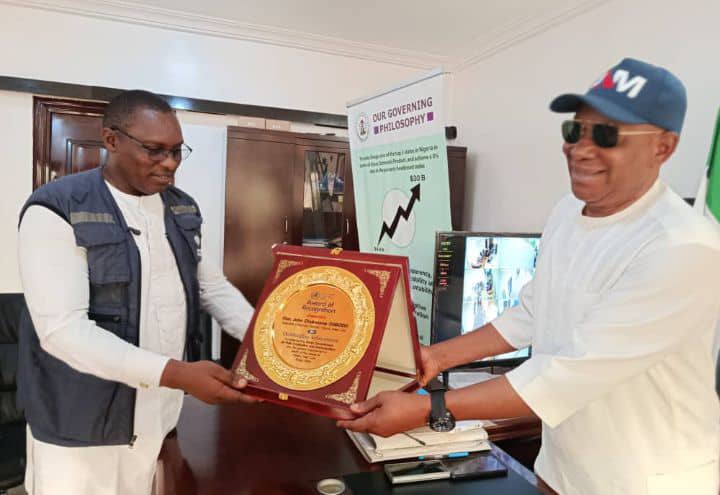
    The Chairman of Nkanu West Local Government Area of Enugu state, Hon. John Chukwuma Ogbodo, has received the prestigious World Health Organization (WHO) Award in recognition of his exceptional contributions to healthcare development in the state.

    The representative of WHO, Dr. Chukwumuanya Igboekwu and the Southeast zonal coordinator presented the award to the chairman at the Nkanu West council headquarters on Friday, June 20, 2025.

    Igboekwu remarked that the activities of the council chairman with regards to his health friendliness, financial support and participation in all state and WHO programmes had earned him the recognition.

    He stated that WHO had been following the activities of the Executive Chairman with regards to various health programmes both at the state level and WHO health programmes. He charged the Chairman to see the award as an encouragement that will spur him to doing more for the health sector and humanity.

    Responding, Hon. John Ogbodo appreciated WHO representatives for finding him worthy of such a meritorious award. He promised to do more as his administration prioritizes health.

    The council boss of Nkanu West also used the opportunity to commend Governor Peter Mbah for creating an enabling environment for health and for the construction of an international 300-bed hospital, 260 Type 2 Primary Healthcare Centers across the state, saying that the governor has carried out several health intervention programmes.

    Other members of WHO team present at the occasion were, Dr Adaeze Ugwu WHO Enugu State Coordinator; Dr Ikechukwu Chidolue WHO Enugu State IDSR Technical Assistant and some local government functionaries.

  • Monkeypox will be renamed Mpox -World Health Organization

    Monkeypox will be renamed Mpox -World Health Organization

    Monkeypox is to be renamed mpox in English, the World Health Organization announced Monday, in a bid to avoid stigmatisation stemming from the existing name.

    Monkeypox received its name because the virus was originally identified in monkeys kept for research in Denmark in 1958, but the disease is found in a number of animals, and most frequently in rodents.

    “Following a series of consultations with global experts, WHO will begin using a new preferred term ‘mpox’ as a synonym for monkeypox. Both names will be used simultaneously for one year while ‘monkeypox’ is phased out,” the UN health agency said in a statement.

    “WHO will adopt the term mpox in its communications, and encourages others to follow these recommendations, to minimise any ongoing negative impact of the current name and from adoption of the new name.”

    The disease was first discovered in humans in 1970 in the Democratic Republic of Congo, with the spread among humans since then mainly limited to certain West and Central African countries where it is endemic.

    But in May, cases of the disease, which causes fever, muscular aches and large boil-like skin lesions, began spreading rapidly around the world, mainly among men who have sex with men.

    Some 81,107 cases and 55 deaths have been reported to the WHO this year, from 110 countries.

    (Channels TV)

  • Blood Donor Day: WHO urges African Govts to prioritise national blood transfusion services

    Blood Donor Day: WHO urges African Govts to prioritise national blood transfusion services

    As Nigeria joins the rest of the world to celebrate this year’s World Blood Donor Day, today, the World Health Organisation, WHO has urged African governments and political leaders to prioritise the provision of adequate human and financial resources to secure the future of national blood transfusion services.

    Making the call in her message to mark the day, WHO Regional Director for Africa, Dr Matshidiso Moeti also called for more people to become regular blood donors.

    According to her, a blood service that gives patients access to safe blood and blood products, in sufficient quantities, is a key component of an effective health system.

    The theme of this year’ is “Donating blood is an act of solidarity. Join the effort and save lives,” this highlights the critical role of voluntary blood donations in saving lives, and enhancing community solidarity and social cohesion by donating just one unit of blood can save the lives of up to three patients.

    The WHO Regional Director stated that compared to other regions globally, the African region sees a disproportionate number of conditions requiring donor blood, impacting as many as seven million patients every year.

    She listed some of the conditions to include haemorrhage associated with pregnancy and childbirth, severe anaemia due to malaria and malnutrition, bone marrow and inherited blood disorders, trauma and accidents, as well as man-made and natural disasters.

    She said: “While the need for donor blood is universal, access for everyone who needs it is not. In the African Region, demand regularly outstrips supply, negatively impacting timely access for all patients who need safe and quality-assured blood to save their lives.

    “As a consequence of the COVID-19 pandemic, voluntary unpaid blood donations dropped significantly. Malawi, for example, registered a 46 per cent decrease in donations.

    “Countries across the African Region have worked hard to improve blood donation frequency, and the situation is showing signs of stabilizing. Blood transfusion services in many countries reached out to blood donors through public awareness campaigns, transporting donors from and to their homes, using digital platforms and establishing call centres.”

    She further stated that the situation remains challenging, and exacerbated by issues such as staff shortages and limited funding from governments and partner organisations for effective blood donor education, recruitment, and retention.

    She said in the region, WHO provides support to countries at various levels, including resource mobilisation for the implementation of national blood transfusion plans, advocacy for integrating blood safety in these plans, and strengthening the legal and regulatory framework for blood safety.

    She added that seeking out opportunities for partnerships and collaborations with media, the private sector, and faith-based and non-governmental organizations, will help increase the recruitment and retention of voluntary unpaid blood donors.

    “I want to sincerely thank Africa’s blood donors for their selfless contribution to national health systems, through this life-saving gift to patients who need transfusion therapy.

    “I also want to acknowledge the tireless efforts of blood services staff who are deeply committed to maintaining critical blood supplies, of the research and development professionals pursuing new technologies and uses for donated blood, as well as the medical teams who use blood rationally to save lives.

    “Donating blood is an act of solidarity. By becoming a blood donor, you will help ease the pressure on health systems still struggling under the burden of the COVID-19 pandemic,” she stated.

    (Vanguard)
  • WORLD AIDS DAY

    WORLD AIDS DAY


    The World AIDS Day, which is one of the 11 official global public health campaigns marked by the World Health Organisation, is designated to be observed on December 1. On this day, people around the world unite to show support for people living with HIV, remember those who have died from AIDS-related illnesses, and inform people that HIV is still very much living among us. The World AIDS Day is globally identified with a red ribbon and after 33 years of its celebration, the theme of World AIDS Day 2021 is “End inequalities, End AIDS” which aims to confront the inequalities that drive AIDS and to reach people who are currently not receiving essential HIV services.

    The inequalities blocking the progress of ending AIDS emerge when HIV interacts with complex fault lines across social, economic, legal and health systems. They are often aggravated by laws and policies and are reflected in unequal HIV outcomes, discriminatory and oppressive practices and violence. Many of the inequalities that facilitated the AIDS pandemic are getting worse and continue to fan the spread of HIV in many parts of the world, not excluding Nigeria. Sexual and gender-based violence which no country has ended, continue to be major drivers of the AIDS epidemic, with immediate and long-term consequences for individuals, families, communities and societies.

    The Acquired Immunodeficiency Syndrome is a chronic, life-threatening condition caused by the Human Immunodeficiency Virus. By damaging the immune system, HIV interferes with the body’s ability to fight infections and diseases. HIV can be spread through different ways, some of which include sex, contact with infected blood or mother to child transmission during pregnancy, childbirth or breastfeeding.


    Statistical data gathered on HIV & AIDS in Nigeria by UNAID in 2018 showed that an estimate of 53 000 people died from AIDS-related illnesses. The results also showed that about 1.9 million people were living with HIV with about 130 000 new HIV infections. 55% of adults living with HIV were accessing antiretroviral treatments, while only 35% of children were accessing the treatment.


    It is important to note that AIDS occurs when the immune system has been severely damaged and such a person will be more likely to develop other infections easily. This has led to several symptoms of AIDS being associated with patients, some of which include: sweats, chills, recurring fever, chronic diarrhoea, weight loss, skin rashes, persistent unexplained fatigue etc. Currently, there is no cure for HIV/AIDS but drugs like “Antiretroviral drugs” can slow the progression of the disease as they reduce the amount of virus in the body of someone with HIV which in turn keeps the immune system strong enough to fight off diseases. Therefore, people experiencing any of the AIDS symptoms must damn the fears of stigmatisation, open up, get tested and seek adequate care.


    HIV stigmatisation affects the emotional well-being and mental health of people living with HIV. They may fear that they will be discriminated against or judged negatively if their HIV status is revealed, and hence do not open up for adequate treatment. The lack of information and awareness combined with outdated beliefs leads to the stigma usually attached to HIV/AIDS. Actions can therefore be taken to end HIV stigma through supportive behaviours.


    Many people think that there is no way to protect themselves from HIV, which is not true. There are several ways to minimise the chances of an infection, such as using condoms for sex, limiting your number of sexual partners, avoiding the reuse of injection syringes, getting tested and knowing your partner’s HIV status. Furthermore, you can always talk to your health care provider about pre-exposure prophylaxis (PrEP) if you are at risk of HIV infection.


    In addition, modern medicine provides a way to minimise the chances of transmitting HIV to one’s child during pregnancy. If an HIV patient takes her medicines daily as recommended by a healthcare provider throughout her pregnancy (including labour and delivery) and continues using her medicines for about four to six weeks after birth, the risk of transmitting HIV to the baby can be as low as one per cent or less.


    The unfortunate prevalence of HIV and AIDS in our society is the more reason why we all need to fight against its spread. As we celebrate this year’s World AIDS Day, we need to sensitise, educate and spread awareness on HIV and AIDS, the need to steer clear of the causes of infection, and what can be done to live a healthy life even if infected already. The government should seek to end the inequalities among people in the nation and make antiretroviral treatments accessible to people irrespective of social class. The collaborative efforts of individuals and the government are important to “End inequalities and End AIDS”.


    Oluwaseyi Egbewande is a Doctor of Pharmacy student at the University of Ilorin, Kwara State


    Source: www.punchng.com


  • WHO endorse RTS,S/AS01 malaria vaccine for children.


    The World Health Organization on Wednesday endorsed the RTS,S/AS01 malaria vaccine, the first against the mosquito-borne disease that kills more than 400,000 people a year, mostly African children.

    The decision followed a review of a pilot programme deployed since 2019 in Ghana, Kenya and Malawi where more than two million doses were given of the vaccine, first made by the pharmaceutical company GSK in 1987.


    After reviewing evidence from those countries, WHO said it was “recommending the broad use of the world’s first malaria vaccine”, the agency’s director general Tedros Adhanom Ghebreyesus said.


    The WHO said in a statement it was recommending the widespread application of the vaccine among children in sub-Saharan Africa and in other regions with moderate to high malaria transmission.


    Many vaccines exist against viruses and bacteria but this was the first time that the WHO recommended for broad use of a vaccine against a human parasite.

    “From a scientific perspective this is a massive breakthrough,” said Pedro Alonso, Director of the WHO Global Malaria Programme.


    The vaccine acts against plasmodium falciparum — one of five parasite species and the most deadly.


    Malaria symptoms include fever, headaches and muscle pain, then cycles of chills, fever and sweating.


    Every two minutes, a child dies of malaria, according to the World Health Organization.


    Before the newly recommended vaccine can reach African children, the next step will be funding.


    “That will be the next major step… Then we will be set up for scaling of doses and decisions about where the vaccine will be most useful and how it will be deployed,” said Kate O’Brien, Director of WHO’s  Department of Immunization, Vaccines and Biological

    (AFP)


    Source: www.punchng.com


  • Nearly 2.5 billion people Worldwide may be living with Some degree of hearing loss by 2050 – WHO

    The World Health Organisation (WHO) says nearly 2.5 billion people worldwide or one in four people would be living with some degree of hearing loss by 2050.

    WHO gave the warning in a statement issued on Tuesday to commemorate the World Hearing Day.

    World Hearing Day is held on March 3 each year globally to raise awareness on how to prevent deafness and hearing loss and promote ear and hearing care across.

    The UN health agency, in its first report on hearing, stated that at least 700 million of these people would require access to ear and hearing care and other rehabilitation services unless action is taken.

    The statement quoted Dr. Tedros Ghebreyesus, WHO Director-General, as saying, “our ability to hear is precious. Untreated hearing loss can have a devastating impact on people’s ability to communicate, to study and to earn a living. It can also impact on people’s mental health and their ability to sustain relationships.

    “This new report outlines the scale of the problem, but also offers solutions in the form of evidence-based interventions that we encourage all countries to integrate into their health systems as part of their journey towards universal health coverage.”

    The report, launched ahead of World Hearing Day on March 3, underlines the need to rapidly step-up efforts to prevent and address hearing loss by investing and expanding access to ear and hearing care services.

    According to the statement, investment in ear and hearing care has been shown to be cost-effective.

    WHO calculates that governments can expect a return of nearly 16 dollars for every one dollar invested.

    The statement, however, said the report found out that lack of accurate information and stigmatisation to ear diseases and hearing loss often limit people from accessing care for these conditions.


    Source: www.sunnewsonline.com