Tag: United States

  • US Warns Mexican Drug Cartels Are Eyeing Nigeria as a Global Meth Hub

    The United States has warned that Mexican drug cartels are increasingly looking to Africa as an alternative route for trafficking synthetic drugs, after the National Drug Law Enforcement Agency dismantled four methamphetamine laboratories in Nigeria this year.

    The US Deputy Assistant Secretary of State for International Narcotics and Law Enforcement Affairs for Africa and the Middle East, Michael Gonzales, said the operations demonstrated the importance of Nigeria’s counter-narcotics campaign to both countries, as Washington intensifies pressure on cartels operating in the Western Hemisphere.

    Gonzales spoke on Tuesday during a visit to the NDLEA headquarters in Abuja, where he commended the agency for its operational successes and said he chose Nigeria as his first visit after assuming office because of the country’s strategic importance and the NDLEA’s record.

    “I became the Deputy Assistant Secretary of State for International Narcotics and Law Enforcement just four months ago, covering all countries of Africa and the Middle East. And when I was thinking where it makes the most sense to visit first, Nigeria was a clear answer.

    “Because as a leader, as an economic powerhouse on the continent, but also particularly NDLEA for the leadership and the impressive wins that you and your team and your interagency counterparts have delivered time and again.

    “In addition to the very robust partnership between INL and NDLEA, I wanted to see firsthand where the magic happens, as we say in the United States,” he said.

    Gonzales specifically cited the four methamphetamine laboratory busts recorded by the NDLEA this year as evidence of the agency’s use of intelligence-led investigations, inter-agency cooperation, operational coordination and prosecution.

    “The four meth lab busts just this year alone are a testament to the deployment of some of the best practices in our tradecraft, the intelligence-based knowledge collection, the coordination across national lines and agency lines, the operational excellence that goes into the actual bust, and then the interrogations, the investigations and prosecutions.

    “They’re all so critical because ultimately counter-narcotics work, the work that each of us does day in and day out, truly delivers for the people,” he said.

    The US official said the significance of the operations extended beyond Nigeria, arguing that the international nature of the narcotics trade meant that successful interdiction in Nigeria could have consequences for drug markets in other parts of the world.

    “When I am talking to American audiences in the United States, I tell them there’s virtually no other issue of foreign policy that so tangibly affects the lives of every community, virtually every family across our country, than narcotics.

    “And the reality of the narcotics trade is international. It knows no boundaries, very few constraints. And so, the work that INL does in the United States and globally and the work that NDLEA does fundamentally delivers for the Nigerian people, for the American people,” Gonzales said.

    He added that the United States had more than four decades of experience supporting counter-narcotics operations around the world, including through training and equipment, and warned that changes in trafficking patterns required countries to work together against criminal networks.

    He said intense US pressure on cartels in the Western Hemisphere was effectively “squeezing a balloon,” forcing traffickers to seek alternative routes through Africa to reach markets in Europe and beyond.

    The official also pointed to the growing shift from plant-based narcotics to synthetic drugs, which he described as harder to detect and potentially deadlier, saying the response must target criminal organisations as interconnected networks, including their financial flows.

    Marwa, in his response, said the NDLEA’s recent operations had uncovered what he described as a deliberate attempt by Mexican cartels to establish Nigeria as a manufacturing base for methamphetamine.

    “Crime has no borders, and neither does the threat. The drugs we seize, the arms we intercept and the terrorist financing we trace are not separate problems.

    “When we seize narcotics and illicit weapons in the same operations and along the same routes, we are looking at the convergence of crime. Drug money buys guns, guns sustain armed groups, and armed groups sustain terrorism.

    “Terrorism has no borders. What festers in the Sahel and the Lake Chad Basin does not stay there, and what is trafficked through West Africa does not stop at our coastline,” the NDLEA chairman said.

    Marwa then detailed the operations against the laboratories, beginning with the largest clandestine methamphetamine laboratory ever discovered by the agency in Nigeria.

    “The Mexican cartel threat is real, and we are confronting it.

    “In recent months, NDLEA operatives dismantled the largest clandestine methamphetamine laboratory ever discovered in Nigeria, in a forest in Ijebu East, Ogun State, where we arrested three Mexican meth experts and their Nigerian collaborators right in the forest where illicit substances worth over $360 million US dollars were recovered.

    “Barely four weeks later, we raided another industrial-scale laboratory at Tapa Village in neighbouring Oyo State and arrested a Mexican methamphetamine expert, brought in for large-scale synthesis, together with four Nigerian collaborators.

    “We have since dismantled a similar facility in Enugu State and another in Ebonyi State, South-East Nigeria, all linked to the Mexican cartels. These were not isolated incidents. They show a deliberate attempt to turn Nigeria into a manufacturing hub,” he said.

    Marwa said the implications of the laboratories went beyond the Nigerian market, arguing that the cartels were seeking routes through West Africa to move methamphetamine to international markets.

    “Let me be plain about why this matters to Washington. These cartels are not setting up in our forests to supply Nigerian consumers alone. They want a West African corridor to ship industrial quantities of methamphetamine to Europe, to Asia, and to American cities.

    “Especially taking into consideration the President Trump hammer that is smashing cartel traffic en route to America. These cartels are now seeking alternative routes to get to the same America,” he said.

    He added, “Every meth-producing laboratory that we shut down is a supply line that never reaches an American street, and every cartel operative we arrest is one fewer in the pipeline.

    “Our forensic chemists, our investigators and our tactical teams are, in effect, forward defence for communities in the United States.”

    Marwa said the US partnership had strengthened the NDLEA’s capabilities in forensic and chemical analysis, professional training, investigations, financial-crime detection and equipment maintenance.

    He said the support had contributed to the agency’s recent operational results, including the arrest of 96,157 drug offenders, among them 250 drug barons, and the seizure of more than 15.8 million kilogrammes of assorted illicit drugs in the last five years.

    He added that 16,691 drug traffickers, including kingpins, had been convicted during the period.

    Marwa, however, warned that withdrawing US support could create a gap that criminal and terrorist networks would exploit, and appealed to Gonzales to convey to Washington the need to sustain or increase its assistance.

    “This great partnership has fueled our offensives that yielded the arrest of 96,157 drug offenders including 250 drug barons, the seizure of over 15.8 million kilograms of assorted illicit drugs and conviction of 16,691 drug traffickers including the kingpins, in the last five years,” he said.

    He urged the US to maintain its support “as it is, if not increased,” arguing that criminal networks already operated across national boundaries.

    “Traffickers, arms dealers and terrorists cooperate across borders every day, and governments confronting them must do the same,” Marwa said. Punch

  • US Threatens to Restrict Military Aid to Nigeria Over Child Soldier Allegations

    The United States of America has placed Nigeria on its Child Soldiers Prevention Act blacklist, saying the designation could lead to cuts in military training, weapons sales, foreign military financing, and defence cooperation from October 1, 2026, unless President Donald Trump issues a waiver.

    This came after the State Department’s 2026 Trafficking in Persons Report cited the continued recruitment and use of children by Boko Haram and ISIS-West Africa on Nigerian soil.

    The report, published on October 11 and obtained by The PUNCH on Monday, covers April 1, 2025 to March 31, 2026 and is the latest available assessment of Nigeria’s anti-trafficking performance by the US State Department.

    It placed Nigeria on a list of 14 nations, including Russia, Iran, South Sudan, and Somalia, that are accused of recruiting or using child soldiers.

    The report also revealed that the country’s anti-trafficking performance failed to meet minimum standards for the 15th consecutive year.

    “Governments identified on the list are subject to restrictions, in the following fiscal year, on certain security assistance and commercial licensing of military equipment.

    “The CSPA prohibits assistance to governments that are identified in the list under the following authorities: International Military Education and Training, Foreign Military Financing, Excess Defence Articles, and Peacekeeping Operations, with exceptions for some programs undertaken pursuant to the Peacekeeping Operations authority.

    “The CSPA also prohibits the issuance of licenses for direct commercial sales of military equipment to such governments. Beginning October 1, 2026, and effective throughout Fiscal Year 2026, these restrictions will apply to the listed countries, absent a presidential waiver, applicable exception, or reinstatement of assistance pursuant to the terms of the CSPA,” the report read.

    It said the determination to include a government in the CSPA list is “informed by a range of sources, including first-hand observation by U.S. government personnel and research and credible reporting from various UN entities, international organisations, local and international NGOs, and international and domestic media outlets.”

    The blacklisting comes amid an ongoing US-Nigeria security partnership after the Trump administration deployed Navy SEAL Team 6 alongside Nigerian forces for joint counterterrorism operations in the northeast and formalised the bilateral 2026 Defence Cooperation Roadmap.

    According to the report, not a single government official was prosecuted for state complicity in trafficking despite acknowledged corruption, even as the number of trafficking victims who received government assistance collapsed from 2,058 the previous year to just 675.

    The CSPA listing, if not waived by a sitting US president, could restrict International Military Education and Training, Foreign Military Financing, Excess Defence Articles, peacekeeping assistance, and licences for direct commercial sales of military equipment to Nigeria, the document said.

    It stated, “The government did not report any investigations, prosecutions, or convictions of government employees allegedly complicit in trafficking crimes or provide details or other actions taken against complicit officials from previous years,” adding that “corruption and official complicity in trafficking crimes remained significant concerns.”

    The report further noted that “observers reported some law enforcement, military, and other government officials reportedly committed trafficking crimes, accepted bribes to facilitate trafficking, or obstructed justice by interfering with investigations.”

    On law enforcement, it said Nigerian authorities investigated 1,341 trafficking cases, comprising 589 sex trafficking cases, 301 forced labour cases, and 451 unspecified cases, involving 1,367 suspects. Of those, 94 were prosecuted and 97 traffickers convicted.

    The US acknowledged that “the majority of those convicted received prison sentences of at least one year” and that “officials increased collaboration with foreign governments on international trafficking investigations,” resulting in operations across West Africa and Southeast Asia in partnership with INTERPOL.

    It said although 2,004 people were identified as trafficking victims, comprising 893 sex trafficking and 1,111 forced labour, only 675 received government-supported assistance during the year, against 2,058 the prior period.

    The report criticised shelter conditions at the National Agency for the Prohibition of Trafficking in Persons, noting that NAPTIP’s closed-shelter policy meant “residents were not allowed freedom of movement, including children’s access to school,” and that “access to some protection services was tied to victims’ willingness to cooperate with law enforcement proceedings.”

    It noted that adult victims who declined shelter were not provided alternative services, and that “only one dedicated NGO shelter was available for adult male trafficking survivors.”

    On the Child Soldiers Prevention Act listing, the report identified Boko Haram and ISIS-West Africa as the entities responsible for child recruitment.

    “Boko Haram and ISIS-West Africa continue recruiting, abducting, and using—including through force, fraud, and coercion—child soldiers as young as 12 years old as cooks, domestic workers, spies, porters, messengers, bodyguards or guards at checkpoints, “morality police,” armed combatants, and suicide bombers in attacks in Nigeria, Cameroon, Chad, and Niger; these children are subjected to physical and sexual abuse and forced drug use.

    “These non-state armed groups continue to abduct women and girls in the northern regions of Nigeria, many of whom they exploit in forced labour, including in domestic servitude, and in sexual slavery. Boko Haram has kidnapped and subjected thousands of women and girls to forced marriage, including for sexual slavery and forced labour; Boko Haram punishes girls, including for refusing to marry, by forcing them to be suicide bombers.

    “In many cases, the government coerces victims of forced marriage, including trafficking victims, to return to their Boko Haram husbands in Borno State demobilisation centres. Criminal gangs in the south recruit and use children in forced criminality, including kidnappings and robberies, and exploit them in sex trafficking. Criminal gangs in the northwest also exploit victims in forced labour in agriculture and mining,” the report stated.

    It said the CSPA listing, under US law, could restrict International Military Education and Training, Foreign Military Financing, Excess Defence Articles, peacekeeping assistance, and licences for direct commercial sales of military equipment, restrictions effective from October 1, subject to a presidential waiver.

    On labour trafficking, the report said the government “did not prohibit worker-paid recruitment fees…did not report holding labour recruiters liable civilly and criminally for fraudulent recruitment,” and “did not provide specialised training on child labour and human trafficking to labour inspectors.”

    It added that “the government did not provide anti-trafficking training to its diplomatic personnel.”

    The report also cited international criminal networks using Nigeria as an arena, saying “highly organised foreign criminal syndicates fraudulently recruit foreigners to Nigeria with promises of employment, confine them in leased properties and compel them to participate in organised online scams.”

    The TIP report also alleged that “Russian authorities fraudulently recruit and use Nigerians to fight in the Russia-Ukraine war” and that Nigeria’s Ministry of Education “helped promote” Russia’s Alabuga Start programme “despite warning signs.”

    It raised concern that “North Korean nationals working in Nigeria may be operating under exploitative conditions displaying indicators of forced labour.”

    On baby factories, which are criminal enterprises disguised as orphanages, maternity homes, or religious centres where women are held against their will, raped, and forced to deliver children who are subsequently sold, the report described the operations as a documented feature of Nigeria’s trafficking landscape, concentrated predominantly in the south.

    Despite the concerns, the US government acknowledged Nigeria’s increased allocations, including victim service funding, which rose from N128m to N233m, while prevention spending jumped from N58.8m to N245m.

    It also noted that the government coordinated the repatriation of 428 Nigerians exploited abroad, secured restitution for 14 victims as part of criminal sentences, and maintained anti-trafficking task forces in 23 states.

    Nigeria, a source, transit, and destination country for trafficking, last attained the top Tier 1 ranking in 2011.

    Its status has fluctuated between Tier 1, Tier 2, and the lower Tier 2 Watch List over the annual report’s 25-year history.

    Countries in the 2026 CSPA listing include Afghanistan, Myanmar, the Democratic Republic of Congo, Ethiopia, Iran, Russia, Somalia, South Sudan, Sudan, Venezuela, Yemen, and two others in a group the US considers the most consequential offenders in child soldier recruitment globally.

    When contacted for comments, NAPTIP’s Head of Press and Public Relations, Vincent Adekoye, said the agency would make its response to the report public.

    Special Adviser to the President on Information and Strategy, Bayo Onanuga, did not respond to calls to his mobile line and a text message seeking the Presidency’s comments. Punch

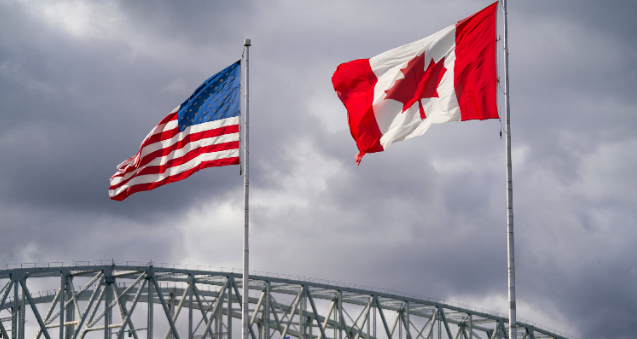
  • Canada Hits US With Up to 50% Tariffs as Trade Talks Collapse

    Canada Hits US With Up to 50% Tariffs as Trade Talks Collapse

    Canada imposes tariffs of up to 50% on US goods after trade talks collapse, escalating tensions between the two allies.

    Canada has imposed new retaliatory tariffs on a broad range of US goods after trade negotiations with Washington collapsed, further straining relations between the two long-standing allies.

    The new duties, which took effect on Tuesday, range from 15% to 50% and cover about $27.6 billion worth of US products, including dairy, agricultural equipment, paper, household appliances and electronics.

    Canada has also doubled its tariffs on US steel, aluminium and iron products to 50%, while furniture and clothing face the highest tariff rate.

    Ottawa described the measures as a “dollar for dollar” response to US tariffs imposed on Canadian goods under Section 338. Canada’s Department of Finance said the measures were intended to protect Canadian workers, producers and manufacturers and help them compete with US products in the domestic market.

    The latest tariffs are in addition to existing Canadian counter-tariffs, including a 25% duty on US automotive products.

    Trade negotiations between the two countries broke down at the end of August, with officials from both sides blaming each other for the failure to reach an agreement and publicly disagreeing over the issues that prevented a deal.

    The dispute escalated further on Monday when US President Donald Trump called for a boycott of Canadian aircraft manufacturer Bombardier, declaring on Truth Social: “NO MORE SELLING BOMBARDIER IN THE UNITED STATES!”

    The intensifying trade tensions come as the US and Canada remain deeply interconnected economically. The US exported $333.6 billion worth of goods to Canada and imported $381.9 billion from its northern neighbour.

    The two countries share extensive trade across sectors including energy, vehicles, heavy machinery, aircraft, pharmaceuticals, gems and jewellery, furniture, clothing, food and beverages.

    Economists have warned that although the newly targeted goods account for a relatively small share of overall bilateral trade, the tariffs could deliver a significant blow to small and medium-sized businesses and companies operating in the most affected sectors.

    In response to the economic impact of the trade dispute, Ottawa announced a $7.5 billion support package for businesses and workers last month.

    The package builds on an existing $25 billion in support introduced in response to the US global tariff offensive that began in April 2025. Arise News