Tag: Terrorism

  • Who Really Benefits From Africa’s War On Terror?

    Who Really Benefits From Africa’s War On Terror?

    By S.N.C Nwagu

    For years, Africa has fought terrorism with soldiers, budgets and foreign partnerships, and for years terrorism has survived them. Armies are deployed, emergency security budgets approved, foreign assistance received, counter-terrorism operations launched in succession. Yet from Nigeria’s northeast to the Sahel, from Somalia to parts of Central and East Africa, terrorist organisations keep demonstrating the same disturbing skill: they absorb military pressure, recruit new fighters and reinvent themselves.

    This is the question Africa has not sufficiently confronted: why does terrorism persist, and who benefits from its persistence?

    THE RELIGIOUS EXPLANATION—AND ITS LIMITS

    The conventional answer is religion. Boko Haram, al-Shabaab, al-Qaeda affiliates and Islamic State-linked organisations invoke Islam and dress their violence in religious language. That is real, and no honest analysis pretends otherwise.

    But it is also incomplete. Millions of African Muslims reject terrorism outright. They live, trade and worship peacefully alongside Christians and adherents of African traditional religions across the continent. If religion alone produced terrorism, every country with a large Muslim population would experience it at comparable scale. None do.

    Religion supplies the ideological vocabulary of terrorism. Poverty, exclusion, weak governance, political grievance, criminal economies and the absence of state authority supply the soil it grows in. Collapsing that distinction is where Africa’s terrorism debate keeps going wrong.

    WHEN TERRORISM BECOMES AN ECONOMY

    A young person without work, education, security or hope is vulnerable to any organisation offering money, protection, identity and belonging. Poverty does not manufacture terrorists on its own, but it lowers the cost of recruiting them.

    And once an extremist organisation takes root, something more dangerous follows: terrorism becomes an economy in its own right. Fighters need financing, and they get it through kidnapping for ransom, extortion, illegal taxation, smuggling, illicit mining, trafficking and control of commercial routes. Where government authority is weak, armed groups do not merely disrupt the state — they become an alternative one, taxing communities and traders directly.

    A group may preach religion while running the books of a criminal enterprise. That is the part of the story Africa’s terrorism debate keeps skipping.

    THE BENEFICIARIES OF INSECURITY

    The question worth asking is not only what religion the terrorists profess. It is what political and economic conditions let them survive, what criminal networks sustain their operations — and, more uncomfortably, who gains when insecurity continues.

    Terrorist organisations gain obviously: money, recruits, territory, publicity, bargaining power. Criminal networks gain alongside them, since weapons trafficking, illegal mining and smuggling flourish precisely where government control is thin.

    There is a third beneficiary Africa is reluctant to name: corruption. Every prolonged security crisis demands enormous expenditure — weapons, equipment, surveillance systems, security contracts, emergency budgets, special interventions. Spending money to protect citizens is not the problem. The problem begins when weak accountability turns insecurity itself into an opportunity for private enrichment, and a war quietly becomes an industry. Once that happens, peace threatens the interests of everyone who has learned to profit from war.

    THE INTERNATIONAL DIMENSION

    Africa’s insecurity does not unfold in isolation. Foreign governments have legitimate security interests on the continent — and economic and geopolitical ones alongside them. Terrorism can justify military cooperation, intelligence partnerships, foreign bases and strategic engagement that might otherwise be harder to secure.

    None of this proves that foreign powers created African terrorist organisations; that claim would be simplistic and unearned. The more defensible argument is narrower: existing conflicts can be, and are, exploited by external actors for strategic advantage. External actors exploit local grievances. Local elites exploit foreign interests. Criminal organisations exploit instability. Terrorist organisations exploit poverty and weak governance. Everyone enters the same conflict carrying a different objective.

    NIGERIA’S BOKO HARAM: A CASE STUDY IN COMPLEXITY

    Nigeria’s experience with Boko Haram makes the point concrete. Its religious ideology is real, and its violence against civilians, schools, religious institutions and government targets cannot be waved away as mere economic grievance dressed up in scripture.

    But neither can the environment that let Boko Haram grow be ignored. Poverty, unemployment, poor governance, corruption and weak state presence built the vulnerabilities that extremism exploited. Military victory over its fighters was never going to be sufficient on its own — and it has not been.

    Africa can eliminate fighters and still leave behind the conditions that produce their replacements. It can destroy camps without destroying the criminal economy that finances them. It can raise military spending without strengthening the institutions that earn citizens’ trust. And it can keep describing every terrorist as a religious fanatic without asking why certain communities remain fertile ground for recruitment.

    BEYOND THE BATTLEFIELD

    The central African question is not whether terrorism is religious or economic. It is both, and neither explanation stands on its own. Religion supplies the ideology; political grievance, the motivation; economic deprivation, the vulnerability; weak governance, the opportunity; illicit markets, the financing; geopolitics, the amplification.

    This is why the fight against terrorism has to move beyond the battlefield. Africa needs security forces capable of defeating armed groups — and, just as urgently, governments capable of defeating the conditions that let those groups regenerate: employment, education, accountable government, effective justice, secure borders, transparent management of natural resources, and the disruption of terrorist financing.

    FOLLOW THE MONEY

    Above all, Africa must start following the money. When a terrorist organisation survives for years, somebody is financing it. When illegal mining continues under armed groups’ control, somebody is buying the minerals. When weapons cross borders repeatedly, somebody is supplying them. When ransom payments keep kidnapping networks in business, somebody is receiving the money. And when insecurity persists despite enormous security expenditure, somebody should be asking where that money has actually gone.

    The real question is bigger than terrorism itself: who benefits from Africa’s insecurity? Until the continent asks that question honestly — and insists on an answer — it may keep winning battles against terrorists while losing the larger war against the political and economic conditions that let terrorism survive.

    Terrorism speaks the language of religion. Its survival is sustained by economics, politics and power. That is where Africa’s next counter-terrorism conversation should begin.
  • CBN Steps Up Bank Checks to Block Terrorism Financing

    CBN Steps Up Bank Checks to Block Terrorism Financing

    Precious Nwonu, Enugu

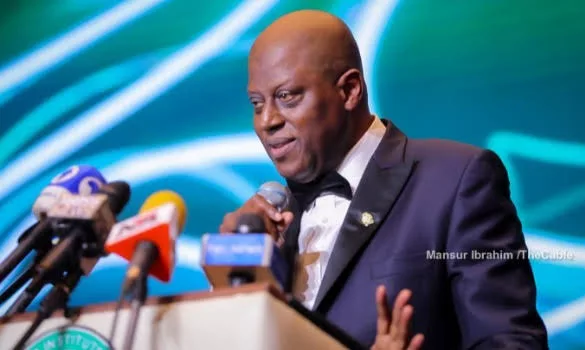
    The Central Bank of Nigeria (CBN) has rolled out a stronger supervisory framework aimed at deterring the use of Nigerian banks and financial institutions for terrorism financing and other financial abuses.

    In an official statement, the apex bank’s Acting Director of the Corporate Communications and Investor Relations Department, Hakama Sidi-Ali, announced that the CBN has made terrorism financing supervision one of its foremost current priorities. This aggressive focus forms part of the bank’s ongoing commitment to thoroughly protect the Nigerian financial system from abuse by illicit actors.

    Sidi-Ali explained that this newly reinforced push explicitly covers four broad operational areas: how financial institutions manage terrorism financing risk, how they monitor transactions for signs of terrorism financing, how they execute targeted financial sanctions, and how they report suspicious transactions linked to terrorism. Rather than sitting back and waiting for problems to surface on their own, the apex bank plans to implement a strict, risk-based approach, ensuring that banks and institutions seen as more exposed to these risks will attract closer supervisory attention.

    “This supervisory focus also supports Nigeria’s ongoing domestic and international cooperation on counter-terrorism financing, counter-proliferation financing, financial integrity, and the protection of the financial system. Further supervisory engagement will be undertaken as appropriate,” Sidi-Ali stated.

    According to her, the bank will continue to apply a risk-based supervisory approach, utilizing both on-site and off-site engagements.

    This strategy is designed to enforce highly effective Anti-Money Laundering, Combating the Financing of Terrorism, and Countering Proliferation Financing (AML/CFT/CPF) controls across the financial sector, in strict alignment with existing legal and regulatory obligations. She added that further supervisory engagement will be undertaken as appropriate, indicating that additional enforcement steps could follow depending on what the CBN’s checks turn up.

    In tandem with these regulations and in line with the provisions of the Terrorism Prevention and Prohibition Act (TPPA), 2022, the Nigeria Sanctions Committee (NSC) recently designated six individuals and three entities as terrorist financiers, subsequently adding them to the official Nigeria Sanctions List.

  • “Stop Giving Motorcycles as Palliatives, They End Up With Terrorists” – Defence Minister

    “Stop Giving Motorcycles as Palliatives, They End Up With Terrorists” – Defence Minister

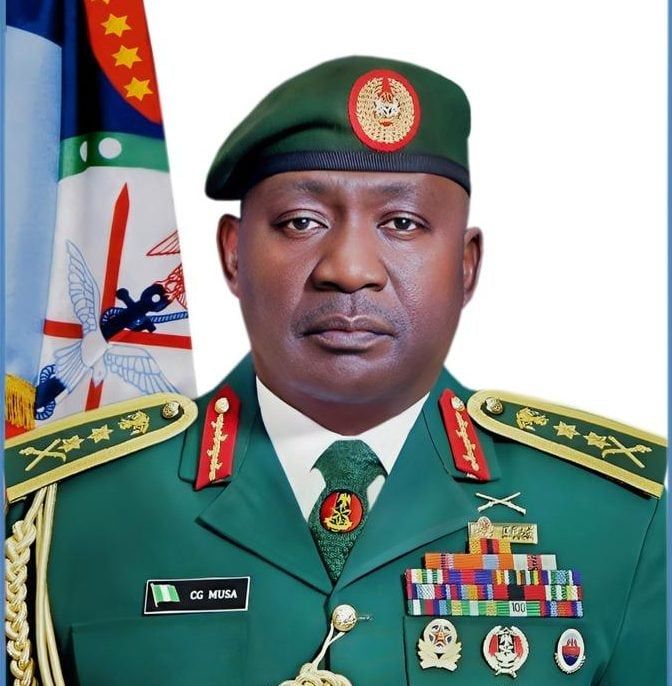
    The Minister of Defence, Gen. Christopher Musa (retd.), on Thursday said terrorists are using motorcycles given to Nigerians as palliatives to wreak havoc across the country.

    He, however, advised the state governors and lawmakers to stop giving motorcycles as palliatives, arguing that some of the motorcycles eventually end up in the hands of terrorists to facilitate and enhance their nefarious activities.

    Musa, who stated this when he appeared on Channels Television’s Politics Today, said efforts are being made to curb terrorism and the operational challenges confronting the country’s security forces.

    “We try to appeal to even governors to stop giving motorcycles out as palliatives. Because these motorcycles are the same ones that still end up with these terrorists.

    “Even if you have to give, don’t give them the big capacity motorcycles; give them the small capacity ones that they won’t be able to use to run around, because that gives them leverage. They can easily enter and then disappear,” he said.

    The minister also warned that motorcycles distributed through constituency projects and other palliative programmes by lawmakers could find their way back to bandits and terrorists.

    “Those bikes… before you know it, they’re already back to the bandits, and that’s what they’re using. So we must stop that,” he said.

    According to him, security agencies had identified illegal markets and motor parks as channels through which terrorists move arms and ammunition into areas where they operate.

    “What we realise from experience is they establish illegal markets or illicit motor parks. They go to those motor parks; that’s where they move arms and ammunition into those areas,” he added.

    The defence minister also called for greater involvement of local governments in tackling insecurity, saying their proximity to communities gives them an advantage in identifying criminals and preventing crime.

    “We must allow our local governments to work. Failure of local government is what is aggravating what we’re dealing with, and if we want a better solution, a quick fix, our local governments must work.

    “Crime and development are local. If every local government chairman is dealing with criminals within his locality, it’s easier to manage them than leaving it to the state or to the federal,” he said.

    Musa said local government chairmen should hold regular security meetings and report developments in their areas.

    He further urged state and local authorities to strengthen monitoring of markets, motor parks and other locations through which drugs, weapons and ammunition could be moved.

    “If we’re able to make sure that we man all the markets, all the motor parks, all these areas where drugs, weapons, ammunition move, it will make it difficult for them,” he added. Daily Trust

  • The Hollow Nigerian Way of Fighting Terror

    The Hollow Nigerian Way of Fighting Terror

    -By Abdul Mahmud 

    Simon Ekpa has been sentenced to six years in Finland for terrorism-related crimes. His arrest by Finnish police in 2024, which was public was followed by criminal charges, trial, and conviction handled by the courts of that country – in quick time.  No politics. No ethnic undertones. No religious sentiment. No ifs. No buts. Just the law. That is how serious nations combat terrorism. They use laws. They use institutions. They make the courts, not politicians, the final arbiters. Finland has shown that when citizens wage wars against the state, there is only one path; the path of justice. Our country and its puissant rulers should take notice. But, will they?

    For years, our country has lived under the weight of terrorism and banditry. From Boko Haram in the Northeast, to bandits in the Northwest, to armed herdsmen across the Middle Belt, to secessionist violence in the Southeast, our country has been battered. Yet, ask yourself: who are the high-profile terrorists that our country has ever successfully tried and jailed? Tukur Mamu, the man the SSS named as a terrorist who was arrested in September, 2022? Three years later the hearing of the criminal charges filed against him at the Federal High Court, Abuja, has not gone bail hearing. Who else? None. Rather than pursue justice, our country has embraced appeasement. Rather than resort to trials, it has embraced settlements. Rather than apply the law, it has enthroned the politics of kid gloves. Terrorists, rather than being dragged before our courts, they are courted with amnesty. That kind of détente plays out in grotesque rituals. Men who once stormed villages, who left behind charred homes and unmarked graves, now appear draped in camouflage. Bandoliers of ammunition hang across their chests. Kalashnikovs, the same weapons that mowed down innocents, slung confidently across their shoulders. They grin for the cameras. In those staged moments of “surrender”, the mass killings and abductions they committed, including the humiliation inflicted on our sovereign state, are made to vanish into thin air. Governors pose beside them as though they were statesmen, not outlaws. Soldiers and police officers stand by in silence, complicit in the theatre. What should be a reckoning becomes a performance. What should be justice becomes indulgence. And what should reaffirm the authority of the state instead diminishes it, making the law itself look like a prop in a grotesque show.

    They also have a way of christening the rituals to make them appear legit. They call it “deradicalisation”. They call it “reintegration”. They call it “rehabilitation”. In truth, it is a capitulation. It is the surrender of the state to its enemies. The hypocrisy is glaring. When petty thieves are caught, they rot in jail. When kidnappers without political links are arrested, they face endless trials. When poor youths are caught for petty crimes, they are paraded before cameras. When the hideouts of Yahoo-Yahoo boys, the so-called Aza men, as the streets now describe them, are raided, it dominates the headlines and fills the evening news. But when men with blood on their hands, when men who sack villages and massacre innocents are caught, they are offered seats at the table. They are told to lay down their arms. They are “reintegrated” into the very society they destroyed.

    This policy of appeasement did not begin today. It has a history. Nasir El-Rufai, former governor of Kaduna State, openly admitted that he paid bandits to stop attacks. He was not ashamed. He said he travelled out of the country to meet them. He said he settled them. His justification was crude: to stop them from killing his people, he had to give them what they wanted. Other governors followed the same path. Bello Matawalle of Zamfara embraced negotiations with bandits, granting them amnesty. Aminu Masari of Katsina tried the same. In Niger State, Abubakar Bello also pursued dialogue and settlement. The logic was always the same: better to settle killers than confront them. Better to appease terror than uphold the law. But what has this brought our country? Nothing but emboldened terrorists. Bandits who now fly helicopters into forests. Bandits who tax farmers before they can plant or harvest. Bandits who shoot down military aircraft. Terrorists who walk free while victims bury their dead.

    Ekpa’s sentencing in Finland throws all this into sharp relief. Here was a man who incited violence from abroad. Here was a man who issued threats, who enforced stay-at-home orders in the Southeast, whose words and actions paralysed local economies and endangered lives. Our puissant rulers cried out, again and again, until their voices broke and turned hoarse. Our country itself wailed in anguish. But nothing tangible happened here. It took a foreign country, thousands of miles away, to act. Why? The answer isn’t farfetched. In Finland, the law is supreme. In our country politics is supreme and it trumps law. Yet, hypocrisy rises to the surface, traded as the common currency of power and persuasion. Our leaders say they are fighting terrorism; but, they refuse to use the one tool that makes nations strong: the impartial force of justice. They are quick to parade the poor. They are quick to jail the powerless. But they refuse to jail terrorists. They refuse to even try them. So we must ask again: who are the high-profile terrorists that Nigeria has jailed? Is it Shekau? No. He died by his own hand. Is it any of his commanders? No. Is it the masterminds of the Chibok abductions? No. Is it the killers of students in Katsina, Kankara, Kagara, or Yobe? No. Is it the men who sacked hundreds of villages in Zamfara, Benue, Plateau? No. The answer is clear. No one.

    But, every other market day, the military announces the surrender of hundreds of “repentant” Boko Haram fighters. They are fed. They are clothed. They are trained. They are sent back into society. Their victims, the widows, the orphans, the displaced, are left with nothing. This is not justice. This is betrayal.

    Our country has turned upside down the meaning of justice. Instead of trials that affirm the rule of law, it creates photo opportunities for terrorists and bandits who shake hands with governors. Instead of courtrooms, it arranges negotiation tables. Instead of jail cells, it sets up reintegration camps. Ekpa’s case is instructive. He was not tried here. He was not punished here. He was punished in Finland. And he was punished because a nation that values law and order cannot allow terrorism to fester unchecked. Our country, by contrast, has allowed terrorism to become an industry. An industry of settlements. An industry of amnesty. An industry of deals. The consequences are dire. Terrorism has metastasised. Banditry has grown. Kidnapping for ransom has become the national enterprise. Farmers are abandoning their land. Children are being denied education because schools are unsafe. Citizens are paying for the failure of the state to act. It is time to say the truth: our country is not fighting terrorism. Our country is accommodating it. Our rulers are bargaining with it. Our rulers are feeding it.

    Those who defend the appeasement policy argue that our country lacks the capacity to fight. They argue that the military is overstretched. They argue that negotiation saves lives. But they miss the point. No country has ever secured itself by appeasing terror. No state ever won peace by rewarding killers. Peace without justice is an illusion. Finland has shown what is possible. Finland has shown that when institutions work, the law can confront terror. Our country must learn. Our country must rise. Our rulers must stop hiding behind appeasement and confront the reality that they have abandoned justice.

    The question remains: who will bell the cat? Who will summon the courage to prosecute terrorists? Who will put Shekau’s successors on trial? Who will bring the leaders of bandit cartels to court? Who will give our citizens the assurance that the state is not in league with killers? Our hypocrisy will remain exposed. We jail the petty thief. We reintegrate the mass murderer. We punish the weak. We reward the strong. We claim to fight terror while pampering terrorists. This is why trust in the state is collapsing. Citizens see a government that cannot protect them, yet embraces those who butchered their families. They see widows mourning while killers are feted. They see children out of school while warlords are called “repentant”. In such a climate, the idea of justice becomes hollow, the meaning of citizenship erodes, and the authority of the state shrinks into ridicule.

    A nation that cannot punish its worst offenders cannot command the loyalty of its people.

    And so the cycle continues. Bandits strike, the state negotiates. Terrorists kill, the state forgives. Villages are burnt, the state calls for dialogue. The message is clear: in our country, crime pays when it is scaled high enough. Small men are crushed by the system; big men are courted by it. This inversion of justice is not only obscene; it is suicidal for a fragile state. For no republic can endure when the sword is turned against the weak while the strong are shielded from the law. The lesson from Finland is plain. Nations that survive are those that make no distinction between the weak and the powerful in the eyes of the law. They understand that justice is not an option, but the very lifeblood of order. Our country with its rulers must decide whether its wants to remain a theatre of indulgence or a country governed by law. Until it chooses justice, our citizens will keep burying the dead, keep mourning the abducted, keep watching governors shake hands with killers. And our hypocrisy, already naked before the world, will become the grave digger of our republic.

    Ekpa’s sentencing is a mirror. A mirror that shows us the face of our country’s failure. The question is: will our country’s rulers look into it? Or will they, as always, look away?

    Time will tell.

  • Benue Killings: Tinubu Visits Victims of Yelewata Attack at Teaching Hospital

    Benue Killings: Tinubu Visits Victims of Yelewata Attack at Teaching Hospital

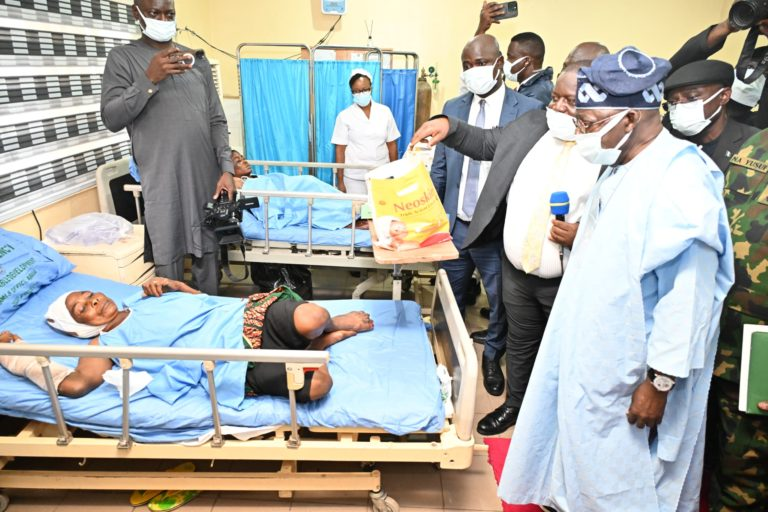
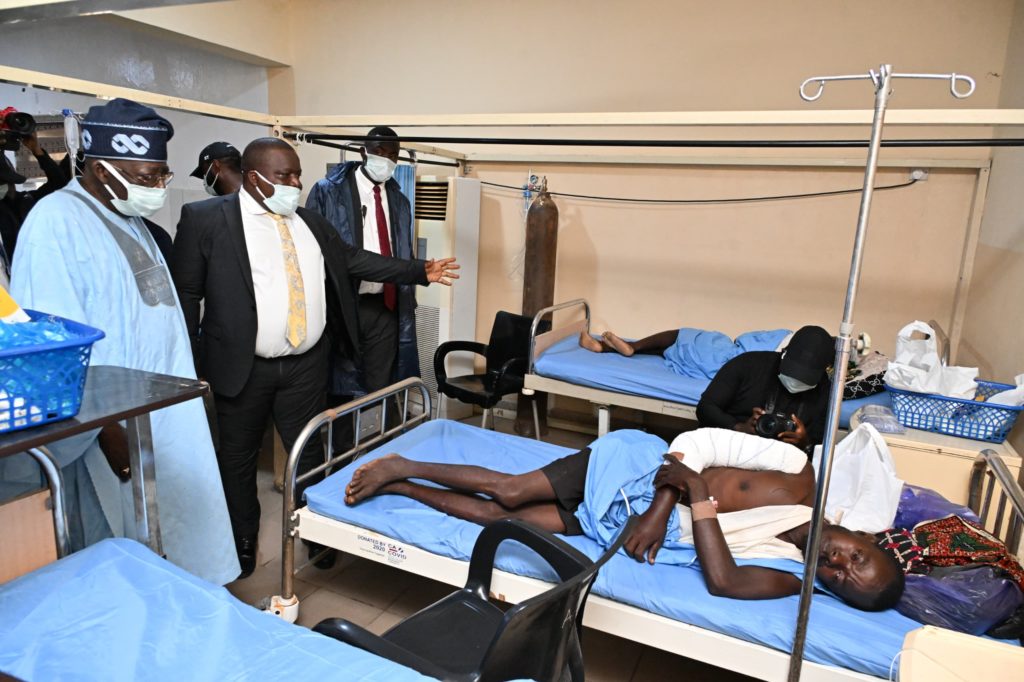
    President Bola Tinubu has visited surviving victims of last Friday’s brutal attack in Yelewata community in the Guma Local Government Area of Benue State.

    Tinubu visited the North-Central state following the attack which left over 59 people dead and several others injured.

    The President went straight to the hospital after arriving at the Tactical Air Command, Nigerian Air Force Base, Makurdi, at about 12:58 pm on Wednesday.

    He later left the hospital for the new Banquet Hall of the Benue State Government House where he is expected to meet with major stakeholders in the state in view of the violent attacks that have led to the loss of lives.

    Tinubu is expected to meet with families of victims, displaced and injured persons, and community leaders directly impacted by the violence.

    The meeting with the stakeholders is part of a broader effort to find a lasting solution to the crisis that has affected parts of the state, especially rural communities.

    Expected at the meeting are key national and state-level figures, including the state governor, Hyacinth Alia; governors from across the country, particularly from the North-Central states; the National Security Adviser (NSA), Nuhu Ribadu, Secretary to the Government of the Federation (SGF), George Akume.

    Also expected to attend are service chiefs, key members of the National Assembly, leaders of the ruling All Progressives Congress (APC), and other prominent individuals, especially those representing affected communities in Benue.

    The state government declared a public holiday for the visit. Channels TV 

    See more photos from the hospital visit below:

  • Nigeria Mourns

    Nigeria Mourns

    By Abdul Mahmud

    Two incidents drew attention to our country’s deepening security crisis this month. The first happened in Zamfara State. A pregnant woman was abducted by terrorists. She gave birth while in captivity. The leader of the terrorist group took her newborn twins. Then he threw them to his dogs. The dogs ate the babies alive. One after the other. The second occurred in Kogi. Lanlege Samuel Adewale was kidnapped in Kabba. He tried to protect his neck from a machete. His left hand was chopped off instead.

    These are not moonlight tales spun to amuse children or transmit ancestral wisdom. They are not the parables of old, meant to echo the values of bygone eras or light the moral path for the future. Or put another way, they are not the moral scaffoldings of ancestral wisdom. They are not the echoes of a noble past meant to instruct the future. No. These are the brutal chronicles of a country in descent. These are simply the grotesque accounts of a country that bear neither lesson nor legend, only the raw stench of evil and the deafening silence of a state in retreat. Such horrors happen every day. Some are reported. Most are not. The victims vanish into the dark forests of our country. Families pay ransom, bury the dead, or live with permanent scars. The ones live to recount their stories.

    This is not just about crime. It is not just insecurity. It is a state failure. A classical state failure. Across large swathes of our country, the government no longer governs. Bandits and terrorists have taken over. They run parallel governments. They control territories. They rule by fear. They collect taxes. They impose laws. They deliver jungle justice. There is a governance crisis. A catastrophe that is palpable and visible. The basics of statehood are absent. Where our country isn’t struggling to exist within itself, it is ceding many parts of itself. It no longer imposes its authority in many parts. In some places, it is an absent authority. From Zamfara to Katsina. From Borno to Zamfara, Plateau in-between, bandits and terrorists have seized land, people, and local power. From Kwara to Niger, they are building and resuscitating terror cells. Abuja is too close for comfort. Be afraid; be very afraid. Of the truth, these are not ragtag criminals. They are terrorists. Organised. Armed. Funded. And strategic, to the extent that their purpose is to turn our country into an Islamic caliphate.

    They understand our country’s weaknesses. And they exploit them.

    Meanwhile, our country is slow to tackling the menace. Disorganised. Reactive. Often silent. Security meetings have become the favourite occupation of the president and his men. All talks about threats to national security. No action. The threats grow. The danger gets closer home. The military is everywhere. But nowhere. Soldiers are deployed in 34 of 36 states. Still, citizens are kidnapped daily. Villages are attacked. Markets are raided. The police are overwhelmed. Intelligence agencies don’t coordinate. Information is hoarded, not shared. Budgets are announced, but weapons don’t arrive. Fighting troops complain of old rifles, low morale, and unpaid allowances.

    The security architecture is broken.

    But, perhaps, the most tragic failure is the State Security Service (SSS). This is the Service that should be leading the fight against terrorism. The one with the power to detect plots, infiltrate networks, and prevent attacks. But what does it do? It tracks critics. Professor Pat Utomi is its latest victim. The grouse against him is that the opposition’s shadow government he proposes in a democracy is a threat to democracy itself. Ludicrous. Utomi is not the threat. The real threats are the terrorists who operate in the forests of our country, occasionally foraying into towns to cause mayhem and chaos. But the SSS chases citizens rather than hunt down the terrorists. Our country is on fire, and our spooks are chasing rats. This is not intelligence work. This is a distraction. And it is dangerous. Does it not show how far our country and its institutions have drifted from their purposes?

    The duty of any country is to protect lives and property. Everything else comes after. If a government cannot provide security, it loses legitimacy. Here, today, legitimacy bleeds. Citizens no longer trust their country. They no longer rely on it for safety. They turn to local hunters, vigilantes, and militias. In the North-West and North-Central, armed groups like Yan Sakai and local vigilantes fill the gap. In the South-East, the Eastern Security Network claims to defend the Igbos. In the South-West, Amotekun was born out of frustration. These groups often do what the police won’t. But they are not trained. They are not regulated. Sometimes they protect. Other times they kill. They will eventually become the problem. Sooner. Not later.

    The more people turn away from our country, the weaker our country becomes. This is how countries collapse. Not all at once. But in pieces.

    Village by village. Town by town. City by city. State by state.

    The warning signs are clear.

    More than 3 million citizens are displaced. Whole communities have fled their ancestral lands. Children are out of school. Farmers have abandoned farms. Food prices have soared. Bandits burn crops and demand ransom before planting. Insecurity now fuels hunger. Hunger fuels desperation. Desperation fuels violence. The economy suffers. Investors flee. Jobs vanish. Even Abuja, once safe, is under siege. Kidnappings happen in the suburbs. Gunmen raid homes. No place is truly safe. Our country is under siege. But this government acts like it’s business as usual. Its spokespersons hold press briefings. They issue press statements. Occasionally, the president issues marching orders to the Service Chiefs. The Service Chiefs make promises. The other arm of government, the legislature, often straddles the Fanonian fence of indifference, watching crises unfold like a passive spectator. Now, and then, it stirs like the wind in the trees, bringing nothing to life, to paraphrase that late great American writer and humourist, E.B White. It is always half-awake, half-concerned. Its knee-jerk? A committee. Then another. An endless parade of legislative committees clothed in the garb of urgency. The latest act in this tired play is the proposed Senate’s ad-hoc committee, chaired by my old friend, Opeyemi Bamidele, to organise a three-day national security summit. Another grand convocation of platitudes. Another theatre of absurd deliberations. But as always, no plan, no resolve, no action, just photo ops. Just echoes in the hall, and silence on the ground. Then, they move on. The killings continue.

    The government must change course. And it must act fast.

    Security must be redefined. Not just by the number of troops. But by presence, intelligence, speed, and effectiveness. Security agencies must share information. They must work together. Not against each other. The State Security Service must turn its gaze in the direction of terrorists, not on the tongues of citizens. Its mandate is to safeguard the nation, not to muzzle dissent. President Tinubu once declared, “Let the poor breathe.” I say now, with equal urgency: let the citizens speak. Let them question. Let them protest. Let them shout into the winds of power without fear. For the lifeblood of democracy is not silence, but speech. The real enemies of the state do not hide behind hashtags. They bear arms and spread terror. The threat is not in tweets, but in the ticking of bombs. The top brass of our military must shed its old, corrosive habit of turning defence budgets into personal fortunes. The battlefield, not the bank, is where its loyalty must lie. Their true duty is not in procurement scandals, but in the protection of citizens. It must secure our borders with honour, and neutralise the terror that stalks our country. It must dismantle every enclave where terrorists find shelter, where fear nests and multiplies. But more than that, it must wage a parallel war for the hearts and minds of our citizens. For no victory is complete if communities feel invaded, not embraced. The soldier must be seen not as a conqueror, but as a shield. Not as a stranger, but as a guardian-angel. When our police force isn’t engulfed in bribery and corruption, it shows up shaking down citizens at roadblocks and on street corners, not injustice. Its presence breeds fear, not safety. This must change. We need a new vision of policing; one rooted in reform, not repression. A Police Force that serves, not shakes down. Our country cries out for local policing. Officers drawn from our communities. Trained not only in tactics, but in the language and customs of our people. Equipped not just with weapons, but with intelligence, empathy, and the trust of those they serve. Real security begins when the badge is a symbol of safety, not the insignia of exploitation.

    Security, though essential, is not sufficient on its own. No country shoot its way to peace. Citizens must confront the uncomfortable truths. They must ask the tough questions: what drives their compatriots into the arms of bandits and terrorists? What poisons their souls so deeply that terrorism, banditry and kidnapping become their vocations? The answers are etched in the margins of society: anger, poverty, unemployment, despair. These are not just statistics; they are the seeds of rebellion, sown in the fields of the countryside abandoned by justice and forgotten by opportunity. Until our country addresses the silence in empty stomachs and the ache in idle hands, the minds of those left behind, forgotten, will remain the devil’s workshop. No wall will be high enough, no gun will be strong enough to secure the peace our country seeks.

    But, there are specific things our country must do to stem the blood tide. The North, which is at the heart of the current conflagration, has millions of out-of-school children. The highest in the world. These children become easy targets. Our country and its rulers must invest in education. In jobs. In agriculture. In dignity. When angry children have no stake in a country, they are the first to join up in the parade of torches to burn their country. Governors must stop building endless flyovers where there are no persistent gridlocks. And start building security. They must stop funding convoys that stretch from Timbuktu to Samarkand. Serengeti, in-between. And start funding police stations. They must stop stealing. And start governing. Tinubu’s government must lead. But states must act.

    There is no excuse for this terror stalking our country. None. Our country is bleeding. Citizens are already losing faith. Losing hope. Every day, more citizens flee. To Europe. To Canada. To anywhere. Those who stay live in fear. Our country and its rulers must act now. Or it will be too late. Our country needs to be saved. But saving it requires courage. Truth. Discipline. It requires facing reality. Not spinning lies. Time is running out.

    Our country is burning. While history has many examples in Somalia, Libya and Syria, our rulers should stop chasing rats.

    They should put out the fire as citizens mourn their dead. And Nigeria mourns. In this shadow of mourning, grief descends like a heavy fog, thick, suffocating, inescapable. Hearts, fragile and weary, reach out for solace. In the sacred rhythm of the Beatitudes, we hear the solemn promise: “Blessed are those who mourn, for they shall be comforted.” But in our country of unending funerals, who brings comfort to mourners? Who wipes the tears of mothers burying sons, of fathers clutching silence where laughter once lived? Who stands in the breach for citizens battered by loss and forgotten by power?

    Nigeria mourns, but where is the hand that heals? Where is the balm for this collective sorrow?

  • Terrorism: DHQ declares Bello Turji, Ado Aliero 17 others wanted, places N5m bounty on each

    Terrorism: DHQ declares Bello Turji, Ado Aliero 17 others wanted, places N5m bounty on each

    The details of the 19 terrorists are contained in a poster released by the Director, Defence Information, Maj.-Gen. Jimmy Akpor, yesterday, in Abuja.

    The information on the poster revealed that the N5 million cash reward is for anyone who could provide information that could lead to the arrest of one of the wanted terrorists.

    Akpor said the wanted persons are notorious bandits/terrorists that have been terrorising Katsina, Sokoto and Zamfara States.

    He gave their names as follows: Sani Dangote who hails from Dumbarum Village in Zurmi Local Government Area (LGA) of Zamfara State; Bello Turji Gudda from Fakai in Zamfara; Leko from Mozoj Village in Mutazu LGA of Katsina State; Dogo Nahali, from Yar Tsamiyar Village in Kankara LGA of Katsina State; Halilu Sububu from Sububu Village in Maradun LGA of Zamfara;Nagona from Angwan Galadima in Isa LGA of Sokoto State; Nasanda from Kwashabawa Village in Zurmi LGA of Zamara State; Isiya Kwashen Garwa from Kamfanin Daudawa Village of Faskari in Katsina State and Ali Kachalla, aka Ali Kawaje, from Kuyambara Village in Dansadau Maru of Zamfara.

    Others are Abu Radde from Varanda Village in Batsari LGA of Katsina State; Dan-Da from Varanda Village in Batsari LGA of Katsina; Sani Gurgu also from Varanda Village in Batsari LGA of Katsina; Umaru Dan Nigeria from RAFI Village in Mada District of Gusau; Alhaji Ado Aliero from Yankuzo Village in Tsafe LGA of Zamfara; Monore from Yantumaki Village in Dan LGA, Katsina State; Gwaska Dankarami from Shamushele Village in Zuri LGA of Zamfara

    Baleri from Shinkafi LGA of Zamfara; Mamudu Tainange from Varanda Village in Batsari LGA of Katsina State and Nagala from Maru LGA of Zamfara.

    (Sun)