Tag: Supreme court

  • 2027: Senate Rules Out Electoral Act Review Before General Elections

    2027: Senate Rules Out Electoral Act Review Before General Elections

    Precious Nwonu, Enugu

    The Senate has ruled out any fresh amendment of the Electoral Act 2026 before the 2027 general elections, saying changes to the legislation at this stage could disrupt preparations for the polls

    The Chairman of the Senate Committee on Media and Public Affairs, Senator Yemi Adaramodu, disclosed this in an interview with Saturday PUNCH, explaining that the National Assembly would only consider reviewing the law after the elections if the need arose.

    His position follows a Supreme Court judgment that restored provisions of the Electoral Act governing political party membership registers and methods of selecting candidates for elections.

    The apex court overturned an earlier ruling by the Court of Appeal, which had declared Sections 77(5), 77(6), 77(7) and 84(2) of the Electoral Act 2026 unconstitutional.

    The Court of Appeal had delivered its ruling following a suit by the Zenith Labour Party, which challenged the requirements as an interference with the internal administration of political parties.

    However, the Supreme Court, in a unanimous decision by a seven-member panel, reinstated the provisions and set aside the appellate court’s decision nullifying parts of the Independent National Electoral Commission’s timetable for the 2027 elections.

    Reacting to calls for a possible review of the legislation, Adaramodu said the National Assembly had completed the lawmaking process and the Act had received presidential assent.

    He maintained that the law was intended to guide the 2027 elections and should not be altered while political parties were already preparing their candidates for the polls.

    According to him, reopening the legislation could create uncertainty for parties that had relied on its provisions in their electoral preparations.

    Adaramodu said individuals or groups seeking changes could submit petitions to the Senate, but stressed that the National Assembly had no immediate plans to amend the law.

    The Supreme Court judgment has renewed attention on compliance with the restored provisions, particularly the requirements governing party membership records and candidate nominations.

    Sections 77(5), 77(6) and 77(7) restrict participation in party primaries, congresses and conventions to members whose names appear on membership registers submitted to INEC.

    Section 84(2) provides for direct primaries and consensus as methods through which political parties can nominate candidates for elections.

    The provisions are expected to remain part of the legal framework guiding political parties as preparations continue for the 2027 general elections.

  • Retiring Supreme Court Justice Warns Politicians Against Sending Cows, Rams To Judges

    Retiring Supreme Court Justice Warns Politicians Against Sending Cows, Rams To Judges

    Precious Nwonu, Enugu

    A retiring Justice of the Supreme Court, Ibrahim Saulawa, has cautioned politicians against sending gifts such as cows, rams and other items to judges, warning that such practices could compromise public confidence in the judiciary.

    Saulawa spoke on Tuesday during a valedictory court session held in his honour following his retirement from the Supreme Court at the mandatory age of 70.

    The jurist said he had previously expressed concern over the practice and urged the Chief Justice of Nigeria, Justice Kudirat Kekere-Ekun, to take steps to discourage politicians and other individuals from offering gifts to judicial officers.

    He questioned the propriety of politicians sending livestock and other presents to Supreme Court justices, describing the practice as demeaning and inappropriate.

    Saulawa, who spent 44 years in the legal profession, also recalled an incident in which an influential individual allegedly attempted to influence the outcome of a case involving him.

    According to the retired justice, the individual offered him a brand-new Peugeot vehicle before judgment was delivered, but he rejected the offer.

    He said the individual later sought the intervention of the Emir, Alhaji Muhammadu Kabir Usman, and a district head, Alhaji Balan Goggo, in an attempt to persuade him to accept the vehicle.

    Saulawa said he remained firm and eventually convicted the individual in the case.

    The retired justice urged judicial officers to remain committed to integrity, honesty and morality, stressing that judges must protect the independence and reputation of their offices.

    He also said he deliberately stayed away from certain social gatherings while serving on the bench to avoid situations that could compromise his principles.

    Saulawa further recounted his experience during the political crisis that followed the annulment of the June 12, 1993 presidential election.

    He was then serving as Chief Registrar of the Court of Appeal and said the period was characterised by conflicting court orders over the conduct and announcement of the election results.

    According to him, an interim order from the FCT High Court restrained the National Electoral Commission, then headed by Professor Humphrey Nwosu, from conducting the election and announcing its results, while some state high courts issued orders directing that the results be announced.

    Saulawa alleged that the military was behind the conflicting legal processes and attempted to interfere with the judiciary during the crisis.

    He said the then President of the Court of Appeal, Justice M. Akanbi, directed him to travel from Lagos to Kaduna and take control of the appellate court registry.

    Saulawa said he supervised the registration of appeals and issuance of court processes before returning to Lagos to brief Justice Akanbi.

    He added that the Court of Appeal subsequently took steps to address the situation, while attempts to infiltrate the judiciary were resisted.

    Kekere-Ekun, who praised Saulawa for his service to the judiciary, also recalled an earlier encounter with the retiring justice involving an attempt to place personal interest ahead of judicial responsibility.

    The CJN said both she and Saulawa had maintained that the integrity of judicial office must remain protected.

    “The integrity of the judicial office admits of no compromise and that even the appearance of impropriety must be guarded against,” she said.

    The valedictory session marked the end of Saulawa’s 44-year career in the legal profession.

    Only six Senior Advocates of Nigeria and 13 other lawyers attended the ceremony. A representative of the Body of Senior Advocates of Nigeria, Damien Dodo, SAN, attributed the relatively low attendance to what he described as miscommunication.

  • The Supreme Court Has Changed the Rules for 2027

    The Supreme Court Has Changed the Rules for 2027

    -By Abdul Mahmud

    The news about the Supreme Court’s decision restoring sections 77(5), 77(6), 77(7) and 84(2) of the Electoral Act 2026 which broke late last Thursday has done more than resolve the dispute between the Independent National Electoral Commission and the Zenith Labour Party, while altering the legal terrain upon which political parties prepare for the 2027 general election. The provisions mentioned above are now part of the law governing the nomination of candidates; and political parties cannot treat them as optional rules simply because some of their internal processes may already have proceeded on a different understanding. The immediate consequence is clear. Section 77(5) ties participation in party primaries, congresses and conventions to the membership register submitted to INEC within the prescribed period and Section 77(6) prevents a party from using a different register for those purposes, while section 77(7) attaches a particularly serious consequence to failure to submit the register as required. Section 84(2), meanwhile, prescribes direct primaries or consensus as the methods through which political parties nominate candidates.

    The Supreme Court has now held that these provisions are not inconsistent with the Constitution.

    The consequence for political parties is that internal party arrangements cannot be divorced from compliance with the law governing election. A party may have its constitution, convention, leadership organs, and rules, but those instruments operate within the legal framework established by the Constitution and the Electoral Act. The Supreme Court has now confirmed that the National Assembly may impose these requirements on the electoral activities of political parties.

    The difficulty, however, in understanding the consequences of all of this ies in the chronology. The Court of Appeal declared the provisions invalid on 16 July 2026. INEC subsequently appealed to the Supreme Court, which has now set aside that decision and restored the provisions. During the intervening period, parties preparing for 2027 were confronted with an appellate judgment that removed the legal foundation for some of the disputed requirements. The present judgment has brought the provisions back into force, but political parties that acted during the period of uncertainty cannot simply assume that every step they took will automatically survive scrutiny, with specific regards to party primaries.

    A political party that conducted its nomination process contrary to section 84(2) now faces an obvious legal question. If the party conducted an indirect primary at a time when the Court of Appeal had declared the statutory restriction unconstitutional, can a candidate subsequently challenge that nomination on the ground that the Supreme Court has restored the provision? The answer cannot be had by saying that the Supreme Court validated section 84(2). Questions concerning the temporal effect of the judgment, the doctrine of precedent, accrued rights and the circumstances in which a completed nomination may be challenged will have to be resolved in individual cases. The same problem arises under sections 77(5) to (7). A party may have conducted a congress or primary using a register different from the one submitted to INEC, or may have failed to comply with the statutory requirement concerning submission of its register. Such conduct can no longer be saved by the Court of Appeal’s judgment. A dissatisfied aspirant may now argue that the nomination process was conducted in breach of the governing electoral law.

    This development consequently opens a new field of pre-election litigation, but it does not, by itself, reopen the statutory window within which such proceedings may be commenced. The Constitution has imposed a strict temporal discipline on pre-election disputes. By section 285(9) of the Constitution, every pre-election matter must be filed not later than 14 days from the date of the occurrence of the event, decision or action complained of. The Electoral Act operates within that constitutional framework and cannot be invoked to extend a limitation period which the Constitution itself has prescribed.

    The critical question, therefore, is not simply when the legal consequence of an irregular nomination or electoral decision becomes apparent, but when the particular event, decision or action forming the subject of the complaint occurred. Once that event has occurred, the statutory clock begins to run. A subsequent discovery of its implications, or the emergence of a further consequence flowing from the original act, will not ordinarily revive a cause of action that has already become statute-barred. The courts have approached the question by examining the reliefs sought and identifying the specific event or decision that constitutes the plaintiff’s complaint. This has an important constitutional consequence. The jurisdiction conferred over pre-election matters is inseparable from the temporal limitation imposed by section 285(9). The court cannot enlarge the period by recourse to equitable considerations, nor can a litigant circumvent the limitation by repackaging an expired pre-election grievance as a post-election complaint. The jurisprudential purpose is evident: disputes concerning the selection, nomination and sponsorship of candidates are intended to be brought and, as far as possible, resolved before the election, leaving election petitions to address matters properly arising from the conduct and outcome of the election itself.

    There is, however, a constitutionally recognised qualification. Section 285(13A) excludes from the computation of time periods during which a natural disaster, war, State or national emergency, or other force majeure prevents the filing or hearing of a pre-election matter. That exception is necessarily confined to circumstances falling within its terms; it does not constitute a general power to extend the 14-day limitation period.


    The consequence is that the emergence of this new question does not necessarily mean that an aggrieved aspirant still has a live pre-election cause of action. Where the complained-of event occurred more than 14 days before the action was commenced, the constitutional limitation may already have extinguished the remedy. The real litigation may consequently shift from the substantive validity of the underlying act to the anterior questions of when the cause of action accrued, what precisely constitutes the event, decision or action complained of, and whether the proceedings fall within the constitutional definition of a pre-election matter.

    Nigeria’s electoral jurisprudence has already demonstrated that the nomination of candidates is one of the most heavily litigated stages of an election. The Supreme Court’s decision provides another statutory basis upon which an aspirant may challenge a party’s nomination process. The practical significance may be greater than the immediate dispute involving ZLP. A candidate who loses a primary may no longer have to confine the challenge to allegations of manipulation, exclusion or breach of the party constitution. The question may become whether the entire process complied with the Electoral Act. Section 77(7) deserves particular attention because its consequence goes beyond the validity of an internal party exercise. The provision concerns the eligibility of a party to sponsor a candidate where the statutory requirement relating to its membership register has not been satisfied. That gives the membership-register question potential consequences for the party’s participation in the election itself. For political parties, the practical consequence is that compliance cannot be left to assumption or delegated entirely to party officials who handled the earlier processes. Each party now needs to establish, from its own records, whether it has complied with the requirements the Supreme Court has restored.

    The first step should be an immediate audit of the party’s 2027 preparations. The audit should establish the membership register submitted to INEC, the date of submission, the register actually used for any congress or primary, the persons entitled to participate under the applicable register, the procedure adopted for nomination, and the documentary evidence supporting every stage of the process. Parties that cannot reconcile their internal records with the statutory requirements have a problem that should not be postponed until after candidates have emerged. In addition, Section 84(2) is equally consequential. Direct primaries and consensus are now the statutory routes for nomination. Political parties that  historically relied upon delegate-based indirect primaries must reconsider their procedures. A party constitution cannot be invoked as a substitute for compliance with a statutory provision that the Supreme Court has expressly upheld.

    There is also a larger institutional consequence. The judgment has settled, at least for now, the constitutional argument that these provisions unlawfully interfere with the independence of political parties. The Court of Appeal accepted that argument, while relying on the constitutional framework governing political parties. The Supreme Court has now rejected that position by restoring the statutory requirements. Political parties should therefore stop treating the controversy as a temporary legal set-back.

    The law has now been clarified. What remains uncertain is the fate of processes undertaken during the period in which the law itself was the subject of conflicting judicial pronouncements. This question will probably not end with this judgment. It may move from the Supreme Court’s constitutional determination to a series of disputes over particular primaries, congresses, registers and nominations. The parties that will be most exposed are those that assumed that the Court of Appeal’s July judgment had permanently removed the disputed provisions from the electoral landscape. It did not. The Supreme Court has restored them, and 2027 will now be contested not only at the polling booth but also over whether the parties themselves complied with the law before their candidates ever reached the ballot. Only the Federal High Court by virtue of Sections 29(1), 32 and 88(2) and (3) of the Electoral Act, 2026 can nullify the candidacies of candidates not validly nominated. Not INEC.


  • Supreme Court Restores Electoral Act Provisions Ahead Of 2027 Polls

    Supreme Court Restores Electoral Act Provisions Ahead Of 2027 Polls

    Precious Nwonu, Enugu

    The Supreme Court has restored key provisions of the Electoral Act 2026 governing political party membership registers and the nomination of candidates ahead of the 2027 general elections.

    A seven-member panel of the apex court, in a unanimous decision, upheld an appeal filed by the Independent National Electoral Commission against an earlier Court of Appeal judgment that had declared Sections 77(5), 77(6), 77(7) and 84(2) of the Electoral Act unconstitutional.

    The ruling means political parties are required to comply with statutory rules on their membership registers and candidate nomination processes.

    Under Section 77 of the Act, political parties must make their membership registers available to INEC not later than 21 days before their primaries, congresses or conventions.

    The law further provides that only members whose names are contained in the register submitted to INEC can vote or be voted for at party primaries, congresses and conventions. Parties are also prohibited from using a different register for such exercises.

    A party that fails to submit its membership register within the stipulated period is not eligible to field a candidate for the election, according to the Act.

    The Supreme Court also restored Section 84(2), which provides that political parties may nominate candidates through direct primaries or consensus. INEC’s 2026 Regulations and Guidelines similarly recognise direct and consensus primaries as the two permitted methods under the Act.

    The legal dispute began after the Zenith Labour Party challenged the provisions at the Federal High Court, arguing that they interfered with the constitutional powers of political parties to manage their internal affairs and nominate candidates.

    The Federal High Court dismissed the challenge in May 2026, but the Court of Appeal later overturned that decision in July and struck down the four disputed provisions. INEC subsequently appealed to the Supreme Court.

    The Supreme Court has now set aside the Court of Appeal’s decision and reinstated the earlier Federal High Court judgment, holding that the disputed provisions were not inconsistent with the Constitution. The apex court also awarded N2 million in costs against the Zenith Labour Party.

    The ruling reinforces INEC’s statutory role in receiving and verifying party membership registers and monitoring compliance with the requirements governing party primaries and candidate nominations.

    INEC had earlier confirmed that all 22 registered political parties submitted their membership registers in May 2026, with the Commission stating that the registers would undergo verification in line with the law.

    The Supreme Court’s decision therefore provides the legal framework that will govern future party nomination exercises under the 2026 Electoral Act, including subsequent elections and the primaries, congresses and conventions preceding them.

  • [FULL LIST] LPPC Releases 72 Shortlisted Candidates For 2025 SAN Conferment

    [FULL LIST] LPPC Releases 72 Shortlisted Candidates For 2025 SAN Conferment

    …Seeks Public Input After Critical Evaluation Stages

    The Legal Practitioners’ Privileges Committee (LPPC) has released the list of shortlisted candidates for the conferment of the prestigious rank of Senior Advocate of Nigeria (SAN) for the year 2025.

    In a press release signed by the Chief Registrar of the Supreme Court and Secretary of the LPPC, Kabir Eniola Akanbi, Esq, the committee announced that the shortlisted applicants have successfully passed critical evaluation stages, including the First and Second Filtration Exercises for Advocates, Academic Pre-Qualification, Independent Appeals Hearing, and Law Office Inspections.

    The list features a total of 57 Advocate Applicants and 15 Academic Applicants, selected after rigorous screening in accordance with the LPPC Guidelines.

    Advocate Applicants:

    1. Theophilus Esan Kolawole, Esq
    2. Fedude Zimughan, Esq
    3. Ernest Chikwendu Ikeji, Esq
    4. Victor Esiri Akpoguma, Esq
    5. Leslie Akujuobi Njemanze, Esq
    6. Akintola Wilson Adewale, Esq
    7. Preye Agedah, Esq
    8. Omamuzo Erebe, Esq
    9. Hannibal Egbe Uwaifo, Esq
    10. Olumide Ekisola, Esq
    11. George Ejie Ukaegbu, Esq
    12. Oromena Justice Ajakpovi, Esq
    13. Tairu Adebayo, Esq
    14. Bawa Akhimie Osali Ibrahim, Esq
    15. Suleh Umar, Esq
    16. Emeka Akabogu, Esq
    17. Godwin Sunday Ogboji, Esq
    18. Godwin Aimuagbonrie Idiagbonya, Esq
    19. Adeolu Olusegun Salako, Esq
    20. Adetunji Oso, Esq
    21. Achienike Godwin William-Wobodo, Esq
    22. Shuaib Agbarere Mustapha, Esq
    23. Adizua Chu-Chu Okoroafor, Esq
    24. Olanrewaju Tasleem Akinsola, Esq
    25. Amaechi Fidelis Iteshi, Esq
    26. Adakole Edwin Inegedu, Esq
    27. Oyinkansola Badejo-Okunsanya, Esq
    28. David Ogenyi Ogebe, Esq
    29. Aminu Sani Gadanya, Esq
    30. Oluseun Awonuga Adeniyi, Esq
    31. Ayodeji Joseph Ademola, Esq
    32. Kelechi Nwaiwu, Esq
    33. Lawal Garba Hudu, Esq
    34. Ibim Simeon Dokubo, Esq
    35. Ikechukwu Raphael Uwanna, Esq
    36. Luka Abubakar Haruna Musa, Esq
    37. Shakeer Adedayo Oshodi, Esq
    38. Oluwole Tolulope Jimi-Bada, Esq
    39. Mubarak Tijani Adekilekun, Esq
    40. Chinyere Ekene Moneme, Esq
    41. Shuaibu Magaji Labaran, Esq
    42. Kingsley Tochukwu Udeh, Esq
    43. Augustine Enenche Audu, Esq
    44. Ali Dussah Zubairu, Esq
    45. Adeyemi Adebambo Pitan, Esq
    46. Habeeb Abdulrahman Oredola, Esq
    47. Abdulakeem Labi-Lawal, Esq
    48. Victor Agunzi, Esq
    49. Nkwegu Luke Ogbagaegwu, Esq
    50. Bidemi Ifedunni Ademola-Bello, Esq
    51. Temilolu Femi Adamolekun, Esq
    52. Abdulkarim Kabiru Maude, Esq
    53. Adedayo Gbolahan Adesina, Esq
    54. Usman Yusuf Zaiyanu, Esq
    55. Taiwo Azeez Hassan, Esq
    56. Mustapha Olayinka Ajenifuja, Esq
    57. Olufemi Olabunmi Oyewole, Esq

    Academic applicants

    1. Prof. John Alewo Agbonika
    2. Prof. Osy Ezechukwunyere Nwebo
    3. Prof. Nlerum Sunday Okogbule
    4. Prof. Najeem Adeyemi Ijaiya
    5. Prof. Nnamdi Onyeka Obiareri
    6. Prof. Akkaarren Samuel Shaakaa
    7. Prof. Nathaniel Ahagbue Inegbedion
    8. Prof. Collins Obioma Chijioke
    9. Prof. Violet Aigbokhaevbo
    10. Prof. Meshak Nnama Umenweke
    11. Prof. Augustine Robert Agom
    12. Prof. Osaretin George Izevbuwa
    13. Prof. Chimajosephat Ubanyionwu
    14. Prof. Ibrahim Abdulqadir Abikan
    15. Prof. Ominiye Bukola Akinola

    The LPPC emphasized that the current publication only represents candidates who have progressed to the final interview stage. It is not a confirmation of conferment.

    The general public is hereby invited to submit comments on the integrity, reputation, and competence of the listed candidates. Such comments must be accompanied by a verifying affidavit deposed to before a Superior Court of Record in Nigeria or a Notary Public, submitted in 20 copies to the LPPC Secretariat no later than 4:00 pm on Monday, July 14, 2025. Submissions may also be sent via email to:lppcsecretariat@courts.gov.ng or enquiries.lppcsecretariat@supremecourt.gov.ng.

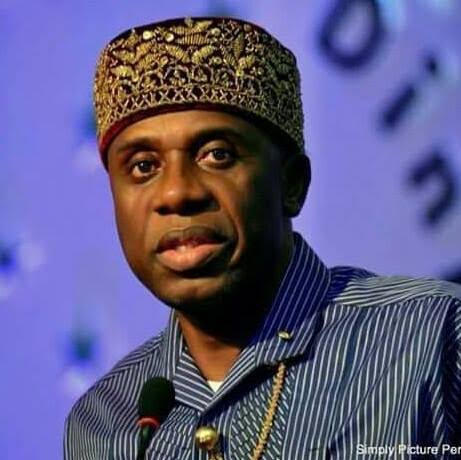
  • Rivers: Judicial commission lacks powers to try Ameachi –Supreme Court

    Rivers: Judicial commission lacks powers to try Ameachi –Supreme Court

    The Supreme Court has described the Rivers State commission of inquiry that indicted former governor Rotimi Ameachi, as a mere fact-finding body with no powers to engage in the trial of anybody for anything whatsoever.

    A seven-member of justices of Supreme Court in a unanimous judgment, said the findings of the probe panel are not enforceable in law.

    The decision of the apex court was contained in the appeal No: SC/911/2017, lodged before it by Ameachi who is a presidential candidate of All Progressives Congress(APC), against the governor of Rivers State, the attorney general of the state, the judicial commis- sion of inquiry and others.

    In the judgment rendered by Justice Emmanuel Agim, the apex court went further to hold that the Rivers State com- mission of inquiry “is not an adjudicatory body and so does not try or determine disputes as to any rights or obligations of liabilities.

    Justice Agim said: “A com- mission of inquiry is a factfinding or information seeking body. It carries out factfinding or information seeking by the process of impartial investigation to find out certain facts or information about the subject of the inquiry.

    “It is mere commonly used in public governance as part of the administrative process to facilitate public governance.

    “The purpose of the investigation is to find out the facts or gather facts on the subject matter of the inquiry.”

    The apex court held that “in doing so, it is not trying any person for the commission of any misconduct or crime.

    It does not engage in the trial of any person for anything. It merely gathers facts on the subject of the inquiry.”

    The apex court judgment ends the contention and controversy over Amaechi’s alleged criminal indictment by Wike’s probe commission in favour of Amaechi, the presidential aspirant of APC.

    Even if it (the commission) makes findings of facts that are adverse to a person (Amaechi), such adverse findings do not amount to a conviction for an offence or determination of his right and obligation. They remain mere finding of facts on the basis of which it would make recommendations to the appointing authority who may accept or reject them.

    If it rejects them, the matter ends there. If it accepts them and decides to take necessary action on the accepted recommendation, the white paper accepting the recommendation can be challenged in court.”

    However, the apex court also rule that, “the accepted recommendations (of the commission) are not enforce- able like a court decision. So, a commission of inquiry is not a court. It is not a criminal investigation agency such as EFCC, ICPC and police.

    “The designation of the commission of inquiry set up as a judicial commission of inquiry and the fact it was headed by a serving or retired judicial officer cannot invest it with judicial powers or character and did not change its nature as a fact-finding or information seeking body with no power to adjudicate, or in any manner determine any rights or obligations or try any person for the commission of a crime. crime.

    “It is not a civil or criminal trial. The purely fact-finding function of a commission of inquiry is what defines its nature and character as an administrative investigation and a non-judicial body.

    “It is also our very view and we hold that the 3rd respondent (the judicial commission of inquiry) is a factfinding and an investigative body. Generally, a body exercising powers which are merely investigative in character and which do not have any legal force.

    “The description of such body as a judicial commission of inquiry does not change its character from being a factfinding body.”

    “With this judgment, the Supreme Court has clearly vindicated Amaechi and cleared him of all purported or alleged indictment by the Governor Wike’s commission.”

    (Sun)

  • Hajo Sarki-Bello new supreme court Cheif Registrar


    The Chief Justice of Nigeria (CJN), Justice Ibrahim Muhammad has approved the appointment of Hajo Sarki- Bello as the Chief Registrar of the Supreme Court.

    The appointment, which is in an acting capacity, followed the retirement of the substantive Chief Registrar, Hadizatu Uwani-Mustapha who will be attaining the mandatory retirement age of 60 years tomorrow, Sunday August 8 2021.


    She served as the CR of the apex court for a period of four years from July 2017 to August 2021.


    A statement by the Director of Press and Information, Dr. Festus Akande on Thursday said the new Chief Registrar would resume office on Monday, August 9, 2021.


    She is a 1988 graduate of Law from Uthman Dan Fodio University, Sokoto, Nigeria. She was called to the Nigerian Bar on June 7, 1990, after successfully completing the mandatory one-year intensive academic programme at the Nigerian Law School, Lagos, Nigeria.


    Hajo equally attended the Nigerian Institute of Advanced Legal Studies (NIALS) in Lagos where she studied Legal Drafting. She subsequently went to Ahmadu Bello University, Zaria for a Master’s Degree programme in International Affairs and Diplomacy. She has worked in in different capacities in different law Firms and commercial organizations before joining the Supreme Court of Nigeria in 1996 as Senior Registrar. In 2001, she was promoted to the position of Acting Deputy Chief Registrar and later became substantive Deputy Chief Registrar in 2006.


    Hajo Sarki-Bello, a seasoned judicial administrator and technocrat, hails from Paiko in Paikoro Local Government Area of Niger State.


    Source: www.sunnewsonline.com