Tag: subsidy

  • Atiku Questions Petrol Price, Demands Probe of Subsidy Savings

    Atiku Questions Petrol Price, Demands Probe of Subsidy Savings

    Precious Nwonu, Enugu

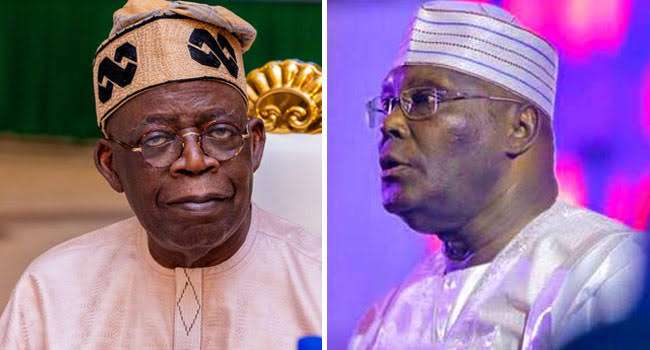
    Former Vice President and African Democratic Congress presidential candidate, Atiku Abubakar, has criticised the Federal Government over the high cost of petrol, questioning the management of revenues following the removal of fuel subsidy.

    Atiku, in a statement issued by his Senior Special Assistant on Public Communication, Phrank Shaibu, said Nigerians were now paying as much as ₦1,470 per litre for petrol despite crude oil selling at about $102.52 per barrel.

    He compared the current situation with 2008, when crude oil reportedly reached $147 per barrel but petrol sold for ₦65 per litre under the late President Umaru Musa Yar’Adua.

    Atiku described the current arrangement as “an organised system of grand larceny”, alleging that opaque deductions from the Federation Account, questionable revenue management and off-book transactions had raised concerns about the handling of public funds.

    He also questioned what had happened to the savings from the removal of fuel subsidy, recalling that Nigerians were told the policy would release funds for investment in education, healthcare and infrastructure.

    “Petrol at ₦1,470 per litre is not merely a figure at the filling station. It enters the price of transportation, food, school runs, farming, manufacturing and virtually everything Nigerians buy,” Atiku said.

    He added, “After all the pain imposed on Nigerians, they have a right to ask: where are the subsidy savings and where is the money?”

    The ADC presidential candidate cited Federal Account Allocation Committee records which, according to him, showed that the Federation Account recorded gross revenue of ₦4.232tn in June 2025, while only ₦1.818tn was distributed.

    Atiku demanded a comprehensive reconciliation of government revenues from 2023 to date, including details of gross collections, deductions, the legal basis for each deduction, receiving accounts and the ultimate beneficiaries of the funds.

    He also called for greater transparency concerning the Renewed Hope Infrastructure Development Fund, OML 143, NNPC LNG trading operations, offshore corporate structures and what he described as alleged unofficial crude lifting.

    The former vice president further rejected international oil prices as a sufficient explanation for the high cost of petrol in Nigeria.

    He noted that petrol prices in the United States, which he put at about $1.14 per litre, were comparable to prices in Nigeria, but stressed that the US federal minimum wage was $7.25 per hour, compared with Nigeria’s ₦70,000 monthly minimum wage.

    “Tinubu has brought Nigerians close to American fuel prices while leaving them with Nigerian poverty wages. That is the true cost of his subsidy-removal policy,” Atiku said.

    He urged the Federal Government to make verifiable financial records available to the public and engage independent forensic auditors to examine and reconcile the accounts.

    Atiku maintained that accountability in the management of public resources was a fundamental obligation to Nigerians and should not be treated as optional.

  • Confusion trail planned fuel subsidy removal


    Nigerians seem to be at crossroads over the move by the Federal Government to suspend payment of subsidy on Premium Motor Spirit (PMS), popularly called petrol.

    President Muhammadu Buhari had in August 2021 signed the Petroleum Industry Bill into law, signaling an end to petrol subsidy.

    But in what looks like a dramatic twist, the Senate President, Mr. Ahmed Lawan, had last week during a meeting with Buhari, said the President has not authorised the removal of fuel subsidy.

    Nigerians and stakeholders alike were still dissecting the comments of Lawan when they were confronted with another position of the National Executive Council (NEC) which suggests that the Federal Government may not be in a position to continue with petrol subsidy.

    If the recommendation of the ad-hoc committee of NEC was implemented by the Federal Government, it might increase the price of petrol to N302 per litre in February.

    This position, however contradicts the stance of the Federal Government as put forward by the Minister of Finance, Budget and National Planning, Mrs. Zainab Ahmed, that funding of petrol subsidy will continue till June because it has made provisions for it in the budget.

    Governor Godwin Obaseki of Edo State said the Federal Government was spending about N2 trillion on petroleum subsidy annually.

    The governor said the amount could have been used for other purposes, adding that petrol, which sells for N162-165 per litre in Nigeria, is 100 per cent higher in other countries.

    According to him, the NEC wondered whether that should be allowed to continue in a situation where, he pointed out, only two-thirds of the states of the federation consume the subsidy.

    Nasarawa State Governor, Abdullahi Sule, said: “As you are aware, the issue of subsidy has been one matter that NEC has deliberated on for more than a year now.

    “There was an ad-hoc committee, which was set up by NEC headed by Governor Nasir El-Rufai of Kaduna State that included members of the Executive arm of government.

    “The committee worked on recommendations as to what we should do about the cost of PMS locally because as you realise, as has been told us, the cost of PMS in Nigeria today is about N162 per litre, whereas every other country surrounding Nigeria is selling the same product at more than 100 per cent of the cost in Nigeria.

    “And the country as at last year spent in excess of N2 trillion subsidising petroleum products. That is money that could have gone into building roads, money that could have gone into healthcare and education.

    “So, for NEC, the arguments have been put out: should we continue this regime of spending money we do not have to subsidise the living standards of only mostly those who have vehicles?

    “And when NEC looked at some of the analysis last year, we then realised that less than 1/3 of the states of this country consume two-thirds of the subsidy.

    On his part, former Head of State, Abdulsalami Abubakar, has warned against removing fuel subsidy, saying the decision will push more Nigerians into poverty.

    Abubakar stated this at the 19th Daily Trust Dialogue in Abuja, last week.

    The recommendations were put forward by the NEC ad-hoc committee interfacing with the Nigerian National Petroleum Company (NNPC) on the appropriate pricing of petrol in Nigeria.

    Commenting on the development, Abubakar said: “The expected fuel price increment will push more Nigerians into poverty.

    Over 80 million Nigerians are still cut off by poverty. Nigeria faces a food crisis worsened by the global COVID-19 pandemic.”

    The Nigerian Labour Congress(NLC), which has consistently warned against subsidy removal, also last week reiterated its earlier position against the move.

    NLC Chairman in Ebonyi State, Mr. Ikechikwu Nwafor, warned that the planned removal of fuel subsidy and subsequent increase in fuel price would affect every facet of life, including transportation, cost of food items, clothing, housing and others.

    Nwafor stated that it was high time Nigeria fixed its own refineries, adding that Nigeria can end the importation of fuel in the country if it can have the refineries working.

    “We should understand that this is not the right time to increase the pump price when the cost of living is already difficult. Prices of food commodities are already beyond the capacity of civil servants.

    “How will the civil servants, who are the engine of the economy, cope?

    “What we are telling the Federal Government is to consider the consequences of the increase on the masses and the current economy,” Nwafor said.

    He warned that the increase is going to affect every facet of life, including transportation, high cost of food items, clothing, housing, among others.

    He also stated that the NLC Chapter in Ebonyi State plans to embark on a protest on January 27, urging all Nigerians and Ebonyi state to rise against the removal of oil subsidy and hike on fuel price.

    “Of course, the increase is going to affect all citizens and we are saying no to it,” he said.

    Meawhile, the Organised Private Sector of Nigeria (OPSN) recently presented three prerequisites that will ensure a rancour-free removal of the fuel subsidy and prevent economic disruption and industrial disharmony in the country. The OPSN comprises Manufacturers Association of Nigeria (MAN); Nigeria Association of Chambers of Commerce, Industry, Mines and Agriculture (NACCIMA); Nigeria Employers’ Consultative Association (NECA); Nigeria Association of Small Scale Industries(NASSI) and Nigeria Association of Small and Medium Enterprises (NASME).

    Proffering ways to ensure a rancor-free subsidy removal, its Chairman, Taiwo Adeniyi, said: “The controversy being generated by fuel subsidy is getting to a crescendo and it will be important to guide government and other stakeholders.

    “While there are proponents and opponents of the fuel subsidy regime, three things are indisputable: the fuel-subsidy regime seems fraught with corruption, with few petroleum importers benefiting. The subsidy payment is a huge leakage from the revenue portfolio of the nation and there is a need to address it urgently to free up needed funds for development. The resuscitation of the four refineries that millions of dollars had been invested in their Turn Around Maintenance (TAM) or outright sale of the refineries to private investors to enhance their sustainability.

    “Specific relieves to address the anticipated drastic reduction in the citizen’s disposable income and standard of living. It is expected that an increase in fuel price will have a direct and immediate consequence on transportation and costs of foodstuff, amongst others.

    The touted N5,000 monthly stipend to 40 million poorest of the poor will most likely aggravate tempers. A more sustainable, well-thought-out relief should be proposed.’’


    (Sun)

  • Crude Oil : Price of Oil hits $56


    The sustained increase in global crude oil prices has pushed up the landing cost of imported petrol closer to the current pump prices of the product in Nigeria, and appears to have triggered a return to petrol subsidy era, ’FEMI ASU reports

    Since November 13, 2020 when the pump prices of Premium Motor Spirit (petrol) were last increased in the country, the price of the international oil benchmark, Brent crude, has been on an upward trajectory, rising from $41.51 per barrel to close at $51.22 per barrel on December 31.

    Fuel marketers had in December expected another upward adjustment of PMS prices to reflect the further rise in crude oil prices.

    However, a N5 reduction in petrol price, effective December 14, was announced by the Federal Government – a development that left them reeling in shock and questioning the deregulation of petrol price.

    Crude oil price accounts for a large chunk of the final cost of petrol, and the country has continued to spend so much on petrol imports for many years amid low domestic refining capacity.

    The Minister of State for Petroleum Resources, Timipre Sylva, had said in September last year that the Federal Government had stepped back in fixing the price of petrol, adding that market forces and crude oil price would determine the cost of the product.

    The Federal Government removed petrol subsidy in March 2020 after reducing the pump price of the product to N125 per litre from N145 on the back of the sharp drop in crude oil prices. The price reduction lasted till June.

    Nigerians saw increases in the pump prices of petrol in four months, rising from N121.50–N123.50 per litre in June to N140.80-N143.80 in July, N148-N150 in August, N158-N162 in September and N163-N170 in November.

    Brent, the international oil benchmark, has risen by about 35 per cent since November 13 when the pump price of petrol was last increased. It closed at $55.99 per barrel on Friday, its highest level in 11 months.

    Going by the petrol pricing template of the Petroleum Products Pricing Regulatory Agency, the landing cost of petrol rose from an average of N143.60 in December to N158.53 per litre on January 7, with the expected open market price (retail price) being N181.53 per litre.

    The product is currently being sold at between N160 and N165 per litre at many filling stations in Lagos.

    The cost of petrol quoted on Platts rose to $480.25 per metric tonne (N139.67 per litre, using N390/$1) last Thursday from an average of $430.107 per MT (N125.09 per litre) in December. The cost of petrol averaged $391.75 per MT (N113.24 per litre) in July, according to PPPRA’s template.

    Apart from the increase in global crude oil prices, the devaluation of the naira last year also led to a significant rise in the cost of imported petrol.

    The PPPRA used an exchange rate of N306.90/$1 on January 14, 2020 to calculate the cost of petrol, while N387.63/$1 was used on July 31.

    The naira closed at 393.50 against the dollar on Friday at the Investors’ and Exporters’ Foreign Exchange Window, and 472/$1 at the parallel market.

    As of January 7, the cost of petrol plus freight stood at $500.72 per MT, translating to N145.62 per litre.

    Other cost elements that make up the landing cost include lightering expenses (N4.57), insurance cost (N0.21), Nigerian Ports Authority charge (N2.38), Nigerian Maritime Administration and Safety Agency charge (N0.23), jetty throughput charge (N1.61), storage charge (N2.58), and financing (N1.33).

    The pump price is the sum of the landing cost, wholesale margin and the distribution margins. The wholesale margin is N4.03 while the distribution margins comprise transporters allowance (N3.89), retailer (N6.19), bridging fund (N7.51), marine transport average (N0.15), and admin charge (N1.23).

    The NNPC, which has been the sole importer of petrol into the country in recent years, is still being relied upon by marketers for the supply of the product despite the deregulation of the downstream petroleum sector.

    Private oil marketing companies have continued to lament that their inability to access foreign exchange at the official rates has hampered efforts to resume petrol importation.

    If the pump price of petrol is left unchanged amid the rise in oil prices, it means the NNPC would again bear the latest subsidy cost on behalf of the government as it did for several years before its removal last year.

    There is currently subsidy, but it is being absorbed by the government through the NNPC,” the National Operation Controller, Independent Petroleum Marketers Association of Nigeria, Mr Mike Osatuyi, told our correspondent.


    He recalled that he said in December that petrol pump price was moving closer to N180 per litre, adding that with the current price of crude oil, petrol subsidy would gulp about N800m daily with an average consumption level of 40 million litres.

    He said, “Because of the volatility of petrol in the Nigerian political landscape, government does not have the boldness to allow full deregulation of petrol because of the spiral effects on Nigerians, and bearing in mind that Nigerians are in very hard times.”

    Osatuyi said, “But the government is supposed to come out and present the subsidy to the National Assembly. They should tell Nigerians that we are going back to subsidy. But because of the loans from the IMF and World Bank that they got with the condition that petrol should be deregulated, I believe the government is trying to manage the problem.

    “If we are going to do genuine deregulation, there must be a level playing field for the players. We are not where we are supposed to be; there is still some dark, hidden elements in our ‘deregulation’.

    “We are practising monopolistic deregulation – where one player is on the field and it is the goalkeeper, the defender and the referee.”

    The President, Petroleum Products Retail Outlets Owners Association of Nigeria, Dr Billy Gillis-Harry, stressed the need for deregulation to be properly done.

    He said, “The concern I have is that we are not getting it right. We must think inwards and grow our local production capacity. I don’t know why our refineries should not work.

    “Deregulation is the way to go; we want the sector to be deregulated. But we need to do it rightly. There should be a level playing field for all operators; everybody should be able to access forex at the same rate.”

    While opposing the return to subsidy, he said, “We call on the government to fast-track the regulatory process to ensure that deregulation is in place.”


    The Source had reported on September 8, 2020 that the Federal Government’s removal of petrol subsidy and the increase in electricity tariff were in line with reforms being sought by the International Monetary Fund and the World Bank.

    “The recent introduction and implementation of an automatic fuel price formula will ensure fuel subsidies, which we have eliminated, do not reemerge,” the Federal Government told the IMF in the letter of intent dated April 21, 2020 with respect to its request for emergency financial assistance of $3.4bn.

    In July, Sylva said in a statement that the Federal Government had reached  a conclusion that it could no longer bear the burden of petrol subsidy.


    Source : www.punchng.com