Tag: Students

  • UK Universities Withdraw Admission Offers to Nigerian Students

    Some United Kingdom universities have withdrawn the admissions of Nigerian students due to an ongoing visa crackdown by the British government impacting international applicants.

    The universities revoked admissions given mostly to Nigerian and Pakistani applicants in the first half of 2026, driven by tightening rules from the Home Office regarding visas for international students.

    According to a Financial Times report on Saturday, a study showed that 10.5 per cent of study visa applications to the UK ended up being withdrawn, up from 2.3 per cent in the same period last year and 0.4 per cent in 2023.

    “Universities are revoking offers en masse made to international applicants from countries including Nigeria and Pakistan as they fear the UK government’s visa crackdown will result in a ban on their recruiting international students,” the report stated.

    The Financial Times noted that the institutions clarified they revoked admissions in reaction to a doubling in the number of study visas refused by the Home Office during the first six months of 2026.

    The report stated that 22.7 per cent of study visa applications from Nigeria were withdrawn in the first half of this year, compared to 4.5 per cent in the first half of 2025.

    Related News

    “While visa applications can be withdrawn for other reasons, universities said the main driver had been an increase in their revoking offers,” it added.

    The British publication further stated that the surge in Home Office study visa rejections has been driven by a higher increase in refusals from applicants suspected by the UK government of using the route to make asylum claims.

    Data from visa processing application firm Enroly indicates that nearly half of universities have refusal rates above the five per cent threshold, which could lead to a ban on recruiting international students.

    Speaking on the repercussions of the visa revocations, the Vice-Chancellor of the University of Sunderland, Sir David Bell, said, “This has involved pulling back from international markets where a tougher approach is being taken to visa applications”.

    Vanessa Wilson, chief executive of University Alliance, a group of 20 professional and technical universities, warned, “This is going to result in restructures, which inevitably result in job losses, course closures, campus closures”. Punch

  • FG Returns 1m Out-of-School Children to Classrooms in 20 Months

    FG Returns 1m Out-of-School Children to Classrooms in 20 Months

    … UNESCO representative to Nigeria, Prof. Da Rosa pledged UNESCO’s unwavering support for Nigeria’s educational

    Precious Nwonu, Enugu

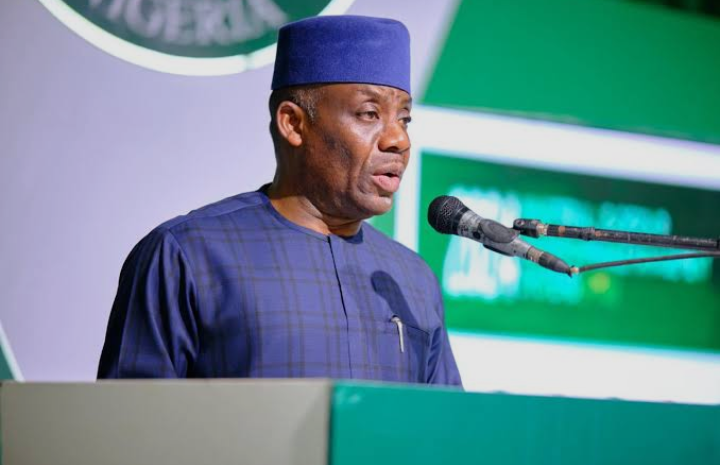
    The Federal Government has successfully returned more than one million out-of-school children to classrooms over the last 20 months as part of its ongoing strategies to tackle Nigeria’s educational crisis, the Minister of Education, Dr. Tunji Alausa, has revealed.

    The Minister also disclosed that nearly 6.7 million girls have benefited from various government interventions specifically designed to expand access to learning and keep children enrolled in schools.

    Dr. Alausa shared these details in Abuja during a courtesy visit from the newly appointed United Nations Educational, Scientific and Cultural Organisation (UNESCO) Country Representative to Nigeria, Prof. Isaiah Barreto Da Rosa.

    He noted that these metrics reflect the government’s relentless drive to overhaul the education sector by widening access, lifting learning outcomes, and removing the chronic barriers keeping millions of Nigerian children out of the formal school system.

    However, the Minister cautioned against tilting intervention frameworks heavily toward a single gender, explaining that while progress in girl-child education must be aggressively sustained, rising attention must also be paid to boys who face a high risk of dropping out or being entirely excluded from formal education.

    “We must sustain the gains we have made with the girl-child, but we also need to pay attention to the boy-child,” Dr. Alausa stated.

    He maintained that Nigeria’s human capital development goals can only be fully realised when every child, regardless of gender or socio-economic background, has access to quality schooling and opportunities to acquire relevant skills.

    He identified six core priority pillars driving the ministry’s current structural reforms: Technical and Vocational Education and Training (TVET); Science, Technology, Engineering and Mathematics (STEM); the reintegration of out-of-school children; data and digitalisation; girl-child education; and rigorous quality assurance.

    The Minister added that the government is heavily investing in practical skills development, modern technology, and comprehensive teacher training to produce graduates who can successfully compete in a rapidly transforming economy.

    He explained that enhanced, high-fidelity education data is increasingly being utilized to map out areas of high need, target state interventions, and accurately measure long-term impacts, rather than relying on estimates that could severely distort policy planning.

    On the critical front of teacher development, Dr. Alausa welcomed UNESCO’s technical support for the ministry’s Accelerated Teacher Professional Programme (ATPP), which targets the upskilling of one million in-service teachers.

    He also formally acknowledged the agency’s assistance in TVET assessment, digital transformation, education for peace, and media and information literacy.

    The Minister actively called for a deeper operational alliance with UNESCO, pushing the body to align its external interventions directly with the Federal Government’s education reform blueprint to completely avoid a duplication of efforts and guarantee measurable results.

    “We want partnerships that complement what Nigeria is already doing and help us deliver faster and better results,” the Minister emphasized.

    Dr. Alausa assured the visiting delegation that the government will continue to combine its domestic resources with strategic international partnerships to expand schooling access, raise education quality, and equip young Nigerians with the exact skills required for national development.

    Earlier in the meeting, Prof. Da Rosa pledged UNESCO’s unwavering support for Nigeria’s educational transformation agenda, describing the organization as a dedicated technical partner fully prepared to deploy its global expertise to areas where the country requires urgent help. He recalled UNESCO’s deep, long-standing engagement with Nigeria dating back to the 1960s, spanning the critical sectors of education, science, culture, communication, and information.

    Prof. Da Rosa highly commended the Ministry of Education’s progress in digitising education data, stressing that reliable, verified statistics are entirely indispensable to effective planning, policy formulation, and successful execution. He reaffirmed that UNESCO stands ready to deepen its collaboration with Nigeria in TVET, teacher development, and specialised programmes aimed at returning out-of-school children to the classroom.

    According to the Country Representative, UNESCO-supported programmes have already trained more than 28,000 teachers across various states and successfully reached over 1.7 million students.

    Prof. Da Rosa concluded by noting that the organization’s highly specialized institutes remain fully available to provide any further technical expertise necessary to back Nigeria’s education reforms.

  • NELFUND Boss: Student Loan Scheme Has No Political, Religious or Ethnic Bias

    The Managing Director and Chief Executive of the Nigerian Education Loan Fund, Akintunde Sawyerr, has debunked claims that the student loan scheme is biased.

    Sawyerr noted that it was “completely ridiculous” to make such an allegation.

    He also said the electronic process for loan application required basic information such as the student’s name and matriculation number, which, according to him, wasn’t programmed to detect political affiliations.

    The NELFUND boss stated this on Sunday during his interview on Channels Television’s Sunday Politics programme.

    “I have not heard this allegation, but I can tell you that it’s a completely ridiculous idea that the administration of Bola Tinubu is focused on trying to fund people who support the party. We are talking about students; many of them are yet to vote, some of them are going to be voting for the first time, [and] many of them are not party members.

    “How, in any event, do we determine who is a party member and who isn’t? Even if you are running a manual process, how do you do that? You can’t. It’s unlikely to yield you any result.

    “It is a process you have to apply for this loan electronically. If you don’t have a name, you can’t apply for this loan. You provide your matriculation number; you have to be in a public institution,” he said.

    Sawyerr, who stated that loan demands had been “overwhelming,” further stressed the transparency of the loan scheme, saying it only grants application requests to students who are deemed worthy of the loan, as he played down any bias in religious or ethnic affiliations.

    He explained, “We have a system that is focused on people who are Nigerians and meet the standard. The system doesn’t recognise your gender. There is no bias in the system at the front end or the back end.

    “This is a system that doesn’t care whether you are of one tribe or the other. This system does not have a view or an opinion on whether you are a Christian, a Muslim, or an African traditional religionist; it doesn’t want to know.”

    On Sunday, the Fund labelled as “fake news” a circulating image claiming that the President had announced life imprisonment for students who fail to repay their education loans after graduation.

    The agency administers interest-free loans to eligible Nigerian students in public tertiary institutions to cover institutional fees and provide monthly upkeep allowances. Punch