
Tag: Sanwo-Olu

  • Elite War Renewed

    Elite War Renewed

    -By Abdul Mahmud

    The war among Nigeria’s political elite has been renewed. It is not a war for ideas, nor one fought over the soul of our country. Rather, it is a petty battle over ego, and personalised struggle for who becomes the capo di tutti capi- the boss of bosses – of the State. It is also about control of access, of appointments, and the primitive accumulation and the appropriation of state resources, as it is about enthroning political narratives. As old alliances crumble and new rivalries emerge, what becomes clear is that our most powerful politicians are less interested in governance and more interested in the politics of dominance.

    This war is not new. It has been fought before. Repeatedly. And among the same political class that switches parties with ease, trades insults with flair, and builds loyalty around personalities rather than principles. What is new, however, is the sheer frequency of the war and the utter contempt they now display for even the pretence of ideological disagreement.

    Take Nyesom Wike and Rotimi Amaechi. Former friends and allies. Both from the same Ikwerre ethnic stock. Their villages, only separated by the brackish ponds that dot the landscape. They have become each other’s fiercest adversaries. Their dispute is now the stuff of public spectacle. What started as a political disagreement has festered into a deeply personal war. They call each other names in the press. They challenge each other’s legacies. They deploy proxies in the media and in government. Yet, behind the noise lies a more sobering reality: this fight is not about the people of Rivers State. It is not about policy. It is about power. It is about who controls the political structure of the state, who gets to anoint successors, and who determines “who gets what, when and how”, to quote the eminent scholar, Harold Lasswell, who framed politics as some primitive accumulation many aeons ago. A few weeks ago, the Wike-Amaechi feud resurfaced in the media. Unlike 2017, when their convoys clashed on the streets of Port Harcourt, this time the battle was fought with words, not fists. No bullets. Just barbs. It began with Amaechi’s declaration: “We’re all hungry. All of us. If you’re not hungry, I am.” Wike fired back. He accused Amaechi of mocking the sufferings of Nigerians. “He never spoke of hunger while he was minister. Two years after leaving the office, he suddenly discovers it. That’s not a concern. That’s hunger for power”. Then came the sting: “You’re insulting Nigerians by trivialising poverty. The only hunger you feel is from being out of power.” Amaechi’s reply was curt: “I don’t want to join issues with children”. In a theatrical twist, Wike took to the streets of Abuja, flanked by schoolchildren who cheered his public works- mocking, perhaps, the maturity of his rival, Amaechi. The Wike-Amaechi war exemplifies how elite disagreements in our country are rarely about governance. They are about the erosion of trust among powerful individuals who once traded favours, shared secrets, and benefitted from a common network. When those relationships sour, they do not simply walk away, they destroy each other in the open, using the levers of government and the media as weapons. Nonetheless, this must be said: there are no victors in this warfare, only theatrical performers draped in borrowed comical robes, stumbling through farce like Clarus and Gringory of yesteryear. Their antics, though staged with the pomp of statesmen, draw laughter laced with pity. For while they clown, the public bears the quiet shame of being forced to watch, knowing the jest is at their own expense.

    A similar war broke out in Edo State a few years ago. Adams Oshiomhole and Godwin Obaseki were once political allies. Oshiomhole handpicked Obaseki as his successor, branding him a technocrat who could consolidate the achievements of his administration. But within one term, their relationship deteriorated. Obaseki began to assert independence. Oshiomhole, accustomed to loyalty, felt betrayed. The fallout culminated in a fierce political battle in 2020 that saw Obaseki defect from the All Progressives Congress (APC) to the Peoples Democratic Party (PDP), securing a second term against his former benefactor’s wishes.  Last year, their hostilities were renewed. The two men backed opposing candidates for the 2024 Edo governorship election. Their political machinery, once united, operated as different war theatres, with a verbal arsenal deployed without caution. As usual, there were little public discourses about what these candidates stood for. The election, like the war between Oshiomhole and Obaseki, became a proxy battle over egos and retribution, not vision or policy.

    Even in Lagos, the epicentre of elite political engineering, cracks have shown up themselves. At the recent commissioning of the Lagos-Calabar coastal highway, President Bola Tinubu, the dominant political godfather of Lagos, snubbed his longtime ally and protégé, Governor Babajide Sanwo-Olu. What might have appeared to the casual observer as a momentary oversight was, to insiders, a clear signal that the relationship between godfather and godson had gone south. Sanwo-Olu extended his hand; Tinubu ignored it. In our country’s politics, these gestures are never accidental. They are loaded with meaning. It was a cold public humiliation disguised as protocol. The reasons for the cold remain the subject of intense speculation. Some say it’s about Tinubu’s future political calculations. Others hint at unresolved tensions over the management and deployment of power. Whatever the reason, it underscores a pattern: political relationships in our country are rarely stable. They are transactional, conditional, and expendable. Only a few days ago, newspapers reported that Tinubu had forgiven Sanwo-olu for his sins. What were his sins in the first place? Nobody knows.

    They are not alone in this theatre of elite war. I invite the reader to turn their gaze to Benue State, where Senator George Akume and Governor Hyacinth Alia are entrenched in a slow-burning war of attrition. Each maneuvering for dominance over the soul of the state. To the south, in Akwa Ibom, the echoes of past battles between Udom Emmanuel and Godswill Akpabio still linger. The current governor, Umo Eno, finds himself delicately poised between these two warring combatants. In a bid to survive the infernal tides, he has publicly aligned with the ruling party at the centre, while seeking sanctuary from political crossfires and shielding himself from the sharp edge of internal vendettas. And in Delta State, a cold war simmers just beneath the surface. There, former Governor Ifeanyi Okowa, incumbent Sheriff Oborevwori, and political godfather James Ibori circle each other in a triangular standoff. The smiles are strained, the handshakes stiff. Hostilities remain veiled for now. But like the harmattan bushfires, all it takes is a single spark.

    These elite wars come at a steep cost. Governance is abandoned or hijacked. Institutions become politicised. Political parties become war camps. State resources are diverted to settle loyalists or fund propaganda. Worse, the people are dragged into disputes they barely understand. They are recruited as foot soldiers in wars that are never about them in the first place. But, at the heart of these elite war is the fundamental problem: the absence of ideological core to the politics of our country’s political elite. Unlike countries where political parties reflect social or economic philosophies, our country’s political parties are mere platforms for personal ambitions. They are vehicles for power, not values. Politicians decamp from one party to another not because of policy disagreements, but because their interests are no longer served where they are. This ideological emptiness is why elite war so often turns violent, personal, and protracted. There is no higher cause to appeal to. No shared philosophy to fall back on. Once trust breaks down, all that remains is the raw, naked struggle for power. The elite war is also sustained by the absence of consequences. In countries with strong institutions, political disagreements are managed through the formal mechanisms of debates and caucuses. In our country where state institutions are weak and compromised, the institutions are thrust into the heart of the war. The elite manipulate them at will, so when they fall out, there are no impartial referees but only loyal judges, partisan security agencies, and pliant lawmakers that play the roles of the palace jesters, group thinkers and echo chambers’ inhabitants.

    The media are not spared. Far from standing above the fray as impartial observers, many have been drawn into the swirl of the elite war. Rather than offering sober analysis and critical scrutiny, they are conscripted as foot soldiers in the war of powerful men. Journalists become partisans, trading objectivity for allegiance. Editorials, once sacred spaces of reasoned reflections, are auctioned to the highest bidder. The press, meant to be the fourth estate in a democracy, becomes the bugle in the battlefield of ambition, echoing the voices of its paymasters. In the process, public trust withers. Journalism, whose noble duty is to shine light on power, becomes not only compromised, co-opted, and complicit; but a shadow of itself.

    The political, governance and public arenas become chaotic and lawless.

    What, then, is the way forward?

    Our country needs a new elite consensus. A shift to issue-based politics. A commitment to governance that outlives personal loyalty. This cannot happen overnight, but it must begin. The country is in crisis on multiple fronts- economic collapse, insecurity, unemployment, mass migration. These problems require political maturity, not endless elite wars. More importantly, our citizens must also resist being drawn into elite wars. They must ask harder questions. Whose interest does the wars serve? What values are at stake? What does this mean for service delivery? They must stop romanticising political gladiators and combatants of needless wars. The tendency to see powerful men as saviours, even after repeated betrayal, emboldens the culture of impunity. Politicians must be judged by what they deliver, not whom they fight.

    Ultimately, elite wars are not harmless rivalries. They deepen polarisation. They stall progress. They distract from urgent reforms. They are the symptoms of a broken political culture that prioritises loyalty over legacy, revenge over reconciliation. The renewed war among our country’s elite is not just a political drama. It is a warning sign. A sign that our democracy remains fragile. That the politics of the strongman still prevails. That until values replace vengeance at the centre of our political life, our country will continue to be governed not by principles, but by grudges.

    Those who still have ears, hear. And let them not only hear, but understand. For in the rising din of political vanity and elite wars, truth speaks in whispers. Wisdom calls from the margins. The times are urgent, the stakes high. Silence is no longer innocence. In a country where power drowns out reason, and noises pass for leadership, discernment becomes a civic duty. Let the discerning rise above the clatter, and let our citizens remember: the future belongs not to those who shout the loudest, but to those who listen, truly listen to the heartbeats of our country in distress.

    Those who have ears, hear! Now.
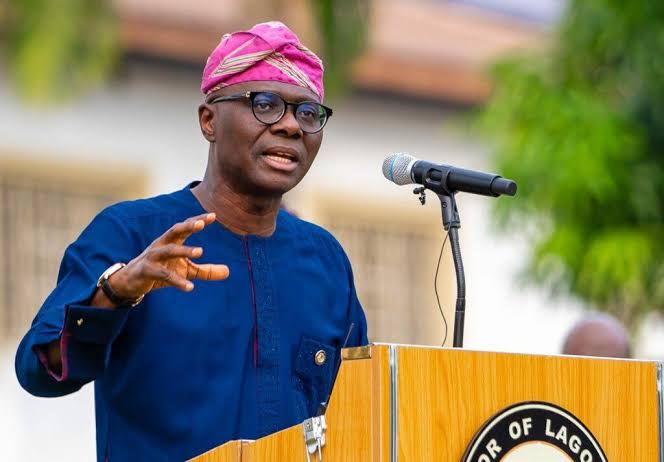
  • I’ll construct $2.5bn 4th Mainland Bridge under 4yrs — Sanwo-Olu

    I’ll construct $2.5bn 4th Mainland Bridge under 4yrs — Sanwo-Olu

    The Lagos State Government has said the proposed construction of the Fourth Mainland Bridge project is scheduled to be completed within four years while the official kick-off for the construction of the project, the turning of the surd, will be done by the Lagos State Governor, Bababjide Sanwo-Olu in the first quarter of 2023.

    The state government through the Office of Public-Private Partnerships had on Thursday, announced Messrs CCECC-CRCCIG Consortium as the preferred bidder for the construction of the bridge.

    Eight roads– Lagos/Ibadan Expressway, Lagos/Abuja highway, Benin/Sagamu, and Igbogbo/Lagos would aligned with the Fourth Bridge. The project, estimated to cost about $2.5 billion, would be delivered through Public-Private Partnership initiative and tolled for two years.

    Lagos State Commissioner for Information and Strategy, Gbenga Omotoso, Special Adviser to the Governor on Public Private Partnerships, Mr. Ope George, and his counterpart in the Ministry of Works and Infrastructure, Engineer, Aramide Adeyoye, disclosed this on Friday, during a press briefing in Alausa, Ikeja, Lagos.

    Omotoso, assured that over 800 identified victims, whose properties would be affected by the project would be adequately compensated.

    According to George, the Fourth Mainland Bridge (4MB) Project, which is a proposed Public Private Partnership (PPP) transport infrastructure development, will comprise of the construction and operation of a greenfield tolled road and bridge with a design speed of 120 kilometre per hour, including the development of adjacent real estates.

    He added that the bridge, when completed, would become the second longest in Africa with three toll plazas, nine interchanges, a 4.5 kilometre Lagoon Bridge and an eco-friendly environment. It is also expected to span about 37 kilometres, starting from Abraham Adesanya in Ajah, on the Eti-Osa-Lekki-Epe corridor and traverse the North West towards the Lagoon shoreline of the Lagos-Ibadan Expressway via Owutu/Isawo in Ikorodu.

    According to George: “The Lagos State Government commenced a Competitive Bidding process for the selection of a Concessionaire, by the issuance of the Request for Expressions of Interest (REOI) on 27th of November, 2019. A total of 52 responses were received with 32 being responsive.

    “Subsequently, a Request for Quotation (RFQ) was issued on February 10, 2020 to the 32 eligible applicants and responses were received on 15th April, 2020 with a total of 15 responses. Upon evaluation, six bidders met the criteria to progress to the Request for Proposal (RfP) stage.”

    George, explained that the bids have now been evaluated and Messrs. CCECC-CRCCIG Consortium emerged as the preferred bidder while the Messrs. MOTA-ENGIL (NIGERIA &AFRICA), CCCC & CRBC CONSORTIUM, also shortlisted as the reserved bidder for the Fourth Mainland Bridge project.

    Adeyoye added that the bridge will reduce congestion on the existing Carter, Eko and Third Mainland Bridges while opening new areas of the City for future developments.

    She said the state government had carried along the over 48 estates, traditional rulers and others that would be affected by the bridge.

    Adeyoye said the negative impact of the bridge was minimal compared to the advantages, urging those anxious for the project to take off to be patient and corporate with the contractor during the construction of the project

    (Vanguard)

  • 2023: Sanwo-Olu, APC chieftains lead women’s march in Lagos

    2023: Sanwo-Olu, APC chieftains lead women’s march in Lagos

    WOMEN in their large numbers, yesterday, shut down vehicular movement as they stormed various parts of Lagos in support of presidential candidacy of the All Progressives Congress, APC, Bola Tinubu/Kashima Shettima.

    The women also expressed support for the second term bid of Governor Babajide Sanwo-Olu of Lagos State and his Deputy, Dr Femi Hamzat.

    Meanwhile, Sanwo-Olu, his wife, Mr Ibijoke Sanwo-Olu; his deputy, Hamzat and wife, Mrs Oluremi Hamzat, led the women in rally, held along some selected areas of the metropolis

    Others at the rally include: Lagos APC chairman, Pastor Cornelius Ojelabi; former Deputy Governor, Dr Oluranti Adebule and Lagos APC Women Leader, Jumoke Okoya-Thomas, among others.

    The women, who spotted different coloured T-Shirts with Tinubu’s insignia, chanted various solidarity songs in support of Tinubu/Shettima Presidency in 2023.

    The activities led to traffic gridlock as motorists were forced to slow down to pass through narrow lane assigned for movement.

    The group, mainly women, came out in large numbers as they marched at the Lagos Island, CMS and other areas and terminated at Mobolaji Johnson Arena, formerly Onikan Stadium, Onikan, singing and hailing APC Presidential candidate of Tinubu/Shettima.

    As of 1 pm, the rally was gradually spreading to other parts of Lagos, like Onigbongbo, Maryland, Onigbongbo Local Council Development Area, LCDA.

    The office of the Women Leader, Lagos APC, Lagos, led by Mrs Okoya-Thomas, organised the rally, tagged ‘Lagos Women Support Walk for Tinubu/Shettima, Sanwo-Olu and Hamzat.

    (Vanguard)

  • EndSARS: Protest is unnecessary, youths should embrace dialogue and reconciliation. -Sanwo-Olu

    Lagos State Governor Babajide Sanwo-Olu and Lagos Chamber of Commerce and Industry (LCCI) yesterday said a protest in commemoration of last year’s #EndSARS demonstration is unnecessary.


    Sanwo-Olu, who acknowledged that youths have reasons to demand for better life and future, admonished them to embrace dialogue and reconciliation instead of resorting to violent attacks.


    The LCCC Director-General, Dr Chinyere Almona, who lamented the impact of the #EndSARS protest on business across the country, pointed out that the business community lost over N700 billion to the protests.

    Sanwo-Olu spoke at a peace conference in Lagos with the theme: Rebuilding for Greatness: ‘Peace Conflict Resolution’.


    The LCCI chief spoke against the backdrops of the one-year anniversary of the #ENDSARS protest.


    Also lamenting the negative impact of the protest, the Ikeja Branch of the Nigeria Bar Association (NBA) said the burnt or missing case files in court have slowed down the administration of justice.


    The Nigerian Association of Road Transport Organisation (NARTO) complained that it was yet to receive compensation for losses incurred during last year’s protest, which was hijacked by hoodlums who unleashed mayhem on the metropolis.


    Yesterday, the police warned against any violent protest in Lagos.


    Led by Police Commissioner Hakeem Odumosu, policemen staged a show-of-force in the metropolis to reiterate their earlier warning against street protest.


    Also, police, soldiers and other security agents have taken over the Lekki Toll Gate, the centre of last year’s protest.


    At the Lagos Peace Conference, the state government and some youth leaders brokered reconciliation and pledge mutual commitment to conflict resolution.


    Read Also; Security operatives take over Lekki Tollgate ahead of #EndSARS memorial protest

    Many youths across Lagos State, despite the national holiday, turned up for the conference aimed at creating a common platform for the resolution to conflicts.


    The youths discussed how they could effectively channel their grievances to the authorities.


    The seven-man discussion panel moderated by Mazi Sam Uche Anyamele, a filmmaker, set the tone for the governor’s response to various suggestions by youths at the event.


    Sanwo-Olu, dressed in Boys Scouts’ green shirt and light-brown pants, with yellow tie to match, said “the moment for true reconciliation has begun.”


    He said Lagos was now set for a total healing after last year’s coordinated attacks on its assets, which also resulted in loss of lives and livelihoods.


    Sanwo-Olu stressed: “Today is a day of reconciliation and it is about our teeming youths. This is the moment to create a common ground and take ownership of our future. We have indeed assessed what we have passed through as a people; it’s now the moment to come together and build our lives together.


    “This event is about aggregating all the conversations of the millions of youths that have been represented here. All of us have agreed that, when we work together, we can build a resilient society we will truly be proud of. We will continue to build, engage and work with our young people. I certainly will not give up on you as partners in progress and your ability to bring about positive changes.”


    Sanwo-Olu acknowledged the need for inter-generational dialogue to proactively address issues that may lead to conflict, assuring the participants of his administration’s readiness to champion causes that would be beneficial to young people.


    The governor said the youth must not only be granted a stakeholder status in the state’s project, but also be given prime seats in decisions making arena. He said his administration had shown example by appointing scores of young people under 40 years into the State Executive Council, and as political aides and administrators of Government’s agencies.


    Sanwo-Olu also promised to increase the State’s investment in human capital development and equip the youths with requisite 21st century skills that would empower them economically.


    He said: “I thank all the youths who participated in this forum for the valuable suggestions offered and the ideas shared. I’m taking full responsibility and ownership of all the feedback recommended here. All the points have been taken and I will continue to rely on them in the course of governance.”


    Sanwo-Olu highlighted some programmes specifically targetted at youths. He said: “Some of these programmes, which were initiated as part of our efforts to address issues bothering on youth development and empowerment, include remodeling, development and equipping of four youth centres – Abesan, Lafiaji, Ikorodu and Omituntun.


    “On October 27, we will be holding the first of its kind Lagos Police Youth Dialogue session where our youths and policemen will deliberate on how to strengthen their relationship and create a synergy that will improve interaction and security in the state.’’


    Businesses lost N700b last year


    Almona said the LCCI estimated the immediate loss from the EndSARS to be above N700 billion in October last year, with discoveries of more losses after weeks of investigations by the government across the country.


    She added: “The 2021 Global Peace Index (GPI) released by the Institute for Economics and Peace ranked Nigeria 146 among 163 independent nations and territories, according to its level of peacefulness in 2020.


    “Nigeria moved one step from 147 in 2020 (from 2019 rank), though it still ranked eighth among the least peaceful countries in Africa after South Sudan, Somalia, the Democratic Republic of the Congo, Libya, Central African Republic, Sudan and Mali.


    “In 2020, the world witnessed almost 15,000 violent protests and riots.


    “The damage it caused came with a hefty price of about 15 trillion dollars or 11.6 per cent of the world’s Gross Domestic Product.


    “Among those, more than 5,000 were pandemic-related and were recorded between January 2020 and April 2020.”


    Burnt case files worry NBA


    Lamenting that the #EndSARS protests, Ikeja NBA said they resulted in loss of lives and property across the country.


    He condemned the hoodlums who looted and razed the Igbosere High Court in Lagos Island.


    The historic edifice was the oldest judicial building in Nigeria and rebuilding of the court complex is yet to commence.


    NBA Ikeja branch chairman, Bartholomew Aguegbodo, said the effects of the #EndSARS protest was still being felt by lawyers as key stakeholders in the administration of justice system.


    “There are a lot of hiccups caused by the burning of the courthouse, case files and exhibits got burnt during the #EndSARS crisis and some of those case files are yet to be recovered.


    “It was just less than two months ago that alternative solutions were put in place for new courthouses in Yaba and Ikoyi areas of Lagos.


    “We are still battling to grasp with the weight of the #EndSARS crisis up till now,” he said.


    The NBA chairman noted that following the arson attack, several lost records could not be retrieved because online e-filing system for the judiciary had not fully taken off.


    “We believe now that with the formal e-filing system working fully, if we are to have a repeat of the #EndSARS crisis, it will not generate cases of missing files any longer.


    “Due to the arson attack, we had instances where both the claimants and the defendants had to bring out records from themselves to reconstruct case files.


    “It created a very unhealthy task and up till today, there are a lot of case files that are yet to be reconstructed.”


    NARTO laments lack of compensation


    NARTO President Alhaji Yusuf Othman complained that the Federal Government has refused to compensate the members of the association.


    He said: “There has been no compensation. Nobody listened to us. There is no development. Nobody listened to us. We did not hear anything.”


    Othman said NARTO lost over N2 billion as their trucks were burnt.


    He added: “We have some trucks that were burnt. Others with drivers and motor boys burnt. Specifically around Imo State, over 100 trucks were burnt with maize, and cattle. And we have taken inventory of these destructions and we have sent to government. We have not heard from them (Government). “We lost more than N2billion. Of course, we cannot quantify the amount of lives (drivers and motor boys) that were lost. Some trucks were burnt at Warri. One or three trucks were burnt around Lagos. But the major destruction was around Aba.”


    The Association of Micro Entrepreneurs of Nigeria (AMEN) urged government to implement policies aimed at massive job creation, youth empowerment and engagements and poverty alleviation.


    Mr Saviour Iche, its National President, Saviour Iche, said last year’s protest was expected to bring changes, transformation, new agendas and innovative ideas, in view of the way government had handled previous issues that brought about the protest.


    According to him, the call for change appears not to have been fully addressed, hence, the need for government to look into the various demands of the youth for improved national outcomes.


    Iche advised against any protest during EndSARS anniversary, saying that the impacts would affect the masses more.


    “There are people that if they did not go out in a day, they would not eat.


    “The high cost of living will lead many people to suffering and the economy will be totally grounded.”


    Source: www.thenationonlineng.net

  • FEEDING BOTTLE FEDERALISM: ALLOW VAT LEGAL BATTLE RUN FULL COURSE – EKWEREMADU

    FEEDING BOTTLE FEDERALISM: ALLOW VAT LEGAL BATTLE RUN FULL COURSE – EKWEREMADU

    …Calls for expedited hearing of VAT, stamp duty suits

    Former Deputy President of the Senate, Senator Ike Ekweremadu, has advised the National Assembly not to embark on any legislation over the collection of the Value Added Tax (VAT) and Stamp Duties, which are subjects of raging legal tussles between some states and the federal government, noting that allowing the litigations to run the full course could be a major step towards strengthening the nation’s federalism.

    Ekweremadu, who recalled that he had for over a decade been warning the nation against what he had since termed a “feeding bottle federalism” in which states depend on redistributed resources of other federating units for survival, held that any constitution amendment to transfer VAT collection to the Exclusive Legislative List, as reportedly requested by the Federal Inland Revenue Service, FIRS, would amount to changing the goal post in the middle of a game.

    He bared his mind in a statement by his media adviser, Mr. Uche Anichukwu, on Sunday.

    The lawmaker, who chaired the constitution amendment process in the Sixth, Seventh, and Eighth Senate, asserted since past legislative efforts to get things right had failed or been scuttled, it was natural and imperative to allow the judiciary to play its role in shaping the nation’s federalism.

    He said: “I commend Governors Nyesom Wike and Babajide Sanwo-Olu as well as the Rivers and Lagos Houses of Assembly for their courageous moves. It is by so doing that our constitution or laws can be tested and our federalism strengthened.

    “In April 2012, I delivered a lecture at the Osgoode Hall Law School, York University, Canada, entitled ‘Nigerian Federalism: A Case for a Review’ wherein I forewarned that Nigeria would surely run into stormy economic weather unless we reinvented our federalism, steering the country away from a military-imposed ‘feeding bottle federalism’ to one predicated on self-reliance, hard work, enterprise, and resourcefulness to catalyse national development and economic prosperity. Many others have also made related calls. Unfortunately, few people were interested in what we were talking about.

    “Although we achieved a number of successes, perhaps my worst experience at the helms of the constitution amendment process was in the Seventh Assembly. We recorded the most elaborate amendments to our constitution, including the rearrangement of the Legislative Lists to devolve more powers to the subnational governments by moving certain items like Aviation, Railway, Power, Stamp Duties, among others to the Concurrent Legislative List. Unfortunately, the amendments were denied assent by the President.

    “But as a lawyer and lawmaker, I know that case law or judicial precedent, is also a veritable source of law. So, I think we should allow the Constitution and the laws of our land to be tested in the courts of law.

    “It is untidy for the Presidency or its agency to come through the backdoor to seek legislative intervention in its favour on the same matter that is prejudice.

    “The ball is now in the court of the judiciary and all we should seek at this juncture is an expedited and courageous adjudication of the lawsuits”.

    Meanwhile, Ekweremadu, whose doctoral thesis is on Fiscal Federalism, has equally advised every state to look inwards to boost its revenues since every part of the country had what it takes to prosper.

    “The bottom line of the raging tax ‘war’ is that having unwittingly killed industry, having elevated our nation to an oil dependent economy, and consequent upon the collapse of oil price amid other sources of energy, our economy is virtually collapsing, the naira has crashed to an all-time low, and the nation has come to rely more and more on taxes. Inevitably, some states have now begun to question some practices they feel fly in the face of federalism and justice, among them the collection and distribution of VAT and other taxes.

    “VAT is essentially a consumption tax and what states like Rivers and Lagos are saying in essence is that the federal government cannot continue to rob them of taxes paid on goods and services consumed in their states, some with environmental and social consequences that they have to deal with, but only to withhold as well as transfer a large chunk of such revenues to other states.

    “The major takeaway from our ailing economy, collapse of the naira, and the VAT and stamp duty imbroglio is that our feeding bottle strand of federalism is no longer sustainable. We must diversify and expand our economy now; and there is no other way than to remake our federalism to enable states to harness and unleash their endowments and comparative advantages.

    “Rather than begrudge states like Rivers and Lagos, all federating units should be encouraged and enabled to look inwards to reinvent themselves, boosting their respective competitiveness through improved security, human capital development, industry, and building of egalitarian and cosmopolitan societies to attract more investments and economically viable populations. That is how federations are meant to function”, he concluded


    Uche Anichukwu

    Media Adviser to Sen. Ike Ekweremadu

    Former Deputy President of the Senate

    12/09/2021

  • Sanwo-Olu launches 102 locally assembled compactor trucks, 100 bins to boost waste collection.

    Sanwo-Olu launches 102 locally assembled compactor trucks, 100 bins to boost waste collection.

    Governor Babajide Sanwo-Olu has bolstered the Lagos State Waste Management Authority (LAWMA) with 102 units of brand new locally assembled compactor trucks and 100 units of double dino waste bins in an effort to reduce turn-around time in waste evacuation within the metropolis, resulting in a cleaner and healthier environment.

    Governor Sanwo-Olu inaugurated the compactor trucks at a lavish ceremony at the State House in Alausa on Wednesday, which was attended by waste service stakeholders, including Private Sector Participants (PSP) operators.

    The assets included 30 12-cubic-meter trucks, 60 24-cubic-meter trucks, and 12 hook loaders. They will work alongside over 850 PSP compactor trucks to improve service delivery in underserved communities throughout the state.

    The compactor trucks were assembled by LAWMA technicians in conjunction with Dangote Sinotruck Manufacturing firm. They are designed according to the local requirements to aid clearing of waste from generating points to transfer-loading stations. Each compactor truck has three years warranty and maintenance package.

    In addition, the Governor officially introduced “CitiMonitor,” a smartphone application that will allow for the monitoring and reporting of environmental violations, such as indiscriminate trash disposal.

    The new waste collecting technology, according to Sanwo-Olu, is not being used to drive PSP businesses out of business. He explained that the compactors would only gather rubbish from public spaces and main roadways, while PSP operators would continue to collect commercial and residential waste.

    Sanwo-Olu advised locals to return the favor by paying their garbage disposal bills on time to ensure better service delivery. The Governor stated that LAWMA would be launching an acquisition program to help willing PSP operators replace their decrepit garbage collection trucks in the coming weeks.

    He stated that the government was well aware of the waste economy’s potential, adding that the state’s trash-to-wealth program had begun to take shape, owing to the expansion of the Lagos Recycling Initiative.