Tag: Press Freedom

  • White House Restores CNN, Politico, MS NOW Access After Court Order

    White House Restores CNN, Politico, MS NOW Access After Court Order

    Precious Nwonu, Enugu

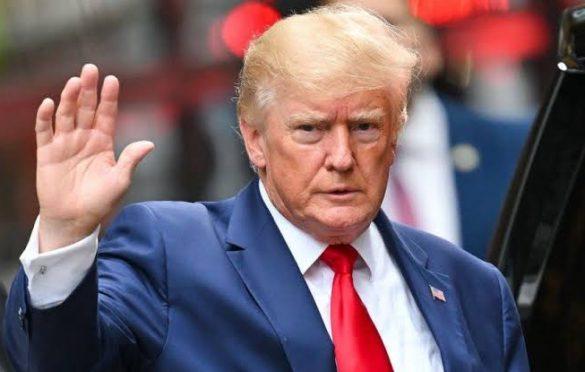
    The White House has restored access to CNN, Politico and MS NOW after a federal judge ordered the Trump administration to lift its ban on the three news organisations.

    The outlets regained access on Thursday, hours after US District Judge Timothy Kelly ruled that their exclusion from the White House press facilities was likely unconstitutional.

    CNN, Politico and MS NOW had sought an emergency court hearing after their journalists were reportedly turned away from the White House despite the judge’s ruling.

    The hearing was later cancelled after the White House restored their press access.

    The dispute began after President Donald Trump barred the three outlets, initially accusing them of publishing what he described as “fake news.” The administration later argued that their exclusion was justified by national security concerns.

    However, in his ruling, Kelly questioned the administration’s national security justification, noting that Trump had not cited national security when the ban was first announced.

    Kelly said the outlets were likely to succeed in their argument that the administration had failed to provide adequate due process before revoking their press passes.

    The judge ordered the immediate restoration of the journalists’ access and temporarily halted enforcement of the ban for 14 days.

    The White House director of operations subsequently informed the court that the outlets’ press passes and confiscated badges had been restored by 9:45am.

    The three organisations later confirmed that their journalists had been allowed back into the White House.

    The dispute occurred as Trump hosted Chinese President Xi Jinping at the White House ahead of a state dinner, limiting some television networks’ coverage of the engagement.

    Fox News, NBC, CBS and ABC had earlier withdrawn from White House coverage in solidarity with the affected outlets. It was not immediately clear whether the networks would resume their regular White House broadcasts following the restoration of access.

    In court filings, the US Department of Justice had argued that reports published by CNN, Politico and MS NOW posed national security concerns. Government lawyers cited stories involving missile stockpiles, construction of a White House ballroom and the recent Republican midterm convention.

    The three media organisations rejected the administration’s position and accused the Trump administration of violating their constitutional rights.

    In a joint statement, they said their legal action was aimed at defending the principle that the government should not determine what the press reports.

    More than 50 media organisations from across the political spectrum also filed a brief supporting the lawsuit, including Fox News, The New York Times, The Washington Post and The Wall Street Journal.

    The dispute is not the first instance of a US administration facing criticism over restrictions on media access.

    In 2009, the Obama administration attempted to exclude Fox News from a specific press pool interview with an administration official. Following objections from other networks participating in the pool, Fox News was ultimately allowed to attend.

  • Surging clampdown on Journalists is alien to democracy – Jon-Igwesi

    Surging clampdown on Journalists is alien to democracy – Jon-Igwesi

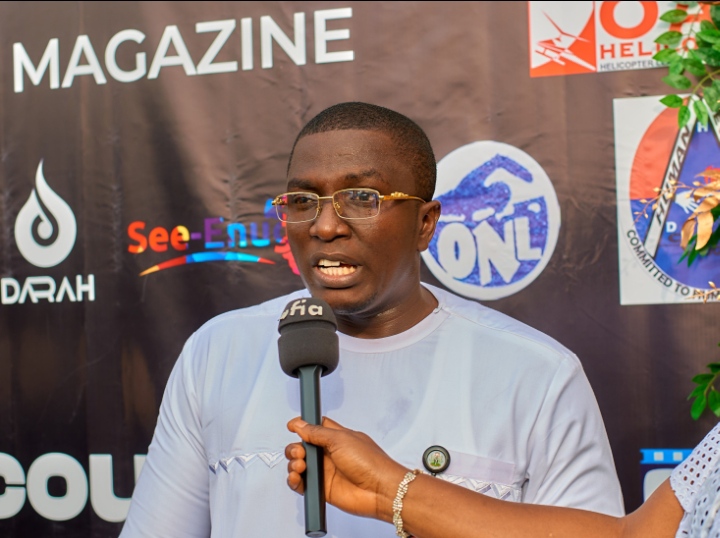
    Following the continued arrests and harassment of investigative journalists in Nigeria, the Chairman of Pacesetter Frontier Magazine, Onochie Jon-Igwesi has appealed to the wielders of political power to be circumspect and more tolerant of the activities of journalists.

    Jon-Igwesi who spoke on Afia TV’s ‘News Today’ expressed concerns about press freedom and freedom of speech in the country, noting that the surging clampdown on journalists was alien to the ideals of democracy. 

    Tracing the litany of journalists that had been hounded in Nigeria from Nnamdi Azikiwe, Dele Giwa, Agba Jalingo, Daniel Ojukwu, to Fisayo Soyombo, David Hundeyin, Jones Abiri and more recently anonymous X whistleblower, PIDOMNigeria and Adejuwon Soyinka, Jon-Igwesi explained that even “the West hasn’t been excluded because as recently as in 2020, journalists who covered the protests that broke out when George Floyd was murdered in the US were also arrested”. 

    In his words: “Press and Media Laws have taught that the concept of freedom of speech can be likened to a rose with thorns, indicating that even though you’re free to express yourself, there’s also this necessity that you do it within the confines of laid down laws. 

    “So, what a democratic institution ought to do would be to define those laid down laws and ensure that those laws are not made with anyone in mind to avoid seeming like you’re out for vendetta and not to have a sane society. 

    “When you look at these journalists, they are not speaking for themselves. They are exposing an ill, something they assume is true from their investigations. I feel that the proper thing should be for authorities to investigate those findings and when true, restore sanity in the system, not clamping down on journalists for even daring to investigate. It would look like the system is encouraging corruption”.

    Informing that the incarceration of journalists will not kill a story due to the global network and affiliations of journalists, the Media Executive suggested that investigative journalists may also consider whether certain stories should be leaked and escalated on social media or simply directed to the authorities concerned to avoid the ‘trap’ of accusations of endangerment of the nation’s sovereignty.

    “There should be some sort of code that should guide the profession. However, we should actually find out if these laws have been defaulted before clamping down on journalists. 

    “Journalists should also be guided by the fact that we’re all interested in fixing the nation, having a nation that works and not for the nation to burn. So, if there are ways that could be employed beyond leaking things on social media, that’s good and fine.

    “Where journalists tell lies, they should be made to face the full weight of the law, but where you’re hounding them for simply telling the truth, it is not good for any government and it is certainly not good for Nigeria”, he said. 

  • 10 Nigerian Journalists Murdered With Impunity In Four Years

    10 Nigerian Journalists Murdered With Impunity In Four Years

    10 Nigerian Journalists Murdered With Impunity In Four Years

    The media space was thrown into sorrow on Thursday, Nov. 11, 2021, following the report that a Vanguard Newspaper missing reporter, Tordue Salem, was found dead at Abuja, North-central Nigeria.

    Late Salem, who was covering the House of Representatives, was last seen on Oct. 13, 2021 with an alarm on his mysterious disappearance being raised the next day.

    The matter was directed to the Police Intelligence Response Team on Oct. 16, 2021 but he was never seen until his remains were recovered on Thursday.

    Salem joined the list of many journalists who have been killed, or died as a result of insecurity and impunity in Nigeria.

    A 20-year-old journalist, Pelumi Onifade, was reportedly killed by officials of the Nigerian police attached to the Lagos State Task Force, on Saturday, Oct. 24, 2020 during #EndSARS protests.

    He was a 200-level student of the Department of History, Tai Solarin University of Education, Ijagun, Ogun State, who was an intern with Gboah TV, an online television.

    He was said to have joined one of his colleagues to cover an attempted burglary by hoodlums at a government facility at Abattoir, Oko Oba area of Agege.

    On Jan. 21, 2020, an editor with the local independent outlet Regent Africa Times, Alex Ogbu, was killed at a protest in Abuja. He was shot by a bullet that was fired by the police at the scene of the Shi’ite protest.

    Also, a former presenter and on-air personality for Naija FM, Titus Badejo, was murdered on June 19, 2021 in Oyo State, Southwest Nigeria.

    The killing was reportedly carried out by armed men outside Club 407 in the Oluyole area of Ibadan at about 11:30 p.m.

    Another incident was that of Olubunmi Afuye who was killed on July 15, 2021 when armed robbers stormed a bank in Ondo State. Afuye, popularly known as ‘Bumbam’ worked with the Ondo State Radiovision Corporation (OSRC) and Orange FM before he resigned to join Elizade University, Ilara-Mokin, as Public Relations Officer (PRO).

    A reporter with the government-owned Federal Radio Corporation (FRCN), Maxwell Nashan, was abducted from his home before being bound, gagged and hacked to death in Adamawa State on Jan. 15, 2020.

    It does not end, still.

    On July 22, 2019, Precious Owolabi, a 23-year-old general assignment reporter for the privately owned broadcaster Channels Television, was shot while covering a confrontation between Shi’ite Muslim protesters and the Nigerian police, and died the same day after being taken to a hospital.

    Some non-state actors killed Famous Giobaro, a staff of state-owned Glory FM 97.1 at his residence at INEC Road, Kpasia in Yenagoa, capital of Bayelsa in April 2017.

    On Nov. 15, 2017, police found Ikechukwu Onubogu, a cameraman with Anambra Broadcasting Service (ABS), dead with bullet wounds in the city of Onitsha, Anambra State.

    Also, a reporter with the Nigerian Television Authority (NTA), Lawrence Okojie, was shot dead by a terror group on Jul. 7, 2017 around Ogunola Junction, off Siluko Road, Benin, capital of Edo State.

    Call for protection of journalists

    As the world marked the 2021 International Day to End Impunity for Crimes against Journalists in early November, Chairman of Nigeria Union of Journalists (NUJ), Lagos State Council, Adeleye Ajayi, urged the Federal Government and security agencies in the country to end further attacks and reopen investigation of past assaults on media practitioners.

    The Media Rights Agenda (MRA) Director, Edetaen Ojo, also charged the government to establish a specialised team of prosecutors to facilitate the effective investigation and prosecution of perpetrators of crimes against journalists and other media workers for Nigeria to fulfill its regional and international treaty obligations to ensure the safety of journalists.

    Reacting to the recent incident involving Salem, a media expert, Kene Obiezu, said Nigeria must guarantee safety of journalists as they give people a voice, and enable them to ask authorities tough questions.

    In a programme organised by the International Press Centre (IPC) in partnership with Premium Times Centre for Investigative Journalism (PTCIJ), to discuss violence against journalists last week, the Executive Director of the IPC, Lanre Arogundade, said CSOs and non-state actors including the various professional groups, trade unions, academics, etc., are critical voices that should be heard on the issue of safety of journalists.

    On his part, the publisher of Premium Times, Dapo Olorunyomi, argued that “journalists cannot afford to relent in the advocacy for complete freedom of the press as the press continues to be important for ensuring transparency and accountability in governance.”

    (HumAngle)

  • Investigation: Democracy, media practice and the future of investigative journalism in a repressed state like Nigeria

    Investigation: Democracy, media practice and the future of investigative journalism in a repressed state like Nigeria

    Investigation: Democracy, media practice and the future of investigative journalism in a repressed state like Nigeria


    Kemi Falodun on 2021/07/30


    Perhaps more than any time in history, ordinary Nigerians came to realise their political power after the 2015 elections. Social media, Twitter and Facebook, in particular, had been employed to mobilise and expand political participation to the point that an incumbent president had been voted out of office. Despite Peter Orubebe’s infamous outburst and allegations of bias by INEC, the elections stood, and there was an orderly transition.

    The result fueled expectations that politicians would become more accountable; that indeed, citizens have the power to change leaderships; that President Buhari would simply be voted out of power like his predecessor if he failed to perform. Nigeria’s crawling democracy had begun to walk.

    Six years later, democratic institutions continue to retrogress under Muhammadu Buhari’s watch. With several cases of non-compliance with court order; civic spaces shrinking at an alarming rate; the NBC’s attempt to control digital media, which led to major Nigerian newspapers on July 10, to publish on their front page, in solidarity, the picture of a man with sealed mouth; and the brazen suspension of Twitter which serves as an avenue for citizens to express their displeasure and coalesce their political involvement — these raise concerns about the great lengths that this government will go to further clamp down on free press and preserve itself.

    Media repression is not alien in Nigerian’s history. From the military era, there were several cases of repression which reached a climax with the murder of Dele Giwa under the Ibrahim Babangida regime. Sanni Abacha continued the practice by throwing journalists in jail. And ever since, most political leaders have tried to undermine democracy to advance their personal agenda and retain political power.

    Like Radio Kudirat, which offered an alternative voice to the people by democratizing access to information, hence playing a key role in fighting Abacha’s autocratic regime; the internet, with its increase in usage in the past decade, is also being wielded by ordinary Nigerians to advocate and form communities. According to this Heinrich Böll report on digital rights and privacy, “at the beginning of 2001, a paltry 200 000 Nigerians used the internet. By 2020, that figure had increased to over 126 million — a factor of almost 630 – with a 61.2 percent penetration of the population.”

    In the past, few media platforms such as Tell and Newswatch, decided what filtered into the public space and their reach was limited. The advent of the internet gave rise to a new media practice. This has helped produce journalists, media platforms and activists without the gatekeeping and rigidity of traditional media. They further expand the work of truth-telling and keeping the public informed.

    Social media is part of the new media. It contributes to the sustenance of investigative journalism — an in-depth process of unraveling facts and details. The new media aids the watchdog function of investigative journalism by adding contexts and nuances to the coverage of issues. Samson Itodo, Executive Director of Yiaga Africa, says investigative journalism plays a vital role in exposing violations of human rights. “If democracy is meant to survive, if we’re going to reclaim the state from oppressors, it’s going to take investigative journalists unearthing and sharing information to empower citizens to demand accountability.”

    From the Occupy movement across the world against economic inequality and lack of democracy, to the Black Lives Movement against violence on black people, to the End SARS movement against police brutality, which flowed from the digital space to the streets — the internet, especially social media, takes power from a select few and provides more avenues for not only journalists and media houses, but also the citizens to inform, mobilise, and hold government accountable. With it, the supposed freedom inherent in democracy seems more realizable.

    With the transition to the digital, there was hope that the repressive tendencies that plagued traditional media would have less impact on the civic space. It’s now almost full circle. In January this year, two days before presidential and parliamentary elections, the Ugandan government shut down social media platforms. In Nigeria, it’s been almost two months since Twitter was suspended. (Even though, according to the Heinrich Böll report, the growth in internet usage has been economically significant). In July 2019, The Republic of Chad’s president Idriss Deby, finally lifted the sixteen-month social media ban. It was the longest social media blockage in any African country.

    Social media connects politicians directly to the people, demystifies them. Ironically, the government also tries to use the media and media people to shape the narrative they desire and further oppress the people. “In Nigeria, politics isn’t service,” Itodo adds, “politics is an investment. It’s a pathway to self-enrichment and self-aggrandizement.”

    What happens when the government seeks to completely control access to social media, this power that the people have to information, collaboration and impactful organisation?

    “War is still war, even in the digital age,” writes Kenyan writer and political analyst Nanjala Nyabola in her essay, “Governance and Public Policy in the Digital Age.” She notes that the digital space is changing the way we do politics, “and this creates a new urgency for understanding the digital ecosystem, and specifically understanding the digital rights of citizens. Who will the African citizen be in this new landscape where war is threatened on a whim and public opinion is bought at a song?”

    The media is not the only space shrinking under the leadership of President Muhammadu Buhari; the civil society is not exempt. There’s been heightened attacks targeted at civil society, from introducing legislations to sponsoring organizations that masquerade as authentic civil society groups.

    A research recently published by the Carnegie Endowment reveals that, in a bid to protect themselves from domestic pressure, politicians and top power brokers have cultivated a new generation of thriving pro-government non-governmental organisations (NGOS). Authored by Matthew T. Page, the document offers insight into the proliferation of NGOs created for praise singing of the government and opposition to civil society organisations. “Once a niche side hustle for those seeking to curry favor with the regime, running a pro-government NGO has become an increasingly lucrative means of gaining political and media influence.”

    The study finds that, “Out of 360 pro-government Nigerian NGOs identified by this research, 90 percent have started operating since President Muhammadu Buhari took office in 2015.”

    The author adds that “this correlation suggests that these groups receive high-level support and encouragement.” The document reads, “Many are controlled by a small number of individuals who have personal and ethnic connections to Nigeria’s ruling All Progressives Congress (APC).”

    Challenges of practising investigative journalism in Nigeria

    In addition to financial constraint, a major challenge pervading journalism in Nigeria, “stifled press freedom, poor remuneration, a shoddy education system that lacks the resources to produce a 21st century journalist” are some of the concerns of Damilola Banjo, a Nigerian investigative journalist. Investigative journalism demands rigour, time, access to information and resources that journalists and media outfits may not find available.

    It’s important to note that, oftentimes, traditional media and the new media do not particularly share the same challenges. “Generally, I think readers underestimate the extent to which we lack the media infrastructure for producing quality journalism in Nigeria,” says Wale Lawal, founder and Editor-in-Chief of The Republic.

    “For those publishers who would like to tell the big stories,” Lawal adds, “the high-cost, high-risk nature of such coverage in Nigeria and the lack of protective and/or supportive media infrastructure means limits to the number of journalists capable of taking on such stories. Political uncertainty in Nigeria is increasing and for many publishers that means potential restrictions to what kinds of stories you can tell.”

    What happens after the story?

    In October 2018, Kano state governor Abdullahi Ganduje was caught on camera collecting wads of dollar notes, reported to be some five million dollars. The following month, Jaa’far Jaa’far, the investigative journalist and Editor-in-Chief of Daily Nigerian, who broke the story, was sued for defamation. According to this report by Amnesty, Jafaar received several threats and had to go into hiding. On June 30, 2021, Ganduje withdrew the lawsuit.

    “It’s sad when status quo continues after you’ve risked so much to unearth corruption,” says Banjo, who has covered several investigative stories, including the corrupt system where people pay for the West African Secondary School Certificate Examination (WASSCE) and the Sex for Grades documentary. “But I’ve learnt to live with it.” After her story that uncovered the extortion of people by court clerks and prison warders, there was hardly any systematic change, despite promises by the responsible parties to take action.

    For every assignment, Banjo has several concerns such as safety and maintaining her cover. She has also come to accept her limitations as a journalist. “I can’t implement policies; it is not my job. When I do a story and show the loopholes in the system, maybe even suggest solutions, I have done my job as a member of the fourth estate. It is left to the citizens to demand change, for the civil society organisations to put pressure on the government, for the government itself to implement and enforce. I am first a journalist before any other thing. I know the lines get blurry sometimes because as a Nigerian journalist, you’re forced to be an activist, advocate, pressure group… but those aren’t really my responsibility.”

    The present administration’s attitude toward governance and democracy has shown that real transformation is beyond making attempts at changing leaderships. “The big question many of us have to face post-EndSARS is how we channel our energy towards sustainable and sustained political reform,” says Lawal. “Unlike protests, political reform is neither glamorous nor immediately gratifying. Are we really ready to do the work knowing it could take years?”

    Journalists and media houses play a pivotal role in bringing about long-lasting reforms. The manner in which media outlets are regarded as threats, so much so that security agents raid and demolish their offices, is the same way digital spaces are perceived. Perhaps there are no physical locations to destroy, but the same brazen attempts at censorship still stand.

    As more people adopt digital tools, there’s an urgent need to also adopt digital security and safety practices. Despite the attempts to distort the public’s view of facts and harm journalists, some key players are building structures to strengthen digital rights and the future of investigative journalism. One of such is Ayeta, a toolkit developed by Paradigm Initiative (PIN), with an “aim is to address the growing need to safeguard digital rights defenders, journalists, whistle blowers, and others working with sensitive information in the global South.”

    “I like to think that Nigeria has some of the best journalists in the world,” says Banjo, on her view on the future of investigative journalism in Nigeria. “People who do great journalism despite these odds. And I’m even more excited about the future of journalists coming up in the country. The younger journalists are relentless.”


    Source: www.newswirengr.com