Tag: President

  • Keyamo Criticises Atiku Over Reference to Tinubu as ‘Bola’

    Keyamo Criticises Atiku Over Reference to Tinubu as ‘Bola’

    Precious Nwonu, Enugu

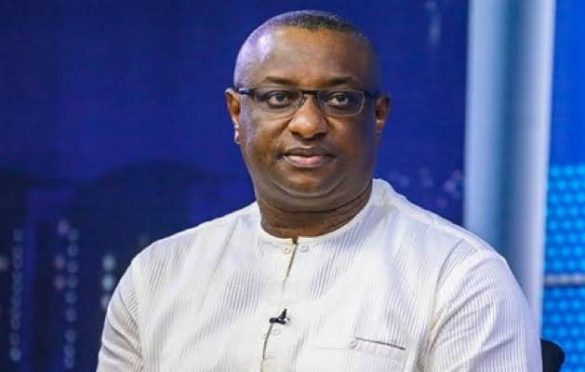
    Minister of Aviation and Aerospace Development, Festus Keyamo, has criticised former Vice-President Atiku Abubakar over his repeated reference to President Bola Tinubu by his first name during a press conference in Abuja.

    Keyamo, in a post on his X account on Friday, described Atiku’s reference to the President as “very disrespectful and discourteous”, arguing that the office of the President should be treated with dignity despite political disagreements.

    “The continuous reference to President Bola Ahmed Tinubu by His Excellency, ex-Vice-President Atiku Abubakar in his Press Conference earlier today as ‘Bola’ is very disrespectful and discourteous,” Keyamo said.

    He added that political differences should not affect the respect accorded to the office of the President.

    “He should know better that no matter your differences with Mr President, for the sake of the country, that office should be accorded all the dignity it deserves,” the minister said.

    Keyamo also took issue with the tone of Atiku’s remarks, alleging that they reflected personal grievances.

    “The tone reeks of pain and bitterness in his heart,” he said.

    The minister further referred to Atiku’s recent comments about the ages of the two politicians, arguing that it was inconsistent for the former vice-president to describe Tinubu as older than himself while addressing him by his first name.

    “After all, he made the outlandish claim the other day that Mr President is older than himself. It is therefore a contradiction that he would also refer to an ‘elder’ by his first name,” Keyamo said.

    Atiku had, during the Friday press conference, called on Tinubu to take measures to reduce petrol prices and ease the pressure of rising living costs.

    The former vice-president urged the President to consider his proposed government intervention, saying Tinubu could rename the idea and take credit for it if that would result in lower petrol prices for Nigerians.

    “Tinubu should not be ashamed to do what is necessary to lower the price of petrol simply because Atiku Abubakar proposed a government intervention.

    “He should just take the idea, rename it if he wishes, and even take the credit. What matters to me is that Nigerians pay less,” Atiku said.

    He also argued that a policy proposal should not be rejected simply because it came from a political opponent and called for measures that would provide more lasting relief to households.

    Atiku’s remarks came amid continuing concerns over petrol prices and the wider impact of energy and transportation costs on the cost of living.

  • Tinubu Launches Four-Year Plan to End Child Labour in Nigeria

    Tinubu Launches Four-Year Plan to End Child Labour in Nigeria

    Precious Nwonu, Enugu

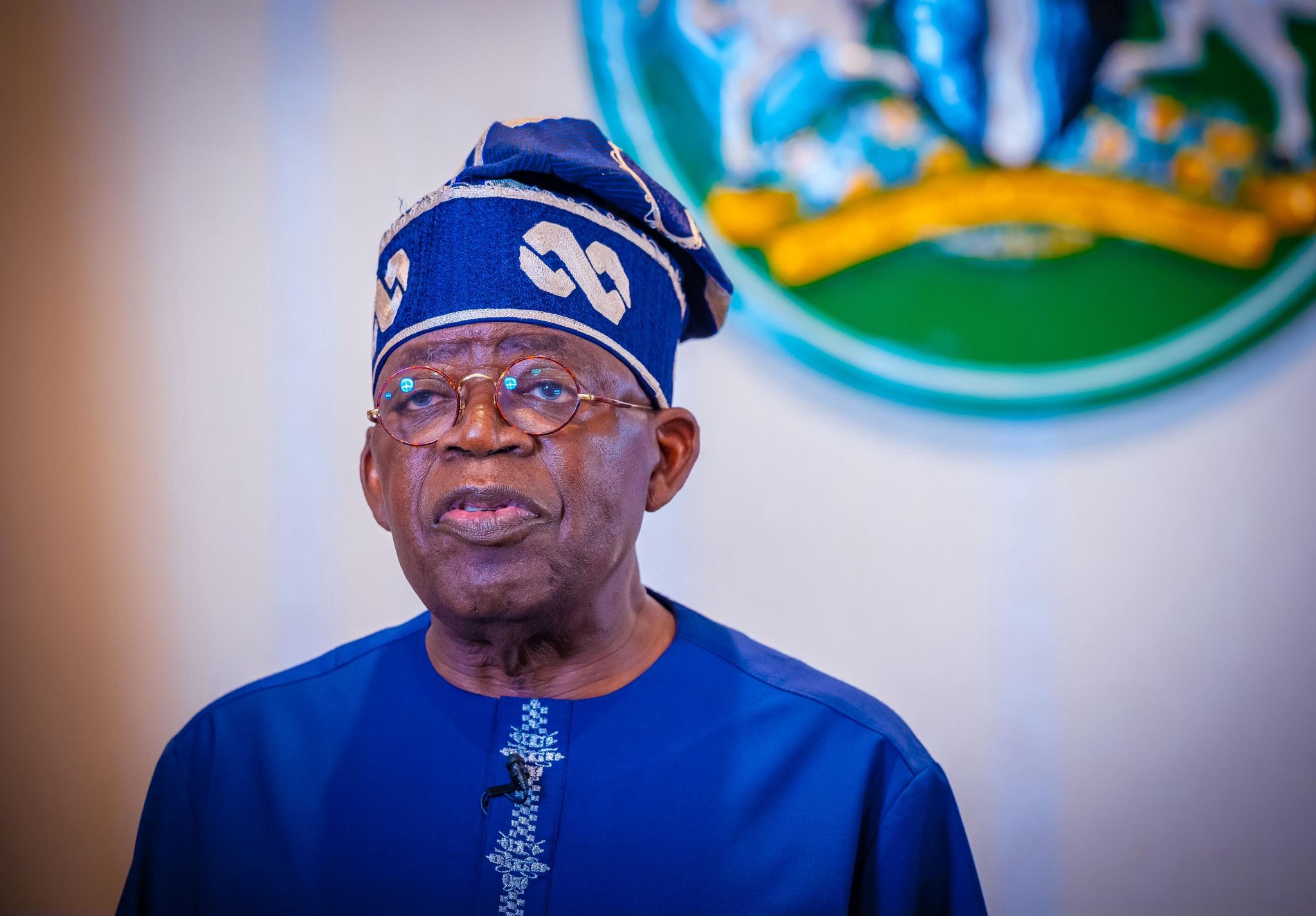
    President Bola Tinubu has unveiled a four-year national action plan aimed at eliminating child labour in Nigeria, describing the issue as a major national development concern.

    Tinubu made the declaration on Wednesday in Abuja at the National Dialogue on Advancing the Implementation of Nigeria’s National Child Labour Policy and National Action Plan 2026-2030.

    The President, who was represented at the event by the Secretary to the Government of the Federation, George Akume, also launched the 2024 National Child Labour Survey Report.

    According to a statement by Akume’s media aide, Yomi Odunuga, Tinubu said child labour had implications for several areas of national development, including education, poverty reduction, economic growth, food security and human capital development.

    He said the Federal Government would focus on addressing the factors that push children into labour, while strengthening systems designed to protect them.

    “Every nation is judged by how well it protects its children. A child who is forced into labour instead of attending school loses more than an education. That child loses opportunities, confidence, health and the chance to fully contribute to national development,” the President said.

    Tinubu said his administration would improve labour administration and inspection, strengthen child protection systems and expand interventions addressing poverty, unemployment, poor access to quality education and social exclusion.

    He said the 2026 theme, “Red Card to Child Labour: Fair Play for Children, Decent Work for Adults,” reflected the country’s commitment to tackling child exploitation.

    The President identified education as a key measure for preventing child labour, saying his administration was implementing reforms focused on out-of-school children, education data, teacher development and skills acquisition.

    He added that the Renewed Hope National Home-Grown School Feeding Programme would encourage school attendance while helping to address hunger and malnutrition among children from vulnerable families.

    Tinubu also pointed to social protection programmes, including the NG-CARES Additional Financing Programme and the Human Capital Opportunities for Prosperity and Equity Programme, as measures aimed at strengthening household resilience.

    According to him, expanding economic opportunities for parents and caregivers would help reduce the pressure that forces children to contribute to household income.

    The President also referenced the National Plan of Action on Ending Violence Against Children in Nigeria 2024-2030, launched in 2025, and said efforts were ongoing to strengthen enforcement of the Child Rights Act and other laws protecting children.

    He said the government was also taking steps to improve security in schools, particularly in communities considered vulnerable to threats.

    Tinubu described Nigeria’s status as an Alliance 8.7 Pathfinder Country as both a responsibility and an opportunity to demonstrate progress in combating child labour.

    He said the newly launched National Child Labour Policy and National Action Plan 2026-2030 would provide a framework for turning the country’s commitments into measurable actions.

    The President urged state governments to support the implementation of the plan and called on the Nigeria Governors’ Forum and Nigeria Governors’ Spouses Forum to promote child protection initiatives across the country.

    He also appealed to employers to ensure that their supply chains were free from child labour.

    Workers’ organisations, development partners, traditional and religious leaders, communities, parents and guardians were similarly urged to contribute to efforts to protect children from exploitation.

    Tinubu subsequently launched the 2024 National Child Labour Survey, conducted under the Labour Force Survey, alongside the National Policy and National Action Plan for the Elimination of Child Labour 2026-2030.

    He directed federal ministries, departments and agencies, state governments, employers, workers’ organisations, development partners and civil society organisations to work towards full implementation of the policy and action plan.

    The President commended the Federal Ministry of Labour and Employment, International Labour Organisation, ECOWAS, European Union, Government of the Netherlands, United States Department of Labour, World Bank, National Bureau of Statistics and members of the National Steering Committee on the Elimination of Child Labour for their contributions.

    Tinubu said the country must now move “beyond commitment to action” to ensure that Nigerian children have access to education and protection and are able to grow up free from exploitation.

  • President Tinubu Says Economic Reforms Moving Nigeria’s Economy to $1tn

    President Bola Ahmed Tinubu

    President Bola Tinubu on Tuesday said the economic reforms introduced by his administration have placed Nigeria on the path to achieving a $1tn economy by 2030, despite the hardship and challenges confronting Nigerians.

    Represented by the National Chairman of the All Progressives Congress, Prof. Nentawe Yilwatda, at the second edition of the Asiwaju Scorecard Series and Policy Roundtable in Abuja, Tinubu said the reforms had strengthened the foundation for economic stability, growth and prosperity.

    Tinubu commenced major economic reforms on May 29, 2023, at his inauguration, measures that were met with mixed reactions from Nigerians due to their varying impact on citizens’ livelihoods.

    However, more than three years into the administration, the Presidency has maintained that the reforms are in the best interest of the country and are delivering the desired results.

    Tinubu said the removal of fuel subsidy and reforms in the foreign exchange market, alongside increased revenue mobilisation and investments in critical infrastructure, were necessary to move the country away from years of economic uncertainty and towards sustainable growth.

    He stated, “When President Bola Ahmed Tinubu assumed office on 29 May 2023, Nigeria faced a difficult economic inheritance. We had fuel subsidy distortions, multiple exchange-rate windows, weak revenue mobilisation, foreign-exchange shortages, rising debt-service pressures and years of inadequate investment in critical infrastructure. The President understood that Nigeria could not continue on that trajectory and therefore took difficult decisions, including the removal of the fuel subsidy and the reform of the foreign-exchange market.

    “The evidence increasingly shows that the foundation is strengthening. Nigeria’s gross external reserves has risen to about $52.7 billion by August 2026. Consolidated non-oil revenue increased from approximately ₦13.63 trillion in 2023 to ₦16.4 trillion in the first two quarters of 2026, demonstrating the growing contribution of non-oil sources to government revenue. Our trade position has also improved dramatically: from a merchandise trade surplus of only about ₦44.8 billion for the whole of 2023 to approximately ₦7.54 trillion in the first quarter of 2026 alone.

    “Real GDP grew by 4.43 percent in Q2 2026, while inflation has fallen significantly from its earlier peak to about 15.4 percent. These figures do not mean that our economic challenges have disappeared, but they demonstrate that the direction of travel has changed. And let me emphasise: macroeconomic stability is not the destination; it is the foundation. The ultimate test is when stability translates into cheaper food, more jobs, affordable credit, reliable electricity and greater purchasing power for Nigerians.

    “Most Nigerians have asked, why the ambitious $1 trillion economy by Mr President? The $1 trillion economy is not merely a number, but a national mission: a Nigeria that produces more, exports more, attracts more investment, creates more jobs and gives its young people a greater stake in the future.”

    He said Nigeria’s $1tn economy ambition requires adequate infrastructure, stressing that the Renewed Hope Agenda prioritises roads, rail, ports, energy and digital connectivity.

    The President added, “Nigeria must now take full advantage of its enormous maritime opportunity by developing an integrated five-port maritime and logistics corridor. Our strategic ambition should be to develop and connect five major deep-sea ports at Lagos, Ondo, Ibom, Port Harcourt and Calabar, linking them by modern rail and road infrastructure, with the Lagos-Calabar Coastal Super Highway serving as the principal coastal road spine. But the vision does not stop at the coastline.

    “The Western Corridor will connect the maritime gateways to the interior through the Lagos–Abuja–Kaduna–Kano rail corridor, complemented by the Sokoto–Badagry Super Highway, thereby opening a direct trade route from the Atlantic coast to the markets of the Northwest and the Sahel. The Eastern Corridor will similarly connect the eastern maritime gateways through the Port Harcourt–Abuja–Kaduna–Kano rail corridor, complemented by the proposed Calabar–Maiduguri Trans-Sahara Super Highway, creating a second major east-to-north trade route.

    “In this way, Nigeria can create an integrated national transport system in which our five deep-sea ports are connected to one another, connected to our major cities and production centres, and connected ultimately to the landlocked markets of Niger, Chad, Burkina Faso, Sudan and the Central African Republic.

    “This is how Nigeria can move beyond being simply a coastal trading nation to becoming the maritime gateway and logistics hub of West and Central Africa, capturing a much larger share of the continent’s trade, logistics, manufacturing and distribution value chain.

    “That is more than transportation infrastructure, but a trade architecture. It would generate opportunities in logistics, warehousing, freight forwarding, customs, banking, insurance, manufacturing, distribution and agro-processing. It would create jobs, generate foreign exchange and strengthen Nigeria’s position as a regional commercial hub.”

    Speaking further, Tinubu said Nigeria must develop industrial parks, export-processing zones, logistics hubs, agro-processing clusters and manufacturing centres along major transport corridors.

    The President continued, “Every container through a Nigerian port is an economic opportunity. Every Nigerian agricultural product exported is an opportunity. Every factory established along a transport corridor is an opportunity. Every international company that chooses Nigeria as its African distribution base is an opportunity. That is how we grow GDP, create jobs, earn foreign exchange and build the foundation of a $1 trillion economy.

    “None of this can succeed without energy, and Nigeria has abundant gas, and the Ajaokuta-Kaduna-Kano gas pipeline (AKK Project) is strategically important in connecting gas resources to major population and industrial centres in Northern Nigeria. It is about electricity, fertiliser, manufacturing, transportation, energising homes and industrialisation.

    “We are investing in the future of our young people because they are the greatest asset of the Nigerian economy. Through NELFUND, we are expanding access to higher education so that financial circumstances do not prevent young Nigerians from acquiring the knowledge they need to succeed. We are also supporting young people in technical and vocational education through grants and skills-development opportunities, while programmes to train young Nigerians in digital technologies are equipping a new generation with the skills required for the global digital economy.

    “At the same time, through initiatives such as CREDICORP, we are expanding access to responsible credit so that workers, entrepreneurs and businesses can acquire productive assets, grow their enterprises and create jobs. This is not simply social investment; it is an investment in the productive capacity of Nigeria and in the young Nigerians who will ultimately build and drive our $1 trillion economy.”

    The President said economic growth must translate into improved living standards, stressing that the next phase of the Renewed Hope Agenda will focus on more jobs, affordable credit, lower inflation, reliable power, increased production and stronger purchasing power.