Tag: Power

  • FG Says China Partnership Will Boost Reliable Power Supply, Local Manufacturing

    FG Says China Partnership Will Boost Reliable Power Supply, Local Manufacturing

    Precious Nwonu, Enugu

    The Federal Government has said stronger collaboration with China in the power sector will support efforts to improve electricity supply, expand renewable energy and promote the local production of power equipment in Nigeria.

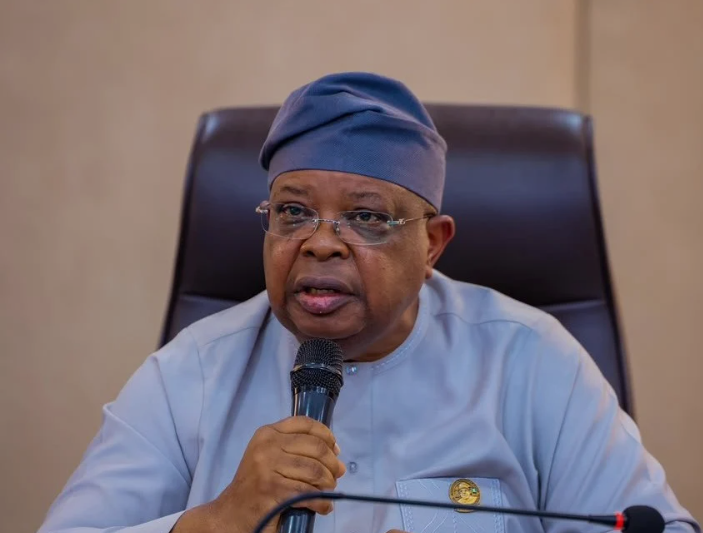
    The Minister of Power, Joseph Tegbe, stated this in Abuja on Wednesday night during a reception to commemorate the 77th anniversary of the founding of the People’s Republic of China.

    Tegbe said Chinese investment in Nigeria would have a greater and more sustainable impact if it also contributed to the development of local technical expertise and strengthened Nigerian businesses.

    According to him, cooperation between both countries should not only focus on financing and infrastructure but also on equipping Nigerian engineers and technicians with the skills required to operate and maintain power facilities built in the country.

    “As Minister of Power, I see particular promise in deeper cooperation on achieving reliable electricity, renewable energy, and manufacture of power equipment in Nigeria with our cooperation with China,” Tegbe said.

    He said Nigeria-China relations had evolved from diplomatic ties into a broad partnership spanning infrastructure, healthcare, technical exchanges, trade and investment.

    Nigeria and China established diplomatic relations on February 10, 1971, while the relationship was elevated to a comprehensive strategic partnership by President Bola Tinubu and Chinese President Xi Jinping in September 2024.

    Tegbe, who also serves as Director General of the Nigerian-China Strategic Partnership, acknowledged China’s role in financing, engineering and investing in major Nigerian projects, including the Lekki Deep Seaport, railway modernisation projects and the Zungeru Hydropower Station.

    He also praised China’s development in manufacturing, science, high-speed rail and clean energy, describing its transformation as remarkable.

    The minister further highlighted China’s zero-tariff programme for African countries, saying it could create opportunities for Nigerian producers and help increase the country’s exports to the Chinese market.

    He said bilateral trade between Nigeria and China stood at $28bn at the end of 2025, while trade in the first half of 2026 had reached $17bn.

    Tegbe, however, said Nigeria needed to move beyond increasing trade volumes by boosting domestic production and exports to China.

    “Our shared task is to translate that access into stronger Nigerian production and Nigerian exports to China, with benefits that will endure both economies,” he said.

    The minister also reaffirmed Nigeria’s commitment to the One-China principle, stating that the Federal Government recognised the People’s Republic of China as the sole legal government representing China.

    The Chinese Ambassador to Nigeria, Yu Dunhai, said relations between both countries had entered what he described as “the fast lane” under the leadership of Presidents Xi Jinping and Tinubu.

    Dunhai said bilateral economic cooperation had continued to expand, pointing to recent agreements on economic partnership and aquatic exports as measures that could provide further institutional support for trade.

    He said trade between the two countries reached $18bn in the first half of 2026, representing a 35 per cent increase, while Chinese imports from Nigeria rose by 81 per cent.

    The ambassador said China was prepared to align its 15th Five-Year Plan with the Federal Government’s Renewed Hope Agenda, particularly in industrialisation, digital development and the green and blue economies.

    “Our future cooperation holds boundless potential. China stands ready to align its 15th Five-Year Plan with President Tinubu’s ‘Renewed Hope’ Agenda across industrialisation, digital, green, and blue economies,” he said.

    Dunhai also invited Nigeria to join the World Artificial Intelligence Cooperation Organisation, saying participation would give the country an opportunity to contribute to and benefit from developments in global artificial intelligence.

    He noted that China’s zero-tariff policy covering 53 African countries, which commenced on May 1, had contributed to a 24 per cent rise in China’s imports from Africa during May and June.

    According to him, Chinese innovations in artificial intelligence, digital payments and solar energy were also helping African countries address development challenges.

    Dunhai said Nigeria and China, which are marking 55 years of diplomatic relations, should continue to strengthen their partnership through mutual respect, shared development and practical cooperation.

    “Those who walk the same path go far. Let us empower development through innovation, openness, and sincere cooperation to continuously enrich China-Nigeria friendship and write a new chapter in China-Africa relations,” he said.

  • Beyond Power and Positions

    BEYOND POWER AND POSITIONS:
    Structuring an Igbocentric Progressive Polity

    M.O. ENE

    Our forefathers figured out that nothing has a God-given gift of eternal existence. It is no wonder that they abhorred lifelong kings or presidents of any Igbo nation state. For constructive coexistence and to build national stability, each ethnic entity must live its core values: “Onye na nke ya!” In many Igbo communities, these core values are communal and based on the sanctity of life, the sacredness of Earth, the belief in an enigmatic supreme spirit, and the golden rule of “Egbe bere, ugo bere.” (Live and let live.)

    Beyond the powers of present political structures, beyond the powerful positions held by politicians and their appointees, Ndiigbo need to step back and do things a bit differently. First, the Igbo must unite in doing everything humanly possible not to fight other people’s wars again. No one is afraid of wars. Our ancestors stipulated that the fear of being fatally shot should not stop a good fight. A good fight is one that has goals, purposes, and strictly for survival—as was done and accomplished in the eventual Nigeria-Biafra War, which was initially not an Igbo fight. As the Commander of Biafran Armed Forces General Alexander A. Madiebo mandated: “If the Igbo can only give others a chance to fight their own wars, there may never be any more wars in Nigeria in which they will be involved directly.” Ndiigbo must use common sense to confront current civil challenges clouding Nigeria. The use of force should be a last resort. We are not close. Therefore, we must unleash our sense of elevated equity and let Nigerian nations resolve the current crises without kicking the Igbo into the middle, like gallant grasshoppers thrown into a court of crooked cocks.

    Nigeria is not working. The clamor for referendum on, and or restructuring of, the 1999 military miracle called ‘constitution’ has gone national and viral. Though many Nigerians do not agree yet on the form of a new polity, anything different from the shady status quo is better. For Ndiigbo, the matter was settled at Aburi, Ghana in 1967, thanks to erudite then-Colonel Chukwuemeka Odumegwu-Ojukwu, later General and Biafra’s Head of State. At the 1994 constitutional conference in Abuja, Dr. Alex I. Ekwueme presented the Ohanaeze proposal, which was the Aburi Accord concept modified to accommodate the sensibilities of minority nations in separate confederations or zones. Nigeria is not working. The solution is simple: While the emotions of the current crises must not tear the country into smaller independent states that have no chance of stability nor sustenance, Nigerian nations must stay slightly apart or be consumed by the frictions of a fundamentally flawed federation tethering on the precipice of perdition. The Igbo must step aside, do useful work on themselves, and watch the others get their shtick together. “Nkwucha” or circumspection cannot be considered cowardice.

    Thus, as the Igbo nation waits for other Nigerian nations to make up their minds without the Igbo in the middle, we must pursue the Aladimma Agenda: a gathering of persons and communities that value life, cherish freedom, and respect the sanctity of our benevolent Earth. Aladimma is a noble nation of majority Igbo-cultured communities. A nation is not necessarily defined by boundaries. Aladimma is for anyone living Igbo core values in thought and in action anywhere in the world but pivoting in core Igbo country southeast of the River Niger. The Igbo must tow paved paths, avoiding the mistakes that led the Jews to lose their promised land for centuries before the Jewish diaspora founded the modern Jewish nation of Israel. Therefore, the aims of Aladimma include the preservation and promotion of pan-Igbo communities in all parts of the world, the unification of Igbo persons and groups worldwide, the refining and reinforcement of Igbo nationalism in thoughts and in actions, and the use of civil advocacy in liaising with peoples and governments to achieve the goals of a great society of Ndiigbo worldwide. Ndiigbo worldwide, especially of the southeast, should aspire to economic, intellectual, and political power with the sole aim of delivering decent dividends of democracy and building town governments in all original communities—not the 1001 “autonomous communities” created for imposed and lifelong pseudo-monarchs, the so-called “traditional rulers.” Aladimma should be about the Igbo people—not power and positions, and about true representations—not callous and crass selfishness or pathetic primitivity.

    As I concluded in my lecture at the International Igbo Conference 2020, titled “Of Dividends and Divisions: A Dozen Decades of Igbo Diaspora Disruptions”:
    Nigeria as-is is untenable;
    Biafra as-was is unattainable.
    Between reality and romance,
    Aladimma is a space of sense.

    Let us use the teachings of our culture to move forward. Let us deliver drizzles of democracy dividends to all denizens. Let us give a new life to the dreams of the founding fathers of this great green giant with fossil-fuel feet and crumbling clay claws. Let us set the pace for numerous nations of Africa. Let us begin with Aladimma in southeastern Nigeria and show the way.

    @Aladimma
    March 15, 2021