Tag: Politics

  • 2027: Peter Obi Promises To Spend Presidential Holidays Across Nigeria

    2027: Peter Obi Promises To Spend Presidential Holidays Across Nigeria

    Precious Nwonu, Enugu

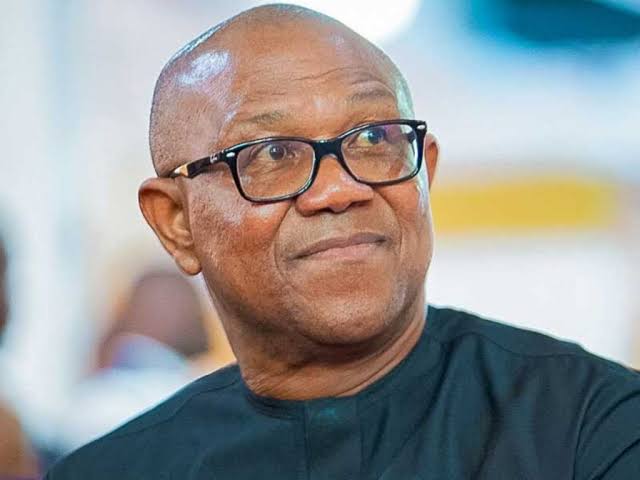
    The presidential candidate of the Nigeria Democratic Congress, Peter Obi, has pledged to spend his holidays within Nigeria if elected president in the 2027 general election.

    Obi made the commitment in his Independence Day address in Abuja on Thursday, saying he would use his four-year tenure to travel across the country, engage with citizens and gain a better understanding of their challenges.

    The former Anambra State governor said his proposed approach to governance would involve leading by example and maintaining close contact with Nigerians.

    “As I have always done, I will lead by example. In four years as President of this great nation, I will not spend my holidays outside Nigeria,” Obi said.

    He listed Zamfara, Borno, Kwara, Ebonyi and Edo among states he intended to visit during his holidays, adding that he wanted to experience the country and interact directly with its people.

    “I want to continue to see Nigeria. I want to know Nigeria. I want to spend time with Nigerians, listen to them, understand their challenges and celebrate their resilience,” he said.

    Obi also promised to make governance measurable and accountable, with emphasis on improving the welfare and productivity of citizens.

    He said Nigerians would begin to see tangible results from his administration within its first year if elected.

    On security, the NDC candidate pledged to intensify efforts to tackle terrorism, banditry and other threats, saying farmers should be able to return to their farms while children attend school and businesses operate without fear.

    “No Nigerian should be forced to live in an IDP camp because his or her government has failed to provide security,” Obi said.

    The former governor also criticised the APC-led Federal Government, arguing that Nigeria continued to face serious challenges despite the promises made by the ruling party in 2023.

    He cited poverty, insecurity and the number of out-of-school children among the challenges confronting the country.

    According to Obi, Nigeria’s problem is not primarily a shortage of resources but the failure of successive administrations to translate the country’s resources into improved human development, productivity, security and shared prosperity.

    He also referred to his recent visit to Sokoto State with his running mate, Rabiu Kwankwaso, where they held discussions on insecurity, unemployment, poverty, drug abuse and out-of-school children.

    Obi said their visit to an internally displaced persons camp in Ramin Kura, Sokoto metropolis, exposed the difficult conditions faced by displaced women and children.

    He described the situation as an indication of the challenges confronting communities across different parts of the country.

    The former Anambra governor had previously criticised Nigerian presidents for spending their holidays abroad, arguing that the President should use such periods to visit parts of the country facing security and developmental challenges.

    He said an elected president should remain connected to citizens and use domestic visits to better understand the BN conditions in different parts of Nigeria.

    Obi maintained that while a Nigerian president would need to travel abroad for official engagements, presidential holidays should be spent within the country.

  • El-Rufai’s Betrayer and Betrayals

    El-Rufai’s Betrayer and Betrayals

    -By Festus Adedayo

    My first encounter with Nasir El-Rufai was in year 2000 at the Akodo Resort, a popular Lagos beachfront getaway along the Lekki-Epe Expressway in Ibeju-Lekki. As Director-General of the Bureau of Public Enterprises (BPE), he had come to sell to his audience the talismanic powers of the agency in unbundling the potential of the Olusegun Obasanjo administration. I saw a super-brilliant man.

    A pint-sized frame trapping a mountainous intellect, Nasir spoke with verve and conviction. In a voice barely above a whisper, he bored deep into the hearts of his audience as one of the standout talents of that era. Yet, as the years rolled by, El-Rufai unraveled into a classic political polymath undone by his own hubris. Locked away in what is undoubtedly a political witch-hunt, he is a quintessential brilliant strategist whose restless tongue and lack of tact ultimately became his Achilles› heel. El-Rufai’s predicament reflects the tragedy of an impolitic genius: a hugely capable operator perpetually limited by a total absence of a political filter.

    Now, a wound inflicted by a friend does not heal. This African proverb must capture the current state of mind of the stormy petrel of Kaduna State. In that mind, the ironies of power hang thickly in the damp air. Locked beyond iron bars in the custody of the Independent Corrupt Practices and Other Related Offences Commission (ICPC) in Abuja for over 200 days now, life must have dealt Nasir a humbling blow. As he penned the short epistle entitled “Mr Relationship And Its Aftermath” on his X handle last week, psychoanalysis would reveal a mind gutted by regrets, ruptured by guilt, and quietly ruminating on the unforgiving nature of political power.

    In that X post of his, El-Rufai offered two theses to chew: his relationships, and their aftermath. Nasir’s relationships have always mirrored his historical combativeness. He is never a politician who believed that gentleness was an art of statecraft. His public trajectory shows an uncompromising bulldozer who laid political waste to opponents; a sharp-tongued, untouchable power broker of Abuja and Kaduna.

    El-Rufai brings to mind the fable of the old, hunting-weary lion who feigned illness and invited all animals to visit his cave, and who slaughtered them one after another for a meal. Similarly, El-Rufai’s path is littered with the carcasses of political associates and bosses whose flesh he mangled for personal convenience. The trail is long: from Atiku Abubakar, to Obasanjo, Muhammadu Buhari, and beyond. The paradoxical question arising from that Nasir X reflection on his relationships is this: Can a man who weaponized political leverage; who wasted associations and friendships in the process, now complain when that same cold, unfeeling apparatus turns its fangs on him?

    Consider the lineage of his battles. El-Rufai is credited with a controversial statement made at a Kaduna APC stakeholders› meeting in September 2017, where he reportedly declared that his political adversaries always meet an unfortunate end. To validate this, he pointed to his battles with Presidents Umaru Yar›Adua and Goodluck Jonathan. It was widely interpreted as a boast that, while his opponents faced downfall or death, he always survived. Today, the sphinx is at the end of his tethers.

    Yet, like a paradox, from the flipside of that same lens, El-Rufai put his combativeness, fearlessness, and acerbic tongue in the service of friendship. The most prominent beneficiaries of that hubris remain former Emir of Kano, Sanusi Lamido Sanusi, and President Bola Ahmed Tinubu.

    Upon the dethronement of Sanusi II in March 2020, El-Rufai demonstrated the truth of the classic Yoruba adage that it is in moments of adversity that true friendship is tested —“Ìgbà ìpónjú l’a ń mò’ré.” As governor of Kaduna State, El-Rufai shielded the embattled Emir, standing resolutely by his side like the Wall of Gibraltar. He intervened through a series of bold, calculated moves, at great risk to his office and political future. By then, insiders who knew said that Buhari’s grievance was beyond what the rest of the world could see. It was encapsulated by the ire of a grieving man seeking vengeance for the trampling of his inviolable “Oza room” by a man whose libido knew no bounds.

    El-Rufai’s first adversarial and bold, daring move against an Almighty Buhari presidency was a swift, deadly punch delivered with masterly finish: immediate institutional solidarity for the deposed Emir. To fill the public vacuum created by the dethronement, on the very day of his deposition, El-Rufai appointed Sanusi Vice-Chairman of the Kaduna Investment Promotion Agency. Barely 48 hours later, he named him Chancellor of Kaduna State University. It was a massive fortification of brotherly ties at a time when the fear of Buhari’s Villa cabal had caused other friends to scatter.

    El-Rufai could be superlative, even excessive, in supporting his allies. He went beyond administrative appointments into wrapping his friend in a cloak of political protection. In this, he provided him crucial logistical assistance. Immediately, he dispatched Kaduna State’s official vehicles to go convey Sanusi’s harem and waist-bead-long family aftermath of the exile. With this, Sanusi’s family had easy access to visit him in his remote exile town of Awe, Nasarawa State. It still did not end there. Upon the pronouncement of the federal court which granted the deposed Emir breather from banishment, El-Rufai personally appeared in Awe to offer Sanusi solidarity and even personally escorted him out of exile to safety in Lagos.

    Today, history presents a stark irony: Sanusi walks the corridors of power with his royal robes trailing through political corridors, as silent as a sphinx, while his saviour sits in a cold, lonely jail cell.

    The political fallout between President Bola Tinubu and El-Rufai presents a striking parallel to the mid-20th-century rift between Kenya’s founding president, Jomo Kenyatta, and his vice president, Jaramogi Oginga Odinga. The historical mechanics behind the Kenyan fallout offer a window into power struggles that span borders and eras. It demonstrates that statecraft relies on the same cold machinery: leveraging key allies to bridge regional or ideological divides to capture executive office, only to systematically dismantle their relevance once authority is consolidated.

    In early post-independence Kenya, while championing Kenyatta as the sole leader who could unite the nation, Odinga famously refused to take the helm of government while Kenyatta remained imprisoned. Yet, as soon as Kenyatta was released and assumed the presidency, he systematically neutralized Odinga’s influence within the ruling party, eventually forcing him out.

    In both instances — Tinubu/El-Rufai and Kenyatta/Odinga, what we have/had was an indispensable ally mobilizing critical regional capital to install a leader, only to be promptly discarded, alienated, and stripped of influence once the administration took roots. In strikingly similar fashion, El-Rufai fought fierce partisan battles for Tinubu. Despite this pivotal loyalty, his nomination to Tinubu’s cabinet was torpedoed by an engineered clearance failure in the Senate. This marked the former governor’s abrupt transition from trusted kingmaker to political outsider, and ultimately, political detainee.

    It is difficult to trace the depth of the Tinubu/El-Rufai relationship prior to Tinubu’s presidential ambition. But when political vultures encircled Tinubu to derail his candidacy, El-Rufai stepped forward like a matador. He appears to specialize in stepping in for weak friends boxed into a corner. His strategic interventions proved instrumental in securing Tinubu’s victory in 2023.

    At a time when the political class feared the menacing claws of the Buhari cabal, El-Rufai boldly led the northern governors who adamantly insisted that power must shift to the South after Buhari’s eight-year tenure. He directly confronted the presidency when Buhari’s body language suggested backing a northern successor like Ahmed Lawan. At the APC presidential primary, El-Rufai acted as Tinubu’s most impregnable shield. How were we to know that battle shields can turn into battle-wary sandals?

    Throughout the 2023 campaign, El-Rufai remained in the vanguard. Beyond marketing candidate Tinubu to the northern electorate through focal groups and media engagements, he vigorously defended the controversial Muslim-Muslim ticket.

    Yet another stab of betrayal felt by El-Rufai came from close quarters: National Security Adviser Nuhu Ribadu, and his political protégé, former activist-turned Kaduna State Governor, Uba Sani. Defying the Yoruba wisdom that he whom one leans upon owes one a warning before stepping away, Uba Sani assumed the role of Judas to the presidency’s Pontius Pilate. He not only abandoned his benefactor at a critical juncture, he also exposed El-Rufai’s financial records and debt profile as governor, aligning himself with those who put his mentor on the cross. To satisfy the Villa, Sani prompted the State House of Assembly to probe his benefactor over alleged misappropriation of funds — an indictment that forms a core pillar of El-Rufai›s current legal troubles.

    Ribadu, for his part, ditched Nasir at the altar of political convenience. As Governor Sani cooked own hemlock for El-Rufai to swallow, Ribadu cooked his too in the El-Rufai wiretaps travails. They both became answerable to the quintessential example of the Yoruba’s projection of betrayals which is reflected in their lamentation that, placing absolute trust in an ally can prove calamitous: “Ẹni a gb’ójú okùn lé, kò ju ẹni agba.”

    El-Rufai’s travails at the hands of his associates demonstrate that in African politics, «friendship» is rarely a moral covenant; it is a transactional instrument. How ironic is it that Nasir, one of Nigeria’s most calculating practitioners of political mechanics, is now wrapped in the shawls of his own fate. Not only is he tasting the bitter pill of abandonment by those he shielded, he is equally experiencing the cold, unfeeling calculus of power, learning how perishable loyalty becomes when the invoice comes due.

    While in office, El-Rufai harvested a large coterie of political enemies. Activist Shehu Mahdi highlighted how he courted the ire of the northern establishment, from the unceremonious revocation of land allocations belonging to northern elites, to his controversial security stances and borderless tendency to talk down on others. These strained his relationship with elders who could rescue him today. Mahdi noted that while campaigning for Tinubu, El-Rufai declared that «there were no elders in the North» because the establishment opposed Tinubu’s candidacy. Those same elders have now remained silent as he undergoes his ordeal.

    Many observe that El-Rufai became the Nostradamus of his own plight. In his 2013 memoir, The Accidental Public Servant, he articulated how friends abandon friends and subordinates desert their leaders the moment authority vanishes. His life mirrors the devastating nature of that rhythm of betrayal by those closest to political leaders shorn of power. He reminds me of what a political follower told ex-Enugu State governor, Chimaroke Nnamani, in 2007 at a time he suffered huge political abandonment and outflow into the camp of his protege/friend-turned successor, Sullivan Chime. The fellow said, as it is said in Igboland, goats follow only he who holds the palm-frond. Palm frond, in this instance, meaning political power, that had just changed hands. While physical injuries from strangers heal with time, the emotional trauma of a stab from an ally shatters the foundation of trust.

    El-Rufai’s situation evokes Niccolò Machiavelli’s The Prince and Thomas Hobbes’ thesis on self-preservation in the arena of power. El-Rufai’s isolation teaches that in statecraft, gratitude is viewed as a burden, while self-preservation remains the ultimate law.

    Yet Nasir ought to have known that the rules that now apply to him also apply to his adversaries. Politics is war by other means — and in war, you kill or get killed. Reversing Carl von Clausewitz’s famous dictum from his classic, On War — that «War is merely the continuation of policy (or politics) by other means» — those who justify keeping El-Rufai incarcerated until the 2027 elections rely on the pragmatic logic of self-preservation: no one leaves their own rear exposed to the eagle while watching over another›s head.

    A foundational rule in military training is never to leave a wounded soldier behind. Ribadu, Uba Sani, and Sanusi Lamido Sanusi have all chosen to disregard this rule in the calculus of power. Nasir is that wounded soldier in a war of crossfires.

    Ultimately, these patterns of betrayal — Kenyatta/Odinga, Tinubu/El-Rufai, El-Rufai/Sani, El-Rufai/Ribadu, El-Rufai/Sanusi — underscore a fundamental law of political expedience: once a kingmaker serves their purpose, their remaining influence becomes a liability. Just as Kenyatta viewed Odinga’s independent base as a long-term threat to his consolidation of power, Tinubu moved to isolate El-Rufai to establish a single center of authority within state apparatus. Whether in Nairobi in the 1960s or Abuja and Kaduna today, the dynamic remains unchanged: tactical alliances are easily sacrificed on the altar of total control.

    In all of this, we observe the ephemerality of power and the nature of power as a volatile mist. Political friendship becomes indistinguishable from a handshake across a dagger, and loyalty proves to be a fleeting shadow. El-Rufai’s fall illustrates how fickle human praise becomes once the masquerade’s robes are removed. For bystanders observing these calculations, it is a haunting reflection on political memory in Africa: the axe forgets, but the tree remembers. Yet, in the court of kings, even the tree learns to pretend it never had roots.

    How does one interpret Sanusi’s silence today? Is it individual morality yielding to political survival, pure ingratitude, or the pragmatic instinct that the Kano throne cannot afford to burn bridges with a sitting president for the sake of a disgraced former governor?

    El-Rufai’s fate carries a broader warning for Nigeria’s political class. It is a cautionary parable for those wielding authority in Abuja and across the 36 state capitals: the court of power is populated by fair-weather sycophants, and the room at the top is always cold, and lonely.


  • ‘Call Governors to Order’ – Obi Demands Security Action After Benue Blockade

    ‘Call Governors to Order’ – Obi Demands Security Action After Benue Blockade

    Presidential Candidate of the Nigeria Democratic Congress (NDC), Peter Obi, has called on the Inspector-General of Police and the Director-General of the Department of State Services (DSS) to intervene following the disruption of his planned visit to Yelewata community in Benue State.

    Obi arrived in Makurdi on Tuesday morning and was heading for Yelewata in Guma Local Government Area, where he had planned to sympathise with families affected by the June 13, 2025, armed attack and make personal donations to victims.

    However, his convoy was stopped by a group of Benue youths along the Makurdi-Gboko Road, less than two kilometres from the airport.

    Chanting, “Obi go back, Obi go back”, some of the youths wielding sticks, reportedly threw stones as security personnel deployed to the area watched the confrontation.

    Following the incident, Obi and members of his team turned back and returned to the airport. He subsequently left the state without visiting Yelewata.

    Speaking before his departure, the former Anambra State governor described the incident as “ridiculous” and “very, very worrisome,” saying he had travelled to Benue to condole with families affected by the killings and offer support to victims.

    “We arrived Benue, Makurdi precisely this morning at 9am, on our way to the Yelewata community to condole and show solidarity to the families affected by last year’s killings,” Obi said.

    He said he had planned to visit the community as part of his decision to travel across the country, meet Nigerians directly and understand their challenges.

    According to him, more than 270 people were killed in the Yelewata attack, prompting him to make the visit as he began his campaign activities.

    “Only to arrive Makurdi this morning and trying to drive out, I was blocked by teeming thugs, shouting ‘Obi go back, Obi go back.’ And I was wondering, are we still in Nigeria? Or am I in another country?” he said.

    Obi said he decided against forcing his way through the blockade because doing so could have resulted in violence and endangered lives.

    “I discontinued because I didn’t want to say we must go on as we have our own teeming crowd, but not wanting to cause confusion and possibly endanger the lives of other people. I decided to remain as civil as possible,” he said.

    The NDC candidate subsequently appealed to the nation’s security authorities, particularly the Inspector-General of Police and the DSS Director-General, to intervene and ensure that political activities across the country were conducted peacefully.

    “I am using this occasion to appeal to the security agencies, the Inspector-General of Police, IGP, the Director of DSS and other agencies to please intervene and be able to call various state governors to order. This rascality cannot be allowed,” Obi said.

    He warned that political violence could escalate if security agencies failed to protect political actors and their supporters.

    “We have a country and we too have followers. We have people who can confront these people on our own if the state and the government can no longer provide us security. We cannot go on this way. It is unacceptable,” he said.

    Obi urges issue-based 2027 campaign
    Obi said the 2027 presidential contest should focus on the problems confronting Nigerians rather than violence, intimidation and political confrontation.

    He identified insecurity, kidnapping, hunger, killings and poverty as issues that presidential candidates should address as they seek the support of voters.

    “I participated yesterday in the commissioning of the office of the Presidential candidate of APM appealing that we need unity, love, justice, and let this campaign be concentrated on ideas, issues that concern Nigerians today of insecurity, kidnapping, hunger, killing and everything and how we are going to pull our people out of poverty,” he said.

    He urged other presidential candidates to travel around the country, interact directly with communities and listen to voters ahead of the 2027 elections.

    “Go around Nigeria so you can feel the people, see their faces, ask them questions and they ask you questions about what you want to do for them to be able to ameliorate the suffering Nigerians are going through today,” Obi said.

    He also appealed to young people allegedly involved in political violence not to allow themselves to be used by politicians.

    “I call on the youths that are being used. The abuse you are allowing them to use you for today will take its revenge on you,” he said.

    “We are not coming here fighting anybody because our elections will be run on ideas, on issues. And I urge people to please let’s concentrate on that. Let’s not allow a country to get into anarchy. Anarchy consumes everybody,” he said.

    ‘Government knew I was here’

    Obi said his experience as a former governor made it difficult for him to believe that the incident could have occurred without the knowledge of the state government and security agencies.

    “I have been governor myself. I know that this cannot happen without the government and security agencies in this state being fully aware that I am here,” he said.

    He recalled that he served as governor of Anambra State for eight years and said he would have intervened had a similar incident occurred under his administration.

    Obi also questioned why he should be prevented from moving around Benue during the campaign period.

    “This is a campaign period. I did not come here on election day so you cannot say I came disturbing the election,” he said.

    He further recalled that he had previously turned back from visiting Benue after the governor reportedly indicated that he did not want to meet him.

    “Remember last time I wanted to come, the governor said he did not want to see me. I turned back. But now is the election period where as a presidential candidate I am free to move around because election campaigns have started,” Obi said.

    He said his objective was simply to see conditions in the state firsthand and interact with residents.

    Reacting to the incident, the Benue State government accused Obi of courting trouble.

    Commissioner for Information, Solomon Iorpev, said this while reacting to the disruption of Obi’s convoy during a visit to the state on Tuesday.

    Iorpev said Obi ought to have formally notified the state government ahead of his visit, describing the action of the former governor as a breach of protocol.

    The commissioner said given his status as a former governor and prominent political figure, the government had a responsibility to make adequate security arrangements for him.

    “A high-profile person who has been a former governor of a state is coming into the state; he should have written a letter to the State Government.”

    “We are supposed to guarantee his safety and protection, but in an instance where no letter was written, we could not guarantee his safety.

    “This is not the first time he is doing this. He is just looking for our trouble. We are peace loving and hospitable people,” he said.

    Iorpev said he was not aware of those who blocked the convoy, but added that Obi’s visit coincided with a meeting involving youths from all the 23 Local Government Areas of Benue. Daily Trust

  • ‘Prove it or Retract’: El-Rufai Family Gives Gen Musa 7-Day Ultimatum

    ‘Prove it or Retract’: El-Rufai Family Gives Gen Musa 7-Day Ultimatum

    The family of former Kaduna State Governor, Nasir El-Rufai, has given the Minister of Defence, General Christopher Musa (rtd.), seven days to provide evidence or retract his allegation that the former governor planned killings in Southern Kaduna.

    The family made the demand in a statement issued on Monday and signed by Mohammed Bello El-Rufai on behalf of the family.

    Musa had, during a live edition of Politics Today on Channels Television on September 3, 2026, allegedly accused the former governor of actively planning killings in Southern Kaduna while serving as governor of the state.

    Reacting to the allegation, the El-Rufai family described it as “grave” and expressed concern that Musa did not present evidence to support the claim.

    The family said while the Minister was entitled to express his personal views, it was equally entitled to demand credible evidence to substantiate such a serious allegation.

    The statement said: “In the absence of such evidence, we call on him to publicly retract the allegation through the same medium on which it was made.

    “Accordingly, General Musa (Rtd.) is hereby given seven (7) days from the date of this statement to either provide evidence in support of his allegation or issue a full public retraction and apology.”

    The family warned that failure by the Minister to meet the demand within the stipulated period would compel it to seek legal redress.

    “Failure to do so will leave the family with no option but to pursue all appropriate legal remedies available under the law in response to these unsubstantiated allegations,” it said. Vanguard

  • 2027: ADC Unveils Governorship Candidates for 28 States – Full List

    Full List: ADC unveils 28 governorship candidates for 2027 election

    The African Democratic Congress (ADC) has unveiled its governorship and deputy governorship candidates for the 2027 general elections across 28 states.

    The party announced the candidates in a statement on Friday, highlighting its commitment to presenting what it described as credible leadership and a viable alternative for Nigerians.

    Among the candidates are Gbadebo Rhodes-Vivour for Lagos State, Isa Mohammed Ashiru for Kaduna, Great Ogboru in Delta, Senator Ahmad Babba Kaita in Katsina and Abubakar Malami in Kebbi.

    The party also fielded candidates in several other states, including Adamawa, Kano, Rivers, Oyo, Ogun, Plateau and Zamfara.

    The party said the candidates would carry its banner and its commitment to offering Nigerians credible leadership and a “real alternative” in the elections.

    Below is the full list of ADC governorship and deputy governorship candidates for 28 states as released by the party.

    1. Abia: Kalu Kalu Agu —  Governor; Alozie Ogadinma Darlington  — Deputy Governor

    2. Adamawa: Modibbo Hammantukur Ribadu —  Governor; Aguwa Kevin Iliya —  Deputy Governor

    3. Akwa Ibom: Akpanudoedehe John James —  Governor; Nsien Mkpombuk Tommy — Deputy Governor

    4. Bauchi: Sen. Halliru Dauda Jika — Governor; Sama’ila Mohammed Kabir — Deputy Governor

    5. Benue: Rt. Hon. Herman Iorwase Hembe —  Governor; Abba John Abba — Deputy Governor

    6. Borno: Babagana Buhari — Governor; Mamman Dauda  — Deputy Governor

    7. Cross River: Nkoyo Toyo —  Governor; Okwoche Andrew Adagbor — Deputy Governor

    8. Delta: Chief Great Ogboru — Governor; Afiari Gloria — Deputy Governor

    9. Ebonyi: Ukpai Mba Udeh — Governor; Onwe Daniel Ede — Deputy Governor

    10. Enugu: Ocho Obodoeze Chukwuma — Governor; Eze Arinze Christopher -Deputy Governor

    11. Gombe: Bala Bello — Governor; Bala Sani Isa — Deputy Governor

    12. Jigawa: Sabo Mohammed Nakudu — Governor; Musa Ya’u Balarabe — Deputy Governor

    13. Kaduna: Isa Mohammed Ashiru -Governor; Kantiok Irmiya Ishaku -Deputy Governor

    14. Kano: Ibrahim Ali Amin — Governor; Shehu Abdulkadir Bari — Deputy Governor

    15. Katsina: Sen. Ahmad Babba Kaita — Governor; Aminu Yar’adua Ahmed — Deputy Governor

    16. Kebbi: Abubakar Malami — Governor; Zagi Musa Mohammed — Deputy Governor

    17. Kwara: Zakari Mohammed — Governor; Olawuyi Julius Olayide — Deputy Governor

    18. Lagos State: Gbadebo Rhodes Vivour — Governor; Gbadamosi Babatunde Olalere — Deputy Governor

    19. Nasarawa: Nuhu Angbazo — Governor; Ahmed Yusuf — Deputy Governor

    20. Niger: Dr. Mohammed Kpautagi -Governor; Musa Mamman — Deputy Governor

    21. Ogun: Biodun Collins Ogundipe — Governor; Muraina Oluwaranti Oluyemi — Deputy Governor

    22. Oyo: Taofeek Adegboyega Adegoke — Governor; Wahab Adeniyi — Deputy Governor

    23. Plateau: Brig. Gen. John Sunday Sura — Governor; Pwajok-Kele Chundung Bitrus — Deputy Governor

    24. Rivers: Gabriel Pidomson — Governor; Okumgba David Amapakaye — Deputy Governor

    25. Sokoto: Manir Mohammad Daniya -Governor; Isah Bello Ambarura — Deputy Governor

    26. Taraba: Abubakar Umar Tutare -Governor; Kwetishe Haruna Kwenyan — Deputy Governor

    27. Yobe: Kassim G. Gaidam — Governor; Kori Lawan Mohammed — Deputy Governor

    28. Zamfara: Shinkafi Bilyaminu Yusuf — Governor; Muhammad Abdulmuddalib Auwal — Deputy Governor. Vanguard


  • Peter and Doubts – By Onochie Jon-Igwesi

    Peter and Doubts – By Onochie Jon-Igwesi

    By Onochie Jon-Igwesi

    The date was Thursday, 17 June 2021. The venue was the Michael Okpara Square, Independence Layout, Enugu, and the event was the well-attended ‘Oganiru Enugu East Senatorial Zone Rally’. It was a gathering of the entire political and traditional paraphernalia of the zone. All heavyweights and political juggernauts of the six local governments that make up the large spread of Enugu East Senatorial Zone were at the venue.

    First-tier governorship aspirants arrived at the venue in flamboyant fanfare, amid flying flags with their names and faces, upheld banners, loud bands and tons of supporters that shook the grounds of the square. The acrobatic display by colourful masquerades unlocked another layer of flavour. From the popular WAEC bus stop, to the gates of the Enugu State House of Assembly, all a part of the Three-Arms Zone, it was electrifying. The voting population roared in excitement as they sniffed the thick air of the political season at the time. That rally served as the perfect cue signaling the political over-readiness of the zone to produce the next governor of the state in line with the spirit of zoning that dominated the state’s political space.

    As boisterous as the atmosphere was, something remarkable to the discerning — barely a handful at the time — happened. One first-tier aspirant walked in so quietly. He was escorted into the venue by just his personal assistant, and was shown his reserved seat among other aspirants, while his driver and a few security details waited outside. Grapevine sources revealed that he had just flown into Enugu for the event and drove straight to Okpara Square from the airport. There were no crowds of supporters. There was no band. No group wore clothes or caps branded with his name or picture. There were no flags with his face flying.

    Gradually, onlookers began to murmur. For those whose lips didn’t move, their faces spoke. “How on earth was he going to emerge as the state ruling party’s flagbearer with no show of strength?”, they wondered. Peter and Doubts!

    That man Peter Mbah, who was doubted, who bestrode the political space, totally recalibrating the scale of governance in Nigeria and among subnationals, would later go on to not only win the primaries but also become the state’s fourth governor of the Fourth Republic, and the poster boy of refined governance.

    Of books, tons have been written. Yet, one of the greatest classics of all time is Robert Greene’s 48 Laws of Power. Law 36 of the book reads: Disdain Things You Cannot Have – Ignoring Them is the Best Revenge.

    As boring as it is, expectedly, there’s a similitude of the doubts of 2023 playing out ahead of 2027. Some persons illusorily believe that Peter Mbah’s second term is a reality that will not be. So hurt that 2023 did not play out like they had hoped, they resorted to disdaining the same seat they so coveted because they couldn’t have it at the time like they wished. Ironically, they hope, even when there’s palpable fear of failure among them, that the seat will be theirs in 2027. And so, to pull the wool over our eyes, they put on pseudo-confidence, draped in half truths, screaming scarcity where there’s sufficiency, darkness where there’s light, and drought where there’s rainfall, forgetting that a man becomes a critic when he cannot be an artist. But they speak not for all of us. For even as their lies appear to be flowering, the seeds of their disillusionment are being sown. As Martin Luther King Jr. puts it: “The arc of the moral universe is long, but it bends toward justice” – and justice is Peter’s second term.

    One under-discussed aspect of human psychology is that if you do good, people will demand better with a sense of entitlement, and if you do extremely bad, people will beg for good with fear. Peter understands this, yet like a priest at the altar of disruptive innovation, he has dedicated himself to doing the greatest good for the greatest number.

    Peter’s mind works in a way that is esoteric. His programmes defy logical reasoning so much that it makes sense to doubt them. Yet, for every ounce of doubt you share today, he makes mincemeat of it tomorrow. They doubted the possibility of Enugu Air but today, that airline has 6 aircraft, will get to 20 aircraft and just got its Air Operator Certificate within a significant 6 months, faster than the industry timeline of 15 to 24 months. Hotel Presidential seemed like what was best for it was to be sold off, yet that monument, once dead but now resurrected, stands as a reminder of the labours of our heroes past. We did not imagine that Monday would ever return as the first day of the week, yet you can now be the judge of that. And the unending list continues, from the nationally admired International Conference Centre; dualization of the Ugwogo-Opi and Enugu-Abakaliki roads; a vehicle assembly plant; the joint venture with Landmark Africa Group that has rebranded Nike Lake Resort; the nearly completed 5-star hotel; to the gobsmacking N1.62trn 2026 Budget. Peter’s administration plans to build five more world class transport terminals in Emene, Udi, Awgu, Four-Corners (Ozalla) and Oboloafor, in addition to those already built and in use in Abakpa, Gariki, Nsukka and Holyghost. It equally set aside 15 per cent of the 2026 budget for providing 15,000 mass housing units. If all of Peter’s projects were to be mentioned, you, my reader, would probably scroll or flip pages endlessly to get to the end of this piece.

    Now, think about these projects, a tidbit of the developments that Enugu has witnessed in three years, and ask yourself whether we should reward hard work or hoaxes in 2027.

    In due course, the questions of 2027 will not be why or whether he will be re-elected, but about why the opposition attempted to mislead the people of Enugu into thinking that there’s an alternative somewhere. It will be about we the people reminding Peter that having served the first four years strikingly well, he MUST fulfill the remainder of his charter in the second term that we have given him.

    Dr. Chimaroke Nnamani was a two-term governor. Barr. Sullivan Chime was another two-term governor. Rt. Hon. Ifeanyi Ugwuanyi was also a two-term governor, and just somehow, you assume that Ndi Enugu will fail to return a moderniser-in-chief and development oracle, His Excellency Peter Ndubuisi Mbah, for a second term? Peter is the moment and he rides into May 29, 2027 on the chariot of brilliant victory. There’s no doubt about this.

    To Gov. Peter Mbah, do not grow weary. You’re convincingly on the right track. If the people – your people – have raised concerns on certain issues, where adjustments can be made, please do, like you did by slashing land-related taxes by about 60%. We are aware that some of those you trusted the most are gearing up to run against you, simply for self. We are aware of how you have continued to make efforts to reach out to, and assuage political gladiators who may have felt bruised in whatever way. It demonstrates that your fountain of meekness and accommodation overflows. In the fullness of time, you will reap your rewards.

    Onochie Jon-Igwesi, an indigene of Enugu, writes from Omuoha-Obuoffia, Awkunanaw.

  • PDP Problems Require Legal and Not Political Solution

    PDP Problems Require Legal and Not Political Solution

    By Godswill Eketabubu

    The above caption appears strange given the well advertised succession of political problems that have afflicted the PDP since 2015; problems that became exacerbated during the 2023 presidential election cycle. Yet, as grave as these political maladies appear, they currently pale into relative insignificance in relation to the complex legal challenge the party is facing. My theory of the case is thus very simple: tackle and resolve this knotty legal challenge and the party’s political pathologies will begin to disappear rapidly but ignore it, throw it under the bus or attend to it half heartedly and the envisaged political solution canvassed for will only bring temporary relief.

    PDP’s 2023 Political ‘Wahala’

    The enormity of the crippling political crises that the PDP faced during the 2023 presidential election season are very well known. From the party’s ambiguous decision over the zoning of the presidential ticket, the refusal of Dr. Iyorcha Ayu, then National Chairman of the party to resign and the open rebellion mounted by the Nyesom Wike led G-5 Governors, the party’s fate and fortune was quickly sealed. Its perennial candidate, Atiku Abubakar, lost the presidential election, Wike landed the top job as President Bola Tinubu’s minister of the FCT, and a vicious political war was levied at the heart of the party’s functioning as a coherent political apparatus. Those angry about the party’s behaviour in 2023 were then resolved to get their pound of flesh and to achieve this, the party must be taught a lesson and made to suffer so much so that it would have broken into many pieces before 2027- thus paving the way for President Tinubu’s leisurely re-entry into office.

    At this stage the driving force in the party’s persistent crises was political contestation – who will control the party’s institutional machinery, determine its direction and to what use it will be put to. There are three forces engaged in this political rofo-rofo: those who insist that the party must remain an autonomous political entity, free from external control so that it can wage and possibly win the political war of 2027; those who want the party to be tied to the apron strings of President Tinubu and the ruling APC; and those who neither want the party to be strong, firm and united because “they have no portion in it again” nor want Tinubu to have anything to do with it. Without a shadow of a doubt, the Governor of Bauchi state and Chairman of the PDP Governors’ Forum, Sen. Bala Mohammed best exemplifies the first tendency. He has of late been joined in that space by the Ag. National Chairman of the party Amb. Illiya Damagun whose loyalty to the party was initially perceived to be questionable.

    PDP Lands Itself in a Legal Quagmire

    The noise over these political challenges was so loud and heavy that scant attention was paid to the legal challenge that sneaked into the party’s core: what has now become the epic battle over the National Secretary position. Why this struggle is existential to the party is not merely the perception of institutional disorder but that unless it is resolved the future of the party will be in grave danger. The matter is fairly straightforward. There are three claimants to that throne- the elected National Secretary, Sen. SamDaddy Anyanwu; Comrade Ude Okoye who the South East Caucus of the party nominated to takeover the position when Sen. Anyanwu contested for the Governorship of Imo state; and Setonji Kosheodo, the Deputy National Secretary who emerged as the Ag. National Secretary to resolve the fight between two brothers.

    Any member or leader of the party who fails to recognize the centrality of this legal tussle to the future survival of the party is either being mischievous or is downright clueless and politically idiotic. If this tussle is resolved speedily, the party will be able to hold a valid and legally sound NEC, ratify the appointment of valid and legally tenable convention and zoning of elective positions committees, hold a valid and legally sound National Convention where it will elect a new NWC, and thereafter in 2026 hold presidential primaries that will produce its Presidential Candidate for the 2027 general elections. If the party does the wrong thing with regard to the National Secretary position, retain the wrong person and proceed to unleash the processes I enumerated above thereof, the fate that befell APC in Zamfara state in 2019 will befall it. This will not only be with regard to all PDP candidates in off season elections but indeed all its governorship, senatorial, House of Representatives and State House of Assembly elections in 2027. Period.

    INEC Holds the Ace in Resolving PDP’s Legal Problem

    There is a loud noise out there that it is unbecoming of the party to call upon INEC to help resolve its problems, that INEC has no business interfering in its affairs or summoning its leaders to a meeting, that the June 30th NEC meeting is sacrosanct and must hold and that Sen. SamDaddy Anyanwu can never return as its National Secretary. While it may be necessary to let off steam and hold onto this kind of outlandish immature political reasoning approaching and tackling the reality on ground must be done devoid of this kind of emotion and sentiment. Only by such a deliberate, rational and logical mode of reasoning and acting will the party come out this mess and solve its problem.

    In Nigerian Constitutional democracy and with regard to multiparty political practices, INEC is the Alpha and Omega. As awful as this sounds, it is the truth. As a regulator INEC has powers that few people comprehend. INEC’s legal team is deep and formidable because of the nature of its work and the legal challenges it faces on a daily basis. I will rather go with INEC’s interpretation of the Supreme Court ruling on the question of who the National Secretary of the party is than that of 100 SANs combined! On this matter INEC has spoken and as regrettable and odious as it may sound to many people, this stance is FINAL. If the PDP does otherwise, trust me, it will be the end of the party, not today but after the 2027 elections – especially if it succeeds in dethroning President Bola Tinubu.

    What is this INEC position? Simply put and devoid of sentiment it is this: that the 30th June NEC meeting was illegally convened and thus cannot hold; that the National Secretary ought to have co-singed the notice with the Ag. National Chairman; that Sen. Anyanwu remains the party’s National Secretary till its next elective convention; and that anything to the contrary will spell legal doom for the party down the road. This picture is stark and clear whether INEC has said so directly or not. A visit to INEC secretariat and a perusal of its records will attest to this loud and clear.

    Gov. Bala Mohammed’s Rescue Mission

    The Governor of Bauchi state and the Chairman of the PDP Governors Forum appears to have recognized this fact given his tenacity, relentless drive and immense sacrifices in hosting countless meetings of the various organs of the party in the search for solution to this problem. He appears to have recognized that Sen. Anyanwu’s moral conduct in refusing to resign when he became the party’s flag bearer in the Imo governorship election or the kind of friends he keeps are irrelevant in the task of saving the party. His embrace of Sen. Anyanwu is thus a logic of common sense and wisdom that emotions and sentiments don’t win legal arguments. The Ag. National Chairman appears to have embraced this position given his stance on the postponement of the 30th June NEC and Sen. Anyanwu’s restoration as the party’s National Secretary. Sen. Bukola Saraki, the Chairman of the Reconciliation Committee appointed by the Gov. Bala Mohammed led PDPGF and other stakeholders appears to be working towards this sound outcome.

    My charge to all members of the party, sympathizers like myself and indeed all lovers of multiparty democracy which is under severe pressure by a frightened APC and its vauntingly ambitious Presidency is to rally round those working day and night to salvage it. If the likes of Gov. Bala Mohammed is to turn his back on the party as this point in time, one wonders what its fate will be. Rather than being vilified and called names, patriotic party faithful will gain more by chipping in their bit in the urgent task of rescuing the party from the jaws of APC sharks.

    Plea to South East Party Leaders

    My plea to the South East leaders of the party, particularly to the dynamic, high performing Gov. Peter Mbah of Enugu state and Sen. Adolphus Wabara who is the Chairman of the party’s BOT, as a neighbour from the South South and a long time PDP sympathizer, is to calm down, rise above your righteous anger over Sen. Anyanwu’s apparent betrayal of trust and unethical conduct and allow peace to reign. You cannot destroy that which you created. You cannot win this case in the eyes of INEC and the eyes of INEC is ultimately the eyes of the law in this regard. This may sound harsh and defeatist but it is the truth. Trust me. Unless you have some other reason why you want to leave the party which you formed that will be fine. It cannot be because of Sen. Anyanwu, whose tenure will lapse in November of this year.

    What will it profit you to ruin it all because you cannot stomach your anger for three or four months and demand that the party re-zones the position to the South East at the next convention so that you can finally get your person in for four years.

    The South East leaders of the PDP has everything to gain by working with the likes of Ag. Chairman Damagun and Gov. Bala Mohammed to put to rest, once and for all, the vexatious issue of the National Secretary, abandon the delusion of a NEC meeting on 30th June 2025 and see that gathering as an Expanded National Caucus during which the party can resolve the date of the next NEC and the upcoming National Convention. To do otherwise is to play into the hands of the enemies of the party and partake in its ultimate ruination.

    Dr. Eketabubu wrote from Port Harcourt Rivers state

  • The PDP should be embarrassed that Wike is still its member – Prof. Okey Ikechukwu

    The PDP should be embarrassed that Wike is still its member – Prof. Okey Ikechukwu

    The Executive Director of Development Specs Academy, Okey Ikechukwu, has said that the PDP should be embarrassed that the former governor of Rivers State and Minister of FCT, Nyesom Wike is still a member, given his alleged anti-party activities.

    Ikechukwu, who spoke on Channels Television’s The Morning Brief, however added that the former Rivers State governor remains a political asset.

    Ikechukwu said, “Wike, whether you like him a not, you must ask yourself: is this man a fool? The answer is no. Does he know what he is doing? Maybe. Can you disregard him? The answer is no. It is the PDP that should be embarrassed that Wike is still a member, given all that he has done and all that he’s doing.

    “It’s the PDP that should be embarrassed that it has not been able to manage such a man because Wike will be a political asset to anybody he works for. For those he is working for now, he is a political asset. But to allow him to bestride both lanes and be doing 160 kilometers per hour shows there is nobody controlling the traffic.

    “The PDP, with all due respect to the distinguished people in that party, is making itself look more ridiculous, not every day but every hour as the next hour comes. They should stop kidding themselves.”

    He slammed the opposition Peoples Democratic Party(PDP) for failing to manage its internal crises.

    The policy analyst said, “The PDP, a very robust party, a party which, during the days of (former President) Obasanjo, Audu Ogbe, and even Atiku (Abubakar) ran impressive campaigns. You had, I think, in 2003, three campaign teams. Today, it has shrunk into a whimpering collection of confounded men and women who are pretending to have a political party.

    “What else does the PDP do today other than talk about its quarrels? Well, occasionally, it makes press releases attacking the APC, thinking that that is political opposition.”

    According to him, the opposition to President Bola Tinubu’s administration is activists, civil society groups, concerned commentators, and elder statesmen who speak on national issues.

    “The whole point of opposition is that you present a profile that will make you attractive to the next person, that will make somebody say to themselves, ‘No, no, no, I need this man to replace this other guy; they don’t know what they are doing.’

    “Please, tell me what makes the PDP attractive today. Internally, it is in total disarray,” he added.

    The professor said that the party’s current preparations for the 2027 general elections, amid the internal crises, do not show that it will perform better at the polls, except it manages the problems.

    “So, in the next election, it will participate but it will not contest; it sounds contradictory.

    “You are taking part in an event but your preparation is such that we know that you are going to get there and get beaten thoroughly and carried out on a stretcher, except a dramatic reconfiguration occurs within that party, with clear attention to the need to modify the optics of people you see in the party,” he said.

  • Obi: The Political Change Agent – Book Review By Oseloka Obaze

    Obi: The Political Change Agent – Book Review By Oseloka Obaze

    Obi: The Political Change Agent

    The story of the man who changed the face of electioneering in Nigeria

    ***********

    A Review by Mr Oseloka H. Obaze

    At the NAF Center Kado, Abuja FCT, Monday 10th June, 2025

    [Protocols]

    As conventional wisdom admonish us, “never judge a book by its cover.” But we are also told that “There is no friend as loyal as a book.” My favorite quote on books is the one by Jeanette Winterson, which says “Books and doors are the same thing. You open them, and you go through into another world.”  I sincerely hope that today we will present a book, which will serve as an open door to closed minds.

    By June 2025 – a span of three years from May 2022 – when Peter Obi became the presidential candidate of the Labour Party, no less than fifteen books have been published on his foray into Nigeria’s political space. Many observers consider that three-year span as a redefining era in Nigeria’s electioneering and partisan politics.

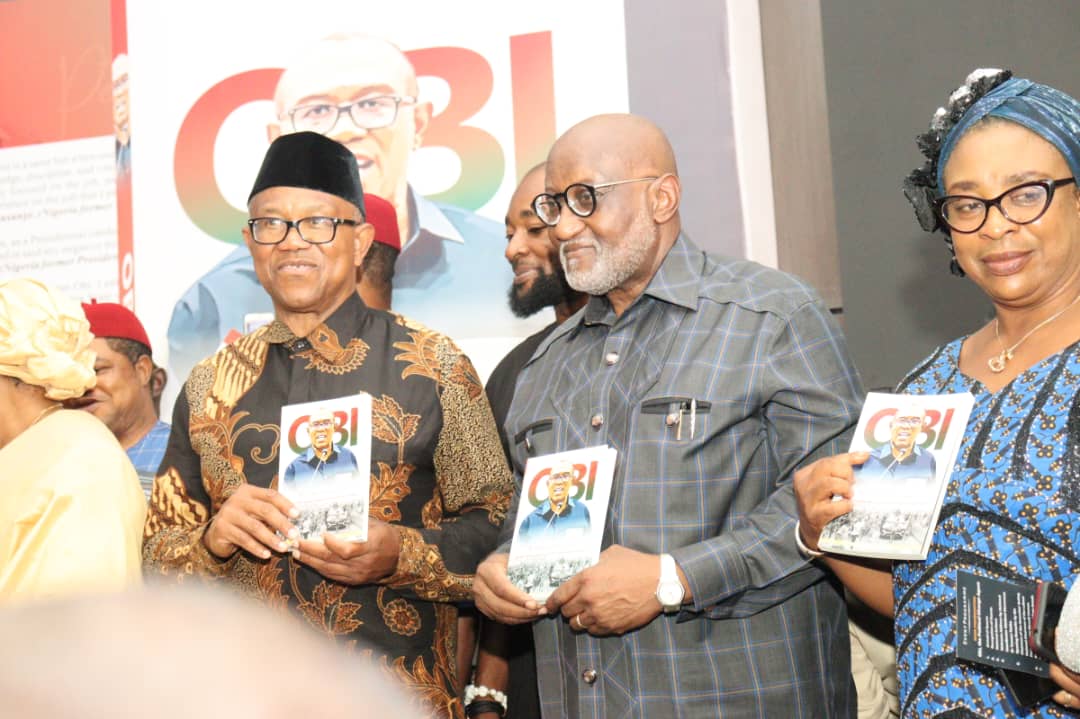
    The book being presented today, Obi: The Political Change Agent -The story of the man, who changed the face of electioneering in Nigeria, is yet another brick in the wall of a fast growing historical record on Peter Obi’s brand of politics.

    As the book’s title suggests, Peter Obi is by every adjectival qualification, a political change agent in Nigerian politics.  He is also an adroit competitor, in a marathon race that is far from over. So this literary work is about Peter Obi; but in the context of Nigeria, it is about the unheralded rise of Obidient Movement phenomenon between 2022 and now.  It is also about an unfinished business of nation-building, and renewal, and ultimately, a preface to the inevitability of a New Nigeria.

    The core value and potency of this book, is that is written from an insider’s perspective. Ike Abonyi, my friend and the author, has done a yeoman’s job. With a keen sense and eyes for details, he has done what adroit researchers and veteran journalists do best; render credible account of seminal events without embellishments.

    If per chance, you do not intend to read this book immediately, I will advise you to read the foreword by my brother, Dele Farotimi, in order to get the gist of this work.  Characteristically, Mr. Farotimi did a positively magisterial job, with some four hundred insightful words. He concluded with his non-hesitant recommendation of the book, “to scholars of Nigerian politics, elections and society.”

    According to Farotimi, “Obi represents an anomaly in Nigeria’s political landscape; a politician who genuinely desires to work for the betterment of society…Peter Obi is a politician unlike any other in Nigeria.  Ike Abonyi’s work looked at the campaign and organic growth of the Obidient Movement and how Peter Obi’s candidacy has rewritten the manual for future aspirants to public office.”  To that very candid summation, I will only add that any book about an enigmatic personality or an icon is worth reading and owing.

    For the sake of brevity and convenience, I am minded to dispense with the formality of the book’s nomenclature, before delving further into its substance and flourish.

    The book, Obi: the Political Change Agent consists of 252-pages, and twenty-six stand-alone compact chapters. Each chapter, adapted from original real-time op-eds and essays, details Peter Obi’s odyssey from the juncture when he ventured into Nigeria’s political setting, through his uncharted trajectory to becoming the Labour Party 2023 presidential candidate on 30th May, 2022 and thereafter.

    I’ve only offered a synopsis of the structure of the book, to get the full gist or chapter-by-chapter narration, please purchase a copy of the book. Now to the historical flourish of the work.


    ***********

    Chapter 1 is essentially a backdrop, and the condensed story of Nigeria’s return to participatory democracy, from 1999 to date.

    Chapter 2, x-rays the man Peter Obi, and captures his essence and bonafides via his abridged official biography.

    Chapter 3 is revelatory. It documents that fortuitous but life-changing encounter that took Obi into politics. It narrates how Peter Obi’s encounter with Professor Donald Jacob, the Dean of the Kellogg School of Management in the USA, altered his views on politics. Ultimately, the unforeseen outcome of that six-week executive course was his decision to go into politics. It’s a thought-provoking story.

    Chapters 4 and 5 encapsulate the Ojukwu and APGA factors; as well the Anambra governance revolution. Obi’s and sojourn in Anambra was not without its vagaries, but would have been utterly impossible without the overwhelming influence of the iconic Igbo leader, Chukwuemeka Odumegwu-Ojukwu, who was the leader of the All Progressives Grand Alliance (APGA).

    Chapter 6 and 7 surveys Obi’s Journey to the center and Obi’s political dalliance with the PDP.  This chapter speaks to Obi’s political movement from the state to the federal level after his successful tenure as Governor of Anambra State. The narration segues into the political leap that made him the running mate to Atiku Abubakar in the 2019 presidential election.

    Chapter 8 and 9 is a periscope of how Obi’s 2023 Presidential Journey begins and landed him in the Labour Party. It chronicles Obi’s encounter with the vicissitudes of Nigeria’s rotational national politics, unkept promises and his eventual divorce from PDP. The factors at play were mot mere imponderables as much as they were a manifestation of human foibles, political machinations and shortsightedness.

    Chapter 10 is about the birthing of the Obidient Movement. The chapter chronicles the emergence of the Obidient Movement in the nation’s political trajectory and how it impacted greatly on the polity during the 2023 electioneering.

    Chapters 11 narrate the already well-documented 2023 election intrigues by the INEC and the ultimate Judiciary ambush. This is one of the longest chapters in the book for obvious reasons; it captured all the election intrigues, the preparations from voter registration to election proper and the post-election drama.

    Chapter 12 is about ‘The Media and the Obi’s Politics.’ This chapter captures media involvement in Obi’s Presidential ambition and how the social and mainstream media played some significant roles in Obi’s politics. Some believed that Obi was a media hype that would fade away with time. They were wrong.

    Chapter 13, narrate the well-known folktale of Peter Obi’s “Madman” friend, affirming ultimately, that ‘all politics is local’. During his Presidential campaigns, Peter Obi frequently recalled how in his quest for adaptive leadership, he opened himself to learning from everybody. In that context, he often recalled how during his tenure as Governor of Anambra State, he got one of the best advices that helped him tackle very naughty security issues from a “madman.” The author corroborates the seemingly bizarre story, by seeking and finding the “madman.”

    Chapter 14 captioned ‘Anatomizing The Peter Obi Character’ offers an insight into varying perceptions of Peter Obi’s persona; Such perceptions are mixed and complex. Some people saw Obi is a stingy and difficult man to deal with, but to others, he is the prudent man, who detests corruption and extravagant living. To some, he was a quiet philanthropist. This chapter looks at his personality from these contrasting and eclectic perspectives.

    Chapter 15 is the author’s published rendition of Obi’s experience during his brief sojourn in PDP. He facetiously asked: “Obi in PDP; was a Celibate in the Whorehouse?” He surmised how Obi’s clean character and credentials meant nothing to some of the PDP leaders who were bent on frustrating him. This narration validates Obi’s frequently uttered contention that any foray into Nigerian politics was an entanglement with “pimps and prostitutes, not priests and nuns.”

    Chapter 16 and 17 titled ‘A Political Phenomenon Called Peter Obi,” is also another published op-ed by the author capturing the enigma in Peter Obi’s politics. The chapter segues to an analysis of ‘LP’s Obi and the Involuntary Campaigners.’ This article talks about how Obi campaigners emerged involuntarily after hearing his disarming messages on how to create a new Nigeria, with his “Go and verify” and “consumption to production” and “a New Nigeria is Possible” Mantras.

    Chapter 18 & 19 are respectively titled “How Obi-phobics Chased the Wind” and “As Campaigns Flag off, it’s Obi…kererenke.”  These chapter mirrors and juxtaposes the twin developments of dislike and, like, hate and love, ignominy and fervor Obi candidacy elicited nationally. It synoptically captures the futility of the quest by Obi’s political traducers, who embarked on a massive search for something negative about him, but failed woefully. On the flip side was the fervent mob like national support during the same period as Obi’s campaign flagged off, to endless chants of ‘Obi…kererenke’. Rather than the unfolding of scandals, that zeal would eventually transform into the electrifying campaign mood that was replete with various campaign songs and slogans that dominated the political space.

    Chapter 20: captioned “OBI’s quest for Justice and Repetition of History,” recalls how Obi has always been treated unjustly since he entered politics and how he has continued to seek Justice undauntedly via legal redress.

    Chapter 21 tackles the very sensitive issue of ethnified politics and the costs and challenges of being Igbo impacted Obi’s and candidacy. It further explores how that negative narrative was used derogatorily to douse Obi’s potentials.

    Chapter 22 highlights the use of political trolling and fake news to demarket Obi. One such instance was the allegation that as governor, “Obi demolished Mosques.” This chapter captures endless calumny, some blatantly religious against Peter Obi during the campaigns. But as it turned out he actually built a mosque and had fantastic relationships with Muslims in his state during and after leaving office.

    Chapter 23 captioned “Peter Obi, the Opposition’s Talking Drum,” documents Obi’s involuntary post-election role after being manipulated out of the presidency in the 2023 polls.  The intention, as the author averred was to frustrate Obi and force him to quit the political stage. Instead, Obi chose to keep playing a proactive role from the opposition desk, becoming as it were the opposition’s vanguard. It was not to be an easy task; but Obi has remained undaunted.

    Chapter 24 is captioned “Can the Labour Party Go Far Without the Obidients?” The chapter grapples with the evidential hesitance of the Labour Party leadership to fully embrace the efforts of the Obidients Movement by bringing its structure in its fold. It wonders what will become of the Labour Party without the Obidient Movement and Peter Obi and his numerous supporters. The answer as the famous song says: ‘Is blowing in the wind.”

    Chapter 25 is titled “In Whose Interest Is Soyinka’s Obidient-Phobia?” Nigeria’s literature icon, Nobel laureate Professor Wole Soyinka, known for his progressive position on issues, has strangely been at the forefront in the campaign against Peter Obi and the Obidients. This chapter examines what may have caused his shocking position and volte face.

    Chapter 26: “Obi on Marble” is a glossary of some of the many quotable quotes of Peter Obi. Most of these became the political refrain for his legion of followers. Their inclusion aligns well with historical records, for which the book is meat to amplify.

    ***********

    If this book offers one unique essence, it is that in politics and governance, we must continue to use history in our decision making. The utility of history remains ever pertinent. As such, any book such as this, which offers a glimpse into history in the making, ultimately adds value to our politics, our history and our decision-making processes.

    In the 25 years of uninterrupted democracy in Nigeria, six consecutive presidential elections were held in 1999, 2003, 2007, 2011, 2015, and 2023. The 2023 elections perhaps, stand out the most. It was a redefining moment. Like most presidential elections –except that of 2015 – the 2023 elections ended up in litigation and was eventually decided; by the Supreme Court.

    In 2023, Nigerian youths, were sufficiently incentivized to play a role in politics. Peter Obi was the catalyst to that foray. It was he who instigated, exhorted and encouraged Nigeria youths to “take back their country”. Even though the outcome of the 2023 election fell far short of expectations in reflecting the desire of Nigeria voters, the unprecedented landmark electoral awareness remains memorable.  This huge change in our electioneering mindset and modalities will forever be attributable to one political character; Mr Peter Obi the former Governor of Anambra State, and the 2023 Presidential flag bearer of the Labour Party.

    Unwittingly, Obi’s unheralded presidential candidacy –in and by itself, an instrument of soft power- gave Nigeria’s electioneering process a new image, impetus and colouration; focusing as it were on issues designed to turn the country away from her dysfunctional economic fixation of “consumption” and channel that inclination to “production.”

    His issues-based campaign had focused on poverty alleviation, economic growth, job creation, educational reform, efficient healthcare delivery, and anti-corruption mode and mindset. His advocacy for broad policy shifts, enjoyed unprecedented support from many discerning minds and gained significant support among young Nigerians, who saw him as a fresh face and an alternative to the traditional selfish and corrupt political elite. Indeed, Obi even made cutting cost of governance sexy and attractive.

    But trying to dislodge the entrenched system was never going to be a walk in the park. Peter Obi was aware of this and so too, were his followers. Thus Obi faced stiff competition from established political parties, candidates, and critics, who initially took him for granted and questioned his ability to win a national election. Indeed, a ranking politician had characterized Peter Obi and the Obidients as largely “effervescent” – a phenomena that would blow away with time. He was wrong. He had since changed his mind and said so publicly.

    Despite the challenges he encountered, Obi’s candidacy generated significant interest and enthusiasm, particularly among Nigerians seeking real change. And despite the fervour and commitment, the eventual outcome of the 2023 presidential elections was not what Nigerians hoped for; but the outcome was also not totality unexpected.  Like most of the prior presidential elections, the Courts would eventually decide who became president, regardless of public opinion and the electoral evidence presented.  This proved the cliché that “the law is an ass.”

    As the author rightly surmised, the political fervour ignited by Obi is still flaming. Nigerian youths appear through Obi’s prompting to have discovered their potential and are not letting go. Consequently, Nigerian youths are now at the center of a struggle to reset Nigeria under the Obidient Movement that has become the platform for the inevitable discovery of a New Nigeria.

    ‘Obi: The Political Change Agent’ the story of the man who changed the face of electioneering in Nigeria, is politically enriching as it captures the historical background of our democratic struggle and offers various insightful perspectives on the different administrations since 1999. This work is a well-researched by an experienced journalist who has been part of Nigeria’s political trajectories. The book captures profusely our contemporary political journey for 25 years with all its vagaries, upheavals and proclivities.

    Written in very easy-to-read prose and elegant language, I find this book very enriching for any inquisitive mind; and for anyone who desires to know more about Nigeria’s uninterrupted two and half decades of the democratic journey. It offers unvarnished insight into how the issues-driven campaign messages by Peter Obi helped to revolutionize and compel Nigerian youths to discover themselves and prepare for the inevitable and proactive role they must play in nation-building. For Nigerian youth’s Peter Obi’s “take back your country” was not just a slogan, it was a clarion call that resonates till this day.

    Political campaign books are usually about train wrecks and triumphs. Most are about introspection and retrospective reconstructing of issues that mattered or played out. Obi: The Political Change Agent is none of these. It is straightforward recording of events as they happened.

    Oftentimes, political campaign books, historical books and memoirs are richer because they include or reveal snippets of undisclosed confidential discussions or events. From my vantage point as a 2023 presidential campaign insider; perhaps two yet undocumented remarks relative to the 2023 elections remain vital.  While visiting Kaduna on 17th October 2022, Sheik Ahmed Abubakar Gumi told Peter Obi, “Even if you don’t win, beyond the 2023 elections don’t let the Movement you have started to end”(p237). I believe Gumi was speaking of the Obidient Movement. He may be clairvoyant.

    The second was what President Muhammadu Buhari told Peter Obi on 22 October 2022: “From what I read in the newspapers, Nigerians, especially the Nigerian media like you. You may not win this particular election, but age is on your side. I tried four times before I finally won.”  I’m certain both messages have stayed with Peter Obi. Both, I believe, will instinctively undergird the inevitability of a New Nigeria that is Possible.

    If this book has any shortcoming, it is not out of dereliction or inattention. Besides the protagonist, the book does not hap on the role of other key campaign dramatis persona. It does not for instance delve deeply into how the choice of Labour Party over the Social Democratic Party was made, or how the Vice-Presidential Candidate was selected over the other possible and probable candidates.

    Finally, I recommend this book for academic work, politics, and leisure reading; and to political party managers. This book will be an integral part of any serious library and an invaluable reference material for anyone sufficiently passionate about political and governance reforms Nigeria.

    I thank you all for your kind attention.
  • 2027 and the Opposition’s Test

    2027 and the Opposition’s Test

    By Abdul Mahmud 

    A few days ago, opposition leaders gathered in Abuja. They called it a national political summit. Their mission was clear: to take back political power in 2027. In speeches laced with urgency and ambition, they signaled the start of a political war to win the hearts of the electorates. At the heart of this new resolve is the burning question: can the opposition really defeat Bola Tinubu’s ruling APC? On the surface, the resolve looks like a noble dream, and the mere push of love for power. But, dreams alone don’t win elections; or as my friend, Ayisha Osori, puts it more poignantly in her book, ‘Love Does Not Win Elections’. Power doesn’t fall into laps. It is taken through strategy, sacrifices, and unity. The opposition coalition must face the uncomfortable truths. They must ask themselves: are we truly ready? Or we are merely taking the citizens who are desperate to escape Tinubu’s nightmare for the ride?

    Right now, the opposition space is fragmented. The PDP, the biggest opposition party, is a shadow of its former self. Its governors bicker in public. Others inside it wear the party’s colours on their sleeves, yet their hearts beat the drums of power inside the ruling party where their personal selfish interests whisper louder than party loyalty and allegiance. Its presidential candidate in the 2023 election appears not to have a foothold on the party. The Labour Party, once the surprise of the last election, is struggling with identity and cohesion. Peter Obi remains popular, but his party lacks depth. Enter Sowore who has consistently presented himself as an insurgent at the gates of neoliberal power; and whose party, the African Action Congress, AAC , conflates radical struggles with petit bourgeois liberalism, and with ill-fitting rhetoric. In seeking to marry the fire of radicalism with bourgeois politics, Sowore mistakes the fact that he is operating within a bourgeois neoliberal political order for a radical political environment, with the presence of revolutionary conditions. He has to operate inside the coalition, posing an objective modernity that is rooted in emancipatory politics or what the British sociologist, Anthony Giddens, describes as “engagements concerned with the liberation from inequality”. Though, internal rifts and ego battles often threaten to reduce opposition coalition to a personal cult rather than a national political force organising for power, how the opposition coalition deals with the rifts over personal ambitions matters in aggregating unity within itself.

    There is a fundamental truth that I must lay bare here – one so central that it ought to serve as the rallying cry for all aggrieved citizens: that within the opposition coalition lies the last viable platform upon which their collective aspirations can be realised. It is not merely a political alignment, but a covenant of common purpose, the big tent under which the dispossessed, the disillusioned, and the determined can find both voice and vision. The orchestrated gale of defections, engineered from the commanding heights of power in our country, has done more than disrupt party lines; it has helped drain the political swamp, clarifying the landscape into a vivid binary: on one side, those content to watch the nation stagger deeper into the mire of misery and ruin; on the other, those resolved to staunch the bleeding and set the republic on the path of recovery and rebirth. This is no longer a matter of mere politics; it is a moral referendum. A battle between light and darkness, justice and impunity, hope and despair. The choice is stark, and the hour is upon us. I am in that hour and have chosen to be on the side of the opposition coalition.

    But, there is this familiar story worth retelling here that the opposition coalition can learn from elsewhere. One that mirrors the fate of Cambodia’s now-defunct opposition. In Cambodia, the ruling Cambodian People’s Party, CPP, led by Hun Sen, waged a quiet and effective war of attrition. It didn’t need to defeat the Cambodia National Rescue Party (CNRP) at the polls. It simply dismantled it. First, by using the courts to de-legitimise it. Then by orchestrating defections and stripping the party of its core. In 2017, the CNRP was dissolved by the Supreme Court. By then, its leaders were in exile or in prison. The party was gone. And so was any real challenge to Hun Sen’s rule. The opposition faces a similar threat. A sinister ministerial order to ‘close the shop’ dangles like a noose around the neck of the PDP, whose national secretariat in Abuja now sits under lock and key – sealed off for alleged non-payment of ground rent. Yet, beneath this ministerial veil of legalism lies the darker pretext: a crude attempt to slam-dunk the party out of existence, not through the ballot, but through the backdoor of state power wielded as vendetta. Also, APC is slowly drawing away influential voices. Defections are gathering momentum. Every defection erodes credibility. It tells voters that the opposition cannot protect or reward loyalty. And as it stands, neither PDP nor Labour has a coherent strategy to prevent further haemorrhage.

    But, defections are just one part of the challenge. The larger problem lies in the opposition’s inability to define itself. What does it stand for? Why should our citizens trust it? Removing Tinubu is not a vision. Citizens want to know what comes after. They want to know how the opposition coalition will end hunger, grow jobs, rebuild institutions, secure lives and secure their country. It is this clarity that is still missing. Though it isn’t late yet to pose and give clarity to all of this.

    The contrast with Senegal is instructive. In 2024, the Senegalese opposition did what many believed was impossible. It defeated the ruling elite and produced the country’s youngest president. This wasn’t luck. It was the result of years of tireless grassroots organising, unity, and ideological clarity. Even when their main figure, Ousmane Sonko, was jailed, the movement endured. The opposition didn’t collapse under pressure. Instead, it grew stronger. It didn’t focus on personalities. It focused on change. That discipline, that resilience, is what turned a protest movement into a governing force. The opposition coalition and its supporters and promoters continue to make elections about individuals. The Atiku-Obi rift cost the opposition dearly in 2023. Instead of presenting a united front, they split the base. Kwankwaso’s ambitions added another fracture. The APC didn’t win because it was popular. It won because the division allowed it to work and game the electoral process in a fraudulent way.

    And now, with 2027 on the horizon, that same lack of coordination is creeping back in. The Abuja summit was the first step. I welcome it, warts and all. But, walking the talk becomes cheap, a mirage, when unity of purpose is absent. Walking the talk begins with shared sacrifices. Someone must be willing to step aside. As Ousmane Sonko did in Senegal last year. Someone must lead the charge. As Diomaye Faye did. Others must fall in line. That’s the nature of coalition politics.

    Coalitions aren’t new to Africa. In Ghana, the National Democratic Congress has built enduring strength through consistent messaging and grassroots work. In Kenya, Raila Odinga’s ability to unify various political camps, despite internal contradictions, shows that coalition-building can deliver momentum. Our opposition coalition leaders must stop seeing each other as rivals and start behaving like allies. They need a memoranda of understandings. On consensus. On ambition. Not the ones signed in hotels but those signed in action. The practical roadmaps with timelines, benchmarks, and compromises. The opposition coalition must also overcome another major weakness: its detachment from the masses. Our citizens want change, but they don’t want elite quarrels. They want food, security, dignity, and a country that works for all. The Senegalese opposition understood this. They mobilised students, unions, and rural farmers. They protested. They forced the state to listen. The opposition coalition is still too focused on media sound bites and elite meetings.

    There’s also a lesson from the Philippines. Rodrigo Duterte didn’t come from the traditional elite. He spoke plainly. He sounded like the people. He wasn’t polished, but he was relatable. That authenticity gave him power. Behind him was a campaign machine that knew how to touch nerves. His supporters built online armies. They controlled narratives. They sold hope. He defeated an entrenched political dynasty because he knew how to connect with ordinary people. The opposition coalition should pay close attention. In 2023, the opposition tasted the power of social media. But it wasn’t enough. Opposition coalition doesn’t win elections alone online. It wins them in the cities, towns, villages, and hamlets. It wins them by convincing the citizens and build the coalition of the aggrieved around them. It wins them by building trust, one handshake with the citizens at a time. And it must organise, not just mobilise. Mobilisation is what serious opposition coalition does before elections. Organisation is what it builds between elections. The opposition coalition needs ward structures, data, election monitors, logistics hubs. It needs to recruit and train volunteers. It needs to know every local issue, every polling unit, and every INEC officer to deliver the message: rig and die. It doesn’t win elections by outrage; it wins by converting citizens’ outrage into protective bulwarks against rigging. It wins by planning.

    Time is not on the side of the opposition coalition. The APC has the tools of incumbency. It will play the ethnic card. Tinubu will argue that it’s still the South’s turn. The opposition must be ready to counter that narrative with a national message. It must present a pan-Nigerian ticket that appeals across the north and the south, across religion, across class. It must also confront the demons within. Ego, ethnicity, and ambition are the three poisons destroying the opposition. Too many leaders think they are saviours. They are unwilling to compromise. They want to lead, even if it means losing. That mindset must change. Politics is not about personal fulfilment. It’s about service. Those who cannot accept this should step aside.

    Ambition will also be a test, with eyes are on 2027. Atiku may run again. Obi is interested. Kwankwaso wants relevance. But there is only one ticket. Unless these men can sit together, agree on terms, and stick with them, the ruling party will coast to victory again. More importantly, the opposition coalition must also take defections seriously. Loyalty must be rewarded. Structures must be protected. There should be clear rules. Crossing to the ruling party shouldn’t be treated as a mere political mischief. It should be political treason. Voters must be made to see defectors as traitors, not heroes. That requires narrative control. It requires discipline. It requires a clear sense of identity.

    And that leads to the final point: the battle of stories. Every election is a contest of narratives. The opposition coalition must invest in storytelling. They must define the 2027 election before APC does. They must control the message. Not just in English, but in Hausa, Yoruba, Igbo, and Pidgin. They must craft a story of hope and urgency. A story that says: 2027 is about saving our country. They must tell this story in markets, at bus stops, on radio, on TikTok, Twitter, Instagram and Facebook. They must reach the old and the young. They must inspire, but also instruct. They must be clear about what they will do differently. And they must say it often.

    History shows that opposition coalitions don’t win by accident. They win because they plan, they unite, they learn. Cambodia shows what happens when an opposition coalition doesn’t protect its base. Senegal shows what’s possible when it does. The Philippines shows how one man with a message can change the game. The opposition coalition still has time. But not much. If it starts now, I mean truly starts now, it can build something powerful. If not, the summit in Abuja will be just another jamboree. And 2027 will be a repeat of 2023- with stolen ballots and all that jazz.

    Our citizens are waiting, watchful, weary, but not without hope. The youths, disillusioned by empty rhetoric, now demand substance and not slogans. The old, mindful of the hourglass, yearn to walk hand-in-hand with the young, to pass on a country that works to the next generation before the final summons of death arrives. In this twilight of despair and flickers of hope, the opposition coalition stands at the cusp of possibility. It can give shape to these longings, give breath to a new covenant.

    I believe it, with the quiet urgency of faith.

  • We must salvage Nigeria or perish, Obi warns

    We must salvage Nigeria or perish, Obi warns

    Former Anambra State governor and 2023 Peoples Democratic Party (PPD) presidential aspirant, Peter Obi, has observed that unless critical decisions and actions are taken by Nigerians, the country is headed for a deep crisis.

    He made the observation during a meeting with Ekiti State PDP stakeholders and delegates, yesterday, in the course of his consultation processes on the need to choose the right candidate for the party.

    He noted that the economic crisis besetting Nigeria is humongous, warning that the country may go under if not properly managed and decried the high level of insecurity in the country, attributing it to the poor state of economy

    The former governor lamented the high rate of unemployment, unstable education sector and deplorable infrastructure in the country and remarked that the challenge is how to pull the country out of its current crisis. He bemoaned the high incidence of borrowing by the country, without much to show for it.

    He vowed that his commitment is to move Nigeria from a consumer society to a productive nation. The first step in this regard, he said, is to cut the cost of governance.

    Obi asked Ekiti delegates not to be swayed by material or primordial considerations at the national convention but do due diligence on those seeking their votes to know if they have the capacity and vision for the job. He warned that Nigeria would continue to lose with the present sharing culture, adding that his mission is to halt the trend.

    In his address, state Chairman of the party, Lanre Omolase, lauded Obi for the good record he set while as governor of Anambra State. He described Obi as one of the best the party can offer for the presidency.

    Earlier, the former Ekiti State governor, Ayo Fayose, had met with Obi where they discussed many challenges faPresident Muhammadu Buhari has described the explosion that rocked an illegal crude oil refinery in Abaezi forest in Ohaji-Egbema Local Government Area of Imo State as a national disaster,.

    He, therefore, directed the armed forces, security and intelligence agencies to intensify clampdown on illegal refineries following reported deaths of tens of people in the disaster.

    According to a statement by his Senior Special Assistant on Media and Publicity, Garba Shehu, Buhari said responsibility for the loss of lives and property must squarely lie with the sponsors of the illegal refinery, “who must all be caught and made to face justice.”

    Conveying his condolences and the full depth and range of the nation’s shock and trauma, to the families of the victims, the Ohaji Egbema community, and the government and people of Imo State, the president urged community leaders, the police, and the secret service not to allow occurrence of the heart-breaking incident in any part of the country again.cing the nation.

    (Sun)

  • INEC clears APGA (Soludo) and blanks out PDP


    The Independent National Electoral Commission (INEC) has released a fresh list of political party candidates that will participate in the November 6 governorship election blanking out the Peoples Democratic Party (PDP) and giving a clean bill of health to former Governor of Central Bank (CBN), Professor Charles Soludo as the candidate of the All Progressives Grand Alliance(APGA).

    In a statement the Commission issued on Thursday and signed by National Commissioner and Chairman Information and Voter Education Committee, Festus Okoye, the apex electoral body indicated that while a total number of eight political parties substituted governorship candidates, four others substituted their deputies.


    The Commission disclosed that the final list of candidates will however be released on September 7 in line with its timetable and schedule of activities approved on January 18, this year.


    According to the Commission, the political parties that substituted candidates are Accord Party, Action Alliance (AA), Africa Action Congress (AAC), Allied Peoples Movement (APM), Zenith Labour Party (ZLP), Social Democratic Party (SDP), National Rescue Movement (NRM) and the All Progressives Grand Alliance (APGA) which substituted due to Court Order.


    Other parties that substituted its deputy governorship candidates are; All Progressives Congress (APC), APM, Peoples Redemption Party (PRP) and Young Progressives Party (YPP).


    The Commission’s statement read: “The Commission met on Thursday and deliberated on a number of issues, including the nomination of candidates for the Anambra governorship election holding on November 6, 2021.


    “The timetable and schedule of activities approved by the Commission on January 18, 2021 provides for the withdrawal/substitution of candidates in line with Sec. 35 of the Electoral Act, 2010 (as amended).


    “Accordingly, by the deadline of July 30, 2021 fixed by the Commission, seven governorship and 11 deputy governorship candidates were substituted by 11 out of the 18 political parties.


    “Similarly, the Commission was served with the judgement of the Court of Appeal (Kano Division) which set aside the judgement of the High Court of Jigawa State on the leadership of APGA and the nomination of its candidates for the Anambra Governorship election.


    “The list of substitute candidates is attached to this press release. It has also been published on the Commission’s website.


    “However, the final list of candidates will be published on October 7, 2021 as provided in the timetable and schedule of activities for the election,” the statement read.


    Source: www.sunnewsonline.com