
Tag: Political parties fret over CBN’s cash policy

  • Supreme Court Restores Electoral Act Provisions Ahead Of 2027 Polls

    Supreme Court Restores Electoral Act Provisions Ahead Of 2027 Polls

    Precious Nwonu, Enugu

    The Supreme Court has restored key provisions of the Electoral Act 2026 governing political party membership registers and the nomination of candidates ahead of the 2027 general elections.

    A seven-member panel of the apex court, in a unanimous decision, upheld an appeal filed by the Independent National Electoral Commission against an earlier Court of Appeal judgment that had declared Sections 77(5), 77(6), 77(7) and 84(2) of the Electoral Act unconstitutional.

    The ruling means political parties are required to comply with statutory rules on their membership registers and candidate nomination processes.

    Under Section 77 of the Act, political parties must make their membership registers available to INEC not later than 21 days before their primaries, congresses or conventions.

    The law further provides that only members whose names are contained in the register submitted to INEC can vote or be voted for at party primaries, congresses and conventions. Parties are also prohibited from using a different register for such exercises.

    A party that fails to submit its membership register within the stipulated period is not eligible to field a candidate for the election, according to the Act.

    The Supreme Court also restored Section 84(2), which provides that political parties may nominate candidates through direct primaries or consensus. INEC’s 2026 Regulations and Guidelines similarly recognise direct and consensus primaries as the two permitted methods under the Act.

    The legal dispute began after the Zenith Labour Party challenged the provisions at the Federal High Court, arguing that they interfered with the constitutional powers of political parties to manage their internal affairs and nominate candidates.

    The Federal High Court dismissed the challenge in May 2026, but the Court of Appeal later overturned that decision in July and struck down the four disputed provisions. INEC subsequently appealed to the Supreme Court.

    The Supreme Court has now set aside the Court of Appeal’s decision and reinstated the earlier Federal High Court judgment, holding that the disputed provisions were not inconsistent with the Constitution. The apex court also awarded N2 million in costs against the Zenith Labour Party.

    The ruling reinforces INEC’s statutory role in receiving and verifying party membership registers and monitoring compliance with the requirements governing party primaries and candidate nominations.

    INEC had earlier confirmed that all 22 registered political parties submitted their membership registers in May 2026, with the Commission stating that the registers would undergo verification in line with the law.

    The Supreme Court’s decision therefore provides the legal framework that will govern future party nomination exercises under the 2026 Electoral Act, including subsequent elections and the primaries, congresses and conventions preceding them.
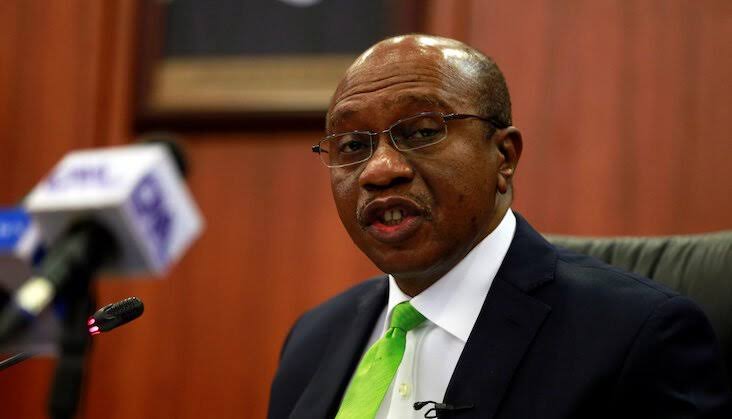
  • Major Political parties not comfortable with CBN’s cash policy

    Major Political parties not comfortable with CBN’s cash policy

    Ahead of the implementation of a new policy by the Central Bank of Nigeria (CBN), wherein customers will be restricted to specific daily and weekly cash withdrawals, there appears to be palpable fear among members and supporters of some of the major political parties in the country.

    According to the CBN policy, individuals will be able to withdraw only N20,000 daily and N100,000 weekly, while corporate bodies will be allowed to withdraw not more than N500,000 weekly.

    The new policy is expected to take effect in January, barely one month to the conduct of the 2023 general elections in the country.

    Ahead of the commencement, The reporter has gathered that though many of the parties are not totally comfortable with the implementation timeline set by the CBN, the ruling All Progressives Congress and the opposition Peoples Democratic Party appear to be most opposed to it.

    According to multiple sources, the APC and the PDP are worried that if the policy kicks off, it may adversely affect their outings before, during and after the general elections.

    Earlier in the week, the House of Representatives resolved that Mr Emefiele should appear before it next Thursday to explain the new policy. It however ordered a reversal of the policy pending his appearance.

    The decision to summon Mr Emefiele followed a motion of matter of urgent public importance moved by Aliyu Magaji (APC Jigawa) on Thursday during plenary.

    In the motion, Mr Magaji said small businesses, which are the major drivers of the economy, depend on cash for transactions. He added that the owners of these businesses are going to be negatively impacted by this policy. He noted that even if the CBN has the statutory power to implement monetary policies, this particular policy would have a negative impact on the economy at large.

    But a source in one of the political parties said, logistics and other necessary activities which require heavy deployment of cash, will suffer if the CBN fails to rethink the implementation timeline.

    He said the two parties, despite their opposing stance on key issues, appear to be on the same page on the issue. He said recent moves by the National Assembly, especially the House of Representatives, asking the CBN to suspend the policy, is part of a larger plan by the two parties to halt the move. Though the APC has claimed that it remains unperturbed, a member of the party said it is just grandstanding, insisting that the policy might be reviewed. Although the CBN governor has said there would be no going back on the cashless policy, he said the withdrawal amounts might be reviewed.

    Reacting to the insinuations and specifically whether the cash withdrawal limit will affect the ruling party, APC national publicity secretary, Felix Morka, in a message to respond to the inquiry from Saturday Sun, wrote: “APC’s presidential election plan is solid and remains solid irrespective of CBN’s policy on withdrawal limits.”

    Aligning with the APC, the PDP Presidential Campaign Council said it is not jittery over the cash withdrawal limit introduced by the CBN earlier in the week. The director of Research and Documentation, Pedro Obaseki, said if any political party is worried about the new CBN policy, it should be the APC.

    Obaseki, who stated that the PDP campaign is already cashless, said those behind the allegation should be evidential.

    According to him, “in the public domain in Nigeria, who is the only presidential candidate that has bullion van parked in his compound? His name is Bola Ahmed Tinubu. So, who should be scared, worried, bothered about the fact that the Central Bank is limiting the spread of cash?

    “I am not among one of those who run riot with naked rumours. We are even a cashless society in PDP. Please let’s be evidential.”

    Meanwhile, the two political parties have also denied claims that they’re behind recent claims made by the Chief of Defence Staff, Lucky Irabor, that some politicians are mounting pressure on the military to compromise the 2023 general elections.

    Responding, the APC spokesperson said: “No, our party is not involved in pressuring any entities on next year’s election. We are working hard to convince Nigerians to renew our mandate by electing our candidates from the presidential to the State Assembly elections.”

    The PDP, while reacting through Obaseki to allegations that members of the PDP are allegedly among those mounting pressure on the military to compromise the 2023 polls, said the opposition party can never be involved in such plot.

    He said: “I challenged General (Babagana ) Monguno about a week ago, to please be categorical. Life is empirical. We have had attacks all over Nigeria, which was described by General Monguno, the National Security Adviser (NSA). But all of them have taken place in APC controlled states.

    “If you look at what the CDS has said, look at it and relax. Who is the collateral victim of the APC, it is the PDP. How can the victim be the perpetrator? How can we be conspiring for the election not to hold? We want the election to hold so that we can take over (government).

    “Listen to Bola Tinubu at Chatham House. He actually impugned that INEC is running a system they don’t understand. That was what he said there. He said they are not even sure of the veracity of the system INEC has put in place . The only jittery party in this regard is the APC. I cannot be sweeping the carpet from under my leg. “The thing is that there is a clear product differentiation between the PDP and the APC. It is the PDP that was maligned and Nigerians were told to bring in the APC. It is the PDP that is the frontline victim of the APC.”

    (Sun)