Tag: police recruitment

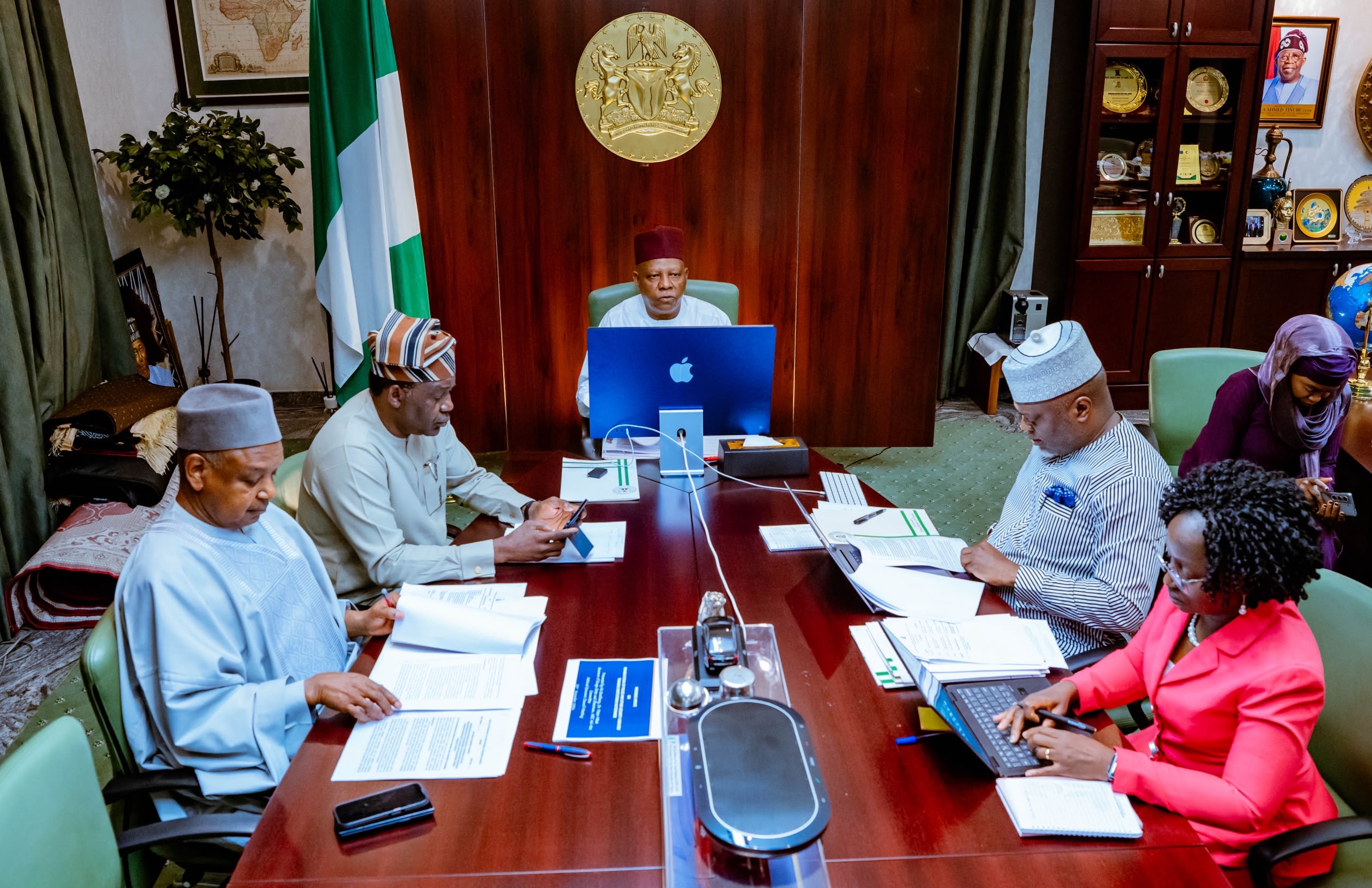
  • NEC Raises Police Colleges’ Rehabilitation Fund to N230bn With Fresh N130bn Approval

    c2ca9a67-152d-4461-9e70-e7ec8d52fac5

    The National Economic Council has approved an additional N130bn for the rehabilitation and modernisation of police training institutions across Nigeria, increasing the total intervention fund to N230bn.

    The decision was reached at the Council’s 162nd hybrid meeting on Monday, presided over by Vice President Kashim Shettima.

    The fresh allocation is expected to support ongoing renovation projects, improve training facilities and prepare police colleges for the proposed recruitment of 50,000 personnel.

    The approval comes amid renewed discussions on the establishment of state police and the need to strengthen the country’s security architecture.

    The additional funding follows an initial N100bn allocation approved after NEC set up an ad hoc committee in October 2025, chaired by Enugu State Governor Peter Mbah, on the recommendation of President Bola Tinubu.

    Presenting an update on the project, the committee disclosed that rehabilitation work was ongoing at 13 locations across the country, with approximately 30 per cent of the projects completed.

    It said the new funding would help complete the ongoing work and expand the capacity of the institutions to accommodate the expected increase in police recruitment.

    Beyond the police training intervention, NEC endorsed two proposed World Bank-supported development programmes worth a combined $850m.

    The Council also received an economic performance report from the Minister of Finance and Coordinating Minister of the Economy, Taiwo Oyedele, who said Nigeria’s real Gross Domestic Product grew by 4.43 per cent in the second quarter of 2026, compared with 4.23 per cent recorded in the corresponding period of 2025.

    Oyedele further reported that headline inflation fell for the fifth consecutive month to 14.06 per cent in October, the lowest level since September 2020.

    He said the country’s external reserves stood at $54.87bn as of November 12, 2026, while the trade surplus increased from N10.2tn in the first half of 2025 to N20.1tn during the same period in 2026.

    Revenue distributed through the Federation Account Allocation Committee also rose by 44 per cent, from N15.2tn in 2024 to N21.9tn in 2025.

    Despite the improvements, the minister cautioned that the gains had not sufficiently eased the financial pressure on households and businesses.

    He identified food prices, electricity costs, high lending rates and unemployment as continuing challenges, adding that food inflation stood at 19.13 per cent in October.

    On the proposed development projects, NEC endorsed the $350m Accelerating Resilience through Investment Systems and Engagement (ARISE-Nigeria) programme, a six-year initiative designed to improve the country’s preparedness and response to natural disasters.

    The project is expected to strengthen the capacity of federal and state governments to manage floods, droughts, fires and other emergencies through improved early warning systems, weather monitoring, emergency operations centres and disaster response financing.

    Between five and 10 states are expected to participate in its initial phase, with selection based on their exposure to disaster risks, institutional readiness and commitment to emergency preparedness.

    The Council also approved the proposed $500m State-Led Early Childhood Development Programme, which could receive an additional $30m grant from the Global Financing Facility.

    The initiative aims to improve children’s access to healthcare, nutrition, early education and protection services across the 36 states and the Federal Capital Territory.

    Under the programme, early childhood development centres are expected to connect primary healthcare facilities with childcare services, preschool education and other essential social support, particularly in underserved communities.

    NEC also called for stronger cooperation between the National Identity Management Commission and state governments to accelerate citizens’ enrolment and expand the use of the National Identification Number in public services.

    The initiative is expected to improve service delivery, strengthen tax administration and reduce fraudulent activities involving government payrolls, pensions and social intervention programmes.

    On pension administration, the Council approved a proposal by the National Pension Commission titled *Securing the Retirement of Nigerian Workers While Strengthening State Finances*.

    The proposal seeks to ensure the full implementation of the Contributory Pension Scheme across the country.

    NEC urged state governors to establish clear timelines for implementing the scheme and directed their administrative and finance teams to work with PenCom towards achieving the objective.

    Earlier, Shettima said the long-term success of the Tinubu administration’s economic reforms would depend on the ability of government institutions at federal and state levels to sustain the progress recorded.

    He urged ministries, departments and agencies, as well as state governments, to prioritise institutional development and ensure that policies translated into tangible benefits for Nigerians.

    The Vice President stressed that cooperation among the different levels of government was necessary to consolidate the gains of ongoing reforms and deliver lasting development.

    Speaking on the proposed disaster resilience programme, Shettima said investments should focus on reducing the economic and social consequences of natural disasters before they occur.

    He added that communities affected by government interventions should be involved in shaping the projects, noting that their experiences could help identify gaps and improve implementation.

    Shettima maintained that building resilience required strong institutions, effective coordination and deliberate planning to ensure that families and businesses could recover from unexpected challenges.

    Precious Nwonu 

  • Rekindling youths’ interest in police recruitment

    Rekindling youths’ interest in police recruitment


    The police profession is hardly attracting the requisite attention among the youths in the Southeast. But things may get better as the Police Service Commission (PSC) toured the region in a move to re-awaken the interest of youths in the police. DAMIAN DURUIHEOMA reports.

    In the past, recruitment into the Nigeria Police Force was considered very prestigious by many youths in the Southeast. However, in the past few years, the interest to take up a career in the police profession by the youths in the Southeast greatly waned. In spite of the unemployment and insecurity challenges ravaging the Southeast, youths seem to have scorned opportunities to take up a career in the nation’s police force.

    According to a figure released this month by the Force Public Relations Officer, Frank Mba, Southeast is the least in terms of indicating interest to join the force among other geopolitical zones.

    He stated that Southeast and Southsouth and Lagos were yet to meet up quota into the police force. Mba said of the 81,005 applications received nationwide as of January 7, 2022, only 1,404 applications (less than 2% of the total applications) were received from the five states in the Southeast.

    Mba added that only 261 were from Lagos State, adding that Anambra has the least figure of just 158 applicants. Mba, who said the Nigeria Police extended the online registration in the ongoing 2021 police constable recruitment to Saturday, January 22, 2022, to allow Southerners to apply, added that the extension became necessary “to ensure equal opportunity and even spread of applications, particularly from states in the Southeast, Southsouth geopolitical zones and Lagos State”.

    Consequently, the Force appealed to states, local governments, religious bodies and other interest groups in the Southsouth, Southeast and Lagos State to mobilise and encourage their citizens and wards to seek a career path in the Nigeria Police Force.

    The revelation by the Force spokesman opened a new vista of opportunity for the Police Service Commission to engage the public and find out the cause of the lack of interest in the police.

    At the Sensitisation/Town Hall Forum of the Police Service Commission, which was held last weekend in Enugu, the PSC brought together traditional rulers, community leaders, religious leaders and various youth groups to further drive the message home.

    According to the representative of the Southeast in the PSC, Chief Onyemuche Nnamani, the town hall meeting was organised by the PSC to sensitise residents of the Southeast on the need for youths in the region to join the NPF.

    According to him, the meeting became necessary following the seeming lack of interest in the NPF by youths in the zone, adding that even those that applied were not the best from the region.

    “An additional concern is the fact that most of the applicants seem academically challenged as more than 90 per cent have consistently failed to score up to 30 per cent in the examinations. This is a sad reflection of the calibre of officers that will be patrolling our communities in the event that these persons actually end up enlisted in the police,” he said.

    Nnamani said the issues bordering on the security of lives and property of the people and the best time to talk about it is now. He said that the best time to join the NPF was now, adding that the PSC was reforming the system.

    “The NPF that will tackle the security challenges in the country will be a new police force that will be well equipped and remunerated. The purpose of this meeting is to act in order to change this unsatisfactory development. Our people should join the armed forces,” he said.

    Why Igbo youths are shunning police job

    Most participants in the event, especially traditional rulers, were of the opinion that youths in the Southeast no longer fancied careers in the police force because they were not usually given similar opportunities as those from other regions.

    According to them, stories of marginalisation and discrimination of officers from the region in the force had done enough in discouraging youths in the region.

    One of the participants, who is the traditional ruler of Amodo Awkunanaw, Enugu South, Igwe Okey Ogbuka, said: “We’re here virtually trying to persuade our youths to join the police force. If they join, will they have similar protection others from other regions are enjoying? A situation where a qualified candidate will be stagnated in a particular position while those with lesser qualifications will be chosen ahead of them in strategic positions is discouraging. So, if you assure us that they would be given equal treatment, I will personally get people from my community to join the force.”

    Igwe H. A Edeani, the chairman of Nkanu East Council of Traditional Rulers, who pleaded for the exercise to be extended, lamented that people from the area usually got screened out after suffering to participate in all the processes leading to the recruitment exercise.

    “I know how many attestation letters I gave in the past recruitments, but none of them was picked. All of them were qualified in terms of height, academic and otherwise. Most of them have since joined other businesses and doing pretty well. So, I wasn’t surprised when no one of them came for attestation”, Igwe Edeani said.

    He also called for the authorities to end discrimination in the force. “A situation where we have 39 AIGs with just one from southeast can only end up discouraging our youths. So, the authorities should do something about that,” he said.

    The traditional ruler of Ugbawka in Nkanu West LGA, Igwe E. D. Nweke, also noted that the monarchs sent to be recruited for community policing had since been abandoned without pay for two years a development he said discourages people from enlisting in anything that concerns the force.

    He said: “The people I’m talking about were trained properly trained at the police college. Since they were given uniforms some two years ago, I have been the one paying them before some of them left for private businesses. So, why should any reasonable person join the police again? Most of these people are graduates.

    “I have a personal experience. My last child graduated with a first-class from the University of Nigeria Nsukka (UNN). He said he would want to join any of the forces despite my family’s persuasion for him to continue as an academic.

    “He tried police, Airforce, Navy and Army, but was not recruited. He has the height, he has education and he has age. When he was snubbed despite his qualifications, he decided not to try again and started a business. Just six months into the business, he started doing pretty well. He is just 32 now and doing very well in his chosen business but still regrets not making it to serve in any of the forces.”

    A retired permanent secretary, Casmire Ugwu and a community leader, Godwin Odenigbo, also pointed out that another reason why youths have shunned enlistment into the force was because policemen who after enlistment acquired higher qualifications still retired at low level without conversion.

    “Our people in the force who suffer to go to university and obtain a degree should be converted immediately. A situation where people are held down at o level because they come from the Southeast is discouraging. They should be converted to degree holders and should be promoted as such,” Odenigbo appealed.

    Poor remuneration and corruption were also given by some participants as some of the factors discouraging youths from joining the force.

    The chairman of the Enugu State Council of Traditional Rulers, Igwe Lawrence Agubuzo, promised that his colleagues would take the message home as people who are close to their people.

    Agubuzo, who was of the view that things would be different henceforth, assured that traditional rulers would do their best to get their youths to join the force because eventually, “it is our communities that they will be protecting when recruited”.

    Nnamani, who assured that a little more time would be given to allow more youths to apply for the jobs, told the stakeholders that the era of marginalisation and discrimination in the force was gradually going down.

    He said: “Nigeria is gradually getting things right. That’s why we’re having electoral reforms. That is why you need to join now so that when you are due for promotion, you will get there without anyone taking your place.

    “If our people are well informed about the police, you won’t want to let such positions go. Our lack of interest at the point of entry is affecting us. If you don’t join now, when it is time for promotion, it is those who are there before you that will be promoted.”

    Enugu State Governor Ifeanyi Ugwuanyi urged citizens of the state to join the police force. Ugwuanyi, who was represented by the Secretary to the State Government, Prof. Simon Ortuanya, commended the PSC “for this important sensitisation activity”.

    “Thank Nnamani for bringing the PSC close to us. It’s important for our youths to join the police because the police are essential in the provision of peace and security. All our youths should try to enlist in the police so that we can get our quota filled up like other states. This is important for our future generations,” he said.

    Enugu State Commissioner of Police Abubakar Lawal, who was represented at the event by the Deputy Commissioner of Police (Administration), Chinedu Okoh, told the participants that the statistics about youths’ poor interest in police recruitment was not good enough.

    “Our people should come out to be part of this. Most of the reasons being advanced by our people are not genuine enough for youths in the Southeast not to apply. In fact, it is very dangerous for Southeast to leave that vacuum as it is.

    “If Southeast allows this to happen, some problems like Customs and traditions may be abused because the policemen that will be brought to your village are people from other parts of the country who may not know your customs. We must occupy the public space in our environment if not others will do it for us,” Okoh said.


    (TheNation)