Tag: petrol subsidy

  • Atiku Reaffirms Plan To Restore Petrol Subsidy If Elected President

    Precious Nwonu, Enugu

    Atiku

    The presidential candidate of the African Democratic Congress, Atiku Abubakar, has reaffirmed his commitment to restoring petrol subsidy if elected president in 2027, arguing that the policy would reduce the financial burden on Nigerians.

    The former Vice-President restated his position in a post on X on Monday, alongside a campaign video outlining how his proposed subsidy arrangement would work.

    “My position stands! I will restore subsidy to make life easier and more affordable for Nigerians,” Atiku wrote.

    In the video, a female narrator highlighted the high cost of petrol in Nigeria, which she said had exceeded ₦1,300 per litre, while comparing fuel prices with those in other crude oil-producing countries, including Libya, Iran, Venezuela, Kuwait and Saudi Arabia.

    The video explained that Atiku’s proposed subsidy would focus on petrol produced by local refineries rather than imported products.

    It also featured a statement attributed to the ADC candidate, in which he insisted that his position on subsidy remained unchanged.

    “My position has not changed and will not change. I will restore it,” he said.

    The campaign video added that the proposed support for domestic refineries would remain in place until the industry became capable of operating without government assistance.

    Atiku’s pledge comes amid continued debate over the removal of petrol subsidy by President Bola Tinubu’s administration in May 2023.

    Tinubu announced the decision during his inauguration, arguing that the government could no longer sustain the rising cost of subsidy. He said the savings would be redirected towards infrastructure, education, healthcare and job creation.

    Atiku has consistently criticised the effects of the policy and included its reversal among his promises ahead of the 2027 presidential election.

    During the ADC presidential campaign flag-off in Sokoto on November 4, he also promised to reopen Nigeria’s land borders for legitimate trade and address insecurity if elected.

    The 2027 presidential election is scheduled for January 16, while the Independent National Electoral Commission has fixed February 6 for governorship and State Houses of Assembly elections.

    Atiku secured the ADC presidential ticket in May, marking his seventh attempt to become Nigeria’s president.

    However, a Federal High Court in Abuja on November 5 nullified his nomination and decisions taken by the party’s David Mark-led leadership.

    The ADC has since appealed the judgment and filed an application seeking a stay of execution.
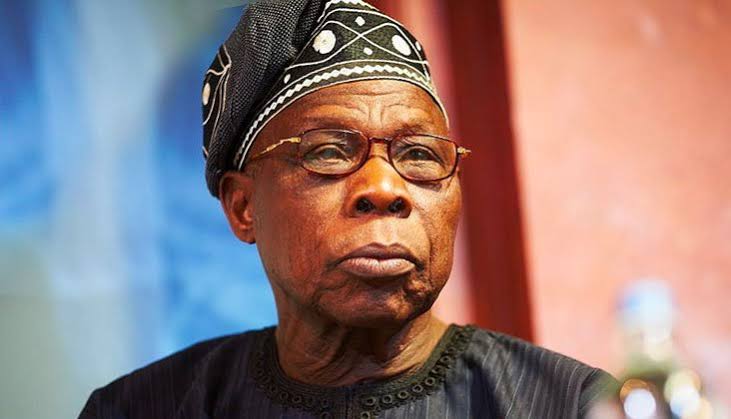
  • Obasanjo Faults Tinubu’s Reforms, Says Nigerians Have Become Poorer

    Obasanjo Faults Tinubu’s Reforms, Says Nigerians Have Become Poorer

    Precious Nwonu, Enugu

    Former President Olusegun Obasanjo has criticised the economic policies of President Bola Tinubu, arguing that the sharp depreciation of the naira has worsened poverty and hardship across Nigeria.

    Obasanjo made the remarks on Wednesday at the Financial Times Africa Summit 2026 in London, United Kingdom, where he questioned the impact of the reforms introduced by the Tinubu administration in 2023.

    He argued that the naira’s depreciation had significantly reduced Nigerians’ purchasing power, noting that the exchange rate moved from about N500 to the dollar to approximately N1,500.

    “We do not live in isolation as a country. We interact with the rest of the world. And overnight, you devalue the currency by 300 per cent. The naira went from N500 to a dollar to N1,500 to a dollar. What that meant was that every Nigerian is made poor by 300 per cent,” the former president said.

    Obasanjo described Nigeria as the “poverty capital of the world”, arguing that the economic changes had increased the number of people struggling to meet their basic needs.

    He rejected suggestions that the President should be given more time for his reforms to deliver results, saying he had yet to see sufficient improvement in the economy.

    “For the economy, I don’t see anything getting better. What policies are you seeing through? You impoverish your people, and you want to see impoverishment through?” he asked.

    The former president also maintained that the administration’s policies were not serving the interests of Nigerians.

    On the removal of the petrol subsidy, Obasanjo acknowledged the importance of fuel to households and businesses but argued that corruption associated with the subsidy regime should have been addressed before the policy was scrapped.

    He said a country facing severe economic difficulties should focus on eliminating corruption, reducing waste and unnecessary spending, and increasing domestic production.

    The Central Bank of Nigeria unified its foreign exchange windows on June 14, 2023, when the official exchange rate stood at approximately N460.8 to the dollar. The naira subsequently weakened, reaching about N1,333.54 to the dollar on the official market on October 19, before falling to around N1,607.05 in early May 2025.

    Despite the currency’s depreciation, official figures cited in the report showed that Nigeria’s headline inflation fell to 14.63 per cent in September from 20.98 per cent a year earlier. Food inflation, however, remained higher at 19.59 per cent, while the economy recorded real gross domestic product growth of 4.43 per cent in the second quarter.

    Meanwhile, the Minister of Finance and Coordinating Minister of the Economy, Taiwo Oyedele, said on August 19 that the removal of the petrol subsidy had saved the government N15.8tn between June 2023 and December 2025.

    Efforts to obtain the Presidency’s reaction to Obasanjo’s comments were unsuccessful, as the President’s Special Adviser on Information and Strategy, Bayo Onanuga, could not be reached.