Tag: Petrol price

  • NLC Demands Petrol Price Cut, Wage Award As Workers Face Economic Hardship

    NLC Demands Petrol Price Cut, Wage Award As Workers Face Economic Hardship

    Precious Nwonu, Enugu

    The Nigeria Labour Congress has called for an immediate reduction in petrol prices, a nationwide wage award and the commencement of negotiations for a new national minimum wage, saying Nigerian workers are facing worsening economic hardship.

    The NLC made the demands in an Independence Day statement signed by its President, Joe Ajaero, on Wednesday, September 30, 2026.

    The labour centre said persistent inflation and rising costs of petrol and transportation had significantly reduced the purchasing power of workers, while driving up the prices of food, rent, education and other essential goods and services.

    The union described the situation as a “full-scale survival crisis”, noting that petrol was selling for about ₦1,430 per litre or higher in major cities and at even higher prices in some remote areas.

    The NLC also criticised the increase in petrol prices that followed the removal of fuel subsidy in May 2023, questioning how the savings from the policy had been utilised.

    According to the union, the Federal Government had promised that subsidy savings would be redirected towards infrastructure and social services, but Nigerians were yet to see the expected benefits.

    The labour centre also expressed concern over Nigeria’s continued dependence on imported refined petroleum products despite being one of the world’s major crude oil producers.

    It argued that dependence on imported fuel exposed workers and households to fluctuations in global oil prices and contributed to rising transportation costs.

    The NLC said reducing petrol prices should be an immediate priority because transportation costs affect the prices of goods and services across the economy.

    “Without cutting this chain, any effort to ease the suffering of the people is futile,” the union said.

    The labour body also demanded the immediate introduction of a nationwide wage award for workers employed by the federal, state and local governments.

    It described the wage award as an emergency measure to cushion the erosion of workers’ incomes rather than a permanent solution to the wage problem.

    “A wage award is not charity. It is an emergency intervention against the collapse of real income,” the NLC said.

    The union further demanded the implementation of tax relief measures agreed upon during the October 2023 negotiations between organised labour and the Federal Government.

    It said some of the tax incentives contained in the Memorandum of Understanding reached during the dialogue had yet to be implemented.

    On the minimum wage, the NLC called for the immediate constitution of a tripartite committee to negotiate and establish a new wage structure for 2027 before the end of the year.

    The labour centre argued that the current ₦70,000 minimum wage had already lost substantial purchasing power to inflation.

    It also called for a reduction in the cost of governance and greater transparency in public spending, saying government should demonstrate restraint while workers are being asked to cope with economic pressures.

    The NLC urged increased investment in roads, hospitals, schools and other public infrastructure, while calling for more opportunities for young Nigerians.

    On insecurity, the union said violence had compounded Nigeria’s economic challenges and undermined national stability.

    It claimed that nearly 2,000 Nigerians were killed in violent incidents during the first quarter of 2026 and said insecurity had disrupted the activities of farmers, teachers, doctors and other workers in some parts of the country.

    The NLC linked poverty, unemployment and inequality to insecurity and argued that addressing economic deprivation was necessary for sustainable improvements in national security.

    With political activities increasing ahead of the 2027 general elections, the labour centre warned political actors against manipulating elections, intimidating voters or using ethnic and religious sentiments to create divisions.

    The NLC said it would, at the appropriate time, use its Workers’ Charter to communicate the policies and political positions it considered relevant to the interests of the working class.

    However, it stressed that individual workers retained the right to make their own political choices.

    Ajaero said the NLC would continue to advocate decent wages, safe working conditions and improved living standards for Nigerian workers.
  • ADC Raises Alarm as Petrol Price Rises to N1,470

    ADC Raises Alarm as Petrol Price Rises to N1,470

    Precious Nwonu, Enugu

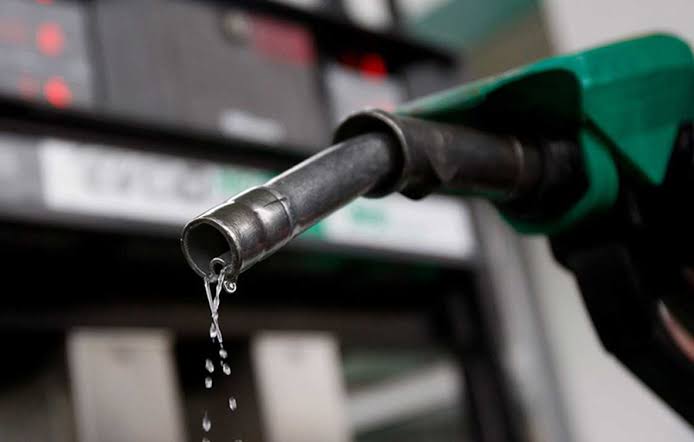
    The African Democratic Congress has raised concerns over the latest increase in petrol prices, warning that the rising cost of Premium Motor Spirit is deepening the economic pressure on Nigerian households and businesses.

    The opposition party’s warning came as petrol prices at some Nigerian National Petroleum Company Limited retail outlets in Abuja rose to as much as N1,430 per litre, while prices in some locations were reported at about N1,470 per litre.

    In a statement issued on Monday by its National Publicity Secretary, Bolaji Abdullahi, the ADC said the increase was already affecting the cost of transportation, food, electricity, education and other essential services.

    The party said the impact of higher fuel prices went beyond motorists, arguing that increased transportation and operating costs were being passed on to consumers and businesses.

    “President Tinubu has turned the petrol pump into an instrument of punishment for Nigerians,” the party said.

    The ADC also expressed concern over reported increases in private school fees, with some schools allegedly raising charges by between 30 and 40 per cent.

    It said the increases were adding to the financial burden on families whose incomes had not increased at the same pace as the cost of living.

    “Parents are not earning 40 per cent more. Their salaries have not risen with the prices of fuel, food, rent, transportation and school fees,” the party said.

    The opposition party, however, acknowledged that school proprietors were also facing higher operating expenses, including electricity bills, fuel costs, taxes, rent and staff salaries.

    The ADC urged President Bola Tinubu’s administration to take urgent measures to ease the pressure on households and businesses, warning against interpreting Nigerians’ ability to cope with the situation as acceptance of government policies.

    Meanwhile, checks at several NNPCL retail outlets in the Federal Capital Territory showed that petrol was being sold at between N1,395 and N1,430 per litre.

    The latest prices represent increases of between N50 and N80 per litre, depending on the location.

    The new pump prices were observed at NNPCL stations around Airport Junction, Gwarinpa, Kubwa Expressway, Wuse Zone 4 and other parts of Abuja and its environs.

    However, Sunday Asefon, National Director of Students Engagement of the City Boy Movement and Senior Special Assistant to the President on Students Engagement, attributed the latest petrol price increase to international market pressures rather than subsidy removal alone.

    In a statement titled, “The Pain Is Not From Subsidy Removal, It’s From Geopolitical Tensions Including the War in the Middle East,” Asefon linked the development to tensions involving the United States, Iran and Israel.

    He argued that the rise in petrol prices from about N800 per litre at the Dangote Petroleum Refinery’s gantry to between N1,300 and N1,400 at filling stations could not be explained solely by the removal of fuel subsidy.

    “The real enemy is the ongoing global geopolitical tension. The missiles being fired by the United States, Iran and Israel are the unseen hands shaping the global oil market,” Asefon said.

    He pointed to instability around the Strait of Hormuz, a major route for global oil shipments, as another factor capable of affecting international crude prices and, consequently, domestic petrol costs.

    According to Asefon, the Bank of England had warned that a complete disruption of the waterway could push global crude prices to between $100 and $130 per barrel.

    The contrasting positions come as Nigerians continue to contend with higher fuel and transportation costs, with the latest pump price adjustments adding to concerns over the cost of living.

  • Amidst scarcity, Nigerian govt denies increasing petroleum pump price

    Amidst scarcity, Nigerian govt denies increasing petroleum pump price

    The Nigerian government on Friday said it has not approved any increase in the pump prices of petrol across the country.

    The Minister of State for Petroleum Resources, Timipre Sylva, disclosed this in a statement issued by his senior adviser on media and communication, Horatius Egua.

    Mr Sylva spoke as Nigeria continue to queue for fuel in filling stations amidst reports of increase in the pump price of petroleum products.

    Mr Sylva claimed that President Muhammadu Buhari has not approved any increase in the price of PMS or any other petroleum product.

    “There is no reason for President Muhammadu Buhari to renege on his earlier promise not to approve any increase in the price of petroleum motor spirit (PMS) at this time,” the minister was quoted as saying.

    According to him, the president is sensitive to the plight of the Nigerians, and has said repeatedly that he understands their challenges, and would not want to cause untold hardship for the people.

    A Guardian report said Thursday that the Nigerian government quietly approved ₦185 as the new petrol pump price per litre. The newspaper reported that the approved pump price was communicated to major marketers in a memo early Thursday.

    But Mr Sylva on Friday claimed that the government will not approve any increase of PMS secretly without due consultations with the relevant stakeholders.

    “The President has not directed the Nigerian Midstream and Downstream Petroleum Regulatory Authority or any agency for that matter to increase the price of fuel.

    “This is not the time for any increase in the pump price of PMS,” he said.

    He noted that what was playing out was the handiwork of “mischief makers and those planning to discredit the achievements of the president in the oil and gas sector of the economy.”

    The minister appealed to Nigerians to remain calm and law-abiding as the government works towards bringing normalcy to fuel supply and distribution in the country.

    In recent months, especially since the government announced plans to remove fuel subsidies, Nigerians have had a hard time getting petroleum products at filling stations.

    The scarcity has persisted despite the government’s repeated claims it had enough petroleum products in stock. In many parts of the country, operators of filling stations sold at prices higher than the government’s pump price.

    (Premium Times)