Tag: Peter Obi

  • Run, Peter, Run…

    Run, Peter, Run…

    By Oseloka H. Obaze

    When I appeared on Arise Prime Time interview with Charles Aniagolu on 2nd June, 2025, I said amongst other things, that any political opposition coalition for the 2027 presidency, which did not include Peter Obi, will not succeed. I stand by that statement. From the caption of this piece, any discerning reader would have already guessed the singular objective of this write-up; to encourage Peter Obi not to be deterred by any force or persuasion from running for the Nigeria presidency in 2027. Here’s the upshot. If Obi runs, he might not win; if he does not run, he is guaranteed not to win.

    The fate of Nigeria hangs on the balance. Most of the Nigerian masses desirous of real leadership change, regardless of their social stratification, education, religion, tribe or political affiliation, hardly consider any person – not Bola Tinubu, Atiku Abubakar, Goodluck Jonathan, Rabui Kwankwaso, Rotimi Amaechi, Aminu Tambuwal, Bukola Saraki or Nasir El-Rufai – as genuinely representing their hope, better than Peter Obi. As contentious as this assertion may seem, it’s no hyperbole. That’s the conflated perception and reality in present day Nigeria.

    Some politicians with vested interests, who understand this reality fully, are already fighting back. They are strategically deploying all forms of trolls and subterfuge to demarket Peter Obi. Corruption is also fighting back, albeit, covertly. The onslaught against Peter Obi is so well oiled and funded; you’d think he is the only person running for the presidency in 2027. Obi’s delegitimization and demythologization are being orchestrated by those awestruck by fear. Two years away from the 2027 presidential election, pre-purposed and pre-positioned media goons are already traducing and pummeling Peter Obi without let or hindrance. Also, those hired hands pretending to be from Obi’s Igbo tribe, are rendering what they want many to believe are even more persuasive, potent, and factually damaging anti-Obi sentiments. They are dredging up vexatious dregs. The assault was long anticipated by those of us aligned with Obi. Still, some heady questions persist: who is afraid of Peter Obi’s presidency and whatever hope it holds out for Nigeria or whatever ill-fate it portends for members of Nigeria’s political elite that belong to the roguish fringe?

    Peter Obi is not a saint. He is the first to admit that publicly. Those who have worked closely with him don’t always agree with him. But he listens. He reads and accepts bad news. He accepts criticisms with saint like equanimity. Because he is human, he does make mistakes. But he is also a servant leader who is willing to adapt; correct his ways and apologize if he errs. He is as deliberate as he is frugal. Also, Peter Obi has the ability to cultivate friends, allies, and adversaries. He is visibly doing that nationwide to the chagrin of his political adversaries. He has left most confused.

    Those who still claim Obi is not known in the North, only tell yesterday’s tales. When ahead of his initial presidential run, they said he was not known in the North and rarely visited the region; he toured the 19 Northern States in two weeks despite the prevailing insecurity. Of recent, more than any rich Nigerian we know, Obi has spent his personal wealth and resources doing altruist work and offering social welfare support around the nation, in the most critical and collectively beneficial sectors. He has given a new face and modality to philanthropy. His public munificence contradicts boldly, the allegations of his stinginess. Yet, some say he is only showboating and wasting his time and resources. Interestingly, his political peers, who possess or have acquired huge largesse from public coffers, have not done half as much.

    I was fully entrenched in the national political mix in April 2022, when Nigerian youths begged the political class to give them Peter Obi. They paid the PDP for Obi’s presidential nomination form, yet PDP’s leadership demurred. Obi and his embryonic Obidient Movement left PDP and found a political haven elsewhere. When thereafter, Peter Obi’s critics and opponents contended that he had no political structure, except for “four men in a room tweeting,” he rallied and grew his “Mustard Seed” support base to well over 20 million voters, and astounded the nation by winning the 2023 presidential elections handily, only for that mandate to be wrested away from him via the INEC legerdemain and judicial subterfuge. When the grab-jacking of the 2023 elections, and the consequent charade of judicial petitions and verdict did not dissuade Peter Obi from further politicking, pro-establishment forces went after his Labour Party, infiltrated it’s ranks with rogue elements, causing its inevitable implosion.
    As an insider, I know and can aver that perhaps, Peter Obi’s main oversight in 2023, was that you never become the leader of labyrinthine Nigeria, without first negotiating with the so-called “owners of Nigeria” about their individual and collective safeguards. Such expedient guardrails not only protect their vested interests, but also form the stickum that holds the Nigeria mosaic in place. Peter Obi needed the “owners of Nigeria” to know, understand, trust, and accept him. The often proffered notion of the “failure to protect his votes,” has merit but was hardly the core culprit. Lack of national elite consensus on the need for sweeping political change was fully at play.

    There were other discernible, if tangential factors. For balance, Obi needed a Northern Muslim running mate. Some of the Northern Muslim politicians, who were approached to run with Peter Obi in 2023, pulled back or pulled out. Almost all wanted Obi to be the number two on any such ticket. Three years later, almost all may have realized their strategic mistake and have changed their minds. Given a second chance, they will readily pair with him in 2027, with Obi heading the ticket.

    Broad realizations of what Nigeria has become, and may yet become, now compels a new thinking. Setting aside the rabble rousing and the revanchists’ default to the tired narrative about the strategic votes required from various parts of the nation to win the presidential elections; the political groundswell for change will trump every other consideration. For most Nigerians, 2027 cannot be business as usual. Nigeria’s political elite know this fact and certainly understand the dire consequences of overplaying their hand.

    Nigerians have heard Peter Obi say routinely that he is not desperate to be president. Yet, many Nigerians at home and abroad are desperate on his behalf. They’ve also heard him say that he will be on the presidential ballot in 2027. Of that I’m dead certain. This has nothing to do with sentiments. As is already unfolding, there will be all forms of political permutations and combinations. Some insidious forces will be planted to derail Peter Obi from running. Some will aim to foreclose on his running. Others will be orchestrated to purvey presumably, better winning options and combinations that can unseat the incumbent. Of the latter, Obi might even be offered yet again, the place of the second fiddle on a ticket. For most Nigerians, this option is off the table as it was in 2023.

    The reality is that the top 2023 presidential candidates, Bola Tinubu, Atiku Abubakar and Rabui Kwankwaso, all knew that Peter Obi defeated them in that election. So, too, did INEC Chairman, Mahmood Yakubu. Of late, some of those politicos initially opposed to Peter Obi are openly confessing that he won the 2023 presidential election. The electoral mandate stolen in 2023 was not just Peter Obi’s votes and victory. It was the votes Nigerians freely cast for Obi and for the betterment of Nigeria and her posterity. The second time around, such votes will double and will be amply protected, even with blood and lives. That much is certain. That’s the present national mindset.

    Four variables make Obi’s run in 2027 imperative. Regardless of the party platform he chooses, his popular support will not wane. His run will also sustain the zoning arrangement that underpins the equity and efficacy of Nigeria’s wobbly federalism; add fillip to Nigeria’s democratic credentials and affirm that a new Nigeria is indeed possible. Every man, woman, and child old enough and registered to vote in 2027 will endeavour to do so. It will most ill-advised for entrenched forces of government and politics, to risk profound fissures and conflict that would arise from any attempt to support or uphold illegalities that will upend the votes and choices freely made by Nigerians. There is only one factor that could change the realities in 2027; that Peter Obi is not willing to be on the ballot. And that is not even an option anymore. Nigerians own Peter Obi as much as he owns himself. He is now a national asset.

    Of Nigeria’s 95 million eligible registered voters, over 33 million or one-third are Nigerian youths, and their votes far outnumber the votes collectively garnered by Tinubu, Atiku, Obi and Kwankwaso in the 2023 presidential election. In 2027, most of those votes, if not all, will go to Peter Obi. They will be protected and will count. Those who think or say otherwise, only unmask their naïveté or profound fears of the prospects of a Peter Obi presidency. Despite all imponderables relative to 2027, I’ll only state by way of advice, support, and affirmation; Run, Peter, Run. Let history take its rightful course.

    ——
    Obaze is MD/CEO, Selonnes Consult – a policy, governance, and management consulting firm in Awka.

  • Anambra: POMR clarifies Obi’s endorsement of ADC’s state assembly candidate, says LP’s Moghalu remains Obi’s guber candidate

    Anambra: POMR clarifies Obi’s endorsement of ADC’s state assembly candidate, says LP’s Moghalu remains Obi’s guber candidate

    The Peter Obi Media Reach, POMR, has clarified that the endorsement of the African Democratic Congress, ADC, candidate in Anambra State Assembly Bye Election by Mr. Peter Obi, the 2023 Labour Party presidential candidate, was on compassionate grounds.

    The clarification was made in a statement issued by Ibrahim Umar, POMR Spokesman, titled ‘Anambra State Assembly Bye Election: Why Obi is Supporting ADC candidate’.

    The statement noted that for the Anambra governorship election, George Moghalu of the Labour Party, remained Obi’s candidate.

    *See the full statement below:*

    The Peter Obi Media Reach, POMR, wish to give clarification on why the Labour Party leader ànd the 2023 Standards bearer, Peter Obi, is throwing his weight behind the African Democratic Congress, ADC, candidate in Saturday’s Anambra State Assembly Bye Election.

    The clarification became necessary following the mix-up in the public space over Obi’s choice ahead of the Labour Party.

    Firstly, the Independent National Electoral Commission, INEC, has not been able to sort out Labour Party issues in this election.

    As at the time of issuing this statement, LP has no candidate in Saturday’s bye election slated all over the country.
    And secondly, the ADC candidate is the wife of the late Labour Party state Assembly member Hon. Justice Azuka, who died in the hands of kidnappers in February this year.

    The leadership of both ADC and LP, as well as the Labour Party Senator and House of Representatives member Tony Nwoye and Idu Emeka, respectively, and the House of Assembly Members in Onitsha South on compassionate grounds, deemed it fit that the capable wife should go ahead to complete the tenure of her husband.

    Where issues of candidates are not in dispute, Obi always supports Labour Party flag bearers, as in the November gubernatorial poll, where our Principal’s candidate is indisputably Chief George Moghalu of the Labour Party.

    By this clarification, it lays to rest the confusion in the minds of the public, as the situation has not in any way changed Obi’s leadership of the Labour Party and his membership of the Coalition.
    We therefore need to underscore the fact that Obi’s mission for a new Nigeria is course and Possible.

    Ibrahim Umar
    POMR Spokesman
    August 13, 2025.

  • Imperatives of a Single Term Presidency

    Imperatives of a Single Term Presidency

    By Oseloka H. Obaze

    When Governor Charles Soludo of Anambra State recently took a dig at his political opponents, from Anambra South, who had pledged to serve a single four-year term, in lieu of an abridged term for the incumbent, he stirred a hornet’s nest. Some by conjecture and others by acute rationalization believed Soludo’s Igboukwu Doctrine was targeted at Peter Obi. As it were, by sheer coincidence, Obi had earlier on, made public his willingness to serve in the Nigerian presidency for one term, if elected in 2027. That unscripted arrangement would guarantee maintaining the unwritten zoning arrangement between the North and the South.

    Only Gov. Soludo can say for sure, who his barb about such candidates and aspirants requiring “psychiatric evaluation” was meant for. The reactions elicited by Soludo’s remarks, have been trenchantly acerbic. His rebutters and traducers include defenders of Peter Obi, as well as the governorship candidates from Anambra South. In summary, they have categorized the governor’s contention as pretentious, pedestrian , nd induced by fear of potential loss of power.

    Incidentally, the only guardrail and determinant of the one-off single term narrative , e it at the presidential or gubernatorial levels, is the constitutional validity of such a decision. In the case of the presidency, and in the broader Nigerian context, the sole determinant of that single story narrative that Soludo stoked, ought to be the Doctrine of Necessity, anchored on the provisions of the 1999 Constitution, as amended.

    Both at the national level and at the state level in Anambra, the pledge by aspirants and candidates to serve for one term is not unconstitutional. Not by any means. Second, it respects and seeks not to upend the extant zoning arrangements. Third, the offer arises primarily from the conclusions that the incumbents have not acquitted themselves creditably in office to merit a second term. For people peddling that notion, as it is with President Bola Tinubu, so it is with Gov. Charles Soludo.

    This much is clear. The 1999 Constitution delimits every presidential or governorship tenure to four years, in the first instance. While the second term is statutorily allowed, it is not mandatory. Thus, to do one term only, or two consecutive terms, is the prerogative of the candidate. History, including Nigerian political history, is replete with leaders who served a single term by design or default and still accomplished much. Even some who left office via natural attrition had accomplished much in those short periods. It is all about personal leadership commitment, dedication , and focus.

    Clearly, Peter Obi’s offer to do only one term is necessitated by political realities, well beyond his control. Such a pledge, in real terms, ought to be a mark of sincerity, statesmanship, integrity and respect for zoning and regional equity, not the contrary. Regrettably, in Nigerian politics , skepticism is habitual.

    Those who argue that not much can be accomplished during one term or that any such pledge is a sign of desperation, utterly miss the impetus and thrust of the evolving debate. They default to the proverbial single story narrative. The ultimate selling point of that proposal is that a president committed or constrained to one term, will not be saddled with reelection responsibilities and will inevitably focus on his or her legacy projects and programmes, and other good governance deliverables and dividends.

    It has become customary, given the complex nature of Nigerian politics to adopt in the national interest, the Doctrine of Necessity when seeking to solve thorny political pproblems That same principle should apply now, just as it did, in 1999, when Olusegun Obasanjo was chosen as the “safe hands” to lead Nigeria, but in essence, his choice was meant to assuage the southwest for the annulment of the 1993 presidential election and truncating MKO Abiola’s presidency. The same principles would apply in the succession battle for bed-ridden President Umaru Yar’Adua. Applying the Doctrine of Necessity as an interim measure for arresting Nigeria’s drift, restoring confidence in the presidency , and moving Nigeria forward has become imperative.

    Also, applying the Doctrine of Necessity to give effect to a one-term arrangement will, in the present instance, address several festering sectoral concerns. First, it keeps the North-South zoning arrangement intact. Second, it offers common grounds for the political opposition to rally to a consensus and form a formidable bloc capable of unseating the incumbent president. Third, it guarantees the North (whether monolithic or not) the uncontested assumption of the presidency in 2031 for an eight-year term, just as was the case in 2015.

    Fourth, it guarantees the South that their zoned eight-year tenure, 2023 to 2031, will be respected. Fifth, it reassures the progressive elements within the southwest, especially those in political opposition, that in seeking to unseat their kith and kin, they will not be accused of breaching the zoning arrangement due to ethnic considerations. Sixth, and perhaps the most salient, it compels, the southeast, to make a huge sacrifice to serve only one term; to vouch to do so and indeed, to do so as an affirmation that they can be trusted as integral players in Nigerian. This aspect will also bring to closure, residual discomfitures from the Nigerian-Biafran civil war. Such a guarantee is one the entire southeast zone has to make, regardless of whether the presidential candidate is Peter Obi or not.

    Finally, if that arrangement works, and achieves its ultimate goal of defeating President Bola Tinubu, it will offer President Tinubu the unique opportunity to remediate and buttress his questionable bonafides as a democrat; and also as an incumbent, who ran credible elections, was defeated and willingly handed power to the opposition. He would join the league of sitting African heads of state that lost popular elections and did not use executive and extraordinary means to stay in power.

    The one-off single term presidency debate in Nigeria is now beyond an academic discourse. It is what Nigeria requires to move forward. It will address several distressing and persisting concerns, some subliminal and others, transparently concrete. The core North in its enlightened self-interest should support the plan since their unfettered support for a Muslim-Muslim ticket in 2023 in a secular state like Nigeria has yielded less than the desirable dividends They must also put to rest the prevailing belief that the North cannot trust an Igbo man with the Nigerian presidency. To help the North make up its mind, they need to revisit the 1960, 1963, and 1979 North-East alliances that yielded tangible political results, especially as regards equity and political stability.

    Bluntly, the stark reality is that despite the North’s long and overwhelming dominance of national leadership in Nigeria, their region remains the poorest, most undeveloped, and now, the most insecure. Their hitherto robust and thriving agricultural, mining, hides and skins, textiles, and manufacturing industries are all in ruins. Perhaps, it’s time for the North to think progressively outside the box. Finally, the North might use the four-year single term to address its persisting internal contradictions; specifically the internecine ethnic and religious conflicts and the rise of home grown non-state actors, who as bandits are putting the North asunder.

    Some vested interests in the south will indubitably oppose the single term presidency for the Southeast under various pretexts. Expectedly, most of their supporting arguments will be counter-intuitive. But they will surely be made, covertly or overtly. Peter Obi made a valid point that “if service is the motive, turning the tide in four years is possible.” There’s not much to add to that non-axiomatic contention. All we need to bear in mind is that we need to save and turn around Nigeria.

    The singular challenge confronting Nigeria’s political establishment at this juncture is mainly that of trust. Trust is Nigeria’s red herring. The trust deficit chasm in Nigeria is wide and expanding daily. In the several discussions I’ve been involved in on this issue; the recurring question still revolves around trust. Can Peter Obi be trusted? Can the North be trusted? Can the Igbo be trusted? Can INEC be trusted? Can the Coalition members be trusted? Can the judiciary be trusted? Can the Southwest be trusted? What is left for Nigerians to ask is: Can God or Allah be trusted?

    If Nigerians can find the courage this time around to exhibit a modicum of trust in their compatriots, then we stand a chance of making headway. Then again, arriving at a consensus on issues even as basic as elemental trust within our body politics might require a Doctrine of Necessity. That is where we are and who we have become as a nation.

    ——
    Obaze is MD/CEO, Selonnes Consult – a policy, governance and management consulting firm in Awka.
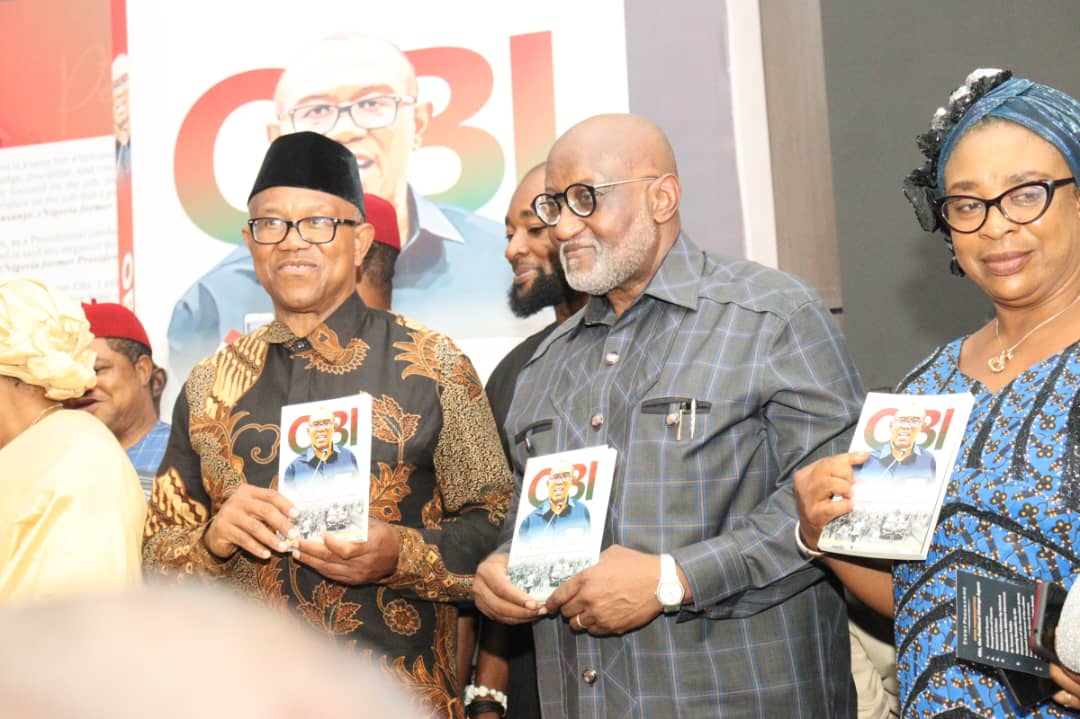
  • Obi: The Political Change Agent – Book Review By Oseloka Obaze

    Obi: The Political Change Agent – Book Review By Oseloka Obaze

    Obi: The Political Change Agent

    The story of the man who changed the face of electioneering in Nigeria

    ***********

    A Review by Mr Oseloka H. Obaze

    At the NAF Center Kado, Abuja FCT, Monday 10th June, 2025

    [Protocols]

    As conventional wisdom admonish us, “never judge a book by its cover.” But we are also told that “There is no friend as loyal as a book.” My favorite quote on books is the one by Jeanette Winterson, which says “Books and doors are the same thing. You open them, and you go through into another world.”  I sincerely hope that today we will present a book, which will serve as an open door to closed minds.

    By June 2025 – a span of three years from May 2022 – when Peter Obi became the presidential candidate of the Labour Party, no less than fifteen books have been published on his foray into Nigeria’s political space. Many observers consider that three-year span as a redefining era in Nigeria’s electioneering and partisan politics.

    The book being presented today, Obi: The Political Change Agent -The story of the man, who changed the face of electioneering in Nigeria, is yet another brick in the wall of a fast growing historical record on Peter Obi’s brand of politics.

    As the book’s title suggests, Peter Obi is by every adjectival qualification, a political change agent in Nigerian politics.  He is also an adroit competitor, in a marathon race that is far from over. So this literary work is about Peter Obi; but in the context of Nigeria, it is about the unheralded rise of Obidient Movement phenomenon between 2022 and now.  It is also about an unfinished business of nation-building, and renewal, and ultimately, a preface to the inevitability of a New Nigeria.

    The core value and potency of this book, is that is written from an insider’s perspective. Ike Abonyi, my friend and the author, has done a yeoman’s job. With a keen sense and eyes for details, he has done what adroit researchers and veteran journalists do best; render credible account of seminal events without embellishments.

    If per chance, you do not intend to read this book immediately, I will advise you to read the foreword by my brother, Dele Farotimi, in order to get the gist of this work.  Characteristically, Mr. Farotimi did a positively magisterial job, with some four hundred insightful words. He concluded with his non-hesitant recommendation of the book, “to scholars of Nigerian politics, elections and society.”

    According to Farotimi, “Obi represents an anomaly in Nigeria’s political landscape; a politician who genuinely desires to work for the betterment of society…Peter Obi is a politician unlike any other in Nigeria.  Ike Abonyi’s work looked at the campaign and organic growth of the Obidient Movement and how Peter Obi’s candidacy has rewritten the manual for future aspirants to public office.”  To that very candid summation, I will only add that any book about an enigmatic personality or an icon is worth reading and owing.

    For the sake of brevity and convenience, I am minded to dispense with the formality of the book’s nomenclature, before delving further into its substance and flourish.

    The book, Obi: the Political Change Agent consists of 252-pages, and twenty-six stand-alone compact chapters. Each chapter, adapted from original real-time op-eds and essays, details Peter Obi’s odyssey from the juncture when he ventured into Nigeria’s political setting, through his uncharted trajectory to becoming the Labour Party 2023 presidential candidate on 30th May, 2022 and thereafter.

    I’ve only offered a synopsis of the structure of the book, to get the full gist or chapter-by-chapter narration, please purchase a copy of the book. Now to the historical flourish of the work.


    ***********

    Chapter 1 is essentially a backdrop, and the condensed story of Nigeria’s return to participatory democracy, from 1999 to date.

    Chapter 2, x-rays the man Peter Obi, and captures his essence and bonafides via his abridged official biography.

    Chapter 3 is revelatory. It documents that fortuitous but life-changing encounter that took Obi into politics. It narrates how Peter Obi’s encounter with Professor Donald Jacob, the Dean of the Kellogg School of Management in the USA, altered his views on politics. Ultimately, the unforeseen outcome of that six-week executive course was his decision to go into politics. It’s a thought-provoking story.

    Chapters 4 and 5 encapsulate the Ojukwu and APGA factors; as well the Anambra governance revolution. Obi’s and sojourn in Anambra was not without its vagaries, but would have been utterly impossible without the overwhelming influence of the iconic Igbo leader, Chukwuemeka Odumegwu-Ojukwu, who was the leader of the All Progressives Grand Alliance (APGA).

    Chapter 6 and 7 surveys Obi’s Journey to the center and Obi’s political dalliance with the PDP.  This chapter speaks to Obi’s political movement from the state to the federal level after his successful tenure as Governor of Anambra State. The narration segues into the political leap that made him the running mate to Atiku Abubakar in the 2019 presidential election.

    Chapter 8 and 9 is a periscope of how Obi’s 2023 Presidential Journey begins and landed him in the Labour Party. It chronicles Obi’s encounter with the vicissitudes of Nigeria’s rotational national politics, unkept promises and his eventual divorce from PDP. The factors at play were mot mere imponderables as much as they were a manifestation of human foibles, political machinations and shortsightedness.

    Chapter 10 is about the birthing of the Obidient Movement. The chapter chronicles the emergence of the Obidient Movement in the nation’s political trajectory and how it impacted greatly on the polity during the 2023 electioneering.

    Chapters 11 narrate the already well-documented 2023 election intrigues by the INEC and the ultimate Judiciary ambush. This is one of the longest chapters in the book for obvious reasons; it captured all the election intrigues, the preparations from voter registration to election proper and the post-election drama.

    Chapter 12 is about ‘The Media and the Obi’s Politics.’ This chapter captures media involvement in Obi’s Presidential ambition and how the social and mainstream media played some significant roles in Obi’s politics. Some believed that Obi was a media hype that would fade away with time. They were wrong.

    Chapter 13, narrate the well-known folktale of Peter Obi’s “Madman” friend, affirming ultimately, that ‘all politics is local’. During his Presidential campaigns, Peter Obi frequently recalled how in his quest for adaptive leadership, he opened himself to learning from everybody. In that context, he often recalled how during his tenure as Governor of Anambra State, he got one of the best advices that helped him tackle very naughty security issues from a “madman.” The author corroborates the seemingly bizarre story, by seeking and finding the “madman.”

    Chapter 14 captioned ‘Anatomizing The Peter Obi Character’ offers an insight into varying perceptions of Peter Obi’s persona; Such perceptions are mixed and complex. Some people saw Obi is a stingy and difficult man to deal with, but to others, he is the prudent man, who detests corruption and extravagant living. To some, he was a quiet philanthropist. This chapter looks at his personality from these contrasting and eclectic perspectives.

    Chapter 15 is the author’s published rendition of Obi’s experience during his brief sojourn in PDP. He facetiously asked: “Obi in PDP; was a Celibate in the Whorehouse?” He surmised how Obi’s clean character and credentials meant nothing to some of the PDP leaders who were bent on frustrating him. This narration validates Obi’s frequently uttered contention that any foray into Nigerian politics was an entanglement with “pimps and prostitutes, not priests and nuns.”

    Chapter 16 and 17 titled ‘A Political Phenomenon Called Peter Obi,” is also another published op-ed by the author capturing the enigma in Peter Obi’s politics. The chapter segues to an analysis of ‘LP’s Obi and the Involuntary Campaigners.’ This article talks about how Obi campaigners emerged involuntarily after hearing his disarming messages on how to create a new Nigeria, with his “Go and verify” and “consumption to production” and “a New Nigeria is Possible” Mantras.

    Chapter 18 & 19 are respectively titled “How Obi-phobics Chased the Wind” and “As Campaigns Flag off, it’s Obi…kererenke.”  These chapter mirrors and juxtaposes the twin developments of dislike and, like, hate and love, ignominy and fervor Obi candidacy elicited nationally. It synoptically captures the futility of the quest by Obi’s political traducers, who embarked on a massive search for something negative about him, but failed woefully. On the flip side was the fervent mob like national support during the same period as Obi’s campaign flagged off, to endless chants of ‘Obi…kererenke’. Rather than the unfolding of scandals, that zeal would eventually transform into the electrifying campaign mood that was replete with various campaign songs and slogans that dominated the political space.

    Chapter 20: captioned “OBI’s quest for Justice and Repetition of History,” recalls how Obi has always been treated unjustly since he entered politics and how he has continued to seek Justice undauntedly via legal redress.

    Chapter 21 tackles the very sensitive issue of ethnified politics and the costs and challenges of being Igbo impacted Obi’s and candidacy. It further explores how that negative narrative was used derogatorily to douse Obi’s potentials.

    Chapter 22 highlights the use of political trolling and fake news to demarket Obi. One such instance was the allegation that as governor, “Obi demolished Mosques.” This chapter captures endless calumny, some blatantly religious against Peter Obi during the campaigns. But as it turned out he actually built a mosque and had fantastic relationships with Muslims in his state during and after leaving office.

    Chapter 23 captioned “Peter Obi, the Opposition’s Talking Drum,” documents Obi’s involuntary post-election role after being manipulated out of the presidency in the 2023 polls.  The intention, as the author averred was to frustrate Obi and force him to quit the political stage. Instead, Obi chose to keep playing a proactive role from the opposition desk, becoming as it were the opposition’s vanguard. It was not to be an easy task; but Obi has remained undaunted.

    Chapter 24 is captioned “Can the Labour Party Go Far Without the Obidients?” The chapter grapples with the evidential hesitance of the Labour Party leadership to fully embrace the efforts of the Obidients Movement by bringing its structure in its fold. It wonders what will become of the Labour Party without the Obidient Movement and Peter Obi and his numerous supporters. The answer as the famous song says: ‘Is blowing in the wind.”

    Chapter 25 is titled “In Whose Interest Is Soyinka’s Obidient-Phobia?” Nigeria’s literature icon, Nobel laureate Professor Wole Soyinka, known for his progressive position on issues, has strangely been at the forefront in the campaign against Peter Obi and the Obidients. This chapter examines what may have caused his shocking position and volte face.

    Chapter 26: “Obi on Marble” is a glossary of some of the many quotable quotes of Peter Obi. Most of these became the political refrain for his legion of followers. Their inclusion aligns well with historical records, for which the book is meat to amplify.

    ***********

    If this book offers one unique essence, it is that in politics and governance, we must continue to use history in our decision making. The utility of history remains ever pertinent. As such, any book such as this, which offers a glimpse into history in the making, ultimately adds value to our politics, our history and our decision-making processes.

    In the 25 years of uninterrupted democracy in Nigeria, six consecutive presidential elections were held in 1999, 2003, 2007, 2011, 2015, and 2023. The 2023 elections perhaps, stand out the most. It was a redefining moment. Like most presidential elections –except that of 2015 – the 2023 elections ended up in litigation and was eventually decided; by the Supreme Court.

    In 2023, Nigerian youths, were sufficiently incentivized to play a role in politics. Peter Obi was the catalyst to that foray. It was he who instigated, exhorted and encouraged Nigeria youths to “take back their country”. Even though the outcome of the 2023 election fell far short of expectations in reflecting the desire of Nigeria voters, the unprecedented landmark electoral awareness remains memorable.  This huge change in our electioneering mindset and modalities will forever be attributable to one political character; Mr Peter Obi the former Governor of Anambra State, and the 2023 Presidential flag bearer of the Labour Party.

    Unwittingly, Obi’s unheralded presidential candidacy –in and by itself, an instrument of soft power- gave Nigeria’s electioneering process a new image, impetus and colouration; focusing as it were on issues designed to turn the country away from her dysfunctional economic fixation of “consumption” and channel that inclination to “production.”

    His issues-based campaign had focused on poverty alleviation, economic growth, job creation, educational reform, efficient healthcare delivery, and anti-corruption mode and mindset. His advocacy for broad policy shifts, enjoyed unprecedented support from many discerning minds and gained significant support among young Nigerians, who saw him as a fresh face and an alternative to the traditional selfish and corrupt political elite. Indeed, Obi even made cutting cost of governance sexy and attractive.

    But trying to dislodge the entrenched system was never going to be a walk in the park. Peter Obi was aware of this and so too, were his followers. Thus Obi faced stiff competition from established political parties, candidates, and critics, who initially took him for granted and questioned his ability to win a national election. Indeed, a ranking politician had characterized Peter Obi and the Obidients as largely “effervescent” – a phenomena that would blow away with time. He was wrong. He had since changed his mind and said so publicly.

    Despite the challenges he encountered, Obi’s candidacy generated significant interest and enthusiasm, particularly among Nigerians seeking real change. And despite the fervour and commitment, the eventual outcome of the 2023 presidential elections was not what Nigerians hoped for; but the outcome was also not totality unexpected.  Like most of the prior presidential elections, the Courts would eventually decide who became president, regardless of public opinion and the electoral evidence presented.  This proved the cliché that “the law is an ass.”

    As the author rightly surmised, the political fervour ignited by Obi is still flaming. Nigerian youths appear through Obi’s prompting to have discovered their potential and are not letting go. Consequently, Nigerian youths are now at the center of a struggle to reset Nigeria under the Obidient Movement that has become the platform for the inevitable discovery of a New Nigeria.

    ‘Obi: The Political Change Agent’ the story of the man who changed the face of electioneering in Nigeria, is politically enriching as it captures the historical background of our democratic struggle and offers various insightful perspectives on the different administrations since 1999. This work is a well-researched by an experienced journalist who has been part of Nigeria’s political trajectories. The book captures profusely our contemporary political journey for 25 years with all its vagaries, upheavals and proclivities.

    Written in very easy-to-read prose and elegant language, I find this book very enriching for any inquisitive mind; and for anyone who desires to know more about Nigeria’s uninterrupted two and half decades of the democratic journey. It offers unvarnished insight into how the issues-driven campaign messages by Peter Obi helped to revolutionize and compel Nigerian youths to discover themselves and prepare for the inevitable and proactive role they must play in nation-building. For Nigerian youth’s Peter Obi’s “take back your country” was not just a slogan, it was a clarion call that resonates till this day.

    Political campaign books are usually about train wrecks and triumphs. Most are about introspection and retrospective reconstructing of issues that mattered or played out. Obi: The Political Change Agent is none of these. It is straightforward recording of events as they happened.

    Oftentimes, political campaign books, historical books and memoirs are richer because they include or reveal snippets of undisclosed confidential discussions or events. From my vantage point as a 2023 presidential campaign insider; perhaps two yet undocumented remarks relative to the 2023 elections remain vital.  While visiting Kaduna on 17th October 2022, Sheik Ahmed Abubakar Gumi told Peter Obi, “Even if you don’t win, beyond the 2023 elections don’t let the Movement you have started to end”(p237). I believe Gumi was speaking of the Obidient Movement. He may be clairvoyant.

    The second was what President Muhammadu Buhari told Peter Obi on 22 October 2022: “From what I read in the newspapers, Nigerians, especially the Nigerian media like you. You may not win this particular election, but age is on your side. I tried four times before I finally won.”  I’m certain both messages have stayed with Peter Obi. Both, I believe, will instinctively undergird the inevitability of a New Nigeria that is Possible.

    If this book has any shortcoming, it is not out of dereliction or inattention. Besides the protagonist, the book does not hap on the role of other key campaign dramatis persona. It does not for instance delve deeply into how the choice of Labour Party over the Social Democratic Party was made, or how the Vice-Presidential Candidate was selected over the other possible and probable candidates.

    Finally, I recommend this book for academic work, politics, and leisure reading; and to political party managers. This book will be an integral part of any serious library and an invaluable reference material for anyone sufficiently passionate about political and governance reforms Nigeria.

    I thank you all for your kind attention.

  • 2024 Democracy Day: Nigeria needs to return to a truly democratic nation – Peter Obi

    2024 Democracy Day: Nigeria needs to return to a truly democratic nation – Peter Obi

    The 2023 presidential candidate of the Labour Party, Peter Obi, has asked that the country should be returned to a truly democratic nation.

    Obi made the call in a statement on Wednesday, marking the nation’s Democracy Day.

    He said the nation can achieve the feat by collectively voting for democracy as it did on June 12, 1993.

    The former governor of Anambra State also called on Nigerians to stand in defence of the nation’s democracy and protect it from being sabotaged.

    Obi said the consequences of not being a true democracy have led to leadership failures that have resulted in uncontrolled systemic corruption, high levels of insecurity, increasing poverty rates, and unprecedented levels of hunger and hardship.

    He wrote, “As our dear nation marks Democracy Day today, commemorating 25 years of striving to be a democratic country, the fundamental question for all of us remains: are we truly democratic?

    “An unexamined life is not worth living, so it is now time to re-examine what we have been doing over this quarter of a century. Democracy, as we know, is the government of the people, by the people, and for the people.

    “While we may say that in 1999, we started in earnest in the right direction, today, we have deteriorated into what can be classified as classical state capture. Instead of benefiting all, it has become a deprivation to all.

    “The consequences of not being a true democracy have led to leadership failures that have resulted in uncontrolled systemic corruption, high levels of insecurity, lack of freedom of speech, increasing poverty rates, and unprecedented levels of hunger and hardship, which remain unsolved and are growing geometrically.

    “True democracy should be people-oriented, where the rights of citizens are respected, the laws are obeyed, the leaders remain accountable to the people, and people’s welfare and care, especially for the poor, become paramount and high priorities. Unfortunately, the opposite is the case in our situation.”

    The former presidential candidate also lamented some of the ratings, which he said were indications that the nation is not truly democratic.

    He added, “To further illustrate that we are not truly democratic and have only produced the vices enumerated above, we are now ranked as follows:

    “In the measurement of democracy, we have a democracy index score of 4.23, which ranks us low on the Global Democracy Index. In the Corruption Perception Index, we are ranked 145th among the 180 countries measured, showing a high level of corruption in Nigeria. In the Rule of Law Measurement, we are ranked 120th out of 142 countries measured in the World Justice Project (WJP) Rule of Law Index, indicating that Nigeria suffers from gross disobedience to the rule of law.

    “The 2024 World Press Freedom Index by Reporters Without Borders (RSF) describes Nigeria as one of West Africa’s most dangerous and difficult countries for journalists.

    “Nigeria ranks 112th out of 180 countries where journalists are regularly monitored, attacked, and arbitrarily arrested. We are ranked 109th out of 125 countries measured on the Global Hunger Index.

    “Let us, therefore, use the commemoration of June 12 as an occasion to return to a truly democratic nation. We achieved that feat on June 12, 1993, by collectively voting for democracy in Nigeria. We must stand in defence of Nigeria’s democracy today.”

    Obi also urged all Nigerians to respect and protect all government institutions and obey the laws of the nation.

    He added, “I urge everyone to respect and protect the institutions of the democratic state, obey the governing laws of the state, be accountable to the people, and fulfil the responsibilities of responsible governance as contained in the constitution.

    “As we build a New Nigeria, these tenets shall be the pillars of our true democracy. It is possible.”

    Punch
  • Peter Obi, Frank Nweke Jr, Concerned Igbo Stakeholders react to murder of Oyibo Chukwu, Enugu East senatorial zone LP candidate

    …Police confirms killing of Oyibo Chukwu

    …Human lives must remain precious, irrespective of political affiliation -Obi

    …Violence has no place in 21st century democracy -Nweke

    …This is an attempt by desperate politicians to disenfranchise the indigenes of Enugu East Senatorial Zone using tool of violence -Okenwa

    Chetanne Chinelo, Enugu

    Following the murder of the Labour Party (LP)’s senatorial candidate for Enugu East senatorial zone, Barr. Oyibo Chukwu, and his personal assistant, the Presidential candidate of the Labour Party, Mr. Peter Obi, the Enugu State governorship candidate of the All Progressives Grand Alliance, APGA, Frank Nweke Jr and the Concerned Igbo Stakeholders Forum have all condemned the unfortunate incident and called on security operatives to ensure protection of the lives and properties of Nigerians before, during and after the elections.

    Chukwu was murdered on the night of Wednesday, February 22, 2023, at Eke-Otu Amechi-Awkunanaw Enugu.

    Reacting via his twitter handle, Mr. Obi condoled with the family of Late Oyibo Chukwu.

    Obi’s statement reads: “I received with deep shock and sadness, the news of the painful killing of Barr Oyibo Chukwu, the Senatorial Candidate of the Labour Party, for Enugu East Senatorial Zone.

    “I strongly condemn the killing of Barr Chukwu in all its entirety. Human lives must remain precious, irrespective of political affiliation. The mindless bloodletting that occurs in the nation is beyond depressing. We must not continue to toe this dangerous path.

    “Enough of the killings, now is time for healing. I sincerely condole with the bereaved family, the Enugu East Senatorial Zone and our dear Labour Party family, for this painful loss.

    “I call on the law enforcement agents to fish out and bring to book, the perpetrators of this crime, and ensure that Nigerians freely exercise their civic duties without intimidation.”

    On his part, the Enugu State APGA flagbearer, Frank Nweke Jr. expressed shock over Chukwu’s painful death. Nweke stated that violence had no place in 21st century democracy.

    His statement reads: “I am stunned and deeply saddened by the news of the murder of Barrister Oyibo Chukwu, the Labour Party Senatorial Candidate for Enugu East and several others in a gruesome attack on Wednesday night by Amechi junction in Enugu.

    “We also received reports of a similar attack on a campaign vehicle of the People’s Democratic Party, leaving one person dead.

    “I condemn these heinous acts and send my condolences to the families and friends of the victims. No ambition is worth the life of any individual, and our politics must evolve past this insatiable thirst for power. Violence has no place in 21st century democracy.

    “These violent attacks leave deep scars on our growing democracy and seek to undermine the importance of the 2023 general elections by instilling fear in the hearts of our people.

    “I encourage ndi Enugu and, indeed, Nigerians to stay calm as we urge the authorities to speedily move forward with a thorough investigation and bring the perpetrators to book without fear or favour.

    “Our security agencies must also intensify measures to forestall further attacks and ensure that Nigerians – politicians and electorates alike, are protected throughout the elections.

    “These are trying times, and we must keep praying for our state and our nation.

    “God bless Enugu State. God bless Nigeria”.

    Also, speaking on the heinous murder of the LP candidate, the leader of a socio-cultural group, Concerned Igbo Stakeholders Forum, CISF, Mr. Chukwuma Okenwa, accused desperate politicians of trying to suppress voters through the instrumentality of electoral violence.

    “The Concerned Igbo Stakeholders Forum(CISF) is saddened with the gruesome killing of the Enugu East Senatorial Candidate of the Labour Party. We as Concerned Igbo Stakeholders Forum(CISF) condemn this act.

    “It as an attempt by desperate politicians to disenfranchise the indigenes of Enugu East Senatorial Zone using the tool of violence”, part of Okenwa’s statement read.

    While calling on the security agencies and Traditional rulers to work together towards bringing the perpetrators of this dastardly act to book, Okenwa called on the people of the South East, not to allow anyone to disenfranchise them using the ploy of violence.

    He called on the young people of the region, to turn down offers by desperate politicians who promote the culture of violence before, during and after elections.

    Police confirms killing of Oyibo Chukwu

    The Enugu Police Command spokesman, Daniel Ndukwe, confirmed the killing of Barr. Oyibo Chukwu in an early Thursday statement.

    He said the incident happened Wednesday when the assailants on a Hilux vehicle, attacked and set ablaze Chukwu’s campaign vehicle.

    The spokesman said they “attacked and set ablaze the campaign vehicle of the Labour Party, at Eke-Otu Amechi-Awkunanaw Enugu, burning to death the Party’s Senatorial Candidate for Enugu East Senatorial District, Barr. Oyibo Chukwu (male) and his Personal Assistant (male) who was with him in the vehicle.

    “However, the miscreants were repelled by security operatives while attempting to also attack the convoy of the Governorship Candidate of the All Progressive Congress (APC) at Eke, Agbani, Nkanu West LGA.”

    During the attack, some members of the Peoples Democratic Party (PDP) were also murdered while the convoy of the All Progressive Congress (APC) governorship candidate for Enugu State Uche Nnaji was also affected.

    “Preliminary investigations into the incidents show that the armed hoodlums, operating in a tricycle, attacked a PDP campaign Mini Bus at Topland by Ebony Paint Road, Amechi-Awkunanaw Enugu and used petrol bomb to set it ablaze, burning to death its driver, simply identified as one KC Great (male),” the statement added.

    In the wake of the attack, the Enugu State Police Commissioner Ahmed Ammani who visited the scenes of the incidents has ordered an investigation into it.

    The Commissioner, while strongly condemning the barbaric acts, has commiserated with the parties and family members of the deceased, vowing to ensure that the perpetrators are fished out and made to face the full wrath of the law,” Ndukwe added.

  • Tinubu describes Peter Obi as “ill-equipped” at Anambra Rally

    Tinubu describes Peter Obi as “ill-equipped” at Anambra Rally

    The presidential candidate of the All Progressives Congress (APC), Bola Tinubu says Peter Obi, standard bearer of the Labour Party (LP), is a danger to those who will fall for his “misrule”.

    He said this while speaking on Tuesday at a rally in Awka, capital city of Anambra, Tinubu said Obi lives in Lagos because he is “guilty” of not developing his home state.

    Tinubu stated this as a reason for the residents of Anambra not to vote for Obi as president because he was “ill-equipped” to be governor.

    Tinubu was quoted to have said “I know I can do these things because I made similar progress when governor of Lagos. Meanwhile, one of my opponents is a former governor of your state. But he does not live among you. He lives in Lagos,” he said

    Tinubu claims he lives in Lagos because he is pleased with the progress made in turning Lagos into one of Africa’s biggest economies. He further explained that Obi, however, refuses to live among his people because he feels guilty for not giving you the development and growth you deserved from him.

    The APC presidential candidate said “Mr. Stingy refused to use the state’s money to help its people. He sacrificed your welfare and wellbeing so that he can boast that he saved money. But what good is saving money if you refuse to save your own people?

    He claimed “That type of man is a danger to those unfortunate enough to be subject to his misrule. Such a man was ill equipped to be your governor. Do not make him your president.”

    While speaking at another rally in Calabar, the Cross River capital, Tinubu said the Peoples Democratic Party (PDP) could not provide electricity to roast corn while it was in power for 16 years.

    The former governor of Lagos also said Atiku Abubakar, the presidential candidate of the PDP, would sell government assets for himself if elected.

    “Don’t mind PDP and their lies of 16 years. They can’t provide electricity to roast corn. They keep on lying,” he said.

    “They say privatisation, privatisation into Atiku’s pocket. We must end that. PDP does not know the way. They don’t know how to think.”

    (Arise News)

  • 2023: Attack on Peter Obi’s convoy not surprising – LP PCC

    2023: Attack on Peter Obi’s convoy not surprising – LP PCC

    The Presidential Campaign Council (PCC) of the Labour Party (LP) says the attack of its candidate Peter Obi’s car in Katsina State on Monday is unsurprising.

    “There are several perspectives from which you can look at what happened there,” Director General of the party’s PCC, Akin Osuntokun, said during a live appearance on Tv on Wednesday.

    “One is that within the general context of widespread security breakdown in society, on which Katsina is one of the hotbeds, there is nothing surprising to that extent it’s a state that has been particularly prone to violence.

    “The violence was up to a degree that the governor had to openly ask his people to arm themselves individually, to defend themselves.”

    He said that is the extent to which Katsina State has attained what he described as “notoriety as a hotbed of violence.” According to him, the same is true of Zamfara: “both of them are unique in that respect.”

    Security is the primary function of the state, Okuntokun argued, saying it is a symptom of complete state failure if the government shifts this responsibility to individuals.

    “But there’s also the temptation to say that it was a backlash against the successful rally that we had in Kano the previous day. A lot of people were surprised what happened in Kano; it took them by surprise.

    “They have become captives of their own imagination that Kano is the stronghold of so-and-so. But the myth was exploded by the turnout at Kano and it was organic and authentic.

    “So, there are politicians of a particular bent of mind who are used to thuggery and violence, and will want to stop that momentum, so I wouldn’t put it past those kind of people to organise kind of mock violence that we experienced there.

    “But it wasn’t as if that mob violence – it did not overwhelm the campaign. We nonetheless had a successful rally here,” he said.

    Describing the reception by Kano voters as tumultuous, the LP campaign boss said, “Even when Nigeria was relatively peaceful, that sort of incident of people throwing stones at convoys has always been there. I remember Katsina particularly – Katsina and Kano.”

    (Channels Tv)

  • Obasanjo has crashed Atiku, Tinubu’s presidential bid with Obi’s endorsement – Udeogaranya

    Obasanjo has crashed Atiku, Tinubu’s presidential bid with Obi’s endorsement – Udeogaranya

    A former presidential aspirant of the All Progressives Congress (APC) in the 2019 general elections, Chief Charles Udeogaranya has called on the presidential candidates of the Peoples Democratic Party (PDP), Alhaji Atiku Abubarkar and the All Progressives Congress (APC), Bola Ahmed Tinubu, to abandon their presidential campaigns with immediate effect, as their chances of winning have been crashed beyond redemption by the former president Olusegun Obasanjo’s premium endorsement of Mr Peter Obi of Labour Party (LP).

    The politician noted that “Obasanjo is not just a two-time former president of Nigeria in both military and democratic governments but the champion of Nigerian unity from the bitter Nigerian civil war, a tall status and an impeccable experience that crowns him the sole right to attest to Nigerians and the global village the best candidate for the Nigerian presidency, IT IS FINISHED”.

    Udeogaranya counsels Peter Obi detractors and merchants of fear about Nigerian unity with a Nigerian president from the South-East, to look elsewhere as their falsehood and hateful propaganda have been shattered like an irredeemably broken bottle by the former president Olusegun Obasanjo’s endorsement of Peter Obi of Labour Party (LP). An endorsement that is framed and firmly anchored with the best intelligence and vetting processes to determine who can best unify, safeguard and prosper Nigeria among the top 2023 presidential candidates if given power.

    (Vanguard)

  • [ANALYSIS] Enugu LP Guber Ticket: Issues, Intrigues, Twists, Way Forward

    [ANALYSIS] Enugu LP Guber Ticket: Issues, Intrigues, Twists, Way Forward

    By Onochie Jon-Igwesi

    Labour Party was almost nowhere to be seen in the build up to the 2023 political scene before May 27, 2022, when Mr Peter Obi, a former governor of Anambra State and 2019 PDP Vice Presidential candidate, formally announced his decision to join their fold after exiting the opposition Peoples Democratic Party.

    Since that move, the rejected stone, arguably, appears to be the rave of the moment.

    Such rapid and geometric growth comes with its attendant issues. It would later go on to reveal itself, first, in the Labour Party Presidential race.

    At the Asaba, Delta State, presidential primary election, Mr. Pat Utomi stepped down for Mr Peter Obi to emerge as the party’s sole presidential candidate, unbeknownst to them that a then factional presidential candidate, Jude Ezenwafor, would later go on to challenge the emergence of Obi. However, possibly by divine orchestration, Ezenwafor, after a while, willingly withdrew from the LP presidential ticket claims, citing personal grounds and offered an apology for causing discomfort.

    As the campaigns for the 2023 elections draw closer and going by the swelling patronage of the Labour Party by, majorly, Nigerian youths and in recent times, Nigerians from all age brackets, the struggle for who clinches the gubernatorial ticket of the party is almost throwing its different state chapters into serious confusion.

    In Enugu State, things are not different as two camps lay claims to being the authentic holder of the party’s governorship ticket.

    On one hand is the Chijioke Edeoga camp, and on the other hand, the Evarest Nnaji camp.

    Both Edeoga and Nnaji were governorship aspirants in the Peoples Democratic Party. While Nnaji formally announced his decision to withdraw from the PDP guber primaries in the early hours of May 25, 2022, the day the election was conducted, Edeoga participated, coming second with a total of 9 votes.

    Many observers have wondered why the duo of Nnaji and Edeoga are re-launching their guber bid using the Labour Party, especially when both of them congratulated the PDP standard bearer, Peter Mbah, and even asked their supporters to channel their support to Mbah.

    But the staunch supporters of the two camps wouldn’t hear of that, with the Edeoga camp claiming irregularities in the state PDP primary elections.

    On the scramble for the Labour Party ticket, their supporters who spoke on the condition of anonymity because they were not authorized to speak, had a lot to reveal.

    Evarest Nnaji’s camp

    On August 4, 2022, a primary election was conducted and it announced Chijioke Edeoga as the winner and governorship candidate of the party in the state.

    Speaking on the legality of the exercise, the campaign organization of Nnaji’s camp, in a publicly issued statement through the Director General, Okey Ezirigwe, wondered why Edeoga should “appear as the sole candidate as seen in the amateur videos from the purported primary that produced him”. He went on to emphasize that Nnaji fulfilled all the party guidelines and was issued the INEC nomination form by the party.

    In his words “The questions Edeoga should answer are, did Nnaji purchase the Labour Party gubernatorial expression of interest and nomination forms or not? Was he given a waiver after he met the party’s conditions for waiver, and did Nnaji fulfill the requirements for becoming the party’s flag-bearer or not? Was Nnaji at any point disqualified from participating in the primaries he fully paid for and met all conditions to emerge the consensus candidate as contained in the party guidelines? How did he (Edeoga) appear as the sole candidate as seen in the amateur videos from the purported primary that produced him and why was the kangaroo primary secretly held in a beer parlour located at the back of his private residence?

    “The purported INEC officials who claimed to have observed the fake election did not emanate from Abuja and INEC had since put a disclaimer. The security agents who attended the purported primary election were proven not to have been officially assigned to observe the process and there was no official memo stating that the party had fixed a primary election between the duo of Edeoga and Nnaji. If the party did, there is no way Nnaji would not be present and the venue would not have been in a beer barn located next to the home of Edeoga”, Ezirigwe stated.

    Submitting that at first, Edeoga’s preferred interest was to contest for the Senate, Ezirigwe questioned why the outcome of the party stakeholders meeting held in Lagos and led by Prof. Pat Utomi, wherein it was made public that there were two governorship aspirants of the party in the state, wasn’t adhered to.

    Chijioke Edeoga’s camp

    Reacting to the claims, a key member of Edeoga’s camp who also spoke on anonymity was perplexed as to “why people believe in lies and folktales than truth and sense of reasonability”.

    He wondered why Nnaji was raising the issue “after over one month of the conduct of the Labour Party primary election for its gubernatorial candidate for Enugu State”.

    He said: “Labour Party conducted its gubernatorial primary election at the largest hall of Top 10 Hotels by SARS office, Golf Estate, Enugu. The place was chosen for strategic security reasons. Again, is it reasonable to hire a stadium for election involving 85 delegates at 5 per Local Government of the 17 LGAs in Enugu state? The hotel is there, whether beer parlour or not, and is verifiable, as our incoming President, Peter Obi will say.

    “The primary election was conducted in line with the guidelines of our Labour Party and that of INEC. The election was by open secret balloting under the supervision of the National Leaders of the party led by the National Deputy Chairman, South East, State Party EXCOs, representatives of NLC, TUC and CSOs, including the Press and Security Agencies, and monitored by INEC according to the Electoral Act of 2022. At the end of voting and sorting, Hon. Barr. Chijioke Jonathan Edeoga emerged victorious with 81 votes, and returned elected and announced by the Returning Officer, Asst. National Secretary of Labour Party. Edeoga’s Certificate of Return was subsequently presented to him by the National Chairman of our great party, Abure, at the party’s headquarters at Abuja”.

    Asked why Edeoga participated unopposed in the primaries, he said, “Edeoga was elected unopposed because in an election where there is not more than one aspirant, the only aspirant automatically will be elected unopposed. Just like I said before, the Team for the conduct of the election announced to the delegates that Enugu State made their job easier by having only one aspirant in the name of Hon. Barr. Chijioke Edeoga. In this situation, should we have manufactured more aspirants or faked some? There is therefore no truth in sidelining Nnaji as no one builds anything on nothing. Odengene (Nnaji) wasn’t an aspirant. The delegates couldn’t have voted for anyone based on rumours of Odegene’s aspiration for the LP’s Gubernatorial ticket for Enugu State”.

    On the claim by Nnaji’s campaign organization that Edeoga first wanted to run for senate, the source said “Edeoga never aspired for anything like senate, except governorship position, which he believes is a better crown to do good and contribute his quota in building a better society in Enugu State devoid of class, state of origin, religion, including practical good governance”.

    Twists

    While the debate as to who the authentic governorship candidate of the party is continued to rage on, it was alleged that Evarest Nnaji was an agent deployed by Enugu State PDP to destabilize Labour Party, being alarmed and amazed by the wide acceptance of Edeoga’s emergence.

    In severally forwarded whatsapp messages shared by Edeoga’s supporters and credited to Comrade Kennedy Iyere, a labour party chieftain and national mobiliser for Peter Obi, it alleged that Nnaji collected 2 billion naira from the state governor, Ifeanyi Ugwuanyi, in order to cause crisis in the determination of who becomes the LP governorship candidate in the state.

    However, in a swift reaction, Iyere denied making such allegations. Iyere however said that Nnaji will surely emerge as the Governorship candidate of the party, adding that as it stands now, there was no Governorship candidate of the party in Enugu state which Mr. Chijioke Edeoga has been holding claim to.

    Speaking during the “Charity Begins At Home” conference of Labour Party in Abakaliki, Ebonyi state, on Saturday, Iyere alleged that three Chieftains from the state were behind the crisis rocking the Labour Party in Enugu state.

    Denying the alleged indictment on Nnaji, Iyere said: “Would I have said such a thing? If they say I said such a thing, let them mention one or two persons who belong to that platform.

    “There was actually no primary to produce Edeoga. What happened was that after a meeting of key stakeholders in Lagos, it was discovered that Edeoga was not fit to run for the Governorship because Edeoga is a political dependant. He is not grounded politically to fund himself. Edeoga does not have N10 million to even rent an office, he depends on people giving money to him, he doesn’t even have money to take care of the basic things. He lacks financial and moral capabilities, you see the way he hijack rallies organized by others, he can’t organise his own.

    “So, in Lagos, we decided there should be another primary election but Capt Evarest Nnaji (Odengene) was deceived out of Enugu without him properly being invited to participate in the primary election after paying all that needed to be paid and filling all the forms. Most people in Labour Party did not know there was a scheduled primary election. The Publicity Secretary of the party in the state didn’t know there was a primary election and he was the one that would have given the notice.

    “Nobody’s name is yet with INEC as the Governorship candidate for Labour Party. Evarest Nnaji will be the candidate because another Primary election will be conducted before 17th September and Odengene will win. The matter is in court”, Iyere said.

    Way Forward

    A public affairs analyst, Orji Ken, who spoke to our correspondent, advised Edeoga, Nnaji and their supporters to thread carefully to avoid a boomerang on the Obidient movement in the state. He cautioned them to hold on till the October 2 date when INEC would publish the final list of governorship candidates in states of the country.

    “It is necessary for Chijioke Edeoga and Evarest Nnaji to thread with caution. The PDP is still a strong party in the state and if this squabble continues, it could definitely affect the chances of Peter Obi in Enugu state.

    “Why the unnecessary heating up of the polity by both of them? Did they not even congratulate and host the PDP governorship candidate, Peter Mbah to a reception at the end of the primaries and promised to work with him? Why did they renege on that? They should even be worried that this could affect their public view before the electorates. It shows their desperation to be governor, and at any cost.

    “While I understand that they both reserve the right to vote and be voted for, they should exercise patience till INEC publishes their own list of candidates for all the positions in the country. Either of them whose name doesn’t make it to the list or feels cheated can then approach the court”.

  • Atiku, Tinubu’s choice of running mates has given victory to Peter Obi

    Atiku, Tinubu’s choice of running mates has given victory to Peter Obi

    A group, Organisation for Global Youths Peace Empowerment and Development Initiative, OGYPEDI, has said the choice of running mates by the presidential candidates of All Progressives Congress, APC, and Peoples Democratic Party, PDP, Messrs. Bola Tinubu and Atiku Abubakar, has paved the way for Peter Obi’s victory.

    In a statement by its National Coordinator, Mr. Japhet Omene, the group questioned why Atiku didn’t accept the recommendation of PDP committee set up to choose a running mate.

    He said picking someone against the position of the party wasn’t a good thing to do.

    His words: “It is no surprise that a lot of Nigerians are already seeing Atiku as an unserious person and as someone who does not heed counsel.

    Tinubu on the other hand, committed the worst political blunder by choosing to disregard the sensitive nature of Nigeria’s religious diversity.

    He willfully committed the worst political blunder by his choice of a Muslim-Muslim ticket. The decision is already dividing Nigeria across religious lines.

    We hope he is aware of the implications because Nigerians are now left with no other choice but to massively vote for Peter Obi who has been prudent in ensuring that Nigerians do not find faults in his candidacy

    (Vanguard)

  • Peter Obi’s presidential ambition a ‘social media thing’ —Sule Lamido

    Peter Obi’s presidential ambition a ‘social media thing’ —Sule Lamido

    Former Jigawa governor, Sule Lamido has mocked the presidential ambition of Peter Obi, calling it “a social media thing.”

    Peter Obi, the presidential flagbearer of the Labour Party, has seen his popularity soar, especially amongst the youth demographics on social media who tagged themselves “OBIdients.”

    Nonetheless, Lamido, during an interview with the Vanguard on Saturday, slammed Obi’s penchant for defection.

    “The younger generation goes after fancy things. “Peter Obi is morally compromised, he should have stayed in the All Progressive Grand Alliance (APGA) and promoted the party in Nigeria.

    “He came from a sectional party, a party from a particular enclave and that is what made him what he is. Now, if he believes in the history of APGA and his own philosophy after coming to PDP, he shouldn’t have gone to the Labour Party.”

    Lamido further asserted that Obi was “now becoming nomadic, going from party to party but he is a good man.”

    “What is happening with him is a social media thing.”

    Obi ran as Atiku Abubakar’s running partner in the 2019 presidential election on the banner of the PDP, before defecting to the Labour Party ahead of the 2023 polls.

    (Ripples)