Tag: others

  • Army appoints new GOCs, Commanders, Defence spokesman, others

    Army appoints new GOCs, Commanders, Defence spokesman, others

    The Nigerian Army has announced the appointment of new Principal Staff Officers(PSOs), General Officers Commanding(GOCs), commanders of various operations of the force and a new Director of Defence Information (DDI).

    The redeployment according to the Nigerian Army spokesman Brigadier-General Onyema Nwachukwu, is routine, particularly with the recent promotion of senior officers as approved by the Army Council for the year 2022.

    Nwachukwu, said the redeployment of all appointees takes effect from January 11, 2022.

    The statement reads; “In an effort to ensure administrative and operational efficiency in the Nigerian Army (NA), amidst recent operational successes recorded in combating emerging security challenges, the Chief of Army Staff (COAS) Lieutenant General Faruk Yahaya has approved the redeployment of Major Generals, and Brigadier Generals amongst several other senior officers across NA formations and units in the country.

    Those affected in the redeployment include some Principal Staff Officers of the Army Headquarters, Corps Commanders, Commandants of NA Training Institutions, Brigade Commanders, Commanding officers and several others.

    Notable among the new General Officers’ Commanding (GOC) appointees are Major General IS Ali from Headquarters 3 Division to Theatre Command as the new Theatre Commander Joint Task Force North East OPERATION HADIN KAI, Major General AB Ibrahim from Army Headquarters Department of Training to Headquarters 3 Division as the new GOC as well as Commander OPERATION SAFE HAVEN, Major General AS Chinade from Headquarters 2 Division to Headquarters 82 Division as GOC, while Major General GM Mutkut is to assume command as the GOC 8 Division and Commander Operation HADARIN DAJI (NW) from Army Headquarters Department of Policy and Plan.

    Those newly appointed Corps Commanders are Major General CG Musa from Theatre Command to Headquarters Infantry Corps Centre as the new Corps Commander, Major General MS Ahmed from Headquarters Theatre Command (NE) to Headquarters Nigerian Army Armoured Corps as Corps Commander, Major General BR Sinjen from Nigerian Army School of Artillery to Headquarters Nigerian Army Corps of Artillery as the new Corps Commander, Major General PE Eromosele from National Defence College to Headquarters Nigerian Army Engineers, Major General AA Ayannuga From Army Headquarters Department of Army Transformation to Nigerian Army Cyber Warfare Command, Major General GS Abdullahi from Defence Space Administration to Headquarters Nigerian Army Signals.

    Among the new Defence and Army Headquarters Principal Staff Officers are Major General SE Udounwa who is redeployed from Army Headquarters Department of Special Services and Programmes to Defence Headquarters as Chief of Defence Training and Operations, Major General SG Mohammed redeployed from Army Headquarters Department of Policy and Plans to the Department of Army Training as Chief of Training, Major General UT Musa from Headquarters 82 Division to the Department of Army Administration as Director Personnel Management, Major General Y Yahaya from Headquarters 31 Artillery Brigade to Department of Army Administration as the Director Manpower (Army) among several others. Brigadier General TI Gusau is also redeployed from Army Headquarters Department of Special Services to the Directorate of Defence Information as the new Director.

    The newly redeployed Brigade Commanders include Brigadier General AM Umar from the Office of the Chief of Army Staff to Headquarters Guards Brigade, Brigadier General S Aliyu from Headquarters 6 Division to Headquarters 63 Brigade, Brigadier General HD Bobbo from National Defence College to Headquarters 31 Brigade, Brigadier General MT Aminu from Army War College Nigeria to Headquarters 35 Brigade among several others.

    It is imperative to note that redeployment in the Nigerian Army is routine, particularly with the recent promotion of senior officers as approved by the Army Council for the year 2022. The redeployment of all appointees takes effect from 11 January 2022.

    (Sun)

  • FG, states, LGAs share N760bn as revenue allocation for September

    FG, states, LGAs share N760bn as revenue allocation for September

    The federal government, states, and local councils on Thursday shared N760billion as revenue allocation for September.

    The Federation Account Allocation Committee (FAAC) disclosed this in a communiqué issued at the end of its meeting in Abuja.

    A breakdown of the figure revealed that N502.135 billion was for statutory revenue, N189.928 billion for Value-Added Tax (VAT), and N8.172 billion for Electronic Money Transfer Levy (EMTL).


    The federal government received N294.244 billion, the states got N233.223 billion and the local councils collected N172.776 billion.

    The oil-producing states also received N59.992 billion as 13 percent derivation from mineral revenue during the month.

    According to the communiqué, the gross revenue available from VAT in September was N189.928 billion.

    From the figure, the federal government got N28.489 billion, the states collected N94.964 billion and local councils took N66.475 billion.

    From the gross statutory revenue of N502.135 billion, the federal government took N232.921 billion, states collected N118.141 billion while the local councils pocketed N91.081 billion.

    FAAC revealed that the balance in the Excess Crude Account (ECA) as of October 26 was $472,513.64.

    (Ripples)

  • Flood: Bayelsa Govt receives over N500m donation from Akwa Ibom, Lagos, others

    Flood: Bayelsa Govt receives over N500m donation from Akwa Ibom, Lagos, others

    Bayelsa State government, yesterday, said it has received over N500million in cash and pledges from Akwa Ibom and Lagos governments as well as top politicians and philanthropists to assist flood victims.

    Governor Douye Diri disclosed this during the State Executive Council meeting.

    He said Lagos Governor, Babajide Sanwo-Olu, donated N50 million; Udom Emmanuel of Akwa Ibom, N100 million, while a concerned indigene, Dr. Azibapu Eruani, visited and pledged food items worth N350 million.

    The governor also expressed appreciation to Labour Party presidential candidate, Mr. Peter Obi, for visiting the state last weekend, during which he made a pledge to support victims of the flood.

    A statement by his Chief Press Secretary, Daniel Alabrah, quoted the governor as stating that the support received so far has helped the state in its recovery process while also assuring that funds and items received will be published in line with the transparent posture of his administration.

    Meanwhile, Minister of Niger Delta Affairs, Umana Okon Umana, has assured flood victims across the Niger Delta that there would be a comprehensive intervention to ameliorate their sufferings.

    Speaking during a working tour of one of the devastated areas at Ihuike community in Ahoada East Local Government Area, Rivers State, yesterday, Umana expressed shock at the level of devastation.

    He pledged that the Federal Government through the Ministry of Niger Delta Affairs and the Niger Delta Development Commission (NDDC) will commence remedial action on the road.

    The minister, who was accompanied by the acting Managing Director of the Niger Delta Development Commission (NDDC), Emmanuel Audu-Ohwavborua, and other directors of the commission, described the flood disaster as a national emergency.

    “I have directed the NDDC to engage SETRACO, the construction company working on the road, to quickly assess the damages at the Ahoada section of the East West Road, so that they can commence remedial repairs to restore the link between Rivers and Bayelsa States.”

    He said that his ministry was collaborating with the NDDC, National Emergency Management Agency (NEMA), and other Federal Government parastatals, as well as state governments, to offer medical and infrastructural assistance to impacted communities in the affected states.

    •PAP donates to Rivers IDPs

    Presidential Amnesty Programme (PAP), yesterday, distributed relief materials to Internally Displaced Persons (IDPs) affected by flood in various communities in Rivers.

    Interim Administrator of PAP, Maj.-Gen. Barry Ndiomu (Retd) delivered the relief items to the state task force on flood management in a ceremony in Port Harcourt.

    Relief materials distributed included 300 cartons of Indomie noodles, 40 bags of 50kg rice and 30 bags of 100kg garri.

    Ndiomu, represented by his Special Adviser on Special Duties, Fraston Akpor, said PAP was worried over the plight of those affected by flood in the country.

    Ndiomu said PAP was planning to commence the second phase of distribution of relief items to IDPs when the flood water rescinds.

    He said the second phase of the exercise would include medical outreaches to cater for the health needs of victims in the various states affected by flood.

    (Sun)

  • FG budgets N13.8bn pension payment to Obasanjo, Jonathan, IBB, Atiku, others

    FG budgets N13.8bn pension payment to Obasanjo, Jonathan, IBB, Atiku, others

    A total of N13,805,814,220 has been proposed for the payment of pensions to former Presidents, Vice-Presidents, Heads of State, Chiefs of General Staff, retired heads of service, permanent secretaries, as well as retired heads of government agencies and parastatals in the 2023 fiscal year.

    The beneficiaries include former Presidents Olusegun Obasanjo and Goodluck Jonathan, as well as Vice-Presidents Atiku Abubakar and Namadi Sambo, among others the report gathers

    Also expected to benefit from the windfall are ex-military Head of States, General Yakubu Gowon and General Abdusalami Abubakar, as well as former dictator and self-styled military President, General Ibrahim Babangida, and a former Chief of General Staff, Commodore Ebitu Ukiwe (retd.).

    It is, however, not clear if the President, Major General Muhammadu Buhari (retd), and his deputy, Prof Yemi Osinbajo, will benefit from the largesse as they will hand over power on May 29, 2023. Buhari served as Head of State between December 31, 1983 and August 27, 1985 before he was booted out of office in a palace coup.

    In the 2023 appropriation budget appropriation, which was highlighted under the service wide vote of the Federal Ministry of Finance, Budget and National planning, it was stated that a total of N2.3bn would be for “entitlements of former presidents/heads of states and vice-presidents/chief of general staff.”

    An analysis of the proposal revealed that a total of N10.5bn would serve as “benefits of retired heads of service and permanent secretaries.”

    The budget also revealed that a total of N1bn would be paid as “severance benefits to retired heads of government agencies and parastatals.”

    At state level, governors and their deputies are also entitled to humongous pensions when they leave office and a number of former chief executives of the various states are known to be beneficiaries of the huge pensions, which include monthly payment, purchase of new vehicles, building of mansions and payment of domestic workers.

    Mounting debt burden

    It was reported that the budget comes at a time when the government has continued to lament dwindling revenue amidst excess borrowing.

    The country’s debt rose by N30.72tn between July 2015 and June 2022, according to data released by the Debt Management Office.

    According to the DMO statistics, Nigeria’s total debt as of June 30, 2015 stood at N12.12tn. By June 30, 2022, the figure had risen to N42.84tn, which showed an increase of 253.47 per cent. Despite the high increase in debt over the years, the government still plans to borrow N8.4tn in 2023.

    Just like the massive rise in debt, there has been a huge increase in expenditure under Buhari. The Federal Government has increased the projected expenditure in its annual budgets by about 238.45 per cent between 2016 and 2023, according to reports analysed by one of our correspondents.

    According to data from the Budget Office of the Federation, the government budgeted to spend N6.06tn for the 2016 fiscal year. However, in the recently proposed 2023 budget, the projected aggregate expenditure was pegged at N20.51tn, more than thrice the amount budgeted in 2016.

    In the 2023 budget, the government’s N17.12tn projected expenditure consists of N6.9tn recurrent expenditure, N5.9tn capital expenditure and N3.9tn for debt servicing. Statutory transfers amount to N744.11bn; non-debt recurrent costs, N8.27tn; personnel costs, N4.99tn; pensions, gratuities and retirees’ benefits, N854.8bn; overheads, N1.11tn; capital expenditure, including the capital component of statutory transfers, N5.35tn; debt service, N6.31tn; and sinking fund of N247.73bn to retire certain maturing bonds.

    CSOs, others react

    The Coordinator, Advocates for Peoples Rights and Justice, Victor Giwa, said former Presidents and Heads of State should exclude themselves from such benefits, adding that the money should be used to revive Nigeria’s dwindling economy.

    “It is by the provisions of the constitution that they are enjoying this benefit. But if these former presidents and heads of states have this country in mind, knowing that the country is at the point of collapse economically, they should wave it. They’ve presided over the country and have benefited and are still benefiting from the country,” he said.

    Similarly, the Convener, Centre for Anti-Corruption and Open Leadership, Debo Adeniran, said, “Well, it is what they can do; it is highly insensitive of them; it is a bad example for other public servants. Despite all they had access to while they were in power with all the allowances, pension and gratuities paid, for them to accept such a humongous amount of money after retirement in this poverty-stricken period is a sign of sadism.

    “It is not only insensitive, the government is culpable maybe because they believe that they have the knife and yam, not knowing that they are pushing Nigerians towards the wall and when that happens, Nigerians will strike back.

    “I will also advice the President not to leave a legacy of profligacy that will continue to hunt him years after retirement from public service; he should leave a good name that will show him as considerate leader, who lived a modest life and left a legacy of modesty for those who will take after him. Finally, any past public officer that accepts that should be seen as insensitive and not taking into consideration the majority of Nigerians who are suffering under the present economic quagmire.”

    Meanwhile, experts in various fields have called on the Federal Government, national and state assemblies to stop the payment of pensions to former presidents, governors and their deputies in order to save the economy.

    The experts, who spoke in separate interviews with the reporter said the current economic situation in the country required reduction in the cost of governance as well as blockage of financial leakages in order to avoid an economic crisis.

    A professor of Economics, University of Uyo, Akpan Edet, described the payment of pensions to past leaders as “robbery” of the country’s treasury that would continue to wreck the economy.

    He said, “The pension that these past leaders take is robbery. It is totally unjustified. It’s just because a great majority of Nigerians are not politically aware.

    “A civil servant stays for at least 35 years and at the end, what does he get? But political office holders will stay for eight years, and during that period, they pay themselves heavily both officially and unofficially, and leave office and still take pensions. It is unfair; it should be expunged from the law and from the system.

    “This is one of the reasons why the economy is badly affected. This act of paying huge pensions to past presidents and governors, and giving them all sorts of undeserved benefits after office adds to the wrecking of the economy.

    “In such ways, money received through loans or internally generated revenue or the states’ allocations is spent carelessly and such careless spending by those who have access to that kind of wealth helps to cripple the economy.”

    Edet added, “Most of the time, what these people spend the money on are foreign products that don’t in any way help the economy. You see them holding meetings in London, Europe and America, and then we complain that the naira is depreciating, why won’t it fall?

    “Each time they make those trips, they supply the naira to the foreign exchange market and make demand for foreign exchange, but there is no demand for the naira in the foreign exchange market. When you have that kind of situation, the domestic currency, which is our naira, will take a serious fall in value.”

    The Dean, School of Business and Entrepreneurship, American University of Nigeria, Yola, Prof Leo Ukpong, said, “The idea of giving governors four vehicles and changing vehicles every four year is pure waste of taxpayers’ money.”

    According to him, some of the governors collect pensions and salaries in the Senate instead of supporting their states to boost the living conditions of their people.

    “I think they should carry out a constitution amendment to put an end to all these unrealistic benefits at the federal and state levels,” Ukpong added.

    A professor of Constitutional Law, University of Jos, Nnamdi Aduba, said the over-bearing influence of the governors on the state Houses of Assembly resulted in the passage of laws providing humongous benefits for them when they leave office.

    According to him, the autonomy of the legislature should also be reviewed to ensure a good system of governance in the country.

    Aduba stated, “It will show you the amount of greed and lack of morals most of them have. With all the money most of them have, why will they want a house in Abuja? Is it not criminal? Every four years, you are going to take a huge amount as salary and you will now go to the Senate.

    “You know our laws are weak and that’s why some of these things are happening. Some states can’t even pay salaries to civil servants, yet the governors will be enjoying unearned benefits and the past governor will be enjoying pensions.

    “Of course, you know the Houses of Assembly are in the pockets of the governors. So, when they propose ridiculous things, the assemblies will just pass them into law.”

    Speaking on the matter, human rights lawyer and Chairman of the Nigerian Bar Association Section on Public Interest and Development Law, Dr Monday Ubani, said giving pension to the former leaders would continue to have adverse effects on the economy unless it was repealed.

    He said, “Provided it is an enactment of the state House of Assembly, which passes through the rigorous process of law making, it is something that is legitimate until that law is set aside. Unless there is a provision in the constitution that conflicts with it, in the absence of such, it remains a valid law.

    “But with the economic situation, if a governor has been in office and made so much money from the system, and you are rewarding him again with such pension despite the fact that the economy is very fragile and many people are living in abject poverty, I don’t see the economic sense of that provision of building houses and paying them pensions.

    “Yes, if anyone has served his state meritoriously, there is nothing wrong in making provision for him, but the problem is that most of the governors, while in office, amassed so much wealth and then come again to enact a law that will cripple the economy.”

    The Chancellor, International Society for Social Justice and Human Rights, Jackson Omenazu, said though paying benefits to past governors and presidents was not wrong, it should be based on their performance, which should be decided by the people.

    Omenazu stated, “I think for those who served well and diligently, that is fine, but it shouldn’t be general, and I believe some of them aren’t worth it. There is no justification for the payment of pension.

    “They (former presidents and ex-governors) are supposed to even return the salaries they took while in office, because there is nothing to show for it; rather, they worsened the situation of the country and their states.”

    (Punch)

  • Bill & Melinda Gates Foundation commits $1.27bn to fight HIV, Malaria, others

    The Bill & Melinda Gates Foundation — alongside governments, philanthropies, the private sector, NGOs, and global and community leaders — has announced commitments totalling $1.27 billion to improve and save millions of lives.

    According to a statement from the organisation, the commitments were announced during the United Nations General Assembly.

    It said the funding will address overlapping global crises that have reversed the progress already made toward achieving the UN Sustainable Development Goals (Global Goals).

    The total sum of $912 million pledge will go to the Global Fund to Fight AIDS, Tuberculosis and Malaria.

    This is the foundation’s largest commitment yet to the Global Fund.

    According to the statement, since 2002, health programs supported by the Global Fund partnership have saved 50 million lives.

    This funding will help accelerate efforts to end HIV, TB, and malaria by 2030 and build resilient health systems needed to protect against future pandemics.

    It also will be instrumental in reducing the disproportionate impact of these diseases on women and girls, the foundation added.

    Moreso, $100 million is to help alleviate the food crisis disproportionately impacting communities in Africa and South Asia and address its underlying causes.

    In addition, the foundation will double its previous commitment to the Child Nutrition Fund — from $10 million to $20 million.

    “Our investment will support the fund’s expansion beyond ready-to-use therapeutic food to include preventative nutrition products for both women and children,” the statement disclosed.

    Other areas of support include the sum of $200 million to expand global Digital Public Infrastructure and $50 million to the Partners in Health Scholarship Fund to attend the University of Global Health Equity (UGHE) in Rwanda.

    The foundation’s sixth annual Goalkeepers Report notes that nearly every indicator of the Global Goals is off track at the halfway point for achieving them by 2030.

    Despite these challenges, the report highlights opportunities to accelerate progress by investing in long-term solutions and innovative approaches to entrenched issues, including poverty, inequality, and climate change.

    “This week has underscored the urgency of the challenges we face, and the promise of sustainable solutions that save and improve lives,” said Mark Suzman, Gates Foundation CEO. “We can get back on track toward the SDGs, but it’s going to take a new level of collaboration and investment from every sector. That’s why our foundation is significantly stepping up our commitment to helping confront crises now and ensure long-term impact across critical determinants of health and development.”

    (Daily Trust)

  • Don’t gag media, Sanwo-Olu tells politicians, others

    Don’t gag media, Sanwo-Olu tells politicians, others

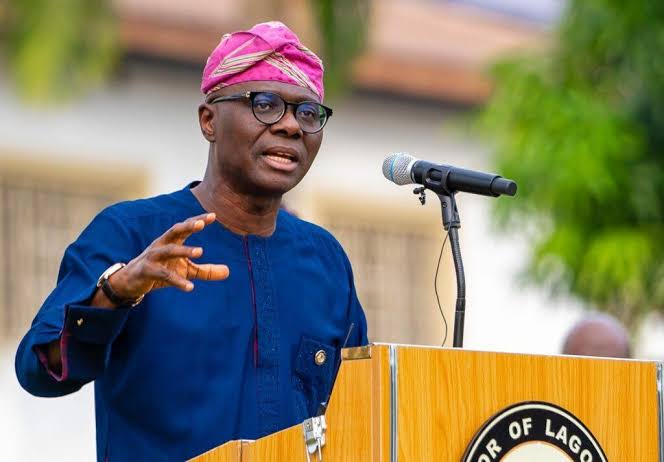
    Lagos State Governor, Babajide Sanwo-Olu, has urged politicians and public office holders not to gag the media, saying press freedom remains important in a democracy.

    He made the appeal, yesterday, at a workshop organised by the Nigerian Guild of Editors (NGE), themed: “Journalist and digitalisation: the imperative of good corporate governance” at Ikeja, Lagos State.

    Sanwo-Olu, who was Special Guest of Honour, said ensuring good corporate governance and self-regulation of the digital space would completely eradicate false and fake news.

    He assured that his administration will continue to promote press freedom, good corporate governance as well as enabling environment for journalists in the state. He urged media practitioners to regulate their activities in the digital space.

    “I stand with you (media practitioners) in solidarity to say that, indeed, your profession is not just a noble one, but it’s the one that gives the general public an independent assessment, holding our governance and government accountable at all times. And so, we need to be very careful as politicians and public officers that we do not gag this profession (media) and do not unduly stifle free press.

    “Our government understands and appreciates that press freedom is the way in which we can hold government accountable. But it is also the responsibility of all of us here to ensure that we understand the thin line; and also self-regulate our activities.”

    President of the Nigerian Guild of Editors, Mustapha Issa, said the media would not succumb to pressure from the government to determine the people’s right to information.

    He said the situation where the National Broadcasting Commission (NBC) that reports to the Minister of Information would also be the one to unilaterally impose fines on broadcast stations for unfavourable reports was tantamount to gagging the media. The NGE President, who urged media owners to embrace good corporate governance and accountability, said the role of scrutiny of the media should not be that of the government alone, adding that the media should not be threatened.

    (Sun)